
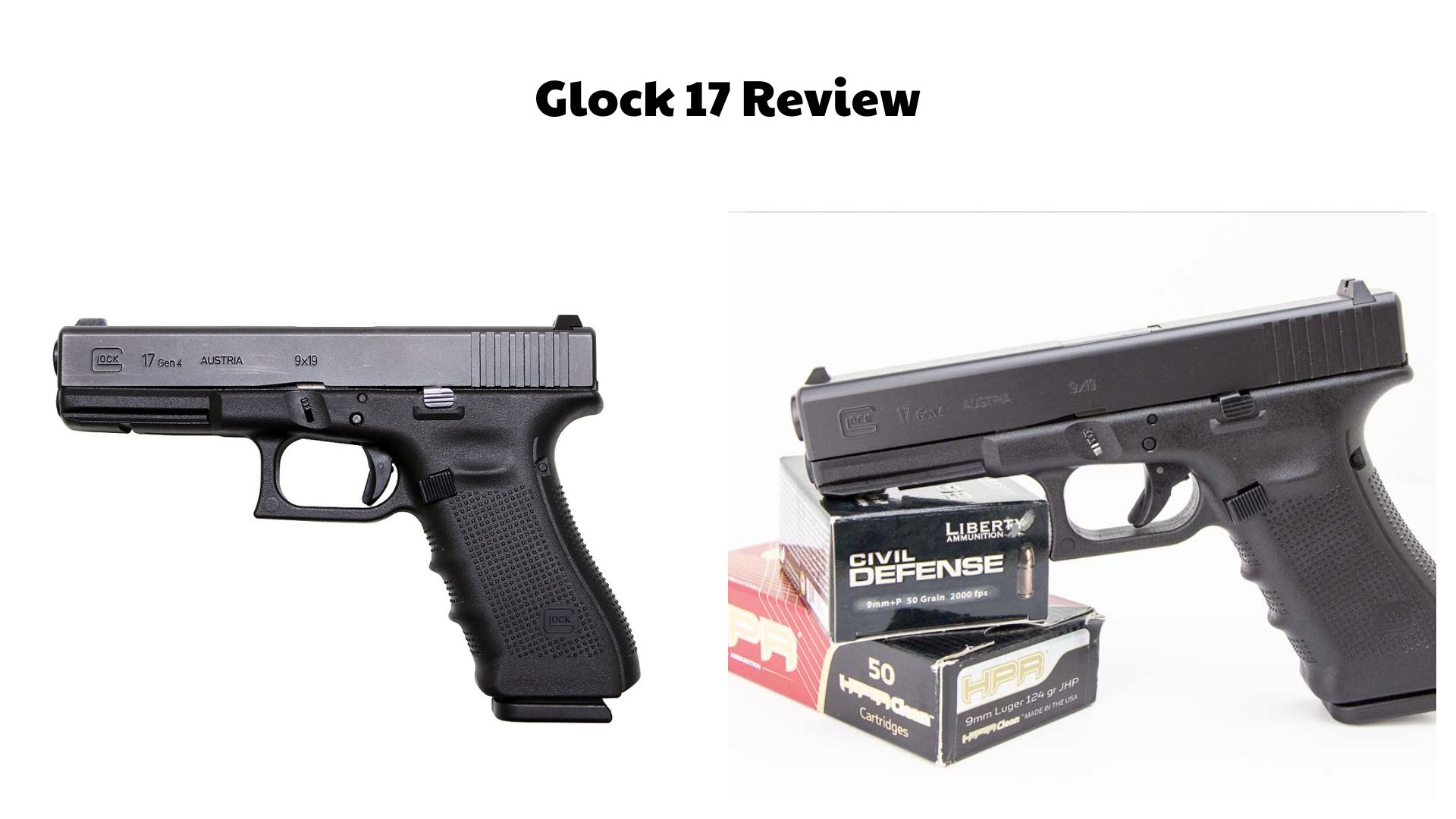

The Glock 17 is widely regarded as the original full-size 9mm striker-fired service pistol, and it has played a defining role in shaping modern handgun design. Since its introduction, it has become a benchmark for reliability, simplicity, and practical performance in both military and civilian markets.
Its reputation as a global “gold standard” for duty, defense, and law enforcement use is built on decades of real-world service across countless agencies and environments. From police departments to military units, the Glock 17 has consistently proven itself under demanding operational conditions.
Despite increasing competition from newer platforms, the Glock 17 continues to dominate due to its unmatched reliability, straightforward design, and long-term support ecosystem. Its ability to function reliably in harsh environments while remaining easy to maintain has made it a preferred choice for professionals worldwide.
This review focuses on several key themes. First is reliability and simplicity, which remain the core strengths of the platform. Second is the gradual evolution across generations, from Gen 3 through Gen 5 and into the modern Gen 6 era. Finally, we examine real-world duty performance and the impact of recent upgrades on overall usability.
This guide is intended for a wide range of users, including first-time handgun buyers looking for a dependable entry point, home defense users seeking proven reliability, law enforcement and duty carriers requiring a trusted service weapon, competitive shooters interested in a consistent platform, and Glock owners considering whether an upgrade to newer generations is worthwhile.
Overview of the Glock 17
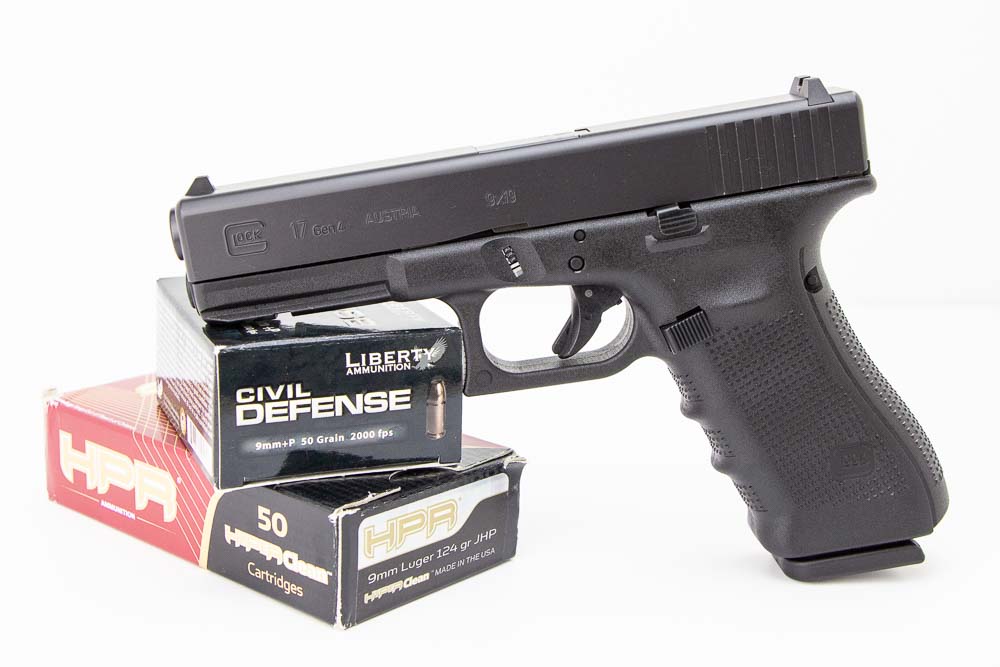
History and Legacy of the Glock 17
The Glock 17 was introduced in the early 1980s by Austrian engineer Gaston Glock. Originally designed to meet military and law enforcement requirements, it was intended to be simple, durable, and highly reliable under adverse conditions.
At the time of its introduction, the Glock 17 represented a major shift in handgun design, moving away from traditional metal-framed hammer-fired systems toward a lightweight polymer-framed striker-fired platform.
Its adoption by law enforcement and military organizations quickly spread across the globe, establishing it as one of the most widely used service pistols in history.
Over time, the Glock 17 evolved through multiple generations, refining ergonomics, improving barrel design, and adding modern features while maintaining its core operating principles.
Why the Glock 17 Became the Industry Standard
The Glock 17 became the industry standard primarily due to its extreme reliability under harsh environmental conditions. It is well known for functioning consistently in dirt, mud, sand, and extreme weather scenarios.
Its simple striker-fired “Safe Action” system reduces mechanical complexity, which improves reliability and simplifies training and maintenance for users.
The pistol’s 17+1 high-capacity magazine design provides a strong balance between firepower and control, making it suitable for both duty and defensive use.
Ease of maintenance and field stripping also contributed significantly to its success, allowing users to service the firearm quickly without specialized tools.
Finally, the massive global adoption of the Glock platform has created an unmatched aftermarket ecosystem, ensuring widespread availability of parts, holsters, and accessories.
Glock 17 Key Specifications (Modern Gen 6 Context)
The modern Glock 17 in its Gen 6 context is chambered in 9mm, offering a balance of manageable recoil and effective defensive performance.
It features a standard magazine capacity of 17+1 rounds, making it suitable for duty and defensive applications where capacity is important.
The barrel length measures approximately 4.49 inches, contributing to stable ballistic performance and consistent accuracy at defensive ranges.
Overall length is around 7.9 inches, positioning it firmly within the full-size service pistol category.
The frame is constructed from durable polymer reinforced with an updated rail system for accessory mounting and long-term structural integrity.
It features a flat-faced striker-fired trigger system with an average pull weight of approximately 5.5 pounds, designed for consistent duty performance rather than competition tuning.
The Gen 6 configuration includes an optics-ready slide system, allowing direct integration of modern red dot optics without relying heavily on adapter plates in certain configurations.
Unloaded weight typically falls in the 21 to 22 ounce range, maintaining Glock’s traditional lightweight design advantage.
Glock 17 Generations and Evolution
Gen 5 Improvements Overview
The Gen 5 generation introduced several meaningful updates to the Glock 17 platform. One of the most noticeable changes was the removal of finger grooves on the grip, allowing for a more universal and adaptable hand fit.
The Glock Marksman Barrel (GMB) was introduced, improving mechanical accuracy and consistency compared to earlier generations.
Gen 5 also added an ambidextrous slide stop, making the platform more accessible to left-handed shooters.
Grip texture was improved for better control under wet or high-stress conditions, and the MOS (Modular Optic System) expanded optics compatibility for modern shooting setups.
Glock 17 Gen 6 Upgrades Explained
The Gen 6 Glock 17 introduces a factory optics-ready slide system that reduces dependence on adapter plates in certain configurations, streamlining red dot integration.
It also features a redesigned flat-faced trigger that improves finger placement and enhances overall trigger consistency.
Grip texture has been made more aggressive using an updated RTF-style pattern, improving control during rapid fire and adverse conditions.
Ergonomics have been further refined through an improved undercut trigger guard, allowing a higher grip position and better recoil management.
The recoil spring system has been refined for smoother cycling and improved long-term consistency under high round counts.
Additional duty-focused refinements improve overall usability while maintaining Glock’s core design philosophy of simplicity and reliability.
What Has Actually Changed in Real Use
In real-world use, the Gen 6 Glock 17 offers improved ergonomics compared to previous generations, particularly in grip feel and recoil management.
However, the core reliability and operational behavior remain largely unchanged, continuing Glock’s long-standing reputation for consistency.
Some users report slight improvements in recoil control and shooting comfort, especially during extended firing sessions.
Trigger feel has received mixed feedback, with some shooters appreciating the updated geometry while others see minimal improvement over Gen 5.
Importantly, Glock has maintained compatibility with many existing components across generations, preserving its strong aftermarket ecosystem and logistical support advantages.
Design and Build Quality
Frame Construction and Materials
The Glock 17 continues to rely on its proven high-strength polymer frame, which is reinforced with internal steel components to enhance structural durability. This design choice keeps the pistol lightweight while maintaining the rigidity required for long-term duty use.
The slide features a durable nDLC-style finish, providing strong resistance to corrosion, abrasion, and harsh environmental conditions. This coating is a key factor in the Glock 17’s reputation for longevity and low maintenance requirements.
Overall, the platform is engineered specifically for long-term duty use and abuse resistance, making it suitable for extended service life under demanding conditions.
Ergonomics and Grip Improvements
The Glock 17 incorporates an improved grip angle that promotes more natural pointability, allowing shooters to acquire targets quickly without significant adjustment.
Enhanced grip texture improves control in both wet and dry conditions, reducing slippage during high-stress shooting scenarios or extended training sessions.
The higher undercut trigger guard allows shooters to achieve a higher grip position on the firearm, which helps improve recoil management and overall shooting stability.
With Gen 6 refinements, these ergonomic improvements work together to provide better recoil control and more comfortable handling compared to earlier generations.
Controls and Handling Features
The Glock 17 includes an ambidextrous slide stop lever, improving usability for both left- and right-handed shooters. This update enhances accessibility and tactical versatility.
A reversible magazine release further increases flexibility, allowing the pistol to be configured according to shooter preference.
Overall, the manual of arms remains intentionally simple, reinforcing Glock’s philosophy of reliability and ease of training for duty and defensive applications.
Performance and Shooting Characteristics
Accuracy and Practical Shooting Performance
The Glock 17 delivers consistent accuracy within typical defensive engagement distances of 5 to 25 yards. Its design prioritizes practical combat accuracy rather than precision target shooting.
The Glock Marksman Barrel (GMB) contributes to improved mechanical consistency, helping produce tighter groupings compared to earlier barrel designs.
Shooters generally experience reliable point-of-impact consistency across a wide range of ammunition types, making it a dependable choice for duty or defensive use.
Recoil and Muzzle Control
The recoil impulse of the Glock 17 remains predictable and consistent across generations, which contributes to shooter confidence and ease of control.
Gen 6 refinements offer slightly improved recoil management due to enhanced ergonomics and grip design changes.
Muzzle rise is moderate and easily manageable for most shooters, allowing for fast and controlled follow-up shots during rapid fire sequences.
Reliability Under Real-World Conditions
The Glock 17 is widely recognized for extreme reliability across decades of real-world use in military, law enforcement, and civilian environments.
It is capable of performing in harsh conditions including dirt, mud, sand, rain, and cold weather, with minimal impact on function.
Modern Gen 6 units tested in 1,000+ round endurance evaluations typically show near-zero malfunctions, reinforcing its reputation as a highly dependable service pistol.
However, some early user reports mention minor ammo-sensitive issues in specific conditions, though these are not considered widespread or systemic problems.
Trigger System and Controls
Flat-Faced Striker Trigger System (Gen 6)
The Gen 6 Glock 17 features an updated flat-faced trigger shoe designed to improve finger placement and overall trigger control during firing.
The trigger maintains a duty-oriented pull weight of approximately 5.5 pounds, balancing safety with functional usability for defensive applications.
It also includes a shorter and more tactile reset compared to earlier generations, allowing for faster follow-up shots when properly trained.
Trigger Feel and Real-World Feedback
The updated trigger system is generally considered an ergonomic improvement over Gen 5, particularly in terms of finger positioning and consistency.
However, it is still not designed to compete with aftermarket or competition-grade trigger systems, as Glock prioritizes reliability and safety over precision tuning.
As a result, the trigger feel is best described as functional, consistent, and duty-oriented rather than refined or performance-focused.
Optics, Sights, and Accessories
Optics-Ready System (Gen 6 ORS)
The Gen 6 Glock 17 features a modern optics-ready slide system designed to support red dot sights for improved target acquisition speed and accuracy. The factory direct-milled slide reduces the need for complex modifications and provides a more streamlined mounting solution compared to earlier generations.
Depending on the configuration, the system may include multiple mounting plate options, allowing compatibility with a wide range of popular pistol optics. This flexibility ensures users can tailor the setup to their specific shooting needs.
Improved co-witness capability also enhances usability by allowing shooters to align backup iron sights with mounted optics, improving reliability in case of electronic failure.
Factory Sights and Sight Picture
The Glock 17 is typically equipped with standard polymer or steel sights depending on the selected package. These sights are designed for durability and simplicity rather than precision competition shooting.
The sight picture is clear and functional, optimized for defensive shooting scenarios where fast target acquisition is more important than fine precision adjustments.
One of the major advantages is the ease of aftermarket replacement, allowing users to upgrade to night sights, fiber-optic sights, or suppressor-height configurations with minimal effort.
Accessory Compatibility
The Glock 17 includes a full-length Picatinny-style accessory rail, enabling the attachment of weapon-mounted lights, lasers, and other tactical accessories.
It is widely compatible with a vast range of holsters and duty gear due to its global adoption across military, law enforcement, and civilian markets.
One of its strongest advantages is the massive aftermarket ecosystem support, which ensures users have access to an extensive selection of upgrades, parts, and customization options.
Size, Weight, and Handling
Full-Size Duty Dimensions
The Glock 17 is designed as a full-size service pistol platform, optimized for duty and defensive applications rather than concealed carry.
Its balanced weight distribution contributes to stable recoil control and consistent shooting performance, especially during extended training sessions or high-round-count usage.
These dimensions make it particularly well-suited for duty belt setups, range use, and professional applications where size is less of a constraint.
Carry Considerations
The Glock 17 performs best in OWB (outside-the-waistband) duty carry configurations, where its size and weight can be comfortably managed.
While concealed carry is technically possible, it is generally less practical compared to compact or subcompact models due to its full-size frame.
Despite this, it remains widely used in holster-based carry systems by law enforcement and armed professionals who prioritize performance over concealability.
Reliability and Durability
Real-World Reliability Testing
Extensive testing and field use show that the Glock 17 consistently achieves near-zero malfunction rates in 1,000-round endurance tests, particularly in modern Gen 6 configurations.
Its reputation for reliability is reinforced by decades of service in military and law enforcement environments worldwide.
The platform is also known for being extremely tolerant of different ammunition types, including a wide range of factory-loaded 9mm cartridges.
Long-Term Durability
The Glock 17 is engineered for high round-count service life, making it suitable for long-term duty use without frequent parts replacement.
Its minimal maintenance requirements contribute to its popularity among professional users who need a dependable, low-maintenance sidearm.
Additionally, long-term durability is supported by Glock’s global manufacturing scale and standardized parts availability, ensuring long service life and easy support worldwide.
Pros and Cons of the Glock 17
Main Advantages
The Glock 17 offers industry-leading reliability that has been proven across decades of real-world military and law enforcement use.
Its massive aftermarket support allows users to easily customize or upgrade nearly every aspect of the platform, from triggers to optics and grips.
It also benefits from extensive global adoption, ensuring widespread training familiarity and logistical support.
The simple manual of arms makes it easy to learn, operate, and maintain, even under stress.
Finally, parts replacement and maintenance are straightforward and widely accessible, contributing to its long-term practicality.
Main Disadvantages
One of the primary criticisms of the Glock 17 is its basic factory configuration, which lacks premium features out of the box compared to newer competitors.
The factory trigger is functional but generally considered less refined than many modern striker-fired alternatives.
Some users also describe the polymer frame as having a “blocky” feel, particularly compared to more ergonomically contoured designs.
Additionally, while improvements across generations are meaningful, they are often incremental rather than revolutionary, which may feel conservative to users expecting major innovation.
Glock 17 vs Competitors
Glock 17 vs SIG P320
The SIG P320 is one of the Glock 17’s strongest modern competitors, particularly due to its modular design. Unlike the Glock, the P320 uses a removable fire control unit that allows users to change grip modules, calibers, and configurations with ease.
In terms of ergonomics, many shooters find the P320 more comfortable out of the box, with a more natural grip angle and smoother factory trigger. However, the Glock 17 maintains a significant advantage in long-term reliability reputation and global duty adoption.
While both platforms are widely used in law enforcement and military environments, the Glock 17 is often preferred for its simplicity and proven durability, whereas the P320 appeals to users who prioritize modularity and customization flexibility.
Glock 17 vs CZ P-10
The CZ P-10 series is known for excellent ergonomics, strong factory triggers, and competitive pricing. It is often considered one of the best value striker-fired pistols on the market.
Compared to the Glock 17, the CZ P-10 typically offers a more refined trigger and more aggressive grip ergonomics, which can enhance shooting comfort and accuracy for some users.
However, the Glock 17 continues to dominate in terms of aftermarket support, parts availability, and long-term service history. The CZ P-10 is highly competitive in performance, but Glock retains the edge in ecosystem and institutional trust.
Glock 17 vs Smith & Wesson M&P 2.0
The Smith & Wesson M&P 2.0 is a direct competitor designed to challenge Glock’s dominance in the striker-fired duty pistol market. It features improved grip texture, a more ergonomic design, and a generally better out-of-the-box trigger feel.
In comparison, the Glock 17 offers a simpler operating system and a more established track record in military and law enforcement use.
While the M&P 2.0 is often praised for comfort and ergonomics, the Glock 17 remains the benchmark for reliability, aftermarket support, and global adoption.
Glock 17 vs Walther PDP
The Walther PDP is widely recognized for having one of the best factory striker-fired triggers on the market, along with aggressive ergonomics and excellent optics integration.
Against the Glock 17, the PDP often wins in terms of trigger quality and immediate shooting feel, especially for range and competition use.
However, the Glock 17 maintains an advantage in long-term durability reputation, simplicity, and worldwide parts and holster availability.
The PDP is often viewed as a more performance-focused handgun, while the Glock 17 is considered the more proven duty-oriented platform.
Real User Feedback and Community Opinions
Professional Reviewer Insights
Professional firearm reviewers consistently praise the Glock 17 for its unmatched reliability and durability. It is frequently described as a “benchmark” or “reference standard” for service pistols.
In Gen 6 discussions, reviewers often highlight improved ergonomics and optics integration, while also noting that trigger upgrades are incremental rather than transformative.
Overall, professional sentiment remains highly positive, especially regarding the pistol’s long-term dependability in duty environments.
Reddit and Shooter Community Opinions
Within online firearm communities, the Glock 17 continues to receive strong consensus praise for its reliability. Many users emphasize that it “just runs” under almost any condition.
However, Gen 6 updates generate mixed reactions, particularly regarding grip undercuts, texture changes, and perceived trigger feel differences.
Despite debates over ergonomics and modernization, the overall community view still recognizes Glock as the most dependable baseline platform in the striker-fired category.
Competitive Shooter Feedback
Competitive shooters generally appreciate the Glock 17 for its consistency, predictable recoil impulse, and wide availability of parts and accessories.
However, many competitors choose to upgrade triggers or internal components to achieve a more refined competition setup, as the factory configuration is designed primarily for duty use.
While not always the top choice for pure competition shooting, it remains a widely used and highly respected platform in practical shooting sports.
Practical Use Cases
Home Defense Applications
The Glock 17 is widely considered an excellent home defense firearm due to its reliability, ease of use, and high-capacity magazine. Its simple manual of arms makes it suitable for high-stress defensive situations.
Law Enforcement Duty Use
Law enforcement agencies around the world continue to rely on the Glock 17 as a primary duty sidearm. Its proven durability, ease of training, and logistical support make it a top-tier service weapon.
Range Training and Skill Development
For training purposes, the Glock 17 offers a consistent platform that allows shooters to build fundamental handgun skills. Its predictable recoil and wide support ecosystem make it ideal for long-term practice.
Competitive Shooting Applications
While not specifically designed as a competition pistol, the Glock 17 is still widely used in practical shooting sports. Many competitors modify the platform to enhance trigger performance and speed.
Concealed Carry Considerations
Although the Glock 17 can be concealed, it is generally better suited for OWB or duty-style carry due to its full-size dimensions. Users prioritizing concealability often prefer smaller Glock models such as the Glock 19.
Final Verdict
Who Should Choose the Glock 17
The Glock 17 is best suited for duty users who require absolute reliability, first-time buyers who want a simple and proven platform, and experienced shooters who prioritize long-term support and durability.
Who Should Avoid It
It may not be ideal for shooters who prioritize lightweight concealment or those seeking a highly refined trigger and premium factory feel out of the box.
Overall Performance Summary
The Glock 17 remains a balanced, reliable, and proven service pistol that continues to set the standard in its category. It focuses on function, durability, and simplicity rather than luxury features or complex design changes.
Final Assessment: Why the Glock 17 Still Leads
The Glock 17 continues to lead its category due to incremental evolution rather than radical redesign. Its core identity has remained consistent for decades, allowing it to build unmatched trust across military, law enforcement, and civilian markets.
Ultimately, reliability remains its defining advantage over competitors, ensuring that even as newer platforms emerge, the Glock 17 continues to be regarded as the benchmark for modern service pistols.
Frequently Asked Questions (FAQ) – Glock 17
1. What makes the Glock 17 so popular worldwide?
The Glock 17 is popular because it combines extreme reliability, simple operation, and high capacity in a full-size 9mm platform. It has been adopted by military and law enforcement agencies globally, which reinforces its reputation as a trusted duty firearm. Its ability to function in harsh environments with minimal maintenance has made it a long-standing standard in the handgun market.
2. Is the Glock 17 good for beginners?
Yes, the Glock 17 is often recommended for beginners because of its simple manual of arms and consistent trigger system. It does not have external safeties or complex controls, making it easier to learn. However, its full-size frame may feel large for some new shooters, especially those with smaller hands.
3. Is the Glock 17 reliable?
The Glock 17 is widely considered one of the most reliable handguns ever made. It is designed to function under extreme conditions such as mud, sand, rain, and cold weather. Many endurance tests involving thousands of rounds show minimal malfunctions when properly maintained and used with quality ammunition.
4. How accurate is the Glock 17?
The Glock 17 is very accurate for defensive and duty use. With its Glock Marksman Barrel and full-size sight radius, it consistently delivers solid performance at typical engagement distances of 5 to 25 yards. While not a precision competition pistol, it is more than adequate for practical shooting.
5. What is the magazine capacity of the Glock 17?
The standard magazine capacity is 17 rounds, plus one in the chamber for a total of 17+1. Extended magazines are also available, but the standard configuration already provides a strong balance of firepower and control.
6. What caliber does the Glock 17 use?
The Glock 17 is chambered in 9x19mm Parabellum, one of the most widely used handgun cartridges in the world. This caliber offers a good balance of recoil control, effectiveness, and ammunition availability.
7. Is the Glock 17 suitable for home defense?
Yes, the Glock 17 is widely used for home defense due to its reliability, high capacity, and ease of operation. It is simple enough to use under stress and powerful enough for defensive scenarios, especially when paired with a weapon light.
8. Is the Glock 17 good for concealed carry?
It can be used for concealed carry, but it is not ideal due to its full-size dimensions. Many users prefer smaller models like the Glock 19 for daily concealed carry because they are easier to conceal and more comfortable for extended wear.
9. What is the difference between Glock 17 Gen 5 and Gen 6?
The Gen 6 Glock 17 includes refinements such as improved ergonomics, updated grip texture, a redesigned flat-faced trigger, and enhanced optics-ready integration. However, the core operating system and reliability remain largely unchanged from earlier generations.
10. Does the Glock 17 have a safety?
The Glock 17 does not have a traditional manual safety. Instead, it uses Glock’s Safe Action System, which includes internal safeties that automatically disengage when the trigger is pulled and re-engage when released.
11. How safe is the Glock 17?
The Glock 17 is very safe when used properly. Its internal safety mechanisms prevent accidental discharge unless the trigger is intentionally pulled. It is widely trusted by law enforcement agencies worldwide.
12. What is the trigger pull weight?
The Glock 17 typically has a trigger pull weight of approximately 5.5 pounds in duty configurations. This weight is designed to balance safety and usability in high-stress environments.
13. Is the Glock 17 good for law enforcement?
Yes, the Glock 17 is one of the most widely used law enforcement pistols globally. Its reliability, ease of training, and durability make it a standard issue sidearm for many agencies.
14. How durable is the Glock 17?
The Glock 17 is extremely durable, with a design intended for high round-count use over many years. Its polymer frame and steel slide are built to withstand repeated firing and harsh environmental conditions.
15. What is the barrel length of the Glock 17?
The Glock 17 has a barrel length of approximately 4.49 inches, which contributes to its balance of accuracy and compact full-size handling.
16. Can the Glock 17 use optics?
Yes, modern versions like Gen 6 are optics-ready and can mount red dot sights using factory systems or adapter plates, depending on configuration.
17. Is the Glock 17 good for competition shooting?
The Glock 17 is used in competition shooting, particularly in practical disciplines. However, many competitors modify it with aftermarket triggers and parts to enhance performance.
18. What are the main advantages of the Glock 17?
Its main advantages include extreme reliability, high capacity, simple operation, and a massive aftermarket ecosystem. These factors make it one of the most versatile handguns available.
19. What are the disadvantages of the Glock 17?
The main disadvantages include a basic factory trigger, a utilitarian design, and limited refinement compared to some newer competitors. It prioritizes function over luxury features.
20. How does the Glock 17 compare to SIG P320?
The SIG P320 is more modular and customizable, while the Glock 17 is more focused on simplicity and proven reliability. Both are widely used in duty roles, but Glock has a longer track record.
21. How does the Glock 17 compare to CZ P-10?
The CZ P-10 often has a better factory trigger and ergonomics, while the Glock 17 has superior aftermarket support and long-term institutional trust.
22. How does it compare to Smith & Wesson M&P 2.0?
The M&P 2.0 offers better ergonomics for some users, but the Glock 17 is generally considered more proven in global duty use with a larger support ecosystem.
23. How does it compare to Walther PDP?
The Walther PDP typically has a better factory trigger and grip ergonomics, while the Glock 17 maintains an advantage in reliability history and parts availability.
24. Does the Glock 17 need a break-in period?
No significant break-in period is required. The Glock 17 is designed to function reliably out of the box with proper lubrication and quality ammunition.
25. What type of ammunition works best?
The Glock 17 performs well with most standard 9mm factory ammunition. It is known for being highly tolerant of different bullet types and loads.
26. How easy is it to maintain?
The Glock 17 is very easy to maintain. It can be field stripped without tools, and routine cleaning is straightforward even for beginners.
27. Are Glock parts easy to find?
Yes, Glock parts are widely available globally due to its massive adoption by military, law enforcement, and civilian users.
28. Is aftermarket support good?
Aftermarket support is one of the strongest advantages of the Glock 17, with extensive options for triggers, sights, barrels, and accessories.
29. What holsters fit the Glock 17?
Because of its popularity, the Glock 17 is supported by nearly every major holster manufacturer, offering OWB, IWB, and duty holster options.
30. Is the Glock 17 heavy?
No, it is relatively lightweight at around 21–22 ounces unloaded, thanks to its polymer frame construction.
31. What is the sight radius?
The Glock 17 has a full-size sight radius that improves practical accuracy and helps shooters align sights more easily during firing.
32. Can left-handed shooters use it?
Yes, modern versions include ambidextrous slide stops and reversible magazine releases, making it suitable for left-handed users.
33. Does it have recoil issues?
The Glock 17 has manageable recoil due to its 9mm chambering and balanced design. It is considered easy to control even for newer shooters.
34. Is the Glock 17 good for tactical use?
Yes, it is widely used in tactical and duty environments due to its reliability, simplicity, and compatibility with accessories.
35. What makes Gen 6 different in ergonomics?
Gen 6 improves grip texture, undercut design, and trigger geometry, which enhances control and comfort compared to earlier generations.
36. Does Glock 17 have customization limits?
It has very few limitations due to its massive aftermarket ecosystem, making it one of the most customizable pistols available.
37. Is it good for training?
Yes, it is widely used for firearms training because of its consistency, reliability, and low maintenance requirements.
38. Can it handle high round counts?
Yes, it is designed for high round-count durability and is commonly used in long-term duty service.
39. Is it better than newer pistols?
While newer pistols may offer improved ergonomics or triggers, the Glock 17 still leads in reliability and ecosystem support.
40. Why do professionals trust it?
Professionals trust it because of its proven track record in real-world combat, law enforcement, and defensive use over several decades.
41. Is the Glock 17 outdated?
No, it is not outdated. While designs evolve, the Glock 17 remains highly relevant due to continuous incremental improvements.
42. Is it good for cold weather use?
Yes, it performs reliably in extreme cold conditions, which is one reason it is widely used in military service.
43. Does it rust easily?
No, the slide coating and polymer frame provide strong corrosion resistance under normal conditions.
44. Is it suitable for duty holsters?
Yes, it is one of the most commonly used pistols in duty holster systems worldwide.
45. How does it perform under stress?
It performs very well under stress due to its simple controls and reliable firing system.
46. Is it easy to shoot accurately?
Yes, its balance, grip angle, and sight radius make it easy to shoot accurately for most users.
47. What is the biggest strength of Glock 17?
Its biggest strength is unmatched reliability combined with simplicity and global support.
48. What is the biggest weakness?
Its biggest weakness is a lack of premium factory refinement compared to newer competitors.
49. Is it worth buying in 2026?
Yes, it remains a strong choice in 2026 due to its reliability, support ecosystem, and proven performance history.
50. What is the final takeaway?
The Glock 17 remains a benchmark service pistol that prioritizes reliability, simplicity, and long-term performance over complexity or premium refinement, making it one of the most trusted handguns ever made.
Read more: