
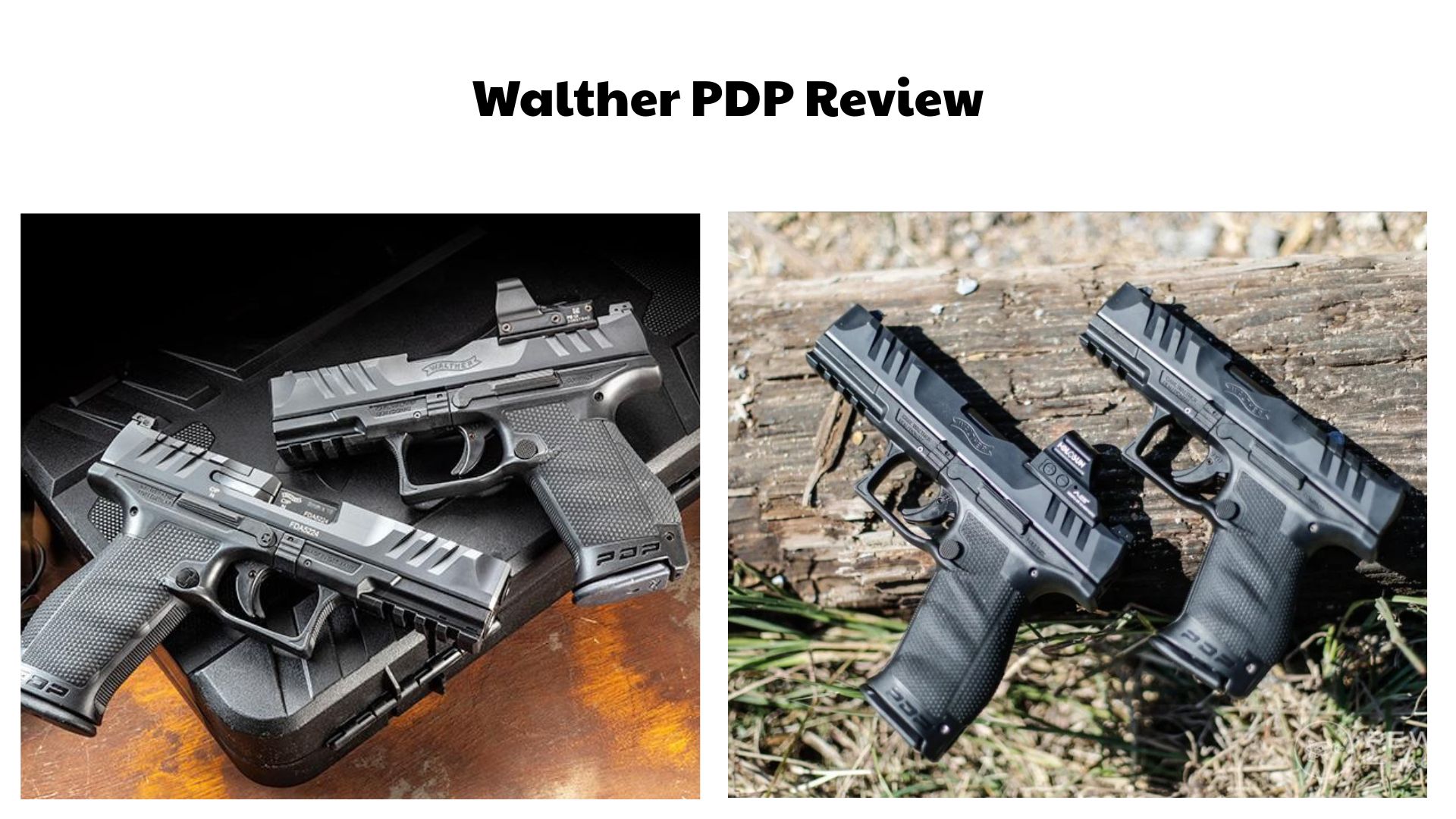

The Walther PDP, short for “Performance Duty Pistol,” is a modern striker-fired handgun designed to meet the needs of professional users, defensive shooters, and firearms enthusiasts seeking a high-performance 9mm platform. Since its release, the PDP has become one of the most talked-about polymer pistols in the market due to its ergonomics, trigger quality, and optics-ready design.
The PDP evolved directly from the highly respected Walther PPQ series. While the PPQ was already praised for having one of the best factory triggers in a striker-fired handgun, the PDP expands on that foundation with improved slide serrations, enhanced grip texture, and a more advanced optics mounting system.
Walther designed the PDP around the concept of a “Performance Duty Pistol,” combining duty-grade reliability with competition-level shootability. The platform is intended to serve multiple roles including duty carry, home defense, range training, competition shooting, and concealed carry depending on the chosen model size.
The Walther PDP gained popularity quickly within the striker-fired pistol market because it addressed many of the modern demands shooters expect today. Its optics-ready configuration, refined ergonomics, and exceptional trigger system allowed it to compete directly against established platforms like Glock, SIG Sauer, and Smith & Wesson.
Walther PDP Design Philosophy
Built Around Red Dot Ergonomics
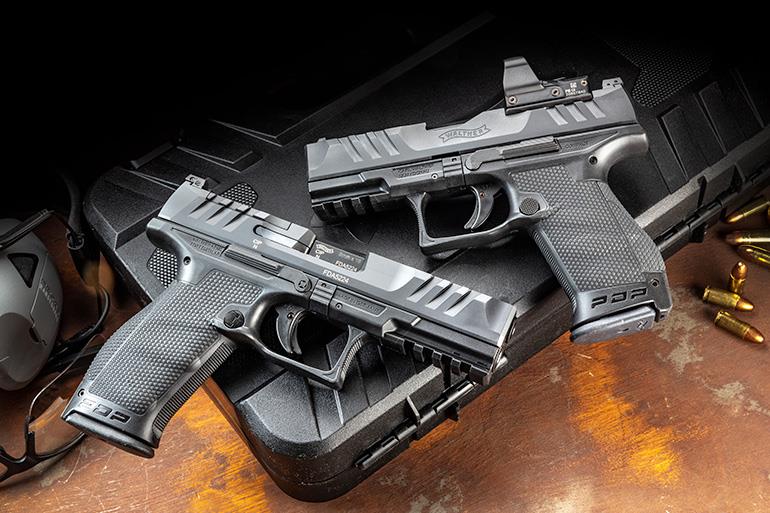
One of the defining characteristics of the Walther PDP is its optics-first design philosophy. Unlike older handgun platforms that later adapted to optics, the PDP was engineered specifically around modern red dot shooting concepts.
The slide geometry and optic mounting system are designed to support Miniature Red Dot Sights (MRDs), allowing shooters to achieve faster target acquisition and improved tracking during recoil.
This design approach also improves sight alignment for modern shooters transitioning from traditional iron sights to red dot systems, making the PDP highly appealing for tactical, defensive, and competition applications.
Performance Duty Concept
Walther engineered the PDP to function as a true performance-oriented duty handgun. The platform balances combat reliability with shooting comfort, creating a pistol capable of handling defensive use while remaining enjoyable during extended range sessions.
The pistol is available in multiple frame and slide configurations, giving shooters modular sizing options depending on their intended role. Compact versions are more suitable for concealed carry, while full-size models excel in duty and competition settings.
Evolution from the PPQ
The Walther PDP retains much of the trigger DNA that made the PPQ series famous among handgun enthusiasts. The trigger maintains a crisp break, short reset, and highly predictable shooting feel.
In addition to the trigger improvements, the PDP introduces more aggressive SuperTerrain slide serrations and enhanced grip texture designed specifically for high-stress manipulation and recoil management.
Walther also significantly upgraded the optics mounting system compared to the PPQ, making the PDP more compatible with modern red dot setups directly from the factory.
Design and Build Quality
Polymer Frame and Ergonomics
The Walther PDP features a reinforced polymer frame combined with Walther’s Performance Duty Texture, a grip design intended to maximize control without sacrificing comfort.
Unlike many competing striker-fired pistols, the PDP eliminates traditional finger grooves, allowing for a more universal grip fit across different hand sizes and shooting styles.
Interchangeable backstraps in small, medium, and large sizes further improve ergonomics by allowing shooters to customize grip dimensions to their personal preferences.
SuperTerrain Slide Serrations
One of the most recognizable design elements of the PDP is its aggressive SuperTerrain slide serration system. Both the front and rear serrations are oversized and deeply cut for improved traction.
These serrations make slide manipulation easier under stress, particularly when performing reloads, malfunction clearances, or administrative handling.
The design also improves grip when wearing gloves or operating the pistol in wet conditions, enhancing overall reliability in demanding environments.
Slide and Barrel Construction
The PDP uses a steel slide treated with Walther’s Tenifer finish, providing strong corrosion resistance and long-term durability against wear and environmental exposure.
The barrel features a durable stepped chamber design intended to support consistent feeding and long service life. Combined with the robust slide construction, the PDP is engineered to withstand high round counts and heavy-duty use.
Overall build quality is widely regarded as excellent for a polymer-framed striker-fired handgun, placing the PDP among the premium options in its category.
Walther PDP Specifications
The Walther PDP is available in multiple configurations, offering flexibility for different roles and user preferences.
Core Specifications
Caliber: 9mm Luger
Capacity: 15+1 or 18+1 depending on model
Barrel lengths: 4-inch, 4.5-inch, and 5-inch variants
Weight: approximately 22–25 ounces unloaded
Optics-ready slide configuration
Ambidextrous slide stop controls
Reversible magazine release
These specifications position the PDP as a highly versatile handgun platform suitable for duty carry, home defense, competition shooting, and concealed carry applications.
Trigger Performance
Performance Duty Trigger (PDT)
One of the standout features of the Walther PDP is its Performance Duty Trigger, commonly referred to as the PDT. The trigger system is widely praised for delivering a refined shooting experience directly from the factory without requiring aftermarket upgrades.
The trigger offers a crisp break paired with a short and highly tactile reset, allowing shooters to maintain faster shot cadence and better consistency during rapid-fire strings.
Trigger pull weight generally falls between approximately 4.5 and 5.6 pounds depending on the specific model and measurement method. The trigger also features minimal take-up and a clearly defined wall, helping shooters achieve more predictable shot placement.
Comparison to Glock and SIG Triggers
Compared to standard factory Glock triggers, the Walther PDP trigger is commonly described as cleaner, lighter, and more refined. Many shooters appreciate the smoother break and shorter reset offered by the PDT system.
When compared to SIG Sauer striker-fired triggers, the PDP still remains highly competitive, particularly in terms of reset feel and overall trigger responsiveness.
Across the striker-fired handgun market, the Walther PDP trigger is often considered one of the best factory trigger systems available, especially for shooters focused on precision and speed.
Real-World Shooting Feel
The trigger performance directly contributes to the PDP’s excellent shooting characteristics in real-world use. Shooters often report noticeably faster follow-up shots due to the short reset and consistent trigger pull.
The trigger also enhances precision during rapid-fire drills by reducing unnecessary trigger movement and improving control under pressure.
Because of these characteristics, the Walther PDP has become especially popular among competition shooters and enthusiasts seeking a high-performance striker-fired platform without extensive customization.
Ergonomics and Handling
Grip Comfort and Control
The Walther PDP is widely recognized for having some of the best ergonomics in the striker-fired handgun category. Its grip angle and frame shape provide a very natural point of aim for many shooters.
Walther’s aggressive Performance Duty Texture improves recoil control and helps maintain a secure grip during rapid firing or adverse conditions.
The grip design is particularly comfortable for medium and large hands, while interchangeable backstraps allow users to customize the feel for improved comfort and control.
Recoil and Shooting Characteristics
Some users describe the PDP’s recoil impulse as slightly “snappy,” especially in lighter compact variants. However, the pistol remains highly controllable overall due to its ergonomics and low bore axis design.
The low bore axis helps reduce muzzle rise and improves sight tracking during recoil, making it easier for shooters to reacquire targets quickly.
Overall, the Walther PDP delivers a balanced shooting experience that combines defensive practicality with competition-level handling characteristics.
Ambidextrous Features
The PDP includes fully ambidextrous slide stop controls, making it accessible for both right-handed and left-handed shooters.
In addition, the magazine release is reversible, allowing users to configure the pistol according to personal preference or shooting style.
This user-friendly control layout improves overall versatility and enhances the pistol’s appeal for duty, training, and defensive applications.
Optics and Accessories Compatibility
Factory Optics-Ready System
The Walther PDP was built from the ground up as an optics-ready handgun platform. Its slide is factory-cut to support a wide variety of modern red dot optics through interchangeable mounting plates.
The system is compatible with popular optics including the Trijicon RMR, Holosun series, Leupold DeltaPoint Pro, and several other Miniature Red Dot Sight platforms.
The PDP also supports co-witness sight configurations depending on optic height and iron sight setup, improving usability for defensive and tactical shooting applications.
Accessory Rail and Tactical Setup
An integrated accessory rail allows the PDP to support tactical lights and laser aiming devices commonly used in home-defense and duty configurations.
Popular accessories include weapon-mounted lights from manufacturers such as Streamlight and SureFire, both of which are frequently paired with the PDP platform.
This versatility makes the pistol highly adaptable for low-light defensive use, tactical setups, and professional duty applications.
Aftermarket Support
The Walther PDP benefits from a steadily growing aftermarket ecosystem, giving users access to upgraded components and customization options.
Available aftermarket products include enhanced triggers, magwells, threaded barrels, compensators, optics plates, and upgraded sights.
Although the aftermarket support is not yet as massive as what exists for Glock pistols, the PDP continues to gain popularity, leading to increased accessory availability and third-party support.
Reliability and Durability
Long-Term Range Testing
The Walther PDP has built a strong reputation for reliability through extensive range testing and real-world use. Many shooters report firing more than 1,500 rounds through the pistol with minimal or no significant malfunctions.
The platform performs consistently under heavy use, maintaining dependable cycling and reliable feeding across a wide range of factory ammunition types.
In addition to reliability, the PDP is also known for maintaining excellent accuracy even during prolonged shooting sessions, making it suitable for both defensive and recreational applications.
Durability Features
One of the key durability elements of the Walther PDP is its Tenifer-coated steel slide. This finish provides strong corrosion resistance and protects the pistol against wear caused by moisture, sweat, and environmental exposure.
The optics cut area is reinforced to improve structural strength and long-term reliability when using mounted red dot optics. This is especially important for shooters who frequently train with optics-equipped pistols.
The PDP also uses durable steel magazines designed for consistent feeding and long service life under repeated use and heavy firing schedules.
Reported Issues
Although the Walther PDP has earned positive reliability reviews overall, some isolated issues have been reported by users. A small number of shooters have experienced occasional trigger reset inconsistencies under certain conditions.
There have also been limited complaints involving optics plate screws loosening or requiring additional attention after extended firing sessions.
Despite these occasional concerns, Walther customer service is generally viewed as responsive and helpful when addressing warranty claims or replacement part requests.
Accuracy and Range Performance
Accuracy Results
The Walther PDP delivers excellent mechanical accuracy for a striker-fired handgun. Its refined trigger system, ergonomic grip design, and stable shooting characteristics contribute to consistent shot placement.
The quality of the Performance Duty Trigger enhances precision by reducing unnecessary trigger movement and providing a clean, predictable break.
These characteristics make the PDP effective for both defensive shooting and competition-style applications where speed and accuracy are equally important.
Shooting Under Pressure
The PDP performs particularly well during rapid-fire drills and high-pressure shooting situations. Its ergonomics and trigger system allow shooters to maintain control while firing quickly.
The aggressive SuperTerrain slide serrations also improve weapon manipulations, making reloads and malfunction clearances easier under stress.
Many shooters describe the overall experience as confidence-inspiring due to the combination of controllability, trigger quality, and consistent handling characteristics.
Red Dot Shooting Performance
The Walther PDP was specifically designed around modern optics use, making it highly effective when paired with miniature red dot sights.
For shooters transitioning from iron sights to optics, the PDP provides an easier learning curve due to its optic-ready slide design and natural presentation angle.
The platform also allows improved target tracking during recoil, helping shooters maintain visual contact with the dot and recover faster between shots.
Pros and Cons of the Walther PDP
Pros
One of the biggest strengths of the Walther PDP is its outstanding factory trigger, which is widely considered among the best in the striker-fired handgun market.
The pistol also features excellent ergonomics, providing a comfortable grip and natural point of aim for a wide range of shooters.
Its optics-ready slide configuration allows users to mount red dot sights directly from the factory without requiring expensive slide modifications.
The aggressive SuperTerrain slide serrations improve handling and weapon manipulation under stress or adverse conditions.
Additional strengths include strong overall accuracy, excellent controllability during rapid fire, and high magazine capacity depending on the chosen model configuration.
Cons
The aggressive grip texture, while excellent for recoil control, may feel too abrasive for some users during concealed carry or extended skin contact.
Compared to some competing striker-fired pistols, the PDP is slightly wider, which may impact concealability for certain users.
Some shooters also consider the factory polymer sights underwhelming and choose to replace them with upgraded metal or night sight options.
Although the PDP’s aftermarket support continues to grow, it still remains smaller than the massive accessory ecosystem available for Glock pistols.
Reliability and Durability
Long-Term Range Testing
The Walther PDP has earned a strong reputation for reliability through extensive real-world testing and high round-count range sessions. Many users report firing well over 1,500 rounds with minimal malfunctions or reliability concerns.
The pistol maintains consistent performance even under heavy use, demonstrating dependable feeding, extraction, and cycling across a variety of ammunition types.
In addition to reliability, the PDP has developed a strong reputation for accuracy, with many shooters praising its ability to maintain tight groupings during both slow-fire precision shooting and rapid-fire drills.
Durability Features
A major contributor to the PDP’s durability is its Tenifer-coated steel slide, which offers strong resistance to corrosion, wear, and environmental exposure.
The optics cut area is reinforced to improve long-term structural integrity when using mounted red dot sights, helping the pistol withstand repeated recoil stress during extended shooting sessions.
The PDP also utilizes durable steel magazines designed for reliable feeding and extended service life under demanding range and duty conditions.
Reported Issues
Although the Walther PDP is generally regarded as highly reliable, some isolated issues have been reported by a small number of users. These include occasional trigger reset inconsistencies under certain shooting conditions.
Some owners have also mentioned concerns regarding optics plate screws loosening during prolonged firing sessions, especially when optics are not properly secured with thread-locking compounds.
Despite these occasional reports, Walther customer service is often viewed positively for its responsiveness and willingness to assist with warranty claims, replacement parts, and technical support.
Accuracy and Range Performance
Accuracy Results
The Walther PDP delivers excellent mechanical accuracy thanks to its refined trigger system, stable shooting characteristics, and ergonomic grip design.
The Performance Duty Trigger significantly enhances precision by providing a clean break and short reset, allowing shooters to maintain consistent control during firing.
These characteristics make the PDP highly effective for both defensive shooting scenarios and competition-style applications where speed and precision are equally important.
Shooting Under Pressure
The Walther PDP handles exceptionally well during rapid-fire drills and high-pressure shooting situations. Its ergonomic frame and responsive trigger system help shooters maintain control during fast shooting sequences.
The aggressive SuperTerrain slide serrations improve weapon manipulations, making reloads and malfunction clearances easier under stress or while wearing gloves.
Overall, the pistol provides a confidence-inspiring shooting experience that appeals to both professional users and enthusiast shooters.
Red Dot Shooting Performance
The PDP was engineered around modern optics use, making it one of the more refined red dot-ready striker-fired pistols currently available.
Its optics-ready system allows shooters to transition more naturally from traditional iron sights to miniature red dot optics without major adjustments in shooting technique.
The pistol’s ergonomics and recoil characteristics also improve target tracking during recoil, helping shooters maintain visual focus on the optic for faster follow-up shots.
Pros and Cons of the Walther PDP
Pros
One of the largest advantages of the Walther PDP is its outstanding factory trigger, which is frequently considered among the best available in a production striker-fired handgun.
The pistol also offers excellent ergonomics, giving shooters a natural point of aim and strong recoil control during extended shooting sessions.
Its optics-ready slide system comes standard from the factory, allowing easy integration with modern red dot sights without requiring expensive aftermarket slide modifications.
The aggressive SuperTerrain slide serrations improve handling and slide manipulation, especially during high-stress or adverse-condition shooting.
Additional strengths include excellent accuracy, strong controllability, and high magazine capacity depending on the specific model configuration.
Cons
The aggressive grip texture may feel too abrasive for some users during concealed carry, particularly when carried against bare skin for long periods.
The PDP is also slightly wider than some competing striker-fired pistols, which may affect concealability for certain users.
Some shooters find the factory polymer sights less impressive compared to the overall quality of the pistol and choose to upgrade them immediately.
Although the PDP’s aftermarket support continues to expand, it still remains smaller than the extensive customization ecosystem available for Glock platforms.
Walther PDP vs Competitors
Walther PDP vs Glock 17
Compared to the Glock 17, the Walther PDP generally offers a superior factory trigger and more refined ergonomics directly out of the box.
The Glock 17, however, maintains advantages in aftermarket support, simplicity, and widespread availability of accessories and replacement parts.
Walther PDP vs SIG Sauer P320
The Walther PDP trigger is often preferred over the SIG Sauer P320 trigger due to its cleaner break and more tactile reset characteristics.
The P320 platform, on the other hand, offers greater modularity through its removable Fire Control Unit system and wider configuration flexibility.
Walther PDP vs Smith & Wesson M&P 2.0
The Smith & Wesson M&P 2.0 provides a softer grip texture that some users may prefer for concealed carry comfort.
The Walther PDP counters with stronger optics integration, a more refined trigger system, and improved overall shooting feel for many users.
Walther PDP vs Walther PPQ
The PDP builds upon the foundation established by the Walther PPQ by improving optics compatibility, grip texture, and slide serration design.
Despite these updates, the PPQ remains highly respected for its trigger quality and smooth shooting characteristics, even years after its release.
Best Uses for the Walther PDP
The Walther PDP is highly versatile and can serve effectively in multiple roles depending on the chosen configuration and barrel length.
Common uses include home defense, duty carry, competition shooting, range training, and concealed carry when using compact PDP variants.
Its combination of ergonomics, optics compatibility, and trigger performance makes it adaptable for both professional and recreational shooting applications.
Who Should Buy the Walther PDP?
The Walther PDP is an excellent option for shooters who prioritize trigger quality and refined shooting ergonomics in a striker-fired handgun.
It is especially appealing for red dot pistol users seeking a factory optics-ready platform optimized for modern sighting systems.
Competitive shooters, home-defense owners, and enthusiasts wanting premium performance without extensive aftermarket upgrades will also find the PDP highly attractive.
Expert Verdict – Is the Walther PDP Worth It?
The Walther PDP stands out as one of the strongest striker-fired handgun options currently available due to its exceptional trigger system and modern optics-ready design.
Its refined ergonomics, strong accuracy potential, and user-friendly handling characteristics make it highly competitive against industry-leading platforms.
Considering its performance, features, and overall build quality, the PDP delivers premium-level capability at a competitive price point and serves as a serious alternative to Glock dominance within the striker-fired market.
Conclusion
The Walther PDP combines excellent trigger performance, modern ergonomics, optics compatibility, and strong reliability into a highly capable striker-fired handgun platform.
While it does have some minor drawbacks such as aggressive grip texture and a smaller aftermarket ecosystem compared to Glock, its overall strengths significantly outweigh these limitations.
For shooters seeking a modern performance-oriented handgun with excellent shootability directly from the factory, the Walther PDP remains one of the most impressive and well-rounded options in today’s handgun market.
50+ FAQs About the Walther PDP
1. What is the Walther PDP?
The Walther PDP, short for “Performance Duty Pistol,” is a modern striker-fired handgun designed for defensive, duty, competition, and recreational shooting. Chambered primarily in 9mm, the PDP was developed as the successor to the Walther PPQ and focuses heavily on ergonomics, optics compatibility, and trigger performance.
2. What makes the Walther PDP different from the PPQ?
The PDP builds on the PPQ platform by adding an optics-ready slide, more aggressive grip texture, enhanced slide serrations, and updated ergonomics. While the PPQ was already respected for its trigger quality, the PDP modernizes the design for today’s red dot-focused shooting environment.
3. Is the Walther PDP good for concealed carry?
Yes, especially the compact PDP variants. While the full-size models are better suited for duty or home defense roles, the compact versions offer a balance between shootability and concealability for everyday carry use.
4. What calibers are available for the Walther PDP?
The most common chambering is 9mm Luger, which remains the primary caliber for the platform due to its balance of recoil control, magazine capacity, and ammunition availability.
5. Is the Walther PDP optics ready?
Yes, the Walther PDP is optics-ready from the factory. It is designed specifically around miniature red dot optics and supports multiple mounting plates for popular optics brands.
6. Which optics are compatible with the PDP?
The PDP supports many popular red dot optics including the Trijicon RMR, Holosun series, Leupold DeltaPoint Pro, Aimpoint ACRO, and several others depending on the mounting plate used.
7. How good is the Walther PDP trigger?
The Performance Duty Trigger is widely considered one of the best factory striker-fired triggers available. It offers a crisp break, short tactile reset, and consistent pull weight that improves both speed and accuracy.
8. What is the trigger pull weight of the PDP?
The trigger pull generally ranges from approximately 4.5 to 5.6 pounds depending on the model and individual measurement conditions.
9. Is the Walther PDP reliable?
Yes, the PDP has earned a strong reputation for reliability. Many users report thousands of rounds fired with minimal malfunctions when using quality ammunition and proper maintenance.
10. Is the Walther PDP accurate?
The pistol is highly accurate for a striker-fired handgun. Its trigger quality, ergonomics, and barrel design contribute to strong precision during both defensive and competition shooting.
11. Does the PDP have ambidextrous controls?
Yes, the PDP features ambidextrous slide stop controls and a reversible magazine release, making it suitable for both left-handed and right-handed shooters.
12. What sizes are available for the Walther PDP?
The PDP is available in compact and full-size variants with barrel lengths commonly ranging from 4 inches to 5 inches, allowing users to select a model suited for concealed carry, duty, or competition use.
13. How does the PDP compare to a Glock 17?
The PDP generally offers better ergonomics and a superior factory trigger compared to the Glock 17. Glock, however, benefits from a larger aftermarket ecosystem and long-established reputation for simplicity.
14. How does the PDP compare to the SIG P320?
The PDP is often praised for having a better factory trigger, while the SIG P320 offers more modularity through its removable Fire Control Unit system.
15. Is the grip texture aggressive?
Yes, the Performance Duty Texture is intentionally aggressive to improve recoil control and handling under stress. Some users may find it abrasive for concealed carry against bare skin.
16. Does the PDP support weapon lights?
Yes, the integrated accessory rail allows attachment of weapon-mounted lights and lasers commonly used for defensive and tactical applications.
17. Is the Walther PDP good for home defense?
Absolutely. Its optics-ready design, high magazine capacity, controllable recoil, and accessory rail make it an excellent home-defense handgun.
18. Is the PDP good for competition shooting?
Yes, many competition shooters appreciate the PDP due to its trigger quality, ergonomics, and fast handling characteristics.
19. What magazines does the PDP use?
The Walther PDP uses steel magazines designed specifically for the platform. Capacity varies depending on the model configuration.
20. Is the Walther PDP durable?
Yes, the PDP uses a Tenifer-coated slide and reinforced internal components designed to handle heavy use and high round counts.
21. What is the bore axis like?
The PDP has a relatively low bore axis, which helps reduce muzzle rise and improve recoil management during rapid-fire shooting.
22. Can the PDP co-witness with optics?
Yes, depending on the optic and iron sight height configuration, the PDP can support co-witness setups for improved redundancy and target acquisition.
23. Is the Walther PDP suitable for beginners?
Yes, many beginners find the ergonomics and trigger system easy to learn. However, the aggressive grip texture and performance-focused design may feel more advanced compared to entry-level pistols.
24. How does recoil feel on the PDP?
The recoil impulse is generally well controlled, although some users describe it as slightly snappy in compact models. Overall controllability remains excellent.
25. Does the PDP require a break-in period?
Most PDP pistols function reliably out of the box, though some shooters choose to fire a few hundred rounds initially to ensure smooth operation and familiarity with the platform.
26. Is the Walther PDP easy to clean?
Yes, field stripping and maintenance are straightforward. The design follows a simple takedown process similar to many modern striker-fired pistols.
27. What type of finish does the slide use?
The PDP uses Walther’s Tenifer finish, which provides strong resistance against corrosion, wear, and environmental exposure.
28. Is there a threaded barrel option?
Yes, certain PDP models are available with threaded barrels for suppressor or compensator use.
29. Does the PDP have good aftermarket support?
Yes, the aftermarket continues to grow steadily with options for triggers, optics plates, barrels, magwells, compensators, and holsters.
30. Is the aftermarket as large as Glock’s?
No, Glock still dominates the aftermarket market, but the PDP ecosystem is expanding rapidly as the platform gains popularity.
31. Are the factory sights good?
The factory sights are functional, but many users upgrade them to steel night sights or suppressor-height sights depending on their intended setup.
32. Is the Walther PDP good for duty carry?
Yes, the full-size PDP models are specifically designed for duty and defensive applications with strong reliability and high magazine capacity.
33. How does the PDP perform with red dots?
The pistol performs exceptionally well with red dot optics due to its optics-first design philosophy and natural sight alignment characteristics.
34. Is the slide easy to manipulate?
Yes, the SuperTerrain slide serrations provide excellent traction and make manipulations easier under stress or while wearing gloves.
35. Can left-handed shooters use the PDP comfortably?
Yes, the ambidextrous controls and reversible magazine release make the pistol highly left-hand friendly.
36. What is the magazine capacity?
Depending on the model, magazine capacity commonly ranges between 15+1 and 18+1 rounds.
37. Is the PDP suitable for range training?
Yes, its comfortable ergonomics, manageable recoil, and excellent trigger make it highly enjoyable for extended range sessions.
38. How does the PDP compare to the M&P 2.0?
The PDP generally offers a better trigger and optics system, while the M&P 2.0 may feel softer in grip texture and slightly slimmer to some users.
39. Is the PDP considered premium?
Yes, the Walther PDP is commonly viewed as a premium striker-fired handgun due to its feature set and refined shooting characteristics.
40. Does the PDP support suppressors?
Threaded barrel models can support suppressors when paired with appropriate suppressor-height sights and compatible ammunition.
41. What type of shooter benefits most from the PDP?
Shooters who prioritize trigger quality, ergonomics, optics compatibility, and overall performance benefit the most from the PDP platform.
42. Is the PDP suitable for tactical training?
Yes, its reliability, optics support, and controllability make it highly suitable for defensive and tactical training scenarios.
43. Does the PDP have interchangeable backstraps?
Yes, interchangeable backstraps allow users to customize grip size for improved comfort and control.
44. Is the PDP comfortable for medium-sized hands?
Yes, the grip design is generally very comfortable for medium and large hands, offering excellent natural pointability.
45. Does the Walther PDP have a manual safety?
Most standard PDP models do not include an external manual safety, relying instead on internal striker-fired safety systems.
46. Is the PDP good for rapid-fire shooting?
Yes, the short trigger reset, ergonomic grip, and controllable recoil make it highly effective during rapid-fire drills.
47. How does the PDP perform under stress?
The pistol performs extremely well under stress due to its slide serrations, trigger responsiveness, and intuitive ergonomics.
48. Is the Walther PDP worth the price?
Many shooters consider the PDP an excellent value because it delivers premium-level performance and features directly from the factory.
49. What are the biggest strengths of the PDP?
Its greatest strengths include trigger quality, ergonomics, optics integration, and overall shooting performance.
50. What are the biggest weaknesses of the PDP?
Its main weaknesses include aggressive grip texture for some users, slightly wider dimensions, and a smaller aftermarket compared to Glock.
51. Why has the PDP become so popular?
The PDP became popular because it successfully combined modern optics-ready capability, excellent ergonomics, and one of the best factory striker-fired triggers available in a single platform.
52. What is the final verdict on the Walther PDP?
The Walther PDP is one of the most refined and capable striker-fired pistols currently available. Its combination of reliability, ergonomics, trigger quality, and optics compatibility makes it a standout option for both defensive and recreational shooters.
Read more: