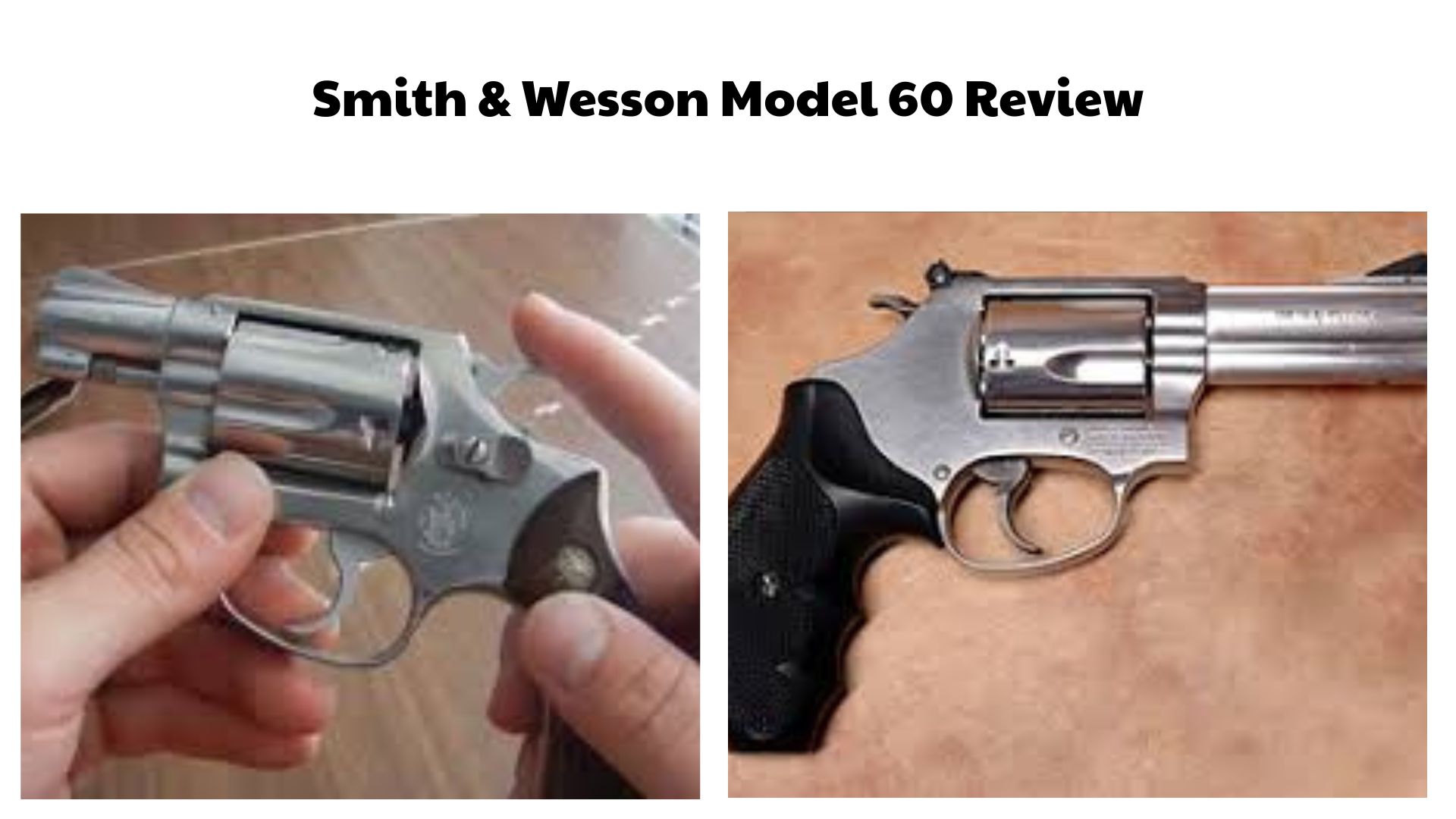

The Smith & Wesson Model 60 holds a unique place in firearm history as the first commercially produced stainless steel revolver, introduced in 1965. At a time when most handguns were still made from blued carbon steel, the Model 60 represented a major shift toward durability, corrosion resistance, and practical everyday carry use.
The Model 60 evolved directly from the legendary Smith & Wesson Model 36 “Chief’s Special,” one of the most iconic small-frame revolvers ever produced. By upgrading the design to stainless steel, Smith & Wesson created a more resilient version of the classic J-frame platform without sacrificing its compact defensive role.
Even in today’s semi-automatic dominated handgun market, snub-nose revolvers like the Model 60 continue to remain relevant. Many shooters still value them for their mechanical simplicity, predictable operation, and ability to function reliably in environments where semi-automatic pistols may be more sensitive to maintenance or ammunition issues.
The Model 60 has maintained steady popularity among concealed carry users, backup gun carriers, and those who prefer a straightforward defensive firearm without complex controls. Its appeal lies in its balance of reliability, compact size, and ease of use under stress.
Over time, it has earned a reputation as a “no-nonsense defensive revolver,” emphasizing function over features and simplicity over capacity. This enduring identity is one of the key reasons it continues to be carried and respected decades after its introduction.
Smith & Wesson Model 60 Overview & Key Specifications
Frame
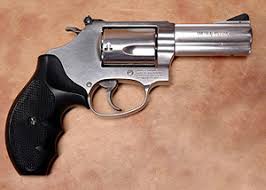
The Model 60 is built on Smith & Wesson’s J-frame platform, a compact revolver frame designed specifically for concealed carry and backup defensive use.
Caliber Options
Depending on the specific variant, the Model 60 is chambered in .38 Special or .357 Magnum. The .38 Special versions are known for manageable recoil, while the .357 Magnum variants offer increased stopping power at the cost of sharper recoil.
Capacity
The revolver typically features a 5-round cylinder, which is standard for J-frame defensive revolvers and contributes to its compact size.
Barrel Length Options
Available barrel lengths include 1.875-inch snub-nose models for maximum concealability, 2.125-inch variants, and select 3-inch versions that offer improved sight radius and shootability.
Action Type
The Model 60 operates in both double-action and single-action modes, allowing the shooter to fire either through a full trigger pull or a manually cocked hammer for lighter trigger weight.
Construction
A defining feature of the Model 60 is its stainless steel construction, including the frame, cylinder, and barrel. This material choice significantly enhances corrosion resistance and durability.
Sights
Depending on the variant, the Model 60 may feature fixed combat-style sights or adjustable sights on longer-barrel models designed for improved precision.
Weight Range
The revolver typically weighs between approximately 19 and 24 ounces depending on barrel length and configuration, balancing concealability with recoil control.
Design Philosophy – The Original Stainless Concealed Carry Revolver
The Smith & Wesson Model 60 was designed with a clear purpose: to create a compact, durable, and reliable revolver suitable for concealed carry and law enforcement backup roles. Its introduction marked a turning point in revolver design due to its stainless steel construction.
As the first production stainless steel revolver, it set a new standard for durability and resistance to rust and environmental wear. This made it especially attractive for users operating in humid, coastal, or high-moisture environments where traditional blued steel firearms required more maintenance.
The Model 60 was widely adopted for both civilian concealed carry and law enforcement backup roles due to its simplicity and reliability. It was engineered to function under stress with minimal maintenance requirements and a straightforward manual of arms.
Its design philosophy prioritizes mechanical strength and ease of use over complexity, making it ideal for defensive situations where reliability is more important than advanced features.
In many ways, the Model 60 represents the evolution of the earlier “Chief’s Special” concept into a more modern and durable platform, preserving the compact defensive revolver idea while improving its longevity and environmental resistance.
Build Quality & Materials
Stainless Steel Construction
One of the defining characteristics of the Model 60 is its full stainless steel construction. This provides a significant advantage in corrosion resistance compared to traditional carbon steel revolvers, especially in environments with high humidity or exposure to sweat and moisture.
The stainless steel build also enhances long-term durability, allowing the revolver to withstand extended use with minimal degradation. However, this durability comes with a trade-off in increased weight compared to lightweight alloy-framed revolvers.
J-Frame Compact Design
The Model 60 uses Smith & Wesson’s J-frame design, which is specifically engineered for compact concealed carry applications. This small frame size allows the revolver to be easily carried in pockets, ankle holsters, or inside-the-waistband setups.
Despite its compact dimensions, the J-frame maintains strong mechanical integrity and is capable of handling defensive-level ammunition pressures, including .357 Magnum in compatible models.
However, the compact design also introduces a trade-off between weight, recoil management, and shootability. While the stainless steel construction improves durability, it can make extended shooting sessions more fatiguing compared to larger revolvers or semi-automatic pistols.
Ergonomics & Grip Feel
Compact Carry Ergonomics
The Smith & Wesson Model 60 is built on the compact J-frame platform, which makes it highly suitable for concealed carry across a wide range of carry methods. Its small frame allows it to fit comfortably in pocket holsters, inside-the-waistband setups, and even ankle carry configurations.
While the factory grip is functional, many users choose aftermarket grips to improve control and comfort. Upgraded grips can significantly enhance handling, especially during extended practice sessions or when firing more powerful .357 Magnum loads.
Hand Fit & Comfort
Hand fit and shooting comfort with the Model 60 can vary depending on barrel length and grip configuration. Snub-nose models with 1.875-inch barrels prioritize maximum concealability, often at the expense of shooting comfort and recoil control.
In contrast, 3-inch barrel variants provide a more balanced shooting platform. The additional length improves sight radius and overall stability, making the revolver easier to control during repeated firing.
Ultimately, the trade-off between concealability and comfort is a defining characteristic of the Model 60’s design philosophy.
Recoil Management
The stainless steel construction of the Model 60 plays an important role in recoil management by adding weight to the platform. This additional mass helps reduce felt recoil, particularly when firing .38 Special ammunition.
However, when chambered in .357 Magnum, recoil becomes significantly more pronounced. The lightweight, compact frame amplifies the “snappy” recoil impulse, which can be challenging for inexperienced shooters.
For most users, .38 Special loads are considered very manageable and are commonly preferred for training and concealed carry applications due to their balance of comfort and effectiveness.
Trigger Performance & Shooting Characteristics
Double-Action Trigger Pull
The Model 60 features a traditional double-action trigger system that requires a long, continuous pull to cock and release the hammer. This design enhances safety under stress by reducing the likelihood of accidental discharge.
The trigger pull is generally consistent, although its exact feel can vary slightly depending on production generation, wear, and maintenance condition. Most users describe it as firm but predictable.
Single-Action Capability
In single-action mode, the hammer can be manually cocked, resulting in a significantly lighter and shorter trigger pull. This mode improves precision and is often used for deliberate, aimed shots.
While single-action shooting is less common in defensive scenarios, it can enhance accuracy during controlled range use or when maximum precision is required.
Real-World Trigger Feel
In practical use, the Model 60 trigger is often described as “serviceable but heavy” compared to modern striker-fired pistols. This reflects its traditional revolver design rather than a modern tuned competition trigger.
Over time, the trigger pull may smooth out slightly with use and proper maintenance, but it retains its characteristic long double-action stroke, which is an intentional part of its safety-focused design.
Reliability & Real-World Performance
Mechanical Simplicity Advantage
One of the strongest advantages of the Model 60 is its mechanical simplicity. With fewer moving parts than a semi-automatic pistol, there are fewer potential points of failure.
This simplicity contributes to an extremely low malfunction probability, making the revolver highly dependable in defensive situations where reliability is critical.
Field Reliability
The Model 60 has earned a strong reputation among both law enforcement personnel and civilian carriers for consistent performance in real-world conditions.
It is known to function reliably with both .38 Special and .357 Magnum ammunition, provided the firearm is properly maintained. Its ability to operate across different environments has contributed to its long-standing trustworthiness.
Maintenance Benefits
Maintenance of the Model 60 is straightforward and requires minimal effort compared to many semi-automatic pistols. Routine cleaning and basic lubrication are typically sufficient to keep the revolver in reliable working condition.
Additionally, the stainless steel construction provides excellent resistance to corrosion, making it particularly well-suited for humid environments or long-term carry where exposure to sweat and moisture is common.
Accuracy & Shooting Performance
Practical Defensive Accuracy
The Smith & Wesson Model 60 is designed primarily for close-range defensive use, where practical accuracy matters more than precision target shooting. In real-world conditions, it performs effectively within typical self-defense distances of 3 to 15 yards.
However, its short barrel and compact sight radius naturally limit long-range precision. This is a common trade-off for all snub-nose revolvers, where concealability is prioritized over extended accuracy potential.
Barrel Length Impact
Barrel length plays a significant role in the Model 60’s shooting performance. The 2-inch snub-nose variants are optimized for maximum concealment, making them ideal for pocket or deep concealment carry. However, this compact size reduces sight radius and can make precision shooting more challenging.
In contrast, 3-inch barrel models provide a noticeable improvement in both sight radius and ballistic performance. The added length enhances stability, improves bullet velocity slightly, and makes the revolver easier to control during rapid or repeated shots.
Real-World Shooting Experience
In practical defensive scenarios, the Model 60 is best suited for close-range engagements where quick reaction and instinctive shooting are more important than precise sight alignment.
Many shooters rely on point shooting or instinctive aiming techniques with this platform, especially in high-stress situations where speed and simplicity take priority over fine accuracy.
Concealed Carry Performance (CCW Use)
Deep Concealment Capability
One of the strongest advantages of the Model 60 is its suitability for deep concealment. Its compact J-frame design allows it to be carried discreetly in pockets, ankle holsters, or small inside-the-waistband setups.
Because of this, it is widely regarded as a reliable backup gun or primary concealed carry option for users who prioritize minimal visibility and simplicity.
Weight & Comfort Trade-offs
Compared to modern polymer micro pistols, the Model 60 is heavier due to its stainless steel construction. This added weight can make all-day carry slightly more noticeable.
However, this same weight provides a benefit by reducing felt recoil, especially when firing .38 Special ammunition. The result is a more controlled shooting experience despite the compact size.
Everyday Carry Practicality
In everyday concealed carry use, the Model 60 offers excellent reliability and simplicity but comes with trade-offs in speed and capacity. Reloading is slower compared to semi-automatic pistols, which typically offer higher magazine capacities and faster reload systems.
As a result, the Model 60 is often favored by users who prioritize a minimalistic carry philosophy focused on reliability, concealability, and straightforward operation over firepower and speed.
Duty & Backup Gun Role
Historically, the Smith & Wesson Model 60 has been used by law enforcement officers as a backup revolver due to its compact size and dependable operation. It was commonly carried as a secondary firearm for last-resort defensive situations.
Its simple manual operation makes it particularly valuable in high-stress environments where fine motor skills may be compromised. With no complex controls or manual safeties, the revolver can be operated quickly and intuitively.
Even today, it remains a respected option in security roles and among civilian carriers who want a dependable backup firearm that is easy to operate under pressure.
Features Breakdown
Cylinder & Capacity
The Model 60 features a standard 5-shot cylinder, consistent with the Smith & Wesson J-frame design. This compact capacity supports its small size while maintaining adequate defensive capability.
It uses a swing-out cylinder design, allowing for faster reloading compared to older fixed-cylinder revolvers, though still slower than magazine-fed semi-automatic pistols.
Sights & Targeting
Sight configurations vary depending on model. Snub-nose versions typically use fixed sights designed for durability and simplicity, while longer-barrel variants may include adjustable sights for improved accuracy.
These sight systems are built for practical defensive use rather than precision competition shooting, reinforcing the revolver’s intended role as a close-range defensive tool.
Frame Variants
Over the years, the Model 60 has been produced in several variants, including the Model 60-15 and other updated configurations that refine performance and ergonomics.
Special editions such as Performance Center models and LadySmith variants offer enhancements in trigger tuning, finish quality, or ergonomics, catering to different user preferences while maintaining the core J-frame design.
Smith & Wesson Model 60 Pros and Cons
Pros
The Smith & Wesson Model 60 is widely respected for its long-standing reputation as a dependable defensive revolver. One of its biggest strengths is its extremely simple mechanical operation, which reduces the likelihood of user error under stress and contributes to its strong reliability record.
Its stainless steel construction provides excellent corrosion resistance, making it especially suitable for humid environments or long-term concealed carry where exposure to sweat and moisture is common. This durability has helped the Model 60 maintain relevance for decades.
In terms of size, the compact J-frame design makes it highly concealable, allowing it to be carried discreetly in a variety of carry positions, including pocket and ankle holsters.
The Model 60 also benefits from a strong defensive track record, having been trusted by law enforcement and civilian users for backup and concealed carry roles for many years.
Additionally, it offers flexibility in caliber choice, with both .38 Special and .357 Magnum options available depending on the specific model and intended use.
Cons
Despite its strengths, the Model 60 does have limitations. The most significant is its low capacity, with only 5 rounds available in the cylinder. This is considerably less than modern semi-automatic pistols.
Reloading is also slower compared to magazine-fed systems, which can be a disadvantage in extended defensive encounters or training scenarios requiring rapid follow-up engagement.
The double-action trigger pull is relatively heavy compared to modern striker-fired pistols, which may impact speed and precision for less experienced shooters.
Finally, snub-nose versions of the Model 60 have inherent accuracy limitations due to their short barrel and reduced sight radius, making them best suited for close-range defensive shooting rather than precision work.
Smith & Wesson Model 60 vs Modern Concealed Carry Pistols
When comparing the Smith & Wesson Model 60 to modern concealed carry pistols, the discussion often centers on the trade-offs between simplicity and capacity.
Revolvers like the Model 60 offer unmatched mechanical simplicity, with no magazines, slide cycling, or complex feeding systems. In contrast, semi-automatic pistols provide significantly higher ammunition capacity and faster reload capabilities.
In terms of reliability under stress, both platforms are capable, but revolvers are often valued for their ability to function regardless of ammunition quality or cycling issues, while modern semi-autos depend more on consistent ammunition and maintenance.
Concealability is another key trade-off. The Model 60 offers a compact footprint, but semi-automatics often provide better capacity-to-size ratios, allowing more rounds in a similar or smaller overall package.
Training differences are also important. Revolvers require mastery of a long double-action trigger and manual reload techniques, while semi-autos emphasize magazine changes and slide manipulation.
Ultimately, the choice is highly role-dependent, with revolvers favoring simplicity and semi-autos favoring efficiency and firepower.
Who Should Buy the Smith & Wesson Model 60?
The Model 60 is best suited for concealed carry users who prioritize simplicity and reliability over capacity and speed. Its straightforward operation makes it appealing to those who prefer a minimalistic defensive tool.
Revolver enthusiasts who appreciate classic firearm design and mechanical durability will also find strong value in the Model 60.
It is a popular choice for backup gun carriers, particularly those in law enforcement or security roles where a secondary firearm is needed for emergency situations.
Users operating in humid or harsh environments may prefer the stainless steel construction, which provides excellent resistance to corrosion and environmental wear.
Finally, it appeals to those who value mechanical reliability over magazine capacity and modern tactical features.
Who Should Avoid It?
The Model 60 is not ideal for high-capacity defensive shooters who prioritize maximum ammunition availability in a single platform.
Users who require fast reload capability and high-speed tactical engagement should consider modern semi-automatic pistols instead.
Competitive shooters will also find the revolver platform limiting due to slower reload times and lower capacity.
Those seeking modern optics-ready platforms with modular accessory systems will find the Model 60 lacking in these areas.
Additionally, tactical users who prioritize rapid fire capability and high-volume engagement may find the revolver platform too restrictive.
Final Verdict – Is the Smith & Wesson Model 60 Worth It in 2026?
In 2026, the Smith & Wesson Model 60 remains one of the most trusted compact revolvers ever produced. Its long-standing reputation for reliability and durability continues to make it a respected choice in the concealed carry market.
While it is outclassed by modern pistols in terms of capacity and reload speed, it remains unmatched in mechanical simplicity and ease of operation.
The Model 60 is best understood as a firearm built around a minimalistic defensive philosophy, where dependability and straightforward function take priority over advanced features.
Its balance of durability and concealability ensures it still holds practical value today, especially for users who prefer traditional revolver platforms.
Ultimately, the Model 60 is a timeless defensive revolver that continues to remain relevant, not because it competes with modern designs, but because it fulfills a very specific and enduring role.
Smith & Wesson Model 60 – 50+ FAQ (Detailed Answers)
1. What is the Smith & Wesson Model 60?
The Smith & Wesson Model 60 is a compact J-frame revolver designed primarily for concealed carry and personal defense. It is known for its stainless steel construction, reliability, and long-standing reputation as a defensive handgun.
2. When was the Model 60 introduced?
The Model 60 was introduced in 1965 and is historically significant as the first production stainless steel revolver ever made. This innovation marked a major shift in revolver durability and maintenance.
3. Why is the Model 60 important in firearm history?
It was the first stainless steel revolver, setting a new standard for corrosion resistance and durability. It also helped define the modern compact concealed carry revolver category.
4. What frame does the Model 60 use?
It uses the Smith & Wesson J-frame, which is a small-frame revolver platform designed specifically for concealed carry and backup defensive use.
5. What calibers is the Model 60 available in?
Most Model 60 variants are chambered in .38 Special, while some models are rated for .357 Magnum, offering increased power at the cost of greater recoil.
6. How many rounds does the Model 60 hold?
The Model 60 typically holds 5 rounds in its cylinder, which is standard for J-frame revolvers.
7. Is 5-round capacity enough for self-defense?
It depends on the user’s philosophy. Many carriers value the Model 60 for its reliability and simplicity, but modern semi-autos offer significantly higher capacity.
8. Is the Model 60 good for concealed carry?
Yes. Its compact size makes it highly suitable for concealed carry, especially in pocket or inside-the-waistband holsters.
9. Is it good for beginners?
It can be used by beginners, but the heavy double-action trigger requires practice to master effectively.
10. Is the Model 60 easy to use under stress?
Yes. Its simple revolver operation and lack of external controls make it intuitive in high-stress situations.
11. How reliable is the Model 60?
It is considered extremely reliable due to its mechanical simplicity and low likelihood of feeding or cycling malfunctions.
12. Does the Model 60 jam?
Revolvers like the Model 60 rarely experience jams in the same way semi-automatic pistols do, making them highly dependable.
13. Is stainless steel important?
Yes. Stainless steel greatly improves corrosion resistance, making the revolver more durable in humid or sweaty carry conditions.
14. How heavy is the Model 60?
It typically weighs between 19 and 24 ounces depending on barrel length and configuration.
15. Is it comfortable to carry all day?
Comfort depends on holster choice and clothing. It is heavier than polymer pistols but still manageable for daily carry.
16. What is the trigger like?
The Model 60 has a long double-action trigger pull that is heavier than modern striker-fired pistols but consistent and predictable.
17. Does it have a single-action mode?
Yes. The hammer can be manually cocked for a lighter, more precise single-action trigger pull.
18. Is the trigger good for accuracy?
It requires training, but once mastered, it can deliver solid defensive accuracy at close range.
19. What is the effective range?
The Model 60 is most effective within 3 to 15 yards, which is typical for self-defense situations.
20. Is it accurate?
It is accurate enough for defensive use, but limited by its short barrel and compact sight radius.
21. What barrel lengths are available?
Common barrel lengths include 1.875 inches, 2.125 inches, and 3 inches depending on model variant.
22. Which barrel length is best?
The 2–3 inch models offer better balance and accuracy, while snub-nose versions prioritize concealability.
23. Is it good for home defense?
It can be used for home defense, but higher-capacity semi-automatic pistols are generally preferred today.
24. Is it good as a backup gun?
Yes. It has historically been widely used as a reliable backup firearm for law enforcement and civilians.
25. Can it handle .357 Magnum?
Certain Model 60 variants are rated for .357 Magnum, but recoil is significantly stronger than .38 Special.
26. Is .38 Special enough for defense?
Many users consider .38 Special adequate for self-defense when paired with proper ammunition and shot placement.
27. How does recoil feel?
.38 Special recoil is mild, while .357 Magnum is noticeably sharper due to the compact frame.
28. Is it good for small hands?
Yes, the J-frame design fits most hand sizes, though grip upgrades can improve comfort.
29. Can grips be changed?
Yes. Aftermarket grips are widely available and can significantly improve ergonomics and control.
30. Is it good for women or smaller shooters?
Yes, especially in .38 Special configuration, though recoil sensitivity should be considered.
31. How fast can it be reloaded?
Reloading is slower than semi-autos and typically requires speed loaders or practice.
32. Does it use magazines?
No. It uses a 5-round cylinder instead of magazines.
33. Is reloading difficult?
It is more complex than magazine swaps and requires practice for speed and efficiency.
34. Is it good for competition shooting?
No. It is not designed for competition due to limited capacity and slow reloads.
35. Is it outdated?
While older in design, it is not obsolete and still serves a role in concealed carry and backup use.
36. Is it better than a Glock?
It depends on use case. Glock pistols offer higher capacity and faster reloads, while the Model 60 offers simplicity and reliability.
37. Is it easy to maintain?
Yes. It requires minimal maintenance compared to semi-automatic pistols.
38. How often should it be cleaned?
Regular cleaning after shooting sessions is recommended, but it is tolerant of neglect.
39. Does it rust?
Stainless steel greatly reduces rust risk, though proper care is still important.
40. Is it legal everywhere?
Legality depends on local laws, but revolvers are generally widely permitted compared to restricted firearms.
41. Is it good for concealed carry permits?
Yes. It is a common choice for concealed carry permit holders.
42. Is it expensive?
Pricing varies, but it is generally mid-range compared to modern pistols.
43. Is it worth buying in 2026?
Yes, for users who value simplicity, reliability, and concealed carry practicality over capacity.
44. What are its biggest limitations?
Low capacity, slower reloads, and heavier trigger pull compared to modern semi-autos.
45. Who uses the Model 60?
Civilians, concealed carriers, collectors, and historically law enforcement officers as backup guns.
46. Is it good for survival situations?
Yes, due to reliability, but limited capacity may be a drawback.
47. Can it be carried in a pocket?
Yes, especially snub-nose models in proper pocket holsters.
48. Is it better than semi-auto pistols?
Not universally. It excels in simplicity but not in capacity or speed.
49. What is its main advantage?
Its main advantage is mechanical simplicity and dependable operation.
50. What is the final takeaway?
The Model 60 remains a timeless concealed carry revolver that prioritizes reliability and simplicity over modern tactical features.
Read more: