
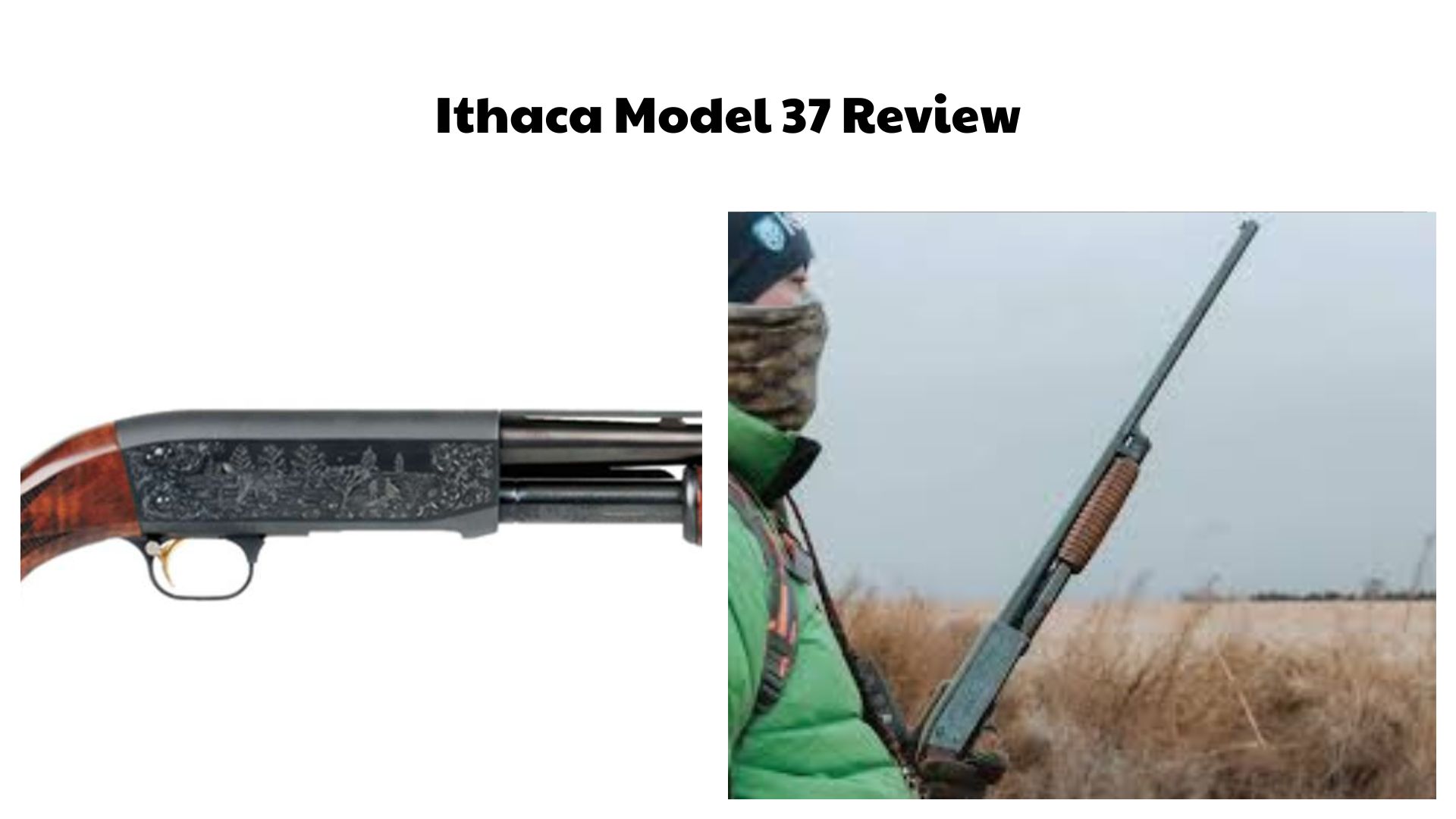

The Ithaca Model 37 is a classic American pump-action shotgun known for its bottom-eject design, smooth handling, strong build quality, and long service life. First introduced in 1937, it has served hunters, clay shooters, law enforcement, and military users for generations. Modern Ithaca Model 37 Featherlight shotguns continue the tradition with bottom ejection, walnut furniture, 3-inch chambering, vent-rib barrels, choke tubes, and practical field features. This review covers specifications, design, ergonomics, recoil, reliability, best uses, comparisons, maintenance, accessories, buyer fit, and final verdict.
Overview of the Ithaca Model 37
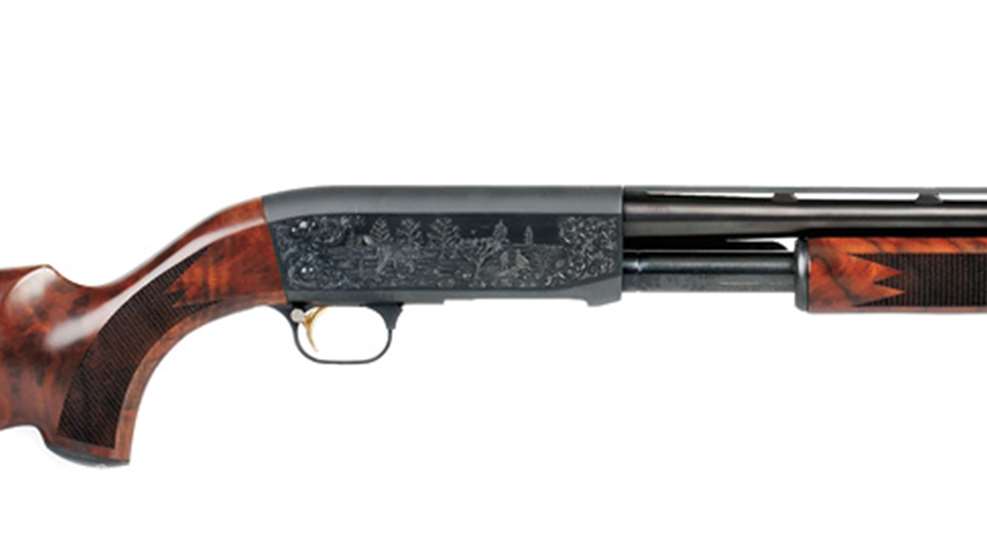
The Ithaca Model 37 is one of the most recognizable pump-action shotguns in American firearms history. It is not famous because it looks radical. It is famous because it works, carries well, and has a design that still feels special after more than eight decades.
The Model 37 is based on the earlier Remington Model 17 design, which traced back to John Browning and John Pedersen patents. Ithaca refined the concept and released its own shotgun in 1937. The result was a bottom-loading, bottom-ejecting pump shotgun with closed receiver sides and a clean, elegant profile.
The bottom-eject system is the feature everyone remembers. Instead of throwing spent hulls out the right side, the Model 37 ejects them downward through the same port used for loading. That makes it friendly to both right- and left-handed shooters. It also keeps the receiver sides closed, which helps limit debris entry in the field.
The Model 37 has been made in many versions. There are field guns, Featherlight models, Deerslayer slug guns, defense models, trench gun reproductions, turkey models, 28-gauge upland guns, and many older collectible variations. This review focuses on the Model 37 as a platform while using the current Featherlight as the modern reference point.
Key Specifications
Exact Ithaca Model 37 specifications vary by year, gauge, barrel, and model. Older guns may differ from current production. Current Ithaca Featherlight specifications provide the best baseline for new buyers.
| Model | Ithaca Model 37 Featherlight |
|---|---|
| Action | Pump action |
| Gauge | Current Featherlight listing: 12 gauge |
| Chamber | 3 inches |
| Capacity | 5-shot capacity, commonly listed as 4+1 |
| Barrel | 28-inch vent-rib barrel on the current Featherlight listing |
| Choke System | Three choke tubes included on current Featherlight listing |
| Sight | TruGlo front sight on current Featherlight listing |
| Stock | AA walnut stock on current Featherlight listing |
| Recoil Pad | Pachmayr pad on current Featherlight listing |
| Trigger | Gold-plated trigger, listed 4-6 lb trigger pull on current Featherlight listing |
| Ejection | Bottom ejection |
| Current Listed Price | $2,799 on Ithaca’s current Featherlight page at time of research |
Older Model 37s can be found in 12, 16, 20, and 28 gauge depending on production era and variant. Some older hunting guns have 2¾-inch chambers, while newer guns may have 3-inch chambers. Used buyers should check barrel markings and have older guns inspected before using modern ammunition.
Design and Build Quality
The Ithaca Model 37 has a design that feels simple at first and clever after closer inspection. The receiver has no side ejection port. That gives the shotgun smooth slab sides and a clean look. It also makes the receiver feel solid and protected.
The action feeds and ejects from the bottom. The loading port and ejection port are the same opening. This is unusual compared with most pump shotguns, but it is one of the Model 37’s best features. Empty hulls drop at the shooter’s feet rather than crossing in front of the face.
Current Ithaca production emphasizes traditional craftsmanship. The modern Featherlight listing includes AA-grade walnut, a vent-rib barrel, choke tubes, a Pachmayr recoil pad, and a gold-plated trigger. It is priced like a premium classic shotgun, not a budget pump.
Older Model 37s have their own appeal. Many vintage examples show honest field wear, engraved receivers, deeply grooved “corn cob” forends, and the kind of smooth action that comes from decades of use. A well-kept older Model 37 can feel almost polished by time.
The main build-quality caution is condition. Used Model 37s vary widely. Some are excellent. Some have cracked stocks, worn springs, altered barrels, rough chambers, or outdated chamber lengths. A buyer should inspect any used shotgun carefully before purchase.
Ergonomics and Handling
Handling is one of the Model 37’s strongest traits. The shotgun has a trim receiver and a natural balance. Many hunters describe it as lively in the hands. It does not feel bulky or overbuilt.
The Featherlight name is not just marketing. The Model 37 gained a reputation for being easy to carry in the field. Older field guns are especially popular with upland hunters and waterfowlers who appreciate a shotgun that carries well and points naturally.
The bottom-eject design helps left-handed shooters. A right-side ejection shotgun can throw hulls across a left-handed shooter’s face. The Model 37 avoids that problem. It is one of the classic pump shotguns that genuinely works well from either shoulder.
The controls are traditional. The safety is a crossbolt style, and the action release is near the trigger guard. The layout is not as modern as a new tactical shotgun, but it is simple once learned. For hunting and field use, the controls are practical and uncluttered.
The Model 37’s pump stroke is often praised. Older examples with good maintenance can feel exceptionally smooth. The single-action-bar design is sometimes criticized by modern reviewers, but many Model 37s run slickly and naturally when properly maintained.
Capacity and Loading System
The Model 37 uses a tubular magazine under the barrel. Current Featherlight capacity is listed as 5 shots, commonly understood as 4+1. Older defense and riot-style models may have different magazine capacities depending on barrel length and magazine tube configuration.
Loading is done through the bottom port. The shooter presses shells into the magazine tube through the same area where spent hulls eject. This is different from side-ejecting pumps, but it becomes intuitive with practice.
One tradeoff is port loading. Some modern reviewers note that the Model 37 cannot be port-loaded in the same way as many side-ejecting shotguns. That matters more for defensive or competition-style manipulation than for normal hunting use.
For hunting, capacity is usually regulated. Migratory bird hunting in the United States typically requires a three-shell limit. That means a plug is needed when required by law. The owner is responsible for following local, state, and federal regulations.
The tubular magazine is simple, durable, and traditional. It does not require detachable magazines, and it keeps the shotgun slim. That is part of why the Model 37 feels so clean in the hands.
Barrel, Sights, and Controls
The current Ithaca Model 37 Featherlight listing uses a 28-inch vent-rib barrel with a TruGlo front sight. That setup is well suited for bird hunting and general field use. The vent rib gives a familiar sighting plane, and the bright front sight helps in changing light.
Older Model 37 barrels vary widely. Some have plain barrels, some have solid ribs, some have vent ribs, and Deerslayer models may use rifle sights. Trench and riot models used shorter barrels. Collectors and shooters should identify the exact barrel type before assuming intended use.
Chokes also vary by production era. Current Featherlight listings include three choke tubes. Older guns may have fixed chokes. Fixed-choke guns can be excellent, but the choke should match the intended use and ammunition.
The controls are simple. There is a trigger, crossbolt safety, pump, and action release. Older guns made before 1975 may lack a disconnector and are historically known for “slam-fire” capability. That feature is part of the Model 37’s history, but it is not something to rely on or imitate. Safe, controlled operation is always the priority.
Recoil and Shooting Experience
The Model 37 is a pump-action shotgun, so recoil depends heavily on gauge, gun weight, load, fit, and recoil pad. A light 12-gauge field gun with heavy loads will produce noticeable recoil. A 20-gauge or 28-gauge version will usually be softer.
The current Featherlight listing includes a Pachmayr pad, which helps with comfort. Still, no recoil pad changes the basic physics of a lightweight pump gun. Heavy waterfowl, turkey, or slug loads will be felt.
The shooting experience is classic. The Model 37 points naturally, cycles with a distinctive feel, and ejects hulls downward. It feels different from a Remington 870 or Mossberg 500, but not in a gimmicky way. The design has personality.
For upland hunting and casual clays, the Model 37 can be very enjoyable. For long sessions with heavy 12-gauge loads, a gas-operated semi-auto will be softer. That is not a flaw. It is the normal difference between pump and gas-operated shotguns.
Accuracy, Patterning, and Reliability
Shotgun accuracy is mostly about fit, pattern, choke, ammunition, and shooter technique. The Model 37 provides a solid platform, but every hunting shotgun should be patterned with the loads it will use.
For birdshot, pattern density and evenness matter. A field Model 37 with the right choke can serve well for upland birds, doves, waterfowl where legal ammunition is used, and casual clay shooting.
For slugs, the Deerslayer models are the key reference point. Reviewers often praise Deerslayer variants for practical slug accuracy, especially when equipped with rifle sights or optic-ready setups. A smoothbore field barrel can use appropriate slugs, but dedicated slug guns are better for that role.
Reliability is one of the reasons the Model 37 has survived so long. It has served hunters, police departments, and military users. The bottom-eject design also helps protect the receiver from some debris. However, no old shotgun should be assumed reliable without inspection and testing.
Pros and Cons
Pros
- Classic American pump-action design with a long service history.
- Bottom ejection works well for right- and left-handed shooters.
- Closed receiver sides help limit debris entry.
- Smooth, lively handling in many field configurations.
- Strong reputation for reliability and durability.
- Modern Featherlight models offer premium wood and field features.
- Used examples can offer excellent value if condition is good.
- Available historically in many gauges and hunting configurations.
- Deerslayer variants are respected slug guns.
- Distinctive character compared with more common pump shotguns.
Cons
- Current new-production models are expensive compared with mass-market pumps.
- Used guns require careful inspection.
- Older guns may have shorter chambers or fixed chokes.
- Parts and accessory support are not as broad as Remington 870 or Mossberg 500 support.
- Bottom loading system feels different to some shooters.
- Not ideal for modern competition-style loading techniques.
- Light 12-gauge versions can recoil sharply with heavy loads.
- Pre-1975 fire-control differences require extra buyer awareness.
Best Use Cases
Upland Hunting
The Model 37 is a natural upland shotgun. Its trim receiver, lively handling, and classic field balance work well for pheasant, quail, grouse, and dove. A 20-gauge or 28-gauge version can be especially appealing for long walks.
Waterfowl Hunting
The Model 37 has a long history in duck blinds and marshes. Bottom ejection keeps hulls from flying sideways, and the closed receiver sides can help in rough weather. Hunters should confirm chamber length, choke compatibility, and non-toxic shot suitability before using an older gun.
Deer Hunting
The Deerslayer models are the standout choice for deer hunters. Rifle sights or optic-friendly setups make more sense for slug use than a standard bird barrel. In shotgun-only deer areas, a proper Model 37 slug gun can still be a practical tool.
Turkey Hunting
Turkey hunting requires careful choke and load selection. Some Model 37 variants are better suited than others. A modern or properly configured older gun can work well, but the shooter should pattern it before hunting.
Casual Clay Shooting
The Model 37 can be enjoyable for casual trap, skeet, and hand-thrown clays. It is not a modern competition autoloader or over-under, but it is satisfying to shoot. A field gun that fits well can break plenty of targets.
Collecting
The Model 37 has serious collector appeal. Early guns, military trench and riot guns, police models, Deerslayers, high-condition vintage field guns, and unusual gauge variants can all interest collectors. Condition and originality matter greatly.
Comparison With Similar Shotguns
Ithaca Model 37 vs Remington 870
The Remington 870 is more common and has broader aftermarket support. It is easier to find parts, barrels, stocks, and accessories. The Ithaca Model 37 feels more distinctive, ejects downward, and has a classic closed-receiver design. Choose the 870 for practicality and parts availability. Choose the Model 37 for character, bottom ejection, and classic handling.
Ithaca Model 37 vs Mossberg 500
The Mossberg 500 is affordable, widely available, and known for its tang safety. It is a practical working shotgun. The Model 37 is usually more refined in feel, especially in older polished examples and current premium production. The Mossberg is easier to customize. The Ithaca is more elegant.
Ithaca Model 37 vs Winchester Model 12
The Winchester Model 12 is another classic pump shotgun with a legendary reputation. The Model 12 ejects to the side, while the Ithaca ejects downward. Both have strong collector appeal. The Model 37 has the advantage of continued production in modern form.
Ithaca Model 37 vs Browning BPS
The Browning BPS is also a bottom-eject pump shotgun. It is heavier in many configurations and has a tang safety that many shooters like. The Ithaca is more historically significant and often feels trimmer. The BPS may be easier to find new in some markets, while the Ithaca offers more classic appeal.
Ithaca Model 37 vs Winchester SXP
The Winchester SXP is a modern budget-friendly pump with fast cycling and broad availability. The Model 37 is more traditional, more expensive new, and more collectible. The SXP is a practical tool. The Ithaca is a heritage shotgun with real field utility.
Ithaca Model 37 vs Semi-Auto Shotguns
A gas-operated semi-auto will usually recoil less and cycle faster. The Model 37 is simpler, slimmer, and mechanically classic. Hunters who value soft recoil may prefer a semi-auto. Hunters who like pump-action reliability and tradition may prefer the Ithaca.
Maintenance and Cleaning
Maintenance should follow the owner’s manual. This is especially important because older Model 37s may differ from current guns. Do not assume every Model 37 comes apart exactly the same way.
Routine cleaning should include the bore, chamber, magazine tube area, action bars, bolt area, and exterior metal. After hunting in rain, snow, marsh mud, or dust, the shotgun should be wiped down and dried carefully.
Wood stocks deserve attention. Many older Model 37s have walnut stocks that may crack near the receiver or show oil soaking around the head of the stock. Used buyers should inspect this area closely.
Choke tubes on modern guns should be removed, cleaned, and lightly protected according to manufacturer guidance. Fixed-choke barrels should be identified before choosing ammunition. Steel shot and older fixed full chokes require special caution.
Any safety-related repair, internal work, chamber question, or barrel modification should go to Ithaca or a qualified gunsmith. This is especially true for vintage firearms.
Accessories and Upgrade Options
The best Model 37 accessories are simple. A quality sling, proper choke tubes for modern guns, a recoil pad, cleaning supplies, and a protective case are the most useful upgrades.
For Deerslayer or slug models, sights and optics may matter. Some versions already include rifle sights. Others may support optic mounting. Any optic setup should be installed safely and confirmed at the range.
Hunters using older guns should think carefully before modifying them. Cutting barrels, altering stocks, refinishing metal, or changing original parts can reduce collector value. A rough working gun may be a candidate for practical upgrades. A clean vintage gun often deserves preservation.
Modern tactical-style accessories are limited compared with the Remington 870 or Mossberg 500. That is not necessarily bad. The Model 37 is at its best when kept clean, functional, and purpose-built.
Who Should Buy the Ithaca Model 37?
The Model 37 is ideal for shooters who appreciate classic pump shotguns and want something more distinctive than the usual 870 or 500. It is especially attractive to left-handed shooters because of the bottom ejection.
Hunters who value light handling, tradition, and field reliability will also appreciate it. A good Model 37 feels like a shotgun built for walking fields, sitting in blinds, and being passed down.
Collectors should also pay attention. The Model 37 has enough history, variation, and longevity to make collecting interesting. Military, police, Deerslayer, early-production, and high-condition examples can all be desirable.
Who Should Avoid the Ithaca Model 37?
Budget buyers may want to avoid new-production Model 37s. A current Featherlight costs far more than many practical pump shotguns. A Mossberg 500, Maverick 88, Winchester SXP, or used Remington 870 may be a better value for basic needs.
Shooters who want maximum accessory support may also prefer another platform. The Model 37 does not have the same aftermarket ecosystem as the 870 or 500.
Buyers who dislike inspecting used firearms should be cautious. Many Model 37s on the market are old. Some are excellent, but others need repair. A gunsmith inspection is smart if condition is uncertain.
Final Verdict
The Ithaca Model 37 remains one of the great American pump-action shotguns. Its bottom-eject design is not just a novelty. It makes the gun ambidextrous, weather-friendly, and mechanically distinctive. Its handling is lively, its history is deep, and its reputation for reliability is well earned.
New-production Ithacas are expensive, but they offer premium materials and old-school craftsmanship. Used Model 37s can be excellent values, though condition matters more than nostalgia. A clean older gun can be a wonderful field companion. A neglected one can become a project.
The Model 37 is not the most practical choice for every buyer. It is not the cheapest pump, not the easiest to accessorize, and not the softest-shooting option. But it has something many modern shotguns lack: identity. For hunters, collectors, and left-handed shooters who appreciate classic design, the Ithaca Model 37 is still easy to respect.
Frequently Asked Questions About the Ithaca Model 37
1. What is the Ithaca Model 37?
The Ithaca Model 37 is a pump-action shotgun introduced in 1937. It is best known for loading and ejecting through the bottom of the receiver. This design gives it closed receiver sides, ambidextrous ejection, and a distinctive feel compared with most side-ejecting pump shotguns.
2. Why is the Ithaca Model 37 famous?
The Model 37 is famous because it has remained useful for generations. Hunters used it in fields and duck blinds. Police and military users carried riot and trench versions. Collectors appreciate its history. Shooters appreciate its smooth handling and bottom-eject design.
3. Is the Ithaca Model 37 still made?
Yes, Ithaca continues to list Model 37 shotguns, including the Featherlight. Current availability may vary by model, dealer, and production schedule. Buyers should check current Ithaca listings or authorized dealers before assuming a specific version is in stock.
4. What gauge is the current Ithaca Model 37 Featherlight?
The current Featherlight product listing referenced in this review is a 12-gauge model. Historically, the Model 37 has also been made in 16, 20, and 28 gauge. Used buyers should verify the exact gauge and chamber markings on the firearm.
5. What is the capacity of the Ithaca Model 37?
The current Model 37 Featherlight listing shows a 5-shot capacity, commonly described as 4+1. Other Model 37 variants may have different capacities, especially older riot, defense, or extended-magazine versions. Hunting laws may require a magazine plug.
6. What is bottom ejection?
Bottom ejection means spent shells exit downward through the underside of the receiver rather than out the side. On the Model 37, the loading and ejection port are the same opening. This helps left-handed shooters and keeps hulls from flying sideways.
7. Is the Ithaca Model 37 good for left-handed shooters?
Yes. The Model 37 is one of the classic pump shotguns most friendly to left-handed shooters because it ejects downward. A left-handed shooter does not have empty hulls crossing in front of the face, which can happen with right-side-eject shotguns.
8. Is the Ithaca Model 37 reliable?
The Model 37 has a strong reputation for reliability. It has served hunters, police departments, and military users for decades. However, individual reliability depends on condition, maintenance, ammunition, and correct operation. Older used guns should be inspected before serious use.
9. Is the Ithaca Model 37 good for hunting?
Yes. The Model 37 is a proven hunting shotgun. It has been used for upland birds, waterfowl, deer, turkey, and general field use. The best version depends on the game. Field models suit birds, while Deerslayer models are better for slugs.
10. Is the Ithaca Model 37 good for duck hunting?
The Model 37 has a long duck hunting history. Its bottom-eject system helps protect the action from some weather and keeps hulls from ejecting sideways in a blind. Hunters using older guns should confirm chamber length and non-toxic shot compatibility.
11. Is the Ithaca Model 37 good for upland hunting?
Yes. The Model 37 is especially appealing as an upland gun because it carries well and points naturally. Lighter 20- and 28-gauge versions can be excellent for long walks. A 12-gauge field version can also work well for pheasant and mixed-bag hunting.
12. Is the Ithaca Model 37 good for deer hunting?
Yes, especially in Deerslayer form. The Deerslayer variants were built for slug use and often include rifle sights or other slug-friendly features. A standard bird barrel can use appropriate slugs, but a dedicated slug model is usually better for deer hunting.
13. Is the Ithaca Model 37 good for turkey hunting?
The Model 37 can be used for turkey hunting when configured properly. Choke, ammunition, sights, and pattern testing are important. A modern 3-inch chambered gun with suitable choke options is more flexible than many older fixed-choke examples.
14. Is the Ithaca Model 37 good for clay shooting?
The Model 37 is enjoyable for casual clays, trap, skeet, and informal practice. It is not a dedicated competition shotgun, but it can break targets well when it fits the shooter. Its pump action also makes clay practice engaging and affordable.
15. Is the Ithaca Model 37 good for home defense?
Some Model 37 variants have been used for defensive roles, especially older riot and police models. For civilian home defense, responsible ownership, safe storage, training, local law compliance, and proper ammunition selection matter more than the model name alone.
16. What is the Ithaca Model 37 Featherlight?
The Featherlight is the classic field version of the Model 37. Current listings show features such as bottom ejection, a 3-inch chamber, 28-inch vent-rib barrel, choke tubes, TruGlo front sight, AA walnut stock, and Pachmayr recoil pad.
17. What is the Ithaca Deerslayer?
The Deerslayer is a Model 37 variant designed for slug hunting. It is commonly associated with rifle sights, slug-focused barrels, and deer hunting in shotgun-only areas. It is one of the best-known specialized Model 37 versions.
18. What is the Ithaca Model 37 Trench Gun?
The Trench Gun is a military-style Model 37 variant associated with combat shotgun history. Original military guns are collectible, and modern reproductions may be offered. Buyers should distinguish between original military examples, reproductions, and modified civilian guns.
19. What is the Ithaca Model 37 Riot Gun?
A riot gun is a shorter-barreled defensive or law-enforcement-style shotgun. Model 37 riot guns were used by police and military users. Original examples can be collectible, while modern defense-style models are intended for practical use.
20. What is the Ithaca Model 37 Stakeout?
The Stakeout was a very short specialty version associated with law enforcement and popular culture. Because short-barreled or pistol-grip-only shotgun configurations can raise serious legal issues, buyers should not attempt to copy such setups without qualified legal guidance.
21. Did the Ithaca Model 37 serve in the military?
Yes. The Model 37 saw military service in multiple periods, including World War II, Korea, and Vietnam-era use. Trench and riot variants are part of its reputation. That history adds to its collector interest today.
22. Did police departments use the Ithaca Model 37?
Yes. The Model 37 was used by several law enforcement agencies, including major departments. Its reliability, compact riot-gun variants, and bottom-eject design made it useful in police service for many years.
23. What is “slam fire” on older Ithaca Model 37 shotguns?
Some older Model 37 shotguns lacked a disconnector, which meant the gun could fire when the action closed if the trigger was held back. This is a historical feature, not a recommended practice. Safe, deliberate trigger control should always be used.
24. Do modern Ithaca Model 37 shotguns slam fire?
Modern Model 37 shotguns are generally understood to include a disconnector and should not be expected to operate like early guns. Buyers should never rely on internet assumptions for safety features. Read the manual and consult Ithaca or a gunsmith if unsure.
25. Is the Ithaca Model 37 safe?
The Model 37 is safe when it is in proper working condition and handled responsibly. As with any firearm, safety depends on mechanical condition, correct ammunition, safe storage, and user discipline. Older guns should be inspected before use.
26. Can the Ithaca Model 37 shoot 3-inch shells?
Current Featherlight listings show a 3-inch chamber. Older Model 37 shotguns may have 2¾-inch chambers. Always check the barrel markings and never fire shells longer than the chamber is designed to accept.
27. Can older Ithaca Model 37 shotguns use steel shot?
Some older fixed-choke barrels may not be suitable for steel shot, especially tighter chokes. Hunters should consult Ithaca, a qualified gunsmith, and ammunition guidance before using steel or other hard non-toxic shot in older barrels.
28. What choke does the Ithaca Model 37 use?
It depends on the gun. Current Featherlight listings include three choke tubes. Many older guns have fixed chokes. Used buyers should identify whether the barrel is fixed-choke or threaded for tubes before choosing ammunition.
29. How much does a new Ithaca Model 37 cost?
The current Featherlight listing reviewed here shows a price of $2,799. Prices can change, and other models may differ. Used guns can cost far less or far more depending on condition, rarity, gauge, and originality.
30. Why are new Ithaca Model 37 shotguns expensive?
Modern Ithaca Model 37 shotguns are positioned as premium classic shotguns rather than budget pumps. Features such as walnut stocks, traditional machining, premium fit, and low-volume production contribute to the price.
31. Are used Ithaca Model 37 shotguns a good value?
They can be. A well-maintained used Model 37 can offer excellent handling and reliability for less than a new gun. Condition is everything. Inspect the chamber, bore, stock, action, safety, barrel, and originality before buying.
32. What should I inspect before buying a used Ithaca Model 37?
Check the chamber length, bore condition, choke marking, barrel integrity, stock cracks, action smoothness, safety function, trigger, magazine tube, serial number range, and signs of amateur modification. A gunsmith inspection is wise for older or collectible examples.
33. Is the Ithaca Model 37 better than the Remington 870?
It depends on priorities. The Remington 870 has broader parts and accessory support. The Ithaca Model 37 has bottom ejection, classic handling, and more distinctive character. The 870 is more practical for customization. The Ithaca is more unique.
34. Is the Ithaca Model 37 better than the Mossberg 500?
The Mossberg 500 is usually more affordable and easier to accessorize. The Model 37 often feels more refined and has bottom ejection. A budget-minded buyer may prefer the Mossberg. A traditionalist or left-handed shooter may prefer the Ithaca.
35. How does the Ithaca Model 37 compare to the Browning BPS?
Both are bottom-eject pump shotguns. The Browning BPS has a tang safety and is often heavier. The Ithaca Model 37 is older, more historically significant, and often trimmer. Both are good choices for left-handed shooters.
36. Is the Ithaca Model 37 better than a semi-auto shotgun?
A semi-auto usually offers less felt recoil and faster follow-up shots. The Model 37 offers pump-action simplicity, classic handling, and mechanical character. Hunters who value tradition may prefer the Ithaca. Recoil-sensitive shooters may prefer a gas semi-auto.
37. Does the Ithaca Model 37 recoil hard?
Recoil depends on gauge, load, gun weight, and fit. A light 12-gauge pump with heavy loads can recoil sharply. A 20- or 28-gauge version is usually more comfortable. A good recoil pad also helps.
38. Is the Ithaca Model 37 easy to clean?
Routine cleaning is straightforward, but owners should follow the manual. Older guns may have differences from current models. Basic care includes cleaning the bore, chamber, action area, magazine tube, and exterior metal after use.
39. How often should I clean an Ithaca Model 37?
Clean it after range sessions, wet hunts, dusty conditions, or before long-term storage. Waterfowl and upland hunting can expose a shotgun to moisture and debris. Regular cleaning helps preserve reliability and value.
40. Can I mount an optic on the Ithaca Model 37?
Some Model 37 variants are better suited for optics than others. Deerslayer and deer-focused models may be more optic-friendly. Standard field guns may require professional mounting solutions. Avoid drilling collectible guns without considering value.
41. Can I change barrels on an Ithaca Model 37?
Barrel compatibility depends on production era and model. Not all barrels interchange across all Model 37 versions. Before buying a spare barrel, confirm compatibility with Ithaca or a knowledgeable gunsmith.
42. Are Ithaca Model 37 parts easy to find?
Parts are available, but not as broadly as Remington 870 or Mossberg 500 parts. Current Ithaca may support some models, and used parts exist. Older guns may require more careful sourcing.
43. Should I modify an old Ithaca Model 37?
Be cautious. Modifying a collectible or high-condition vintage shotgun can reduce value. Practical upgrades may make sense on a worn field gun, but original examples often deserve preservation. Safety-related work should go to a qualified gunsmith.
44. What accessories make sense for the Model 37?
Useful accessories include a quality sling, proper choke tubes for modern threaded barrels, a recoil pad, a protective case, and cleaning supplies. Slug guns may benefit from appropriate sights or optics. Keep accessories practical and compatible.
45. Is the Ithaca Model 37 good for youth shooters?
It can be, depending on gauge, stock fit, and recoil. A 20-gauge or 28-gauge version may be better than a 12-gauge for younger shooters. Proper supervision, fit, and training are essential.
46. Is the Ithaca Model 37 good for women shooters?
The Model 37 can be a good fit for many women shooters, especially in lighter gauges or properly fitted stock dimensions. Fit matters more than gender. A shotgun that mounts naturally and does not recoil harshly will build confidence.
47. Is the Ithaca Model 37 good for collectors?
Yes. The Model 37 has strong collector appeal because of its long production history, military and police variants, gauge variations, and classic American design. Condition, originality, and rarity drive collector value.
48. What makes the Model 37 different from most pump shotguns?
The bottom loading and ejection system is the biggest difference. Most pump shotguns eject from the side. The Model 37 ejects downward, which makes it ambidextrous and gives it closed receiver sides.
49. Is the Ithaca Model 37 outdated?
The design is old, but not obsolete. It lacks some modern features and accessory support, but it remains effective for hunting, casual shooting, collecting, and field use. Its simplicity is part of its appeal.
50. Is the Ithaca Model 37 durable?
The Model 37 has a strong durability reputation. Many older guns are still in use after decades. Durability still depends on maintenance, storage, ammunition, and condition. A neglected gun can have problems regardless of brand.
51. What is the best Ithaca Model 37 for hunting?
For birds, a Featherlight or field model with a suitable barrel and choke is ideal. For deer, a Deerslayer is the better choice. For turkey, choose a model that can be patterned well with appropriate loads and sights.
52. What is the best Ithaca Model 37 for left-handed shooters?
Most Model 37 versions are left-hand friendly because of bottom ejection. A field or Featherlight model that fits the shooter well is usually the best choice. Left-handed buyers should still check safety operation and stock fit.
53. Is the Ithaca Model 37 worth buying today?
Yes, if you value classic design, bottom ejection, smooth handling, and history. It may not be the cheapest or most customizable pump shotgun, but it offers a unique ownership experience and real field utility.
54. Who should avoid the Ithaca Model 37?
Buyers who want the lowest price, broadest accessory market, or easiest parts sourcing may prefer a Mossberg 500 or Remington 870. Buyers who dislike inspecting used guns should also be cautious with older Model 37 examples.
55. What is the final verdict on the Ithaca Model 37?
The Ithaca Model 37 is a classic pump-action shotgun with a design that still matters. Its bottom ejection, clean receiver, smooth handling, and long history make it special. It is best for hunters, collectors, and left-handed shooters who appreciate tradition. It is less ideal for budget buyers or heavy customization projects.
Read more: