
World War I, commonly known as the Great War, was an unprecedented clash of nations that transformed the landscape of military technology, tactics, and strategy. Spanning from 1914 to 1918, this conflict saw the introduction of numerous weapons, most notably firearms that would define modern warfare. This article aims to explore the various types of guns used during World War I, detailing their specifications, roles, and impact on the war.
Introduction to Firearms in WWI
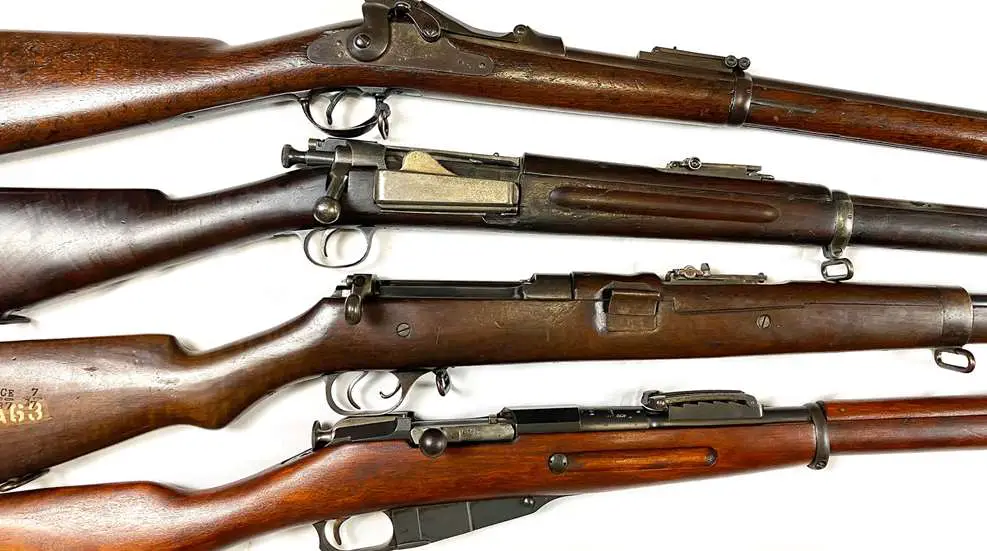
At the onset of World War I, armies primarily relied on bolt-action rifles, revolvers, and machine guns. As the war progressed, the need for more efficient and powerful firearms became evident, leading to the advent of semi-automatic rifles and submachine guns. Understanding the types of firearms used during this period is crucial for comprehending how they shaped the tactics and outcomes of battles fought across the war’s extensive front lines.
1. Bolt-Action Rifles
Bolt-action rifles were the backbone of infantry forces in World War I. These rifles allowed soldiers to fire single shots with accuracy and power, marking a significant advancement from the muzzle-loading rifles of previous conflicts.
1.1. Lee-Enfield Rifle (UK)
The Lee-Enfield rifle was the standard issue weapon for British and Commonwealth troops. Its distinctive features included:
- Caliber: .303 British
- Rate of Fire: Up to 30 rounds per minute with practice.
- Effective Range: Approximately 600 yards. The Lee-Enfield’s notable 10-round magazine and smooth bolt action made it a favorite among British soldiers. The rifle’s accuracy and reliability were significant advantages in trench warfare.
1.2. Gewehr 98 (Germany)
The German Gewehr 98 was another prominent bolt-action rifle used during WWI, featuring:
- Caliber: 7.92×57mm Mauser.
- Rate of Fire: Around 15-20 rounds per minute.
- Effective Range: Up to 1,000 meters.
Renowned for its accuracy and range, the Gewehr 98’s design was pivotal in shaping infantry tactics on the Western Front.
1.3. Springfield M1903 (USA)
Adopted by the United States Army in 1903, the Springfield M1903 served as the primary rifle for American soldiers:
- Caliber: .30-06 Springfield.
- Rate of Fire: Approximately 15 rounds per minute.
- Effective Range: Over 800 yards.
The M1903 was celebrated for its precision, and many snipers favored it due to its capabilities in long-range engagements.
2. Semi-Automatic Rifles
As the war progressed, advancements in firearms technology led to the development of semi-automatic rifles. These weapons allowed soldiers to fire multiple rounds without manually cycling the action, providing a significant tactical advantage on the battlefield.
2.1. M1 Garand (USA)
Though officially adopted after World War I, development of the M1 Garand began during this period. It introduced features that would later revolutionize infantry weaponry:
- Caliber: .30-06 Springfield.
- Rate of Fire: 8-10 rounds per minute.
- Effective Range: Up to 500 yards.
The M1 Garand became iconic for its reliability and accuracy, serving as the standard infantry rifle for U.S. forces in World War II.
3. Machine Guns
The advent of machine guns marked a pivotal moment in warfare, fundamentally changing how battles were fought. These rapid-fire weapons provided suppressive fire, allowing forces to dominate the battlefield.
3.1. Maxim Gun (UK)
The Maxim gun was the first self-powered machine gun, which saw widespread use during World War I:
- Caliber: .303 British.
- Rate of Fire: Approximately 600 rounds per minute.
- Effective Range: Up to 2,000 yards.
The Maxim gun’s capability to lay down sustained fire made it a game-changer in trench warfare, leading to high casualty rates.
3.2. Lewis Gun (UK)
The Lewis gun was developed as a lighter alternative for infantry units:
- Caliber: .303 British.
- Rate of Fire: About 500-600 rounds per minute.
- Effective Range: Approximately 1,000 yards.
Utilized both in an infantry role and mounted on aircraft, the Lewis gun’s versatility contributed to its popularity among allied forces.
3.3. Vickers Machine Gun (UK)
The Vickers machine gun became the standard heavy machine gun for British forces:
- Caliber: .303 British.
- Rate of Fire: About 450-600 rounds per minute.
- Effective Range: Up to 2,500 yards.
With its water-cooled mechanism, the Vickers gun was designed for sustained fire, making it a formidable weapon in defensive positions.
3.4. MG08 (Germany)
The MG08 was Germany’s answer to the need for a reliable machine gun:
- Caliber: 7.92×57mm Mauser.
- Rate of Fire: Approximately 500 rounds per minute.
- Effective Range: About 2,000 meters.
Its design drew heavily from the Maxim gun, and it played a significant role in German defensive tactics during the war.
4. Submachine Guns
While less common in World War I compared to World War II, submachine guns began to emerge toward the war’s conclusion, providing close-range firepower for assault troops.
4.1. MP 18 (Germany)
The MP 18 was one of the first submachine guns to see combat in World War I:
- Caliber: 9×19mm Parabellum.
- Rate of Fire: Around 400-450 rounds per minute.
- Effective Range: Up to 200 meters.
The MP 18 was initially developed for use in trench raids and quickly became a favorite for its compact size and rapid rate of fire.
5. Handguns and Sidearms
Pistols also played a role in World War I, primarily as sidearms for officers and specialized troops.
5.1. Webley Mk VI (UK)
The Webley Mk VI revolver was the standard-issue sidearm for British officers:
- Caliber: .455 Webley.
- Capacity: 6 rounds.
- Effective Range: Approximately 50 meters.
Its solid design made it reliable in various combat situations, although its limited capacity was a notable drawback.
5.2. Luger P08 (Germany)
The German Luger P08 became iconic during WWI:
- Caliber: 9×19mm Parabellum.
- Capacity: 8 rounds.
- Effective Range: Up to 100-200 meters.
The Luger’s distinctive toggle-lock mechanism and ergonomic design earned it a reputation as one of the finest service pistols of its time.
6. Anti-Materiel and Specialty Weapons
As warfare evolved, specialized weapons designed to target vehicles and fortifications emerged.
6.1. Hotchkiss M1909 (France)
This light machine gun was used by French forces and could be adapted for anti-material uses:
- Caliber: 8mm Lebel.
- Rate of Fire: Approximately 500 rounds per minute.
Its agility and effectiveness made it useful in various combat scenarios, including against enemy machine gun positions.
6.2. 37mm Anti-Tank Gun (Various)
Several countries developed anti-tank guns to combat the emerging threat posed by armored vehicles. These weapons were rifled and typically employed specialized ammunition to penetrate armor.
7. Impact of Firearms on the War
The vast array of firearms and their strategic roles during World War I greatly impacted the conduct of warfare. The introduction of machine guns made traditional infantry charges increasingly lethal, resulting in devastating attrition rates.
7.1. Tactics and Strategy
As machine guns and artillery became more prevalent, military strategists were forced to adapt. The static nature of trench warfare necessitated new tactics:
- Defensive Positions: Machine guns were often fixed in preparation for defense, leading to heavily fortified locations.
- Coordinated Assaults: Combined arms tactics that included infantry, artillery, and tanks began to take shape, allowing for more dynamic engagements.
7.2. Casualty Rates
The firepower generated by these firearms led to staggering casualty rates in battles such as the Somme and Verdun, with millions of soldiers sustaining injuries or losing their lives.
FAQ’s
1. What types of guns were commonly used in World War 1?
World War 1 featured rifles, machine guns, pistols, and early submachine guns, each playing a crucial role in trench warfare.
2. What was the standard infantry rifle in WW1?
Most soldiers used bolt-action rifles, such as the British Lee-Enfield or German Mauser Gewehr 98.
3. Why were bolt-action rifles widely used in WW1?
They were reliable, accurate, and capable of firing powerful cartridges suitable for long-range combat.
4. What was the most famous machine gun of WW1?
The Maxim machine gun was one of the most iconic and deadly weapons used during the war.
5. How did machine guns impact WW1 battles?
Machine guns caused massive casualties and made frontal assaults extremely dangerous.
6. What role did pistols play in WW1?
Pistols were mainly used by officers, pilots, and soldiers in close combat situations.
7. Were automatic weapons used in WW1?
Yes, early automatic weapons like machine guns and submachine guns were introduced.
8. What was the first submachine gun used in WW1?
The German MP18 is considered the first practical submachine gun used in combat.
9. How effective were submachine guns in WW1?
They were highly effective in trench warfare due to their rapid-fire capability.
10. What guns did German soldiers use in WW1?
German soldiers commonly used the Mauser Gewehr 98 rifle and MG08 machine gun.
11. What weapons did British troops use?
British forces primarily used the Lee-Enfield rifle and Vickers machine gun.
12. What guns did American troops use in WW1?
American soldiers used the M1903 Springfield rifle and Browning Automatic Rifle.
13. What was the Browning Automatic Rifle (BAR)?
The BAR was a portable automatic weapon used to provide suppressive fire.
14. How accurate were WW1 rifles?
They were highly accurate, capable of hitting targets at several hundred meters.
15. What kind of ammunition was used in WW1 guns?
Most firearms used full metal jacket cartridges designed for military use.
16. Were sniper rifles used in WW1?
Yes, snipers used scoped versions of standard rifles for long-range targeting.
17. How did snipers influence WW1?
Snipers created constant danger in trenches and targeted enemy officers.
18. What was the Vickers machine gun?
The Vickers was a reliable British heavy machine gun used throughout the war.
19. How heavy were WW1 machine guns?
They were very heavy and often required multiple soldiers to operate.
20. What made the Maxim gun revolutionary?
It was the first fully automatic machine gun, dramatically increasing firepower.
21. Were shotguns used in WW1?
Yes, especially by American forces for trench combat.
22. Why were shotguns effective in trenches?
Their spread made them deadly at close range in confined spaces.
23. What is trench warfare?
Trench warfare involved soldiers fighting from fortified ditches, leading to close-quarters combat.
24. How did guns change trench warfare?
Rapid-fire weapons made it difficult to advance, causing stalemates.
25. Were there any semi-automatic rifles in WW1?
Yes, but they were rare and not widely issued.
26. What was the Gewehr 98?
It was the standard German bolt-action rifle used throughout the war.
27. What was the Lee-Enfield rifle known for?
It had a fast rate of fire and high reliability.
28. Did soldiers customize their weapons?
Some soldiers modified their guns for better performance or comfort.
29. What role did firearms play in WW1 strategy?
They were central to both offensive and defensive tactics.
30. Were machine guns portable?
Most were not easily portable and required crews and support equipment.
31. How many rounds could a machine gun fire?
Machine guns could fire hundreds of rounds per minute.
32. What was the MG08?
The MG08 was Germany’s standard heavy machine gun, based on the Maxim design.
33. Did WW1 guns overheat?
Yes, especially machine guns, which often required water cooling.
34. What is a water-cooled machine gun?
It uses water to prevent overheating during sustained fire.
35. Were revolvers used in WW1?
Yes, revolvers were common sidearms among officers.
36. What was the role of firearms in defense?
They helped defend trenches and repel enemy attacks.
37. Did soldiers carry multiple weapons?
Typically, they carried a primary rifle and sometimes a sidearm.
38. How were guns maintained in trenches?
Regular cleaning was essential due to mud and harsh conditions.
39. Were firearms reliable in WW1 conditions?
Most were reliable but could malfunction due to dirt and weather.
40. What was the M1903 Springfield?
It was the standard American bolt-action rifle during WW1.
41. How did firearms evolve during WW1?
They became more advanced, with improvements in rate of fire and reliability.
42. What challenges did soldiers face using guns?
They dealt with mud, cold, and constant wear on equipment.
43. Were automatic pistols used?
Yes, semi-automatic pistols became more common during the war.
44. What was the Luger pistol?
It was a popular German semi-automatic pistol known for its design.
45. How did firearms affect casualty rates?
High-powered and rapid-fire weapons significantly increased casualties.
46. What training did soldiers receive with guns?
They were trained in marksmanship, maintenance, and battlefield tactics.
47. Were experimental weapons tested in WW1?
Yes, many new firearm designs were developed and tested.
48. What was suppressive fire?
It involved firing continuously to keep enemy forces under cover.
49. How important were firearms compared to artillery?
Firearms were essential for close combat, while artillery dominated long-range warfare.
50. Did WW1 guns influence modern firearms?
Yes, many modern weapons evolved from designs first used in WW1.
51. What lessons were learned about firearms in WW1?
The war highlighted the importance of firepower, reliability, and adaptability.
52. Why are WW1 guns still studied today?
They represent a major shift in military technology and tactics.
Conclusion
World War I represented a watershed moment in the evolution of firearms and military technology. The transition from bolt-action rifles to machine guns and the early prototypes of automatic weapons illustrated the rapid pace of innovation necessitated by the demands of warfare.
Understanding the role of these firearms not only provides insight into the strategies employed during the Great War but also how they set the stage for future conflicts. Even today, the legacy of World War I firearms continues to influence modern military weaponry and tactics.
This article has touched on a variety of firearms used during World War I, providing a glimpse into their specifications, roles, and the broader impact they had on the war and military history. As we explore this context, it is vital to remember the human experiences behind these weapons, reflecting on the profound implications they had on soldiers and societies during one of history’s most significant conflicts.
When it comes to customizing or restoring firearms, one of the most common questions is, what do you use to paint guns? The process of applying paint to a gun involves a combination of proper tools, suitable types of paint, preparation, and techniques to ensure a durable and aesthetically pleasing finish. In this comprehensive guide, we will delve into all aspects of gun painting, from selecting the right supplies to maintaining your finished product, helping enthusiasts and professionals achieve flawless results.
Read more: