
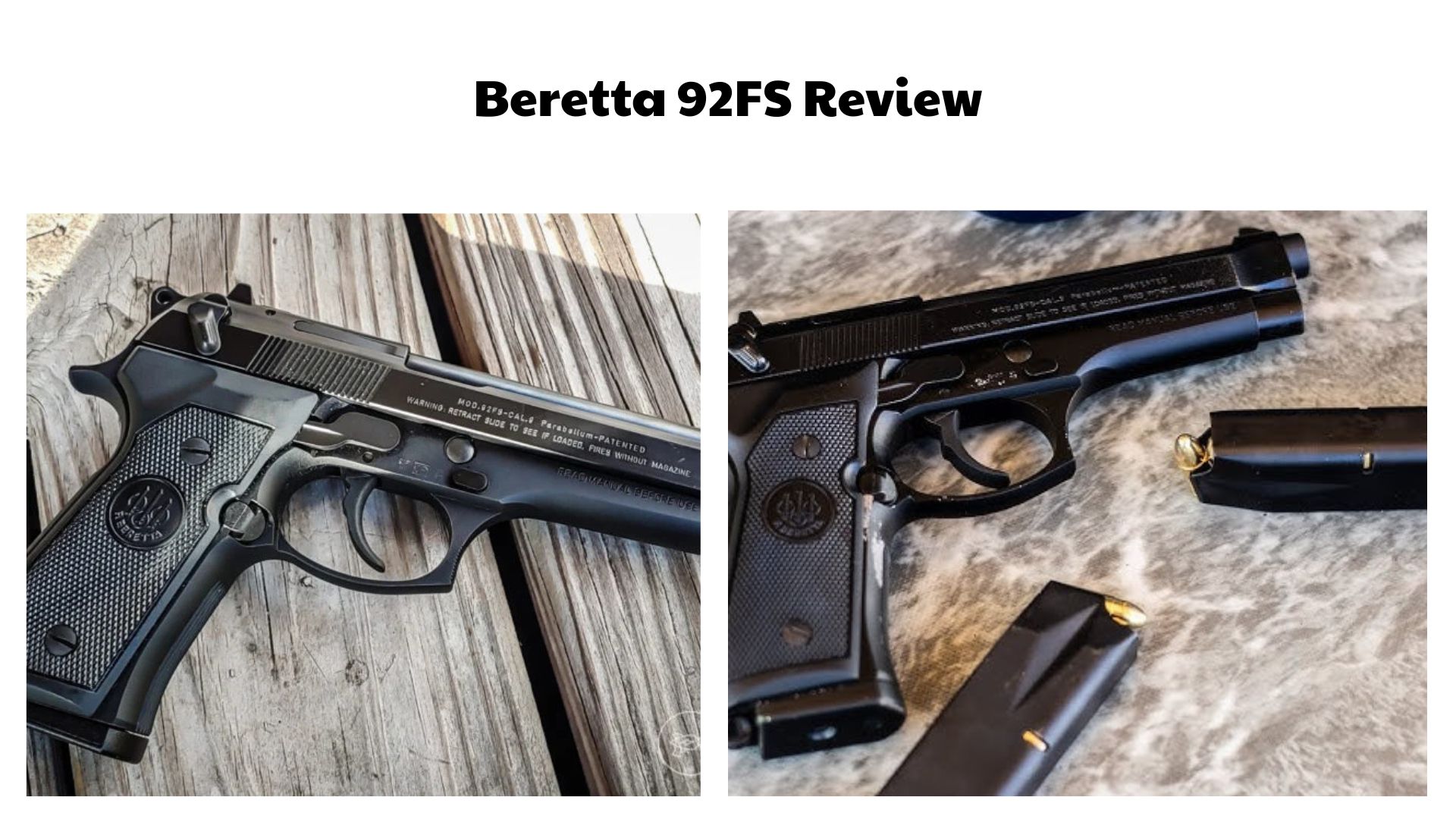

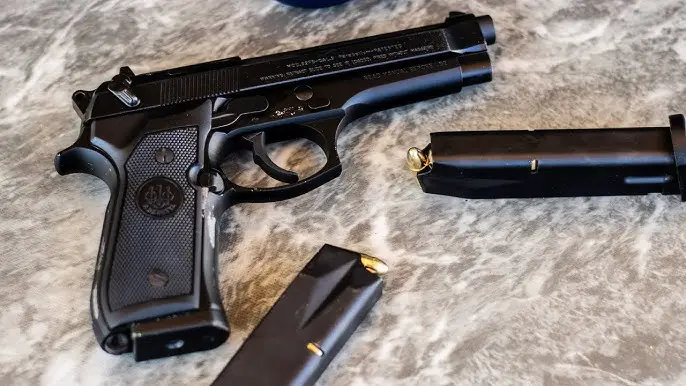
The Beretta 92FS is a full-size, semi-automatic 9mm pistol manufactured by Beretta, one of the oldest firearms companies in the world. Known for its DA/SA (double-action/single-action) trigger system, alloy frame, and open-slide design, the 92FS has become one of the most recognizable handguns in modern firearms history.
It is widely used for military, law enforcement, and civilian self-defense purposes due to its proven reliability, high magazine capacity, and smooth shooting characteristics.
The Beretta 92FS earned the nickname “Wonder Nine” during the rise of high-capacity 9mm pistols in the late 20th century. This term refers to its combination of a 9mm caliber, double-stack magazine capacity, and advanced semi-automatic features compared to older handgun designs.
Its reputation grew from its ability to deliver higher capacity, controllable recoil, and strong reliability, making it stand out among service pistols of its era and cementing its status as a “modern wonder” handgun.
History and Military Legacy
Adoption as the U.S. Military M9 Sidearm
The Beretta 92FS gained global recognition when it was adopted by the United States Armed Forces as the M9 service pistol in 1985. This decision marked a major shift from the previously issued .45 ACP 1911 platform to a more modern, higher-capacity 9mm handgun.
Its selection was based on factors such as magazine capacity, NATO standardization, durability testing, and ease of maintenance in military environments.
Global Law Enforcement and Military Use
Beyond the U.S. military, the Beretta 92 series has been widely adopted by law enforcement agencies and armed forces around the world. Its reputation for reliability under harsh conditions made it a trusted sidearm in both tactical and everyday service roles.
Many countries continue to use or have historically used variants of the 92 platform due to its balance of performance, capacity, and durability.
Evolution of the 92 Series Over Time
The Beretta 92 platform has evolved significantly since its introduction, leading to multiple upgraded variants such as the 92FS, 92G, and modern 92X series. These updates have improved ergonomics, rail systems, trigger performance, and modularity.
Despite these advancements, the core design principles—reliability, accuracy, and durability—have remained unchanged, ensuring the platform’s continued relevance in modern firearm markets.
Design and Build Quality
Full-Size Alloy Frame Construction
The Beretta 92FS is built on a full-size aluminum alloy frame, which helps reduce overall weight while maintaining strong structural integrity. This design choice provides a balance between durability and shootability, making the pistol comfortable for extended range sessions and duty use.
Despite being lighter than all-steel pistols, the alloy frame remains robust enough to handle high round counts and long-term service conditions.
Open-Slide Design and Locking Block System
One of the most distinctive features of the Beretta 92FS is its open-slide design. This reduces the chance of stovepipe malfunctions and improves cycling reliability by allowing more direct ejection of spent casings.
The pistol also uses a falling-block locking system, which helps manage recoil and ensures consistent barrel alignment during firing. This contributes to both reliability and accuracy.
Durability and Long-Term Reliability Reputation
The Beretta 92FS has built a strong reputation for durability, particularly in military and law enforcement service. It is known for functioning reliably under harsh environmental conditions, including sand, dust, and extended firing schedules.
With proper maintenance, the platform is capable of extremely high round counts, making it one of the most trusted service pistols in modern firearm history.
Key Specifications of the Beretta 92FS
Caliber, Capacity, and Barrel Length (9mm, 15–17 Rounds)
The Beretta 92FS is chambered in 9×19mm Parabellum, one of the most widely used handgun calibers in the world. Standard magazine capacity is typically 15 rounds, with some variants extending to 17 rounds depending on magazine design and jurisdiction.
The barrel length is approximately 4.9 inches, contributing to improved velocity, accuracy, and recoil control compared to compact handguns.
DA/SA Trigger System Overview
The pistol features a double-action/single-action (DA/SA) trigger system. The first trigger pull is longer and heavier in double-action mode, while subsequent shots are fired in single-action with a lighter, shorter trigger pull.
This system provides both a safety advantage for the first shot and improved precision for follow-up shots.
Slide-Mounted Safety and Decocker Function
The Beretta 92FS includes a slide-mounted safety lever that also functions as a decocker. When engaged, it safely lowers the hammer without firing the weapon, adding an extra layer of mechanical safety.
This control setup is unique compared to many modern striker-fired pistols and reflects the platform’s traditional service pistol design philosophy.
Ergonomics and Handling
Grip Size and Control Layout
The Beretta 92FS features a relatively large grip to accommodate its double-stack magazine design. While this may feel bulky for users with smaller hands, it provides excellent control and stability during firing.
The control layout is intuitive for trained users, with all major functions positioned for quick access.
Weight Balance and Shooting Stability
One of the standout characteristics of the 92FS is its excellent balance. The full-size frame and barrel weight distribution help reduce muzzle rise and improve shot-to-shot consistency.
This makes the pistol especially comfortable during extended shooting sessions and rapid fire drills.
Control Accessibility (Safety, Mag Release, Slide Release)
The pistol’s controls are designed for military and duty use, with a prominent safety/decocker lever and accessible magazine release. The slide release is also positioned for efficient operation during reloads.
While functional and durable, some users may require training to adapt to the slide-mounted safety system compared to frame-mounted alternatives.
Trigger Performance
Double-Action Trigger Pull Characteristics
The double-action trigger pull on the Beretta 92FS is relatively long and heavy, which is typical for DA/SA pistols. It is designed for safety and deliberate first-shot control in defensive or duty scenarios.
Single-Action Trigger Break and Reset
In single-action mode, the trigger becomes significantly lighter with a cleaner break and shorter reset. This allows for improved accuracy and faster follow-up shots once the initial round has been fired.
Learning Curve for New Shooters
New shooters may require some practice to adapt to the transition between double-action and single-action trigger modes. However, once mastered, the system offers a strong balance between safety and precision shooting performance.
Accuracy and Shooting Performance
Real-World Accuracy at Defensive and Range Distances
The Beretta 92FS is widely recognized for its strong accuracy in both defensive and recreational shooting scenarios. At typical self-defense distances (3 to 15 yards), it delivers consistent and tight groupings when paired with proper trigger control and fundamentals.
At extended range distances, the pistol continues to perform well due to its long barrel and stable platform, making it a popular choice for target shooting and training.
Recoil Management and Follow-Up Shots
One of the standout advantages of the 92FS is its soft recoil impulse. The combination of its full-size frame, weight distribution, and 9mm chambering results in very manageable recoil.
This allows shooters to recover quickly between shots, improving follow-up shot speed and overall shooting efficiency, especially during rapid fire drills.
Consistency and Sight Radius Advantages
The Beretta 92FS benefits from a long sight radius, which enhances aiming precision and target alignment. This design feature contributes to its reputation as an accurate service pistol.
Combined with fixed combat-style sights, the platform offers consistent performance once the shooter becomes familiar with its sight picture.
Reliability and Durability
Performance Under High Round Counts
The Beretta 92FS is well known for its ability to withstand high round counts without significant performance degradation. It has been extensively tested in military and law enforcement environments where sustained firing is common.
With proper maintenance and periodic parts replacement, the platform can remain operational for tens of thousands of rounds.
Ammo Compatibility and Cycling Reliability
The 92FS is highly versatile in terms of ammunition compatibility, reliably cycling a wide range of 9mm loads, including standard pressure and +P ammunition in most configurations.
Its open-slide design helps reduce feeding and extraction issues, contributing to its reputation for smooth and dependable cycling under various conditions.
Long-Term Service Reputation in Military Use
The Beretta 92FS, along with its military variant the M9, has earned a long-standing reputation for reliability in service use. It has been trusted by armed forces worldwide for decades.
This extensive service history reinforces its status as a proven duty pistol capable of performing in demanding operational environments over long periods of time.
Pros and Cons of the Beretta 92FS
Key Advantages (Reliability, Accuracy, Shootability, History)
The Beretta 92FS offers several major advantages that have kept it relevant for decades. Its proven reliability under military and law enforcement conditions makes it one of the most trusted service pistols in history.
Accuracy is another strong point, thanks to its long barrel, stable full-size frame, and extended sight radius. The soft recoil impulse also improves shootability, allowing for fast and controlled follow-up shots.
In addition, the 92FS carries significant historical value as the U.S. military M9 service pistol, which adds to its legacy and appeal among collectors and enthusiasts.
Main Drawbacks (Size, Weight, Capacity vs Modern Pistols)
Despite its strengths, the Beretta 92FS has some limitations compared to modern handgun designs. Its full-size frame and metal construction make it heavier and less convenient for concealed carry.
While its 15–17 round capacity was once considered high, many modern polymer pistols now offer similar or greater capacity in a lighter, more compact form.
Additionally, the slide-mounted safety and DA/SA trigger system may require more training for users accustomed to striker-fired pistols.
Variants and Modern Updates
92FS vs M9 and 92X Series
The Beretta 92FS is closely related to the M9, which is the U.S. military designation for the same platform. While mechanically similar, the 92FS includes design refinements for civilian and export markets.
The newer 92X series represents a modern evolution of the platform, featuring improved ergonomics, accessory rails, and updated controls designed to better match current tactical and competitive shooting standards.
Decocker-Only Models (92G Style)
The 92G variant replaces the traditional safety/decocker combination with a decocker-only system. This removes the manual safety function, allowing the pistol to automatically return to fire mode after decocking.
Many users prefer this configuration for defensive use, as it simplifies manual operation while still maintaining safe hammer control.
Modern Tactical Upgrades and Optics-Ready Versions
Modern iterations of the Beretta 92 platform now include tactical enhancements such as accessory rails for lights and lasers, improved grips, and factory optic-ready slides on select models.
These upgrades help the 92 series remain competitive in today’s market by bridging the gap between classic design and modern tactical requirements.
Final Verdict
Is the Beretta 92FS Still Worth It Today?
The Beretta 92FS remains a highly respected full-size 9mm pistol, even in today’s market dominated by lighter polymer-framed striker-fired handguns. Its strengths are still very relevant: excellent reliability, smooth recoil control, long sight radius, and proven military-grade durability.
While it is heavier and bulkier than many modern alternatives, that weight actually contributes to its soft shooting experience and stability under rapid fire. For shooters who prioritize control, accuracy, and long-term durability over concealability, the 92FS continues to be a strong and viable choice.
It is not the most modern design, but its track record in military and law enforcement service, along with decades of proven performance, ensures that it still holds its place as one of the most dependable pistols ever made.
Who Should Buy the 92FS?
The Beretta 92FS is best suited for shooters who want a full-size home defense pistol, a range-focused handgun, or a historically proven service-style firearm. It is especially appealing to those who value shootability, metal-frame construction, and classic DA/SA operation.
It is also a strong option for users transitioning from revolvers or those who prefer a heavier, more stable handgun with minimal recoil. However, it may not be ideal for concealed carry due to its size and weight compared to modern compact pistols.
Overall, the 92FS is a “buy with confidence” firearm for enthusiasts who appreciate proven engineering, long service history, and a smooth shooting platform that still performs well decades after its introduction.
Frequently Asked Questions (FAQ) – Beretta 92FS
1. What is the Beretta 92FS best known for?
The Beretta 92FS is best known for its long-standing military service, exceptional reliability, and smooth shooting characteristics. It gained worldwide recognition as the U.S. military’s M9 sidearm and became one of the most iconic 9mm pistols ever produced.
2. Is the Beretta 92FS still reliable today?
Yes, the Beretta 92FS is still considered highly reliable today. Its proven design has been tested over decades of military and law enforcement use. With proper maintenance, it continues to function consistently even under harsh conditions and high round counts.
3. What makes the Beretta 92FS different from other 9mm pistols?
The 92FS stands out due to its alloy frame, open-slide design, and DA/SA trigger system. Unlike many modern striker-fired pistols, it uses a hammer-fired mechanism with a manual safety/decocker, offering a different shooting experience focused on control and safety.
4. Is the Beretta 92FS good for beginners?
It can be good for beginners, but it requires some training due to its DA/SA trigger system and slide-mounted safety. Once learned, it offers a very stable and forgiving shooting platform, especially due to its low recoil and full-size frame.
5. Is the Beretta 92FS suitable for concealed carry?
The 92FS is generally not ideal for concealed carry due to its full-size frame and heavier weight. It is better suited for home defense, duty use, or range shooting rather than everyday concealed carry.
6. What caliber does the Beretta 92FS use?
The Beretta 92FS is chambered in 9×19mm Parabellum (9mm), one of the most widely used handgun cartridges in the world. It balances manageable recoil with effective defensive performance.
7. How many rounds does the Beretta 92FS hold?
Most standard magazines hold 15 rounds, though some variants and extended magazines can hold up to 17 rounds. This capacity was considered high when the pistol was first introduced.
8. Is the Beretta 92FS accurate?
Yes, the 92FS is known for its strong accuracy. Its long barrel, stable frame, and extended sight radius help shooters achieve tight groupings at both defensive and range distances.
9. Why is it called the “Wonder Nine”?
It earned the nickname “Wonder Nine” during the rise of high-capacity 9mm pistols in the 1980s. It was considered “wonderful” for combining 9mm power, high capacity, and modern semi-automatic features.
10. What is the difference between the 92FS and the M9?
The M9 is the military designation of the Beretta 92 platform used by the U.S. Armed Forces, while the 92FS is the civilian commercial version. They are mechanically very similar, with minor specification differences.
11. Is the Beretta 92FS heavy?
Yes, it is heavier than many modern polymer pistols due to its aluminum alloy frame. However, this weight helps reduce recoil and improves shooting stability.
12. Does the Beretta 92FS have a safety?
Yes, it has a slide-mounted safety that also functions as a decocker. This allows the user to safely lower the hammer without firing the pistol.
13. What is DA/SA on the Beretta 92FS?
DA/SA stands for double-action/single-action. The first trigger pull is long and heavier (double-action), while subsequent shots are lighter and shorter (single-action).
14. Is the DA/SA trigger hard to learn?
It requires some practice, especially for beginners, because the first and subsequent trigger pulls feel different. However, many shooters appreciate the added safety and control it provides.
15. How does the recoil feel on the Beretta 92FS?
Recoil is very soft and manageable due to the pistol’s weight and design. It is widely considered one of the smoothest-shooting full-size 9mm pistols.
16. What is the open-slide design?
The open-slide design reduces the likelihood of malfunctions by allowing spent casings to eject more freely. It also contributes to smoother cycling and improved reliability.
17. Is the Beretta 92FS durable?
Yes, it is extremely durable and has been proven in military service for decades. With proper care, it can withstand very high round counts.
18. What kind of maintenance does it require?
Routine cleaning, lubrication, and periodic replacement of wear parts like recoil springs are recommended. Overall, it is not difficult to maintain.
19. Can the Beretta 92FS use +P ammo?
Yes, it can handle +P ammunition in most cases, but excessive use may accelerate wear over time. It is commonly used for defensive loads.
20. Is the Beretta 92FS good for home defense?
Yes, it is an excellent home defense pistol due to its reliability, capacity, and controllability. Its size is less of an issue in home defense compared to concealed carry.
21. How does it compare to Glock pistols?
Compared to Glock pistols, the 92FS is heavier, uses a DA/SA system instead of striker-fired action, and has a metal frame. Glock pistols are simpler and lighter, while the 92FS offers smoother recoil and a different shooting feel.
22. Is the Beretta 92FS still used by the military?
It has largely been replaced by newer platforms like the M17/M18 in the U.S. military, but it is still used in some units and remains widely used internationally.
23. What is the sight system like?
It uses fixed combat-style iron sights. They are durable but not adjustable, designed for quick target acquisition rather than precision competition shooting.
24. Can the sights be upgraded?
Yes, aftermarket sights are available for some models, allowing upgrades such as night sights or enhanced visibility options.
25. Is the Beretta 92FS good for competition shooting?
It can be used for competition, especially in production or service pistol divisions, but it is not specifically designed as a competition firearm.
26. What is the barrel length?
The barrel length is approximately 4.9 inches, contributing to improved accuracy and velocity.
27. Is it easy to field strip?
Yes, the Beretta 92FS is relatively easy to field strip for cleaning and maintenance once the user learns the takedown process.
28. Does it rust easily?
The alloy frame and coated components provide good corrosion resistance, but like all firearms, it benefits from regular maintenance and cleaning.
29. What magazines does it use?
It uses Beretta 92-series magazines, typically 15-round standard magazines, though higher-capacity versions are also available.
30. Is the Beretta 92FS good for left-handed shooters?
It is partially ambidextrous, though the slide-mounted safety may require adaptation. Many left-handed shooters still use it comfortably with training.
31. How long does the Beretta 92FS last?
With proper maintenance, it can last for decades and tens of thousands of rounds, making it a long-term firearm investment.
32. Is it expensive to maintain?
No, maintenance costs are generally moderate, and parts are widely available due to its long production history.
33. Does it have a rail for accessories?
Standard 92FS models do not include a rail, but newer variants in the 92 series often feature accessory rails.
34. Is it good for law enforcement use?
Historically yes, it was widely used in law enforcement agencies worldwide due to its reliability and capacity.
35. What is the grip like?
The grip is relatively large but provides excellent control and stability, especially during rapid fire.
36. Can it be customized?
Yes, there are aftermarket grips, sights, triggers, and other accessories available for customization.
37. Is it good for tactical use?
It can be used in tactical roles, but modern pistols with rails and lighter frames are often preferred today.
38. How reliable is the magazine system?
The magazine system is highly reliable when using quality factory magazines and proper maintenance.
39. What is the locking system?
It uses a falling-block locking system that helps ensure consistent barrel alignment and smooth cycling.
40. Is it still worth buying today?
Yes, for shooters who value reliability, smooth shooting, and classic design, it remains a strong choice even in modern markets.
41. Is it better than modern polymer pistols?
It depends on preference. Polymer pistols are lighter and more compact, while the 92FS offers smoother recoil and metal-frame durability.
42. What is the trigger reset like?
The single-action trigger reset is relatively short and tactile, allowing for controlled follow-up shots.
43. Is it loud when fired?
Like most 9mm pistols, it produces a standard report, which is typical for centerfire handguns.
44. Can it be used for training?
Yes, it is widely used for firearms training due to its safe DA/SA system and predictable handling.
45. Is it good for older shooters?
Yes, many older shooters appreciate its soft recoil and stable shooting platform.
46. Does it require a break-in period?
Some users notice smoother operation after initial use, but it generally performs reliably out of the box.
47. Is it easy to reload?
Reloading is straightforward but slightly slower compared to modern pistols with optimized controls.
48. What is its effective range?
It is most effective within typical handgun distances, but can maintain accuracy at longer ranges due to its barrel length.
49. Is it good for survival use?
Yes, its reliability and durability make it suitable for survival or emergency preparedness scenarios.
50. What is the final verdict on the Beretta 92FS?
The Beretta 92FS remains one of the most proven and respected 9mm pistols ever made. While not the most modern design, it continues to offer exceptional reliability, accuracy, and shootability, making it a strong choice for enthusiasts and defensive shooters alike.
Read more: