
When exploring the history of the Third Reich, understanding what guns did the Nazis use is pivotal for grasping their military prowess, technological advancements, and the brutal efficiency of their armed forces. The Waffen-SS, Wehrmacht, and Luftwaffe all employed a variety of firearms, each designed for specific strategic purposes. From iconic rifles to portable submachine guns and pistols, Nazi firearms played a crucial role in shaping the battles and campaigns of World War II. This article delves deeply into the different types of guns used by the Nazis, their distinctive models, and their historical significance.
What guns did the Nazis use? This question opens the door to an era marked by innovation, mass production, and military experimentation. Exploring these weapons offers insights not only into the military history of WWII but also into the technological drives and tactical doctrines of Nazi Germany. By examining their arsenal, we can better appreciate the engineering marvels and variations that helped the Nazi military machine forge its infamous reputation.
Overview of Nazi Firearms
The Nazi military’s firearms ecosystem was both diverse and meticulously organized. Their weaponry comprised a combination of existing European designs, like the Mauser rifles inherited from the pre-war German army, alongside innovative new models specifically developed during the war. The emphasis on standardized weapons allowed for mass production and easier logistical support, which was vital for sustaining their large-scale military campaigns. At its core, Nazi firearms reflected a blend of traditional engineering excellence and wartime necessity, with some models becoming iconic symbols of WWII’s brutal combat.
Beyond mere utility, Nazi firearms also embodied the ideological and cultural representations of the regime. For instance, the design of pistols like the Luger and P38 reflected German engineering pride, while the submachine gun MP40 became a symbol of the close-quarters combat tactics employed on the Eastern Front and many urban battles. Understanding the landscape of Nazi firearms thus offers us a layered perspective—highlighting technological innovation, strategic doctrine, and cultural identity—all encapsulated within their firearms inventory.
Types of Guns Used by the Nazis

Nazi Germany employed a broad spectrum of firearms, from rifles and pistols to machine guns and specialized weapons. Their standard service rifle was the Karabiner 98k, a bolt-action weapon derived from the famous Mauser design, which served as the backbone of their infantry forces. Submachine guns like the MP40 were introduced to equip units engaged in rapid, close-quarters combat, especially in urban warfare and anti-partisan operations. Additionally, pistols such as the iconic Luger P08 and Walther P38 were standard issue for officers, crew members, and paratroopers, representing a range of preferences from traditional to modern firearm technology.
As the war progressed, Nazi arms manufacturers introduced new firearm variants and improved upon existing designs. The development of submachine guns and semi-automatic pistols reflected the changing tactics of WWII combat—favoring mobility and quick-fire ability. Moreover, the wide deployment of machine guns like the MG34 and MG42 demonstrated a focus on suppressive fire, reinforcing defensive positions and attacking enemy formations. These diverse types of guns showcase a military adapting to the evolving nature of warfare, balancing firepower, reliability, and logistical practicality.
The MP40 Submachine Gun
Arguably one of the most recognizable firearms associated with Nazi Germany is the MP40 submachine gun. Designed in the late 1930s and adopted officially by the Wehrmacht in 1940, the MP40 became a symbol of German infantry and paratrooper units. It was renowned for its compact size, reliable operation, and ease of manufacturing—features that made it ideal for guerrilla tactics and urban combat. Its distinctive folding stock and lightweight frame allowed soldiers to maneuver quickly in confined spaces, giving Nazi forces an edge in proliferated close-quarters battles across Europe and North Africa.
The MP40’s design was a simplified, stamped metal construction that emphasized mass production over intricate craftsmanship. This approach enabled rapid manufacturing, with hundreds of thousands produced throughout the war. Its potent 9mm Parabellum rounds gave it a considerable punch, rivaling many contemporary submachine guns. The weapon’s popularity extended beyond Nazi forces—later, Allied soldiers would recognize it on the battlefield—and it remains an iconic symbol of WWII in popular culture. The MP40 epitomizes Nazi innovation in small arms, blending practicality with symbolic militarism.
The Karabiner 98k Rifle
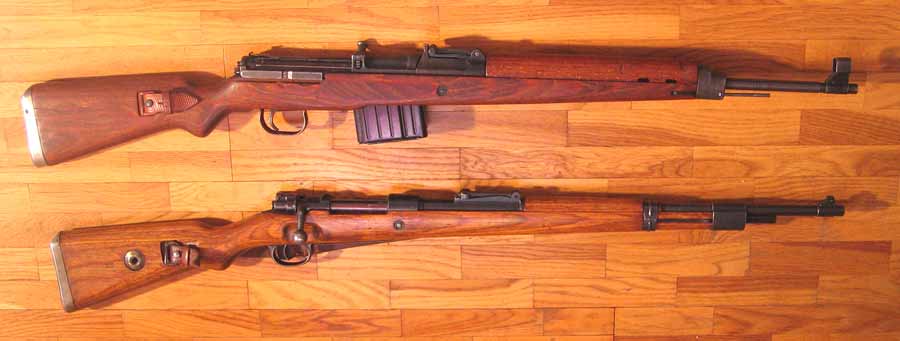
The Karabiner 98k, or K98k, was the mold-breaking rifle that served as the standard issue bolt-action firearm for German infantry from the mid-1930s through the end of WWII. Derived from the legendary Mauser Gewehr 98, this rifle embodied precision engineering, reliability, and durability. Its design allowed for rapid, accurate fire, which made it a formidable weapon with a reputation for ruggedness under harsh wartime conditions. It fired 7.92×57mm Mauser rounds and had a bolt mechanism that was both smooth and robust, capable of withstanding the rigors of frontline combat.
In terms of strategic significance, the K98k was more than just a firearm; it was a symbol of the disciplined, disciplined German soldier. Its widespread use meant that many Nazis viewed it as an extension of their combat identity. The rifle saw extensive combat during key battles—from the invasions of Poland and France to the brutal fighting on the Eastern Front. Its influence endured even after the war, inspiring subsequent rifle designs worldwide. The K98k stands as a testament to Nazi military precision and the relentless pursuit of effective small arms for mass armies.
Nazi Service Pistols: The Luger and P38
Two pistols—namely the Luger P08 and the Walther P38—define the era of Nazi Germany’s personal sidearms. The Luger P08, introduced in the early 20th century and heavily used during WWI, gained fame for its distinctive toggle mechanism and ergonomic design. Its iconic form has become synonymous with German military and Nazi symbolism in popular culture. During the rise of the Third Reich, the Luger was largely replaced by the P38 due to the latter’s simplified manufacturing and modern features.
The Walther P38, introduced in 1938, marked a significant shift toward semi-automatic pistols with symbolic and tactical importance. Its double-action trigger mechanism and stamped metal frame signified advances in firearm technology, aligning with Nazi efforts to modernize their military equipment. The P38 was favored by officers, ceremonial units, and parachutists, providing a balanced mix of reliability, firepower, and ease of concealment. Both pistols shared the common purpose of personal self-defense and officer-carry duties, but the P38’s more modern design ultimately made it emblematic of wartime innovation. Collecting these pistols today offers tangible links to the personal stories of Nazi soldiers and the technological developments that characterized their era.
Collecting Nazi Firearms: A Historical Perspective
The collection of Nazi firearms is a complex subject steeped in legal, ethical, and historical considerations. Many enthusiasts and historians pursue these relics to better understand WWII, military history, and technological evolution. These firearms, often preserved in museums or private collections, embody a chapter of history characterized by human conflict, ideological extremism, and remarkable engineering. Collecting these weapons—not for glorification, but for educational and memorial purposes—has helped preserve lessons from the past and promote an understanding of the era’s intricacies.
From a historical perspective, Nazi firearms reflect the industrial capabilities and strategic priorities of a totalitarian regime. The mass production techniques, innovative designs, and widespread deployment reveal much about wartime resource allocation and craftsmanship. However, their study also prompts an ethical reflection on the destructive nature of warfare and the importance of remembrance. Responsible collecting and study can serve as a tribute to the victims of Nazi brutality and a reminder of the importance of peace and human rights. Analyzing these firearms enables us to recognize the technological achievements of that dark epoch while remaining vigilant about the moral lessons it imparts.
FAQ’s
1. What types of guns did Nazi Germany use during World War II?
Nazi Germany used a wide range of firearms, including rifles, pistols, submachine guns, and machine guns designed for different combat roles.
2. What was the standard-issue rifle for German soldiers?
The Karabiner 98k (Kar98k) was the standard-issue bolt-action rifle used by German infantry.
3. What caliber did the Kar98k use?
The Kar98k fired the 7.92×57mm Mauser cartridge, known for its accuracy and power.
4. Did Nazi soldiers use semi-automatic rifles?
Yes, they used semi-automatic rifles such as the Gewehr 43 (G43), although these were less common than bolt-action rifles.
5. What was the Gewehr 43?
The Gewehr 43 was a semi-automatic rifle developed to improve fire rate compared to bolt-action rifles.
6. What submachine guns did the Nazis use?
The most common submachine guns were the MP38 and MP40, widely used by infantry and paratroopers.
7. What was the MP40 known for?
The MP40 was known for its compact design, reliability, and ease of use in close-quarters combat.
8. Did German officers carry pistols?
Yes, German officers typically carried pistols such as the Luger P08 and Walther P38.
9. What was the Luger P08?
The Luger P08 was a semi-automatic pistol famous for its distinctive design and use in World War II.
10. What replaced the Luger P08?
The Walther P38 gradually replaced the Luger due to simpler manufacturing and improved reliability.
11. What machine guns were used by Nazi forces?
The MG34 and MG42 were the primary machine guns used by German forces.
12. Why was the MG42 significant?
The MG42 had a very high rate of fire and became one of the most effective machine guns of the war.
13. What role did machine guns play in German tactics?
German infantry tactics were centered around the machine gun as the core of the squad’s firepower.
14. Did Nazi Germany develop assault rifles?
Yes, they developed the StG 44, considered the world’s first modern assault rifle.
15. What was the StG 44?
The Sturmgewehr 44 combined automatic fire with an intermediate cartridge, influencing future rifle designs.
16. What cartridge did the StG 44 use?
It used the 7.92×33mm Kurz cartridge, designed for controllable automatic fire.
17. Were sniper rifles used by the Germans?
Yes, sniper variants of the Kar98k equipped with scopes were widely used.
18. How effective were German sniper rifles?
They were highly accurate and effective at long ranges, especially in Eastern Front combat.
19. Did German troops use captured weapons?
Yes, they often used captured firearms from other countries when supplies were limited.
20. What pistols were most common among soldiers?
The Walther P38 and Luger P08 were the most commonly issued sidearms.
21. Were submachine guns widely distributed?
Submachine guns were typically issued to specialized units rather than all infantry.
22. What made the MP38 different from the MP40?
The MP38 was more expensive to produce, while the MP40 used more stamped parts for mass production.
23. Did the Nazis use automatic rifles?
Yes, the StG 44 functioned as an automatic rifle with both semi-auto and full-auto capabilities.
24. What was the MG34?
The MG34 was an earlier general-purpose machine gun that could be used in multiple roles.
25. Why was the MG42 preferred over the MG34?
The MG42 was cheaper, faster to produce, and more reliable in harsh conditions.
26. Did German paratroopers use different weapons?
Yes, they often used lighter weapons like the FG 42 rifle designed specifically for airborne troops.
27. What was the FG 42?
The FG 42 was a selective-fire rifle combining features of rifles and machine guns.
28. Were shotguns used by Nazi forces?
Shotguns were not commonly used by German forces compared to other nations.
29. Did German soldiers carry grenades along with guns?
Yes, grenades were standard equipment and complemented firearms in combat.
30. What was the standard sidearm caliber?
Most German pistols used the 9×19mm Parabellum cartridge.
31. Were German firearms considered reliable?
Many German firearms were highly reliable and well-engineered for their time.
32. How accurate was the Kar98k?
The Kar98k was known for excellent accuracy, especially at long distances.
33. Did the Nazis produce large quantities of guns?
Yes, Germany mass-produced firearms, especially as the war progressed.
34. Were there shortages of firearms?
Later in the war, shortages led to simplified designs and use of captured weapons.
35. What was the Volksturm’s weaponry?
The Volksturm used a mix of outdated, simplified, and captured firearms.
36. Did Germany innovate in firearm design?
Yes, innovations like the StG 44 influenced modern military weapons worldwide.
37. What was the main infantry weapon early in the war?
The Kar98k bolt-action rifle was the primary weapon at the start of the war.
38. Were suppressors used by German troops?
Suppressors were used in limited roles, mainly for specialized operations.
39. Did German tanks have mounted guns?
Yes, tanks were equipped with machine guns for defense against infantry.
40. What was the role of pistols in combat?
Pistols were mainly used as backup weapons by officers and specialized troops.
41. Did the Nazis use experimental firearms?
Yes, they developed several experimental weapons, though many were not widely deployed.
42. Were German firearms expensive to produce?
Early designs were costly, but later models were simplified for mass production.
43. How did German firearms compare to Allied weapons?
German weapons were often technologically advanced but sometimes more complex to manufacture.
44. What was the rate of fire of the MG42?
The MG42 had a very high rate of fire, around 1,200 rounds per minute.
45. Did German soldiers customize their weapons?
Some soldiers added scopes, grips, or modifications depending on their role.
46. What was the main advantage of German machine guns?
Their versatility and high rate of fire made them highly effective in combat.
47. Were German firearms durable?
Most were built to high standards and performed well in various conditions.
48. Did Germany export weapons to allies?
Yes, German firearms were supplied to allied nations during the war.
49. What firearm is most associated with Nazi Germany?
The Kar98k rifle is one of the most iconic firearms associated with German forces.
50. Why are Nazi-era firearms still studied today?
They are studied for their historical significance and influence on modern weapon design.
51. Did Nazi Germany influence modern firearms?
Yes, especially through the development of the StG 44, which inspired modern assault rifles.
52. Were German firearms used after World War II?
Yes, many designs influenced post-war weapons and were used by other countries.
Conclusion
Exploring what guns did the Nazis use offers a comprehensive window into the technological, tactical, and cultural facets of World War II. From the iconic Karabiner 98k rifle and the formidable MP40 submachine gun to the innovative P38 pistol, their arsenal reflected a regime focused on efficiency, mass production, and tactical versatility. Each firearm tells a story—icons of wartime engineering, symbols of brutality, or relics of a dark chapter in history. Understanding these weapons helps us grasp the complexity of Nazi military strategy and technological innovation, while also appreciating the importance of remembrance, education, and historical reflection. As we study these firearms, we bear witness to a history that must never be forgotten—serving as a reminder of the capacity for destruction and the resilience required to prevent such atrocities in the future.
Read more: