
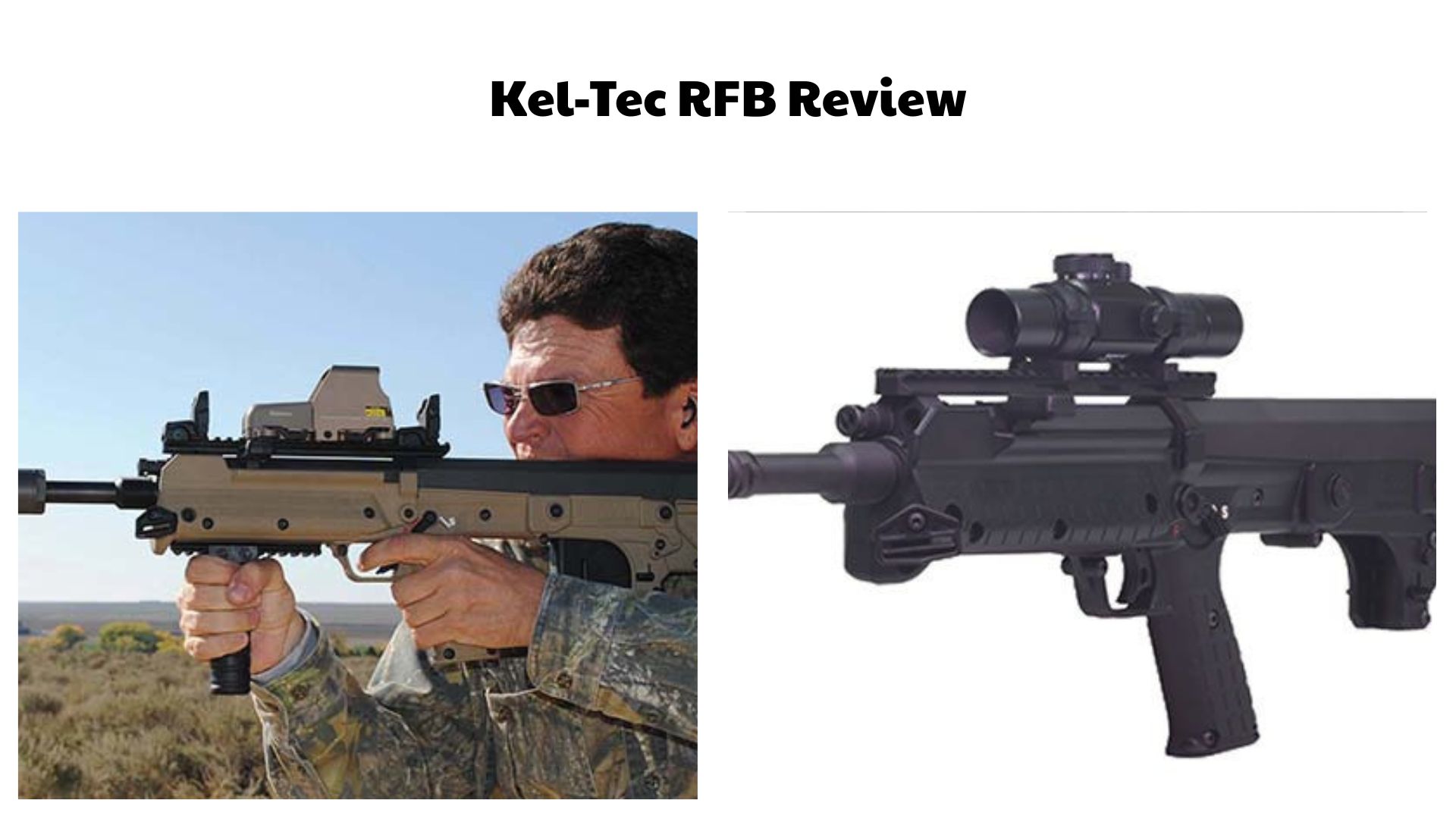

The Kel-Tec RFB is a highly distinctive .308 Winchester bullpup rifle that stands out in the modern firearms market due to its compact footprint, forward-ejecting system, and fully ambidextrous operation, all while maintaining the ballistic performance of a full-length barrel in a significantly shorter overall package. Designed for users who want the power of a battle rifle cartridge in a more maneuverable platform, the RFB combines innovation and practicality in a way that is both intriguing and, at times, controversial within the shooting community. It is often praised for its engineering creativity—especially its unique gas-piston system and enclosed forward-ejection design—while also receiving mixed feedback regarding long-term reliability, trigger feel, and overall refinement compared to more traditional AR-style or battle-proven platforms. Despite these debates, the RFB remains one of the most recognizable modern bullpup rifles due to its unconventional approach to solving classic design limitations.
Kel-Tec RFB Overview
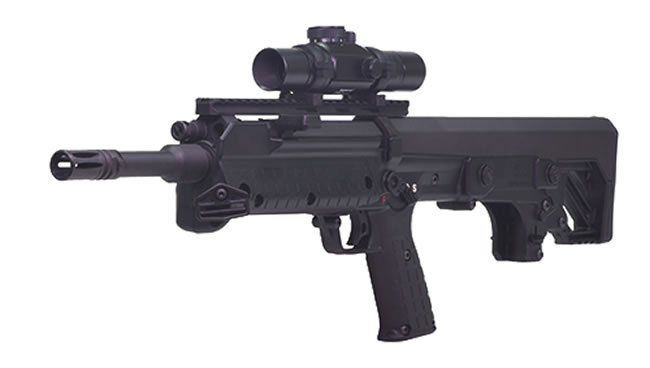
What is the Kel-Tec RFB?
The Kel-Tec RFB, which stands for “Rifle, Forward-ejecting Bullpup,” is a semi-automatic .308 Winchester rifle designed with the primary goal of reducing overall length without compromising barrel performance or ballistic effectiveness. By relocating the action behind the trigger group in a bullpup configuration, the rifle achieves a compact form factor while still retaining a full-length barrel that preserves velocity, accuracy potential, and terminal performance. The forward-ejecting system is one of its most defining characteristics, allowing spent brass to be safely directed out of the front of the rifle rather than to the side, which eliminates traditional ejection issues for left-handed shooters and improves usability in confined environments.
The design philosophy behind the RFB is centered on creating a modern tactical rifle that balances power, compactness, and ambidextrous functionality, making it suitable for a wide range of applications including civilian range shooting, defensive scenarios, survival preparedness, and compact “bug-out” setups. It is intended for users who value innovation and compact firepower, even if that means accepting certain trade-offs in ergonomics or aftermarket support.
Manufacturer Background – Kel-Tec CNC Industries
Kel-Tec CNC Industries is a U.S.-based firearms manufacturer widely recognized for its unconventional and innovation-driven approach to weapon design, particularly in the civilian market where experimentation with form factors is more flexible. The company has built a reputation for pushing engineering boundaries, often producing lightweight, compact, and highly original firearm platforms that challenge traditional design norms.
Over the years, Kel-Tec has introduced several bullpup and compact firearm concepts that emphasize portability and efficiency, and the RFB is one of its most ambitious rifle projects in the .308 category. While the company is praised for creativity and affordability compared to many competitors, it has also faced criticism regarding production consistency and finishing quality. In the modern rifle market, Kel-Tec occupies a niche position, appealing primarily to enthusiasts who value unique engineering solutions and compact tactical designs rather than strictly military-grade refinement or widespread institutional adoption.
Design and Engineering Features
Bullpup Configuration Advantages
The bullpup configuration of the Kel-Tec RFB provides one of its most significant advantages, as it allows the rifle to maintain a full-length barrel while dramatically reducing the overall length of the weapon system. This results in a rifle that is far easier to maneuver in confined environments such as vehicles, buildings, or dense terrain, without sacrificing the velocity and ballistic efficiency typically associated with longer barrel systems.
Another key advantage of the bullpup layout is the rearward shift of weight distribution, which places more of the rifle’s mass closer to the shooter’s shoulder. This can improve balance and reduce perceived front-end heaviness, especially when compared to traditional long-barreled .308 rifles. However, this configuration can also feel unconventional to shooters accustomed to AR-style ergonomics, particularly in terms of magazine placement and trigger linkage feel.
Forward Ejection System Explained
One of the most technically unique aspects of the RFB is its forward-ejection system, which is designed to solve one of the most common challenges in bullpup rifle designs: managing spent brass in a confined action space. Instead of ejecting casings to the side like conventional rifles, the RFB channels spent cartridges through an internal system that guides them forward and out of a chute located at the front of the handguard area.
This system provides a major safety and usability advantage because it prevents hot brass from ejecting near the shooter’s face, making the rifle fully ambidextrous without requiring configuration changes for left- or right-handed use. Compared to traditional side-eject rifles, the forward-ejection system is mechanically more complex, which contributes to both its innovative appeal and its potential sensitivity to maintenance and ammunition variability.
Gas Piston Operating System
The Kel-Tec RFB utilizes a short-stroke gas piston operating system rather than a direct impingement design, which helps isolate heat and carbon fouling away from the bolt carrier group. This system is designed to enhance reliability under adverse conditions and reduce internal fouling compared to more traditional gas systems commonly found in AR-10 style rifles.
A key feature of the system is its adjustable gas regulator, which allows the shooter to fine-tune gas flow depending on ammunition type, environmental conditions, or suppressor use. When properly tuned, the RFB can operate smoothly across a wide range of conditions, although improper adjustment or inconsistent ammunition selection may lead to cycling issues. The gas piston system also contributes to a different recoil impulse compared to direct impingement rifles, often perceived as slightly sharper but more controlled depending on configuration.
Build Quality and Materials
Polymer and Steel Hybrid Construction
The Kel-Tec RFB is constructed using a hybrid approach that combines a reinforced steel receiver core with extensive polymer housing components, allowing the rifle to maintain structural strength while keeping overall weight manageable for a .308 bullpup platform. The steel elements provide the necessary rigidity and durability to handle the pressures and stresses of sustained firing cycles, while the polymer exterior reduces unnecessary bulk and helps improve handling comfort during extended use.
This combination of materials reflects Kel-Tec’s broader design philosophy of balancing weight savings with functional durability, although opinions within the firearms community are divided regarding long-term finish quality and perceived robustness compared to more traditionally machined all-metal rifles.
Modular Breakdown Design
The Kel-Tec RFB is engineered around a modular breakdown system that allows the rifle to be separated into several main assembly groups, typically including the bolt assembly, barrel assembly, grip module, and receiver housing. This modularity simplifies both manufacturing and maintenance, while also making the rifle easier to transport and service in the field compared to more complex monolithic rifle designs.
Field stripping the RFB is generally straightforward once the user becomes familiar with its layout, and most routine maintenance tasks can be performed without specialized tools. However, due to the compact bullpup layout, some users may find initial disassembly less intuitive than traditional AR-style rifles, requiring a learning curve before efficient maintenance becomes routine.
Controls and Ergonomics
Ambidextrous Handling
One of the most notable ergonomic strengths of the Kel-Tec RFB is its truly ambidextrous design, which eliminates the traditional limitations found in many semi-automatic rifles where ejection direction and control placement often favor right-handed shooters. In the RFB, the forward-ejection system ensures that spent casings are directed away from the shooter regardless of dominant hand, making the platform inherently safe and comfortable for both left- and right-handed users without requiring mechanical changes or configuration swaps.
The safety selector is positioned in a way that allows relatively intuitive access, though its placement may feel slightly unconventional compared to AR-style rifles, especially for users who are accustomed to muscle memory developed on standard military-pattern platforms. The magazine insertion and release system, located behind the pistol grip due to the bullpup layout, can also require a learning curve, as reload procedures differ significantly from conventional rifle ergonomics, particularly under stress or timed conditions.
Charging Handle and Control Layout
The forward-mounted charging handle of the RFB is designed to provide a stable and accessible point for manually cycling the action without interfering with optics or rear-mounted components, while also contributing to the rifle’s compact overall profile. This location allows the shooter to manipulate the action without breaking their firing position as drastically as some traditional designs require, although it still feels different compared to AR-15 or AR-10 platforms.
In terms of ergonomic reach and usability, the control layout of the RFB prioritizes compact efficiency over conventional familiarity, meaning that while the rifle is highly functional once learned, it may initially feel less intuitive to shooters accustomed to AR-style controls. Compared to AR platforms, the RFB’s control scheme sacrifices some instinctive handling speed in exchange for compactness and bullpup efficiency, making training and repetition important for effective use.
Magazine Compatibility
FAL Magazine System
The Kel-Tec RFB uses metric FAL magazines, which connects the rifle to one of the most widely distributed battle rifle magazine systems in history. This compatibility allows users to take advantage of existing surplus and aftermarket FAL magazines, which are often more affordable and widely available than some proprietary magazine systems used in other modern rifles.
However, magazine availability and cost considerations can still vary depending on region and supply conditions, and while FAL magazines are generally accessible, they are not as universally common as AR-10 or AR-15 magazine ecosystems. The use of FAL magazines creates a mix of advantages and limitations, as it provides durability and proven design heritage while also limiting compatibility with more modern polymer magazine platforms.
In comparison to AR magazine systems, FAL magazines used in the RFB offer robust construction and historical reliability, but they lack the widespread modular ecosystem and accessory integration that modern AR platforms benefit from, which can be a disadvantage for users seeking standardized logistics.
Trigger Performance
Trigger Mechanism Design
The trigger system in the Kel-Tec RFB is based on a bullpup linkage mechanism, where the trigger shoe is mechanically connected to the fire control group located further rearward in the receiver assembly. This design is necessary due to the bullpup configuration, but it introduces additional mechanical linkage between the shooter’s finger and the sear engagement, which can affect trigger feel.
As a result, the trigger pull is often described as functional but not exceptionally crisp, with some degree of sponginess or stacking that is common among bullpup rifles due to the extended linkage path. While it is fully serviceable for defensive and tactical applications, it does not typically match the clean break and reset characteristics found in high-quality AR-platform triggers.
In newer production models, some incremental improvements have been made to smooth out trigger consistency and reduce perceived slack, but the fundamental limitations of bullpup trigger geometry remain a design constraint that cannot be fully eliminated without changing the platform architecture itself.
Accuracy and Shooting Performance
Real-World Accuracy Results
In real-world shooting conditions, the Kel-Tec RFB is generally capable of producing practical accuracy that is consistent with a combat-oriented .308 rifle, with typical group sizes at 100 yards often falling within a range that is suitable for defensive, tactical, and general-purpose shooting roles rather than precision competition use. While individual performance can vary depending on ammunition quality and shooter skill, the platform is not primarily designed as a dedicated precision rifle.
Barrel heating can have a noticeable effect on precision during extended firing strings, as is common with semi-automatic .308 rifles, and sustained rapid fire may lead to a gradual opening of group sizes. As a result, the RFB is best understood as a practical engagement rifle rather than a precision benchrest system, with its strengths lying in compact firepower rather than match-grade accuracy.
Recoil and Shooting Experience
The felt recoil of the Kel-Tec RFB in .308 configuration is generally manageable due to the rifle’s weight distribution and gas piston system, which helps mitigate some of the sharp impulse typically associated with high-pressure rifle cartridges. The bullpup design also contributes to a more rear-biased balance, which can help the shooter maintain control during rapid follow-up shots.
Muzzle rise is influenced by both the compact design and the positioning of mass closer to the shooter’s shoulder, resulting in a shooting experience that feels different from traditional AR-10 platforms. From a benchrest position, the rifle may feel slightly more compact and “rear-heavy,” while in field shooting scenarios, its maneuverability becomes a significant advantage, particularly in confined or dynamic environments.
Reliability and Common Issues
Break-In Period and Gas Tuning
The Kel-Tec RFB typically benefits from an initial break-in period during which internal components settle and cycling consistency improves, particularly when paired with proper lubrication and a range of ammunition types. During this phase, gas system tuning becomes especially important, as the adjustable regulator must be correctly set to match the pressure characteristics of the ammunition being used.
Ammo sensitivity during early use is not uncommon, and users may experience variations in cycling behavior depending on whether they are using full-power military loads, commercial .308, or suppressed configurations. Proper gas adjustment is therefore a critical factor in achieving consistent reliability.
Reported Malfunctions
Some users have reported feeding issues when using mixed or lower-quality ammunition, as well as occasional double feeds or failures to eject, particularly when the gas system is not optimally tuned. These issues are not universal but are often cited in discussions surrounding the platform’s real-world reliability compared to more established rifle designs.
User-reported variability in performance suggests that the RFB can be highly functional when properly set up, but less forgiving when neglected or paired with inconsistent ammunition, making maintenance and setup discipline important for dependable operation.
Long-Term Durability Feedback
Long-term durability feedback on the Kel-Tec RFB is mixed, with some owners reporting satisfactory performance over extended use, while others raise concerns about quality control consistency and component wear under heavy firing schedules. These differences in experience contribute to the rifle’s reputation as an innovative but somewhat polarizing platform.
When compared to competing bullpup rifles from more established military suppliers, the RFB is often seen as more experimental in nature, offering unique engineering solutions at the cost of uniformity and long-term institutional refinement.
Suppressor Compatibility
Adjustable Gas System Benefits
The adjustable gas system of the Kel-Tec RFB provides meaningful benefits for suppressor use, as it allows the shooter to fine-tune gas flow to compensate for increased back pressure when a suppressor is attached. This helps reduce over-gassing issues that can lead to excessive wear, increased recoil impulse, or unreliable cycling.
Tuning for suppressed fire is one of the platform’s practical strengths, as it allows the rifle to remain functional and controllable in configurations that might otherwise cause performance degradation in non-adjustable systems. As a result, the RFB can be adapted for a variety of operational roles where sound suppression and recoil management are priorities.
Advantages and Disadvantages
Key Advantages
The Kel-Tec RFB offers several significant advantages, including an extremely compact .308 platform that retains full-length barrel performance, a truly ambidextrous design enabled by forward ejection, a unique and innovative spent casing management system, and an adjustable gas system that enhances adaptability across different shooting conditions.
Key Disadvantages
Despite its strengths, the RFB also presents notable disadvantages, such as reliance on FAL magazine compatibility instead of modern AR-style magazines, a mixed reputation regarding long-term reliability consistency, a trigger feel that does not match high-end AR platforms, and relatively limited aftermarket support compared to more mainstream rifle systems.
Kel-Tec RFB vs Competing Bullpups
RFB vs IWI Tavor
Compared to the IWI Tavor, the RFB offers a more unique forward-ejection system and .308 capability in a compact form, while the Tavor is generally regarded as more refined in terms of reliability and military adoption, particularly in 5.56 configurations.
RFB vs Springfield Hellion
Against the Springfield Hellion, the RFB provides a different caliber class advantage in .308, whereas the Hellion focuses on 5.56 NATO with modern ergonomics and AR-like controls, making the Hellion more familiar to AR users while the RFB prioritizes raw power and compact .308 firepower.
RFB vs FN SCAR / AR-10 platforms
When compared to FN SCAR or AR-10 platforms, the RFB is significantly more compact due to its bullpup layout, but AR-10 and SCAR rifles generally offer superior modularity, broader aftermarket support, and a more established reliability track record in professional use environments.
Size comparison
The RFB maintains a much shorter overall length than traditional AR-10 rifles while preserving a full-length barrel, giving it a clear advantage in maneuverability and transportability.
Reliability comparison
In terms of reliability, AR-10 and SCAR platforms are generally considered more proven under a wider range of operational conditions, while the RFB is more dependent on tuning and maintenance discipline.
Ergonomics and usability differences
Ergonomically, the RFB prioritizes compact bullpup efficiency, while AR and SCAR platforms emphasize conventional control layouts and broader user familiarity, making each system suitable for different shooter preferences and training backgrounds.
Best Use Cases for the Kel-Tec RFB
Home Defense and Tactical Use
The compact size and .308 chambering make the RFB a capable option for defensive scenarios where maneuverability and firepower are both important considerations.
Range Shooting and Training
The RFB performs well in range environments where users want to train with a compact battle rifle platform and experience .308 recoil in a shorter configuration.
Survival / Bug-Out Rifle Concept
Its compact bullpup design makes it suitable for emergency preparedness or “bug-out” scenarios where space efficiency and versatility are prioritized.
Suppressed Shooting Applications
With proper gas tuning, the RFB can be effectively used in suppressed configurations, offering reduced noise and manageable recoil characteristics.
Final Verdict
The Kel-Tec RFB represents a highly innovative approach to the .308 bullpup rifle concept, combining compact design, forward ejection, and gas piston operation into a unique platform that prioritizes engineering creativity and space efficiency over traditional refinement. While it offers compelling advantages in size reduction, ambidextrous usability, and mechanical originality, it also comes with trade-offs in trigger quality, aftermarket support, and consistency compared to more established rifle systems.
Ultimately, the RFB is best suited for shooters who value innovation and compact firepower and are willing to accept a learning curve and potential tuning requirements. It is less ideal for users seeking maximum plug-and-play reliability or extensive modular customization, but it remains a distinctive and capable option in the modern rifle landscape.
Frequently Asked Questions (FAQ) – Kel-Tec RFB Review
1. What does RFB stand for in Kel-Tec RFB?
RFB stands for “Rifle, Forward-ejecting Bullpup,” which directly describes the firearm’s core design philosophy. The name highlights two defining characteristics of the platform: its bullpup configuration, where the action is located behind the trigger to reduce overall length, and its forward-ejection system, which safely directs spent casings out of the front of the rifle instead of the side. This combination is what makes the RFB one of the most distinctive .308 rifles in modern firearms design.
2. Is the Kel-Tec RFB a good rifle for beginners?
The Kel-Tec RFB can be used by beginners, but it is generally not considered the most ideal first rifle due to its unconventional bullpup layout and non-standard manual of arms. New shooters may find the magazine placement, trigger linkage feel, and charging handle operation less intuitive compared to AR-style platforms. However, once properly learned, it can be manageable and even enjoyable, especially for users committed to practicing and familiarizing themselves with its unique controls.
3. What caliber does the Kel-Tec RFB use?
The Kel-Tec RFB is chambered in .308 Winchester (7.62×51 NATO), which is a powerful and widely used battle rifle cartridge known for its strong ballistic performance and effective range. This caliber makes the RFB suitable for medium to long-range shooting applications, including tactical use, hunting in appropriate jurisdictions, and general-purpose defensive roles where higher energy delivery is desired.
4. How does the forward-ejection system work?
The forward-ejection system works by collecting spent casings inside an internal channel after they are extracted from the chamber. Instead of ejecting them to the side, the system guides them forward through a tube-like pathway, eventually releasing them at the front of the rifle near the handguard area. This design prevents brass from ejecting near the shooter’s face and allows the rifle to be fully ambidextrous without modification.
5. Is the Kel-Tec RFB ambidextrous?
Yes, the RFB is fully ambidextrous by design due to its forward-ejection system, which eliminates the need for side-based brass ejection. Both left-handed and right-handed shooters can use the rifle without any configuration changes, making it one of its strongest ergonomic advantages compared to traditional rifles.
6. Can left-handed shooters use the RFB safely?
Left-handed shooters can use the RFB safely and comfortably because the rifle does not eject brass to the side. This eliminates the common issue of hot casings ejecting across the shooter’s face. The ambidextrous design is one of the main reasons the RFB is considered lefty-friendly.
7. What magazines does the Kel-Tec RFB use?
The RFB uses metric FAL magazines, which are based on the magazine system used in the FN FAL battle rifle. These magazines are known for their durability and steel construction, and they are relatively widely available due to surplus production and aftermarket manufacturing.
8. Are FAL magazines still easy to find for the RFB?
FAL magazines are still available on the market, but their availability can vary depending on region and supply conditions. While they are not as ubiquitous as AR magazines, they are still considered reasonably accessible, especially through online firearm accessory retailers and surplus markets.
9. How reliable is the Kel-Tec RFB?
The reliability of the RFB is generally considered good when properly maintained and correctly tuned, but it is also known for variability depending on ammunition type, gas settings, and individual unit quality. Some users report smooth operation, while others experience cycling issues, making it a platform that benefits from careful setup and maintenance discipline.
10. Does the RFB require a break-in period?
Yes, many users report that the RFB benefits from a break-in period where internal components settle and cycling becomes smoother over time. During this phase, proper lubrication and testing with different ammunition types can help stabilize performance and improve reliability.
11. Is the Kel-Tec RFB good for home defense?
The RFB can be used for home defense due to its compact bullpup design and powerful .308 chambering, but its suitability depends on user familiarity and control proficiency. The short overall length makes it easier to maneuver indoors, but recoil and over-penetration considerations should be carefully evaluated.
12. How accurate is the Kel-Tec RFB at 100 yards?
At 100 yards, the RFB is generally capable of producing combat-accurate groups suitable for defensive and general-purpose shooting. While not a precision match rifle, it can deliver consistent performance with quality ammunition, typically within practical accuracy standards expected of semi-automatic .308 platforms.
13. Does barrel heating affect accuracy in the RFB?
Yes, like most semi-automatic .308 rifles, the RFB can experience reduced precision as the barrel heats up during sustained firing. As temperature increases, group sizes may gradually expand, making it more suitable for controlled semi-automatic fire rather than continuous rapid-fire precision shooting.
14. Is the RFB good for long-range shooting?
The RFB can engage targets at extended distances thanks to its .308 chambering, but it is not primarily designed as a dedicated long-range precision rifle. It performs best in mid-range applications where compactness and power are more important than extreme precision.
15. How heavy is the Kel-Tec RFB?
The RFB has a moderate weight for a .308 bullpup rifle, with enough mass to help control recoil but still light enough to be carried in tactical or field environments. Its weight distribution is shifted toward the rear, improving balance during handling.
16. What is the overall length of the RFB?
The RFB achieves a significantly reduced overall length compared to traditional .308 rifles due to its bullpup design, while still retaining a full-length barrel. This compact configuration makes it easier to transport and maneuver in confined spaces.
17. Is the RFB shorter than an AR-10?
Yes, the RFB is generally shorter than most AR-10 platforms because the bullpup configuration places the action behind the trigger, effectively reducing overall length without shortening the barrel.
18. How does recoil feel in the Kel-Tec RFB?
Recoil in the RFB is generally described as manageable but firm, typical of a .308 rifle. The gas piston system and rear-weighted bullpup design help reduce muzzle rise and make recoil feel more controlled compared to some lightweight traditional rifles.
19. Does the bullpup design improve handling?
Yes, the bullpup design improves handling in tight spaces by reducing overall length while maintaining barrel performance. However, it can also feel less intuitive due to unconventional magazine placement and trigger linkage design.
20. What are the main advantages of a bullpup rifle?
The main advantages of a bullpup rifle include compact size, full-length barrel performance in a shorter package, improved maneuverability in confined environments, and better weight distribution closer to the shooter’s body.
21. Is the Kel-Tec RFB good for suppressed shooting?
Yes, the RFB can be used with suppressors effectively due to its adjustable gas system, which allows tuning to reduce over-gassing and improve cycling consistency when back pressure increases.
22. Can you adjust the gas system on the RFB?
Yes, the RFB features an adjustable gas regulator that allows users to tune gas flow based on ammunition type, environmental conditions, and suppressor use for optimal performance.
23. What happens if the gas system is not tuned correctly?
If the gas system is not properly tuned, the rifle may experience cycling issues such as failures to eject, double feeds, or excessive recoil impulse. Correct adjustment is essential for reliable operation.
24. Does the RFB work with all types of .308 ammo?
The RFB can function with most .308 ammunition, but performance may vary depending on pressure levels and quality. Some lighter or inconsistent loads may require gas system adjustments for reliable cycling.
25. What is the trigger like on the Kel-Tec RFB?
The trigger on the RFB is serviceable but not match-grade, often described as having a longer pull and slightly spongy feel due to the bullpup linkage system that connects the trigger to the rear-mounted fire control group.
26. Is the trigger better on newer RFB models?
Newer RFB models show some improvements in trigger smoothness and consistency, but the fundamental limitations of bullpup trigger linkage still affect overall feel compared to AR-style triggers.
27. How difficult is it to clean the Kel-Tec RFB?
The RFB is moderately easy to clean once the user becomes familiar with its modular breakdown system. Routine maintenance can be performed without special tools, although the bullpup layout can initially feel less intuitive.
28. Can the RFB be field stripped easily?
Yes, the RFB can be field stripped into major components for cleaning and maintenance, but it requires familiarity with its design and sequence of disassembly steps.
29. Is the RFB made of polymer or metal?
The RFB uses a hybrid construction with a steel receiver core for strength and polymer housing for weight reduction, creating a balance between durability and portability.
30. How durable is the Kel-Tec RFB?
The RFB is generally durable for civilian and tactical use, but long-term durability perceptions vary among users, with some praising its performance and others questioning consistency under heavy use.
31. Does the RFB have a lot of recoil compared to AR-15?
Yes, the RFB has significantly more recoil than an AR-15 because it is chambered in .308 Winchester, a much more powerful cartridge designed for greater range and energy.
32. How does the RFB compare to the Tavor?
The RFB differs from the Tavor primarily in caliber and ejection system, with the RFB offering .308 power and forward ejection, while the Tavor typically focuses on 5.56 NATO with a more traditional bullpup design.
33. How does the RFB compare to the FN SCAR?
Compared to the FN SCAR, the RFB is more compact due to its bullpup design, but the SCAR generally offers higher military-grade refinement, modularity, and broader institutional adoption.
34. Is the Kel-Tec RFB worth the price?
Value depends on user priorities; the RFB is worth it for those seeking compact .308 innovation, but may not be ideal for users prioritizing maximum reliability or aftermarket support.
35. Why is the RFB considered innovative?
The RFB is considered innovative due to its forward-ejection system, bullpup .308 configuration, and adjustable gas piston design, all of which are relatively uncommon in mainstream rifle platforms.
36. What are common problems with the Kel-Tec RFB?
Commonly reported issues include sensitivity to gas tuning, occasional feeding inconsistencies, and variability in reliability depending on ammunition and maintenance practices.
37. Does the RFB jam frequently?
The RFB does not inherently jam frequently, but improper tuning, poor-quality ammunition, or insufficient maintenance can increase the likelihood of malfunctions.
38. Can the Kel-Tec RFB be used in tactical applications?
Yes, the RFB can be used in tactical applications, particularly where compact size and .308 firepower are valuable, although user training and system familiarity are important.
39. Is the RFB a good survival rifle?
The RFB can serve as a survival or “bug-out” rifle due to its compact size and power, but its reliance on specific magazines and tuning requirements should be considered.
40. Does the forward ejection system ever fail?
While generally reliable when clean and properly maintained, the forward ejection system can be affected by debris, fouling, or improper maintenance, potentially causing malfunctions.
41. Is the RFB better than a traditional AR-10?
The RFB is not universally better than an AR-10; it excels in compactness and ambidextrous design, while AR-10 platforms typically offer superior modularity, familiarity, and aftermarket support.
42. Can you mount optics on the Kel-Tec RFB?
Yes, the RFB includes rail space that allows mounting of optics, making it compatible with a wide range of modern sighting systems.
43. Does the RFB have a Picatinny rail system?
Yes, the RFB features Picatinny rail sections that allow attachment of optics, lights, and other tactical accessories.
44. Is there aftermarket support for the RFB?
Aftermarket support for the RFB is relatively limited compared to AR-platform rifles, which is one of the trade-offs of its more niche and specialized design.
45. How does the charging handle work on the RFB?
The charging handle is forward-mounted and used to manually cycle the action, allowing the shooter to chamber rounds or clear malfunctions without rearward access.
46. Is the RFB gas system adjustable without tools?
Yes, the gas system can be adjusted manually to tune performance based on ammunition or suppressor use, though care should be taken to follow proper settings.
47. What makes Kel-Tec rifles unique?
Kel-Tec rifles are known for their unconventional engineering approaches, lightweight designs, and innovative concepts such as bullpup layouts and non-traditional ejection systems.
48. Is the Kel-Tec RFB still in production today?
Yes, the RFB remains in production, although availability may vary depending on manufacturing cycles and market demand.
49. What is the main criticism of the RFB?
The main criticisms include inconsistent quality control perception, limited aftermarket support, and a trigger system that does not match traditional rifle standards.
50. Who should avoid buying the Kel-Tec RFB?
Users who prioritize maximum reliability, extensive customization, or AR-style ergonomics may find the RFB less suitable for their needs.
51. Is the RFB good for competition shooting?
The RFB is generally not considered ideal for competitive shooting due to its trigger characteristics and ergonomic limitations compared to purpose-built competition rifles.
52. How does brass ejection work in confined spaces?
Brass is routed forward through an internal system, preventing side ejection and making the rifle safer and more practical in confined or close-quarters environments.
53. Does the RFB run dirty compared to AR platforms?
The gas piston system helps reduce fouling compared to direct impingement AR platforms, but maintenance is still necessary to ensure long-term reliability.
54. What improvements has Kel-Tec made over time?
Over time, Kel-Tec has made incremental improvements in production consistency, trigger feel, and overall refinement, though the core design remains largely unchanged.
55. Is the Kel-Tec RFB a duty-grade rifle?
The RFB is generally viewed as a capable civilian tactical rifle, but opinions differ on whether it meets strict duty-grade standards compared to more widely adopted military rifles.
Read more: