
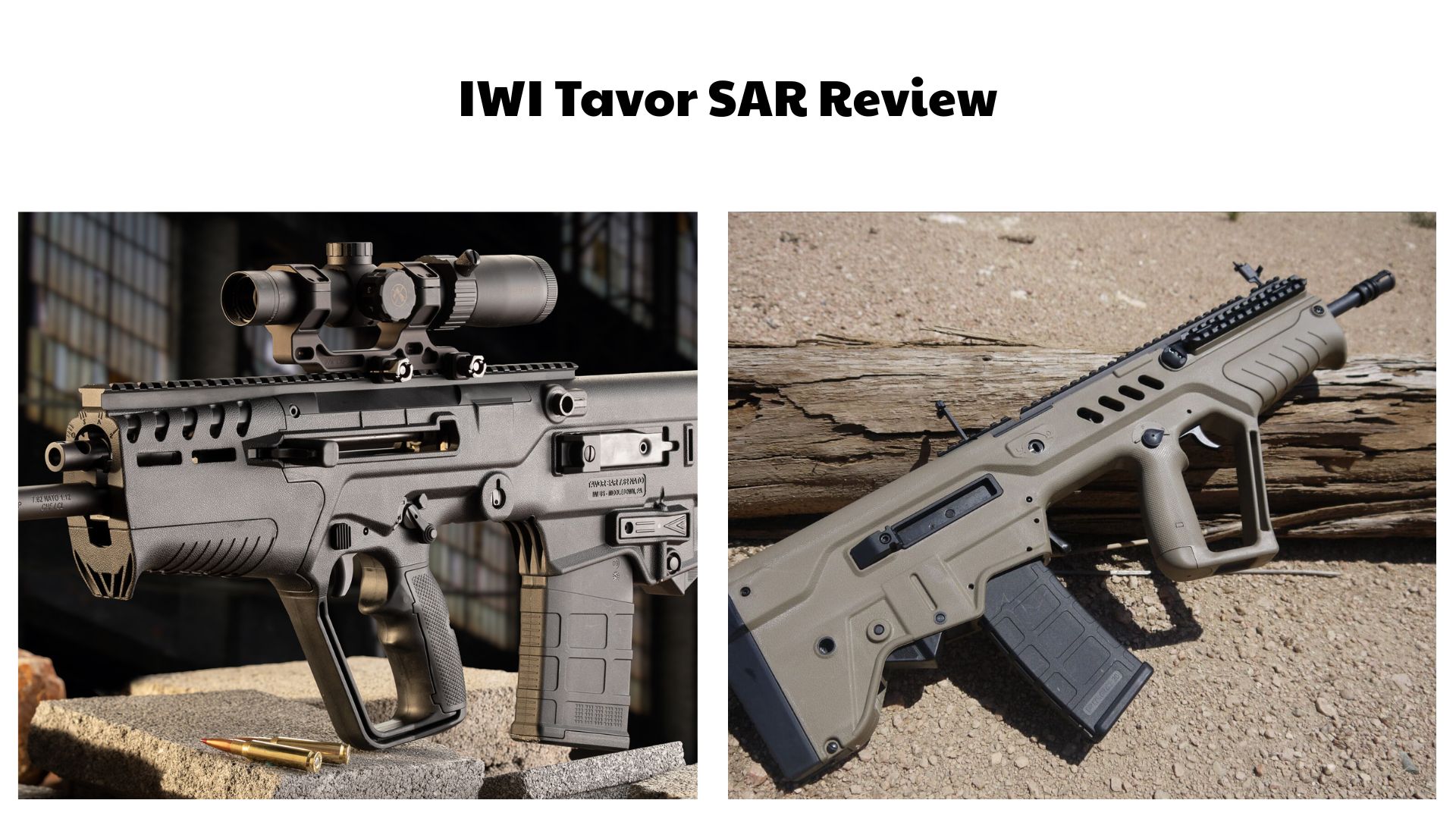

The IWI Tavor SAR is one of the most influential modern bullpup rifles, engineered by Israel Weapon Industries (IWI) to deliver military-grade reliability in a compact and highly maneuverable civilian platform. Chambered in 5.56 NATO, it combines a full-length barrel with a shortened overall footprint, giving shooters the ballistic performance of a standard rifle in a significantly more compact package. This design philosophy makes it especially effective for close-quarters environments while still maintaining the velocity and accuracy expected from a duty-grade rifle.
Built around a long-stroke gas piston operating system, the Tavor SAR is designed to function reliably under harsh environmental conditions where dirt, heat, and sustained firing can challenge other platforms. This piston-driven setup reduces fouling in the receiver compared to direct impingement systems, contributing to its reputation for ruggedness and long-term durability.
The rifle’s bullpup configuration places the action and magazine behind the trigger, shifting weight rearward and allowing for a shorter overall length without sacrificing barrel size. Combined with a full-length Picatinny rail and robust polymer chassis, the SAR variant of the Tavor emphasizes durability and optics compatibility in a combat-ready layout.
While widely respected for its reliability and compact design, the Tavor SAR also presents certain trade-offs. Its trigger system is heavier and less refined than many AR-15 platforms, and its ergonomics require adaptation for shooters accustomed to traditional rifle layouts. Despite these limitations, it remains a proven design used by military forces worldwide and is widely adopted by civilian shooters for home defense, tactical training, and general range use.
Overview of the IWI Tavor SAR
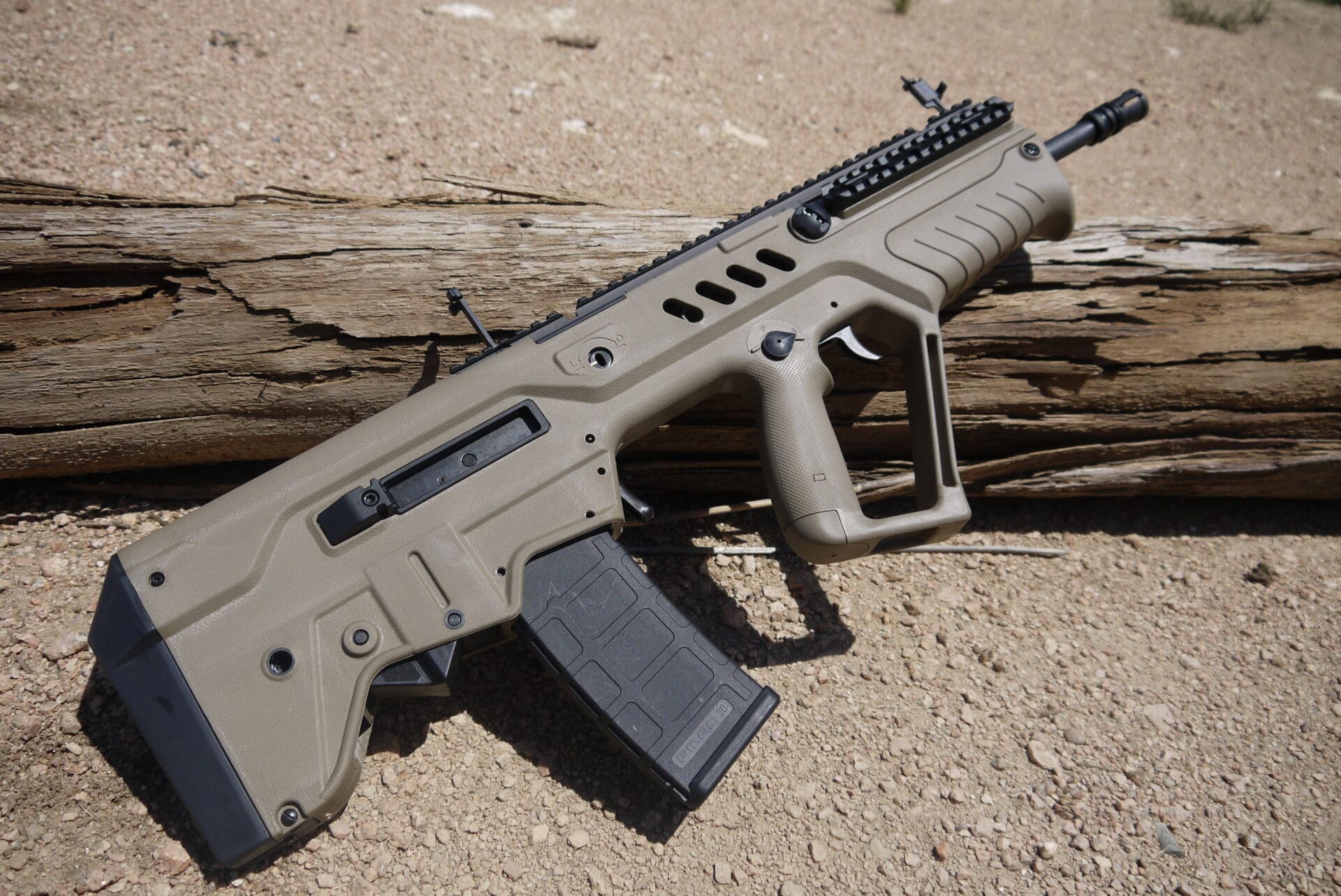
What is the IWI Tavor SAR?
The IWI Tavor SAR is a semi-automatic bullpup rifle designed for civilian use, based on the military TAR-21 platform. It retains the core operational principles of its military counterpart while adapting internal components and fire control systems to comply with civilian regulations. The result is a compact, high-performance rifle suitable for defensive and recreational applications.
Development history from Israeli military requirements
The Tavor series was developed in response to the Israeli military’s need for a compact rifle optimized for urban combat and close-quarters engagements. Traditional rifles were often too long and cumbersome in confined environments, leading IWI to design a bullpup system that maintained barrel length while reducing overall size. The SAR model represents one of the early civilian adaptations of this military lineage.
Civilian adaptation of the TAR-21 platform
The Tavor SAR is derived from the TAR-21, Israel’s standard-issue bullpup rifle. For civilian markets, the design was modified to operate in semi-automatic mode while maintaining the same gas piston system, chassis layout, and general ergonomics. This adaptation preserves much of the original battlefield-tested durability while ensuring legal compliance.
Purpose: close-quarters battle rifle with compact footprint
The primary purpose of the Tavor SAR is to serve as a compact battle rifle optimized for close-quarters combat. Its shortened overall length improves maneuverability in tight spaces such as buildings, vehicles, and urban environments, while still delivering the ballistic performance of a full-length 5.56 NATO rifle.
Market position in the bullpup rifle segment
In the bullpup market, the Tavor SAR occupies a strong mid-to-high tier position. It competes with platforms such as the Steyr AUG and later Tavor X95 variants. While it may lack some of the ergonomic refinements of newer designs, it is valued for its durability, military heritage, and proven field performance.
Design and Build Quality
Bullpup configuration and compact rifle layout
The bullpup configuration of the Tavor SAR places the action and magazine behind the trigger, significantly reducing overall length while maintaining a standard barrel length. This design improves maneuverability without compromising ballistic efficiency, making it ideal for close-quarters and confined environments.
Polymer receiver and reinforced chassis construction
The rifle uses a high-strength polymer shell reinforced with internal structural components. This reduces overall weight while maintaining rigidity and resistance to impact, heat, and environmental stress. The polymer chassis also contributes to the rifle’s corrosion resistance and long-term durability.
Full-length top Picatinny rail system
A continuous Picatinny rail runs along the top of the receiver, providing a stable platform for optics and accessories. This rail system is integral to the rifle’s design and ensures consistent zero retention even under heavy use or recoil stress.
Barrel length vs overall length efficiency
One of the key advantages of the Tavor SAR is its ability to maintain a full-length barrel within a compact frame. This allows it to achieve ballistic performance similar to traditional rifles while being significantly shorter in overall length, improving handling in confined spaces.
Weight distribution and rear-heavy balance characteristics
Due to its bullpup design, the Tavor SAR has a rear-biased weight distribution. This shifts the center of gravity closer to the shooter’s shoulder, improving control in tight movement scenarios but creating a different handling feel compared to front-heavy AR platforms.
Military-grade durability and environmental resistance
The Tavor SAR is engineered to meet military durability standards, allowing it to function reliably in extreme conditions including dust, sand, humidity, and temperature fluctuations. This rugged construction is one of its defining strengths.
Operating System and Action
Long-stroke gas piston system explained
The Tavor SAR uses a long-stroke gas piston system, where gas pressure from the fired round drives a piston connected directly to the bolt carrier. This system is known for its reliability and reduced fouling compared to direct impingement systems.
Closed-bolt semi-automatic operation
The rifle operates from a closed bolt in semi-automatic mode, meaning the bolt is fully forward and chambered before firing. This improves initial shot consistency and contributes to more predictable accuracy.
Forward-mounted bolt and recoil impulse behavior
The piston-driven bolt system is positioned forward in the chassis, contributing to a unique recoil impulse. The system distributes energy efficiently, resulting in a controlled and manageable shooting experience.
Reduced fouling compared to direct impingement AR systems
Unlike AR-15 platforms that vent gas directly into the receiver, the Tavor SAR keeps most fouling within the gas piston assembly. This results in a cleaner operating environment and potentially longer intervals between deep cleanings.
Cycling speed and reliability under harsh conditions
The piston system is optimized for reliability under adverse conditions. Even when exposed to dirt, dust, or heavy firing schedules, the Tavor SAR maintains consistent cycling performance, making it suitable for demanding operational environments.
Controls and Ergonomics
Bullpup manual of arms differences from AR-15
The Tavor SAR requires a different manual of arms compared to AR-15 platforms due to its bullpup layout. Controls are repositioned, and reload and manipulation techniques differ, requiring training for efficient operation.
Charging handle placement and manipulation
The charging handle is located forward on the rifle and can be used from either side. While functional and robust, its position requires users to adapt their manipulation technique compared to AR-style rear charging systems.
Magazine release design and user efficiency concerns
The magazine release is located at the rear of the magazine well, which can feel less intuitive than AR-style releases. While secure and reliable, it may slow down reload speed for inexperienced users.
Safety selector placement and usability
The safety selector is positioned near the trigger area for accessibility, though its feel and ergonomics differ from traditional rifle safeties. Users often require training to build muscle memory.
Ambidextrous limitations (SAR generation)
The SAR generation of the Tavor has limited ambidextrous features compared to later models like the X95. While usable by both left- and right-handed shooters, it may require configuration changes for optimal use.
Ergonomic strengths in confined environments
Despite its unconventional layout, the Tavor SAR performs well in confined spaces. Its compact length and rear-weighted balance make it easier to maneuver in tight corridors, vehicles, and indoor environments.
Magazine System and Reloading
Standard 30-round STANAG magazine compatibility
The Tavor SAR is compatible with standard 30-round STANAG magazines, making it highly versatile and allowing users to leverage widely available AR-15 magazine ecosystems.
Magazine insertion and retention system
The magazine insertion system is robust and designed for secure retention under stress. However, its rearward placement requires a slightly different insertion angle compared to traditional rifles.
Reload speed compared to AR platforms
Reload speeds on the Tavor SAR are generally slower than AR-15 platforms due to the bullpup configuration. With training, efficiency improves, but AR platforms still maintain an advantage in speed.
Tactical reload technique challenges
Tactical reloads can be more complex due to the location of the magazine well and controls. Users must develop muscle memory specific to the bullpup layout to perform reloads efficiently.
Reliability of magazine feeding under stress
When using quality magazines, the Tavor SAR maintains strong feeding reliability even under rapid fire or adverse conditions. Magazine quality remains an important factor for consistent performance.
Barrel, Caliber, and Ballistics
5.56 NATO chambering and performance overview
The Tavor SAR is chambered in 5.56 NATO, a widely used military cartridge known for its balance of velocity, accuracy, and terminal performance. This makes it effective for both defensive and tactical applications.
Cold hammer-forged barrel characteristics
The rifle typically features a cold hammer-forged barrel, which enhances durability, accuracy, and barrel life. This manufacturing process is widely used in military-grade firearms.
Velocity performance in bullpup configuration
Because the Tavor SAR retains a full-length barrel in a compact frame, it maintains strong muzzle velocity performance comparable to standard rifle configurations.
Effective range for combat and civilian use
The effective range of the Tavor SAR typically extends to several hundred yards, depending on shooter skill and ammunition selection. It performs well within typical defensive engagement distances.
Ammunition types and optimization for performance
The rifle is compatible with a wide range of 5.56 NATO ammunition types, including FMJ, soft point, and specialty defensive rounds. Ammunition selection can influence accuracy and terminal performance.
Ballistic advantages of full-length barrel in compact form
One of the key advantages of the Tavor SAR is its ability to deliver full-length barrel ballistic performance in a compact bullpup package, providing both maneuverability and effective terminal energy.
Accuracy and Shooting Performance
Typical accuracy range (2–4 MOA expectations)
The IWI Tavor SAR typically delivers accuracy in the 2–4 MOA range depending on ammunition quality, shooter skill, and environmental conditions. While not designed as a precision rifle, this level of accuracy is consistent with most duty-grade 5.56 NATO carbines and is more than sufficient for defensive and tactical applications.
Practical defensive accuracy vs precision shooting
The Tavor SAR is optimized for practical accuracy rather than precision marksmanship. It excels in fast target engagement at close to mid-range distances, where speed and reliability matter more than sub-MOA grouping. For precision shooting, AR-style platforms generally offer a slight advantage due to trigger and ergonomics.
Optics usage and sighting system performance
Most shooters pair the Tavor SAR with red dot or low-magnification optics to maximize its close-quarters effectiveness. The full-length rail provides a stable mounting platform, ensuring consistent zero retention and allowing fast target acquisition in dynamic shooting scenarios.
Stability in rapid fire engagements
In rapid fire, the Tavor SAR demonstrates strong stability due to its rear-biased weight distribution and piston-driven recoil system. The rifle remains controllable during controlled bursts, making it effective for defensive scenarios requiring fast follow-up shots.
Real-world grouping performance at 100 yards
At 100 yards, the Tavor SAR can produce consistent groupings suitable for defensive accuracy standards. While results vary based on ammunition and shooter proficiency, most rifles perform within a combat-effective accuracy envelope rather than precision competition standards.
Influence of barrel harmonics and piston system
The long-stroke gas piston system and bullpup barrel configuration influence barrel harmonics differently than direct impingement rifles. While this can slightly affect precision consistency, it contributes positively to reliability and durability under high round counts.
Recoil and Shooting Experience
Perceived recoil in bullpup configuration
The Tavor SAR produces moderate and manageable recoil in 5.56 NATO. The bullpup layout brings the recoil impulse closer to the shooter’s shoulder, creating a compact and controlled shooting experience.
Weight-assisted recoil absorption
The rifle’s rear-biased weight distribution helps absorb recoil energy more effectively than front-heavy rifles. This makes the shooting experience feel smoother and reduces perceived kick during sustained fire.
Muzzle rise control in rapid fire
Muzzle rise is relatively minimal due to the inline barrel alignment and piston system. Shooters can maintain a stable sight picture during rapid fire, improving follow-up shot speed and accuracy.
Comparison to AR-15 recoil impulse
Compared to an AR-15, the Tavor SAR has a slightly different recoil impulse that feels more compact and rearward-focused. While both platforms are manageable, the Tavor’s piston system produces a more mechanical and solid recoil sensation.
Comfort in sustained shooting sessions
The Tavor SAR remains comfortable during extended shooting sessions due to its balanced recoil and compact structure. However, its heavier trigger and bullpup ergonomics can contribute to shooter fatigue over long training periods.
Effect of rear-biased weight distribution
The rear-biased weight distribution enhances close-quarters handling but changes how recoil is perceived. Instead of forward muzzle heaviness, the rifle feels centered and compact, improving maneuverability but requiring adaptation for traditional rifle shooters.
Reliability and Durability
Battle-tested military reliability reputation
The Tavor SAR benefits from a strong military heritage and has been tested in real combat environments. Its design prioritizes reliability under extreme conditions, making it a trusted platform for military and law enforcement use.
Performance in harsh environmental conditions
The rifle performs well in harsh environments such as dust, sand, mud, and humidity. Its sealed polymer construction and piston system help maintain consistent function even when exposed to debris and adverse weather.
Sensitivity to ammunition quality
While generally reliable, the Tavor SAR performs best with quality ammunition. Lower-grade or inconsistent ammunition may occasionally affect cycling reliability, though major malfunctions remain uncommon.
Common malfunction types and causes
Most malfunctions are related to magazine issues, improper maintenance, or low-quality ammunition. Mechanical failures are rare, but feeding issues can occur if magazines are worn or improperly seated.
Break-in period considerations
Some Tavor SAR rifles benefit from a short break-in period during which internal components settle and cycling becomes smoother. After this phase, reliability typically stabilizes at a very high level.
Long-term durability of piston system
The long-stroke gas piston system is known for long-term durability due to reduced fouling and mechanical stress on internal components. This contributes to extended service life and consistent performance over time.
Maintenance and Field Stripping
Tool-less disassembly process overview
The Tavor SAR is designed for relatively simple field stripping without specialized tools. Key components can be accessed quickly for cleaning and inspection, making it practical for field maintenance scenarios.
Trigger pack removal system
The trigger pack can be removed as a modular unit, simplifying internal maintenance and allowing quick access to the fire control components. This modularity also aids in detailed cleaning and inspection.
Bolt carrier group maintenance requirements
The bolt carrier group requires regular cleaning and lubrication to ensure smooth cycling. While the piston system reduces fouling compared to AR platforms, carbon buildup still occurs in the bolt area.
Gas piston cleaning and lubrication
The gas piston assembly should be cleaned periodically to maintain optimal performance. Excess carbon or debris in the piston system can impact cycling efficiency if not addressed.
Polymer shell durability and wear points
The polymer shell is highly durable but may show wear over time in high-contact areas such as sling mounts and control interfaces. Overall structural integrity remains strong even after extensive use.
Ease of field maintenance in tactical conditions
The Tavor SAR is designed with field maintenance in mind, allowing basic cleaning and inspection to be performed efficiently in tactical or outdoor environments without specialized equipment.
Optics and Sight System
Full-length top rail advantages
The full-length Picatinny rail provides a stable and continuous mounting platform for optics. This ensures consistent zero retention and supports a wide range of modern sighting systems.
Red dot vs holographic optic setups
Red dot and holographic sights are the most popular choices for the Tavor SAR due to their fast target acquisition and suitability for close-quarters shooting. Both options perform well on the platform.
Iron sight backup usability
Iron sights serve as a backup option but are less commonly used due to the superior performance of modern optics. They remain functional in case of optic failure.
Optic height and cheek weld alignment
Proper optic height is important to maintain a comfortable cheek weld. The bullpup design requires some adjustment to ensure a natural and consistent sight picture.
Best optics for Tavor SAR platform
Compact red dots, holographic sights, and low-power variable optics (LPVOs) are commonly recommended. These provide a balance between speed and versatility depending on shooting needs.
Zero retention and rail stability
The integrated rail system is highly stable, allowing optics to retain zero effectively even under recoil and rough handling conditions.
Weight, Size, and Handling
Compact bullpup footprint benefits
The bullpup design significantly reduces overall length while maintaining a full-length barrel, making the Tavor SAR highly maneuverable in confined spaces.
Comparison to AR-15 carbines in size
Compared to AR-15 carbines with similar barrel lengths, the Tavor SAR is noticeably shorter overall, giving it an advantage in tight environments.
Maneuverability in close quarters
The compact design enhances maneuverability in indoor or vehicle-based scenarios, allowing easier movement around corners and confined spaces.
Storage and transport advantages
The reduced overall length makes the Tavor SAR easier to store and transport compared to traditional rifle platforms, especially in compact storage cases.
Rear-heavy balance characteristics
The rear-heavy balance improves close-quarters handling but creates a different shooting feel that may require adjustment for shooters accustomed to front-heavy rifles.
Handling trade-offs vs traditional rifles
While the Tavor SAR excels in compactness and maneuverability, it sacrifices some ergonomic familiarity and trigger refinement compared to traditional rifle platforms like the AR-15.
Advantages of the IWI Tavor SAR
Extreme compactness with full-length barrel
One of the most significant advantages of the Tavor SAR is its ability to maintain a full-length 5.56 NATO barrel within a highly compact bullpup chassis. This design provides rifle-level ballistic performance while greatly improving maneuverability in confined spaces such as buildings, vehicles, and urban environments.
Proven military-grade reliability
The Tavor SAR benefits from a design rooted in military requirements and battlefield testing. Its reputation for reliability under harsh conditions makes it a trusted platform among military forces and civilian users who prioritize dependability.
Gas piston system cleanliness
The long-stroke gas piston system reduces fouling in the receiver compared to direct impingement systems. This results in a cleaner-running rifle that requires less frequent intensive maintenance, especially during high-round-count sessions.
Durable polymer construction
The reinforced polymer chassis provides excellent durability while keeping overall weight manageable. It is resistant to corrosion, impact, and environmental stress, making it suitable for long-term use in demanding conditions.
Effective CQB performance
Thanks to its short overall length and balanced weight distribution, the Tavor SAR excels in close-quarters combat scenarios. It allows fast target transitions and improved maneuverability in tight spaces compared to traditional rifle platforms.
Strong optics mounting platform
The full-length Picatinny rail provides a stable and versatile mounting platform for optics. This ensures consistent zero retention and allows users to configure the rifle with modern red dots, holographic sights, or magnified optics.
Disadvantages and Limitations
Heavy and mushy trigger system
One of the most commonly cited drawbacks of the Tavor SAR is its trigger system. Due to the mechanical linkage required in bullpup designs, the trigger pull is heavier and less crisp compared to AR-15 platforms, which can affect precision shooting performance.
Less intuitive ergonomics than AR platforms
The bullpup layout requires users to adapt to a different manual of arms. Controls are repositioned, and some operations feel less intuitive compared to traditional AR-style rifles, especially for new users.
Magazine release inefficiency
The magazine release system, while secure, is less ergonomic than AR-15 designs. This can slow down reload speeds and require additional training to achieve efficient manipulation under stress.
Limited aftermarket customization
Compared to AR platforms, the Tavor SAR has limited aftermarket support. While some upgrades exist, customization options for triggers, grips, and accessories are significantly more restricted.
Weight perception due to rear balance
Although the overall weight is manageable, the rear-heavy balance of the bullpup design can make the rifle feel heavier than it actually is, especially during extended use or unsupported shooting positions.
Cost vs modern bullpup alternatives (X95)
The Tavor SAR is often compared to newer bullpup designs like the Tavor X95. In many cases, the SAR is considered less refined while still being similarly priced, leading some users to prefer newer alternatives with improved ergonomics and modularity.
Ideal Use Cases
Home defense applications
The Tavor SAR is highly effective for home defense due to its compact size, ease of maneuverability in tight spaces, and reliable 5.56 NATO performance. It allows quick target engagement in confined environments.
Tactical training and CQB environments
The rifle is well-suited for tactical training and close-quarters battle scenarios where compactness and rapid target transitions are essential. Its design supports dynamic movement and fast response shooting.
Duty-style civilian defensive use
For civilian defensive roles, the Tavor SAR offers a military-inspired platform with proven reliability. It is often chosen by users seeking a duty-style rifle for preparedness or defensive purposes.
Range shooting and recreational use
The Tavor SAR performs well as a recreational range rifle. Its low recoil and unique bullpup design make it enjoyable to shoot, even though it may not be optimized for precision competition.
Not ideal for precision or competition shooting
Due to its trigger characteristics and ergonomics, the Tavor SAR is not typically preferred for precision shooting or competitive disciplines where fine trigger control and modular tuning are important.
Final Verdict on IWI Tavor SAR
Overall performance summary
The IWI Tavor SAR is a rugged, battle-proven bullpup rifle that delivers strong reliability, compact handling, and solid 5.56 NATO performance. It is designed more for durability and practicality than precision refinement.
Strength vs weakness balance
Its strengths lie in its compact design, piston reliability, and military-grade construction, while its weaknesses include a heavy trigger, limited ergonomics, and reduced aftermarket support compared to AR platforms.
Value compared to modern bullpups (X95, AUG, etc.)
When compared to newer bullpup rifles such as the Tavor X95 or Steyr AUG, the SAR is often seen as less refined but still highly capable. Its value depends on whether the user prioritizes proven durability over modern ergonomics.
Practical role in 2026 firearm market
In 2026, the Tavor SAR remains relevant as a dependable bullpup option for shooters who prioritize reliability and compactness. However, it competes with more modern platforms that offer improved ergonomics and modularity.
Who should consider or avoid the Tavor SAR
The Tavor SAR is best suited for shooters who want a rugged, compact defensive rifle with military heritage and are willing to adapt to bullpup ergonomics. It may not be ideal for users who prioritize lightweight handling, precision shooting, or extensive customization options.
FAQ – IWI Tavor SAR Review
1. What is the IWI Tavor SAR?
The IWI Tavor SAR is a semi-automatic bullpup rifle chambered in 5.56 NATO. It is the civilian version of Israel’s TAR-21 military rifle, designed to provide compact size without sacrificing barrel length or ballistic performance. It is widely used for home defense, tactical training, and recreational shooting.
2. What does SAR stand for in Tavor SAR?
SAR stands for “Short Assault Rifle,” highlighting its compact bullpup design intended for close-quarters use while still maintaining full rifle capabilities.
3. Is the Tavor SAR based on a military rifle?
Yes, the Tavor SAR is based on the Israeli TAR-21 military rifle platform, which was developed for infantry use in urban and close-quarters combat environments.
4. What caliber does the Tavor SAR use?
The Tavor SAR is chambered in 5.56×45mm NATO, a standard military cartridge known for its balance of velocity, recoil control, and effective range.
5. Is the Tavor SAR a bullpup rifle?
Yes, it is a bullpup rifle, meaning the action and magazine are located behind the trigger. This allows a shorter overall length while retaining a full-length barrel.
6. How does the bullpup design benefit the Tavor SAR?
The bullpup configuration makes the rifle significantly more compact without sacrificing barrel length. This improves maneuverability in tight spaces while maintaining ballistic performance comparable to full-sized rifles.
7. What is the barrel length of the Tavor SAR?
The standard barrel length is approximately 16.5 inches, which provides full 5.56 NATO performance in a compact bullpup platform.
8. What is the overall length of the Tavor SAR?
The Tavor SAR has an overall length of roughly 26–27 inches, making it significantly shorter than most AR-15 carbines with similar barrel lengths.
9. Is the Tavor SAR legal in the United States?
Yes, the Tavor SAR is legal in most U.S. states, though restrictions may apply depending on local assault weapon laws, magazine capacity limits, or feature-based regulations.
10. Is the Tavor SAR still in production?
The SAR model has largely been replaced by the newer Tavor X95 in many markets, but it is still available through secondary markets and remains widely used.
11. What type of operating system does the Tavor SAR use?
It uses a long-stroke gas piston system, which improves reliability by keeping carbon fouling away from the receiver and internal fire control components.
12. Is the Tavor SAR reliable?
Yes, the Tavor SAR is known for high reliability, especially in harsh environments such as dust, sand, and high-round-count firing conditions.
13. How accurate is the Tavor SAR?
Typical accuracy ranges from 2 to 4 MOA depending on ammunition and shooter skill. It is designed for combat effectiveness rather than precision shooting.
14. Why is the Tavor SAR not extremely accurate?
Its bullpup design, piston system, and heavy trigger linkage can slightly reduce precision compared to AR-15 platforms, which are more optimized for accuracy.
15. Is the Tavor SAR good for home defense?
Yes, it is an excellent home defense rifle due to its compact size, low recoil, and reliable operation, making it effective in confined indoor spaces.
16. Is the Tavor SAR good for beginners?
It can be suitable for beginners in terms of recoil and reliability, but its unconventional ergonomics require training to become proficient.
17. Does the Tavor SAR have low recoil?
Yes, the recoil is relatively low due to the 5.56 NATO cartridge and the rear-weighted bullpup design, which helps absorb recoil energy effectively.
18. How does recoil compare to an AR-15?
Recoil is similar or slightly softer in perceived feel, but the impulse is different due to the piston system and weight distribution.
19. What magazines does the Tavor SAR use?
It uses standard STANAG AR-15 magazines, including common 30-round magazines, making it highly compatible with widely available magazines.
20. Are magazines easy to change on the Tavor SAR?
Magazine changes are slightly slower than AR platforms due to the rearward placement of the magazine well, requiring more practice for efficiency.
21. Is the trigger on the Tavor SAR good?
The trigger is functional but heavy and less crisp than AR-15 triggers due to the mechanical linkage required in bullpup designs.
22. Can the Tavor SAR trigger be upgraded?
There are limited aftermarket trigger upgrades available, but improvements are modest compared to the extensive AR-15 trigger ecosystem.
23. Is the Tavor SAR ambidextrous?
It is partially ambidextrous, but early SAR models are not fully optimized for left-handed shooters compared to newer bullpup designs.
24. Does the Tavor SAR eject brass to the side?
Yes, it ejects spent casings to the side, which can be adjusted for left or right-hand configuration depending on setup.
25. Can left-handed shooters use the Tavor SAR?
Yes, but configuration adjustments may be required for optimal use, especially in SAR models with limited ambidextrous features.
26. Is the Tavor SAR heavy?
It is moderately heavy compared to some carbines, but its weight is well-balanced due to the bullpup design.
27. Why does the Tavor SAR feel rear-heavy?
Because the action and magazine are located behind the trigger, most of the rifle’s weight is concentrated toward the rear shoulder area.
28. Is the Tavor SAR good for CQB?
Yes, it excels in close-quarters battle due to its compact size and ease of maneuverability in tight spaces.
29. How does the Tavor SAR perform in rapid fire?
It performs well in rapid fire due to low recoil and stable balance, allowing fast follow-up shots.
30. Is the Tavor SAR good for long-range shooting?
It is not ideal for long-range precision shooting, though it can engage targets effectively within several hundred yards.
31. What optics work best on the Tavor SAR?
Red dot sights, holographic optics, and low-power variable optics (LPVOs) are most commonly used for versatility and speed.
32. Does the Tavor SAR come with iron sights?
Yes, it typically includes backup iron sights, though most users prefer optical sights for better performance.
33. Is the rail system on the Tavor SAR good?
Yes, the full-length Picatinny rail is stable and provides excellent mounting flexibility for optics and accessories.
34. Does the Tavor SAR lose zero easily?
No, the rail system is generally stable and maintains zero well under normal use conditions.
35. Is the Tavor SAR easy to clean?
It is moderately easy to clean, though more complex than AR-15 rifles due to its bullpup internal layout.
36. How often should the Tavor SAR be cleaned?
Regular cleaning after heavy use is recommended, though the piston system allows longer intervals between deep cleanings.
37. Is the Tavor SAR durable?
Yes, it is highly durable and built to military standards, capable of withstanding harsh environmental conditions.
38. Can the Tavor SAR run dirty?
Yes, it is designed to function reliably even when dirty, thanks to its piston-driven operating system.
39. What ammo works best in the Tavor SAR?
High-quality 5.56 NATO ammunition is recommended for best reliability and consistency, though it can run most standard loads.
40. Does the Tavor SAR require a break-in period?
Some users report a short break-in period where the action becomes smoother after initial rounds are fired.
41. Is the Tavor SAR expensive?
Yes, it is generally more expensive than many AR-15 rifles due to its imported design and military-grade construction.
42. Why is the Tavor SAR more expensive than AR-15s?
Its cost reflects imported manufacturing, specialized bullpup engineering, and military-derived design features.
43. Is the Tavor SAR worth it?
It is worth it for users who prioritize compactness, reliability, and a unique platform, but not necessarily for those seeking customization or precision.
44. What are the disadvantages of the Tavor SAR?
Main disadvantages include heavy trigger pull, slower reloads, and limited aftermarket support compared to AR platforms.
45. Is the Tavor SAR better than an AR-15?
It is not strictly better; it is different. The AR-15 excels in modularity and ergonomics, while the Tavor SAR excels in compactness and durability.
46. Is the Tavor SAR outdated?
It is not outdated, but newer models like the X95 offer improved ergonomics and refinements over the SAR.
47. What replaced the Tavor SAR?
The Tavor X95 is the primary successor, offering updated ergonomics, modularity, and improved controls.
48. Who should buy the Tavor SAR?
It is ideal for shooters who want a compact, rugged defensive rifle with military heritage and are willing to learn bullpup handling.
49. Who should avoid the Tavor SAR?
Shooters who prioritize precision, lightweight handling, or AR-style ergonomics may prefer alternative platforms.
50. What makes the Tavor SAR unique?
Its bullpup layout, military heritage, piston system, and compact design while maintaining a full-length barrel make it highly unique in the civilian rifle market.
51. Is the Tavor SAR still relevant in 2026?
Yes, it remains relevant as a reliable bullpup option, especially for users prioritizing durability and compact design over modularity.
Read more: