
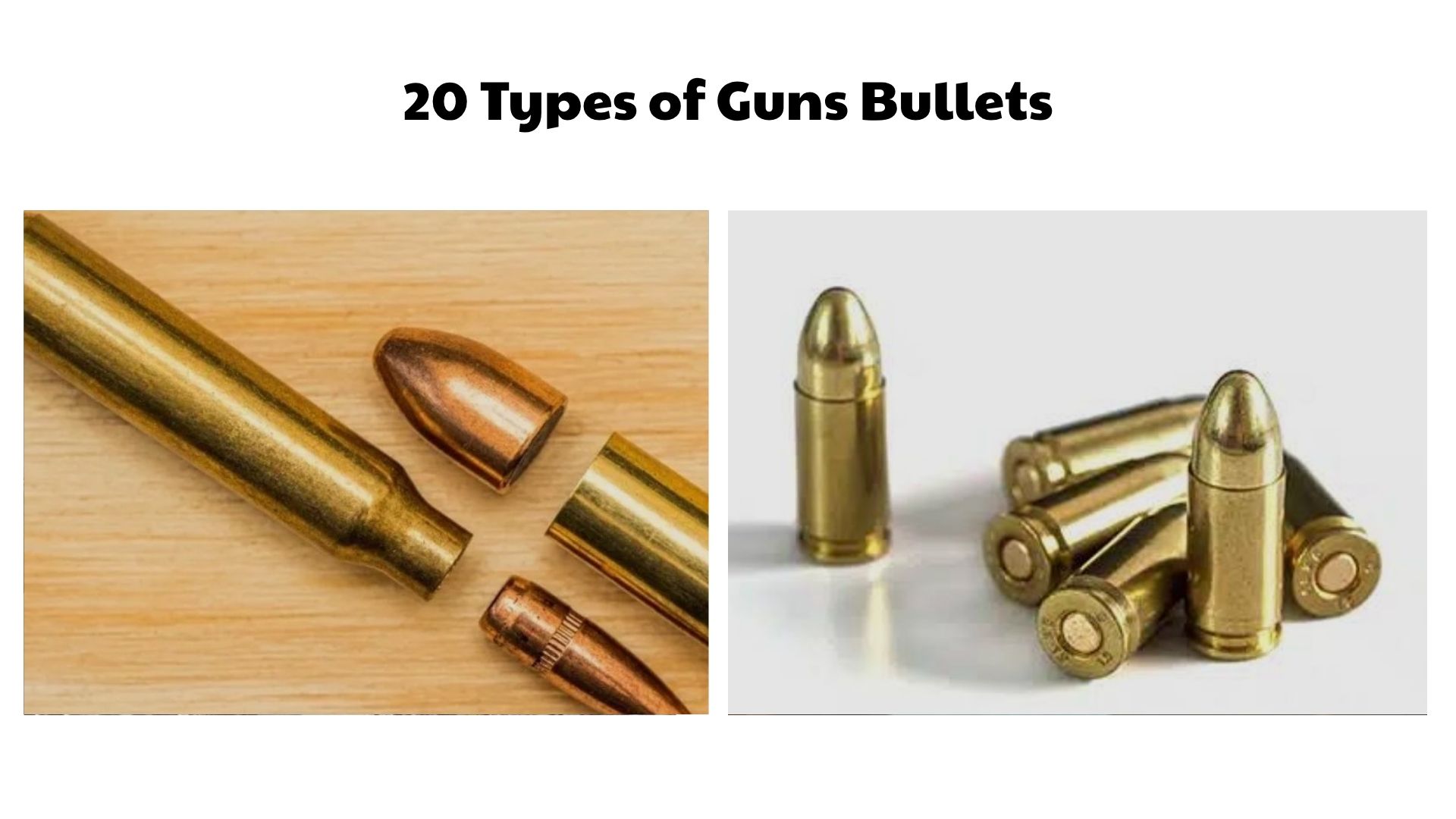

When people talk about firearms, the focus often lands on the gun itself—but the real story begins with the bullet. The wide range of types of guns bullets determines how a firearm performs, how it interacts with a target, and what purpose it serves in real-world use. From simple training rounds to highly specialized designs, each bullet type is engineered with a specific role in mind. Understanding these differences does not require deep technical knowledge; instead, it comes down to recognizing how shape, material, and structure influence behavior. In this guide, we will explore 20 carefully selected guns bullets, breaking them down into clear, practical explanations that are easy to follow and genuinely useful.
20 Types of Guns Bullets
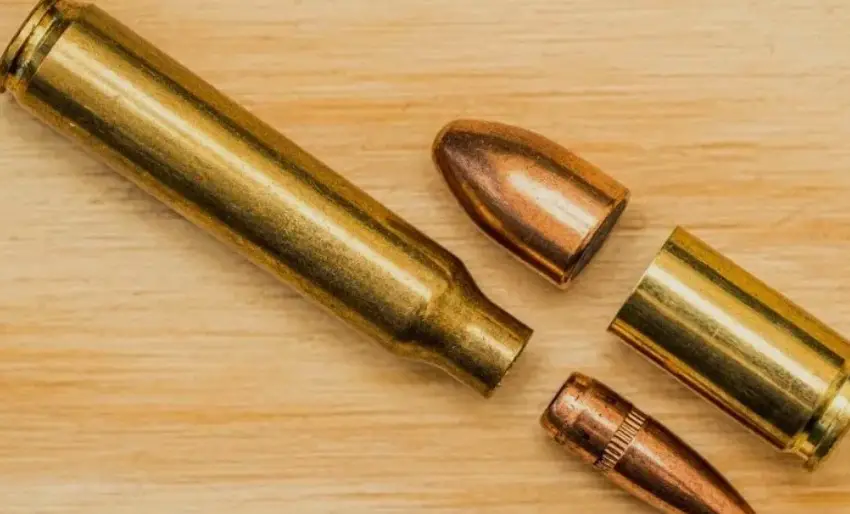
1. Full Metal Jacket (FMJ)
Full Metal Jacket, often abbreviated as FMJ, is one of the most widely recognized and commonly used types of guns bullets in the world, especially for training and general shooting purposes. This bullet design features a soft lead core that is completely encased in a harder metal shell, typically made from copper or a copper alloy, which helps maintain the bullet’s shape during firing and impact. The primary goal of this design is to ensure smooth feeding in semi-automatic firearms while reducing barrel fouling, making it a practical and reliable option for high-volume shooting environments such as target practice or range sessions.
One of the defining characteristics of FMJ bullets is their tendency to penetrate targets rather than expand upon impact, which sets them apart from more specialized ammunition designed for hunting or self-defense. This behavior makes them particularly suitable for controlled shooting scenarios where consistent performance is more important than terminal effect. In the broader context of guns bullets, FMJ rounds are often chosen for their affordability and availability, as they are generally less expensive to manufacture compared to more complex bullet designs.
Another important aspect of FMJ bullets is their role in standard military applications, where reliability and consistency are critical. The design allows for predictable trajectories and stable flight paths, which are essential for accuracy over distance. While they may not offer the same level of stopping power as expanding bullets, their ability to maintain structural integrity makes them a dependable choice in situations where penetration is required.
Overall, Full Metal Jacket bullets represent a foundational category within types of guns bullets, providing a straightforward and effective solution for training, target shooting, and general use. Their simplicity and reliability continue to make them a staple in the world of firearms, even as more advanced designs emerge.
2. Hollow Point (HP)
Hollow Point bullets are among the most well-known types of guns bullets designed specifically for controlled expansion upon impact, making them a common choice for self-defense applications. Unlike FMJ rounds, these bullets feature a hollowed-out cavity at the tip, which causes the bullet to expand when it strikes a target. This expansion increases the bullet’s diameter, creating a larger wound channel while reducing the risk of over-penetration, which is an important consideration in defensive scenarios.
The design of Hollow Point bullets is focused on maximizing energy transfer, ensuring that the force of the impact is concentrated within the target rather than passing through it. This characteristic distinguishes them from other guns bullets that prioritize penetration over expansion. As a result, Hollow Point ammunition is often recommended for situations where stopping power is critical, such as personal defense or law enforcement use.
In addition to their functional advantages, Hollow Point bullets are engineered to perform reliably across different conditions, including varying velocities and target types. Modern advancements in bullet design have improved their consistency, ensuring that they expand as intended without compromising accuracy. This balance of performance and predictability makes them a trusted option among those who require dependable defensive ammunition.
In summary, Hollow Point bullets play a significant role within types of guns bullets by offering a design that prioritizes safety and effectiveness in close-range situations. Their ability to expand upon impact sets them apart, making them a key option for users focused on defensive applications.
3. Jacketed Hollow Point (JHP)
Jacketed Hollow Point bullets build upon the basic concept of Hollow Point designs by adding a metal jacket around the lead core, resulting in a more controlled and reliable expansion process. This combination places them firmly among the most advanced types of guns bullets for self-defense, as they offer a balance between structural integrity and expansion capability. The jacket helps the bullet maintain its shape during flight, while the hollow cavity ensures that it expands effectively upon impact.
One of the key advantages of JHP bullets is their consistency. Unlike simpler designs, the jacketed construction allows for more predictable performance, which is crucial in situations where reliability cannot be compromised. This makes them a preferred choice among law enforcement agencies and experienced shooters who require dependable results. In the broader category of guns bullets, JHP rounds are often seen as a refined evolution of the standard Hollow Point.
Another important factor is their versatility. JHP bullets are available in a wide range of configurations, allowing users to select options that match their specific needs, whether for compact handguns or full-size firearms. This adaptability ensures that they remain relevant across different platforms and use cases, further solidifying their position within the market.
Overall, Jacketed Hollow Point bullets represent a sophisticated approach to bullet design within types of guns bullets. By combining expansion with structural stability, they provide a reliable and effective solution for defensive use, making them one of the most widely trusted options available.
4. Soft Point (SP)
Soft Point bullets are a classic example of types of guns bullets designed for controlled expansion, particularly in hunting applications. These bullets feature a partially exposed lead tip, which allows them to expand upon impact while still maintaining enough structural integrity to penetrate effectively. This balance between expansion and penetration makes them well-suited for medium-sized game, where both factors are important for ethical and effective hunting.
The design of Soft Point bullets reflects a practical approach to bullet performance. Unlike Hollow Point designs, which rely on a cavity to expand, Soft Point bullets use the exposed lead tip to initiate expansion. This results in a more gradual deformation, which can be advantageous in certain scenarios where deeper penetration is required. Among guns bullets, this characteristic places Soft Point rounds in a unique position between non-expanding and rapidly expanding designs.
Another advantage of Soft Point bullets is their reliability across different conditions. The simpler design reduces the likelihood of inconsistent performance, making them a dependable choice for hunters who need predictable results. They are also relatively easy to manufacture, which contributes to their widespread availability and affordability compared to more complex bullet types.
In summary, Soft Point bullets remain an important category within types of guns bullets, offering a practical and effective solution for hunting and similar applications. Their ability to balance expansion and penetration ensures they continue to be a trusted option for those who require consistent performance in the field.
5. Lead Round Nose (LRN)
Lead Round Nose bullets, commonly referred to as LRN, are among the simplest and most traditional types of guns bullets, characterized by their rounded shape and all-lead construction. This straightforward design has been used for decades, particularly in revolvers and older firearm platforms, where reliability and ease of use are key considerations. Despite the emergence of more advanced bullet designs, LRN bullets continue to hold relevance due to their simplicity and effectiveness in basic shooting scenarios.
One of the primary advantages of LRN bullets is their affordability. Because they are made entirely from lead without additional jackets or complex features, they are less expensive to produce, making them a popular choice for target practice and recreational shooting. In the broader landscape of guns bullets, this cost-effectiveness makes them accessible to a wide range of users, especially those who shoot frequently.
Performance-wise, LRN bullets are known for their consistent behavior, though they do not offer the same level of expansion or penetration as more specialized designs. Their rounded shape allows for smooth feeding in certain firearms, but they may not perform as reliably in all semi-automatic platforms compared to jacketed bullets. Still, for many applications, their straightforward design is more than sufficient.
Overall, Lead Round Nose bullets represent a foundational element within types of guns bullets. They may lack the advanced features of modern ammunition, but their simplicity, affordability, and consistent performance ensure they remain a practical choice for everyday shooting needs.
6. Wadcutter (WC)
Wadcutter bullets are a distinctive category within types of guns bullets, primarily designed for precision target shooting. Their most recognizable feature is the flat-front profile, which is almost cylindrical in shape, allowing them to cut clean, round holes in paper targets rather than tearing irregular shapes. This makes scoring easier and more accurate, especially in competitive shooting environments where precision matters more than terminal performance. Wadcutter bullets are commonly used in low-velocity handgun cartridges, particularly in revolvers, where their design performs most efficiently.
The flat face of a wadcutter bullet creates a unique interaction with air resistance and target impact. While this design is not optimized for long-range stability or penetration, it excels in short-range accuracy scenarios. Among guns bullets, wadcutters are valued for their consistency and predictable behavior, which helps shooters develop fundamental skills such as trigger control and sight alignment. Their reduced recoil also makes them suitable for beginners or those engaged in extended training sessions.
Another practical aspect of wadcutter bullets is their ease of loading and use in controlled environments. They are often chosen in competitive disciplines like bullseye shooting, where tight grouping is more important than ballistic performance. While they are not intended for defensive or hunting purposes, their role in training is significant and well established.
Overall, wadcutter bullets represent a highly specialized but important segment of types of guns bullets, focusing entirely on precision and consistency in target shooting scenarios.
7. Semi-Wadcutter (SWC)
Semi-Wadcutter bullets bridge the gap between wadcutter and traditional round-nose designs, making them a versatile option within types of guns bullets. They feature a flat tip similar to wadcutters but include a tapered shoulder that improves feeding in semi-automatic firearms and enhances ballistic performance. This hybrid shape allows them to perform well in both target shooting and light hunting applications, depending on the load and firearm used.
The design of semi-wadcutter bullets is intended to improve efficiency without sacrificing accuracy. The flat front still creates clean target holes, while the tapered section reduces drag compared to full wadcutters. This makes them more suitable for slightly longer distances and more varied shooting conditions. In the broader category of guns bullets, SWC rounds are appreciated for their balance between precision and practicality.
Another advantage of semi-wadcutter bullets is their versatility in different firearm platforms. They are commonly used in revolvers and some semi-automatic pistols that are tuned for their profile. This adaptability makes them a popular choice among shooters who want a single bullet type for multiple purposes, especially in training environments.
Overall, semi-wadcutter bullets offer a practical compromise within types of guns bullets, combining the precision of wadcutters with improved feeding and performance characteristics.
8. Open Tip Match (OTM)
Open Tip Match bullets are highly specialized types of guns bullets designed primarily for precision shooting and long-range accuracy. At first glance, they may resemble hollow point bullets, but their hollow cavity is not intended for expansion. Instead, it is a result of the manufacturing process, which enhances weight distribution and improves aerodynamic stability. This makes OTM bullets a popular choice in competitive shooting and precision rifle applications.
The primary strength of OTM bullets lies in their consistency. Each bullet is engineered to have a uniform shape and weight distribution, which helps reduce variability during flight. This results in tighter groupings and improved accuracy at longer distances. Among guns bullets, OTM rounds are often chosen when precision is more important than terminal performance.
Although they are not designed for expansion, OTM bullets can still exhibit some fragmentation upon impact depending on velocity and target conditions. However, their main purpose remains accuracy rather than terminal effect. This makes them less suitable for hunting or defensive use but highly effective in controlled shooting environments.
Overall, Open Tip Match bullets represent a performance-focused category within types of guns bullets, emphasizing accuracy, consistency, and long-range stability.
9. Boat Tail (BT)
Boat Tail bullets are designed with a tapered rear section that resembles the shape of a boat’s stern, which significantly improves aerodynamic efficiency. This design reduces air resistance during flight, allowing the bullet to maintain velocity over longer distances. As a result, Boat Tail bullets are widely used in rifle cartridges where long-range accuracy is essential, making them an important part of types of guns bullets used in precision shooting.
The aerodynamic advantage of Boat Tail bullets translates into flatter trajectories and improved resistance to wind drift. This makes them particularly effective for long-range target shooting and hunting scenarios where distance plays a critical role. Among guns bullets, their design is considered a key advancement in ballistic efficiency.
While Boat Tail bullets are primarily associated with rifles rather than handguns, their influence on modern ammunition design is significant. They are often combined with other bullet types, such as soft points or hollow points, to enhance both aerodynamic performance and terminal effect.
Overall, Boat Tail bullets are a foundational element in types of guns bullets for long-range applications, offering improved stability and accuracy over extended distances.
10. Boat Tail Hollow Point (BTHP)
Boat Tail Hollow Point bullets combine two performance-enhancing designs into a single projectile, making them one of the more advanced types of guns bullets used in precision shooting and tactical applications. They feature a boat tail for improved aerodynamics and a hollow point for controlled expansion or fragmentation, depending on impact conditions. This combination allows them to perform well both in flight and upon reaching the target.
The aerodynamic efficiency of the boat tail design helps maintain velocity and accuracy over long distances, while the hollow point structure enhances terminal performance. This dual-purpose design makes BTHP bullets highly versatile within the category of guns bullets, especially in situations where both precision and impact effectiveness are important.
In many cases, BTHP bullets are used in competitive shooting and tactical scenarios where consistency and performance are critical. They offer a balance between long-range accuracy and controlled terminal behavior, making them suitable for advanced users who require reliable results across varying conditions.
Overall, Boat Tail Hollow Point bullets represent a refined and specialized category within types of guns bullets, combining aerodynamic efficiency with functional expansion capabilities.
11. Armor Piercing (AP)
Armor Piercing bullets are a specialized category within types of guns bullets designed to penetrate hard surfaces such as metal, body armor, or reinforced barriers. They typically feature a hardened steel or tungsten core surrounded by a lighter metal jacket. This construction allows the bullet to maintain structural integrity upon impact, concentrating force into a small area for deeper penetration. In modern ammunition design, AP rounds are carefully regulated in many regions due to their high penetrative capability.
The key characteristic of Armor Piercing bullets is their ability to defeat protective materials that would normally stop standard lead-core projectiles. This makes them relevant in military and law enforcement contexts where barrier penetration may be required. Among guns bullets, AP rounds are not focused on expansion or energy transfer but instead on maintaining momentum through resistant surfaces.
However, this performance comes with trade-offs. AP bullets are generally less effective in terms of energy transfer to soft targets compared to hollow points or soft points. Their design prioritizes penetration over stopping power, which limits their suitability for hunting or defensive civilian use. Despite this, they remain an important part of ammunition technology development.
Overall, Armor Piercing bullets represent a high-penetration segment of types of guns bullets, engineered for specialized roles where barrier defeat is the primary objective.
12. Armor Piercing Incendiary (API)
Armor Piercing Incendiary bullets combine penetration capability with an incendiary effect, placing them among the most technically complex types of guns bullets. These rounds are designed with a hardened core similar to AP bullets, but they also include a chemical compound that ignites upon impact. This dual-action mechanism allows the bullet to both penetrate a target and create a secondary incendiary reaction.
The incendiary component is typically activated by friction and heat generated during impact, causing ignition of flammable materials or internal components. This makes API bullets particularly effective against light armored vehicles, fuel containers, or aircraft structures in military applications. Among guns bullets, they are considered highly specialized and are subject to strict regulations worldwide.
Despite their effectiveness in specific scenarios, API bullets are not suitable for general shooting purposes. Their design prioritizes destructive capability over precision or safety, which limits their use to controlled and highly regulated environments. In civilian contexts, they are generally prohibited due to their potential hazards.
Overall, Armor Piercing Incendiary bullets are a high-impact category within types of guns bullets, combining penetration and ignition for specialized tactical use.
13. Full Metal Jacket (FMJ)
Full Metal Jacket bullets are one of the most widely used and recognizable types of guns bullets in the world. They consist of a soft lead core fully encased in a harder metal shell, usually copper or a copper alloy. This jacket prevents deformation during firing and ensures smooth feeding in semi-automatic firearms, making FMJ rounds highly reliable for training and target shooting.
The primary advantage of FMJ bullets is their consistency and cost-effectiveness. Because they are designed to minimize expansion, they maintain shape throughout flight and often pass through targets with minimal deformation. Among guns bullets, FMJ rounds are valued for their predictable performance and low production cost, making them a standard choice for military training and civilian practice.
However, FMJ bullets are not designed for maximum stopping power. Their tendency to over-penetrate makes them less suitable for self-defense situations compared to expanding bullet types. Despite this limitation, their role in training and general shooting remains essential due to their reliability and affordability.
Overall, Full Metal Jacket bullets are a foundational category within types of guns bullets, emphasizing reliability, feeding efficiency, and consistent ballistic behavior.
14. Soft Point (SP)
Soft Point bullets are a classic category within types of guns bullets, designed to combine penetration with controlled expansion. They feature an exposed lead tip at the front, which allows the bullet to expand upon impact while still retaining a significant portion of its mass. This makes them particularly effective for hunting applications where both penetration and tissue damage are important.
The exposed lead tip is the key design feature that differentiates Soft Point bullets from FMJ rounds. Upon impact, the softer tip begins to deform, causing the bullet to expand and create a larger wound channel. Among guns bullets, SP rounds are widely used in medium and large game hunting due to their balance of power and controlled expansion.
Soft Point bullets also offer good accuracy and stability in flight, especially when used in rifle cartridges. While they are not as aerodynamically refined as boat tail designs, they provide dependable performance in typical hunting ranges. Their versatility has kept them relevant despite the development of more modern bullet types.
Overall, Soft Point bullets remain a trusted and effective option within types of guns bullets, offering a balance of expansion and penetration for hunting purposes.
15. Hollow Point (HP)
Hollow Point bullets are one of the most well-known types of guns bullets, specifically designed for controlled expansion upon impact. They feature a hollow cavity at the tip, which causes the bullet to expand outward when it strikes a target. This expansion increases the diameter of the projectile, enhancing energy transfer and reducing the likelihood of over-penetration.
The primary purpose of Hollow Point bullets is to maximize stopping power. When the bullet expands, it creates a larger wound channel, which is especially important in self-defense scenarios. Among guns bullets, HP rounds are widely used in law enforcement and civilian defense applications due to their effectiveness in stopping threats quickly.
Despite their effectiveness, Hollow Point bullets are less commonly used in target shooting due to higher cost and specific performance characteristics. They are designed for terminal performance rather than long-range precision or training efficiency.
Overall, Hollow Point bullets represent a critical category within types of guns bullets, focusing on controlled expansion and effective energy transfer.
16. Jacketed Hollow Point (JHP)
Jacketed Hollow Point bullets are one of the most refined and widely used types of guns bullets in modern defensive ammunition. They feature a lead core surrounded by a copper jacket, with a hollow cavity at the tip designed to promote controlled expansion. This combination improves both structural integrity and terminal performance, allowing the bullet to expand reliably without breaking apart prematurely during impact.
The copper jacket plays a critical role in JHP performance. It helps the bullet feed smoothly in semi-automatic firearms and reduces lead fouling in the barrel. Upon impact, the hollow point cavity forces the bullet to expand outward, increasing its diameter and transferring energy more efficiently into the target. Among guns bullets, JHP rounds are highly valued for their balance between reliability and stopping power.
In defensive use, Jacketed Hollow Points are preferred because they reduce the risk of over-penetration compared to FMJ rounds. This makes them safer for use in environments where unintended collateral penetration must be minimized. Their controlled expansion ensures that most of the energy is delivered into the intended target.
Overall, JHP bullets represent a modern evolution within types of guns bullets, combining feeding reliability with effective and controlled terminal expansion.
17. Frangible Bullets
Frangible bullets are specialized types of guns bullets designed to break apart upon impact with hard surfaces. They are typically made from compressed powdered metals such as copper and tin, rather than solid lead cores. This construction allows the bullet to disintegrate into small fragments when it strikes steel or other hard targets, significantly reducing the risk of ricochet.
The main advantage of frangible bullets is safety in close-range training environments. They are commonly used in indoor shooting ranges and tactical training facilities where steel targets are frequently used. Among guns bullets, frangible rounds are valued for their ability to reduce hazardous splash-back while maintaining acceptable accuracy at short to medium distances.
However, frangible bullets are not designed for deep penetration or hunting purposes. Their energy disperses rapidly upon impact, making them unsuitable for applications that require sustained penetration or expansion. Despite this limitation, their role in training and safety-focused environments is extremely important.
Overall, frangible bullets represent a safety-oriented category within types of guns bullets, prioritizing controlled fragmentation over penetration.
18. Tracer Bullets
Tracer bullets are visually distinctive types of guns bullets that contain a small pyrotechnic charge in their base. When fired, this compound ignites and produces a visible trail of light, allowing shooters to track the bullet’s trajectory in real time. This makes them especially useful for adjusting aim and observing ballistic paths during low-light or nighttime conditions.
The glowing effect of tracer bullets provides immediate feedback to shooters, particularly in military and training scenarios. Among guns bullets, tracer rounds are often used in combination with standard ammunition to help identify impact points and improve shooting accuracy under dynamic conditions. The visual trail can also assist in coordinating fire in group settings.
Despite their usefulness, tracer bullets have limitations. The burning compound can slightly alter ballistic performance, and they are not typically used for precision shooting. Additionally, they can pose fire hazards in dry environments due to the heat generated during flight and impact.
Overall, tracer bullets are a functional and visually distinctive category within types of guns bullets, designed primarily for observation and training purposes.
19. Wadcutting Hollow Point Hybrid
Wadcutting Hollow Point Hybrid bullets combine elements of flat-faced wadcutters and expanding hollow point designs, making them a unique entry among types of guns bullets. They are engineered to create clean target cuts while also providing controlled expansion upon impact. This dual-purpose design makes them suitable for both precision shooting and specialized defensive applications.
The flat front profile helps produce clear, easily scored holes in paper targets, while the hollow point cavity allows for expansion when the bullet strikes a soft target. Among guns bullets, this hybrid design is less common but appreciated in niche shooting disciplines where versatility is valued over specialization.
These bullets are typically used in controlled environments and are not widely adopted in mass production due to their specific design requirements. However, they offer an interesting balance between accuracy-focused wadcutter performance and terminal expansion characteristics.
Overall, this hybrid category represents an experimental but functional segment within types of guns bullets, blending precision and controlled impact behavior.
20. Glaser Safety Slug
Glaser Safety Slugs are a specialized type of pre-fragmented ammunition within types of guns bullets, designed primarily for defensive use in environments where over-penetration must be minimized. Instead of a solid core, they contain small pellets encased in a thin jacket, often sealed with a polymer tip. Upon impact, the bullet disintegrates, dispersing energy rapidly into the target.
The design philosophy behind Glaser Safety Slugs focuses on reducing the risk of collateral damage. Because the projectile fragments almost immediately upon impact, it is less likely to pass through walls or unintended targets. Among guns bullets, this makes it particularly suitable for close-quarters defense in urban or confined environments.
However, the rapid fragmentation also limits penetration depth, making them less effective against heavily clothed or barrier-protected targets. Their performance is highly situational, and they are typically used in specific defensive scenarios rather than general-purpose shooting.
Overall, Glaser Safety Slugs represent a highly specialized category within types of guns bullets, prioritizing safety and controlled energy dispersion over penetration.
Conclusion
Understanding the different types of guns bullets provides a clearer view of how ammunition is engineered for specific purposes such as training, hunting, self-defense, or tactical applications. Each bullet type is designed with a unique balance of penetration, expansion, accuracy, and safety in mind. From Full Metal Jacket rounds used for reliable practice to Hollow Point and Jacketed Hollow Point bullets designed for controlled expansion, the diversity in ammunition reflects the wide range of real-world shooting needs.
Specialized options like Armor Piercing, Tracer, Frangible, and Glaser Safety Slug bullets further demonstrate how advanced ballistic design can adapt to different operational environments. Some prioritize penetration through barriers, while others focus on visibility, safety, or minimizing over-penetration risks. In contrast, precision-focused designs like Boat Tail and Open Tip Match bullets highlight the importance of aerodynamics and consistency in long-range shooting.
Overall, the study of guns bullets is not just about classification—it is about understanding function, safety, and performance. Whether for sport, defense, or professional use, selecting the right bullet type always depends on the intended purpose and environment. A basic awareness of these 20 categories helps shooters make more informed and responsible decisions.
1. What are types of guns bullets?
Types of guns bullets refer to different ammunition designs made for specific purposes such as training, hunting, self-defense, and tactical use. Each bullet type has a unique structure and performance characteristic.
2. Why are there so many different guns bullets?
Different shooting needs require different performance outcomes. Some bullets focus on penetration, while others prioritize expansion, accuracy, safety, or reduced recoil.
3. What is the most common type of guns bullet?
Full Metal Jacket (FMJ) bullets are among the most common because they are affordable, reliable, and widely used for training and practice.
4. What is the difference between FMJ and Hollow Point?
FMJ bullets are designed for penetration and training, while Hollow Point bullets expand on impact to create a larger wound channel and improve stopping power.
5. Are Hollow Point bullets legal?
Legality depends on the country or region. In many places, Hollow Point bullets are legal for civilian self-defense but restricted in certain jurisdictions.
6. What are Armor Piercing bullets used for?
Armor Piercing bullets are designed to penetrate hard targets such as metal or body armor and are mainly used in military and specialized law enforcement applications.
7. What is a Jacketed Hollow Point (JHP)?
A JHP bullet combines a copper jacket with a hollow cavity, allowing controlled expansion while improving feeding reliability in semi-automatic firearms.
8. What are Frangible bullets?
Frangible bullets break apart upon impact with hard surfaces, reducing ricochet risk and improving safety in training environments.
9. What are Tracer bullets used for?
Tracer bullets contain a pyrotechnic compound that creates a visible trail, helping shooters track bullet trajectory, especially in low-light conditions.
10. What is a Soft Point bullet?
Soft Point bullets have an exposed lead tip that allows controlled expansion on impact, making them popular for hunting.
11. What is a Boat Tail bullet?
Boat Tail bullets have a tapered rear design that improves aerodynamics and long-range accuracy by reducing air resistance.
12. What are Open Tip Match bullets?
Open Tip Match bullets are precision-designed for consistent weight distribution and are commonly used in competitive shooting.
13. Are wadcutter bullets good for self-defense?
No, wadcutter bullets are mainly designed for target shooting and precision scoring, not defensive use.
14. What is a Semi-Wadcutter bullet?
Semi-Wadcutter bullets combine flat and tapered shapes, offering both accuracy and improved feeding in firearms.
15. What is a Glaser Safety Slug?
It is a pre-fragmented bullet designed to reduce over-penetration and increase safety in close-quarters defensive situations.
16. Do all bullets expand on impact?
No, only specific types like Hollow Point or Soft Point bullets are designed to expand upon impact.
17. What is the safest bullet type for indoor shooting?
Frangible bullets are often considered safer because they break apart on impact and reduce ricochet risk.
18. What are the most accurate bullets?
Open Tip Match and Boat Tail bullets are widely regarded as highly accurate due to their aerodynamic and balanced design.
19. What bullets are used for hunting?
Soft Point and Hollow Point bullets are commonly used for hunting because they provide controlled expansion and effective energy transfer.
20. What bullets are used for training?
Full Metal Jacket bullets are most commonly used for training due to their low cost and consistent performance.
21. What is over-penetration in bullets?
Over-penetration occurs when a bullet passes through a target and continues traveling, which can be dangerous in defensive situations.
22. Why are Hollow Points preferred for defense?
They expand on impact, increasing stopping power while reducing the risk of over-penetration.
23. What is bullet caliber?
Caliber refers to the diameter of the bullet or barrel and affects the size and power of the ammunition.
24. Are larger bullets always more powerful?
Not always. Power depends on multiple factors including velocity, design, and intended use.
25. What is bullet expansion?
Bullet expansion refers to the widening of a projectile upon impact to increase damage and energy transfer.
26. What is bullet penetration?
Penetration is the ability of a bullet to travel through a material or target.
27. What is ballistic coefficient?
It measures how well a bullet maintains velocity and resists air resistance during flight.
28. What is bullet velocity?
Velocity is the speed at which a bullet travels after being fired from a firearm.
29. Do all bullets have jackets?
No, only jacketed bullets like FMJ or JHP have an outer metal covering.
30. What is a lead bullet?
A lead bullet is made primarily from lead and is often used in older or low-velocity ammunition.
31. What is bullet fragmentation?
Fragmentation occurs when a bullet breaks into multiple pieces upon impact.
32. Are frangible bullets reusable?
No, frangible bullets are designed to disintegrate on impact and cannot be reused.
33. What are hunting bullets made for?
They are designed to ensure ethical kills by maximizing energy transfer and controlled expansion.
34. What is the difference between rifle and pistol bullets?
Rifle bullets are generally faster and more aerodynamic, while pistol bullets are shorter and designed for close-range use.
35. What is bullet recoil?
Recoil is the backward force felt when a gun is fired due to Newton’s third law of motion.
36. What is subsonic ammunition?
Subsonic ammunition travels slower than the speed of sound, reducing noise when used with suppressors.
37. What is supersonic ammunition?
Supersonic ammunition travels faster than the speed of sound, often producing a sonic crack.
38. What is bullet stability?
Stability refers to how well a bullet maintains its flight path without tumbling.
39. What is bullet tumbling?
Tumbling occurs when a bullet loses stability and rotates unpredictably in flight.
40. What affects bullet accuracy?
Accuracy is influenced by bullet design, firearm quality, barrel length, and environmental conditions.
41. What is match-grade ammunition?
Match-grade ammunition is manufactured with high precision for competitive shooting accuracy.
42. What is bullet seating?
Bullet seating refers to how deeply a bullet is placed into a cartridge case.
43. What is a cartridge?
A cartridge is a complete unit of ammunition including bullet, casing, powder, and primer.
44. What is primer in bullets?
The primer is a small explosive component that ignites the gunpowder when struck.
45. What is gunpowder used for?
Gunpowder generates gas pressure that propels the bullet out of the barrel.
46. What is bullet deformation?
Deformation is when a bullet changes shape after impact or during firing.
47. What is terminal ballistics?
Terminal ballistics studies how a bullet behaves when it hits a target.
48. What is external ballistics?
External ballistics focuses on bullet behavior during flight.
49. What is internal ballistics?
Internal ballistics studies what happens inside the firearm when the bullet is fired.
50. What is bullet spin?
Bullet spin is caused by rifling in the barrel and helps stabilize the projectile in flight.
51. What is the best bullet type overall?
There is no single best bullet type; each is designed for a specific purpose such as defense, training, or hunting.
52. Why is bullet selection important?
Choosing the right bullet ensures safety, effectiveness, and optimal performance for the intended shooting activity.