
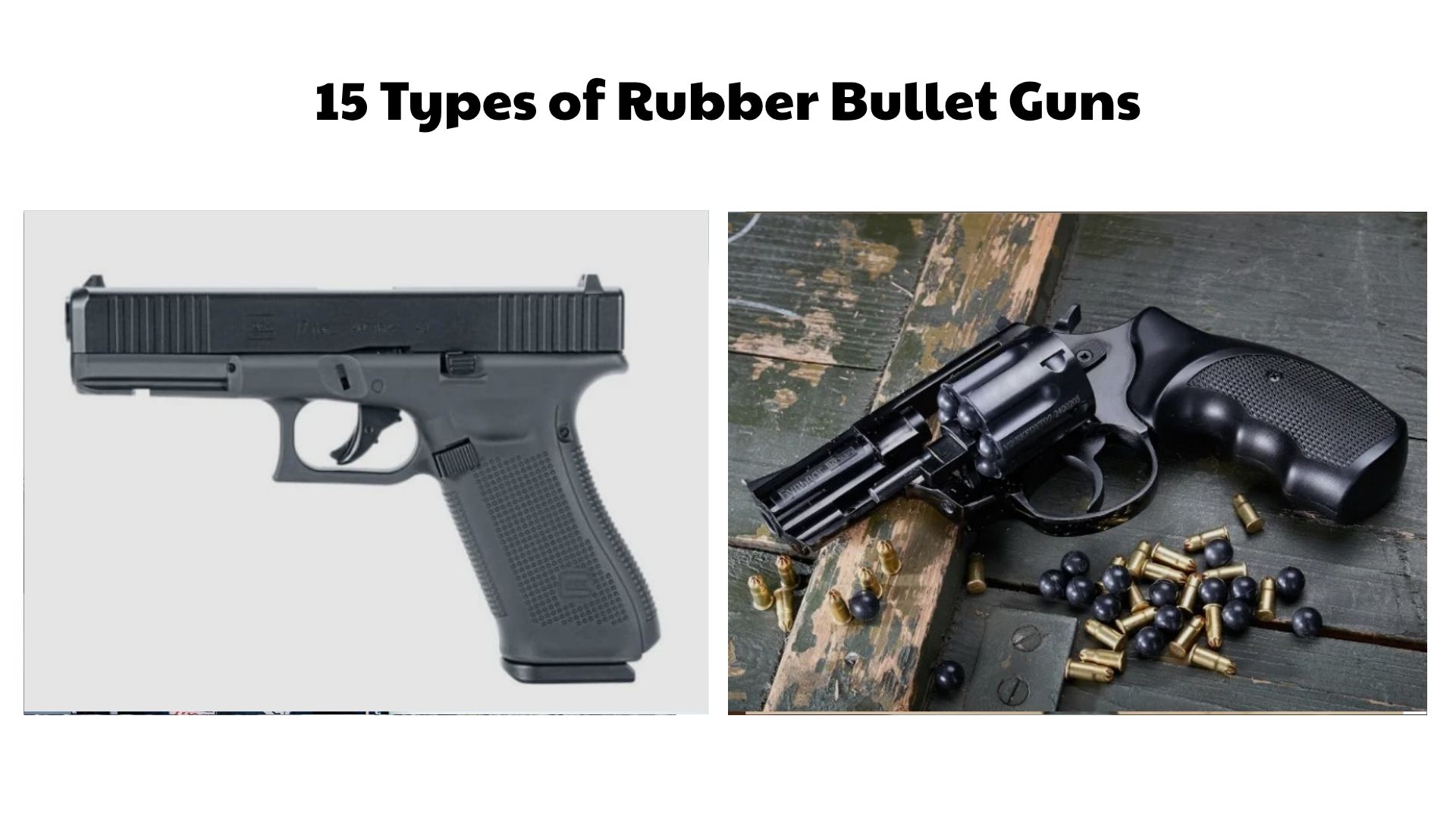

Rubber bullet guns are a category of less-lethal weapons designed to deliver impact force without using traditional lethal ammunition. They are commonly used in law enforcement, crowd control, security training, and certain self-defense contexts depending on local regulations. Unlike conventional firearms, these systems rely on rubber or rubber-like projectiles that cause pain compliance or temporary incapacitation through blunt force rather than penetration. This guide explores 15 types of rubber bullet guns in detail, helping readers understand how each system works, where it is used, and why different designs exist. From riot launchers to CO2-powered pistols, each category reflects a specific operational need. Hop in and explore this structured breakdown of rubber bullet guns in a clear and practical way.
15 Types of Rubber Bullet Guns
1. 37mm Riot Control Launcher
The 37mm riot control launcher is one of the most recognized systems in the category of rubber bullet guns, widely used for crowd management and non-lethal enforcement scenarios. It is typically a single-shot or break-action launcher designed to fire large rubber baton rounds or impact munitions. The design focuses on delivering controlled kinetic force over short to medium distances, making it suitable for dispersing crowds without resorting to lethal ammunition. These launchers are often lightweight and shoulder-fired, allowing operators to maintain mobility in dynamic situations. Because of their simple mechanical structure, they are also considered reliable under harsh operational conditions where rapid deployment is required.
One of the key characteristics of the 37mm launcher is its ability to fire multiple types of less-lethal rounds, depending on jurisdiction and operational rules. These may include rubber slugs, sponge rounds, or signaling cartridges. Among rubber bullet guns, this system is valued for its balance between range, impact control, and ease of use. However, its effectiveness depends heavily on operator training and strict adherence to safety protocols. Misuse can lead to serious injury due to the high kinetic energy involved, even though it is classified as less-lethal.
In law enforcement environments, the 37mm launcher is often deployed as a first-response tool before escalation to more aggressive force options. Its presence alone can act as a deterrent in many situations, reducing the need for physical confrontation. Despite its simplicity, it remains one of the most important systems in modern non-lethal weapon design.
2. 40mm Grenade Launcher (Less-Lethal Configuration)
The 40mm grenade launcher adapted for rubber bullet use is a more advanced and versatile system within the broader category of rubber bullet guns. Originally designed for military applications, this launcher has been modified in many jurisdictions to fire less-lethal rounds such as rubber projectiles, foam baton rounds, and impact grenades. It is commonly available in both standalone and under-barrel configurations, allowing integration with standard rifles for tactical flexibility.
This system is known for its extended range compared to smaller launchers. It can deliver impact rounds accurately at distances that exceed many handheld less-lethal devices. Among rubber bullet guns, the 40mm launcher is often chosen for situations requiring both precision and controlled escalation of force. Its modular ammunition types also allow operators to adapt quickly to changing operational needs, such as crowd dispersal or targeted impact delivery.
Despite its effectiveness, the 40mm system requires extensive training due to its power and range. Improper use can result in serious injury, which is why strict guidelines govern its deployment in law enforcement agencies. Its combination of versatility and performance makes it one of the most strategically important non-lethal platforms.
3. Pump-Action Shotgun (Rubber Slug Configuration)
The pump-action shotgun configured for rubber slugs is one of the most widely recognized forms of rubber bullet guns in both law enforcement and tactical training environments. This system modifies a traditional shotgun platform to fire rubber projectiles instead of standard lethal shells. The pump-action mechanism allows manual cycling of rounds, ensuring reliability even in harsh or dirty conditions where semi-automatic systems might fail.
Rubber slugs fired from shotguns deliver significant kinetic energy at close to medium range. This makes them highly effective for stopping aggressive behavior or disabling mobility without penetrating the body like traditional ammunition. Among rubber bullet guns, this system is known for its simplicity and adaptability, as most standard shotguns can be converted to accept less-lethal rounds with minimal modification.
However, due to the high impact force, distance control is critical. Rubber slugs can still cause serious injury if used improperly or at close range. This is why operational training is essential for anyone handling such systems. Despite this risk, the pump-action shotgun remains a dependable tool in less-lethal force strategies.
4. Single-Shot Baton Round Launcher
The single-shot baton round launcher is a compact and straightforward device within the category of rubber bullet guns. It is designed specifically to fire a single less-lethal round, usually in the form of a rubber baton or impact projectile. Its simplicity is one of its strongest advantages, making it easy to operate under stress without complex mechanical handling.
This type of launcher is often used in crowd control situations where precision and controlled force are more important than sustained firepower. Among rubber bullet guns, single-shot systems are valued for their lightweight design and ease of deployment. They are often carried as secondary tools by law enforcement personnel who may need a quick-response less-lethal option.
Although simple, this system still delivers significant kinetic energy upon impact. As a result, proper aiming and distance management are essential to avoid unintended injuries. Its role is typically supportive rather than primary in operational use, but it remains an important component in non-lethal equipment arsenals.
5. Multi-Shot Riot Control Launcher
The multi-shot riot control launcher represents a more advanced evolution in rubber bullet guns, designed to allow multiple rounds to be fired without reloading after each shot. This system is typically used in high-intensity crowd control operations where rapid follow-up shots may be necessary. It often features rotating barrels or magazine-fed mechanisms that increase operational efficiency in dynamic environments.
Among rubber bullet guns, this system is particularly valued for its ability to maintain pressure in rapidly evolving situations. Officers can respond quickly to changing crowd behavior without pausing to reload, which significantly improves tactical responsiveness. The launcher is typically designed for ergonomic handling, allowing controlled recoil management during repeated firing.
Despite its advantages, the multi-shot system requires a higher level of training and discipline. The increased rate of fire must be carefully controlled to prevent excessive force application. When used correctly, it serves as one of the most effective tools in modern less-lethal crowd management strategies.
6. CO2 Powered Rubber Bullet Pistol
The CO2 powered rubber bullet pistol is one of the most accessible systems within modern rubber bullet guns, designed primarily for training, personal protection in permitted regions, and controlled practice environments. It operates using compressed CO2 cartridges that generate the pressure needed to propel rubber or rubber-like projectiles through a short barrel. This design makes it compact, lightweight, and relatively easy to handle compared to larger launcher systems. The overall structure resembles a conventional handgun, which helps users adapt quickly if they already have familiarity with standard pistol ergonomics.
One of the key advantages of CO2-powered systems is consistency. Each shot delivers a relatively stable level of pressure, resulting in predictable projectile behavior at short ranges. Among rubber bullet guns, this makes it suitable for controlled drills where repeatability matters more than long-range accuracy. However, because CO2 pressure can fluctuate with temperature and usage, performance may vary slightly depending on environmental conditions. This is an important consideration for anyone relying on this system for consistent output.
Despite being categorized as less-lethal, CO2 rubber bullet pistols can still cause injury if misused or fired at close range. Proper handling, safe distances, and responsible usage are essential. In most cases, these pistols are used in structured environments rather than unpredictable field scenarios. Their role is best described as supportive, offering a compact and manageable entry point into the broader category of rubber bullet guns.
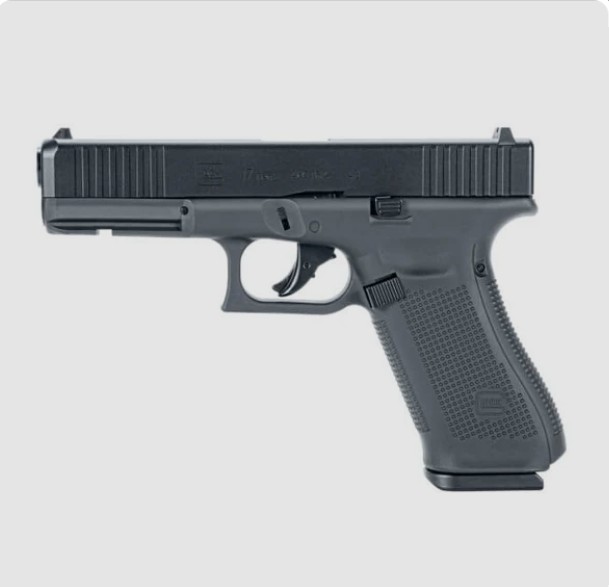
7. Blank-Firing Rubber Ball Revolver
The blank-firing rubber ball revolver is a distinctive type of rubber bullet gun that combines traditional revolver mechanics with less-lethal ammunition systems. Instead of firing live rounds, it uses blank cartridges to generate gas pressure that propels rubber balls or impact projectiles. This mechanism allows the revolver to maintain a familiar mechanical feel while eliminating the use of live ammunition.
Revolvers are known for their mechanical simplicity and reliability, and this design carries those advantages into the less-lethal category. Among rubber bullet guns, the blank-firing revolver is valued for its low maintenance requirements and straightforward operation. It does not rely on magazines or complex feeding systems, which reduces the likelihood of jamming or malfunction during use.
However, the performance of blank-firing systems can vary depending on cartridge strength and projectile type. While effective at short range, they are not designed for extended distance engagement. Their primary use is often in training scenarios or controlled environments where simulation of real firearm handling is important without introducing lethal risk.
8. Magazine-Fed Rubber Ball Pistol
The magazine-fed rubber ball pistol represents a more modern evolution in rubber bullet guns, offering semi-automatic functionality and increased firing capacity. This system uses detachable magazines that hold multiple rubber projectiles, allowing users to fire successive shots without manual reloading after each round. The design closely resembles standard semi-automatic pistols, making it highly intuitive for users familiar with conventional firearms.
One of the primary benefits of this system is speed of operation. Among rubber bullet guns, magazine-fed pistols provide a faster response capability, which can be useful in dynamic training environments or regulated self-defense scenarios. The semi-automatic cycling mechanism ensures smoother operation compared to single-shot systems, although it still relies on gas or spring-based propulsion systems depending on the model.
Despite its advantages, this type of pistol requires careful handling due to the potential for rapid discharge. Controlled usage is essential to avoid excessive force application. Its role is typically limited to structured environments where rules of engagement are clearly defined, making it a controlled but efficient option within the broader ecosystem of rubber bullet guns.
9. Break-Action Rubber Bullet Gun
The break-action rubber bullet gun is one of the simplest and most mechanically transparent systems in the category of rubber bullet guns. It operates by manually breaking open the barrel to load a single rubber projectile before each shot. This simplicity makes it extremely reliable, as there are very few moving parts that could fail during operation.
Because of its single-shot nature, this system is often used in training environments where discipline and precision are emphasized over rapid firing capability. Among rubber bullet guns, break-action designs are appreciated for their durability and ease of maintenance. They are also relatively lightweight, making them easy to carry during field exercises or instructional sessions.
However, the lack of rapid firing capability limits its tactical application. It is not suitable for situations requiring multiple successive shots, but it excels in controlled scenarios where accuracy and deliberate action are prioritized. This makes it a foundational tool for understanding basic firearm handling principles in less-lethal contexts.
10. Semi-Automatic Rubber Pellet Gun
The semi-automatic rubber pellet gun is one of the more advanced systems in the category of rubber bullet guns, designed to combine firing speed with mechanical efficiency. It uses gas or spring-assisted cycling to automatically chamber the next round after each shot, allowing for quicker follow-up shots compared to manual-action systems. This makes it particularly useful in training environments where reaction time and continuity are important.
Among rubber bullet guns, semi-automatic systems are valued for their balance between performance and usability. They provide a more realistic shooting experience that closely mimics traditional firearms, which is useful for instructional purposes. The ability to fire multiple rounds in rapid succession also makes it suitable for simulated scenarios that require controlled escalation of force.
However, this increased capability also demands greater user responsibility. Proper trigger discipline and controlled engagement are essential to prevent misuse or overapplication of force. While not intended for high-risk tactical deployment, the semi-automatic rubber pellet gun plays an important role in bridging training realism and less-lethal technology.
11. Paintball Marker (Rubber Ball Conversion)
The paintball marker adapted for rubber ball use is a flexible system within the broader category of rubber bullet guns. Originally designed for sport and recreational shooting, standard paintball markers can be modified or configured to fire solid rubber projectiles instead of paint-filled capsules. This transformation changes the purpose from marking targets in games to delivering controlled impact force in training or simulation environments.
Among rubber bullet guns, this system is valued for its low operating pressure and high availability. Paintball markers typically use compressed air or CO2, making them easy to refill and maintain. The firing mechanism is designed for rapid cycling, which allows users to practice dynamic shooting drills with multiple successive shots. This makes it particularly useful in structured training environments where movement and reaction timing are emphasized.
However, rubber ball conversion systems are not designed for high-impact or defensive use. Their energy output is relatively low compared to dedicated less-lethal weapons, which limits their effectiveness in real enforcement scenarios. Despite this, they remain popular due to their affordability, accessibility, and adaptability in controlled settings.
12. Airsoft Rubber Pellet Gun (Modified)
The modified airsoft rubber pellet gun is an unconventional entry in the category of rubber bullet guns, originally based on airsoft platforms designed for recreational use. These systems are typically adapted to fire heavier rubber pellets instead of lightweight plastic BBs, changing both the purpose and ballistic behavior of the platform. The modification requires careful calibration to ensure safe operation under increased projectile weight.
Among rubber bullet guns, this system is primarily used for simulation training rather than enforcement or self-defense. Airsoft platforms are known for their realism in terms of firearm handling, including magazine changes, trigger response, and cycling action. When adapted for rubber pellets, they provide a cost-effective way to simulate impact-based scenarios without the complexity of professional less-lethal weapons.
However, due to the structural limitations of airsoft internals, these systems are not suitable for high-energy applications. They are best suited for controlled environments where safety, repetition, and tactical training are the primary goals. Their role is educational rather than operational.
13. PCP Air Rifle (Rubber Ammo Compatible)
The PCP (Pre-Charged Pneumatic) air rifle configured for rubber ammunition is one of the more powerful systems within rubber bullet guns designed for precision and controlled impact. It uses a high-pressure air reservoir that delivers consistent energy output, allowing for accurate and stable projectile firing over longer distances compared to CO2-based systems.
Among rubber bullet guns, PCP systems stand out for their superior consistency and tuning capability. Users can adjust pressure levels to control velocity, making the platform highly adaptable for different training scenarios. This level of control also improves accuracy, especially in environments where distance and precision are important factors.
Despite its performance advantages, the PCP system requires careful maintenance and strict safety handling due to the high-pressure air involved. It is typically used in controlled training environments rather than spontaneous field deployment. Its strength lies in precision rather than raw tactical impact.
14. PepperBall Launcher (Rubber/Impact Hybrid System)
The PepperBall launcher represents a hybrid system within rubber bullet guns, combining impact force with chemical irritant delivery. While not a pure rubber projectile system, it is often included in the broader less-lethal category due to its similar operational role. The launcher fires spherical projectiles that may contain powdered irritants along with impact-enhancing materials.
Among rubber bullet guns, this system is widely used in crowd management and perimeter control. It provides both kinetic impact and sensory disruption, allowing operators to influence behavior without direct physical confrontation. The combination of effects makes it especially effective in dispersal scenarios where visibility and compliance are priorities.
However, because it involves chemical agents, usage is highly regulated and restricted in many regions. Proper training is required to ensure safe deployment and avoid unintended exposure. Despite this, it remains a key tool in modern non-lethal operational strategies.
15. FN 303 Less-Lethal Launcher
The FN 303 less-lethal launcher is one of the most advanced and widely recognized systems in the category of rubber bullet guns. It is designed specifically for professional law enforcement use and fires fin-stabilized projectiles that can deliver impact, marking dye, or irritant payloads depending on configuration. The system is engineered for accuracy, controlled force delivery, and operational reliability.
Among rubber bullet guns, the FN 303 stands out due to its air-powered firing mechanism and precision-oriented projectile design. It is capable of engaging targets at moderate distances with improved accuracy compared to many traditional less-lethal systems. The fin-stabilized rounds ensure stable flight, reducing deviation and improving hit consistency.
Despite its advanced capabilities, the FN 303 requires strict operational training and adherence to safety protocols. It is not intended for civilian use and is typically restricted to authorized agencies. Its design reflects a balance between tactical efficiency and reduced lethality, making it one of the most sophisticated tools in modern crowd control technology.
Conclusion
Rubber bullet guns represent a broad category of less-lethal weapon systems designed to deliver controlled impact force without using live ammunition. Across the different types—from simple break-action and CO2-powered pistols to advanced systems like the FN 303 launcher—each design serves a specific purpose depending on the environment, required range, and level of control needed.
While some models are built for training and simulation, others are intended for professional law enforcement or regulated security use. The key difference between these systems lies in their power source, firing mechanism, and projectile design, which directly affect accuracy, impact energy, and operational reliability.
However, despite being classified as less-lethal, these devices are not harmless. Improper use or close-range discharge can still cause serious injury. For this reason, strict safety protocols, proper training, and legal compliance are essential whenever dealing with rubber bullet gun systems.
In summary, rubber bullet guns bridge the gap between training tools and real-world enforcement needs, offering versatility, scalability, and controlled force application when used responsibly.
FAQ’s
1. What is a rubber bullet gun?
A rubber bullet gun is a less-lethal weapon designed to fire rubber or rubber-like projectiles for training, crowd control, or self-defense in regulated environments.
2. Are rubber bullet guns safe?
They are considered less-lethal, but not completely safe. Improper use or close-range firing can still cause serious injury.
3. How do rubber bullet guns work?
They typically use CO2, compressed air, spring mechanisms, or blank cartridges to propel rubber projectiles at a target.
4. What are rubber bullets made of?
Rubber bullets are usually made from hard rubber, polymer composites, or rubber-coated metal cores depending on the model.
5. Can rubber bullet guns be used for self-defense?
In some countries and regions, they may be used for self-defense, but legal restrictions vary widely.
6. What is the effective range of rubber bullet guns?
Most rubber bullet guns are effective between 5 to 50 meters depending on the system and pressure source.
7. Do rubber bullets hurt?
Yes, rubber bullets can cause pain, bruising, and injury depending on impact distance and velocity.
8. Are rubber bullet guns legal?
Legality depends on country and local regulations. Some regions require licenses or prohibit civilian ownership.
9. What is a CO2 rubber bullet gun?
A CO2 rubber bullet gun uses compressed CO2 gas to propel rubber projectiles with consistent pressure.
10. What is the difference between airsoft and rubber bullet guns?
Airsoft guns fire lightweight plastic BBs, while rubber bullet guns fire heavier rubber projectiles designed for impact.
11. Can rubber bullets penetrate skin?
At close range or high velocity, rubber bullets can penetrate skin and cause serious injury.
12. What is a less-lethal weapon?
A less-lethal weapon is designed to minimize fatal injuries while still incapacitating or controlling a target.
13. Are rubber bullet guns used by police?
Yes, many law enforcement agencies use rubber bullet launchers for riot control and crowd management.
14. What is a PepperBall launcher?
A PepperBall launcher fires impact rounds that may contain irritants for crowd control purposes.
15. What is FN 303?
The FN 303 is a professional less-lethal launcher used by law enforcement for precision impact projectiles.
16. What is the difference between rubber bullets and plastic bullets?
Rubber bullets are softer and more flexible, while plastic bullets are harder and may cause greater impact damage.
17. Can rubber bullet guns be lethal?
Yes, in rare cases especially at close range or when hitting sensitive areas like the head or chest.
18. What is the most common type of rubber bullet gun?
CO2-powered pistols and air-powered launchers are among the most commonly used types.
19. Do rubber bullet guns require training?
Yes, proper training is essential for safe and responsible handling.
20. What is the purpose of rubber bullet guns?
They are used for training, self-defense in some cases, and non-lethal crowd control.
21. Can rubber bullet guns be used indoors?
They are generally not recommended for indoor use due to risk of injury and ricochet.
22. What is a break-action rubber bullet gun?
A simple single-shot system where the barrel is manually opened for loading each round.
23. What is a semi-automatic rubber bullet gun?
A system that automatically chambers the next round after each shot for faster firing.
24. What is a magazine-fed rubber bullet gun?
It uses a detachable magazine to hold multiple rubber rounds for quick firing.
25. Are rubber bullet guns noisy?
They produce moderate noise depending on whether they use CO2, air pressure, or blanks.
26. What is the velocity of rubber bullets?
Velocity varies widely but typically ranges from 60 to 150 m/s depending on the system.
27. Can rubber bullets break bones?
Yes, high-impact shots at close range can cause fractures or severe bruising.
28. What is a training rubber bullet gun?
A device used to simulate real firearm handling using non-lethal rubber projectiles.
29. Do rubber bullets leave marks?
Yes, they often cause bruises, welts, or temporary skin marks.
30. What is a CO2 cartridge used for?
It provides compressed gas pressure to fire rubber projectiles in CO2-powered systems.
31. Can rubber bullet guns be modified?
Some models can be modified, but unauthorized modifications may be illegal or unsafe.
32. What is a rubber pellet gun?
A gun that fires small rubber pellets instead of metal or plastic ammunition.
33. Are rubber bullet guns accurate?
Accuracy depends on model, pressure system, and distance, with higher-end systems being more precise.
34. What is a PCP rubber bullet gun?
A pre-charged pneumatic system that uses high-pressure air for consistent firing performance.
35. Do rubber bullet guns need maintenance?
Yes, regular cleaning and pressure system checks are necessary for safe operation.
36. What is the recoil of rubber bullet guns?
They generally have lower recoil compared to real firearms but it varies by system.
37. Can rubber bullets ricochet?
Yes, rubber bullets can bounce off hard surfaces and cause unintended injuries.
38. What is the lifespan of a rubber bullet gun?
With proper maintenance, many models can last several years.
39. Are rubber bullet guns expensive?
Prices vary widely from affordable training models to expensive professional launchers.
40. What safety gear is needed?
Eye protection, face shields, and protective clothing are strongly recommended.
41. Can rubber bullets be reused?
No, most rubber bullets are single-use and should not be reused.
42. What is a blank-firing rubber bullet gun?
A system that uses blank cartridges to propel rubber projectiles.
43. Are rubber bullet guns regulated?
Yes, many countries regulate ownership, usage, and import of these devices.
44. What is the weight of rubber bullets?
Weight varies but typically ranges from a few grams to over 10 grams depending on type.
45. Can rubber bullet guns be used in sports?
Some modified systems are used in training or simulation sports environments.
46. What is crowd control weapon?
A weapon designed to disperse or control groups of people with minimal lethal risk.
47. Do rubber bullet guns require licensing?
In many regions, licensing or permits are required for ownership or use.
48. What is a rubber ball gun?
A firearm or launcher designed to shoot spherical rubber projectiles.
49. Can rubber bullet guns be carried publicly?
Usually restricted and depends heavily on local laws and permits.
50. What is the main risk of rubber bullet guns?
The main risk is injury from improper use, especially at close range or sensitive body areas.
51. Are rubber bullet guns effective?
They are effective for deterrence and training when used correctly and within proper conditions.
52. What is the difference between lethal and less-lethal weapons?
Lethal weapons can cause death, while less-lethal weapons are designed to reduce fatal outcomes.