
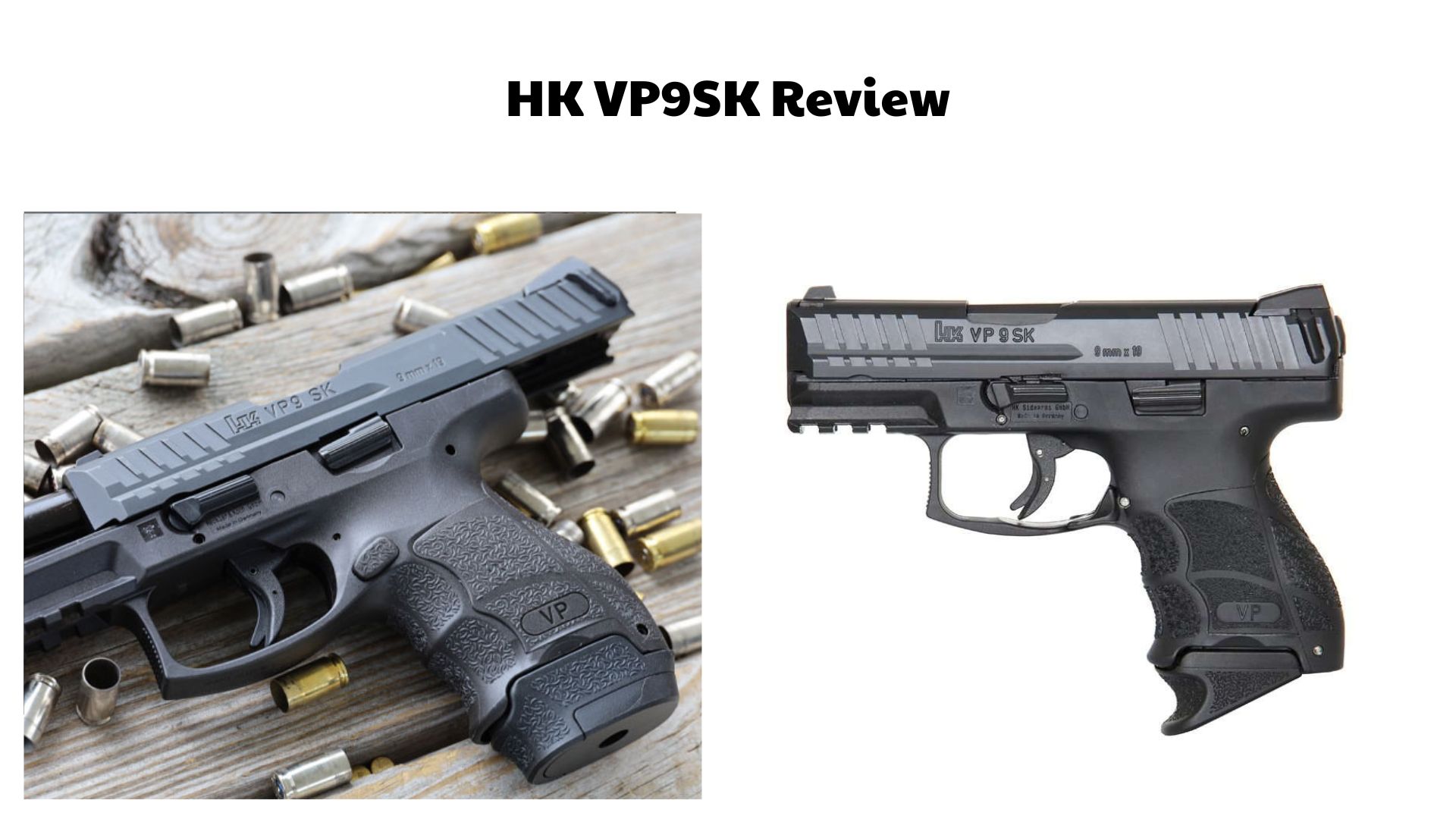

Subcompact concealed carry pistols continue to dominate the CCW market in 2026 because they strike a practical balance between concealability, firepower, and shootability. As carry needs evolve, many users no longer accept the tradeoff of extremely low capacity in exchange for small size alone. Instead, the modern trend favors compact firearms that can still perform reliably under defensive conditions.
In this space, two very different pistols often come up for comparison: the HK VP9SK and the Smith & Wesson Bodyguard 2.0. Although both are designed for concealed carry, they serve entirely different roles within the defensive handgun spectrum.
The HK VP9SK represents a premium subcompact 9mm pistol built with duty-grade performance in mind. It prioritizes shootability, accuracy, and ergonomics while still maintaining a manageable concealed carry footprint. On the other hand, the Bodyguard 2.0 is an ultra-compact .380 ACP pistol designed for deep concealment, backup carry, and maximum portability.
This creates a clear divide in purpose: one pistol is designed to be a primary defensive handgun, while the other is optimized for extreme concealment and minimal size. As a result, the key question for many concealed carriers becomes: which platform better fits modern self-defense needs in real-world conditions?
2. HK VP9SK Background & Platform Evolution
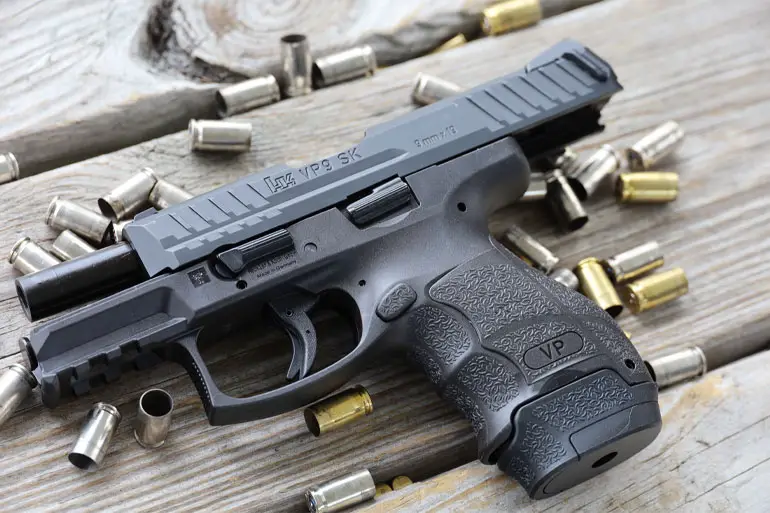
The HK VP9SK is the subcompact evolution of Heckler & Koch’s successful VP9 full-size platform. It was developed to bring the same level of performance, ergonomics, and reliability into a smaller, more carry-friendly form factor. This transition reflects HK’s broader design philosophy of maintaining duty-grade standards even in compact defensive pistols.
The VP series is often associated with the “Volkspistole” or “people’s pistol” concept, emphasizing accessibility, usability, and real-world performance. Unlike some ultra-compact pistols that prioritize size above all else, the VP9SK was engineered to preserve shooting comfort and control while still fitting concealed carry requirements.
This approach places the VP9SK in the premium concealed carry category, where it competes directly with established subcompact and compact pistols such as the Glock 26, SIG P365, and Smith & Wesson Shield Plus. These platforms all target users who want defensive reliability without stepping up to full-size handgun dimensions.
The VP9SK also benefits from HK’s reputation for engineering quality. It inherits many of the design elements from the full-size VP9, including its striker-fired system, ergonomic grip design, and ambidextrous control layout. This continuity ensures that users transitioning from other HK pistols experience a familiar and consistent manual of arms.
Overall, the VP9SK is positioned as a refined subcompact pistol designed for users who prioritize performance and reliability over ultra-minimal size reduction. It is not simply a smaller pistol—it is a fully developed defensive tool scaled down for concealed carry use.
3. Key Specifications Overview (HK VP9SK)
The HK VP9SK is chambered in 9mm Luger, which remains the industry standard for defensive handguns due to its balance of recoil control, terminal performance, and ammunition availability. This choice immediately places it in the primary concealed carry category rather than backup-only roles.
It features a barrel length of approximately 3.39 inches, which contributes to a compact overall profile while still maintaining reasonable ballistic performance. This barrel length supports effective defensive accuracy at typical engagement distances without making the pistol difficult to conceal.
One of the most notable features of the VP9SK is its modular capacity system. It supports 10, 13, and 15-round magazine configurations depending on user preference and concealment needs. This flexibility allows the pistol to adapt between deep concealment setups and higher-capacity carry configurations.
The pistol weighs approximately 23 ounces, placing it in the mid-range category for subcompact firearms. While not the lightest option available, this weight contributes positively to recoil management and shooting stability.
The VP9SK uses a striker-fired precision trigger system, which is one of its standout characteristics. It offers a smooth pull, predictable break, and short reset, providing a shooting experience that is often considered superior within its class.
Construction includes a durable polymer frame combined with a steel slide and polygonal barrel. This combination enhances longevity, corrosion resistance, and overall mechanical strength while keeping weight manageable for everyday carry.
Finally, the VP9SK features fully ambidextrous controls and a modular grip system. Interchangeable backstraps and side panels allow users to fine-tune grip fit and comfort. This design makes it highly adaptable for different hand sizes and shooting preferences, reinforcing its position as a user-focused defensive handgun.
4. Design, Ergonomics & Build Quality (VP9SK)
The HK VP9SK reflects Heckler & Koch’s reputation for premium German engineering, with a strong emphasis on durability, precision manufacturing, and practical real-world usability. Unlike many cost-driven subcompact pistols, the VP9SK is built with a clear focus on long-term reliability and consistent performance under demanding conditions. Every aspect of its design feels intentional rather than simplified for mass production.
One of the defining features of the VP9SK is its fully modular grip system. The pistol includes interchangeable backstraps and side panels, allowing users to fine-tune grip thickness and palm swell. This level of customization is especially important in a subcompact firearm, where grip comfort directly affects recoil control and shooting consistency. By adjusting the grip fit, users can significantly improve both comfort and accuracy.
The grip texture is another standout feature. HK uses a deep, aggressive surface pattern designed to maintain control even in adverse conditions such as sweat, rain, or rapid-fire scenarios. While this texture may feel sharp during extended concealed carry against the body, it provides a noticeable advantage when shooting under stress. The result is a pistol that locks into the hand with confidence during firing sequences.
A unique design element of the VP9SK is the inclusion of charging supports at the rear of the slide. These raised surfaces make it easier to rack the slide, especially under high-pressure situations or for users with reduced hand strength. This feature is not always found in subcompact pistols and adds meaningful practical value in defensive use cases.
In terms of overall size, the VP9SK does carry slightly more bulk compared to ultra-slim single-stack pistols. However, this additional width contributes to better shootability and recoil control. Rather than chasing extreme thinness, HK prioritized balance between concealability and performance, resulting in a pistol that feels more stable during live fire.
Overall, the VP9SK’s design philosophy centers on functionality, adaptability, and durability. It is not just a smaller version of a duty pistol—it is a carefully engineered subcompact platform that maintains HK’s premium build standards while adapting to concealed carry requirements.
5. Trigger, Recoil & Shooting Performance (VP9SK)
One of the most widely praised aspects of the HK VP9SK is its striker-fired trigger system. While technically a striker-fired design, the trigger feel is often described as “single-action-like” due to its smooth take-up, defined break point, and short reset. This makes it stand out in a class where many subcompact pistols suffer from heavier or less refined trigger systems.
The trigger pull is consistent and predictable, which is critical in defensive shooting scenarios. The break is clean rather than mushy, allowing shooters to maintain better control during rapid fire. The tactile and audible reset also supports faster follow-up shots, especially during controlled pairs or defensive drills.
In terms of recoil, the VP9SK produces what can be described as snappy but highly manageable behavior. Like most subcompact 9mm pistols, it generates noticeable recoil due to its reduced size and lighter weight compared to full-size handguns. However, HK’s grip ergonomics and frame geometry help mitigate muzzle rise effectively.
The combination of a well-designed grip angle, deep texturing, and balanced weight distribution allows shooters to maintain a solid firing grip even during extended strings of fire. While it is not as soft-shooting as larger service pistols, it performs exceptionally well within the subcompact category.
Accuracy is another strong point for the VP9SK. Despite its compact size, it delivers consistent grouping at typical defensive distances. Many shooters find it surprisingly capable out to intermediate ranges when proper fundamentals are applied. This level of performance is largely attributed to the quality of the trigger system and HK’s tight manufacturing tolerances.
In defensive shooting drills, the VP9SK demonstrates strong repeatability and control. It is not designed as a competition pistol, but it consistently performs above average for its size class. The combination of trigger quality, recoil management, and ergonomic design makes it a well-rounded defensive tool.
6. Concealed Carry Performance (VP9SK)
The HK VP9SK is primarily designed as a concealed carry handgun, and its performance in this role reflects a careful balance between size, comfort, and shootability. It is not an ultra-thin deep concealment pistol, but rather a compact defensive firearm optimized for users who prioritize shooting performance alongside concealment.
The pistol is best suited for inside-the-waistband (IWB) and appendix carry configurations. In these setups, its slightly wider frame is effectively concealed under proper clothing and holster selection. While it may not disappear as easily as ultra-slim single-stack pistols, it offers a significantly better shooting experience in return.
One of the key advantages of the VP9SK in concealed carry use is its balance. The pistol’s weight and grip geometry make it stable during movement, reducing the feeling of “top-heaviness” that some lightweight subcompacts exhibit. This contributes to more comfortable all-day carry, especially for users who carry as their primary defensive weapon.
For users who prioritize performance over maximum concealability, the VP9SK is an excellent option. It offers a level of control and accuracy that bridges the gap between compact duty pistols and ultra-compact concealed carry guns. This makes it particularly appealing to experienced shooters who want confidence in both concealment and shooting capability.
However, it is important to note that the VP9SK is not designed for extreme deep concealment or pocket carry. Its role is firmly within the “primary EDC pistol” category rather than backup or ultra-minimal carry solutions. In exchange for slightly increased size, users gain significantly improved handling and defensive effectiveness.
Overall, the VP9SK stands out as a concealed carry pistol that prioritizes real-world performance. It is built for users who understand that effective self-defense requires not just concealment, but also control, accuracy, and confidence in handling under stress.
7. Reliability & Real-World Performance (VP9SK)
Reliability is one of the strongest defining traits of the HK VP9SK, consistent with Heckler & Koch’s long-standing reputation for producing duty-grade firearms. The pistol is engineered to perform under demanding conditions, and this is reflected in its real-world track record among civilian carriers and professional users alike.
The VP9SK demonstrates highly consistent cycling with quality defensive 9mm ammunition. Its striker-fired system, combined with tight manufacturing tolerances and a well-balanced recoil spring assembly, allows for smooth feeding and ejection across a wide range of ammunition types. This makes it suitable for both training ammunition and defensive hollow-point loads without significant adjustments.
One of the most notable characteristics of the VP9SK is its low incidence of malfunctions in long-term use. While no firearm is completely immune to issues, reports involving the VP9SK are relatively rare when proper maintenance and quality magazines are used. This reliability contributes heavily to its popularity as a concealed carry pistol, where dependability is non-negotiable.
In addition to civilian use, the VP9SK has also gained recognition in duty and security environments. Its combination of compact size and HK engineering makes it suitable for users who require a concealed yet highly dependable sidearm. The pistol is designed to function reliably under stress, including rapid fire and adverse handling conditions.
Overall, the VP9SK is widely regarded as a trustworthy defensive handgun. Its performance consistency and mechanical reliability make it a strong choice for users who prioritize confidence in real-world defensive situations.
8. Smith & Wesson Bodyguard 2.0 Overview
The Smith & Wesson Bodyguard 2.0 represents a very different category of concealed carry firearm compared to the HK VP9SK. Instead of focusing on performance and shootability, it is designed around maximum concealability, simplicity, and ease of carry. It belongs to the ultra-compact .380 ACP segment, where size reduction is the primary design goal.
This pistol is intended for deep concealment, backup carry, or situations where a full-size or subcompact handgun is impractical. It is especially popular among users who prioritize minimal printing, lightweight carry, and discreet everyday portability. Its design philosophy is centered around being as unobtrusive as possible while still providing basic defensive capability.
In the market, the Bodyguard 2.0 competes with other ultra-compact .380 pistols such as the Ruger LCP Max and similar pocket-sized defensive firearms. These pistols are not designed to replace service handguns but to complement them as secondary or last-resort defensive tools.
The key focus of the Bodyguard 2.0 is simplicity. It minimizes complexity in favor of ease of use, making it accessible for users who may not want to manage larger, heavier, or more mechanically complex pistols. This simplicity also contributes to its appeal as a discreet everyday carry option.
9. Bodyguard 2.0 Key Specs & Features
The Smith & Wesson Bodyguard 2.0 is chambered in .380 ACP, a cartridge widely used in ultra-compact concealed carry pistols. While it does not offer the same ballistic performance as 9mm, it is generally considered adequate for close-range defensive situations when proper ammunition is used.
One of the most significant advantages of the Bodyguard 2.0 is its extremely lightweight construction. With an approximate weight in the 11-ounce range, it is among the lightest defensive pistols available. This makes it exceptionally comfortable for pocket carry or all-day concealed use without noticeable fatigue.
Despite its small size, the pistol offers a capacity of 10+1 or 12+1 rounds depending on magazine configuration. This is a notable improvement over earlier ultra-compact designs, providing more defensive capacity in a very small footprint.
The trigger system has also been improved compared to previous generations. The flat-faced trigger design provides more consistent finger placement and a smoother pull, enhancing overall shootability within its class. While still a defensive-focused trigger, it is a clear step forward in usability and control.
The Bodyguard 2.0 is specifically engineered for pocket carry and minimal footprint applications. Its compact dimensions allow it to disappear easily into a pocket holster or small concealed carry setup. This makes it especially attractive for users who require maximum discretion or need a secondary firearm that can be carried in nearly any situation.
Overall, the Bodyguard 2.0 is a specialized tool designed for deep concealment rather than high-performance shooting. It prioritizes portability and simplicity, making it a practical choice for backup carry or situations where size is the overriding concern.
10. Bodyguard 2.0 Performance Overview
The Smith & Wesson Bodyguard 2.0 is designed with one primary goal in mind: maximum concealability. In real-world use, it excels at disappearing in a pocket carry setup, especially when paired with a proper pocket holster. Its extremely small footprint makes it one of the easiest defensive pistols to carry discreetly on a daily basis.
Despite its ultra-compact size, recoil in .380 ACP is generally manageable for most shooters. It is not soft like a full-size handgun, but it remains controllable within its intended role. The lightweight frame does contribute to some snap during firing, but the low-power cartridge helps keep it within acceptable limits for defensive use.
In terms of accuracy, the Bodyguard 2.0 performs best at short defensive distances, typically within 5 to 7 yards. This aligns with its intended purpose as a close-range defensive or backup firearm. Within this range, it is capable of delivering consistent hits with proper training and practice.
However, some users report mixed experiences during the break-in period, particularly depending on ammunition choice. As with many ultra-compact pistols, reliability can improve after initial use, but it is important to test multiple defensive loads to ensure consistent performance before carrying it for self-defense.
11. HK VP9SK vs Bodyguard 2.0 (Key Comparison)
The HK VP9SK and the Smith & Wesson Bodyguard 2.0 occupy very different roles in the concealed carry ecosystem, and comparing them requires understanding their intended purpose rather than just size or capacity differences.
The VP9SK is a premium 9mm subcompact pistol designed for primary everyday carry. It emphasizes shootability, accuracy, ergonomics, and duty-grade reliability. It is intended to be a shooter’s main defensive handgun, capable of performing in both concealed carry and more demanding defensive scenarios.
In contrast, the Bodyguard 2.0 is an ultra-compact .380 ACP pistol designed for backup carry or deep concealment. Its purpose is not to replace a full defensive handgun but to provide an extremely small and lightweight option that can be carried when larger firearms are impractical.
When comparing capacity, the VP9SK holds a clear advantage. Its 9mm platform offers significantly higher magazine capacity, along with more effective terminal performance. This makes it more suitable for primary defensive roles.
On the other hand, the Bodyguard 2.0 excels in size reduction. It is significantly smaller and lighter, allowing it to be carried in environments where even subcompact 9mm pistols may feel too large or noticeable.
Shootability is another major differentiator. The VP9SK is far superior in terms of recoil control, trigger quality, and overall handling. It is designed for controlled defensive shooting, while the Bodyguard 2.0 is strictly limited to close-range engagement scenarios.
Ultimately, the role distinction is clear: the VP9SK functions as a primary concealed carry firearm, while the Bodyguard 2.0 serves as a backup or ultra-discreet defensive option. They are not direct competitors but complementary tools depending on carry needs.
12. Pros & Cons Summary (Both Platforms)
HK VP9SK Pros
The HK VP9SK offers several key advantages that place it in the premium subcompact category. Its trigger system is one of the best in its class, providing a smooth and predictable shooting experience. Reliability is another major strength, with a strong track record in both civilian and duty use. The ergonomic design is highly refined, featuring interchangeable grip panels and deep texturing for superior control. Additionally, the modular grip system allows users to customize fit and comfort, making it adaptable to different hand sizes and preferences.
HK VP9SK Cons
Despite its strengths, the VP9SK does have some drawbacks. Its price point is higher compared to many competing subcompact pistols, which may be a consideration for budget-conscious buyers. Recoil, while manageable, is noticeably snappy due to its compact size. Additionally, it has slightly more bulk than ultra-slim single-stack pistols, which may affect deep concealment for some users.
Bodyguard 2.0 Pros
The Bodyguard 2.0 excels in concealability, making it one of the easiest pistols to carry discreetly. Its extremely lightweight design ensures comfort during all-day carry, and its compact size allows it to disappear in pocket holsters or small concealment setups. This makes it ideal for users prioritizing minimal footprint and maximum discretion.
Bodyguard 2.0 Cons
However, the Bodyguard 2.0 also has inherent limitations due to its design purpose. The .380 ACP caliber offers reduced ballistic performance compared to 9mm. Accuracy is limited to short-range defensive distances, and recoil can feel sharp relative to its size. These factors make it more suitable as a backup or deep concealment option rather than a primary defensive handgun.
13. Ideal Users
The HK VP9SK and Smith & Wesson Bodyguard 2.0 are built for very different types of users, and understanding these roles is essential for choosing the right firearm for concealed carry. While both are designed for personal defense, their intended use cases rarely overlap directly.
The VP9SK is best suited for experienced concealed carriers who want a primary defensive handgun with strong shooting performance. These users typically prioritize accuracy, recoil control, and reliability over absolute minimal size. The VP9SK also fits well within duty-oriented environments, making it a strong option for law enforcement personnel or security professionals who need a compact but fully capable sidearm.
It is also a solid choice for EDC-focused shooters who train regularly and value consistent performance under stress. These users tend to appreciate the VP9SK’s ergonomics, trigger quality, and overall shootability, especially in defensive training scenarios where control and repeatability matter.
In contrast, the Bodyguard 2.0 is designed for backup gun users and deep concealment applications. It is ideal for situations where carrying a larger firearm is impractical or undesirable. This includes users who need a discreet secondary firearm or those who prioritize maximum concealability above all else.
The Bodyguard 2.0 is also favored by minimalist carriers who prefer ultra-lightweight setups. These users often value simplicity, ease of carry, and the ability to discreetly carry a firearm in nearly any environment without noticeable printing or discomfort.
While these pistols serve different roles, they can also complement each other within a broader concealed carry strategy. The VP9SK functions effectively as a primary defensive handgun, while the Bodyguard 2.0 can serve as a backup or ultra-concealable alternative when conditions require minimal equipment.
Together, they represent two ends of the concealed carry spectrum: one focused on performance and capability, the other on discretion and portability.
14. Final Verdict: Which One Should You Choose?
Choosing between the HK VP9SK and the Smith & Wesson Bodyguard 2.0 ultimately depends on your intended role for the firearm rather than simple size comparison or capacity numbers.
The VP9SK is the clear choice for users who want performance-driven concealed carry. It offers superior shootability, better recoil control, higher capacity, and a more refined trigger system. It is designed to function as a primary defensive handgun and performs exceptionally well in that role.
The Bodyguard 2.0, on the other hand, is best suited for extreme concealment and backup use. It prioritizes portability and discretion over performance, making it ideal for pocket carry, deep concealment, or secondary defensive roles where size is the most important factor.
Both pistols serve valuable but distinct roles within modern concealed carry strategies. The VP9SK excels when performance and control matter most, while the Bodyguard 2.0 excels when concealability and simplicity are the top priorities.
The final takeaway is straightforward: the right choice is not about which pistol is universally better, but about which one fits your specific defensive role. Understanding how you intend to carry and use the firearm will determine which platform is the better match for your needs.
1. Is the HK VP9SK good for concealed carry in 2026?
Yes, the HK VP9SK remains a very strong concealed carry option in 2026. It offers a balance of compact size, high reliability, and excellent ergonomics that many newer pistols still struggle to match. While it is slightly larger than ultra-slim micro 9mm pistols, it compensates with better shootability, improved recoil control, and a superior trigger system. For users who prioritize performance and confidence in defensive shooting, the VP9SK continues to be a highly relevant choice.
2. Is the Bodyguard 2.0 a good primary concealed carry pistol?
The Bodyguard 2.0 is generally not recommended as a primary concealed carry pistol. It is designed for deep concealment or backup roles rather than full defensive use. Its .380 ACP chambering and very small size make it ideal for discretion, but it lacks the shootability, capacity, and ballistic performance of modern 9mm pistols. It works best as a secondary firearm or for situations where carrying a larger handgun is not possible.
3. How does the VP9SK compare to the Glock 26?
The VP9SK and Glock 26 are both subcompact 9mm pistols, but they differ in philosophy. The Glock 26 focuses on simplicity, durability, and a proven system with a large aftermarket ecosystem. The VP9SK, on the other hand, offers better ergonomics, a more refined trigger, and a more modern design. Shooters often find the VP9SK more comfortable, while Glock users value the G26 for its rugged reliability and compatibility with Glock magazines.
4. Is the VP9SK better than the SIG P365?
Neither pistol is strictly better; they serve slightly different priorities. The SIG P365 offers higher capacity in a smaller footprint, making it more efficient for concealment. The VP9SK provides superior ergonomics, a more comfortable grip, and a trigger that many shooters prefer. The decision often comes down to whether the user values capacity and compactness (P365) or shooting comfort and control (VP9SK).
5. How reliable is the HK VP9SK?
The VP9SK is widely regarded as extremely reliable. It is built on HK’s duty-grade engineering standards and performs consistently with a wide range of ammunition, including defensive hollow points. Most users report very few malfunctions when using quality magazines and proper maintenance. This reliability is one of the key reasons it is trusted for both civilian concealed carry and professional use.
6. Does the Bodyguard 2.0 have reliability issues?
The Bodyguard 2.0 is generally reliable within its design limitations, but some users report mixed experiences during the initial break-in period. These issues are often related to ammunition sensitivity or extremely tight tolerances in small pistols. After proper break-in and ammunition testing, performance tends to stabilize, but it is still important to verify reliability with defensive ammo before carrying it.
7. Is the VP9SK too big for concealed carry?
The VP9SK is not considered too big for concealed carry, but it is larger than ultra-compact pistols. It fits comfortably in IWB and appendix carry setups, but may not be ideal for deep concealment or pocket carry. Most users find it to be a good balance between concealability and shooting performance, especially for a primary everyday carry firearm.
8. Can the Bodyguard 2.0 be used for self-defense?
Yes, the Bodyguard 2.0 can be used for self-defense, but it is best suited for close-range encounters. Its .380 ACP caliber is effective at short distances, especially with modern defensive ammunition. However, its primary role is backup carry or deep concealment rather than primary defensive engagement.
9. Which pistol has better ergonomics?
The HK VP9SK has significantly better ergonomics compared to the Bodyguard 2.0. It features interchangeable grip panels, a more substantial grip surface, and a design optimized for control during firing. The Bodyguard 2.0 prioritizes size reduction, which naturally limits ergonomics and shootability.
10. Which is easier to conceal?
The Bodyguard 2.0 is much easier to conceal due to its ultra-compact size and lightweight design. It can be carried in a pocket with minimal printing. The VP9SK is still highly concealable but requires proper holster selection and clothing considerations due to its slightly larger frame.
11. Is the VP9SK suitable for beginners?
Yes, the VP9SK can be suitable for beginners, especially those serious about concealed carry training. Its excellent ergonomics and trigger system make it easy to learn proper shooting fundamentals. However, its snappier recoil compared to full-size pistols means some training is recommended for complete beginners.
12. Is the Bodyguard 2.0 beginner-friendly?
The Bodyguard 2.0 is simple to operate, which makes it accessible for beginners. However, its small size and sharp recoil can make it more challenging to shoot accurately. It is easier to carry than to shoot well, which is an important distinction for new firearm owners.
13. Which pistol is more accurate?
The HK VP9SK is significantly more accurate than the Bodyguard 2.0. Its superior trigger, better ergonomics, and 9mm chambering contribute to tighter shot groupings and better consistency at defensive distances. The Bodyguard 2.0 is limited to close-range defensive accuracy.
14. What is the effective range of the VP9SK?
The VP9SK is highly effective within typical defensive distances of 5 to 15 yards, but experienced shooters can extend its practical accuracy beyond 25 yards. While not designed for precision shooting, it performs very well in real-world defensive scenarios.
15. What is the effective range of the Bodyguard 2.0?
The Bodyguard 2.0 is designed for extremely close-range defense, typically within 5 to 7 yards. Beyond that range, accuracy and energy transfer become more limited due to the .380 ACP cartridge and short barrel length.
16. Does the VP9SK have a good trigger?
Yes, the VP9SK has one of the best triggers in the subcompact striker-fired category. It offers a smooth pull, clean break, and short reset, which enhances both accuracy and shooting speed compared to many competitors.
17. Is the Bodyguard 2.0 trigger improved?
Yes, the Bodyguard 2.0 features an improved flat-faced trigger compared to earlier models. It provides more consistent finger placement and smoother operation, but it is still designed primarily for defensive use rather than precision shooting.
18. Which pistol has more recoil?
The VP9SK produces snappy recoil due to its compact size but remains controllable. The Bodyguard 2.0 has less raw recoil energy due to .380 ACP, but its extremely light weight can make it feel sharper in practice.
19. Which is better for appendix carry?
The VP9SK is better suited for appendix carry when using a proper holster, as it offers improved control and shootability. The Bodyguard 2.0 is easier to conceal in appendix carry due to its size, but is less effective as a primary defensive tool in that role.
20. Can the VP9SK be used for duty carry?
Yes, the VP9SK is frequently used as a duty or backup pistol in professional environments. Its reliability, ergonomics, and performance make it suitable for law enforcement and security applications where a compact sidearm is needed.
21. Is the Bodyguard 2.0 good for pocket carry?
Yes, the Bodyguard 2.0 is specifically designed for pocket carry. Its small size and lightweight frame make it ideal for discreet carry in a pocket holster, provided proper safety precautions are followed.
22. Which pistol is more durable?
The VP9SK is more durable overall due to its duty-grade construction, steel slide, and HK engineering standards. The Bodyguard 2.0 is durable within its class but is not designed for high-volume training or extended heavy use.
23. Does the VP9SK support optics?
Some VP9SK variants support optics-ready configurations, allowing red dot sights to be mounted. This enhances target acquisition speed and accuracy for users who prefer modern optics systems.
24. Does the Bodyguard 2.0 support optics?
No, the Bodyguard 2.0 is not designed for optics integration. It prioritizes simplicity and minimal size rather than modular accessories or optics compatibility.
25. Which pistol is better for home defense?
The VP9SK is significantly better for home defense due to its higher capacity, better accuracy, and improved shootability. The Bodyguard 2.0 is not ideal for this role due to its limited power and size constraints.
26. Is the VP9SK expensive?
Yes, the VP9SK is priced in the premium subcompact category. However, many users consider the cost justified due to its build quality, performance, and long-term reliability.
27. Is the Bodyguard 2.0 affordable?
Yes, the Bodyguard 2.0 is generally more affordable than premium 9mm subcompacts. It is positioned as a budget-friendly deep concealment option.
28. Which has better magazine capacity?
The VP9SK has significantly better magazine capacity, offering up to 15 rounds depending on configuration. The Bodyguard 2.0 typically offers 10+1 or 12+1 in .380 ACP.
29. Which is easier to shoot fast?
The VP9SK is easier to shoot fast due to better recoil control, grip ergonomics, and trigger reset. The Bodyguard 2.0 is slower in rapid fire due to its size and recoil characteristics.
30. Which pistol is better overall?
Overall, the VP9SK is the better all-around defensive pistol due to its balance of performance, reliability, and capacity. The Bodyguard 2.0 excels only in deep concealment and backup roles.
31. Is the VP9SK good for everyday carry (EDC)?
Yes, the VP9SK is an excellent everyday carry option for users who prioritize performance and reliability. It is compact enough for IWB or appendix carry, yet large enough to offer a full shooting grip and strong recoil control. Many experienced carriers prefer it as a primary EDC pistol because it balances concealability with real defensive capability.
32. Is the Bodyguard 2.0 comfortable for all-day carry?
The Bodyguard 2.0 is extremely comfortable for all-day carry due to its ultra-lightweight and compact design. It is often “forgotten” when carried in a pocket holster. However, comfort comes at the cost of reduced shootability compared to larger pistols.
33. Which pistol is better for summer concealed carry?
The Bodyguard 2.0 is better for extreme summer concealment due to its small size and ability to fit easily in light clothing setups. However, the VP9SK is still a strong option if carried with proper lightweight clothing and holster setup.
34. Which pistol is better for winter carry?
The VP9SK is better suited for winter carry because heavier clothing allows easier concealment of its larger frame. Winter carry also benefits from its improved shootability and higher capacity.
35. Can the VP9SK be carried in a pocket?
No, the VP9SK is generally too large and heavy for safe or practical pocket carry. It is designed for holster-based concealed carry such as IWB or appendix setups.
36. Is the Bodyguard 2.0 good for new gun owners?
It can be suitable for new gun owners due to its simplicity and ease of carry, but its small size and snappy recoil may make it harder to learn proper shooting fundamentals. Many instructors recommend starting with a larger pistol before transitioning to ultra-compact models.
37. Does the VP9SK have ambidextrous controls?
Yes, the VP9SK features fully ambidextrous controls, including magazine release and slide stop levers. This makes it highly user-friendly for both right- and left-handed shooters.
38. Does the Bodyguard 2.0 support ambidextrous use?
The Bodyguard 2.0 is simpler in design and typically does not feature fully ambidextrous controls like the VP9SK. Its focus is minimalism rather than customization.
39. Which pistol is easier to maintain?
Both pistols are relatively easy to maintain, but the VP9SK may require slightly more attention due to its more complex system and tighter tolerances. The Bodyguard 2.0 is simpler mechanically, making it straightforward for basic cleaning and upkeep.
40. Which pistol has better aftermarket support?
The VP9SK has stronger aftermarket support, including holsters, sights, and accessories. The Bodyguard 2.0 has more limited aftermarket options due to its niche role and smaller market demand.
41. Is the VP9SK good for law enforcement use?
Yes, the VP9SK is suitable for law enforcement backup or off-duty carry due to its reliability, ergonomics, and performance. It is not always a standard-issue duty pistol but is widely respected in professional environments.
42. Is the Bodyguard 2.0 used by professionals?
Yes, but typically as a backup firearm rather than a primary duty weapon. It is valued for its concealability and ease of carry in situations where discretion is critical.
43. Which pistol is more beginner-friendly to shoot?
The VP9SK is more beginner-friendly to shoot due to its better recoil control, ergonomics, and trigger quality. It is easier to learn proper fundamentals with compared to ultra-compact pistols.
44. Which pistol is easier to conceal without a holster?
The Bodyguard 2.0 is easier to conceal without a holster due to its pocket-friendly size. However, carrying without a holster is generally not recommended for safety reasons.
45. Does the VP9SK require a break-in period?
Most VP9SK pistols do not require a significant break-in period. They typically perform reliably out of the box, though some users still prefer to run a few hundred rounds for confidence and familiarity.
46. Does the Bodyguard 2.0 need a break-in period?
Some Bodyguard 2.0 pistols may benefit from a short break-in period, especially with different ammunition types. Reliability often improves after initial use as the internal components settle.
47. Which pistol is better for small hands?
The Bodyguard 2.0 may feel too small for some users, while the VP9SK offers adjustable grip panels that can better accommodate different hand sizes. Overall, the VP9SK provides more ergonomic flexibility.
48. Which pistol is better for large hands?
The VP9SK is significantly better for larger hands due to its modular grip system and interchangeable side panels. The Bodyguard 2.0 may feel cramped for larger users.
49. Which pistol is more modern in design?
The VP9SK is more modern in terms of ergonomics, modularity, and trigger refinement. The Bodyguard 2.0 focuses more on simplicity and minimal size rather than advanced features.
50. Final comparison: which one should you choose overall?
The final choice depends entirely on intended use. The VP9SK is the better option for primary concealed carry, offering superior performance, accuracy, and control. The Bodyguard 2.0 is best suited for backup carry or deep concealment where size and discretion matter most. In practical terms, the VP9SK is a fighting pistol, while the Bodyguard 2.0 is a concealment tool.