
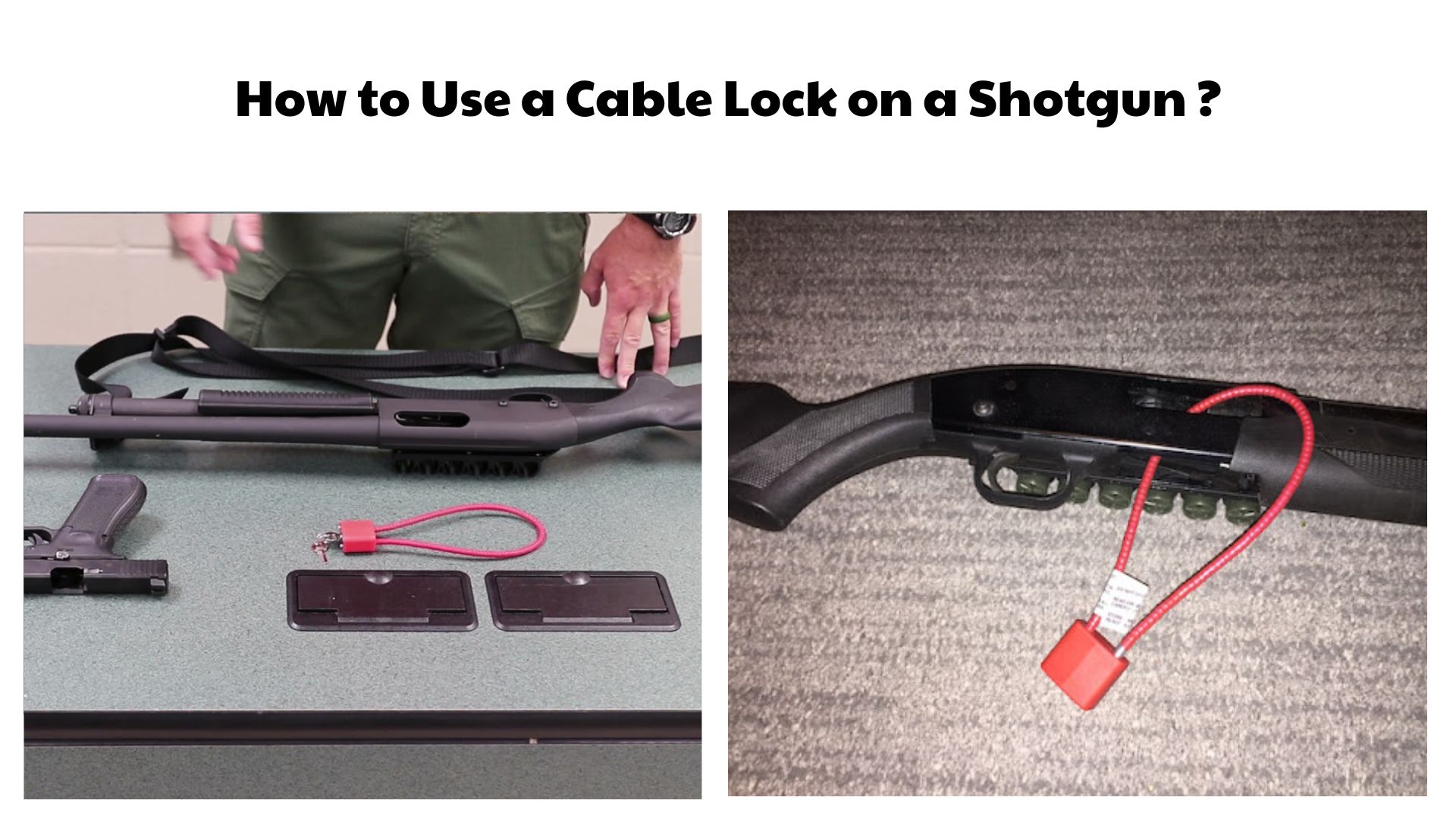

Firearm safety and secure storage are essential responsibilities for every gun owner, regardless of experience level. Proper handling and storage practices not only protect the owner but also help prevent unauthorized access, accidents, and misuse. Among the many safety tools available, cable gun locks have become one of the most widely used and accessible options for securing firearms in everyday situations.
Cable gun locks are commonly used with shotguns, rifles, and handguns because of their simplicity, versatility, and effectiveness in preventing a firearm from being loaded or fired. They are often included with new firearm purchases and are frequently required in many jurisdictions as part of legal or regulatory compliance for safe storage and transport. This makes them a standard entry-level safety device for both new and experienced gun owners.
In practice, gun locks are used in a variety of situations. These include home storage when a firearm is not in active use, transportation to and from shooting ranges, and compliance with local firearm safety laws. In many cases, they also serve as a temporary safety measure when a dedicated gun safe is not immediately available.
However, one of the most important points to understand is that a gun lock is not a replacement for safe handling practices. A common misconception among beginners is that simply locking a firearm makes it fully “safe.” In reality, cable locks are only one layer of protection and must always be combined with responsible behavior, proper storage habits, and basic firearm safety rules.
This guide will provide a clear and practical breakdown of how cable gun locks work and how to use them correctly. We will cover the different types of cable locks, step-by-step instructions for proper installation, specific application for shotguns, and essential safety best practices. The goal is to help gun owners understand not just how to use a cable lock, but how to integrate it into a complete and responsible firearm safety system.
What Is a Gun Cable Lock?
Definition and Purpose
A gun cable lock is a simple but effective firearm safety device designed to prevent a gun from being loaded or fired. It typically consists of a flexible steel cable attached to a locking mechanism. When properly installed, it physically blocks key parts of the firearm’s operating system, making it impossible to chamber a round or discharge the weapon.
The main purpose of a cable lock is not to store a firearm long-term, but to provide a basic layer of security when the gun is not in use. It helps reduce the risk of accidental handling, unauthorized access, and improper use, especially in household environments.
How Cable Locks Work
Cable locks function by physically obstructing the internal pathway needed for a firearm to operate. The cable is threaded through critical areas such as the action, chamber, or magazine well, depending on the firearm type.
Once inserted, the cable prevents the bolt or action from closing fully and stops ammunition from being loaded into the chamber. This effectively renders the firearm inoperable until the lock is removed.
After placement, the cable is secured using a keyed or combination lock mechanism. When locked, the cable cannot be removed without the correct key or code, ensuring that the firearm remains disabled during storage or transport.
Types of Gun Locks
There are several types of gun locks available, each serving a slightly different purpose depending on the firearm and intended use.
Cable locks are the most versatile and widely used option. They can be used with shotguns, rifles, and many handguns, making them a common choice for general firearm safety.
Trigger locks are another type that physically block the trigger from being pressed. These devices attach directly to the trigger guard and prevent firing by restricting movement of the trigger itself.
Integrated chamber locks are less common in modern consumer use but are designed to secure the chamber directly. These systems are often used in institutional or specialized settings rather than everyday civilian ownership.
Why Cable Gun Locks Are Important
Preventing Unauthorized Use
One of the primary benefits of cable gun locks is preventing unauthorized access to firearms. In households, this is especially important for child safety and general household protection. A properly locked firearm reduces the risk of curious or untrained individuals handling a loaded weapon.
Cable locks also help prevent accidental handling in situations where multiple people may have access to a home or storage area. Even brief, unintentional interaction with a firearm can lead to dangerous outcomes if the weapon is not secured.
Legal and Storage Requirements
In many regions, cable gun locks are part of legal or regulatory requirements for firearm ownership. Some jurisdictions require that firearms be sold with a safety device included, while others recommend or mandate secure storage practices that involve locking mechanisms.
Because of their simplicity and effectiveness, cable locks are often used to help meet basic safe storage compliance standards. They are commonly included with new firearms at the point of purchase and are recognized as a minimum safety measure in many legal frameworks.
Backup Layer of Safety
While cable gun locks are useful, they are best understood as a backup layer of safety rather than a complete storage solution. They are designed to complement, not replace, more secure storage systems such as gun safes or lockboxes.
A cable lock can prevent immediate use of a firearm, but it does not provide the same level of protection against theft or long-term unauthorized access as a hardened storage container. For this reason, responsible gun ownership typically involves using cable locks alongside other safety measures.
When combined with proper storage practices and safe handling habits, cable gun locks contribute to a more complete and responsible firearm safety system.
How to Use a Cable Gun Lock (General Steps)
Using a cable gun lock correctly is a straightforward process, but it requires attention to detail and strict adherence to firearm safety rules. The goal is not just to “lock” the firearm, but to ensure it is fully rendered inoperable and safely stored. Each step plays an important role in preventing accidental discharge and unauthorized use.
Step 1 – Always Unload the Firearm
The first and most important step is to completely unload the firearm. This means removing the magazine (if applicable) and carefully clearing the chamber. Even if you believe the firearm is unloaded, it must always be physically and visually inspected to confirm that no ammunition is present.
A proper check involves looking into the chamber area and verifying that it is empty, as well as ensuring no rounds remain in the magazine or feeding system. This step is critical because many firearm incidents occur due to the assumption that a gun is unloaded when it is not.
Until you have personally verified that the firearm is empty, it should always be treated as if it is loaded. This mindset is one of the core principles of firearm safety and helps prevent accidents during handling and locking procedures.
Step 2 – Unlock the Cable Lock
Once the firearm has been confirmed as unloaded, the next step is to unlock the cable gun lock. Most cable locks come with either a key-based system or a combination lock mechanism.
Use the provided key or correctly enter the combination to release the locking mechanism. Before inserting the cable into the firearm, ensure that it is fully unlocked and that the cable moves freely. Attempting to force a locked or partially locked cable can damage the mechanism or make proper installation difficult.
Step 3 – Thread Cable Through Firearm
After unlocking the cable, carefully thread it through the appropriate part of the firearm. The exact path depends on the firearm type, but it is commonly passed through the ejection port, chamber area, or magazine well.
The purpose of this step is to block the firearm’s action so that it cannot close, cycle, or accept ammunition. When properly installed, the cable physically prevents the firearm from being used in its normal operating condition.
It is important to insert the cable gently and avoid forcing it through internal components. Rough handling can cause unnecessary wear or potential damage to the firearm’s internal surfaces.
Step 4 – Secure and Lock Cable
Once the cable is correctly positioned through the firearm, the next step is to secure it by connecting both ends to the locking mechanism. Ensure that the cable is properly seated and that there is no slack that could allow movement or partial operation of the firearm.
Engage the lock using the key or combination system. After locking, remove the key immediately and verify that the mechanism is fully secured. A properly locked cable should not be removable without unlocking it first.
It is also a good practice to double-check the placement to confirm that the firearm’s action is fully blocked and cannot be cycled or loaded.
Step 5 – Store Key Separately
The final step is to store the key or combination information separately from the firearm. This is an important security measure that prevents immediate access to both the firearm and its unlocking mechanism at the same time.
Ideally, the key should be stored in a secure location that is not easily accessible to unauthorized individuals. This adds an additional layer of safety and ensures compliance with responsible storage practices.
By keeping the key separate, you reduce the risk of accidental or unauthorized firearm access while maintaining control over when and how the firearm can be made operational again.
How to Use a Cable Lock on a Shotgun
Shotguns are commonly used for home defense, hunting, and sport shooting, which makes safe storage especially important. Using a cable gun lock on a shotgun is a simple but effective way to ensure the firearm cannot be loaded or fired while not in use. The process is straightforward, but it must be done carefully and consistently to ensure full safety.
Step 1 – Verify Shotgun Is Unloaded
Before installing a cable lock, the shotgun must be completely unloaded. This begins by opening the action and carefully checking both the chamber and the magazine tube. Many shotguns store additional rounds in the magazine, so it is important not to rely on chamber inspection alone.
A proper safety check includes both a visual and physical inspection. Visually confirm that no shell is present, and physically verify the chamber with your finger to ensure it is empty. This dual-check method reduces the risk of overlooking a loaded condition.
Even if you are confident the shotgun is unloaded, it should always be treated as if it is loaded until verified. This habit is a fundamental rule of firearm safety and helps prevent accidental discharge during handling.
Step 2 – Insert Cable Through Action
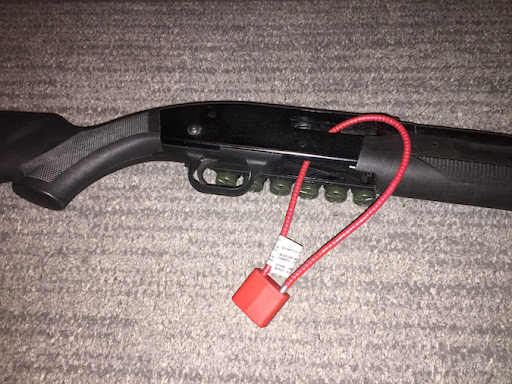
Once the shotgun has been confirmed safe, the next step is to insert the cable through the firearm’s action. The most common insertion point is the ejection or loading port, depending on the shotgun’s design.
The cable should pass through the action in a way that prevents the bolt or pump mechanism from closing or cycling. This ensures that the shotgun cannot be chambered with a shell or brought into firing condition while the lock is installed.
Care should be taken to avoid forcing the cable through tight or sensitive areas. The goal is secure blockage of the action without causing unnecessary wear or damage to internal components.
Step 3 – Lock the Cable Securely
After properly threading the cable through the shotgun’s action, the next step is to secure it using the locking mechanism. Attach the cable ends to the lock body and ensure that the connection is fully engaged.
Once locked, gently test the setup to confirm that the action cannot close or cycle. A properly installed cable lock should feel firm and stable, with no slack that would allow partial movement of the firearm’s components.
After confirming secure placement, remove the key or finalize the combination to complete the locking process.
Step 4 – Safe Storage Practices
Installing a cable lock is only one part of safe shotgun storage. The firearm should also be placed in a secure storage location, such as a locked cabinet or gun safe, when not in use.
In addition, ammunition should always be stored separately from the firearm. This reduces the risk of unauthorized loading and adds another layer of safety to the overall storage system.
When combined, a locked firearm and separate ammunition storage significantly improve household firearm safety and reduce the likelihood of accidental or unauthorized use.
How to Use a Cable Lock on Rifles and Semi-Auto Firearms
Rifles and semi-automatic firearms have different operating mechanisms compared to shotguns, so cable lock placement must be adjusted accordingly. The goal remains the same: prevent the firearm from being loaded or fired by blocking its action or feeding system.
Through Ejection Port Method
One of the most common methods for rifles and semi-automatic firearms is threading the cable through the ejection port. This method effectively prevents the bolt or action from cycling.
By blocking the ejection port, the firearm cannot properly chamber a round or complete the firing cycle. This makes it one of the most secure and widely used methods for securing modern rifles, including semi-automatic platforms.
Through Magazine Well Method
Another common method is inserting the cable through the magazine well. This approach blocks the ability to insert a magazine or feed ammunition into the firearm.
Without access to the feeding system, the firearm cannot be loaded or prepared for firing. This method is especially useful for rifles and pistols that rely on detachable magazines.
Ensuring Proper Fit
Regardless of the method used, it is important that the cable is properly fitted to the firearm. The cable should be snug enough to prevent movement of the action but not so tight that it causes unnecessary stress or damage to internal components.
A properly installed cable lock should fully immobilize the firearm’s operating system while maintaining the integrity of the firearm itself. Regular inspection of both the lock and firearm is recommended to ensure continued safe performance.
Common Mistakes When Using Gun Cable Locks
Gun cable locks are simple tools, but improper use can significantly reduce their effectiveness. Most safety issues do not come from the device itself, but from user mistakes during installation, handling, or storage. Understanding these common errors helps ensure that cable locks actually provide the level of safety they are designed for.
Not Fully Unloading Firearm
One of the most serious mistakes is failing to fully unload the firearm before applying a cable lock. Some users remove the magazine but forget that a round may still be present in the chamber. This creates a dangerous condition where the firearm is still capable of firing even after being “locked.”
Leaving a round in the chamber or magazine defeats the purpose of using a safety device. A cable lock is designed to prevent operation, not to neutralize a loaded weapon. If the firearm is not properly cleared, the risk of accidental discharge remains high during handling or removal of the lock.
For this reason, every locking procedure must begin with a complete and verified unload process. This is not optional—it is the foundation of safe firearm handling.
Improper Cable Placement
Another common mistake is incorrect placement of the cable through the firearm. Each firearm type has specific points where the cable must be routed to effectively block the action. If the cable is threaded incorrectly, it may not fully prevent the firearm from being cycled or loaded.
Improper installation reduces the effectiveness of the lock and may create a false sense of security. In some cases, the firearm may still be partially operable if the cable does not fully obstruct the action or feeding system.
Correct placement ensures that the bolt, chamber, or magazine system is completely blocked. Taking the time to install the cable properly is essential for reliable performance.
Storing Key Improperly
The effectiveness of a cable lock system also depends on how the key or combination information is stored. Keeping the key in an easily accessible location near the firearm defeats the purpose of using a security device.
If the key is stored too close to the firearm, it increases the risk of unauthorized access. In household environments, this can also create unsafe situations if someone gains access to both the firearm and the unlocking mechanism at the same time.
Proper key storage should always be separate, secure, and controlled by the firearm owner. This adds an important layer of protection and supports responsible ownership practices.
Over-Reliance on Cable Locks
A major misconception among some firearm owners is the belief that a cable lock alone is sufficient for complete safety. While cable locks are useful, they are not designed to replace comprehensive storage solutions.
Relying solely on a cable lock can create gaps in security, especially in situations involving theft, unauthorized access, or long-term storage. Cable locks are best viewed as a temporary or supplementary safety measure rather than a primary storage system.
For true safety, cable locks should always be used alongside proper storage methods such as gun safes, lockboxes, and ammunition separation practices.
Safety Best Practices for Gun Lock Usage
Using a cable gun lock correctly is only one part of responsible firearm ownership. To maximize safety, gun owners should combine proper handling habits, secure storage practices, and regular equipment checks. These best practices create a layered safety system that significantly reduces risk.
Always Follow the Four Basic Firearm Safety Rules
The foundation of firearm safety is built on four universal rules that apply at all times, regardless of experience level or equipment used.
First, always treat every firearm as if it is loaded. This mindset prevents complacency and ensures consistent caution during handling.
Second, keep your finger off the trigger until you are ready to shoot. This helps prevent negligent discharges caused by accidental pressure or poor handling habits.
Third, never point a firearm at anything you are not willing to destroy. This rule reinforces safe muzzle direction and reduces the risk of harm in case of unexpected discharge.
Fourth, always know your target and what is beyond it. Awareness of surroundings is essential for safe firearm use in any environment.
Combine Multiple Safety Methods
Cable locks are most effective when used as part of a broader safety system. Relying on a single method is not enough to ensure full protection.
A strong safety approach combines cable locks with secure storage solutions such as gun safes or lockboxes. In addition, storing ammunition separately adds another layer of protection by preventing immediate firearm use even if access is gained.
This layered approach significantly reduces the likelihood of accidents, unauthorized use, and improper handling.
Regular Safety Checks
Like any mechanical device, cable locks should be inspected regularly to ensure they remain in good working condition. Over time, cables can wear down, locks can loosen, or components can become damaged.
Gun owners should periodically check the integrity of the cable, locking mechanism, and overall fit. Any signs of fraying, bending, or malfunction should be addressed immediately.
If a cable lock becomes damaged or unreliable, it should be replaced without delay. Regular maintenance ensures that the safety system continues to function as intended and provides consistent protection over time.
Limitations of Cable Gun Locks
While cable gun locks are widely used and provide a valuable layer of firearm safety, they are not a complete security solution. Understanding their limitations is important for setting realistic expectations and using them correctly as part of a broader safety system.
Not a Theft-Prevention Device
Cable gun locks are primarily designed to prevent a firearm from being loaded or fired, not to stop theft. Although they can slow down unauthorized access and make quick use of a firearm more difficult, they are not strong enough to fully prevent someone from stealing the weapon.
A determined individual with tools or enough time may still be able to remove or bypass a cable lock. For this reason, relying on a cable lock as the only form of security is not recommended, especially in environments where theft risk is a concern.
Not a Substitute for Safe Storage
Another key limitation is that cable gun locks should never replace proper firearm storage systems. They are designed as a supplemental safety tool, not a standalone storage solution.
For effective protection, firearms should always be stored in a secure gun safe, lockbox, or other locked container when not in use. These storage methods provide a much higher level of physical security compared to cable locks alone.
When used together, however, cable locks and secure storage systems create a stronger, layered approach to firearm safety.
Does Not Replace Training
Cable gun locks also do not replace the need for proper firearm training. Safe handling skills, situational awareness, and disciplined behavior are essential components of responsible gun ownership.
Even when a firearm is locked, users must still understand how to handle, inspect, and store firearms safely. Training ensures that gun owners can correctly identify safe conditions and avoid mistakes that could lead to accidents.
Expert Insight Summary
Cable gun locks are effective basic safety tools that provide a simple and accessible way to secure firearms when they are not in use. They are widely used because they are affordable, easy to install, and compatible with many types of firearms, including shotguns, rifles, and handguns.
Proper installation of a cable lock always begins with fully unloading the firearm. This step is critical because a lock applied to a loaded firearm does not eliminate the risk of accidental discharge. Safety must always start with verifying that the weapon is completely empty.
Different firearms require correct cable threading methods to ensure proper function. Whether used on a shotgun, rifle, or handgun, the cable must fully block the action or feeding system to prevent the firearm from being operated.
In most cases, firearm safety incidents are caused by user error rather than mechanical failure or lock malfunction. This highlights the importance of responsible handling practices and consistent adherence to safety rules.
Ultimately, cable locks are most effective when used as part of a layered safety system that includes secure storage, proper handling, and ongoing awareness.
Conclusion
Gun cable locks offer a simple and practical solution for improving firearm safety. They are easy to use and provide an important barrier that helps prevent unauthorized or accidental use of firearms when properly installed.
However, correct usage requires careful attention to detail, especially when it comes to fully unloading the firearm and properly threading the cable through the action or chamber. These steps are essential for ensuring the lock functions as intended.
Whether used on shotguns, rifles, or handguns, every firearm must be thoroughly verified as safe before a cable lock is applied. Skipping this step significantly reduces the effectiveness of the safety system.
Cable locks should never be viewed as a replacement for responsible storage practices. They are a supportive tool, not a complete solution for firearm security.
Final recommendation: for maximum firearm safety, combine cable gun locks with secure storage systems and responsible handling habits. This layered approach remains the most effective way to reduce risk and promote safe firearm ownership.
Frequently Asked Questions (FAQ)
1. What is a gun cable lock used for?
A gun cable lock is used to prevent a firearm from being loaded or fired. It works by physically blocking the firearm’s action, chamber, or magazine system so that it cannot operate normally. It is primarily used as a basic safety device during storage or transport.
2. Can a cable lock make a gun completely safe?
No single device can make a firearm completely “safe.” A cable lock reduces risk by preventing operation, but safe firearm handling, proper storage, and responsible ownership practices are still required for full safety.
3. Are cable gun locks required by law?
In many regions, cable locks are included with firearm purchases or required as part of safe storage regulations. However, laws vary by country, state, or local jurisdiction, so requirements should always be verified locally.
4. How does a cable gun lock physically work?
A steel cable is inserted through the firearm’s action or chamber area and then locked in place. This prevents the firearm from closing, cycling, or being loaded with ammunition, making it inoperable until unlocked.
5. Can a locked firearm still fire?
If a cable lock is correctly installed and the firearm is fully unloaded, it cannot be fired. However, improper installation or failure to unload the firearm first can still create unsafe conditions.
6. Is a cable lock enough for home storage?
No. Cable locks are not intended as long-term storage solutions. They should always be used together with a gun safe or locked container for proper home security.
7. What is the biggest mistake people make with cable locks?
The most common mistake is failing to fully unload the firearm before installing the lock. This creates a dangerous situation where the firearm may still be capable of firing.
8. Can children bypass a cable lock?
While a properly installed cable lock adds a layer of protection, it is not designed to resist determined tampering. This is why firearms must always be stored in locked, secure containers away from unauthorized access.
9. Do cable locks damage firearms?
When used correctly, cable locks do not damage firearms. However, forcing the cable or improper installation can potentially cause wear or minor cosmetic damage over time.
10. How long can a firearm stay locked with a cable lock?
A firearm can remain locked indefinitely, but cable locks are intended for temporary or supplemental security. Long-term storage should always involve a dedicated safe or secure container.
11. Can I reuse a cable gun lock?
Yes, cable gun locks are reusable as long as they remain in good working condition. Regular inspection is recommended to ensure the cable and locking mechanism are not worn or damaged.
12. What happens if I lose the key to a cable lock?
If the key is lost, the lock may need to be removed using manufacturer-approved methods or replaced entirely. This highlights the importance of storing keys separately and securely.
13. Are combination cable locks better than key locks?
Both types are effective. Combination locks eliminate the need for a physical key, while keyed locks may be simpler for quick use. The choice depends on user preference and security needs.
14. Can a cable lock prevent theft?
A cable lock may slow down unauthorized access but cannot fully prevent theft. It is not a substitute for secure storage like a gun safe or locked cabinet.
15. How should a firearm be stored with a cable lock?
The firearm should be fully unloaded, locked with a cable lock, and then stored in a secure container or safe. Ammunition should be stored separately for added safety.
16. What firearms can use cable locks?
Cable locks are compatible with most firearms, including shotguns, rifles, and many handguns. They are designed to be versatile across different platforms.
17. Can a cable lock be used on a loaded gun?
Technically it can be installed, but it is unsafe and strongly discouraged. Firearms should always be unloaded before applying any lock.
18. Do police use cable locks?
Law enforcement may use cable locks for temporary storage or transport, but they typically rely on more secure systems for long-term weapon storage.
19. Are cable locks reliable for travel?
Yes, they are commonly used during transport to meet legal requirements and prevent unauthorized access, but firearms must still comply with local transport laws.
20. Can a cable lock stop accidental discharge?
Yes, if properly installed on an unloaded firearm, it prevents the firearm from being fired, thereby reducing risk of accidental discharge during handling.
21. What is the correct way to insert a cable lock?
The cable should be threaded through the firearm’s action or chamber area in a way that prevents the firearm from closing or cycling.
22. Can improper use make a cable lock useless?
Yes, incorrect installation can significantly reduce effectiveness, leaving parts of the firearm still operable or unsafe.
23. How often should cable locks be inspected?
Regular inspection is recommended, especially before and after use, to ensure the cable and lock mechanism are functioning properly.
24. Can rust affect a cable lock?
Yes, rust or corrosion can weaken the cable and reduce reliability. Proper storage in dry conditions helps prevent this issue.
25. Are cable locks childproof?
They provide a barrier but are not fully childproof. Secure storage remains essential for preventing unauthorized access.
26. What is the difference between a trigger lock and cable lock?
A trigger lock blocks trigger movement, while a cable lock blocks the firearm’s action or chamber, preventing operation at a system level.
27. Can a cable lock be used with optics or accessories attached?
Yes, cable locks generally do not interfere with external accessories, as they focus on internal firearm operation points.
28. Is it safe to dry fire a locked firearm?
No. A firearm with a cable lock installed should not be dry fired, as it is intended to be fully inoperable.
29. Can temperature affect a cable lock?
Extreme temperatures may affect materials over time, but normal storage conditions are generally safe for cable locks.
30. Do cable locks expire?
They do not have a fixed expiration date, but they should be replaced if signs of wear or damage appear.
31. Are cable locks required when buying a gun?
In many regions, firearms are sold with a cable lock included as part of safety regulations or industry standards.
32. Can cable locks be cut easily?
Basic cable locks can be cut with tools if forced, which is why they are not considered high-security anti-theft devices.
33. What is the safest way to use a cable lock?
The safest method is to fully unload the firearm, properly install the cable through the action, and store the firearm in a locked safe.
34. Can a cable lock affect firearm function long-term?
When used correctly, it does not affect firearm function. Improper use may cause minor wear over time.
35. Should ammunition be stored with a locked firearm?
No. Ammunition should always be stored separately to enhance overall safety.
36. Can a cable lock be used during cleaning?
It is generally not used during cleaning because the firearm must be fully accessible and verified empty during maintenance.
37. What makes a good quality cable lock?
A good lock has durable steel cable, reliable locking mechanism, and smooth operation without excessive force or looseness.
38. Are cable locks suitable for beginners?
Yes, they are commonly recommended for new firearm owners due to their simplicity and ease of use.
39. Can a cable lock be used for storage in vehicles?
Yes, but additional legal and safety requirements may apply depending on location.
40. What should I do before removing a cable lock?
Always ensure the firearm is pointed in a safe direction and handled as if loaded until visually confirmed otherwise.
41. Can cable locks be used on antique firearms?
Yes, but care must be taken to avoid damaging older or delicate mechanical components.
42. Do cable locks prevent firing pin movement?
They prevent overall firearm operation, indirectly preventing firing pin engagement by blocking the action.
43. Are there legal penalties for not using a cable lock?
In some jurisdictions, improper storage may result in legal consequences, especially if unauthorized access occurs.
44. Can cable locks be used with suppressors or attachments?
Yes, they generally do not interfere with external barrel attachments.
45. What is the lifespan of a cable lock?
With proper care, a cable lock can last many years, but it should be replaced if any wear is detected.
46. Can cable locks be used on air rifles?
Yes, they can be used on many types of air rifles as an additional safety measure.
47. What is the safest storage combination?
A firearm safe, unloaded firearm, cable lock, and separate ammunition storage provide the highest safety level.
48. Do cable locks affect reloading speed?
Yes, they completely prevent reloading until removed, which is their intended safety function.
49. Are cable locks recommended by firearm instructors?
Yes, they are commonly recommended as a basic safety tool, especially for beginners.
50. What is the final purpose of a cable gun lock?
Its primary purpose is to add a simple and effective barrier that prevents a firearm from being loaded or fired during storage or transport.
Read more: