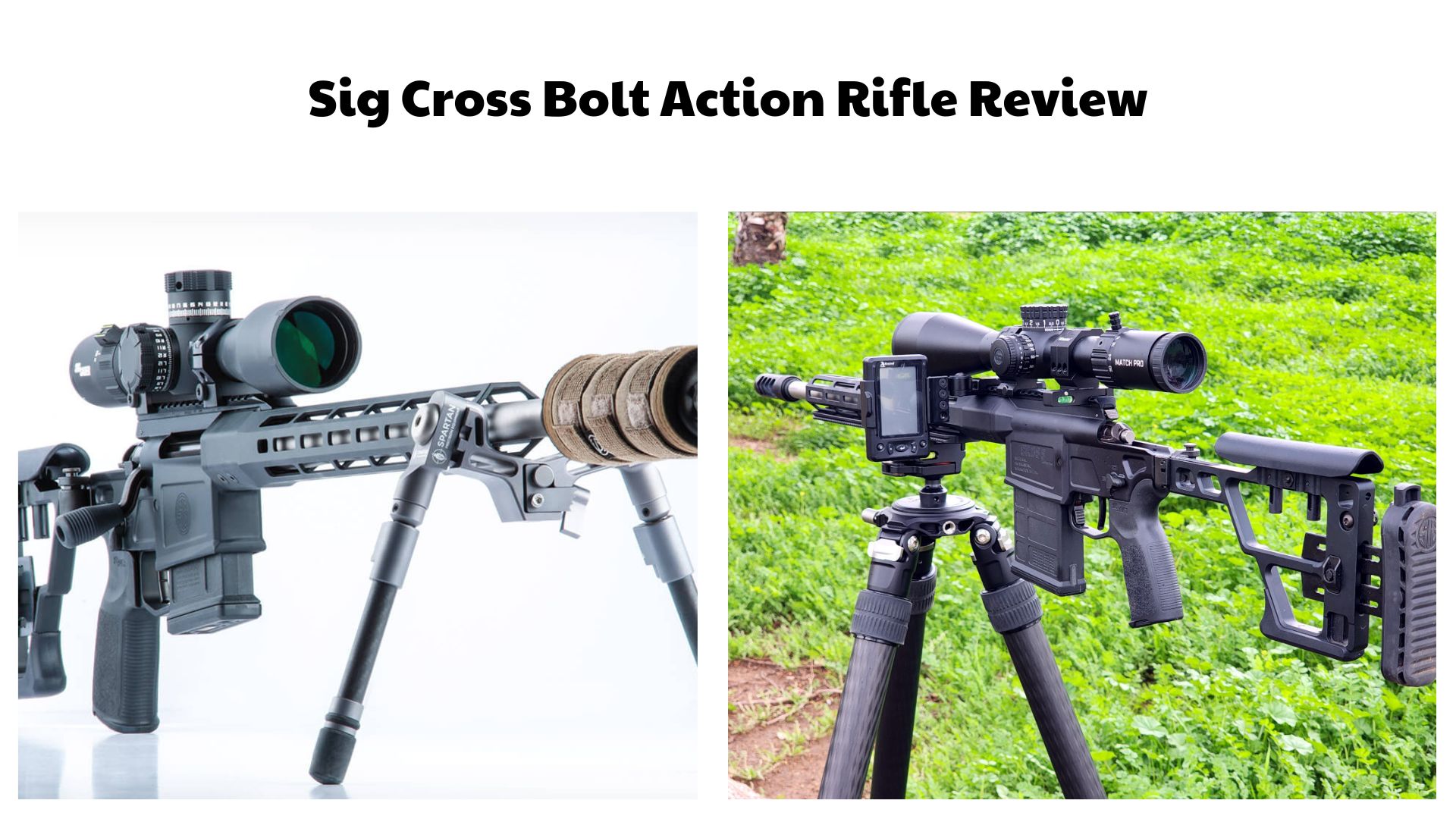
The Sig Cross Bolt Action Rifle represents a modern shift in how hunters and long-range shooters think about a bolt-action platform. Built by Sig Sauer, a company widely recognized for its innovation in both military and civilian firearms, the Cross is designed to combine the best elements of a lightweight hunting rifle and a precision long-range system. It is not a traditional bolt gun in the classic sense. Instead, it reflects a new generation of “crossover” rifles that prioritize versatility, mobility, and practical accuracy in the field.
Sig Sauer introduced the Cross as its first dedicated bolt-action rifle in decades, marking a significant expansion beyond its well-known pistol and AR-platform offerings. The goal was simple but ambitious: create a rifle that performs well in rugged backcountry environments while still delivering the consistency needed for longer-range shooting. This dual-purpose design philosophy is what defines the Sig Cross from the start.
Positioned within the growing “crossover rifle” category, the Sig Cross sits between ultralight mountain rifles and heavier precision chassis systems. It is engineered for hunters who hike long distances, move through difficult terrain, and still want dependable accuracy when the shot presents itself. At the same time, it offers enough precision capability to appeal to shooters interested in stretching distances beyond typical hunting ranges.
Weight reduction, modular construction, and AR-style ergonomics are central to its identity. The rifle feels modern in hand, with familiar controls for shooters who already use AR platforms. This familiarity reduces the learning curve and makes it easier to transition between different shooting systems without major adjustments.
Since its release, the Sig Cross has seen rapid adoption among both hunters and precision-oriented shooters. Its combination of lightweight design and practical accuracy has made it especially popular in backcountry hunting circles, where every ounce and every shot matters. It is not designed to replace heavy competition rifles or full chassis systems, but to offer a more mobile solution for real-world field conditions.
Key Features of the Sig Cross
Action and Receiver Design
The Sig Cross is built around a lightweight aluminum receiver, which plays a key role in keeping overall weight low while maintaining structural strength. This choice of material allows the rifle to remain durable without becoming overly heavy, which is essential for extended backcountry use.
Its bolt-action system features a three-lug design with a 60-degree bolt throw. This short bolt lift is one of the most noticeable mechanical advantages of the rifle. It allows faster cycling between shots and provides additional clearance for mounted optics. For hunters, this can translate into quicker follow-up shots when needed in the field.
The bolt cycles smoothly and benefits from a compact, modern receiver layout. While it is not a traditional heavy-duty precision action, it is engineered for efficiency and practical reliability. The design also incorporates AR-style ergonomics, making the rifle feel more familiar to shooters who already have experience with modern sporting rifles.
Overall, the action prioritizes strength-to-weight efficiency, ensuring the rifle remains both durable and easy to carry over long distances.
Barrel System and Construction
The Sig Cross uses a stainless steel barrel with a free-floating design. Free-floating means the barrel does not contact the stock along its length, which helps reduce external pressure points that could affect accuracy. This is especially important in lightweight rifles, where maintaining consistency can be more challenging.
The barrel features a medium contour profile. This design strikes a balance between weight savings and stiffness. It is not as heavy as a dedicated precision rifle barrel, but it still provides enough rigidity for consistent shot placement in hunting and moderate long-range applications.
A threaded muzzle (5/8×24) comes standard, allowing the installation of suppressors or muzzle brakes. This adds flexibility depending on whether the shooter prioritizes recoil reduction, sound suppression, or both.
Barrel lengths vary depending on caliber and intended use, with configurations optimized for hunting performance rather than extreme long-range bench shooting. The twist rate, commonly 1:8 in 6.5 Creedmoor models, supports modern high-BC bullets and stabilizes longer projectiles effectively.
In practical terms, the barrel system is designed for real-world hunting distances and moderate extended-range shooting. It is not a heavy match barrel, but it is built for dependable field accuracy in a lightweight platform.
Stock and Ergonomics
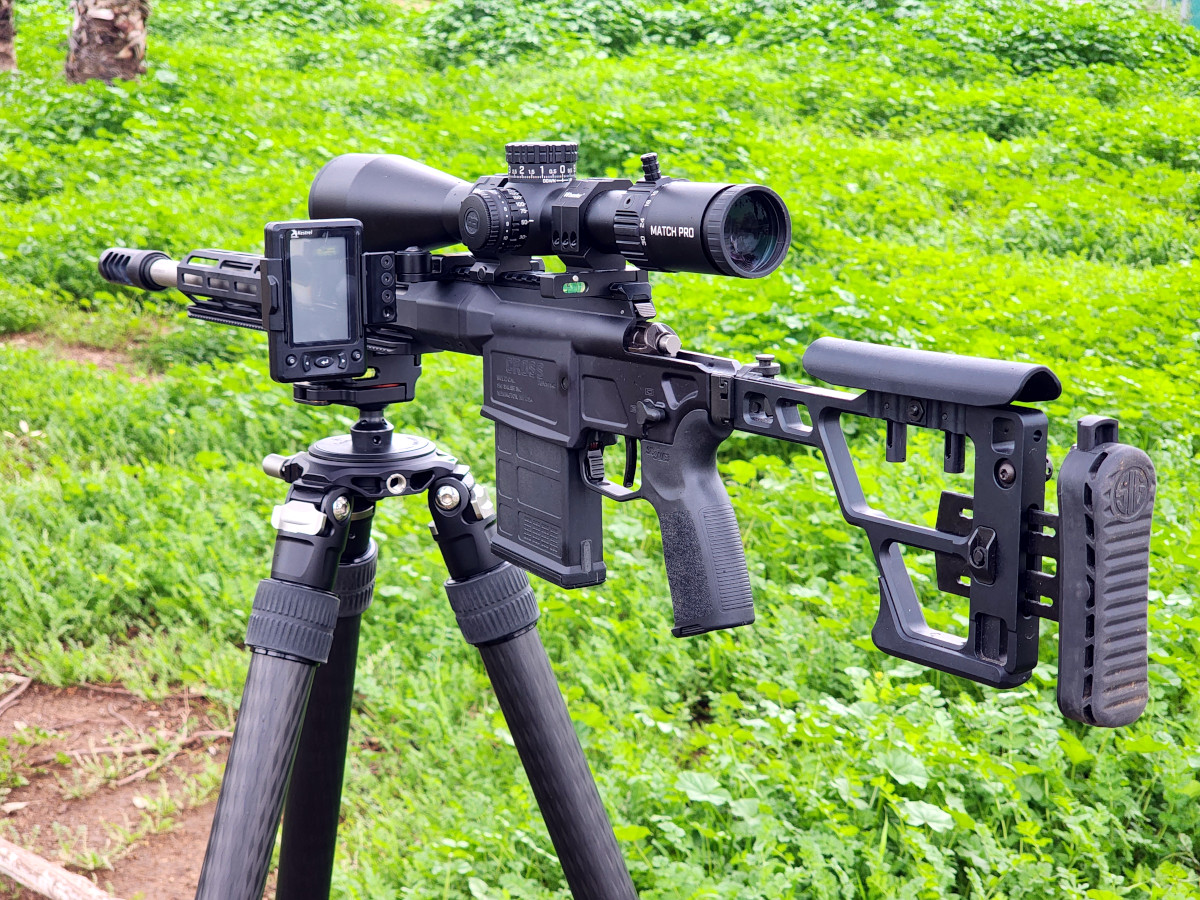
One of the defining features of the Sig Cross is its folding precision stock. This allows the rifle to become significantly more compact for transport, which is particularly useful for hunters traveling through dense terrain or mountainous environments.
The stock is fully adjustable, offering both cheek riser height and length of pull adjustments. This ensures that shooters can fine-tune the rifle for proper eye alignment and comfortable shoulder positioning. These adjustments are important for maintaining consistent shooting form, especially when using optics.
The rifle also supports AR-style pistol grip compatibility, which enhances control and gives the shooter a familiar interface. This design choice makes the Cross feel more modern compared to traditional bolt-action hunting rifles.
Adjustments are tool-less in many configurations, allowing changes to be made quickly in the field without specialized equipment. This is particularly useful in dynamic hunting situations where conditions can change rapidly.
The stock itself is a lightweight carbon-aluminum hybrid structure. It is designed to provide strength without adding unnecessary weight, maintaining the rifle’s focus on mobility and field usability.
Overall, the ergonomics strike a strong balance between portability and stability, making it suitable for both hiking-heavy hunts and controlled shooting positions.
Magazine System
The Sig Cross uses AICS-style detachable magazines, which are widely respected for their reliability and compatibility across many precision rifle platforms. This standardization is a major advantage for shooters who prefer proven feeding systems.
Most configurations use a 5-round magazine capacity, which is typical for hunting-oriented bolt-action rifles. This capacity provides enough ammunition for field use while keeping the magazine compact and lightweight.
The feeding system is designed for reliability in real-world conditions. Whether in cold weather, dusty environments, or uneven terrain, the magazine system is intended to function consistently when properly maintained.
Another benefit is broad aftermarket compatibility. Because AICS-style magazines are widely used, shooters have access to multiple manufacturers and material options depending on preference and budget.
Trigger System
The Sig Cross is equipped with a two-stage adjustable trigger system. This design allows the shooter to experience a light initial take-up followed by a clean break, which helps improve shot control and precision.
Trigger pull weight typically ranges between approximately 2.5 to 4 pounds, depending on configuration and adjustment. This range allows users to tailor the trigger to either hunting safety preferences or more precision-focused shooting styles.
The break is generally described as crisp and predictable, which is important for consistent accuracy. A clean trigger helps reduce shooter-induced error, especially at longer distances.
Factory tuning of the trigger system reflects the rifle’s dual-purpose design. It is intended to perform well in both hunting and long-range scenarios, without being overly specialized in one direction.
In overall performance, the trigger is smooth and consistent under field use, contributing to the rifle’s reputation as a practical and well-balanced modern bolt-action platform.
Accuracy and Long-Range Performance
The Sig Cross delivers a level of accuracy that fits well within the expectations of a modern lightweight precision hunting rifle. In controlled conditions, the rifle shows sub-MOA potential with quality ammunition, especially when paired with match-grade loads and consistent shooting fundamentals. However, real-world performance is typically closer to the 1 MOA range for most shooters, which is still considered highly effective for hunting applications.
One of the standout performers in the lineup is the 6.5 Creedmoor configuration. This caliber aligns perfectly with the design philosophy of the rifle, offering flat trajectories, manageable recoil, and strong long-range energy retention. It is especially well-suited for ethical hunting shots in open terrain where distance can extend beyond typical woodland ranges.
In practical field use, the Sig Cross performs best within 300–700 yard hunting applications. At these distances, the rifle maintains predictable grouping and consistent point-of-impact, provided environmental conditions and ammunition quality remain stable.
However, the lightweight barrel design introduces some limitations. During extended firing sessions, heat buildup can lead to slight stringing, where successive shots begin to spread slightly as the barrel warms. This is a natural trade-off in lightweight hunting rifles, where mobility is prioritized over sustained fire precision.
For best results, the rifle performs most consistently with match-grade ammunition. While it can function with standard hunting loads, higher-quality ammunition helps unlock its full accuracy potential.
Overall, the design clearly favors hunting precision over benchrest dominance. It is not intended to compete with heavy chassis rifles in controlled precision environments, but rather to deliver dependable accuracy in real-world field conditions where mobility matters.
Build Quality and Materials
The Sig Cross is built with a clear focus on weight efficiency without sacrificing structural integrity. At the core of its design is a lightweight aluminum receiver, which provides strength while significantly reducing overall rifle weight. This choice of material is essential for backcountry hunting applications where every ounce matters.
The barrel is made from stainless steel and finished with a durable protective coating. This combination ensures resistance to corrosion and wear, making it suitable for harsh outdoor environments where moisture, dust, and temperature changes are common.
The stock incorporates carbon fiber reinforced elements, which further reduce weight while maintaining rigidity. This hybrid approach allows the rifle to remain both lightweight and structurally stable under field conditions.
One of the most practical features is the folding stock mechanism. It is engineered for strength and reliability, ensuring that repeated folding and deployment does not compromise alignment or durability. This makes transportation easier, especially in tight spaces such as backpacks or vehicle storage.
Designed specifically for rugged backcountry durability, the Sig Cross is intended to withstand real-world hunting conditions rather than controlled range environments. Its materials and coatings are selected to resist corrosion, impact, and environmental wear over time.
Overall, the rifle emphasizes weight savings without sacrificing reliability, making it a strong candidate for hunters who prioritize mobility and endurance in the field.
Recoil Management and Shooting Control
Due to its lightweight construction, the Sig Cross naturally produces more perceived recoil than heavier bolt-action rifles. This is an expected trade-off in designs that prioritize portability over mass-based recoil absorption.
However, the rifle is fully compatible with suppressors, which significantly helps reduce recoil while also improving shooting comfort and sound signature. This makes it a more manageable platform when paired with modern suppressor systems.
It also supports muzzle brakes, which can further reduce recoil by redirecting gas pressure away from the shooter. This is particularly useful for maintaining sight picture and improving follow-up shot speed in the field.
The ergonomic stock design plays an important role in shooting stability. It allows the shooter to maintain consistent shoulder positioning and cheek weld, which contributes to better control during firing sequences.
The rifle performs best in prone or supported shooting positions, where external stability helps offset its lightweight nature. In these conditions, recoil management becomes more predictable and easier to control.
The AR-style grip also improves trigger control, allowing for a more natural and stable firing posture. This contributes to smoother shot execution, especially during precision shots at medium range.
Overall, recoil management in the Sig Cross reflects a clear design trade-off: it prioritizes mobility, while relying on ergonomics and accessories to balance shooting comfort.
Reliability and Field Performance
The Sig Cross has established strong reliability in hunting environments, where consistency under varying conditions is critical. It is designed to function reliably in cold, wet, and rugged terrain, making it suitable for a wide range of hunting scenarios.
The bolt action operates smoothly under normal field conditions, providing predictable cycling and consistent extraction. While it may not feel as heavy or rigid as traditional precision rifles, it delivers dependable performance in real-world use.
Feeding reliability is generally strong when using quality AICS-style magazines. These magazines help ensure proper alignment and smooth chambering of rounds, reducing the likelihood of feeding issues during operation.
The rifle is engineered specifically for rugged outdoor use, where environmental challenges such as rain, mud, and temperature fluctuations are common. Its construction reflects a focus on simplicity and mechanical dependability rather than complexity.
Long-term durability has also been demonstrated through extended hunting seasons and repeated field use. The platform is built to withstand wear over time while maintaining consistent functionality.
In real-world backcountry scenarios, the Sig Cross performs reliably and predictably. It is not a delicate precision instrument, but rather a practical hunting tool designed for consistency in unpredictable environments.
Ultimately, its design philosophy emphasizes simplicity and dependability, making it a trusted option for hunters who prioritize function over complexity.
Pros and Cons of the Sig Cross
Advantages
The Sig Cross offers several strong advantages that make it one of the most compelling lightweight bolt-action rifles on the market today.
Its most notable advantage is its extremely lightweight bolt-action platform, making it ideal for long-distance hiking and backcountry hunting where carrying weight matters significantly.
It also excels as a backcountry hunting rifle, providing a balance of portability, accuracy, and practical usability in remote environments.
The inclusion of modern AR-style ergonomics enhances usability and makes the rifle more intuitive for shooters familiar with contemporary firearm platforms.
The folding stock design allows for compact storage and easier transportation, especially in tight or mobile hunting setups.
It maintains sub-MOA capable accuracy under the right conditions, which is more than sufficient for ethical hunting distances and general long-range shooting.
The threaded barrel supports suppressors, adding flexibility for recoil reduction and sound management.
Finally, the fast 60-degree bolt throw allows for quicker cycling and improved handling during follow-up shots.
Disadvantages
Despite its strengths, the Sig Cross also comes with several limitations that are important to understand before purchase.
It is not ideal for benchrest precision shooting, as its lightweight design and hunting-focused barrel profile are not optimized for sustained high-volume accuracy work.
The lightweight construction also increases perceived recoil compared to heavier bolt-action platforms, which can affect comfort for some shooters.
The barrel lacks the mass needed for extended firing sessions, meaning heat buildup can affect consistency over time.
It is not as stable as heavier chassis rifles, particularly in controlled competition environments where weight and rigidity are advantages.
Early production models reportedly experienced minor issues, though many of these have been improved in later manufacturing revisions.
Finally, the platform has less aftermarket support compared to legacy systems like the Remington 700, which limits customization options for advanced builders.
Ideal Use Cases
The Sig Cross is designed with a very specific type of shooter in mind—someone who values mobility as much as accuracy. Its lightweight construction and modern ergonomics make it especially effective in environments where carrying a heavy rifle would be a disadvantage. Because of this, its ideal applications are centered around hunting and practical field shooting rather than static competition use.
One of the primary use cases is backcountry hunting, particularly for game such as elk, deer, and other mountain species. In these scenarios, hunters often travel long distances on foot, climb elevation, and navigate uneven terrain. The reduced weight of the Sig Cross makes it significantly easier to carry over extended periods without causing fatigue.
The rifle also performs well as a lightweight long-distance field rifle. While it is not designed for extreme precision benchrest shooting, it offers enough consistency for ethical shots at extended hunting ranges. This makes it a practical choice for shooters who may need to engage targets at varying distances while remaining mobile.
In terms of range capability, the Sig Cross is most effective in the 300–700 yard range. Within this envelope, it maintains reliable accuracy and predictable ballistic performance, especially when paired with quality ammunition and proper shooting fundamentals.
It is also well-suited for travel and hiking rifle setups. The folding stock design allows the rifle to be stored compactly in backpacks, vehicle compartments, or travel cases. This makes it a convenient option for hunters who move between locations or operate in remote regions.
Another key use case is hunting in rugged terrain where mobility is essential. The rifle’s lightweight nature allows shooters to remain agile while still having a capable precision tool in hand. This is particularly useful in mountainous or forested environments where quick movement and adaptability are important.
However, the Sig Cross is not suitable for every application. It is not designed for PRS (Precision Rifle Series) or heavy competition shooting, where rifles typically require greater weight, barrel mass, and stability for repeated high-volume firing.
It is also not intended for ultra-precision benchrest work. Shooters seeking sub-quarter-MOA consistency in controlled environments will generally prefer heavier, more specialized precision platforms.
Sig Cross vs Other Rifles (Context Overview)
When compared to the Remington 700, the Sig Cross represents a more modern and lightweight evolution. The Remington 700 is a classic platform with extensive aftermarket support and a long history in both hunting and precision shooting. However, it typically requires upgrades to match modern ergonomic and modular standards. The Sig Cross, by contrast, delivers a more refined out-of-the-box experience with reduced weight and integrated modern features.
Against the Bergara HMR, the differences are more pronounced in terms of weight and intended use. The Bergara HMR is a heavier, more stable rifle designed for precision and chassis-style shooting. The Sig Cross is significantly lighter and more focused on mobility, making it better suited for field hunting rather than stationary precision roles.
When compared to the Tikka T3x, the Sig Cross offers a more tactical and modular approach. The Tikka T3x is known for its smooth action and traditional hunting design, while the Sig Cross incorporates folding stock functionality, AR-style ergonomics, and modern adjustability. This makes the Cross feel more adaptable in varied field conditions.
Against the Daniel Defense Delta 5, the Sig Cross again prioritizes weight savings over pure precision stability. The Delta 5 is a heavier, more precision-focused platform, while the Sig Cross is designed for portability and hunting efficiency. Each serves a different type of shooter depending on whether mobility or stability is the priority.
Overall, the Sig Cross holds a strong advantage in portability and field hunting usability. It is one of the lightest rifles in its category while still maintaining respectable accuracy performance. This makes it highly attractive for hunters who prioritize movement and endurance in challenging environments.
It is best understood as a modern “crossover hunting rifle”—a platform that bridges the gap between traditional lightweight hunting rifles and modern modular precision systems.
Final Verdict on Sig Cross
The Sig Cross stands out as an excellent lightweight precision hunting rifle that successfully blends modern design with practical field performance. It is built for shooters who need a rifle that can perform reliably in demanding environments without adding unnecessary weight.
One of its greatest strengths is its balance between portability and accuracy. While it is not a dedicated long-range competition platform, it provides more than enough precision for ethical hunting and real-world shooting scenarios. This balance makes it especially appealing to backcountry hunters and mobile shooters.
The rifle is best suited for users who spend significant time moving through terrain—whether that involves hiking, climbing, or traveling between remote hunting locations. In these conditions, its lightweight structure and folding stock design provide a clear advantage.
It is important to note that the Sig Cross is not intended to replace heavy competition rifles or ultra-precision benchrest systems. Instead, it occupies a more practical role focused on field usability and versatility.
Overall, the Sig Cross remains one of the most practical modern bolt-action hunting platforms available today. It delivers a strong combination of portability, ergonomic design, and real-world accuracy, making it a dependable choice for hunters who value efficiency and mobility in the field.
FAQ – Sig Cross Bolt Action Rifle (55 Questions)
1. What is the Sig Cross designed for?
The Sig Cross is designed as a lightweight, modern bolt-action rifle built primarily for backcountry hunting and practical long-range shooting. It blends hunting rifle portability with precision rifle features.
2. Is the Sig Cross a hunting rifle or precision rifle?
It is primarily a hunting rifle with precision capabilities. While it can shoot accurately at long range, its main focus is mobility and field performance rather than competition-grade precision.
3. What makes the Sig Cross different from traditional bolt-action rifles?
The Sig Cross stands out due to its lightweight aluminum receiver, folding stock, and AR-style ergonomics. These features make it more modern and adaptable compared to traditional hunting bolt guns.
4. What action does the Sig Cross use?
It uses a three-lug bolt-action system with a 60-degree bolt throw, allowing faster cycling and better clearance for optics compared to traditional 90-degree bolt lifts.
5. How accurate is the Sig Cross?
The Sig Cross is capable of sub-MOA accuracy under ideal conditions with match-grade ammunition, though typical real-world performance is around 1 MOA depending on shooter skill and load selection.
6. Does the Sig Cross guarantee sub-MOA accuracy?
No rifle can guarantee perfect sub-MOA results in all conditions, but Sig designs the Cross to achieve sub-MOA performance with quality ammunition under controlled conditions.
7. What calibers are available?
The Sig Cross is commonly available in calibers such as 6.5 Creedmoor and .308 Winchester, both popular for hunting and long-range shooting applications.
8. What is the effective range of the Sig Cross?
Its effective hunting range typically falls between 300 and 700 yards, depending on caliber, shooter ability, and environmental conditions.
9. Is the Sig Cross good for long-range shooting?
Yes, it performs well at moderate long-range distances, but it is not designed for extreme long-range or benchrest-level precision shooting.
10. Is the Sig Cross suitable for backcountry hunting?
Yes, it is one of its strongest use cases due to its lightweight design, folding stock, and portability in rugged terrain.
11. How heavy is the Sig Cross?
The rifle is notably lightweight compared to most bolt-action rifles, making it easy to carry during long hunting trips or mountain expeditions.
12. Is the Sig Cross considered lightweight?
Yes, it is specifically engineered to be a lightweight platform, prioritizing mobility over heavy barrel stability.
13. What barrel does the Sig Cross use?
It uses a stainless steel barrel designed for free-floating performance, ensuring consistent accuracy without stock interference.
14. Is the barrel free-floating?
Yes, the barrel is fully free-floating, which helps maintain accuracy consistency under different shooting conditions.
15. Does it come with a threaded barrel?
Yes, most configurations include a threaded muzzle (5/8×24), allowing suppressor or muzzle brake installation.
16. What twist rate does it use?
The twist rate varies by caliber, but 1:8 is common in 6.5 Creedmoor models to stabilize modern long-range bullets effectively.
17. Is the Sig Cross good for elk hunting?
Yes, it is suitable for elk hunting, especially in open terrain where longer shots may be required and mobility is important.
18. Is it good for deer hunting?
Yes, it performs very well for deer hunting, offering enough accuracy and power for ethical shots at typical hunting distances.
19. Does it have a folding stock?
Yes, the folding stock makes the rifle significantly more compact for transportation and storage in backpacks or vehicles.
20. Is the stock adjustable?
Yes, it features adjustable cheek riser height and length of pull, allowing shooters to customize fit and comfort.
21. What magazine system does it use?
The Sig Cross uses AICS-style detachable magazines, which are widely used across precision rifle platforms for reliability and compatibility.
22. How many rounds does the magazine hold?
Most magazines hold 5 rounds, balancing compact size with sufficient capacity for hunting use.
23. Is it compatible with aftermarket magazines?
Yes, it is compatible with many AICS-pattern magazines from different manufacturers.
24. What trigger does the Sig Cross use?
It uses a two-stage adjustable trigger designed for a clean break and consistent shot control in field conditions.
25. Is the trigger adjustable?
Yes, the trigger pull weight can be adjusted within a range suitable for both hunting safety and precision shooting preference.
26. Is the Sig Cross reliable?
Yes, it is designed for reliable operation in harsh environments such as cold, wet, and dusty conditions.
27. Does it have feeding issues?
Feeding issues are rare when using quality magazines and properly maintained equipment.
28. How smooth is the bolt?
The bolt cycles smoothly with a short 60-degree throw, allowing fast and efficient follow-up shots.
29. Is it good for PRS competition?
No, it is not ideal for PRS due to its lightweight design and lack of heavy barrel stability needed for competition shooting.
30. Can it be used for tactical shooting?
It can be used for general tactical-style shooting, but it is primarily designed for hunting applications rather than combat or competition use.
31. Is the Sig Cross beginner-friendly?
Yes, it is relatively beginner-friendly due to its simple operation, but it still requires basic understanding of bolt-action shooting fundamentals.
32. What optics work best?
Mid- to high-magnification scopes with clear glass and reliable turrets are ideal for maximizing its long-range capability.
33. Does recoil feel strong?
Recoil is more noticeable due to its lightweight build, but it can be managed effectively with proper technique or a suppressor.
34. Does it support suppressors?
Yes, its threaded barrel allows easy suppressor installation for recoil and sound reduction.
35. Is a muzzle brake useful on it?
Yes, a muzzle brake can significantly reduce recoil and improve follow-up shot control.
36. Is it good for mountain hunting?
Yes, it is one of the best applications due to its lightweight design and compact folding stock.
37. Is it durable enough for harsh environments?
Yes, it is built with corrosion-resistant materials and designed for rugged outdoor conditions.
38. Does it rust easily?
No, its stainless steel barrel and protective coatings help resist rust and corrosion.
39. Is it good for long hikes?
Yes, its lightweight design makes it highly suitable for long hiking hunts where every pound matters.
40. What is the biggest advantage of the Sig Cross?
The biggest advantage is its combination of extreme portability and practical field accuracy in a modern bolt-action platform.
41. What is the biggest drawback?
The main drawback is increased recoil and reduced stability compared to heavier precision rifles.
42. Is it better than Tikka T3x?
It depends on use: the Tikka T3x is smoother and more traditional, while the Sig Cross is more modern and lightweight.
43. Is it better than Bergara HMR?
The Sig Cross is lighter and more portable, while the Bergara HMR is heavier and more stable for precision shooting.
44. Is it worth the price?
Yes, for hunters prioritizing mobility and modern design, it offers strong value in its category.
45. Does it have aftermarket support?
It has moderate aftermarket support, but not as extensive as legacy platforms like the Remington 700.
46. Can it be used for competition shooting?
It is not ideal for competition due to its lightweight build, but it can be used for casual long-range shooting events.
47. How does it perform in cold weather?
It performs well in cold environments due to its simple, reliable mechanical design and corrosion-resistant materials.
48. Is it noisy without a suppressor?
Yes, like most rifles, it is loud when fired without a suppressor, especially in open environments.
49. What makes it unique?
Its folding stock, AR-style ergonomics, and ultra-lightweight construction make it stand out among bolt-action hunting rifles.
50. Who should buy the Sig Cross?
It is best suited for hunters and shooters who prioritize mobility, lightweight carry, and practical field accuracy.
51. Is it good for long-term use?
Yes, it is designed for durability and consistent performance over extended hunting seasons and repeated field use.
52. Does it require frequent maintenance?
No, regular basic maintenance is sufficient to keep it functioning reliably in field conditions.
53. Is it good for suppressed shooting?
Yes, it works very well with suppressors, improving recoil control and shooting comfort significantly.
54. Does barrel heat affect accuracy?
Yes, like most lightweight rifles, extended rapid firing can cause heat-related stringing over time.
55. Is the Sig Cross a good all-around rifle?
It is a strong all-around hunting rifle, but it is specialized for mobility and backcountry use rather than universal precision applications.
Read more: