
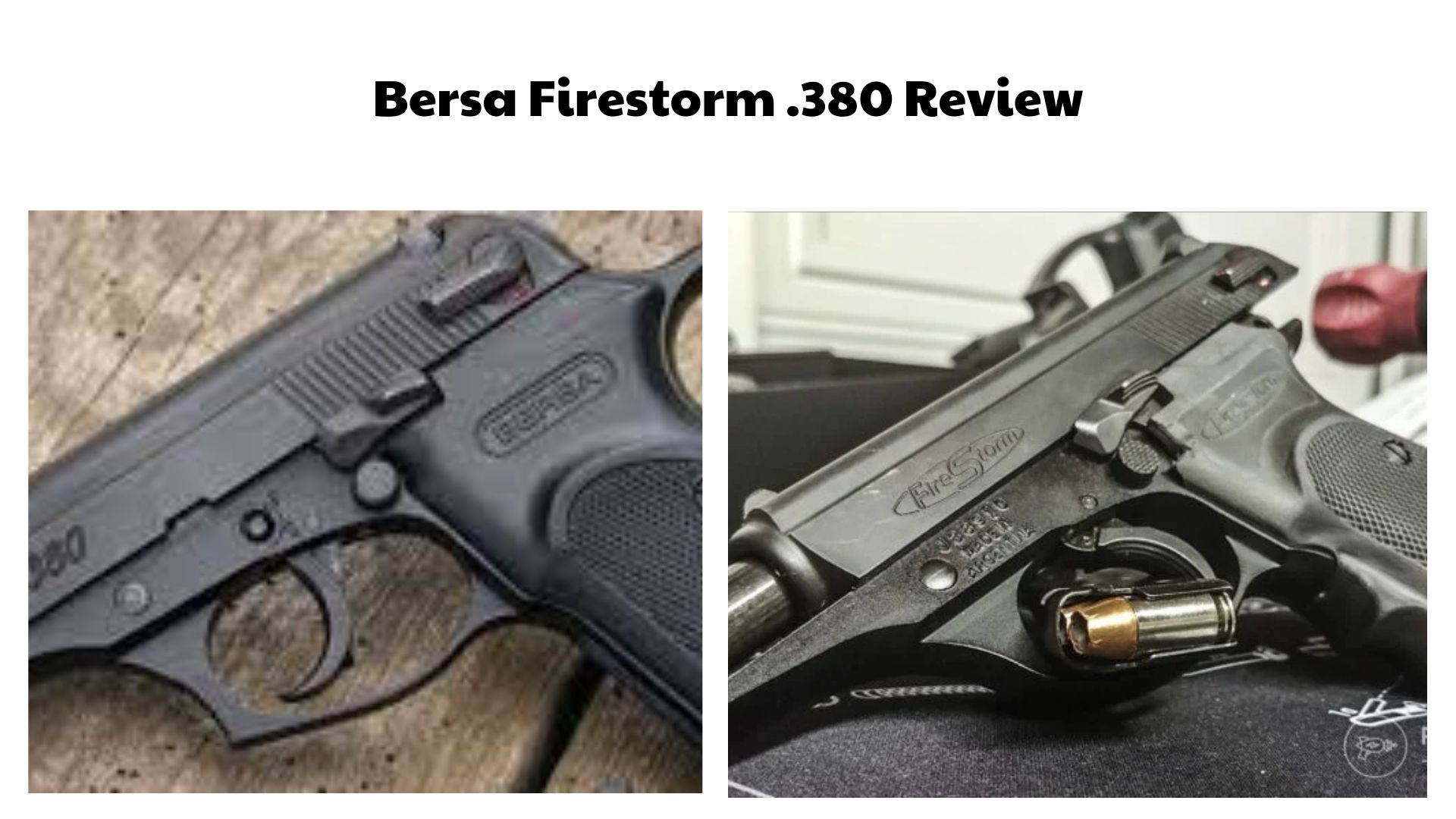

The Bersa Firestorm .380, often closely associated with the Bersa Thunder .380 line, is a compact DA/SA semi-automatic pistol designed primarily for concealed carry and personal defense. It is widely recognized as a budget-friendly defensive handgun that delivers traditional styling and straightforward functionality in a compact package.
This pistol is often compared to classic defensive handguns like the Walther PPK due to its size, metal-frame construction, and double-action/single-action operation. As a result, it has become a popular option for entry-level concealed carry (CCW) users, backup carry roles, and shooters who prefer a more traditional handgun design.
Unlike many modern polymer micro-compact pistols, the Bersa Firestorm stands out as a metal-frame alternative in a market dominated by lightweight polymer designs. It is well known for its affordability, mechanical simplicity, and ease of use, making it an accessible choice for new and budget-conscious gun owners.
History and Background of Bersa Pistols
Bersa is an Argentine firearms manufacturer founded by Italian immigrants, and it has built a strong reputation for producing reliable and affordable handguns. Over the decades, the company has focused on delivering practical defensive firearms for civilian, law enforcement, and security markets.
The Thunder and Firestorm series were introduced as part of Bersa’s effort to expand into the civilian self-defense market, particularly in the United States and Latin America. These pistols were designed to offer dependable performance in a compact .380 ACP platform without the high cost associated with premium European designs.
Today, Bersa .380 pistols are widely used in Latin America and have gained steady popularity in the U.S. concealed carry market, especially among shooters seeking a reliable, low-cost defensive option with traditional handling characteristics.
Key Specifications of Bersa Firestorm / Thunder .380
- Caliber: .380 ACP
- Action: Double-action / Single-action (DA/SA)
- Barrel Length: approximately 3.5 inches
- Capacity: 7+1 or 8+1 rounds depending on magazine configuration
- Frame: Aluminum alloy or metal frame construction
- Sights: Basic 3-dot iron sight system
- Safety: Manual safety combined with decocker system
These specifications place the Bersa Firestorm firmly in the compact concealed carry category, offering a balance between shootability, reliability, and ease of concealment.
Design & Ergonomics
The Bersa Firestorm .380 features a compact and slim profile that makes it suitable for concealed carry applications. Its size allows it to be comfortably carried in a variety of holster configurations, including inside-the-waistband (IWB) and outside-the-waistband (OWB) setups.
One of its most notable characteristics is its all-metal construction, which provides a solid and durable feel in the hand. This metal frame also adds weight, which helps reduce felt recoil compared to lighter polymer micro pistols.
The pistol uses a traditional DA/SA layout with a slide-mounted safety and decocker, offering a familiar manual of arms for shooters who prefer classic handgun designs. The grip is generally comfortable for small to medium hands, supporting a secure hold during firing.
While slightly heavier than modern polymer micro-compacts, the Firestorm’s weight contributes to stability and recoil management. Its design is intentionally simple and functional, focusing on reliability rather than modern tactical features or modular customization.
Trigger System & Controls
The Bersa Firestorm .380 uses a traditional DA/SA (double-action/single-action) trigger system, which is a hallmark of many classic defensive pistols. The first shot requires a longer, heavier double-action pull, which acts as a built-in safety feature by reducing the likelihood of an accidental discharge under stress or poor trigger discipline.
After the first round is fired, the pistol transitions into single-action mode, where subsequent trigger pulls are noticeably shorter and smoother. This improves shootability during follow-up shots and helps maintain better accuracy in defensive scenarios.
The pistol also features a slide-mounted safety combined with a decocker function. This allows the user to safely lower the hammer while disengaging the firing mechanism, adding an additional layer of control and safety during handling or carry.
Its manual of arms is simple and closely resembles classic European DA/SA pistols, making it familiar to shooters who have experience with traditional handgun platforms. While the double-action pull is heavier, most users find that it becomes more manageable with practice and familiarity.
Performance Review
Accuracy
The Bersa Firestorm .380 delivers solid defensive accuracy, particularly at typical concealed carry distances. It is designed for close-range engagements rather than precision target shooting at extended ranges.
With practice, many shooters are able to achieve consistent fist-sized groupings at 7–10 yards, which is more than adequate for personal defense applications.
While the sight system is basic, it remains functional and sufficient for defensive shooting. The simplicity of the sights aligns with the pistol’s overall design philosophy of reliability and ease of use rather than advanced competition-level precision.
Recoil Management
Chambered in .380 ACP, the Firestorm produces relatively mild recoil compared to larger calibers. This makes it accessible for newer shooters and those sensitive to recoil.
However, due to its blowback operating system, the recoil impulse can feel somewhat snappy during extended shooting sessions. This is a common trait in many compact .380 pistols.
The pistol’s heavier metal frame helps mitigate recoil by adding mass, which improves stability and makes follow-up shots more manageable. With proper grip technique, most shooters find it comfortable and controllable.
Reliability
In general, the Bersa Firestorm .380 is considered reliable when properly maintained and used with quality ammunition. Many owners report successful use over hundreds or even thousands of rounds without major malfunctions.
However, as with many budget-friendly firearms, there can be some variation in quality control depending on production batch. This means that individual experiences may differ slightly from one pistol to another.
To ensure optimal performance, regular cleaning, lubrication, and the use of reputable ammunition are strongly recommended. When properly cared for, the Firestorm is capable of consistent defensive performance.
Concealed Carry & Real-World Use
The Bersa Firestorm .380 is a popular choice for concealed carry due to its compact size and straightforward design. It offers a practical balance between concealability and shootability, making it suitable for everyday defensive carry.
Depending on the specific model and holster setup, it can be comfortably carried in both inside-the-waistband (IWB) and pocket holsters. Its slim profile allows for relatively easy concealment under everyday clothing.
It is also commonly used as a backup or beginner concealed carry pistol, particularly for those who prefer a simple, traditional handgun platform over modern striker-fired designs.
One of its drawbacks is its weight compared to modern polymer micro-compact 9mm pistols, which are generally lighter and easier to carry for long periods. However, some users prefer the added weight for improved recoil control and a more solid shooting feel.
Overall, the Firestorm is often chosen by shooters who value simplicity, reliability, and metal-frame construction over modern features like optics mounting or modular systems.
Bersa Firestorm vs Competitors
The Bersa Firestorm .380 occupies a unique position in the concealed carry market, blending classic design principles with budget-friendly pricing. When compared to its competitors, its strengths and weaknesses become clearer depending on the category of handgun it is measured against.
Comparison with Walther PPK: The Walther PPK is often seen as the iconic compact DA/SA .380 pistol, known for its historical significance and refined European engineering. The Bersa Firestorm is frequently considered a more affordable alternative that delivers similar functionality without the premium price tag. While the PPK offers a more polished fit and finish, the Firestorm provides comparable defensive performance at a significantly lower cost.
Comparison with Ruger LCP: The Ruger LCP represents the modern ultra-light polymer pocket pistol category. Compared to it, the Firestorm is noticeably heavier due to its metal frame. However, this added weight helps reduce recoil and improves shooting comfort. The LCP wins in deep concealability and portability, while the Firestorm offers better shootability and a more traditional handgun feel.
Comparison with modern 9mm micro-compacts: When compared to modern 9mm pistols, the Firestorm falls behind in terms of power, capacity, and modern features. However, it still holds appeal for users who prioritize simplicity, familiarity, and reduced recoil over increased ballistic performance and advanced modular systems.
Overall, the Firestorm’s competitive identity is built on affordability, mechanical simplicity, and a solid metal construction. Its main trade-offs include lower caliber performance, reduced size efficiency compared to modern designs, and a noticeable gap in modernization features.
Advantages of Bersa Firestorm
- Affordable price point: The Firestorm is widely regarded as an accessible entry-level concealed carry pistol, making it attractive for budget-conscious buyers.
- Reliable DA/SA operating system: Its traditional double-action/single-action trigger system provides a balance of safety and usability.
- Solid metal-frame construction: The aluminum or metal frame gives the pistol a durable and stable shooting platform.
- Easy-to-use manual of arms: Simple controls and familiar operation make it easy for new and experienced shooters alike.
- Comfortable ergonomics: The grip design fits well in many hands, contributing to controllability and shooting confidence.
- Proven defensive track record: It has been widely used for civilian self-defense and has established a reputation for dependable performance when properly maintained.
Disadvantages of Bersa Firestorm
- Limited stopping power: The .380 ACP cartridge is effective for self-defense but is generally considered less powerful than modern 9mm options.
- Heavier than modern alternatives: Its metal-frame construction adds weight compared to lightweight polymer micro pistols.
- Inconsistent quality control: Some users report variability between production batches, although many experience reliable performance.
- Limited aftermarket support: There are fewer customization options and accessories compared to more popular handgun platforms.
- Blowback recoil characteristics: While manageable, the recoil can feel snappy during extended shooting sessions.
- Not modernized: It lacks optics readiness and modular features found in newer defensive handgun designs.
Best Use Cases
The Bersa Firestorm .380 is best understood as a practical, entry-level defensive handgun that prioritizes simplicity, affordability, and traditional handling characteristics over modern tactical features.
- Budget concealed carry handgun: It is an excellent option for users looking for an affordable way to carry a reliable defensive pistol without investing in higher-priced modern platforms.
- Backup or secondary defensive pistol: Due to its compact size and straightforward operation, it works well as a secondary firearm for concealed carry professionals or experienced shooters.
- Beginner-friendly DA/SA training platform: The traditional double-action/single-action trigger system makes it a useful training tool for learning trigger control and safe handgun handling fundamentals.
- Range and recreational shooting: Its manageable recoil and solid metal-frame construction make it enjoyable for casual range sessions and skill-building practice.
- Users who prefer traditional metal-frame pistols: It appeals to shooters who value classic handgun designs over modern polymer, striker-fired systems.
Final Verdict
The Bersa Firestorm .380 is a reliable and affordable compact defensive pistol that delivers solid performance within its intended role. It is best suited for shooters who prioritize simplicity, mechanical familiarity, and cost-effectiveness over modern features and high-capacity designs.
While it does not offer the power, capacity, or modularity of newer 9mm micro-compact pistols, it remains a dependable option for those who appreciate traditional DA/SA metal-frame handguns.
Overall, the Firestorm represents strong value in the entry-level concealed carry market, offering practical defensive capability at an accessible price point.
50+ Frequently Asked Questions (FAQ) – Bersa Firestorm / Thunder .380
1. What is the Bersa Firestorm .380?
The Bersa Firestorm .380 is a compact, DA/SA semi-automatic handgun chambered in .380 ACP. It is designed primarily for concealed carry and personal defense, offering a traditional metal-frame construction at an affordable price point.
2. Is the Bersa Firestorm the same as the Bersa Thunder .380?
The Firestorm and Thunder .380 are very closely related pistols, often sharing the same mechanical platform. The Firestorm is essentially a variant with slight cosmetic and feature differences depending on production batch and market.
3. What caliber does the Bersa Firestorm use?
It is chambered in .380 ACP, a compact defensive cartridge designed for low recoil and ease of control, making it suitable for concealed carry pistols.
4. Is the Bersa Firestorm good for concealed carry?
Yes, it is widely used as a concealed carry handgun due to its compact size, manageable recoil, and simple DA/SA operation. However, it is heavier than modern polymer micro pistols.
5. Is the Bersa Firestorm reliable?
Generally, yes. Many users report reliable performance when the pistol is properly cleaned and used with quality ammunition. However, like many budget firearms, some variation in quality control can occur.
6. What is the magazine capacity?
Depending on the model, the Firestorm typically holds 7+1 or 8+1 rounds of .380 ACP ammunition.
7. Is the Bersa Firestorm striker-fired?
No, it is a DA/SA (double-action/single-action) pistol with a hammer-fired system, not a striker-fired design.
8. What does DA/SA mean?
DA/SA stands for double-action/single-action. The first trigger pull is long and heavier (double-action), while subsequent shots are shorter and lighter (single-action).
9. Is the trigger heavy?
The initial double-action pull is heavier than modern striker-fired pistols, but the single-action pull is significantly lighter and smoother.
10. Is it good for beginners?
Yes, it can be good for beginners who want to learn DA/SA fundamentals, but the heavy first trigger pull may require some training and familiarity.
11. How accurate is the Bersa Firestorm?
It is accurate enough for defensive use, typically producing fist-sized groups at 7–10 yards with practice, which is adequate for concealed carry applications.
12. What is the effective range?
The effective defensive range is typically within 7–15 yards, which is standard for most concealed carry pistols.
13. Does the Bersa Firestorm have recoil?
Yes, but recoil is mild due to the .380 ACP cartridge. The metal frame helps absorb recoil, although the blowback design can make it feel slightly snappy.
14. Is it easy to shoot?
Yes, most shooters find it easy to control after some practice, especially due to its moderate recoil and solid weight distribution.
15. Is the Bersa Firestorm heavy?
It is heavier than modern polymer micro pistols because of its metal frame, but this weight helps improve recoil control.
16. Can it be pocket carried?
It is generally too large and heavy for most pocket carry setups, and is better suited for IWB or OWB holsters.
17. What holsters work best?
IWB (inside-the-waistband) leather or Kydex holsters are commonly used, along with OWB holsters for range or open carry where legal.
18. Is it good for home defense?
Yes, it can be used for home defense, especially for users comfortable with DA/SA systems and who prefer a simple, reliable firearm.
19. Is .380 ACP powerful enough?
.380 ACP is considered a lower-powered defensive cartridge, but it is still effective for self-defense at close range when using quality defensive ammunition.
20. Does it have a safety?
Yes, it typically includes a manual safety and a decocker integrated into the slide-mounted control system.
21. What is a decocker?
A decocker safely lowers the hammer without firing the gun, allowing the user to carry the pistol safely in double-action mode.
22. Is it safe to carry?
Yes, when used correctly in DA/SA mode with proper handling, it is considered safe for concealed carry.
23. Is it better than a Glock?
It depends on preference. Glock pistols offer higher capacity and modern features, while the Bersa offers traditional DA/SA operation and lower cost.
24. Is it better than a Ruger LCP?
The Firestorm is heavier and more controllable, while the LCP is smaller, lighter, and easier to conceal.
25. Is it reliable for long-term use?
Yes, many users report long-term reliability, especially with proper maintenance and quality ammunition.
26. Does it require break-in?
Some users experience smoother performance after a short break-in period of a few hundred rounds.
27. Is maintenance difficult?
No, it is relatively simple to clean and maintain compared to more complex modern platforms.
28. What is it made of?
It typically features an aluminum alloy or metal frame with a steel slide, giving it a durable construction.
29. Is it rust resistant?
It has standard protective finishes, but like all firearms, it requires proper care to prevent corrosion.
30. Is it good for women shooters?
Yes, many women prefer it due to its manageable recoil and simple operation, though grip size should be considered.
31. Is it better than 9mm pistols?
9mm pistols generally offer more stopping power and capacity, but .380 pistols like the Firestorm offer reduced recoil and easier handling.
32. Can it be used for training?
Yes, it is commonly used for DA/SA training and basic defensive shooting practice.
33. Is it a good backup gun?
Yes, it is often used as a secondary or backup concealed carry firearm.
34. Does it have good sights?
It uses basic 3-dot sights that are functional but not advanced compared to modern tactical pistols.
35. Can sights be upgraded?
In some cases, aftermarket options exist, but the platform has limited upgrade support compared to modern pistols.
36. Is aftermarket support strong?
No, aftermarket support is limited compared to more popular platforms like Glock or SIG.
37. Is it good for competition shooting?
No, it is not designed for competitive shooting; it is intended for defensive use.
38. Is it outdated?
It is considered a traditional design, but still effective for its intended purpose.
39. Why is it popular?
It is popular due to its affordability, simplicity, and reliable defensive performance.
40. Is it good for daily carry?
Yes, but its weight may be noticeable compared to modern polymer pistols.
41. What are common problems?
Some users report occasional feeding issues or variations in quality depending on production batch.
42. Is it picky with ammo?
It generally runs best with quality factory ammunition and may be less forgiving with low-quality rounds.
43. Is it comfortable to shoot?
Yes, its metal frame and moderate recoil make it comfortable for most shooters.
44. Is it suitable for concealed beginners?
Yes, especially for those who prefer traditional DA/SA handguns and are willing to train.
45. Does it have high capacity?
No, its capacity is modest at 7+1 or 8+1 rounds, typical for .380 compact pistols.
46. Is it a good value?
Yes, it is widely considered one of the better value options in the budget concealed carry market.
47. Is it easy to disassemble?
Yes, field stripping is relatively simple and straightforward.
48. Does it have recoil spring issues?
Some users replace recoil springs after extended use, but this is normal maintenance for many pistols.
49. What is its biggest weakness?
Its biggest weaknesses are limited stopping power, weight compared to modern designs, and limited modernization features.
50. Is it still worth buying today?
Yes, it remains a solid option for users who want an affordable, reliable, and traditional concealed carry pistol.
Read more: