
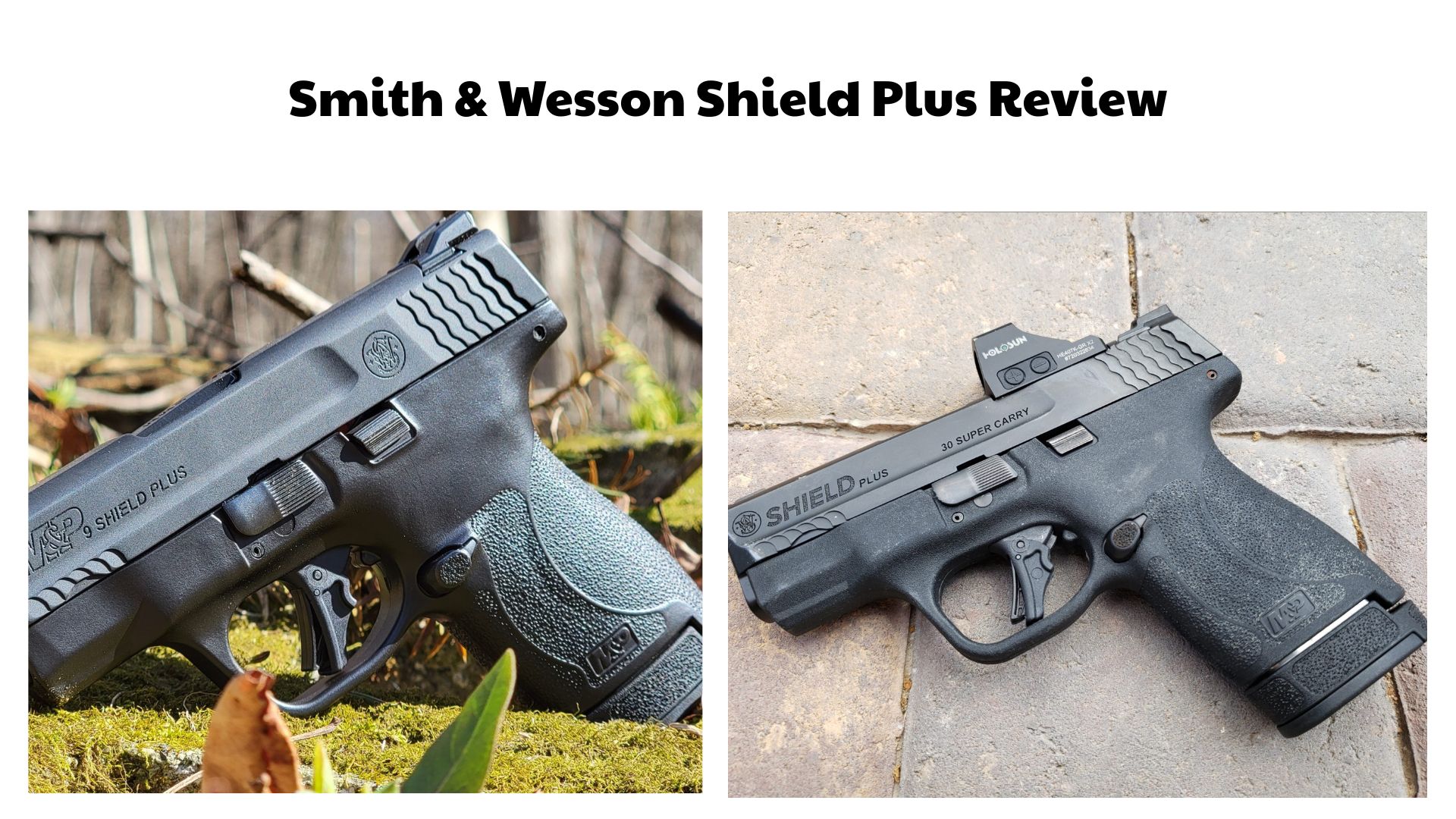

The Smith & Wesson M&P 9 Shield Plus represents a major evolution in the micro-compact 9mm handgun category. Building on the long-standing success of the original Shield series, this upgraded model introduces higher capacity, a significantly improved trigger, and enhanced ergonomics—all while maintaining the slim, carry-friendly profile that made the Shield so popular in the first place.
The original Shield helped define the single-stack concealed carry market, offering a lightweight and reliable option for everyday carry (EDC). However, as the industry shifted toward higher-capacity micro-compacts, Smith & Wesson responded with the Shield Plus. This new version adopts a double-stack magazine design, increasing capacity without dramatically increasing size, which is a key advantage in modern defensive handguns.
One of the standout improvements in the Shield Plus is its flat-face trigger system. Compared to the older hinged trigger design found in previous Shield models, the new trigger offers a cleaner break, shorter reset, and more consistent performance. This upgrade alone makes the pistol more appealing to both new shooters and experienced users who demand better shooting control.
The Shield Plus is designed with concealed carry performance in mind. Its compact dimensions, manageable recoil, and improved grip texture make it well-suited for daily carry in a variety of positions, including inside-the-waistband (IWB) and appendix carry. At the same time, it remains comfortable enough for range use and training sessions.
In today’s competitive micro-compact market, the Shield Plus continues to hold its ground against major competitors like the Sig P365, Springfield Hellcat, and Glock 43X. Each of these pistols offers its own strengths, but the Shield Plus stands out for its balance of ergonomics, trigger quality, and value.
Overall, the Smith & Wesson M&P 9 Shield Plus is positioned as a practical, modern concealed carry handgun that combines proven reliability with meaningful upgrades. It is designed to meet the needs of today’s concealed carriers who want more capacity and better performance without sacrificing comfort or simplicity.
Key Specifications
Core Specs
The Shield Plus is chambered in 9mm, the most widely used caliber for concealed carry and defensive handguns. This ensures strong performance, manageable recoil, and broad ammunition availability.
It operates using a striker-fired semi-automatic system, providing a consistent trigger pull from shot to shot. This design is known for its simplicity and reliability, making it a preferred choice for both beginners and experienced shooters.
The barrel length measures approximately 3.1 inches, which is typical for micro-compact pistols. This length balances concealability with sufficient ballistic performance for defensive use.
With an overall length of around 6.1 inches and a width of approximately 1.1 inches, the Shield Plus maintains a compact profile that is easy to conceal while still offering a comfortable grip.
The unloaded weight is about 20 ounces, making it lightweight enough for all-day carry without causing excessive fatigue. This is an important factor for users who rely on their handgun as part of their daily routine.
In terms of capacity, the Shield Plus offers a 10+1 flush-fit magazine for maximum concealability and a 13+1 extended magazine for increased firepower and improved grip control. This flexibility allows users to choose between a more discreet setup or a more shootable configuration depending on their needs.
Build & Features
The Shield Plus features a durable polymer frame paired with a steel slide, a combination that provides both strength and weight efficiency. This construction is standard for modern striker-fired pistols and ensures long-term durability under regular use.
One of the key ergonomic improvements is the enhanced grip texture. The aggressive yet comfortable texturing helps maintain a secure hold on the pistol, even under recoil or in less-than-ideal conditions.
The flat-face trigger system is one of the most notable upgrades in the Shield Plus. It offers a smoother pull, a more defined break, and a shorter reset compared to earlier Shield models. This results in better control and improved shooting consistency.
The pistol typically comes equipped with steel white-dot sights, though some variants include night sights for improved visibility in low-light conditions. This provides flexibility depending on user preference and intended use.
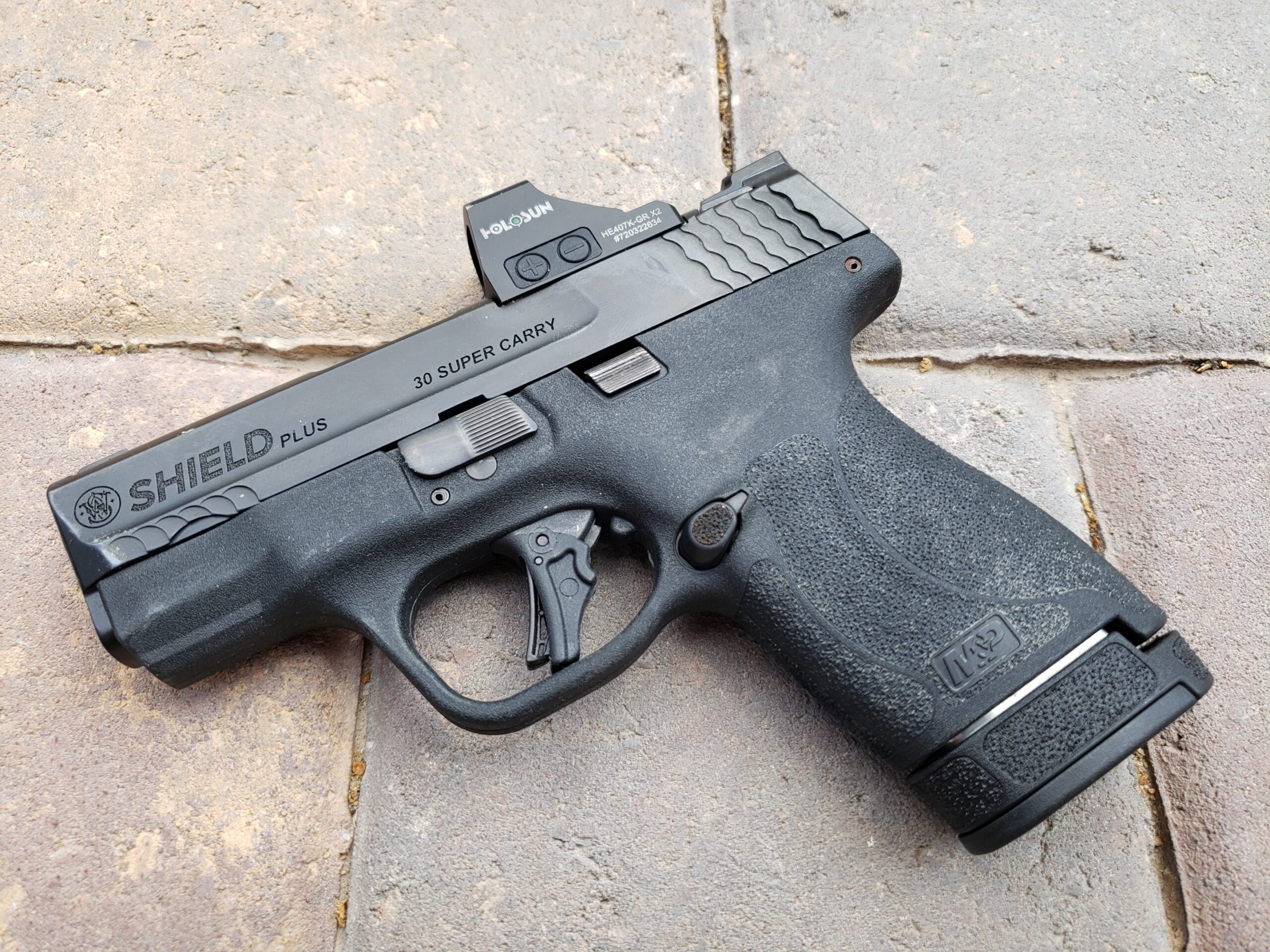
Standard models of the Shield Plus do not include an optics-ready slide cut, which helps keep the design simple and cost-effective. However, optics-ready versions are available for users who prefer to run a red dot sight on their concealed carry pistol.
Overall, the Shield Plus combines practical features with thoughtful upgrades, making it a well-rounded option for modern concealed carry needs.
Design & Build Quality
Compact Micro-Compact Design
The Smith & Wesson M&P 9 Shield Plus is designed as a modern micro-compact pistol intended specifically for concealed carry. It maintains a slim profile that makes it easy to carry discreetly on a daily basis, whether in an inside-the-waistband (IWB) or appendix carry setup.
Compared to the original Shield, the Shield Plus is slightly thicker due to its transition to a double-stack magazine system. This change increases capacity while still keeping the overall footprint compact enough for comfortable concealment.
This balance between size and performance is one of the key strengths of the Shield Plus. It manages to offer improved firepower without becoming bulky or difficult to carry, making it suitable for both concealed carry and practical shooting use.
Ergonomics and Grip Texture
The Shield Plus features an aggressive grip texture designed to enhance control during firing. This improved texturing helps prevent slippage, especially under recoil or in adverse conditions such as heat or humidity.
Its grip angle is consistent with other M&P pistols, which gives it a familiar feel for users already accustomed to the Smith & Wesson platform. This ergonomic continuity makes the transition to the Shield Plus smooth for experienced shooters.
Another important improvement is the use of extended magazines, which allow for a full-hand grip. This enhances control, reduces felt recoil, and improves overall shooting comfort, especially during longer range sessions.
Materials and Durability
The Shield Plus is built with a polymer frame reinforced by an internal chassis system, providing a strong yet lightweight structure. This design helps maintain durability without adding unnecessary weight, which is essential for concealed carry applications.
The slide is constructed from steel and finished with a protective coating designed to resist wear and corrosion over time. This ensures the pistol remains reliable even after extended use and exposure to varying environmental conditions.
Overall, the Shield Plus is engineered for long-term defensive use, combining durable materials with a proven design philosophy that prioritizes reliability and ease of maintenance.
Magazine Capacity & Concealability
One of the most significant upgrades in the Shield Plus is its increased magazine capacity. It comes standard with a 10-round flush-fit magazine, which is designed to maximize concealability while maintaining a slim profile.
For users who prioritize firepower and improved handling, the Shield Plus also includes a 13-round extended magazine. This option provides better grip support and increased capacity without drastically affecting overall concealability.
This higher capacity is a major advantage in the micro-compact category, where many competitors still offer lower round counts. The Shield Plus strikes a strong balance between size and firepower.
However, as with most compact pistols, there is a trade-off between grip length and concealability. The extended magazine improves control but can slightly increase printing depending on carry position and clothing choice.
The Shield Plus is well-suited for a variety of concealed carry methods, including IWB, appendix carry, and everyday concealed setups. Its flexible magazine options allow users to tailor the pistol to their specific needs, whether prioritizing discretion or shooting performance.
Trigger Performance
Flat-Face Trigger System
One of the most important upgrades in the Smith & Wesson M&P 9 Shield Plus is its flat-face trigger system. This represents a clear improvement over the older hinged trigger design found in previous Shield models. The new trigger is designed to provide a more consistent and controlled shooting experience, especially under defensive conditions where repeatability matters.
The flat-face design allows the shooter to place their finger more consistently on the trigger surface. This improves leverage and helps reduce inconsistencies in trigger pull. As a result, the Shield Plus delivers a cleaner break with a more predictable reset, which is essential for controlled follow-up shots.
Compared to earlier Shield generations, the trigger system in the Shield Plus feels more refined and modern. It reduces the spongy or uneven feel that some shooters experienced in older models. This improvement makes the pistol more appealing not only for concealed carry but also for regular range training.
Overall, the flat-face trigger significantly enhances shooting control and consistency, making the Shield Plus more competitive in the modern micro-compact handgun category.
Shooting Feel
In practical use, the Shield Plus offers a smooth and predictable trigger pull. The take-up is relatively light, followed by a clean break that allows for better shot timing and control. The short reset is especially useful during defensive shooting scenarios where speed and accuracy are both important.
One of the most noticeable differences compared to older models is the improved shooting feedback. The trigger no longer feels vague or overly mechanical. Instead, it provides a more direct and responsive connection between the shooter and the firearm.
This improvement makes the Shield Plus easier to shoot accurately, particularly for users who may not have extensive training experience. It also benefits experienced shooters by allowing faster, more efficient shot sequences without sacrificing control.
Overall, the shooting feel of the Shield Plus represents a meaningful upgrade that enhances both confidence and performance in real-world use.
Shooting Performance & Accuracy
Recoil Management
The Shield Plus produces moderate recoil for its size class, which is typical for a lightweight micro-compact 9mm pistol. While recoil is present, it remains manageable for most shooters with proper grip technique.
The aggressive grip texture and improved ergonomics help the shooter maintain a secure hold during firing. This reduces unwanted movement and allows for better control of muzzle rise.
When using the extended 13-round magazine, recoil control improves noticeably. The additional grip surface provides more leverage, which helps stabilize the pistol during rapid fire and improves follow-up shot speed.
Overall, recoil management is well-balanced for a pistol of this size, making it suitable for both concealed carry and regular training use.
Accuracy
In terms of accuracy, the Shield Plus performs very well within typical defensive shooting distances, generally between 7 and 25 yards. At these ranges, the pistol delivers consistent and repeatable performance.
The combination of a stable grip, improved trigger system, and clear sight picture contributes to solid grouping capability. While it is not a competition pistol, it is more than capable of delivering accurate defensive shots under pressure.
Like most handguns in this category, shooter skill plays a major role in overall accuracy. However, the Shield Plus provides a reliable platform that supports consistent shot placement with minimal effort.
Reliability
The Shield Plus maintains the strong reliability reputation associated with the Smith & Wesson M&P lineup. It is designed to function reliably with a wide range of 9mm ammunition, including common defensive hollow points and practice FMJ rounds.
Out of the box, the pistol may go through a short break-in period during which cycling becomes smoother over time. Once this period is complete, it demonstrates consistent feeding and ejection performance under normal conditions.
Its striker-fired system and proven internal design contribute to dependable operation with minimal maintenance requirements. This makes the Shield Plus a trustworthy option for everyday concealed carry and defensive use.
Controls & Features
The Smith & Wesson M&P 9 Shield Plus is designed with a simple and intuitive control layout, making it easy to operate even for newer shooters. The controls are positioned in a familiar way for users of striker-fired pistols, allowing for a smooth transition between platforms.
Some variants of the Shield Plus include an optional manual thumb safety, giving users an additional layer of security if preferred. This feature is especially useful for those who carry appendix or want extra mechanical reassurance during daily carry.
The pistol features standard slide serrations that provide adequate grip for slide manipulation. While not overly aggressive, they are functional enough for reliable racking under normal and defensive conditions.
Depending on the model, the Shield Plus may include a loaded chamber indicator, offering a quick visual or tactile confirmation of whether a round is chambered. This adds a small but useful safety and status-check feature.
Field stripping and maintenance are straightforward, following the typical M&P design. The pistol can be disassembled easily without specialized tools, making routine cleaning simple and efficient for everyday users.
Pros and Cons
Pros
One of the biggest advantages of the Shield Plus is its high capacity relative to its compact size. With up to 13+1 rounds available, it stands out in the micro-compact category and offers strong defensive capability without significantly increasing overall footprint.
Another major benefit is the improved trigger system. The flat-face trigger provides a cleaner break, shorter reset, and better overall consistency compared to earlier Shield models, significantly enhancing shooting performance.
The ergonomics and grip texture are also strong points. The pistol feels secure in hand, with a grip angle and texture that support controlled shooting even under recoil. This improves both comfort and confidence during use.
Reliability is another key advantage. The Shield Plus is built on the proven M&P platform, which has a strong track record in both civilian and professional use. It performs reliably with a wide range of ammunition types.
Finally, the Shield Plus is competitively priced, offering strong value for a modern concealed carry pistol with upgraded features and performance.
Cons
One drawback is that the Shield Plus is slightly thicker than the original Shield due to its double-stack magazine design. While this improves capacity, it can slightly affect concealability for some users.
Another limitation is that optics-ready options are not standard on all base models. Users who want a red dot sight may need to choose a specific variant or consider aftermarket modifications.
Additionally, while aftermarket support is growing, it is still not as extensive as the Glock platform. This means fewer customization options compared to some competing pistols.
Comparison with Competitors
Shield Plus vs Sig P365
The Sig P365 is known for its strong modular design and extensive optics-ready ecosystem. It offers a wide range of configuration options, making it highly flexible for different carry preferences.
The Shield Plus, on the other hand, is often praised for its superior ergonomics and trigger feel. Many shooters find it more comfortable in hand, with a smoother and more predictable shooting experience.
In short, the P365 focuses on modularity and customization, while the Shield Plus emphasizes comfort and shooting performance.
Shield Plus vs Springfield Hellcat
The Springfield Hellcat offers a slightly higher capacity in a similarly compact frame, giving it a small edge in terms of raw firepower.
However, the Shield Plus is often considered more comfortable to shoot. Its trigger system and grip design contribute to a smoother shooting experience, especially during extended range sessions.
This makes the Hellcat a strong option for maximum capacity, while the Shield Plus appeals more to users prioritizing shootability and comfort.
Shield Plus vs Glock 43X
The Glock 43X features a longer grip and benefits from the extensive Glock aftermarket ecosystem, making it highly customizable and widely supported.
The Shield Plus, however, is generally more compact and offers a better factory trigger out of the box. This gives it an advantage in stock shooting performance without requiring upgrades.
Overall, the 43X focuses on aftermarket support and grip length, while the Shield Plus emphasizes compact design and improved trigger quality.
Best Use Cases
The Smith & Wesson M&P 9 Shield Plus is designed as a practical, all-around concealed carry handgun. Its balance of size, capacity, and shootability makes it suitable for a wide range of defensive and everyday applications.
For everyday concealed carry (EDC), the Shield Plus performs very well due to its compact frame and improved capacity. It offers enough firepower for defensive situations while remaining easy to carry comfortably throughout the day.
It is also well-suited for appendix carry and inside-the-waistband (IWB) setups. Its slim profile allows it to sit close to the body, reducing printing and improving concealment in most clothing styles.
As a first-time defensive handgun, the Shield Plus is a strong option because it combines simplicity with modern upgrades. The striker-fired system, improved trigger, and manageable recoil make it approachable for new shooters while still offering reliable performance.
It also works well as a balanced carry and range firearm. While primarily designed for concealed carry, it performs consistently during training sessions, allowing users to build confidence and skill with a single platform.
In addition, the Shield Plus can serve as a backup firearm option for users who already carry a larger handgun. Its compact size and reliability make it a practical secondary defensive tool.
Aftermarket Support & Accessories
The Shield Plus benefits from a growing aftermarket ecosystem, although it is not as extensive as some competing platforms like Glock. Even so, it offers enough customization options to meet most concealed carry needs.
Holster availability is strong, with options for IWB, OWB, and appendix carry widely available from many manufacturers. This ensures users can find carry solutions that match their comfort and concealment preferences.
Sight upgrades are also common, including night sights and improved visibility options. These upgrades enhance low-light performance and allow users to tailor the pistol for defensive scenarios.
While aftermarket support is still developing compared to more established platforms, it continues to expand as the Shield Plus grows in popularity.
Magazine extensions and grip accessories are also available, allowing users to increase capacity and improve handling. These additions help optimize both concealability and shooting comfort depending on user preference.
Who Should Buy the Shield Plus?
The Shield Plus is ideal for concealed carriers who want higher capacity in a compact and easy-to-carry package. It offers a strong balance between size and firepower, making it suitable for modern defensive needs.
It is also a great choice for users seeking an improved trigger compared to older Shield models. The flat-face trigger system provides a noticeable upgrade in control and shooting consistency.
First-time handgun buyers will also benefit from the Shield Plus. Its straightforward operation, manageable recoil, and reliable performance make it an approachable yet capable defensive firearm.
Finally, it appeals to shooters who prioritize ergonomics and comfort. The grip design and texture provide a secure hold, making it easier to shoot accurately and confidently over extended use.
Who Should Avoid It?
While the Smith & Wesson M&P 9 Shield Plus is a strong concealed carry option, it may not be the ideal choice for every type of shooter. Understanding its limitations helps ensure it matches the right user needs and expectations.
Users who want a fully modular handgun system may find the Shield Plus somewhat limiting. Unlike platforms designed around extensive modularity, the Shield Plus offers fewer frame or slide configuration options out of the box.
Shooters who prioritize extensive aftermarket customization may also prefer other platforms. While support for the Shield Plus is growing, it still does not match the depth of customization available in more established ecosystems.
Those who prefer ultra-slim single-stack designs may also look elsewhere. Although the Shield Plus is still compact, its double-stack magazine design makes it slightly thicker than traditional single-stack pistols.
Finally, competition-focused shooters may find the Shield Plus less suitable for their needs. While it performs well for defensive and general shooting, it is not designed for high-speed competition environments or advanced sport shooting applications.
Final Verdict
The Smith & Wesson M&P 9 Shield Plus represents a strong and meaningful upgrade over the original Shield platform. It successfully addresses one of the biggest demands in the concealed carry market by increasing capacity without sacrificing overall size and carry comfort.
By combining higher magazine capacity, improved ergonomics, and a significantly better trigger system, the Shield Plus delivers a more refined and capable shooting experience compared to earlier models.
In today’s competitive micro-compact handgun market, the Shield Plus remains a strong contender. It stands alongside popular alternatives while offering its own unique balance of performance and practicality.
Overall, it is best suited for practical concealed carry and defensive use. It is a well-rounded handgun designed for users who want reliability, comfort, and increased firepower in a compact everyday carry package.
50+ FAQ – Smith & Wesson M&P 9 Shield Plus (Detailed Answers)
1. What is the Smith & Wesson Shield Plus?
The Shield Plus is a modernized version of the original M&P Shield series. It is a micro-compact 9mm pistol designed for concealed carry, featuring higher magazine capacity, improved ergonomics, and a significantly upgraded trigger system. It bridges the gap between slim single-stack pistols and higher-capacity micro-compacts.
2. How is the Shield Plus different from the original Shield?
The biggest difference is magazine capacity and trigger design. The original Shield used a single-stack magazine, while the Shield Plus uses a double-stack design, increasing capacity up to 13+1. It also replaces the older hinged trigger with a flat-face trigger for better control and consistency.
3. What caliber is the Shield Plus chambered in?
The Shield Plus is chambered in 9mm Luger, which is the most common defensive handgun caliber due to its balance of recoil, stopping power, and ammunition availability.
4. Is the Shield Plus good for concealed carry?
Yes, it is specifically designed for concealed carry. Its compact size, slim profile, and improved capacity make it one of the most practical EDC pistols in its category.
5. How many rounds does the Shield Plus hold?
It typically holds 10+1 rounds with the flush magazine and 13+1 rounds with the extended magazine, giving users flexibility between deep concealment and higher capacity.
6. Is the Shield Plus a single-stack or double-stack pistol?
It is a double-stack micro-compact pistol, which is how it achieves higher capacity without dramatically increasing size.
7. Is the Shield Plus reliable?
Yes, it is built on the proven M&P platform, which has a strong reputation for reliability in both civilian and law enforcement use. It functions well with a wide range of 9mm ammunition.
8. Does the Shield Plus have a good trigger?
Yes, it features a flat-face trigger that is a major improvement over older Shield models. It offers a cleaner break, shorter reset, and more consistent shooting performance.
9. Is the Shield Plus better than the original Shield?
For most users, yes. It improves capacity, trigger quality, and overall shootability while maintaining a similar carry-friendly size.
10. Is the Shield Plus good for beginners?
Yes, it is beginner-friendly due to its simple operation, manageable recoil, and improved ergonomics, making it a solid first handgun option.
11. How does the Shield Plus compare to Glock 43X?
The Glock 43X offers better aftermarket support and a longer grip, while the Shield Plus provides a better trigger and slightly more compact design.
12. How does it compare to Sig P365?
The Sig P365 offers more modularity and optics-ready options, while the Shield Plus is often preferred for its ergonomics and trigger feel.
13. How does it compare to Springfield Hellcat?
The Hellcat offers slightly higher capacity, but the Shield Plus is generally considered more comfortable and smoother to shoot.
14. Is the Shield Plus good for appendix carry?
Yes, its slim profile and compact size make it suitable for appendix inside-the-waistband carry setups.
15. Is it good for pocket carry?
No, it is generally too large for pocket carry. It is designed for IWB or appendix carry instead.
16. What is the barrel length of the Shield Plus?
The barrel length is approximately 3.1 inches, which is typical for micro-compact concealed carry pistols.
17. Is the Shield Plus optics-ready?
Some variants are optics-ready, but standard models are not. Users should check the specific version when purchasing.
18. Does it have a manual safety?
Yes, some versions include an optional thumb safety, while others are safety-free for a cleaner draw.
19. How heavy is the Shield Plus?
It weighs around 20 ounces unloaded, making it lightweight enough for all-day concealed carry.
20. Is recoil manageable?
Yes, recoil is moderate and manageable. The extended magazine improves grip and helps reduce muzzle flip.
21. Is it accurate?
Yes, it is accurate within typical defensive ranges (7–25 yards). Accuracy depends more on shooter skill than platform limitations.
22. What type of trigger does it use?
It uses a flat-face striker-fired trigger system designed for consistent pull and improved control.
23. Is the Shield Plus good for home defense?
Yes, it can be used for home defense, although many users prefer larger pistols for that role due to higher capacity and longer sight radius.
24. Does it have good aftermarket support?
Aftermarket support is growing but still not as extensive as Glock platforms.
25. What holsters are available?
There are many IWB, OWB, and appendix holsters available from major manufacturers, making carry setup flexible.
26. Can it handle +P ammo?
Yes, it is rated for +P 9mm ammunition within manufacturer guidelines.
27. Is it good for women shooters?
Yes, many female shooters prefer it due to its manageable recoil, compact size, and improved ergonomics.
28. Is it good for large hands?
It can work for larger hands using extended magazines, though some users may prefer larger pistols.
29. Is it better than Glock 19?
They serve different roles. Glock 19 is more versatile, while Shield Plus is more compact and optimized for concealed carry.
30. Is it better than Glock 43X?
It depends on preference. Shield Plus has a better trigger, while Glock 43X has stronger aftermarket support.
31. How easy is it to maintain?
It is very easy to maintain, with simple field stripping and minimal cleaning requirements.
32. Does it have a rail for accessories?
No, most Shield Plus models do not include a rail for lights or lasers.
33. What sights does it come with?
It typically comes with white-dot steel sights, with some versions offering night sights.
34. Is it good for duty use?
It can be used for backup duty roles, but it is primarily designed for concealed carry rather than full-duty service.
35. How does it feel to shoot?
It feels smooth and controlled for a micro-compact pistol, especially with the improved trigger and grip texture.
36. Is it snappy?
It has moderate snap typical of compact 9mm pistols, but it remains controllable with proper grip.
37. Does it break in over time?
Yes, like most semi-automatic pistols, it may feel smoother after an initial break-in period.
38. Is it good for range practice?
Yes, it performs well at the range and is suitable for regular training.
39. Is it better than Hellcat Pro?
Hellcat Pro offers higher capacity and optics readiness, while Shield Plus offers better ergonomics for many shooters.
40. What is the main advantage of Shield Plus?
Its main advantage is combining compact size with higher capacity and improved trigger performance.
41. What is the main disadvantage?
Its main disadvantage is slightly increased thickness compared to the original Shield and limited optics-ready options.
42. Is it good for deep concealment?
Yes, it works well for deep concealment with proper holster and clothing choices, though not as slim as single-stack pistols.
43. Can it be used for competition?
It is not designed for competition shooting, but it can be used for casual range practice.
44. Is it drop safe?
Yes, it includes modern striker-fired safety mechanisms designed to prevent accidental discharge.
45. Does it have a good grip texture?
Yes, the grip texture is aggressive enough for control while still comfortable for carry.
46. Is it worth buying in 2026?
Yes, it remains highly competitive due to its balance of size, capacity, and performance.
47. What makes it different from micro-compacts?
It focuses more on ergonomics and trigger quality rather than extreme slimness or modular optics systems.
48. Is it suitable for everyday carry?
Yes, it is one of its primary design purposes and excels as an EDC firearm.
49. Does it have good resale value?
Yes, Shield series pistols generally maintain strong resale value due to brand reputation and demand.
50. Who should buy it?
It is ideal for concealed carriers who want a balance of capacity, comfort, and improved shooting performance without moving to a larger handgun.
51. Is it better than older M&P Shield models?
Yes, it significantly improves capacity, trigger performance, and overall handling compared to older models.
Read more: