
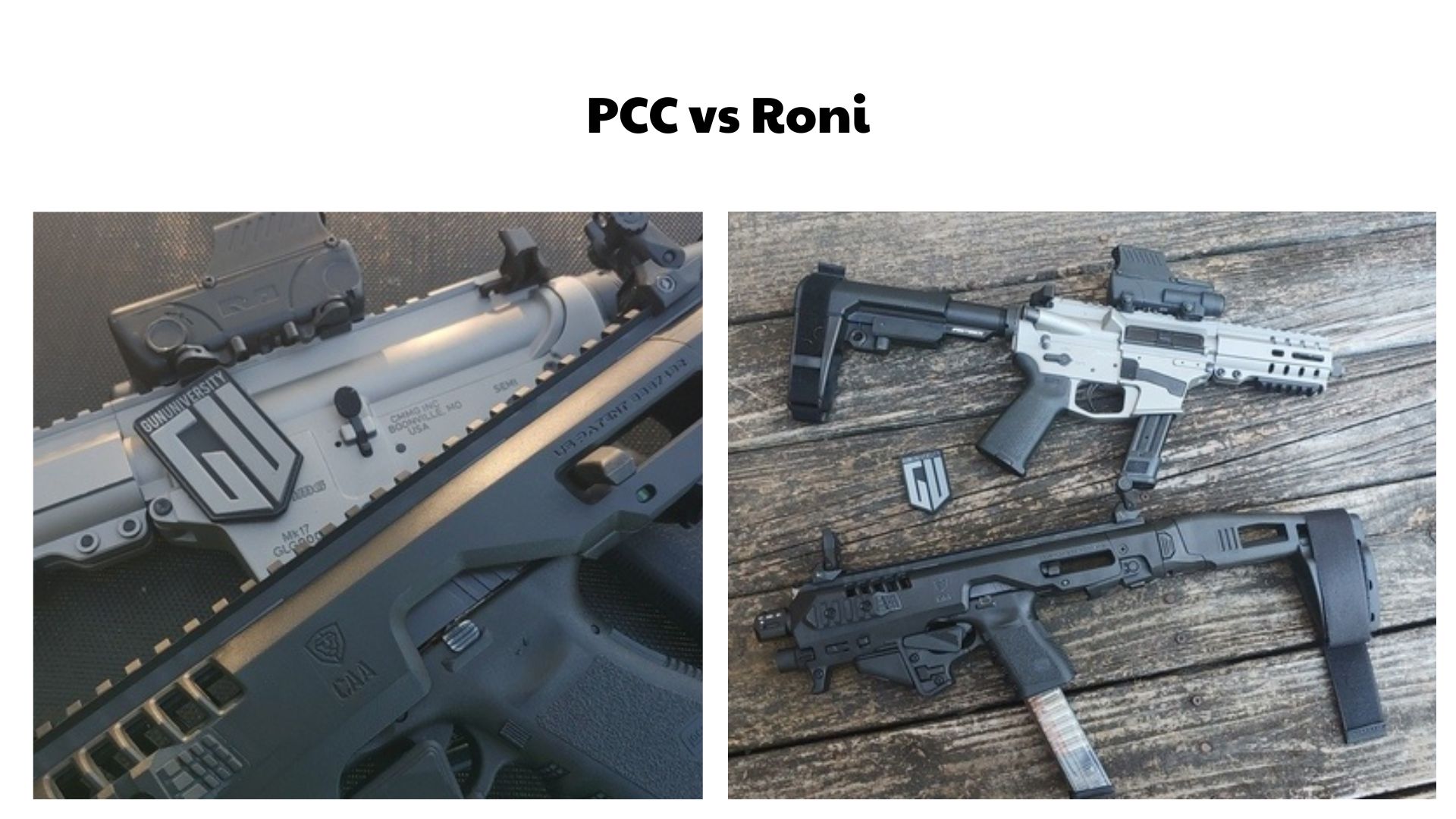

Pistol Caliber Carbines (PCCs) and Roni/Micro Roni chassis systems are two popular solutions designed to improve the performance of standard handguns, particularly Glock-style pistols and other widely used defensive platforms. While both systems aim to enhance accuracy, control, and accessory compatibility, they achieve this goal in fundamentally different ways.
A PCC is a dedicated firearm chambered in a pistol cartridge such as 9mm, built from the ground up to function as a carbine. In contrast, a Roni or Micro Roni is a conversion chassis that transforms an existing handgun into a carbine-style configuration without altering its internal mechanics.
Although both platforms improve shooting stability and expand usability, they differ significantly in design philosophy, cost structure, legal classification, accuracy potential, and real-world applications. Understanding these differences is essential for anyone choosing between building a PCC or upgrading an existing pistol with a chassis system.
What Is a PCC (Pistol Caliber Carbine)?
Definition and Core Concept
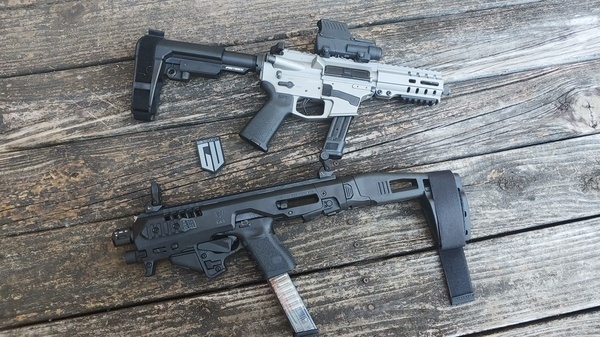
A Pistol Caliber Carbine (PCC) is a purpose-built firearm designed to fire pistol cartridges such as 9mm, .40 S&W, or .45 ACP. Unlike conversion systems, a PCC is engineered as a complete rifle-style platform with a dedicated receiver, barrel, and operating system.
The key distinction is that a PCC is not a modified handgun—it is a standalone firearm optimized for carbine performance. This allows manufacturers to design everything from the ground up for stability, recoil management, and accuracy.
Common PCC Examples
PCC platforms come in several widely recognized formats:
AR-style PCCs: Built on AR-15-inspired receivers and controls, often using blowback or delayed-blowback systems.
MP5-style platforms: Roller-delayed systems known for smooth recoil and reliability.
Compact PCCs (MPX-type systems): Modern designs focusing on modularity, suppressor use, and compact handling.
Each of these systems prioritizes control, consistency, and ergonomics while using inexpensive and widely available pistol ammunition.
Why Shooters Choose PCCs
Shooters often choose PCCs for their significant performance advantages over handguns:
Superior stability due to rifle-length frames and shoulder support.
Reduced recoil impulse compared to pistol-only configurations.
Improved accuracy, especially beyond typical handgun distances.
Rifle-style ergonomics that allow better control during rapid fire.
For many users, PCCs represent a “best of both worlds” solution: handgun ammunition with rifle-like performance.
Key Advantages of PCC Platforms
PCCs offer several technical advantages that make them highly effective:
Fixed receiver design improves optic mounting stability and ensures consistent zero retention.
Higher structural rigidity compared to chassis-based systems.
Better ballistic performance at extended pistol-caliber ranges (50–150 meters).
Improved reliability under high round counts, especially in duty or competition environments.
These factors make PCCs particularly appealing for competitive shooting, home defense, and training applications.
PCC Limitations
Despite their strengths, PCCs have some limitations:
Higher upfront cost compared to handgun-based systems.
Less compact and more cumbersome than pistol or chassis-based configurations.
Requires purchasing and maintaining a separate firearm platform.
Limited overlap with handgun portability and concealment use cases.
What Is a Roni / Micro Roni System?
Definition of Roni Chassis System
A Roni system is a polymer-based conversion chassis designed to house a handgun and transform it into a carbine-like platform. One of the most well-known systems in this category is the Micro Roni, developed by CAA Gear Up, a manufacturer specializing in tactical firearm accessories.
The system allows a standard pistol—most commonly a Glock—to be inserted into a rigid frame that adds a shoulder stock or brace, accessory rails, and improved handling characteristics. Importantly, it does not modify the pistol’s internal firing mechanism.
A well-known example of this platform is the Micro Roni pistol conversion chassis for Glock-style handguns.
How the Micro Roni Works
The operating concept behind the Micro Roni is straightforward:
The pistol is inserted into a dedicated chassis slot.
The slide and trigger remain fully functional and unchanged.
The chassis provides structural support and carbine-style ergonomics.
Once installed, the pistol effectively becomes a stabilized, shoulder-fired platform with improved control and accessory mounting capability.
Design Philosophy of Roni Platforms
Roni systems are built around three core ideas:
Improve handgun stability without requiring a second firearm purchase.
Maintain full compatibility with existing pistols, especially Glock models.
Provide a compact alternative to full-sized PCC platforms.
This makes them attractive to users who want enhanced performance without committing to a dedicated carbine system.
Key Features of Micro Roni
Modern Roni systems typically include:
Fixed top rail for mounting optics such as red dots or scopes.
Full-length accessory rails for lights, lasers, and foregrips.
Folding or adjustable brace/stock systems for compact storage.
Enhanced two-handed grip ergonomics for better recoil control.
These features significantly improve usability compared to a standalone pistol.
Limitations of Roni Systems
Despite their advantages, Roni chassis systems have several drawbacks:
Potential optic zero shift when removing and reinserting the pistol into the chassis.
Lower rigidity compared to dedicated PCC receivers.
Compatibility limitations depending on handgun model and generation.
Increased weight and bulk compared to a standard pistol configuration.
Additionally, the system still relies entirely on the pistol’s internal mechanics, meaning performance is ultimately tied to handgun reliability rather than a purpose-built carbine system.
PCC vs Roni – Core Concept Differences
Dedicated Firearm vs Conversion Kit
PCC and Roni systems differ fundamentally in their design purpose and classification.
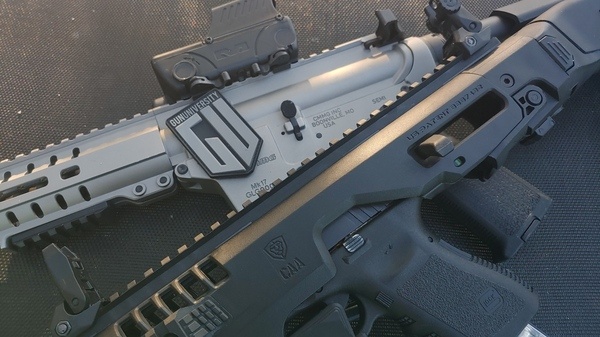
PCC = purpose-built firearm engineered from the ground up as a pistol caliber carbine.
Roni = accessory chassis system that converts an existing handgun into a carbine-style platform without modifying internal components.
Structural Rigidity Comparison
Structural rigidity is one of the most important differences between the two platforms.
PCCs are monolithic platforms designed as a single integrated firearm, resulting in higher overall stability and durability.
Roni systems rely on the pistol’s lock-up inside the chassis, meaning structural consistency depends on how securely the handgun interfaces with the frame.
Accuracy and Consistency Differences
Accuracy performance varies significantly between PCC and Roni systems.
PCCs provide stable zero retention and consistent shot groupings due to their fixed receiver and barrel alignment.
Roni systems may experience slight zero shifts after removing and reinserting the pistol into the chassis, which can affect long-term consistency.
Ergonomics and Handling
Ergonomics also differ based on design philosophy.
PCCs offer rifle-like handling with optimized stock positioning, grip angles, and trigger control.
Roni systems provide a hybrid pistol-carbine feel, improving control over a handgun but not fully matching the ergonomics of a dedicated carbine platform.
Performance Comparison
Accuracy at Different Distances
Performance at varying distances highlights the strengths of each system.
PCCs deliver better long-range grouping and repeatability, especially beyond typical handgun engagement distances.
Roni systems improve accuracy compared to a standalone pistol, but generally remain less precise than a dedicated PCC platform.
Recoil Management
Recoil control is enhanced in both systems but to different degrees.
PCCs feature built-in recoil system optimization, resulting in smoother and more predictable recoil impulse.
Roni systems improve recoil management through added weight and shoulder support, but still rely on the handgun’s original recoil characteristics.
Speed and Target Transitions
Speed and target acquisition vary based on platform rigidity and ergonomics.
PCCs allow smoother target tracking due to their rigid structure and stable sight alignment.
Roni systems are faster than pistols alone but slightly less fluid than PCCs in rapid transitions due to chassis flex and weight distribution.
Optics and Zero Retention
Optics performance is a key consideration for both platforms.
PCCs provide a stable mounting platform that maintains consistent optic zero even under heavy use.
Roni systems may experience minor zero shift when the pistol is removed and reinstalled into the chassis, depending on fitment quality.
Reliability and Maintenance Considerations
PCC Reliability Factors
PCC reliability is influenced by dedicated firearm engineering.
Most PCCs use either gas-operated or blowback systems designed specifically for pistol calibers, reducing dependency on handgun tolerances or variances.
Roni System Reliability Factors
Roni systems rely heavily on the underlying pistol’s reliability.
Because the system does not alter internal mechanics, any malfunction risk is tied directly to the handgun itself.
Additional considerations include potential fitment issues, alignment sensitivity, and the need to maintain both the chassis and pistol components.
Legal and Regulatory Considerations
PCC Legal Classification
PCC classification varies by jurisdiction but is typically treated as a rifle or firearm depending on barrel length, stock configuration, and local regulations.
Roni Legal Complexity
Roni systems can introduce legal complexity due to their modular nature.
Classification may change depending on whether a brace or stock is used, and regulations can vary significantly between countries and states.
Cost Comparison
PCC Investment Cost
PCC platforms generally require a higher initial investment.
This includes purchasing a dedicated firearm in addition to optics, accessories, and ammunition setup.
Roni System Cost
Roni systems offer a lower entry cost for users who already own a compatible handgun.
They provide a modular upgrade path without requiring the purchase of a second firearm.
Long-Term Value Considerations
From a long-term perspective, PCCs tend to offer better performance per dollar due to their dedicated design and durability.
Roni systems are more cost-effective initially but may not match the long-term performance consistency of a dedicated PCC platform.
Use Case Scenarios
Home Defense Applications
PCC platforms are generally preferred for home defense due to their higher consistency, improved recoil control, and better accuracy under stress. Their rifle-like stability makes them easier to operate in low-light or high-pressure environments.
Roni systems offer a compact alternative for users who already own a compatible handgun. They provide a noticeable improvement in control and accuracy compared to a pistol alone, but they do not fully match the stability and repeatability of a dedicated PCC.
Range Training and Competition
PCCs are widely used in competition shooting because they offer superior accuracy, faster follow-up shots, and more predictable handling characteristics. Their consistent performance makes them ideal for precision-focused training.
Roni systems are also used at the range, particularly for recreational shooting and skill development. They provide a fun, flexible platform that bridges the gap between pistol and carbine shooting, although they remain less refined than dedicated PCC platforms.
Tactical / Field Use
In tactical or field environments, PCCs are considered more robust and reliable due to their purpose-built construction and integrated operating systems. They perform better under sustained use and harsh conditions.
Roni systems offer portability advantages and quick deployment but sacrifice some rigidity and durability compared to PCCs. Their effectiveness is closely tied to the reliability of the underlying handgun.
Pros and Cons Summary
PCC Advantages
PCC platforms provide several key benefits:
Higher accuracy and stability due to dedicated rifle-style design.
Better ergonomics optimized for shoulder-fired use.
Consistent optic zero retention for reliable performance.
Purpose-built construction for long-term durability.
PCC Disadvantages
Despite their strengths, PCCs have some drawbacks:
Higher overall cost compared to handgun-based solutions.
Requires purchasing and maintaining a separate firearm platform.
Roni Advantages
Roni systems offer a different set of benefits:
Ability to convert an existing pistol into a carbine-style platform.
More compact and portable than a full PCC.
Highly modular and flexible design depending on configuration.
Roni Disadvantages
Roni systems also have notable limitations:
Lower rigidity compared to dedicated PCC platforms.
Potential zero shift when reinstalling the pistol into the chassis.
Fitment limitations depending on handgun model and generation.
PCC vs Roni – Which Should You Choose?
Choose PCC If You Want
A PCC is the better choice if your priorities include:
Maximum performance and stability in all shooting conditions.
Long-range consistency and repeatable accuracy.
A dedicated, purpose-built firearm platform with proven reliability.
Choose Roni If You Want
A Roni system may be more suitable if you want:
A budget-friendly way to achieve carbine-like performance.
To upgrade an existing pistol without purchasing a separate firearm.
A compact, modular system with flexible configuration options.
Final Verdict
Both PCC and Roni platforms serve the same general purpose of improving handgun performance, but they achieve it through very different design philosophies.
PCCs are the superior performance platform overall, offering better accuracy, stability, and reliability due to their dedicated construction.
Roni systems are a flexible and cost-effective alternative, especially for users who want to enhance an existing pistol without investing in a full carbine platform.
Ultimately, the best choice depends on your budget, legal environment, and intended use case, whether it is home defense, training, or recreational shooting.
PCC vs Roni – 55 Frequently Asked Questions (FAQ)
1. What is a PCC?
A PCC (Pistol Caliber Carbine) is a dedicated firearm designed to fire pistol ammunition such as 9mm, .40 S&W, or .45 ACP. It is built as a complete rifle-style platform rather than a modified handgun, offering improved stability, accuracy, and control.
2. What is a Roni system?
A Roni system is a conversion chassis that turns a handgun into a carbine-like platform. It does not change the internal mechanics of the pistol but adds a frame, stock or brace, and accessory rails for improved handling.
3. Is PCC better than Roni?
In terms of performance, PCCs are generally better because they are purpose-built firearms with higher rigidity, better accuracy, and more consistent performance. However, Roni systems are more affordable and flexible for users who already own a pistol.
4. Can a Roni replace a PCC?
A Roni can improve a handgun significantly, but it cannot fully replace a PCC in terms of accuracy, durability, and long-term consistency. PCCs are engineered specifically for carbine performance.
5. Is a PCC good for home defense?
Yes, PCCs are often considered excellent for home defense due to their low recoil, high controllability, and improved accuracy compared to pistols.
6. Is a Roni good for home defense?
A Roni can be used for home defense, especially if a user already owns a compatible handgun. It improves stability and accuracy but is still dependent on pistol reliability.
7. What is the main advantage of PCC?
The main advantage of a PCC is its dedicated design, which provides superior stability, consistent accuracy, and better recoil control compared to handgun-based systems.
8. What is the main advantage of Roni?
The main advantage of a Roni system is its ability to convert an existing pistol into a carbine-like platform without purchasing a second firearm.
9. Are PCCs legal everywhere?
PCC legality depends on local firearm laws. In most regions they are legal, but regulations vary regarding barrel length, stock configuration, and firearm classification.
10. Are Roni systems legal?
Roni systems are legal in many places, but legal classification may change depending on whether a brace or stock is installed. Users must always check local laws.
11. Do PCCs have better accuracy than Roni?
Yes, PCCs typically offer better accuracy due to fixed barrels, rigid receivers, and purpose-built alignment systems.
12. Why is PCC more accurate?
PCCs are more accurate because they eliminate variables found in handgun-based systems, such as slide movement and chassis fitment inconsistencies.
13. Does Roni affect accuracy?
Roni systems improve accuracy compared to a pistol, but they may introduce slight inconsistencies due to how the handgun fits inside the chassis.
14. Can Roni lose zero?
Yes, Roni systems can experience minor zero shifts when the pistol is removed and reinserted, depending on fitment and quality.
15. Do PCCs lose zero?
PCCs are much more stable platforms, so optic zero retention is typically very consistent and reliable over time.
16. Which is better for beginners?
PCCs are often better for beginners because they provide a stable, easy-to-control shooting platform with predictable performance.
17. Is Roni beginner-friendly?
Roni systems can be beginner-friendly if the user already owns a pistol, but they require understanding of both handgun and chassis operation.
18. Which is cheaper, PCC or Roni?
Roni systems are generally cheaper upfront since they convert an existing handgun, while PCCs require purchasing a dedicated firearm.
19. Is PCC expensive?
Yes, PCCs are usually more expensive because they are complete firearms with specialized engineering and components.
20. Do Roni systems improve recoil control?
Yes, Roni systems improve recoil control by adding weight and allowing shoulder support, making the pistol easier to manage.
21. Why do PCCs have less recoil?
PCCs have less felt recoil because their design distributes force more effectively through a longer, heavier platform with a stock.
22. Can you use a suppressor on PCC?
Yes, many PCCs are suppressor-compatible depending on barrel threading and local regulations.
23. Can Roni use suppressors?
Yes, Roni systems can support suppressors if the pistol used inside the chassis is compatible and properly threaded.
24. Which is more reliable?
PCCs are generally more reliable because they are purpose-built firearms rather than dependent on handgun tolerances.
25. Are Roni systems durable?
Roni systems are reasonably durable but not as robust as PCCs due to their polymer chassis construction and reliance on pistol fitment.
26. What pistols work with Roni?
Most Roni systems are designed primarily for Glock models and similar full-size pistols, depending on the specific chassis version.
27. Can any pistol fit in a Roni?
No, only compatible handgun models are supported. Fitment is limited by chassis design and manufacturer specifications.
28. Is PCC better for competition?
Yes, PCCs are widely used in competition shooting due to their accuracy, speed, and stability advantages.
29. Is Roni used in competitions?
Roni systems are less common in competition but can be used for recreational shooting or training purposes.
30. Which is more tactical?
PCCs are generally considered more tactical due to their robustness and consistent performance in demanding environments.
31. Is Roni good for CQB?
Roni systems can be effective in close quarters due to compact design, but they still depend on handgun limitations.
32. Do PCCs handle better?
Yes, PCCs typically handle better because they are designed as integrated rifle systems with optimized ergonomics.
33. Is Roni bulky?
Roni systems are bulkier than standard pistols, but still more compact than full PCC setups in some configurations.
34. Do PCCs need maintenance?
Yes, like all firearms, PCCs require regular cleaning and maintenance, but they are generally straightforward to service.
35. Is Roni hard to maintain?
Roni systems require maintenance of both the chassis and the pistol, making them slightly more complex than PCCs.
36. Can PCC shoot faster?
PCCs allow faster follow-up shots due to reduced recoil and better stability compared to pistol-based systems.
37. Does Roni increase fire rate?
Roni systems do not increase mechanical fire rate but can improve practical shooting speed through better control.
38. Which is more accurate at long range?
PCCs are more accurate at longer ranges due to fixed barrels and rigid construction.
39. Is Roni good for 100 meters?
Roni systems can be used at 100 meters but are less consistent than PCCs at that distance.
40. Do PCCs work with all ammo?
PCCs typically function well with most pistol ammunition, though reliability can depend on design and ammo quality.
41. Does Roni affect ammo performance?
No, Roni systems do not change ammunition performance, as they use the same pistol mechanism.
42. Which has better ergonomics?
PCCs have better ergonomics because they are designed for shoulder-fired use from the ground up.
43. Can Roni improve ergonomics?
Yes, Roni systems significantly improve handgun ergonomics by adding a stock and forward support.
44. Is PCC heavier than Roni?
PCCs are generally heavier but more balanced, while Roni systems vary depending on chassis and pistol combination.
45. Which is more compact?
Roni systems are usually more compact when folded or disassembled compared to full PCC platforms.
46. Do PCCs require special training?
No special training is required, but familiarity with rifle-style handling improves performance.
47. Is Roni good for training?
Yes, Roni systems are good for training transitions from pistol to carbine-style shooting.
48. Which is better for law enforcement?
PCCs are generally preferred due to reliability, accuracy, and consistent performance in duty environments.
49. Can civilians own PCC?
In most regions, civilians can legally own PCCs, subject to local firearm laws and regulations.
50. Can civilians own Roni systems?
Yes, Roni systems are generally civilian-legal where compatible pistols are legal, but restrictions may apply.
51. Which lasts longer?
PCCs typically last longer due to stronger construction and dedicated firearm engineering.
52. Do Roni systems wear out pistols?
They do not inherently wear out pistols, but repeated assembly and use can contribute to normal wear over time.
53. Which is better overall?
PCCs are better in overall performance, while Roni systems are better for affordability and modular upgrades.
54. What is the biggest drawback of PCC?
The biggest drawback is cost, as PCCs require purchasing a separate firearm platform.
55. What is the biggest drawback of Roni?
The biggest drawback of Roni systems is reduced rigidity and dependence on pistol fitment, which can affect consistency.
Read more: