

What are the top rifle scope brands? Leupold, Vortex Optics, Nightforce, Swarovski Optik, ZEISS, Trijicon, Burris, Maven, Athlon Optics, Meopta, Primary Arms Optics, and Bushnell are among the strongest current names to consider. Each brand has different advantages, so the best choice depends on whether you prioritize lightweight hunting performance, premium low-light glass, rugged mechanics, advanced reticles, warranty support, or accessible pricing.
A brand name alone does not guarantee that every scope in its catalog is right for your rifle. Compare the exact model’s magnification range, reticle, focal plane, eye relief, weight, turret design, mounting dimensions, weather protection, and warranty. This guide reflects official manufacturer information and current scope lineups checked on July 29, 2026.
This is a general equipment guide, not firearm-purchasing or legal advice. Follow the rifle, scope, rings, and base manufacturers’ instructions, use a qualified gunsmith when necessary, and confirm all hunting and firearm regulations that apply where you live or travel.
Quick Answer
The strongest all-around hunting brands are Leupold and Vortex because they offer broad product ranges, familiar hunting configurations, and substantial warranty support. Nightforce is a leading choice for rugged mechanics and demanding precision use, while Swarovski Optik and ZEISS are prominent premium choices for optical quality and low-light hunting. Trijicon, Burris, Maven, Athlon, Meopta, Primary Arms, and Bushnell each offer compelling options for particular budgets, reticles, hunting styles, or precision applications. There is no single best rifle scope brand for every hunter.
Top Rifle Scope Brands at a Glance
| Brand | Best Known For | Typical Buyer | Notable Scope Families | Main Consideration |
|---|---|---|---|---|
| Leupold | Lightweight hunting scopes and broad hunting lineup | Traditional hunters, mountain hunters, and general-purpose users | VX-Freedom, VX-3HD, VX-4HD, VX-5HD, VX-6HD, Mark 4HD, Mark 5HD | Advanced lines can become expensive |
| Vortex Optics | Wide selection and strong VIP Warranty | Beginners through experienced hunters and precision shooters | Crossfire, Diamondback, Venom, Strike Eagle, Viper, Razor | Quality and weight differ considerably between product tiers |
| Nightforce | Rugged construction and repeatable adjustment systems | Hunters and shooters prioritizing mechanical reliability | SHV, NX6, NX8, NXS, ATACR | Many models are heavier and more complex than basic hunting scopes |
| Swarovski Optik | Premium hunting glass and wide zoom ranges | Hunters prioritizing image quality and low-light performance | Z5i, Z6i, Z8i, dS | Premium acquisition cost |
| ZEISS | Premium European optics and hunting versatility | Low-light hunters and premium-optics buyers | Conquest V4, Conquest V6, V8, LRP S3, LRP S5 | Some product families are specialized or premium-priced |
| Trijicon | Rugged illuminated reticles and hunting-oriented scopes | Hunters who value illumination and durable construction | Huron, Ascent, Credo, Credo HX, AccuPoint, Tenmile | Illumination technology and warranty terms vary by model |
| Burris | Practical hunting scopes, reticle options, and innovation | Value-conscious hunters and feature-focused users | Fullfield, Signature HD, Veracity, XTR, Eliminator | Electronic and traditional scopes have different complexity |
| Maven | Direct-to-consumer hunting optics and Japanese glass | Hunters seeking premium features without a conventional dealer structure | CRS, RS.1, RS1.2, RS.2, RS.3, RS.4 | Fewer opportunities to inspect locally before ordering |
| Athlon Optics | Feature-rich scopes across accessible and advanced tiers | Budget-conscious precision shooters and hunters | Neos, Argos, Helos, Midas, Ares, Cronus | Model weight, controls, and glass vary widely by series |
| Meopta | European optical performance and hunting-oriented designs | Hunters comparing premium glass below some luxury tiers | MeoPro Optika5, Optika6 and other regional lines | Availability and product names vary by market |
| Primary Arms Optics | Useful reticle systems and tiered product families | Hunters and shooters who want feature-rich reticles | CLx, SLx, GLx, PLx | Complex reticles require practice and ballistic verification |
| Bushnell | Accessible hunting scopes and precision-oriented Match Pro models | Beginners, recreational hunters, and developing precision shooters | Banner, R7, Engage, Match Pro | Warranty and features should be checked by product family |
Important Firearm Safety Notice
A rifle scope is an aiming device, not a substitute for safe firearm handling, positive target identification, sound judgment, or demonstrated shooting ability. Hunter-education guidance emphasizes four primary firearm-safety rules: treat every firearm as loaded, control the muzzle, keep your finger outside the trigger guard until ready to shoot, and be certain of the target and what lies beyond it.
- Never use a rifle scope as a general wildlife-observation tool because doing so requires pointing the firearm at whatever you are viewing.
- Use binoculars or a spotting scope to locate and identify animals.
- Unload the firearm and keep the muzzle in a safe direction before mounting, adjusting, cleaning, or inspecting an optic.
- Confirm that rings, bases, screws, and the scope are compatible with the rifle.
- Follow the manufacturers’ torque specifications rather than guessing or overtightening.
- Confirm zero with the exact ammunition intended for the hunt.
- Recheck zero after an impact, major temperature change, air travel, long vehicle trip, or removal and reinstallation.
- Never take a shot merely because magnification makes the target appear closer.
1. Leupold: Strong All-Around Hunting Brand
Leupold is one of the most established choices for hunters who want manageable weight, conventional hunting magnification ranges, simple reticles, and several premium upgrade paths. Its current lineup includes the entry-oriented VX-Freedom, lightweight VX-3HD, broader-zoom VX-5HD and VX-6HD families, and precision-oriented Mark scopes.
The VX-3HD is particularly relevant to hunters building lightweight mountain, whitetail, or general-purpose rifles. Leupold describes the family as combining HD clarity with a tough, lightweight package. The VX-5HD Gen 2 adds more advanced adjustments and a 5:1 zoom ratio, while the VX-6HD Gen 2 increases versatility further.
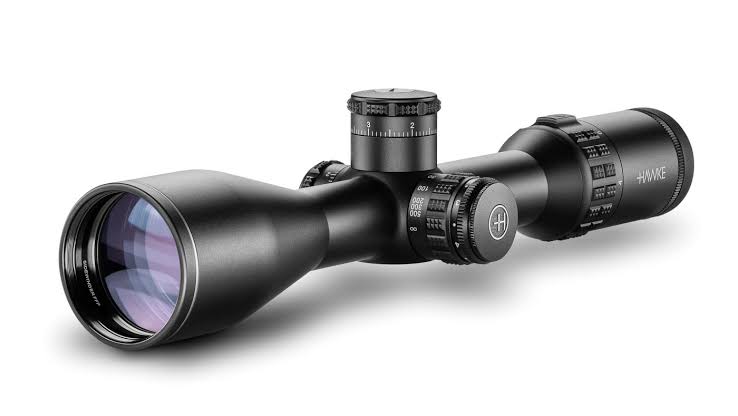
Leupold states that its riflescopes are designed, machined, and assembled in the United States and covered by its lifetime performance guarantee. Current warranty details should still be reviewed before purchasing, especially for electronic components and accessories.
Leupold Is Best For
- Lightweight hunting rifles
- Whitetail, elk, and mountain hunting
- Hunters who prefer straightforward controls
- Buyers wanting several upgrade tiers within one brand
- Users who value established domestic service support
Leupold Limitations
- Premium models can cost considerably more than entry-level alternatives.
- Some specialized reticles and dial systems require precise ballistic information.
- Model names and generations must be checked carefully because older versions may remain in retailer inventory.
2. Vortex Optics: Broadest Selection and Notable Warranty Support
Vortex Optics offers one of the broadest riflescope ranges, extending from approachable Crossfire and Diamondback scopes to Viper and premium Razor products. Its scope finder currently identifies models for close-range hunting, general hunting, long-range use, rimfire rifles, and precision shooting.
Vortex is especially popular with newer buyers because the product tiers are easy to recognize and the company provides extensive educational materials about reticles, magnification, mounting, and zeroing. Its VIP Warranty states that damaged or defective Vortex products will be repaired or replaced without charge, subject to the current published terms.
Do not assume every Vortex scope performs like a Razor simply because it carries the same brand name. Crossfire, Diamondback, Viper, Strike Eagle, Venom, and Razor scopes occupy different performance, weight, and feature categories.
Vortex Is Best For
- First-time scope buyers
- Hunters comparing several price and performance tiers
- Users who value warranty simplicity
- Rimfire, deer hunting, western hunting, and precision applications
- Buyers who want abundant manuals and educational support
Vortex Limitations
- The large catalog can make model selection confusing.
- Some precision models are heavier than traditional hunting scopes.
- Optical and mechanical performance differs significantly between tiers.
3. Nightforce: Top Choice for Rugged Mechanical Performance
Nightforce Optics is strongly associated with rugged construction, repeatable adjustments, and precision-focused scope systems. Its current lineup includes the hunting-oriented SHV family, compact NX8 scopes, newer lightweight NX6 configurations, NXS models, and premium ATACR scopes.
SHV stands for Shooter, Hunter, Varminter and is the clearest Nightforce family for hunters who do not require every feature found in NX8 or ATACR products. NX8 scopes provide broad magnification ranges in relatively compact bodies, while the NX6 family emphasizes lightweight configurations and simplified use.
Nightforce makes the most sense when mechanical durability, turret tracking, and maintaining zero are higher priorities than minimum price. Hunters should still avoid buying more magnification, turret complexity, and reticle detail than they can use responsibly.
Nightforce Is Best For
- Demanding mountain and backcountry environments
- Hunters prioritizing rugged mechanics
- Long-range target shooting and advanced hunting systems
- Users who dial elevation and verify adjustments through practice
- Rifles exposed to frequent travel and hard field use
Nightforce Limitations
- Many models are heavier than simple hunting scopes.
- Advanced reticles and turrets require training.
- The premium scope families may exceed the needs of short-range woodland hunters.
4. Swarovski Optik: Premium Choice for Hunting Glass
Swarovski Optik is an Austrian premium-optics manufacturer with hunting scope families including the Z5i, Z6i, Z8i, and dS. The current Z8i family uses an 8x zoom ratio, while the Z6i range emphasizes broad hunting versatility in a slimmer current design.
Swarovski is a leading consideration for hunters who value image quality, generous field of view, refined illumination, and low-light observation. This can be particularly useful during lawful dawn and dusk hunting periods, but premium glass cannot make an unidentified or obstructed target safe.
The brand is most appropriate for buyers willing to pay for premium optical performance and refined controls rather than the highest number of tactical-style features.
Swarovski Optik Is Best For
- Premium hunting rifles
- Low-light woodland and field hunting
- Driven hunting, stalking, and mountain hunting
- Hunters prioritizing field of view and optical refinement
- Buyers who prefer a dedicated hunting-oriented European optic
Swarovski Optik Limitations
- Premium pricing places it outside many beginner budgets.
- Some advanced electronic functions add setup and maintenance considerations.
- Highly refined optical performance does not replace practice or reliable mounting.
5. ZEISS: Premium European Versatility
ZEISS offers premium hunting scope families including the Conquest V4, Conquest V6, and V8, along with LRP S3 and LRP S5 scopes for precision-focused use. ZEISS describes the hunting range as covering conditions from dense forest to open fields, with the V6 and V8 families providing wider zoom ranges.
ZEISS is a strong alternative to Swarovski for hunters who value premium glass but want a different selection of reticles, turret systems, and hunting-to-precision crossover options. The Conquest families are the most likely starting point for a general hunting rifle, while LRP scopes are more specialized.
ZEISS Is Best For
- Low-light deer and big-game hunting
- Hunters comparing premium European glass
- Mixed woodland and open-country use
- Buyers wanting hunting and precision families within one brand
- Users who value high-contrast target images
ZEISS Limitations
- The differences between Conquest, V8, and LRP families require careful research.
- Premium models can be expensive.
- Large objectives may require taller rings and can add weight.
6. Trijicon: Rugged Illumination and Hunting Reticles
Trijicon offers Huron, Ascent, Credo, Credo HX, Tenmile, and AccuPoint riflescopes. AccuPoint scopes are particularly distinctive because selected configurations use fiber-optic and tritium illumination rather than depending entirely on a conventional battery. Credo and Tenmile scopes provide more conventional illuminated, precision, and tactical-style options.
Trijicon states that its products are backed by a limited lifetime warranty, while tritium illumination has its own time-specific warranty terms. Buyers should read the current warranty for the exact optic rather than assuming every component has identical coverage.
Trijicon Is Best For
- Hunters wanting illuminated reticles
- Low-light hunting within legal shooting hours
- Users prioritizing rugged construction
- Hunters interested in battery-free illumination on selected AccuPoint models
- Buyers comparing hunting and precision scope families
Trijicon Limitations
- Illumination systems differ by product family.
- Some reticles are more complex than traditional duplex designs.
- Tritium and electronic components may have different warranty periods.
7. Burris: Practical Value and Useful Innovation
Burris Optics covers conventional hunting scopes, advanced precision scopes, and electronic rangefinding optics. Current families include Fullfield, Signature HD, Veracity, XTR, and Eliminator.
The Signature HD and Veracity families are particularly relevant to hunters seeking traditional or precision-oriented scopes. Veracity includes both first- and second-focal-plane options, while Burris offers several reticle styles ranging from relatively simple designs to more advanced holdover systems.
Burris states that traditional hunting optics are covered by its transferable Signature Warranty without requiring a receipt. Electronic products may involve additional limitations, so verify the exact terms.
Burris Is Best For
- Hunters seeking features without entering the highest premium tier
- Buyers interested in several reticle options
- Traditional hunting and precision crossover
- Users who value transferable warranty support
- Hunters interested in integrated electronic features
Burris Limitations
- Electronic scopes introduce batteries, software, setup, and additional failure points.
- Advanced ballistic features require correct data and independent verification.
- The catalog covers very different product types that should not be compared solely by brand.
8. Maven: Direct-to-Consumer Hunting Optics
Maven produces hunting-oriented riflescopes built around Japanese glass and sold through a direct-to-consumer business model. The lineup includes compact hunting scopes and more advanced first-focal-plane configurations.
The RS.2 is a notable lightweight hunting option with a 2-10x magnification range intended for eastern whitetail, small game, western big game, and mountain-rifle setups. The RS1.2 adds first-focal-plane construction, illumination, a zero stop, capped windage, and a dialable elevation turret for hunters wanting more advanced controls.
Maven publishes a lifetime warranty, subject to exclusions such as loss, deliberate damage, and cosmetic issues that do not impair performance. Local product inspection may be less convenient because the company does not rely on the same retail network as larger mainstream brands.
Maven Is Best For
- Mountain and backcountry hunters
- Buyers seeking premium hunting optics through direct sales
- Hunters interested in lightweight scope options
- Users comparing traditional and first-focal-plane hunting designs
- Buyers who value customization choices
Maven Limitations
- In-person comparison may be difficult in some areas.
- The product range is smaller than Vortex or Leupold.
- Advanced RS models require more reticle and turret knowledge.
9. Athlon Optics: Feature-Rich Value Across Multiple Tiers
Athlon Optics offers riflescopes from entry-oriented Neos models to Argos, Helos, Midas, Ares, and premium Cronus products. The company offers both first- and second-focal-plane designs and has built much of its reputation around bringing precision-style features into more accessible product tiers.
Athlon states that its optical products are tested for waterproof, fog-proof, and shock-proof performance before shipping and that riflescopes are covered by its lifetime warranty. Coverage remains subject to the published terms and exclusions.
Athlon Is Best For
- Developing precision shooters
- Hunters seeking first-focal-plane scopes at several performance levels
- Buyers prioritizing turret and reticle features
- Rimfire and centerfire target applications
- Value-conscious shoppers willing to compare specifications carefully
Athlon Limitations
- Some models are heavier than traditional hunting scopes.
- Feature-rich reticles may be visually busy for close woodland hunting.
- Optical quality and controls differ between the Neos, Argos, Midas, Ares, and Cronus tiers.
10. Meopta: European Optical Performance
Meopta is a European optical manufacturer with riflescopes intended for hunting, sport shooting, and longer-distance applications. Its recent U.S. catalog has included MeoPro Optika5 and Optika6 hunting scopes in several magnification and reticle configurations.
Meopta is often considered by hunters who want European-style optical performance without automatically moving to the highest Swarovski or ZEISS tiers. Product availability, names, and warranty arrangements can vary substantially by country and distributor, so verify the current regional lineup.
Meopta Is Best For
- Hunters comparing European glass
- Low-light big-game hunting
- Buyers seeking straightforward hunting reticles
- Users who value optical performance over extensive electronic features
- Hunters who have access to reliable regional dealer support
Meopta Limitations
- Regional availability can be inconsistent.
- Current product families may differ between international markets.
- Local warranty and service arrangements should be confirmed before purchase.
11. Primary Arms Optics: Reticle Innovation and Tiered Value
Primary Arms Optics divides its products into CLx, SLx, GLx, and PLx families. The brand is especially associated with ACSS reticle systems, which combine aiming points, ranging references, and holdover information in various configurations.
Primary Arms can be a strong option for hunters who want a reticle with more built-in reference information than a basic duplex. Those features only help when the user understands the reticle, confirms the actual trajectory of the rifle and ammunition, and practices under realistic conditions.
Primary Arms publishes lifetime coverage for its optics through its support resources, although warranty wording on dealer and product pages has varied. Confirm the exact current terms for the selected model.
Primary Arms Is Best For
- Hunters who prefer feature-rich reticles
- Buyers comparing several clearly defined performance tiers
- Users transitioning between hunting and target shooting
- Rimfire, general-purpose, and precision applications
- Buyers willing to study and practice with the reticle
Primary Arms Limitations
- Some ACSS reticles may feel crowded to hunters who prefer a simple crosshair.
- Ballistic references must be verified for the exact rifle and ammunition.
- Warranty terms should be checked on the exact product page.
12. Bushnell: Accessible Hunting and Precision Options
Bushnell has a long history in accessible hunting optics and currently offers or supports hunting-oriented Banner and R7 scopes alongside Engage and Match Pro precision lines. The current R7 family is designed around hunting use and backed by a transferable lifetime warranty, while Match Pro scopes focus more heavily on target and precision features.
Bushnell can be a sensible starting point for a first deer rifle, rimfire, or recreational setup when the exact model has the required eye relief, reticle visibility, and adjustment reliability. Buyers should not assume an entry Banner and a Match Pro ED offer the same intended use or performance.
Warranty coverage varies by product family and age. Bushnell currently publishes a general lifetime warranty page, while some older products and specific series use separate written terms.
Bushnell Is Best For
- First-time hunting-scope buyers
- Rimfire and recreational shooting
- Hunters seeking uncomplicated scope configurations
- Developing precision shooters considering Match Pro
- Buyers with access to local retail inventory
Bushnell Limitations
- Product lines differ considerably in purpose and build.
- Warranty terms can vary by family and production period.
- Some older or discontinued models remain available through third-party sellers.
Best Rifle Scope Brands by Hunter Type
| Hunter or Shooter | Brands to Consider First | Why |
|---|---|---|
| First-time deer hunter | Leupold, Vortex, Burris, Bushnell | Broad availability and simple hunting configurations |
| Mountain hunter minimizing rifle weight | Leupold, Maven, Swarovski Optik | Strong lightweight hunting options |
| Low-light whitetail hunter | Swarovski Optik, ZEISS, Leupold, Meopta | Premium or hunting-focused optical systems |
| Backcountry hunter prioritizing ruggedness | Nightforce, Leupold, Trijicon, Vortex | Durable product families and established support |
| Long-range target shooter who also hunts | Nightforce, ZEISS, Athlon, Burris, Vortex | Advanced reticles, turrets, and first-focal-plane options |
| Hunter wanting illuminated reticles | Trijicon, Swarovski Optik, ZEISS, Leupold | Several purpose-built illumination systems |
| Value-focused precision beginner | Athlon, Primary Arms, Bushnell, Vortex | Feature-rich product tiers below many premium alternatives |
| Buyer interested in direct-to-consumer optics | Maven | Hunting-focused lineup sold through a direct model |
How to Choose Between the Top Rifle Scope Brands
Start With the Hunt, Not the Brand
The terrain and expected distance determine which scope features are useful. Leupold’s current hunting-scope guidance recommends emphasizing a low minimum magnification for thick timber and broader magnification ranges for open prairies or alpine terrain.
A compact 2-7x or 3-9x scope may be more practical in dense woodland than a heavy 5-25x optic. An open-country hunter may benefit from additional magnification and side focus, but only when the extra size and complexity are justified.
Choose an Appropriate Magnification Range
- 1-4x, 1-6x, or 1-8x: Close woodland, driven hunts, and fast field-of-view requirements.
- 2-7x or 2-10x: Lightweight rifles and mixed close-to-medium-distance hunting.
- 3-9x, 3-12x, or 3-15x: General deer and big-game hunting.
- 4-16x or 4-20x: Open terrain, varmints, and deliberate medium-to-long-distance use.
- 5-25x and higher: Precision target shooting and specialized long-distance applications.
Higher magnification narrows the field of view, increases visible movement, may reduce exit-pupil size, and can encourage shooters to attempt distances beyond their proven ability. Purchase magnification for the hunt you actually conduct, not the longest theoretical shot.
Decide Between First and Second Focal Plane
A first-focal-plane reticle changes apparent size as magnification changes, keeping its subtensions valid throughout the magnification range. A second-focal-plane reticle remains visually the same size, with calibrated hold marks usually accurate at one specified magnification. Leupold notes that FFP designs are useful for long-range precision applications, while SFP remains popular for hunting at known distances.
FFP is not automatically better. A fine FFP reticle may become difficult to see at low magnification, while an SFP duplex can remain bold and fast in timber.
Match the Reticle to the Hunting Style
- Simple duplex: Fast, uncluttered choice for common hunting distances.
- BDC reticle: Provides approximate holdover references that must be verified with actual ammunition.
- MOA or MIL hash reticle: Useful when the shooter measures corrections and understands the matching adjustment system.
- Illuminated center point: Can improve reticle visibility against dark backgrounds during lawful low-light periods.
- Christmas-tree reticle: Provides extensive elevation and wind references but can be unnecessarily complex for routine deer hunting.
Compare Eye Relief and Eye Box
Eye relief is the distance between the rear lens and the eye at which the full image is visible. A forgiving eye box helps the shooter obtain the image quickly from realistic field positions.
Confirm adequate clearance for the rifle’s recoil and establish a repeatable cheek weld. If you cannot obtain a full image without moving your head unnaturally, the mount height, fore-and-aft position, stock fit, or scope may be wrong.
Consider Weight and Balance
A compact hunting scope may preserve the handling of a lightweight rifle. Large objectives, 34-millimeter tubes, exposed turrets, illumination, and high magnification can add significant weight.
Balance matters more than the scope’s isolated weight. A heavy optic mounted high can make the rifle feel top-heavy and may require a different cheek position.
Check Turret Design
- Capped turrets: Protected against accidental movement and well suited to set-and-forget hunting.
- Exposed turrets: Faster for deliberate elevation adjustments but easier to move accidentally.
- Locking turrets: Help prevent unintended adjustment.
- Zero stop: Provides a repeatable return to the established zero after dialing.
- Custom elevation dial: Can simplify adjustments but depends on correct ammunition, velocity, atmospheric, and sight-height information.
Vortex’s hunting guidance notes that capped and exposed turrets serve different hunting styles. Select the simpler system unless you regularly practice dialing corrections.
Examine Warranty and Repair Support
A generous warranty is useful, but it does not make a poor-fit or unsuitable scope a good purchase. Check whether the warranty is transferable, whether proof of purchase is required, and whether electronics, illumination, tritium, accidental damage, and cosmetic damage receive the same coverage.
Verify Mounting Compatibility
Check the scope’s tube diameter, objective-bell clearance, mounting length, bolt-handle clearance, action type, and ring height. A larger objective may require taller rings, which can raise the shooter’s head and weaken cheek contact.
What Not to Do When Choosing or Using a Rifle Scope
- Do not buy solely by brand name without examining the exact series and model.
- Do not use the rifle scope to scan for wildlife or identify movement.
- Do not point the rifle at anything you are unwilling to shoot.
- Do not choose excessive magnification merely because a higher number appears better.
- Do not mix MIL turrets with an MOA reticle unless you understand the conversion burden.
- Do not trust an unverified BDC mark or custom dial.
- Do not overtighten scope rings or bases.
- Do not use thread-locking chemicals unless the manufacturer permits them.
- Do not assume factory mounting means the rifle is zeroed.
- Do not take shots beyond your demonstrated ability, visibility, or safe backstop.
- Do not rely on an illuminated reticle when the battery has not been checked.
- Do not assume a mechanical safety compensates for poor muzzle or trigger-finger discipline.
Common Beginner Mistakes
| Mistake | Why It Causes Problems | Better Approach |
|---|---|---|
| Buying by maximum magnification | The scope may become heavy, slow, and difficult to use at close distance | Prioritize a useful low-end magnification and field of view |
| Choosing a large objective automatically | It may require taller rings and weaken cheek weld | Choose the smallest objective that meets the actual low-light need |
| Ignoring scope weight | The rifle may become top-heavy or unpleasant to carry | Evaluate total rifle, mount, and optic balance |
| Selecting a complicated reticle | Unused references create clutter and confusion | Choose the simplest reticle that supports the intended shots |
| Buying mismatched rings | The tube may not fit or the objective may contact the rifle | Verify tube diameter, base system, and clearance |
| Guessing screw torque | Too little torque can permit movement; too much can damage components | Use the manufacturer’s specifications and an appropriate torque tool |
| Skipping zero confirmation | A mounted scope may not place shots at the aiming point | Zero and verify from stable positions before hunting |
| Believing the warranty prevents failure | A warranty repairs equipment after a problem | Inspect, test, and verify the optic before every important trip |
How to Check a Scope Before Hunting
- Unload the rifle and verify the chamber and magazine are empty.
- Inspect the scope body, lenses, rings, base, screws, and adjustment caps.
- Confirm the scope has not shifted within the rings.
- Check eye relief and the full field of view from realistic shooting positions.
- Install a fresh illumination battery when appropriate and carry a spare.
- Confirm zero with the exact hunting ammunition.
- Fire enough shots to distinguish equipment movement from normal group variation.
- Confirm that turret caps, locks, and zero stops function correctly.
- Return adjustable turrets to the established zero.
- Clean the lenses using an optic-safe method.
- Pack binoculars for wildlife observation and identification.
- Recheck local hunting regulations, licenses, tags, and equipment rules.
Scope Maintenance
- Use a blower or soft lens brush to remove grit before wiping the glass.
- Use a clean microfiber lens cloth rather than a shirt, tissue, or dirty rag.
- Do not apply household glass cleaner unless the scope manufacturer approves it.
- Keep adjustment caps and battery covers secure without overtightening.
- Dry the optic after rain before placing it in long-term storage.
- Inspect exposed metal and mounting hardware for corrosion.
- Do not store the rifle permanently in a wet soft case.
- Replace damaged lens covers and batteries as needed.
- Contact the manufacturer or a qualified gunsmith when the scope will not hold zero, the reticle rotates, lenses fog internally, or adjustments become unreliable.
FAQs
1. What is the best rifle scope brand overall?
Leupold and Vortex are the most broadly useful starting points because both offer hunting scopes across several performance tiers. Leupold is particularly strong in lightweight hunting configurations, while Vortex offers an unusually wide catalog and notable warranty support.
2. What is the best premium rifle scope brand?
Swarovski Optik and ZEISS are leading premium hunting choices for optical quality, field of view, contrast, and low-light performance. Nightforce is a stronger premium choice when rugged mechanics and precision adjustments are the main priorities.
3. What rifle scope brand is best for deer hunting?
Leupold, Vortex, Burris, Swarovski Optik, ZEISS, Trijicon, Meopta, and Maven all offer suitable deer-hunting scopes. Select the exact model according to terrain, likely distance, rifle weight, reticle visibility, and legal shooting hours.
4. What brand is best for a first hunting scope?
Leupold, Vortex, Burris, and Bushnell provide approachable hunting configurations and substantial educational or dealer support. A basic 2-7x, 3-9x, or similar scope with capped turrets and a clear reticle is often easier to learn than a complex precision optic.
5. Is Leupold better than Vortex?
Leupold often has an advantage for hunters prioritizing lightweight scopes and traditional hunting designs. Vortex offers a broader selection across hunting and precision categories and publishes an especially simple VIP Warranty. Compare equivalent product tiers rather than the brands as a whole.
6. Is Nightforce better than Leupold?
Nightforce is often favored for rugged mechanics and repeatable precision adjustments. Leupold offers more lightweight and conventional hunting options. The better choice depends on whether the rifle is a backcountry hunting setup, traditional deer rifle, or precision system.
7. Is Swarovski better than ZEISS?
Both make premium European hunting scopes. Swarovski is especially associated with refined hunting optics and wide zoom ratios, while ZEISS provides hunting and precision families with different control and reticle options. Personal eye preference is important, so compare them outdoors when possible.
8. Are Trijicon rifle scopes good for hunting?
Yes. Trijicon’s Huron, Credo HX, and AccuPoint families include hunting-oriented models. AccuPoint is distinctive for fiber-optic and tritium illumination on selected scopes.
9. Is Burris a reliable rifle scope brand?
Burris is an established optics manufacturer offering traditional hunting, precision, and electronic scope systems. Its transferable Signature Warranty is a strong support feature for covered products.
10. Are Maven rifle scopes worth considering?
Yes. Maven offers hunting-focused scopes built around Japanese glass, including lightweight models and more advanced first-focal-plane options. The direct sales model may provide strong feature value but can limit local hands-on comparison.
11. Is Athlon a good rifle scope brand?
Athlon is a useful choice for buyers seeking first-focal-plane reticles, exposed turrets, and precision features across several price categories. Compare individual lines carefully because an entry Neos differs substantially from an Ares or Cronus.
12. Are Primary Arms scopes suitable for hunting?
Many are suitable when the magnification, weight, and reticle match the hunt. ACSS reticles can provide useful references, but hunters must verify every hold with the actual rifle and ammunition.
13. Is Bushnell still a good scope brand?
Bushnell remains relevant through accessible hunting scopes and Match Pro precision products. Check whether the selected scope is current or discontinued and review the warranty for that product family.
14. Is Meopta comparable to Swarovski or ZEISS?
Meopta is a respected European optics manufacturer and can provide strong optical performance. Swarovski and ZEISS offer broader recognition in the highest premium hunting tier, but Meopta may provide an appealing balance for buyers with reliable regional availability.
15. What rifle scope brands are made or assembled in the United States?
Leupold states that its riflescopes are designed, machined, and assembled in the United States. Other brands may design domestically while sourcing or assembling products in several countries. Verify the exact model rather than assuming one origin applies to the entire brand.
16. What magnification is best for deer hunting?
A 2-7x, 3-9x, 2-10x, or 3-15x scope covers many deer-hunting situations. Thick woodland favors a low minimum magnification, while open terrain may justify a higher upper range.
17. Is a 3-9×40 scope still useful?
Yes. It remains a practical configuration for many deer and general big-game hunts. It offers a manageable field of view at 3x and enough magnification for many responsible medium-distance shots.
18. Is more magnification always better?
No. Excess magnification can narrow the field of view, magnify movement, add weight, complicate target acquisition, and encourage unrealistic shooting distances.
19. Is a 50-millimeter objective better than a 40-millimeter objective?
Not automatically. A larger objective may support a larger exit pupil at comparable magnification, but it also adds size and may require taller rings. Optical quality, coatings, magnification, and eye position also influence the visible image.
20. What is the best scope brand for low-light hunting?
Swarovski Optik, ZEISS, Leupold, Meopta, and Trijicon offer notable low-light hunting options. Compare the exact scope outdoors because individual eyesight and reticle visibility affect the experience.
21. What is the best scope brand for long-range target shooting?
Nightforce, Vortex Razor, ZEISS LRP, Athlon Ares or Cronus, Burris XTR, and selected Leupold Mark scopes are strong candidates. Long-range shooting also requires training, reliable data, suitable ammunition, and a safe range.
22. Is first focal plane better for hunting?
It is useful when the hunter needs accurate reticle subtensions at every magnification. Second focal plane can be better for hunters wanting a bold, consistently visible reticle and simpler use.
23. What is the difference between MOA and MIL scopes?
MOA and MIL are angular measurement systems. Either works when the reticle and turrets use the same system and the shooter understands the adjustment values. Mixing the systems adds unnecessary conversion.
24. Do I need an illuminated reticle?
No. Illumination can help a reticle stand out against dark backgrounds, but a clear non-illuminated reticle remains suitable for many hunters. Illumination does not make shooting outside legal hours acceptable.
25. What is a BDC reticle?
A bullet-drop-compensating reticle includes additional aiming references for estimated trajectory drop. The references are approximations until verified with the exact rifle, ammunition, velocity, environmental conditions, and sight height.
26. Are custom elevation dials accurate?
They can simplify adjustments when the supplied ballistic data match real field performance. Confirm the dial at several distances rather than trusting calculated information without testing.
27. Are capped turrets better for hunting?
Capped turrets are usually appropriate for hunters who establish a zero and use a simple reticle hold. They reduce the chance of an accidental adjustment during transport or brush contact.
28. When are exposed turrets useful?
They are useful for shooters who deliberately dial elevation or wind adjustments and regularly verify turret tracking. Locks and zero stops can reduce operating mistakes.
29. What is eye relief?
Eye relief is the distance between the eye and the rear lens where the full image is visible. Adequate eye relief helps prevent contact between the scope and the shooter’s face during recoil.
30. What is a forgiving eye box?
A forgiving eye box allows the shooter to see the complete image without placing the head in one extremely precise position. It can improve target acquisition from standing, kneeling, and improvised field positions.
31. Is a one-inch tube worse than a 30-millimeter tube?
No. Tube diameter does not directly determine image brightness. A larger tube may provide more internal adjustment range or structural space but can add weight and require different rings.
32. Do expensive rifle scopes hold zero better?
Higher-priced scopes may provide better mechanical construction, adjustment consistency, glass, and quality control, but price alone is not proof. Inspect and test every scope before relying on it.
33. How much should I spend on a rifle scope?
Spend enough to obtain reliable zero retention, usable glass, safe eye relief, and suitable controls. There is no rule requiring the scope to cost as much as the rifle.
34. Is the warranty more important than glass quality?
Both matter, but the scope must function during the hunt. A strong warranty cannot prevent a missed opportunity or unsafe condition caused by equipment failure.
35. Can a rifle scope lose zero?
Yes. Loose mounts, impacts, internal damage, temperature changes, ammunition changes, stock movement, and improper installation can alter point of impact.
36. How often should I check my rifle’s zero?
Check before each season and after a significant impact, travel, mounting change, ammunition change, or unexplained shift in accuracy. Confirm zero shortly before an important hunt.
37. Can I mount a rifle scope myself?
You may be able to when you have the correct base, rings, tools, instructions, and safe workspace. Use a qualified gunsmith when compatibility, alignment, torque, or firearm disassembly is uncertain.
38. Does bore sighting mean the rifle is zeroed?
No. Bore sighting may help place the first shots on paper, but live-fire confirmation is required at a safe range.
39. Can I use a rifle scope to spot animals?
No. Use binoculars or a spotting scope. Looking through a rifle scope means pointing the firearm toward the observed object, which is unsafe when the target has not been positively identified.
40. Do rifle scopes require legal verification?
Ordinary optical scopes are widely permitted, but rules concerning electronic, thermal, night-vision, illuminated, or rangefinding optics can vary by jurisdiction, land type, species, and season. Check current official regulations before hunting.
Final Answer
What are the top rifle scope brands? Leupold and Vortex are the strongest general starting points for most hunters; Nightforce is prominent for rugged precision; Swarovski Optik and ZEISS lead many premium-glass comparisons; and Trijicon, Burris, Maven, Athlon, Meopta, Primary Arms, and Bushnell provide strong specialized or value-oriented alternatives.
Choose the exact scope by terrain, expected distance, weight, reticle, eye relief, turret design, mounting compatibility, warranty, and your actual skill level. Use binoculars for observation, follow the four firearm-safety rules, confirm zero before hunting, and never let magnification persuade you to take a shot beyond your proven ability or without a safe backstop.
Read more: