
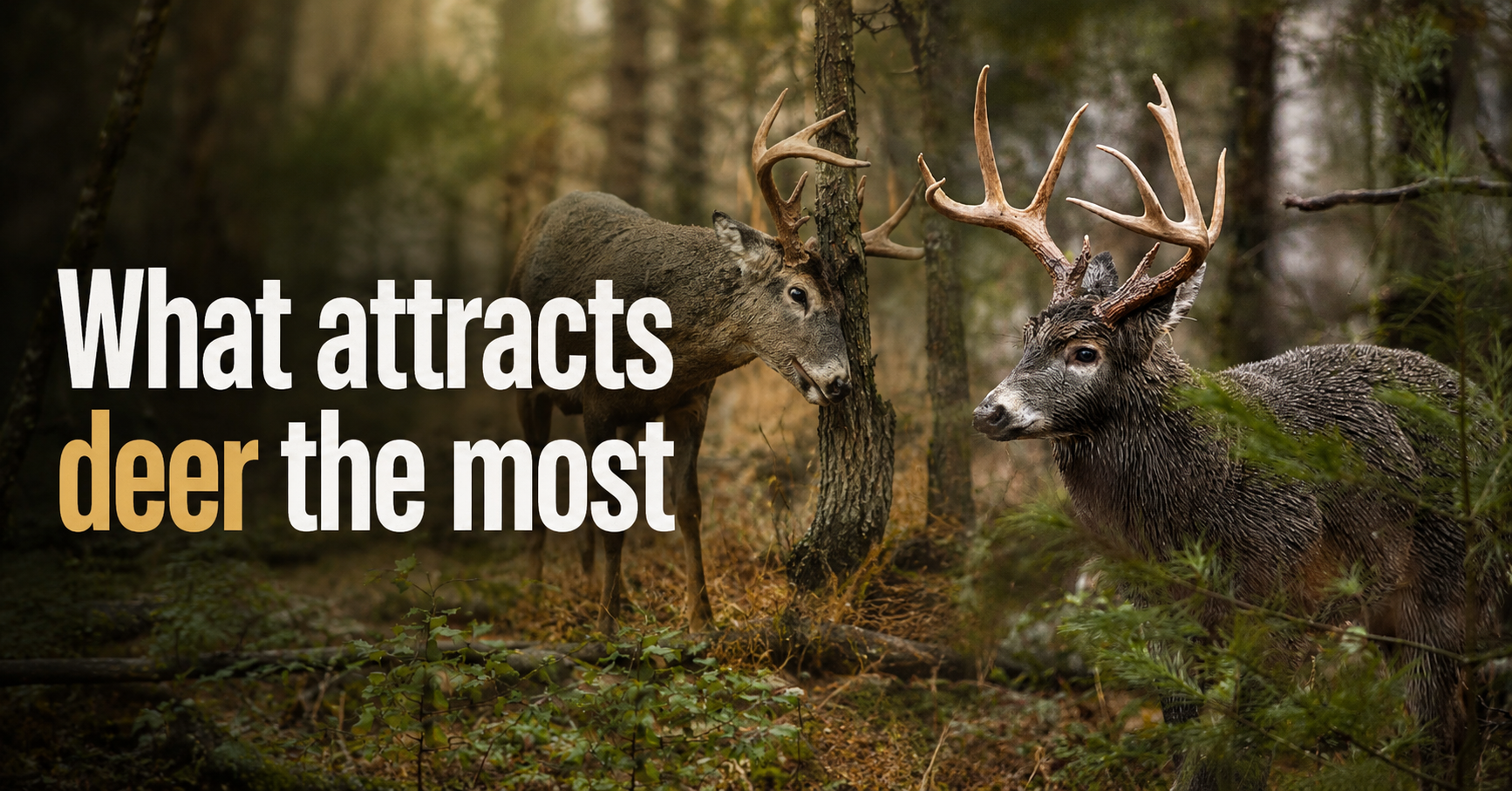

If you are wondering what attracts deer the most, the most reliable answer is not one bottled scent, grain, fruit, or mineral. Deer are drawn most consistently to a preferred seasonal food source located close to secure cover, dependable travel routes, and minimal disturbance.
During autumn, that food may be fresh acorns, other hard mast, soft fruit, or agricultural crops. Spring and summer deer focus more heavily on tender broadleaf plants, new growth, browse, and crops where available. During the breeding season, a receptive doe can temporarily become the strongest attraction for a buck. Water becomes especially important where natural supplies are limited.
This guide primarily addresses white-tailed deer, which are the usual North American search intent. Mule deer and other deer species may respond differently according to habitat, migration, climate, and local food availability.
Quick Answer
What attracts deer the most? Across most white-tailed deer habitat, the strongest dependable attraction is high-quality seasonal food positioned near thick, secure cover. Deer are more likely to return when they can feed, bed, and travel without repeated human disturbance. During the rut, bucks may temporarily prioritize receptive does and doe travel routes over food. No bait, scent, call, food plot, or moon phase guarantees deer activity, and artificial attractants may be restricted or prohibited by local law.
Important Legal and Wildlife-Health Notice
Check the current hunting regulations for the exact state, province, wildlife unit, land type, species, and season before placing corn, fruit, minerals, salt, urine scent, food plots, or any other attractant. Baiting and feeding rules vary widely, can differ between public and private land, and may change after a chronic wasting disease detection.
Concentrated feeding and bait sites can cause deer to gather unnaturally, increasing direct contact and environmental contamination from saliva, urine, feces, and blood. Wildlife agencies may prohibit baiting, feeding, mineral sites, or certain natural cervid-fluid lures to reduce chronic wasting disease risks.
This general guidance was checked on July 31, 2026. Official wildlife regulations and emergency orders override general online advice.
Deer Attractions Ranked by Practical Importance
The following ranking combines current habitat guidance from university extension programs and wildlife agencies. The order can change with season, local habitat, breeding behavior, drought, snow, crop harvest, and hunting pressure.
| Attraction | Why Deer Use It | When It Matters Most | Main Limitation |
|---|---|---|---|
| Preferred seasonal food near cover | Provides nutrition without requiring long exposure in open ground | Throughout the year | The preferred food changes by region and season |
| Security cover and low disturbance | Provides bedding, concealment, escape routes, and safer access to food | Especially important for pressured deer | Frequent human entry can reduce use |
| Receptive does | Bucks seek breeding opportunities and follow doe scent and movement | Pre-rut and rut | The attraction is temporary and timing varies regionally |
| Water | Supports hydration and can concentrate movement where water is scarce | Drought, heat, dry regions, and limited-water habitat | Less influential where water is abundant |
| Edges and travel corridors | Connect food, bedding, water, and different vegetation types | Year-round scouting | Not every visible trail is used during daylight |
| Calls, scrapes, decoys, and scents | May trigger curiosity, social behavior, or breeding responses | Specific seasonal situations | Results are inconsistent and some methods are regulated |
| Artificial bait or minerals | Can concentrate feeding where legal | Depends on local rules and food availability | Disease, legal, ethical, and pressure concerns |
Why Food Is Usually the Strongest Deer Attraction
White-tailed deer consume a varied diet that can include forbs, leaves, buds, stems, vines, mushrooms, agricultural crops, acorns, nuts, and soft fruits. Mississippi State University Extension notes that forbs and leafy browse make up much of the natural diet, while hard and soft mast become important when available.
Food is powerful because deer must obtain energy and nutrients every day. However, the most attractive food is generally the best currently available option in the local landscape—not necessarily the food hunters discuss most often.
Hard mast
Acorns, beechnuts, chestnuts, hickory nuts, and similar hard mast can concentrate deer movement in autumn. Acorns are especially important in many hardwood regions, although production varies greatly between individual trees and years.
Soft mast
Apples, crabapples, persimmons, berries, and other seasonal fruits may draw deer while they are ripe or falling. Their importance depends on regional plant species, fruit production, and competing foods.
Forbs and browse
Tender broadleaf plants, shoots, leaves, vines, buds, and young woody growth are major natural foods. Early-successional vegetation can be particularly useful because it places nutritious forage within a deer’s feeding height while also creating cover.
Agricultural crops
Corn, soybeans, alfalfa, wheat, oats, and other crops can become important attractions where they are locally available. University of Minnesota Extension reports that crops may form a large portion of deer diets in agricultural landscapes.
Food plots
A well-established food plot may provide seasonal forage, but it is not automatically more attractive than natural browse, fresh mast, or nearby crops. Food plots work best as one part of a larger habitat containing nearby cover and varied natural foods.
What Attracts Deer the Most in Different Seasons?
| Season or Phase | Likely High-Interest Resources | Useful Scouting Focus |
|---|---|---|
| Early spring | New green growth, tender browse, fields, and openings | South-facing openings, field edges, and early-successional habitat |
| Late spring and summer | Forbs, leafy browse, crops, soft mast, and water during dry periods | Shaded travel routes between feeding and bedding cover |
| Early autumn | Fresh acorns, fruit, crops, and remaining green forage | Currently producing trees rather than oak species alone |
| Pre-rut | Food, secure cover, doe concentrations, rubs, and scrape areas | Routes connecting bedding cover and food |
| Peak rut | Receptive does and routes used by doe groups | Funnels, crossings, cover edges, and doe bedding areas without intrusion |
| Post-rut | High-energy remaining food and secure resting cover | Low-pressure routes to late-season food |
| Winter | Remaining mast, crops, woody browse, and thermal or wind shelter | Protected habitat that combines reachable forage and cover |
Autumn mast helps deer build reserves, while winter scarcity can push them toward available woody vegetation and sheltered areas. Breeding activity is influenced by shortening day length, and bucks may follow the scent and movement of does during the rut.
Security Cover May Matter More Than the Food Itself
A productive food source does not automatically create predictable deer activity if reaching it requires crossing exposed terrain or tolerating frequent human disturbance. Deer habitat works best when food, cover, water, and space occur in a usable arrangement.
Useful security cover may include:
- Dense young forest
- Shrubby old fields
- Regenerating timber cuts
- Brushy creek or wetland edges
- Native grass and forb cover
- Thickets and low woody growth
- Conifer shelter in severe winter regions
Early-successional vegetation is valuable because it can provide both reachable food and concealment. Edges between forest and open habitat also tend to contain abundant low woody and herbaceous growth.
Why mature bucks may avoid an attractive food source
A food source may receive heavy nighttime use but little legal-shooting-time activity when the location is exposed, repeatedly entered, surrounded by human odor, or approached through important bedding cover. A practical inference from deer habitat and hunting-pressure research is that low-disturbance access often matters more than adding another attractant.
What Attracts Bucks During the Rut?
During the breeding season, a receptive doe can temporarily become the strongest attractor for a buck. Maryland wildlife guidance describes bucks following doe scent during breeding behavior and explains that the breeding cycle is triggered largely by shortening day length.
Rut-related features that may concentrate buck travel include:
- Routes connecting doe bedding and feeding areas
- Narrow terrain funnels
- Creek, fence, or ditch crossings
- Edges of secure cover
- Active scrapes and rub lines
- Locations where several doe groups overlap
Scrapes, grunts, rattling, decoys, and synthetic scents may create interest under the right conditions, but they do not override wind, pressure, timing, visibility, and individual deer behavior. Natural cervid-fluid scents are restricted in some jurisdictions because of chronic wasting disease concerns.
How Important Is Water?
Water can be highly attractive in arid regions, drought, heat, or habitat where dependable sources are widely separated. Missouri research notes that restricting water can reduce deer food intake, confirming that water is a genuine habitat requirement.
Water usually becomes less useful as a scouting differentiator in landscapes filled with creeks, ponds, wetlands, springs, and livestock water. In those areas, food quality, security cover, and low disturbance may predict deer use more effectively than the nearest visible water source.
Avoid creating an artificial concentration site without first checking landowner permission, water laws, baiting definitions, disease guidance, and public-land rules.
Do Scents Attract Deer?
Scents can attract, alarm, or have no visible effect depending on the product, season, wind, deer experience, and how much scent is used. Rut scents are most relevant when deer are displaying breeding behavior. Food scents do not create food where none exists and may encourage deer to investigate only briefly.
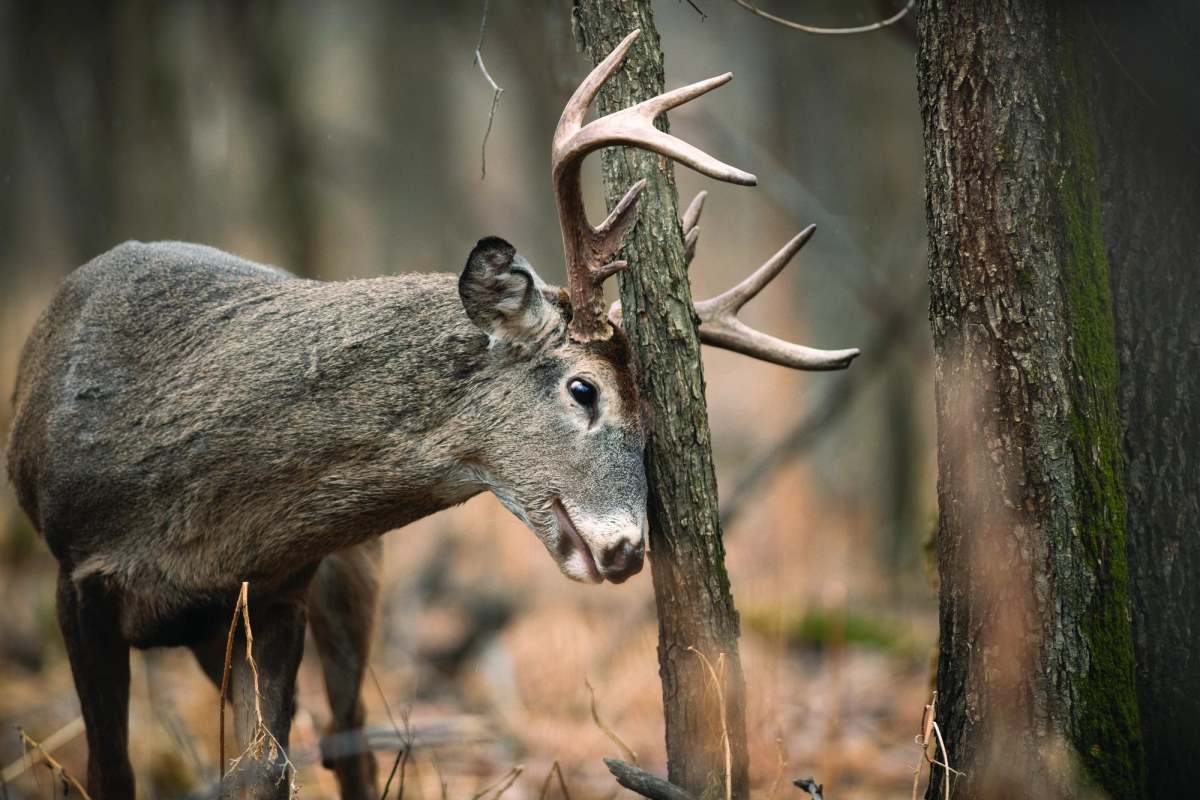
Some jurisdictions prohibit natural urine, gland oil, blood, feces, or other cervid-fluid products, while allowing certain synthetic alternatives. South Carolina, for example, prohibits natural cervid excretions used as attractants because of chronic wasting disease concerns. That rule is an example of why hunters must check their own jurisdiction rather than assuming a commercial product is legal everywhere.
Use scents cautiously
- Verify current wildlife regulations before purchase or use.
- Prefer synthetic products when required or recommended by the wildlife agency.
- Do not place scent where retrieving it would require trespassing or unsafe travel.
- Use small amounts according to the manufacturer’s directions.
- Avoid contaminating footwear, stands, vehicles, or equipment.
- Do not expect scent to compensate for poor wind or excessive disturbance.
Are Corn, Minerals, and Salt the Best Deer Attractants?
Corn can attract deer where it is legal, but it is not universally the strongest food. Fresh acorns, soybeans, fruit, green forage, or local browse may receive more attention depending on the season and landscape. A feed pile also creates an unnatural concentration point rather than improving the full habitat.
Salt and mineral sites may draw deer, but they can be regulated as bait even when they dissolve into the soil. Wildlife health agencies warn that shared feeding, mineral, and scent sites can contribute to chronic wasting disease exposure because infected materials may remain in the environment.
Improving natural food, cover, and habitat diversity is generally a more durable management approach than repeatedly supplying concentrated feed. New York wildlife guidance advises improving natural summer and fall habitat rather than feeding deer through winter.
How to Attract Deer Naturally Without Bait
- Identify what deer are already eating. Look for browsed plants, producing mast trees, crop use, tracks, droppings, and trail-camera activity.
- Protect existing cover. Avoid repeatedly walking through bedding areas or clearing every thicket and brushy edge.
- Improve habitat diversity. Maintain a mixture of forest, young growth, openings, shrubs, native forbs, and mast-producing trees.
- Encourage reachable browse. Proper forestry, prescribed fire, invasive-plant control, and early-successional management should be planned with qualified land managers.
- Place food plots near cover when appropriate. Follow soil tests, local planting guidance, pesticide labels, and land-use rules.
- Preserve travel corridors. Creek edges, brush lines, saddles, field corners, and narrow cover strips may connect daily needs.
- Reduce unnecessary disturbance. Use low-impact observation and avoid checking cameras or plots more frequently than necessary.
- Manage for year-round habitat. A property that supplies food and cover through several seasons is more dependable than one short-lived attractant.
University extension guidance emphasizes a landscape containing varied plant communities and different growth stages rather than one isolated food source.
A Responsible Scouting Process
Step 1: Find the current food
Do not rely on last year’s pattern. Check which oak trees are actually dropping, which crop fields remain usable, which fruits are ripe, and which browse shows fresh use.
Step 2: Locate secure bedding cover
Identify dense vegetation where deer can rest and escape disturbance. Observe from outside rather than walking repeatedly through the center.
Step 3: Map the connecting routes
Look for trails, crossings, terrain funnels, edge habitat, and narrow strips of cover linking bedding, food, and water.
Step 4: Consider hunting pressure
Parking areas, roads, stands, camera checks, farm activity, neighboring access, and previous hunting may alter when deer use an otherwise attractive location.
Step 5: Verify legal access and a safe setup
Confirm property boundaries, landowner permission, season dates, legal equipment, baiting status, hunter-orange requirements, and a safe target background before hunting.
Step 6: Keep expectations realistic
Tracks, food use, and nighttime trail-camera photographs show that deer visit an area. They do not guarantee that a legal, ethical opportunity will occur during a particular hunt.
Common Mistakes That Make an Attractive Area Less Effective
| Mistake | Why It Causes Problems | Better Approach |
|---|---|---|
| Focusing on one “magic” food | Deer preferences change as new foods become available | Scout current seasonal foods |
| Ignoring bedding cover | Deer may avoid exposed food until after dark | Evaluate food and security together |
| Checking cameras constantly | Repeated intrusion can alter deer use | Reduce visits and use low-impact access |
| Placing bait without reading regulations | The material or location may be illegal | Check the current official rulebook |
| Using natural urine automatically | Some states restrict cervid-fluid lures | Verify rules and disease guidance |
| Overlooking nearby crops or mast | Natural food may outperform a planted plot | Monitor the surrounding landscape |
| Hunting the same access route repeatedly | Disturbance can make deer avoid the area | Plan access around cover, wind, and boundaries |
| Assuming nighttime photos predict daytime use | Deer may visit only when human activity is low | Study timing, pressure, and travel routes |
| Creating a feed pile near a road or home | Concentrated deer may increase conflicts and disease risk | Improve natural habitat away from conflict zones |
What Not to Do
- Do not bait, feed, or place minerals without confirming the current law.
- Do not assume private land is exempt from wildlife regulations.
- Do not use natural cervid-fluid scents where they are restricted.
- Do not trespass to place attractants, scout, hunt, or recover game.
- Do not create concentrated feeding sites in chronic wasting disease areas.
- Do not dump large amounts of unfamiliar feed for wintering deer.
- Do not overhunt or repeatedly enter secure bedding cover.
- Do not shoot at sound, movement, antlers, or an unidentified shape.
- Do not take a shot without a safe background and positive target identification.
- Do not assume an attractant guarantees a humane opportunity.
- Do not let habitat work replace hunter education, practice, and responsible judgment.
FAQs
1. What food attracts deer the most?
The strongest food is usually the highest-quality seasonal option currently available nearby. That may be tender forbs in spring, crops or leafy browse in summer, fresh acorns and fruit in fall, or remaining mast and browse in winter.
2. Do acorns attract deer more than corn?
Fresh acorns can compete strongly with corn during a good mast drop, especially where oak habitat is close to cover. Corn may be important in agricultural landscapes, but neither food wins everywhere. Availability, freshness, pressure, and local feeding history change the answer.
3. What smell attracts deer the most?
No smell is universally irresistible. During the rut, doe scent may interest bucks, while food odors may create curiosity at other times. Legal restrictions, wind, contamination, timing, and individual deer experience all affect results.
4. Do apples attract deer?
Deer eat soft mast and fruit where it is naturally available. Apples may draw visits while fruit is ripe or falling, but their importance declines when more preferred foods become available. Placing apples deliberately may legally qualify as bait.
5. Does corn attract mature bucks?
Corn may attract feeding deer where legal, but mature bucks may avoid an exposed or heavily disturbed site until nighttime. Nearby security cover, access pressure, alternative foods, and the breeding season can matter more than corn itself.
6. Do salt blocks attract deer?
Salt and mineral products may attract deer, particularly where natural sodium is limited. They may also be defined as bait, remain regulated after dissolving, and create shared concentration sites associated with disease concerns.
7. Does peanut butter attract deer?
Peanut butter is an artificial food attractant rather than a habitat feature. Its legality depends on local baiting definitions, and it should not be treated as a guaranteed or responsible substitute for habitat management.
8. Do deer prefer food plots or natural food?
Deer use whichever suitable food provides the best combination of nutrition, availability, safety, and familiarity. A fresh acorn drop or crop field may temporarily outperform a food plot. Diverse natural habitat provides more dependable year-round value.
9. What food plot attracts deer best?
No single planting is best everywhere. Climate, soil, rainfall, planting date, browsing pressure, surrounding crops, and seasonal goals determine whether clover, cereal grains, brassicas, or another planting is appropriate. Follow local extension recommendations.
10. Does clover attract deer?
Clover is commonly used in deer food plots and can provide attractive forage when healthy and actively growing. Its value depends on soil fertility, moisture, maintenance, and the other foods available nearby.
11. Do soybeans attract deer?
Soybeans can be important in agricultural deer diets, especially while leaves are green and when waste grain remains after harvest. Use changes as plant maturity, harvest, snowfall, and nearby food availability change.
12. Does water attract deer?
Yes, especially during heat, drought, or in dry habitat with limited dependable sources. In wet landscapes with many streams and ponds, water may be less useful for predicting deer movement than food and cover.
13. What attracts bucks during the rut?
Receptive does and travel routes connecting doe groups become major attractions. Bucks may also investigate active scrapes, calls, or legal scents, but responses vary and do not override safety, wind, pressure, and individual behavior.
14. Do scrapes attract deer?
Active scrapes can function as communication locations and may receive visits from several deer. A scrape is more useful as evidence of movement than as a guarantee that a buck will appear during legal hunting hours.
15. Do deer calls attract deer?
Calls may trigger curiosity, social contact, or breeding behavior when timing and context are appropriate. Calling too loudly or frequently can alarm deer, especially in pressured areas. Electronic-call rules also vary by jurisdiction.
16. Does human scent keep deer away from food?
Repeated human disturbance can alter when and how deer use a location. A food source may continue receiving nighttime visits while daylight use declines. Low-impact access is therefore an important part of scouting attractive habitat.
17. What type of cover attracts deer?
Dense young growth, shrub cover, regenerating woodland, brushy edges, native grass and forb cover, and sheltered winter habitat can provide bedding and concealment. The best cover is connected to seasonal food and travel routes.
18. Do habitat edges attract deer?
Edges often provide a mixture of low woody browse, herbaceous plants, concealment, and access to several habitat types. New York wildlife guidance notes that deer frequently find abundant food in transition zones between forest and open habitat.
19. What attracts deer to a backyard?
Gardens, ornamental plants, fallen fruit, birdseed, young trees, and nearby cover may bring deer into residential areas. Intentionally feeding deer may be illegal and can increase property damage, disease concentration, and vehicle-conflict risks.
20. Will a bird feeder attract deer?
Deer may consume spilled birdseed or reach accessible feeders. Some wildlife agencies require feeders to be elevated or enclosed where deer feeding is prohibited. Check local rules if deer begin using a feeder.
21. How quickly will deer find a new food source?
There is no dependable timeline. Deer may discover it quickly when it lies on an existing route, or ignore it for weeks when it is unfamiliar, exposed, contaminated by disturbance, or less desirable than natural food.
22. Why did deer suddenly stop visiting?
Possible causes include a new food source, mast drop, crop harvest, hunting pressure, predator activity, weather, breeding behavior, habitat disturbance, or a change in access. Evaluate several causes rather than assuming an attractant failed.
23. Is baiting deer legal?
It depends entirely on the jurisdiction, land type, species, season, disease zone, quantity, material, and distance from a hunting location. Read the current official regulation booklet immediately before hunting.
24. Can feeding deer spread chronic wasting disease?
Wildlife agencies warn that feeding and baiting can cause unnatural congregation, increasing direct contact and contamination of shared sites with infectious material. CWD prions may persist in the environment.
25. Is natural doe urine legal?
Not everywhere. Some jurisdictions prohibit natural cervid urine and other bodily-fluid lures, while others recommend synthetic products or impose certification requirements. Verify the current rule where you hunt.
26. Are synthetic deer scents safer?
Synthetic products avoid collected cervid bodily fluids and may be permitted where natural urine is prohibited. They are not automatically legal in every situation, and they do not guarantee a response.
27. How can I attract deer without feeding them?
Improve native browse, protect mast-producing trees, maintain early-successional vegetation, preserve bedding cover, reduce disturbance, and retain connected habitat. These practices support deer without creating one concentrated feed pile.
28. What attracts mature bucks in daylight?
No feature guarantees daylight movement. A practical combination is seasonal food, secure nearby cover, limited disturbance, favorable access, and routes used by does during the rut. Hunting pressure and individual behavior still create major variation.
29. Does the moon attract or move deer?
The moon is not an attractant. Deer movement reflects several interacting factors, including food, breeding activity, temperature, weather, disturbance, and habitat. Avoid treating a moon phase as a guarantee.
30. What is the safest way to use deer-attraction knowledge?
Use it to scout natural food, cover, and travel routes while following official regulations, property boundaries, positive target identification, safe shooting backgrounds, and fair-chase principles. Attraction never removes the hunter’s responsibility to make a lawful and humane decision.
Final Answer
What attracts deer the most is usually a dependable seasonal food source located close to secure cover and used with minimal human disturbance. Fresh acorns, natural browse, soft mast, crops, and food plots can all become important, but the leading food changes through the year.
During the rut, receptive does may temporarily become the strongest attraction for bucks. Water matters most where it is scarce, while habitat edges and travel corridors connect the resources deer need.
Artificial bait, minerals, and scents are not guaranteed solutions. They may be illegal and can create wildlife-health concerns, particularly in chronic wasting disease areas. The most responsible long-term approach is to manage diverse natural habitat, scout current conditions, reduce pressure, complete hunter education, and verify the latest official regulations before hunting.
Read more: