
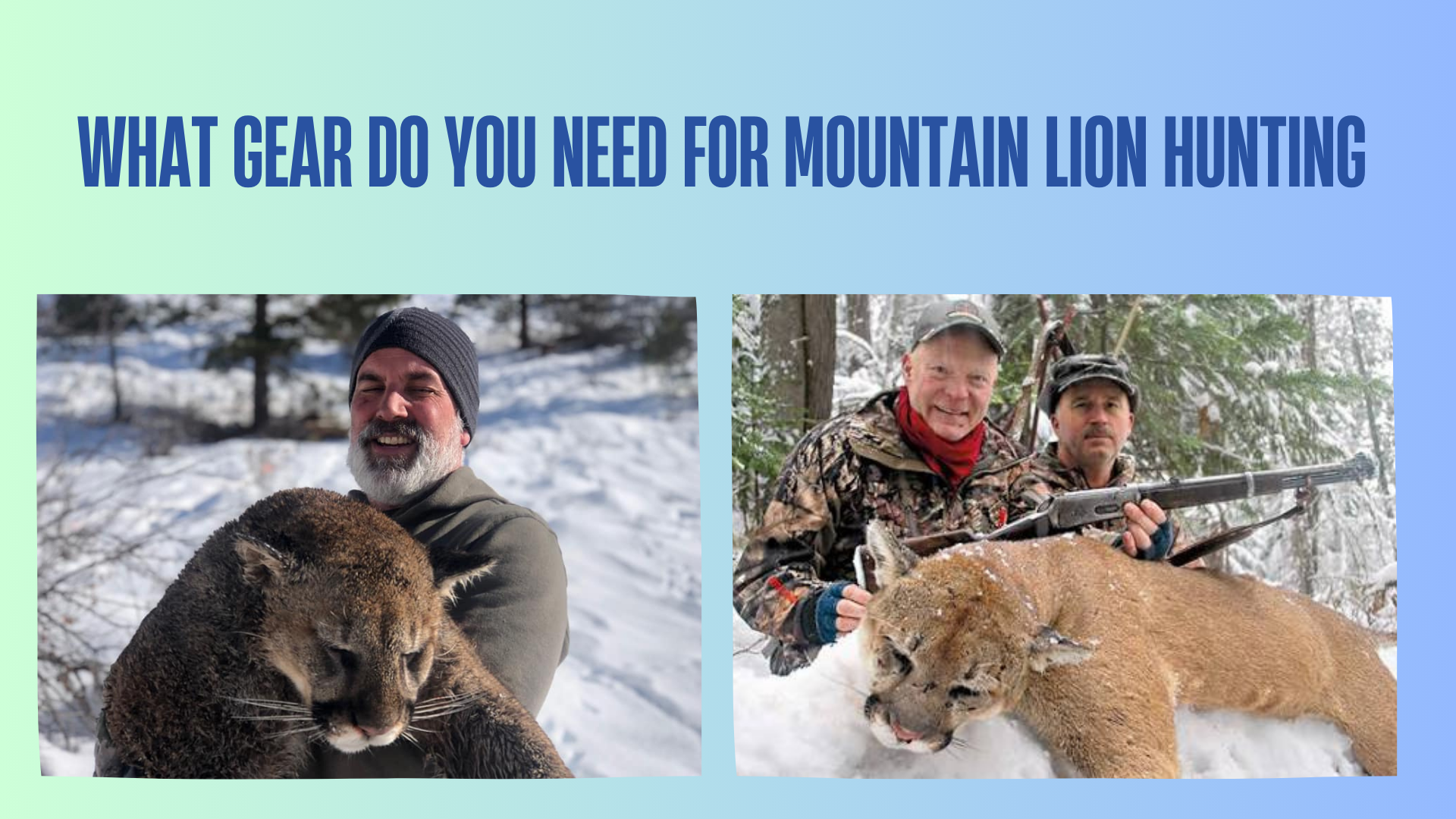

Mountain lion hunting requires equipment for much more than taking a shot. Hunters may travel through steep, snowy, rocky, or heavily forested country while trying to locate tracks, remain oriented, communicate without cellular service, and comply with species-specific reporting rules.
The right setup depends heavily on location and hunting method. Some jurisdictions permit hunting with trained hounds, while others restrict or prohibit dogs. Rules for electronic calls, legal weapons, night hunting, quotas, protected animals, evidence of sex, and mandatory inspections also vary. Always check the current regulations for your exact hunt area before selecting equipment.
Quick Answer
What gear do you need for mountain lion hunting? Start with a valid license and tag, a legal and familiar firearm or bow, appropriate ammunition or arrows, binoculars, navigation equipment, emergency communication, layered clothing, sturdy boots, a first-aid and survival kit, and field-care supplies. Snow-country hunts may also require gaiters, traction devices, insulated gear, and snowshoes. If hunting with hounds is legal, you need properly conditioned dogs, tracking collars, leads, water, food, protective equipment, and canine first-aid supplies.
Mountain Lion Hunting Gear Checklist
| Category | Recommended Gear | Priority |
|---|---|---|
| Licenses and regulations | Hunting license, mountain lion tag, identification, current regulations, land permission | Essential |
| Legal hunting equipment | Legal firearm or bow, suitable ammunition or arrows, sling or case | Essential |
| Optics | Binoculars, lens cloth, optional rangefinder | Essential to useful |
| Navigation | Paper map, compass, GPS or offline mapping application, spare power | Essential |
| Communication | Phone, satellite messenger or personal locator beacon, radio where legal | Essential in remote areas |
| Clothing | Base layers, insulation, weatherproof shell, gloves, hat, required hunter orange | Essential |
| Footwear | Supportive waterproof boots, gaiters, spare socks, optional traction devices | Essential |
| Emergency equipment | First-aid kit, shelter, fire starter, headlamp, food, water, signaling equipment | Essential |
| Field care | Knife, gloves, game bag, cord, tag-securing supplies | Essential after harvest |
| Hound equipment | Tracking collars, leads, canine water, food, protective vest, canine first-aid kit | Only where lawful and applicable |
Check Regulations Before Packing Equipment
Mountain lion regulations can be unusually detailed and may change during the season. A license alone does not necessarily confirm that a particular unit remains open. Some areas use quotas or harvest limits and can close after those limits are reached.
Verify the following through the responsible wildlife agency:
- Season dates and legal hunting hours
- Hunt-unit boundaries and access restrictions
- License, tag, permit, and hunter-education requirements
- Whether a separate mountain lion examination or certification is required
- Legal firearms, archery equipment, and ammunition
- Whether hounds may be used and when
- Rules for electronic or recorded calls
- Trail-camera and electronic communication restrictions
- Current quota or unit-closure status
- Protected females, dependent young, or other animal restrictions
- Tagging, evidence-of-sex, reporting, inspection, and sealing requirements
- Meat, hide, skull, and carcass-salvage rules
Requirements differ substantially. For example, Colorado Parks and Wildlife requires mountain lion hunters to obtain the applicable certification, while other states use different education or licensing systems.
Legal Firearm or Archery Equipment
Carry a lawful hunting firearm, bow, or other permitted method that you can operate safely and accurately. Choose equipment according to the current regulations rather than relying on a generic caliber or draw-weight recommendation.
A basic hunting setup may include:
- A properly maintained legal firearm or bow
- Appropriate lawful hunting ammunition, arrows, or bolts
- A secure sling, bow carrier, or protective case
- A properly mounted and confirmed sight or optic
- A small equipment-specific maintenance kit
- A safe means of protecting the muzzle, action, strings, and sight from snow or debris
Confirm point of impact or bow setup before the hunt using the same equipment you will carry. Practice from realistic field positions and establish a personal maximum range based on demonstrated accuracy. Never fire without positively identifying the animal and confirming a safe background.
Binoculars and Rangefinding Equipment
Binoculars let you inspect tracks, terrain, trees, rock ledges, and distant animals without pointing a firearm. Carry them in a chest harness or secure case where they are protected but quickly accessible.
A rangefinder can be helpful in open or steep terrain where angles and distance are difficult to judge. A spotting scope may benefit hunters glassing large canyon systems, but it may add unnecessary weight during a mobile, track-based hunt.
Pack a lens cloth and consider anti-fog protection suitable for the optic. Moving between cold outdoor air and a warm vehicle can create condensation.
Navigation Equipment
Mountain lion habitat can include steep ridges, drainage systems, logging roads, deep timber, and snow-covered landmarks. Carry redundant navigation rather than relying on a single phone.
- Printed topographic and hunt-unit maps in waterproof protection
- A compass and the knowledge to use it
- A GPS receiver or phone with offline maps
- A protected power bank or spare batteries
- Marked property lines and motorized-access boundaries
- Saved locations for the vehicle, camp, trailheads, and emergency exits
Download digital maps before leaving home and test them with cellular service disabled. Do not follow dogs, tracks, or roads across private property or closed boundaries without authorization.
Emergency Communication and Trip Planning
Cellular service is often unreliable in mountain terrain. A satellite messenger or personal locator beacon can provide an important emergency backup. Learn how the device works, confirm the subscription if required, and test it according to the manufacturer’s instructions.
Leave a trip plan with a responsible person that includes:
- Your hunt area and planned route
- Vehicle description and parking location
- Names of everyone in the group
- Communication devices and contact details
- Expected return time
- The time at which emergency assistance should be requested
Radios can help a hunting party or hound handlers communicate, but local law may regulate how electronic communication is used during a hunt. Use communication devices for safety and only for hunting activities specifically permitted by regulation.
Clothing for Changing Mountain Conditions
Mountain lion seasons often occur during cold or variable weather. Pack layers that control moisture while allowing you to adjust between strenuous climbing and long periods of slow travel or waiting.
Base Layer
Choose a moisture-managing layer that remains comfortable during sustained movement. Avoid depending on cotton in cold, wet conditions because it retains moisture.
Insulating Layers
A fleece, wool, or synthetic mid layer provides adjustable warmth. Carry an additional insulating jacket for stops, emergencies, or falling temperatures.
Weatherproof Outer Layer
Use a wind-resistant, waterproof or highly water-resistant shell appropriate for the forecast. It should permit safe movement without obstructing access to essential equipment.
Hands, Head, and Face
Carry warm gloves, a lighter pair for tasks requiring dexterity, a warm hat, and protection from sun and wind. Keep a dry backup pair of gloves in waterproof storage.
Legally Required Visibility Clothing
Hunter-orange or other visibility requirements vary by state, season, weapon, and overlapping hunts. Wear the amount and configuration required by current law.
Boots and Snow-Travel Equipment
Supportive, weather-resistant boots are essential for rocky slopes, snow, mud, and fallen timber. Break them in before the season and match insulation to expected temperatures and activity.
Depending on conditions, also consider:
- Gaiters for snow, mud, and debris
- Dry spare socks
- Traction devices compatible with your boots
- Snowshoes for deep or soft snow
- Trekking poles for balance on steep ground
- Waterproof storage for backup footwear items
Traction products and snowshoes require practice. Steep slopes, ice, avalanche terrain, and unstable snow demand skills that equipment alone cannot provide.
Daypack and Load Organization
Select a pack that fits securely, supports the expected load, and does not interfere with firearm or bow handling. A moderate daypack may be enough for vehicle-supported hunting, while remote hunts require more emergency and overnight capacity.
Organize frequently needed items near the top or in accessible pockets:
- Navigation tools
- Communication device
- Headlamp
- Rain shell
- Gloves and hat
- Water and food
- First-aid kit
- Tag and regulations
Use waterproof bags for insulation, electronics, fire-starting supplies, documents, and emergency gear.
First-Aid and Survival Gear
A basic first-aid kit should reflect trip length, party size, and distance from professional medical care. Carry wound dressings, gauze, tape, blister treatment, disposable gloves, and personally required medication. Take wilderness first-aid training so you can use the supplies correctly.
Your survival kit should include:
- Headlamp and backup light
- Spare batteries
- Multiple fire-starting methods
- Emergency bivy, tarp, or compact shelter
- Whistle and signal mirror
- Repair tape and strong cord
- Extra high-energy food
- Water container and treatment method
- Compact insulating blanket
Keep critical signaling, fire-starting, and navigation items on your body or in a small kit that remains with you if separated from your main pack.
Food and Water
Carry enough food and water for the planned hunt plus a reasonable delay. Cold weather does not eliminate dehydration risk, and hunters may drink less than they need while tracking or climbing.
If relying on natural water sources, carry a filtration or purification method appropriate to the area and a backup treatment option. Do not assume that clear mountain water is safe without treatment.
Track-Reading and Field Observation Tools
Fresh snow can make tracks easier to locate, but it also increases travel hazards. Useful track-observation items include:
- Binoculars
- A small ruler or scale for lawful documentation and personal notes
- A weather-resistant notebook and pencil
- Offline maps for recording track locations
- A camera or phone used without disturbing the site
- A compact flashlight for examining tracks in shadow
Avoid treating track size alone as proof of an animal’s sex or age. Learn identification through an approved hunter-education course and follow all rules protecting females with dependent young.
Calling Equipment
Some hunters carry a legal hand-operated predator call. Electronic or recorded calls may be allowed in certain jurisdictions and prohibited in others. Confirm the rule for mountain lions specifically; a device allowed for an unprotected predator may not be legal for a regulated game species.
Calling equipment is optional and does not guarantee an animal will respond. Hunters using a call must maintain awareness of their surroundings and positively identify any animal before considering a shot.
Equipment for Hunting With Hounds
Only use hounds where and when the practice is legal. Regulations may control dates, permits, pursuit-only seasons, handler participation, number of dogs, electronic tracking, and where dogs may travel.
A responsible hound setup may include:
- Reliable tracking collars and a charged receiver
- Spare batteries or a protected charging system
- Leads, collars, and identification tags
- High-visibility dog equipment where appropriate
- Water and portable bowls
- Food suitable for the duration and exertion
- A canine first-aid kit
- Protective vest or chest protection suited to the terrain
- Paw-care supplies and protective boots when appropriate
- Insulated dog transport equipment
- A plan for recovering a lost or injured dog
Tracking technology does not replace attentive handling. Stop the pursuit when weather, roads, private-property boundaries, exhaustion, injury, or other conditions make continuation unsafe or unlawful.
Field-Care and Harvest-Reporting Gear
After a lawful harvest, tagging, reporting, inspection, and carcass-handling requirements may apply immediately. Pack supplies that let you comply without damaging biological evidence officials need to examine.
- License and physical or downloaded electronic tag
- A durable knife
- Disposable gloves
- A clean breathable game bag
- Strong cord
- Headlamp and spare batteries
- A clean tarp or ground sheet
- Cooler or other lawful transport arrangement at the vehicle
- Agency contact and inspection-location information
Do not cut, freeze, discard, or alter the skull, hide, proof of sex, or other required parts until you understand the inspection rules. For example, Arizona requires mountain lion harvest reporting and a physical inspection within specified periods. Other jurisdictions use different procedures.
Personal Safety Around Mountain Lions
Stay alert whenever following tracks or approaching an animal. Do not run from a live mountain lion. Maintain awareness, remain with companions when possible, and keep children and dogs controlled.
Bear spray may be a useful wildlife-defense option where legal. Carry it in an immediately accessible holster and learn its limitations and correct use. Idaho Fish and Game includes bear spray, a noise device, and a bright light among equipment people may consider in mountain lion country.
If a mountain lion attacks, wildlife agencies generally advise fighting back rather than playing dead. Contact the wildlife authority after any threatening encounter and obtain emergency care for injuries.
Optional Gear by Hunting Situation
| Situation | Useful Additional Gear | Main Consideration |
|---|---|---|
| Snow tracking | Gaiters, snowshoes, traction devices, insulated gloves, shovel | Cold exposure, snow depth, and route safety |
| Canyon or open-country glassing | Rangefinder, tripod, spotting scope, seat pad | Added weight versus viewing benefit |
| Remote backcountry | Satellite communication, emergency shelter, water treatment, extra food | Self-rescue and delayed return |
| Hound hunting | Tracking system, leads, dog water, canine first aid, dog protection | Legality, animal welfare, and boundary control |
| Vehicle-supported hunt | Recovery equipment, cooler, extra clothing, battery charger | Legal road access and safe storage |
| Guided hunt | Personal clothing, boots, documents, optics, guide-approved equipment | Confirm what the outfitter supplies |
Common Gear Mistakes to Avoid
Depending on Outdated Regulations
Mountain lion seasons can change through quotas and emergency closures. Check the official status immediately before hunting rather than relying on an old booklet or screenshot.
Assuming Hounds or Electronic Calls Are Always Legal
The legality of these methods varies substantially. Verify the species-specific rule for the unit, season, and date.
Relying Only on Cellular Navigation
Mountain terrain can block signals and drain batteries. Carry offline maps, a paper map, and a compass.
Wearing New Boots
Unbroken boots can cause blisters and shorten the hunt. Test the complete boot, sock, gaiter, and traction combination beforehand.
Leaving Emergency Gear in the Vehicle
A survival kit cannot help if unexpected conditions prevent you from returning. Carry essential shelter, fire, signaling, food, and navigation equipment.
Pointing a Rifle Scope to Identify an Animal
Use binoculars for observation. A firearm must never be used as a general viewing tool.
Ignoring Dog Safety
Hounds need water, conditioning, first-aid supplies, monitoring, and a recovery plan. A tracking collar does not make every route or weather condition safe.
Failing to Plan for Inspection
Know which animal parts must remain intact or unfrozen and where the official inspection will occur. Improper preparation can interfere with mandatory biological checks.
Final Pre-Hunt Checklist
- License, tag, certification, and hunter education verified
- Unit boundaries, land access, season, and quota status confirmed
- Hound, call, trail-camera, and electronic-device rules checked
- Legal hunting equipment inspected and zero confirmed
- Personal ethical shooting range established through practice
- Binoculars and optional rangefinder packed
- Offline map, paper map, compass, and backup power packed
- Emergency communicator tested
- Trip plan left with a trusted person
- Weatherproof clothing, boots, and snow equipment tested
- First-aid and survival equipment packed
- Food, water, and water treatment prepared
- Field-care and tagging supplies packed
- Reporting and inspection procedures understood
- Hound equipment and canine emergency plan prepared if applicable
Final Answer
What gear do you need for mountain lion hunting? The essential setup includes current licenses and tags, a lawful and familiar hunting method, binoculars, redundant navigation, emergency communication, weatherproof layers, supportive boots, survival supplies, and field-care equipment. Add snow-travel equipment or a complete canine gear system when conditions and lawful hunting methods require them. Because mountain lion rules can change by unit and quota, confirm season status and every equipment restriction with the official wildlife agency immediately before hunting.
Frequently Asked Questions
1. Do you need a special tag to hunt mountain lions?
Most jurisdictions that permit mountain lion hunting require a species-specific license, tag, permit, or endorsement. The exact system varies, so check the current official regulations.
2. Is mountain lion hunting legal everywhere?
No. Mountain lion hunting is prohibited in some jurisdictions and regulated differently in others. Never assume that a neighboring state’s rules apply.
3. Do mountain lion hunters need special education?
Some jurisdictions require hunter education, a species-identification course, or a mountain lion examination. Even where it is optional, species-specific training is valuable.
4. What firearm is used for mountain lion hunting?
Hunters should use a legal, reliable firearm they can handle accurately with suitable lawful ammunition. Regulations determine which firearm types and ammunition are permitted.
5. Can you hunt mountain lions with a bow?
Archery hunting is allowed in some seasons and jurisdictions. Check legal bow, arrow, broadhead, licensing, and season requirements before hunting.
6. How much ammunition should you carry?
Carry a practical amount of lawful hunting ammunition without unnecessary weight. Store and transport it safely and use the same load with which the firearm was zeroed.
7. Do you need a scope?
A scope can support accurate shooting, but it is not a substitute for binoculars. Select an optic suitable for the terrain and practice with it before the season.
8. Are binoculars necessary?
Yes. Binoculars provide a safe way to identify animals and examine terrain without pointing a firearm.
9. Is a rangefinder useful?
A rangefinder can help in steep or open country where distance is difficult to estimate. It is especially useful for archery but does not extend a hunter’s ethical ability.
10. Do you need snowshoes?
Snowshoes may be useful in deep, soft snow. Conditions vary, so check snow depth and practice using them with your hunting pack before the trip.
11. What boots are best?
Choose broken-in, supportive, weather-resistant boots with traction and insulation appropriate to the expected conditions. Fit is more important than brand.
12. Should mountain lion hunters wear camouflage?
Camouflage is optional in many situations. Safe movement, wind awareness, appropriate clothing, and legally required visibility garments are more important.
13. Is hunter orange required?
Requirements vary by location, season, and overlapping hunts. Consult the current regulations for the exact amount and placement required.
14. Can electronic calls be used?
Electronic-call rules vary by jurisdiction and species. Confirm that the device and its intended use are legal for mountain lions in your hunt area.
15. Can hand-operated calls be used?
They may be legal in places where electronic calls are restricted, but this is not universal. Check the species-specific regulation.
16. Can dogs be used to hunt mountain lions?
Some jurisdictions allow trained hounds during designated periods, while others restrict or prohibit them. Additional licensing and pursuit rules may apply.
17. What equipment do hunting hounds need?
Common equipment includes legal tracking collars, leads, identification, water, food, protective gear, paw care, and a canine first-aid kit.
18. Are GPS dog collars always legal?
No. Rules governing electronic tracking and how the information may be used vary. Confirm current regulations before placing a tracking collar into service.
19. Do trail cameras help with mountain lion hunting?
They may provide information about wildlife activity, but their placement and use can be restricted on certain lands or during certain seasons.
20. Can radios be used while hunting?
Radios may be useful for safety, but some jurisdictions restrict electronic communication used to locate or pursue animals. Follow the applicable rule.
21. Is a cellphone enough for navigation?
No. Downloaded maps may work without service, but phones can fail or lose power. Carry a paper map and compass as backups.
22. Do I need a satellite messenger?
It is strongly worth considering in remote terrain without dependable cellular coverage. Test the device and understand its emergency functions before leaving.
23. What should be in the first-aid kit?
Carry wound dressings, gauze, tape, blister treatment, gloves, and personally required medications. Adapt the kit to remoteness, weather, and group size.
24. Should I carry bear spray?
Bear spray may be a practical wildlife-defense tool where lawful. Carry it accessibly and learn correct use, storage, and transportation requirements.
25. What emergency shelter should I bring?
A compact bivy, tarp, or emergency shelter can provide protection after an injury, navigation problem, or unexpected overnight delay.
26. How much water is needed?
Water needs depend on temperature, exertion, elevation, and trip duration. Carry adequate water and a treatment system if you expect to refill from natural sources.
27. What gear is needed for snow tracking?
Useful items include waterproof boots, gaiters, traction devices, snowshoes where necessary, spare gloves, extra insulation, navigation, and emergency shelter.
28. Are trekking poles useful?
They can improve balance on steep, snowy, or loose terrain. Ensure they do not interfere with safe handling of other equipment.
29. What knife is needed after a harvest?
Carry a sharp, controllable hunting knife and disposable gloves. Avoid altering parts required for inspection, sealing, or proof of sex.
30. Do you need a game bag?
A clean, breathable game bag helps protect salvaged meat where meat retention is required or desired. Local salvage regulations determine exactly what must be retained.
31. Must a harvested mountain lion be reported?
Reporting and physical inspection are mandatory in many jurisdictions. Deadlines and required animal parts vary, so review the current procedure before hunting.
32. Can the skull or hide be frozen before inspection?
Not necessarily. Some agencies require an unfrozen skull or accessible evidence for inspection. Follow the exact instructions issued by the local wildlife agency.
33. Can female mountain lions be harvested?
Rules vary, but females accompanied by dependent young are commonly protected. Hunters must learn reliable identification and follow all sex-specific or quota restrictions.
34. Should you check quotas before leaving home?
Yes. Check immediately before hunting and again as required during the trip because a unit may close when its harvest limit is reached.
35. What gear should remain on your body?
Keep essential navigation, communication, signaling, fire-starting, and emergency items with you rather than leaving everything in a vehicle or main pack.
36. Can you hunt mountain lions alone?
Solo hunting may be legal, but remote terrain and winter conditions increase risk. Carefully assess experience, communication, route, weather, and emergency capability.
37. What should you ask a guide or outfitter?
Ask what equipment is supplied, whether hounds are used, how dogs are managed, what licenses you need, and how reporting and inspection will be completed.
38. How should optics be protected from snow?
Use suitable lens covers, a chest harness or protective case, and a clean lens cloth. Avoid wiping gritty debris across coated lenses.
39. What is the most common equipment mistake?
Relying on a phone, outdated regulations, or untested winter gear creates preventable problems. Prepare redundant systems and test them before the hunt.
40. When should you stop a hunt?
Stop when weather, injury, exhaustion, lost dogs, unsafe snow, poor visibility, legal boundaries, equipment failure, or a closed quota makes continuation unsafe or unlawful.
Read more: