
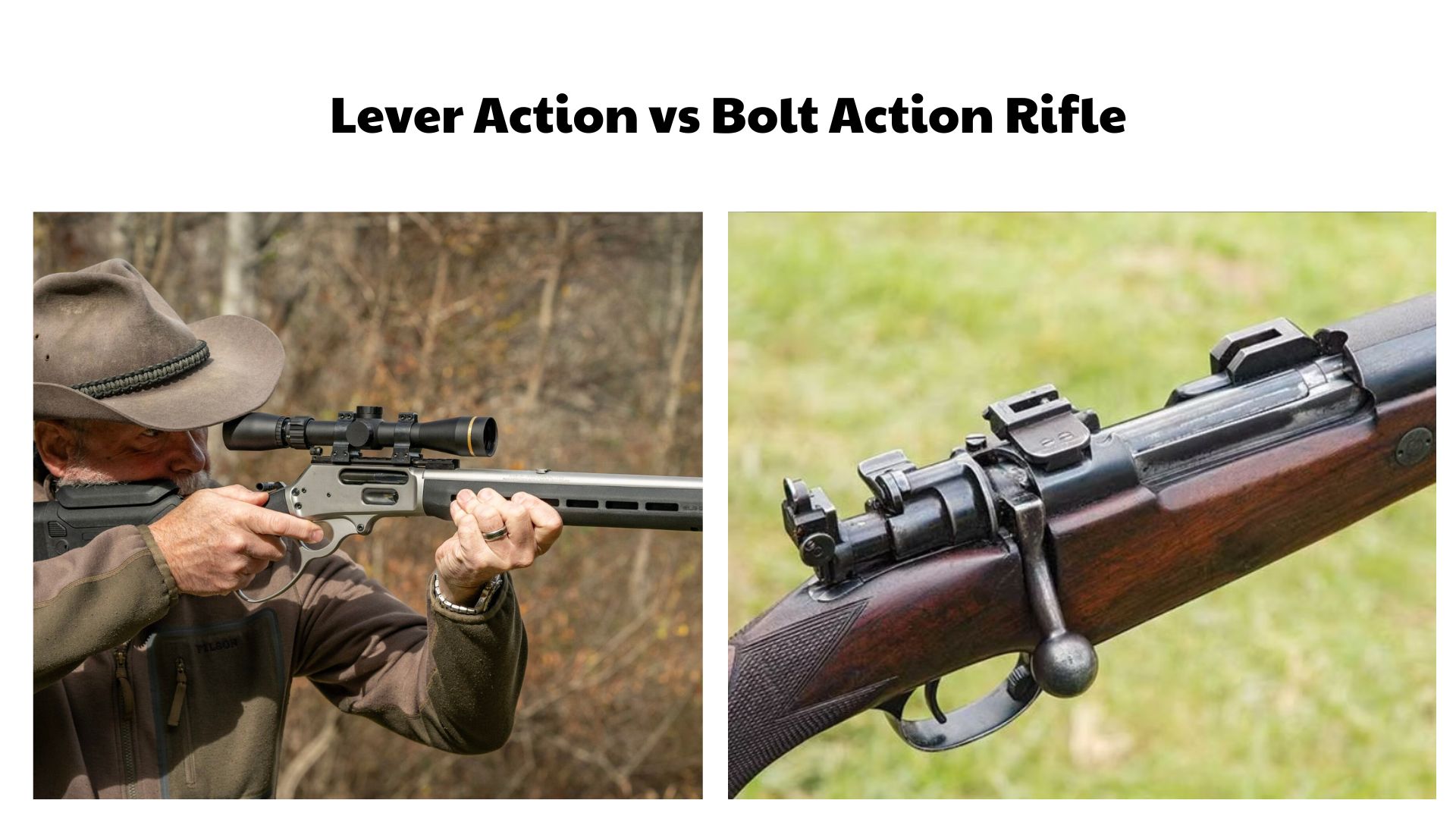

Lever action and bolt action rifles are two of the most iconic firearm platforms in history, widely used in hunting, sport shooting, and survival applications. Both designs have stood the test of time due to their reliability, mechanical simplicity, and consistent real-world effectiveness.
Despite being developed in different eras and for different purposes, both rifle types remain highly popular among modern shooters. Lever actions are often associated with fast, close-range shooting and traditional hunting styles, while bolt actions are known for precision and long-range accuracy.
Understanding the differences between Lever Action vs Bolt Action rifles is essential for choosing the right platform based on factors such as speed, accuracy, terrain type, and hunting or shooting style.
History and Development of Lever Action and Bolt Action Rifles
Origins of Lever Action Rifles
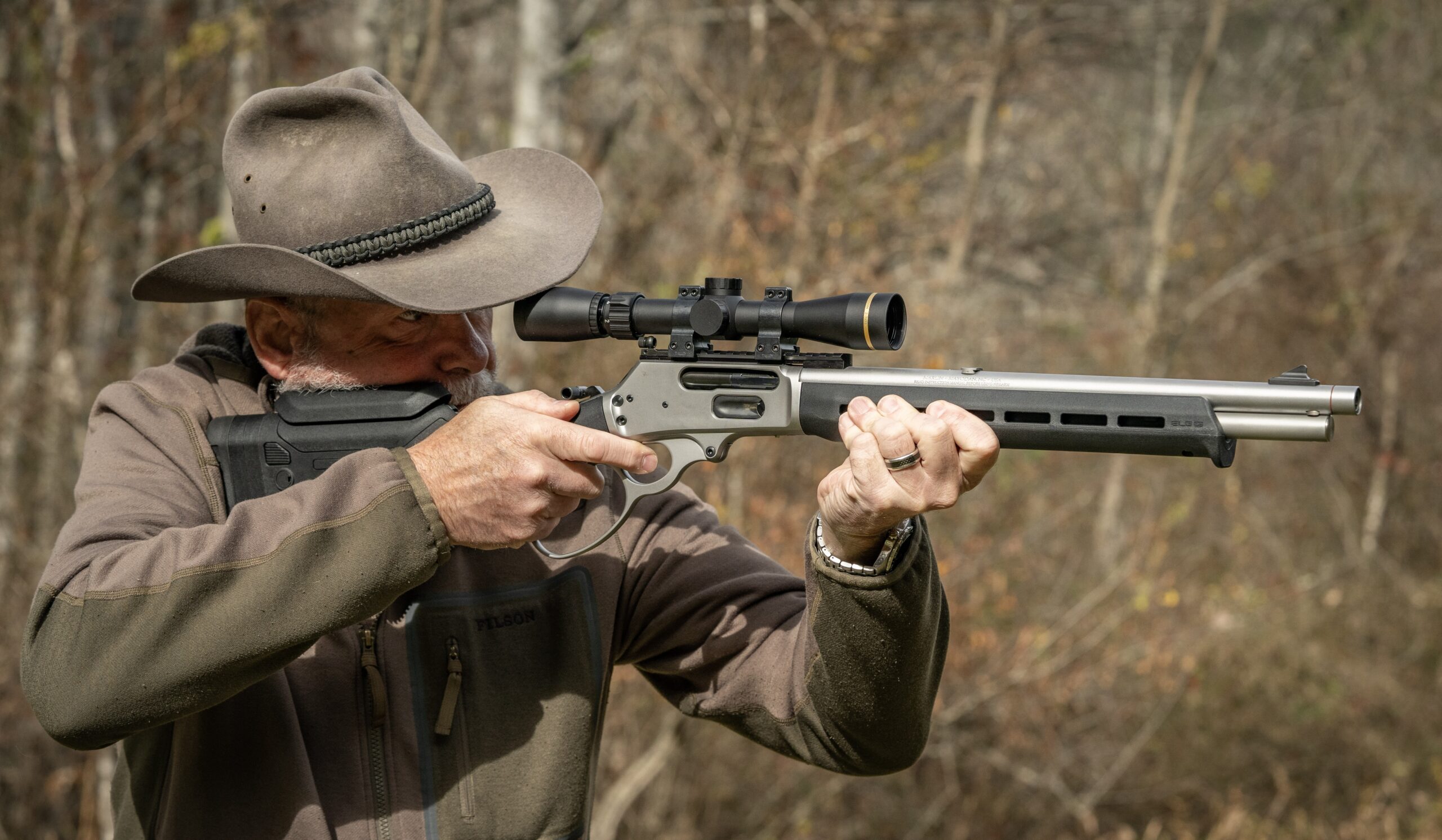
Lever action rifles were developed in the 19th century as one of the first successful repeating rifle systems. Their ability to fire multiple shots without reloading each round individually represented a major advancement in firearm technology at the time.
They became especially popular during the American frontier era, where speed and reliability were critical in hunting and self-defense situations. Iconic designs such as Winchester lever action rifles helped establish their legendary status.
These rifles were specifically designed for fast follow-up shots at close to mid-range distances, making them highly effective in dynamic shooting environments.
Origins of Bolt Action Rifles
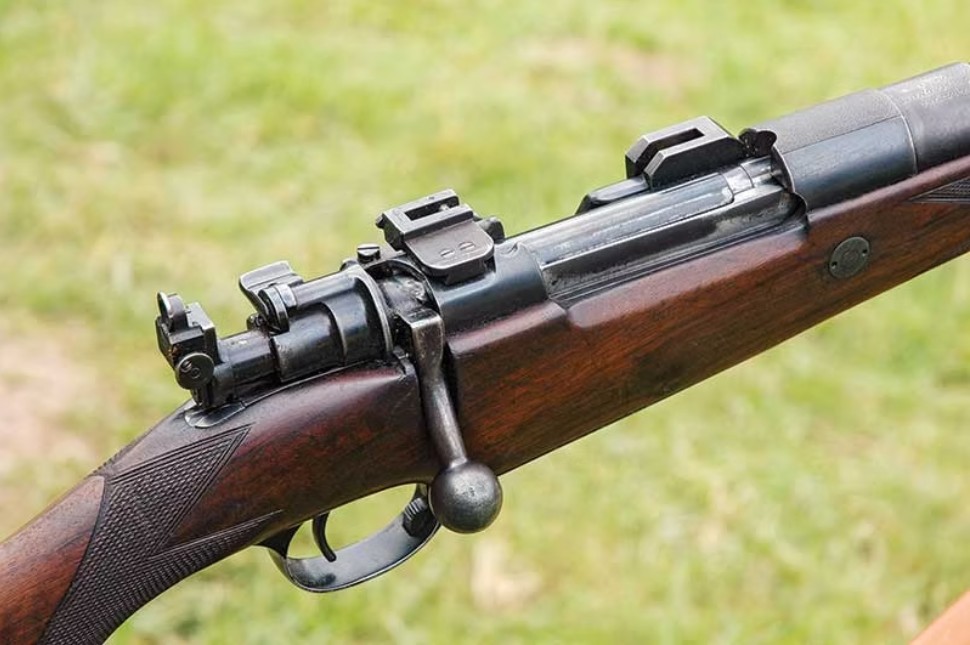
Bolt action rifles emerged in the late 19th century and quickly became the standard for military and precision hunting applications around the world. Their mechanical simplicity and strong locking system made them extremely reliable and accurate.
They were widely adopted by militaries for decades due to their durability, ease of production, and effectiveness in combat scenarios. Over time, bolt action designs became the foundation for many modern hunting rifles.
Well-known examples include Mauser-based systems and modern bolt action rifles used today in hunting and precision shooting disciplines.
Evolution Into Modern Hunting Platforms
Today, lever action rifles continue to be favored in traditional hunting environments, especially in dense forests and brush-heavy terrain where quick handling is important.
Bolt action rifles, on the other hand, dominate the world of precision hunting and long-range shooting due to their superior accuracy and ballistic performance.
Both platforms have evolved with modern materials, improved manufacturing processes, and enhanced optics compatibility, ensuring their continued relevance in contemporary shooting sports.
Design and Mechanical Differences
Lever Action Mechanism
Lever action rifles operate using a lever located beneath the trigger guard. By moving the lever, the shooter ejects a spent cartridge and chambers a new round in a single fluid motion.
This mechanism allows for relatively fast follow-up shots, making it particularly effective in situations where quick target re-engagement is required at close range.
Bolt Action Mechanism
Bolt action rifles function by manually lifting, pulling back, and pushing forward a bolt handle to cycle the action. This process chambers a new round and locks it securely into place.
The strong locking system provides excellent pressure tolerance and contributes significantly to the platform’s reputation for precision and controlled firing.
Structural Strength Comparison
Bolt action rifles generally offer a stronger lock-up system, allowing them to handle higher-pressure cartridges and deliver more consistent performance under heavy use.
Lever action rifles, while reliable, tend to have more mechanical complexity and often use tubular or box magazine systems that can influence ammunition selection and overall durability.
These structural differences directly impact how each platform performs under different shooting conditions and cartridge types.
Accuracy and Performance Comparison
Bolt Action Accuracy Advantages
Bolt action rifles are widely regarded as the superior platform for accuracy due to their rigid locking mechanism and minimal internal movement during firing.
This stability allows for highly consistent shot placement, making bolt actions ideal for long-range shooting and precision hunting applications.
Lever Action Accuracy Characteristics
Lever action rifles provide adequate accuracy for short to mid-range hunting scenarios, where extreme precision is less critical than speed and responsiveness.
However, the mechanical movement involved in cycling the lever can slightly reduce precision at longer distances compared to bolt action systems.
As a result, lever actions are typically optimized for fast target engagement rather than long-range precision shooting.
Real-World Shooting Performance
In real-world conditions, bolt action rifles excel in open terrain where long-distance shots are common and accuracy is the top priority.
Lever action rifles perform best in dense woods and brush environments where game may appear suddenly at close range, requiring quick follow-up shots.
Speed and Handling Differences
Lever Action Speed Advantage
Lever action rifles offer a significant speed advantage when it comes to follow-up shots. The lever cycling motion allows shooters to quickly chamber the next round with minimal disruption to their firing position.
This makes lever actions especially effective in fast-moving hunting scenarios and close-range engagements where reaction time is critical.
They are particularly popular in brush hunting environments where targets appear and disappear quickly.
Bolt Action Speed Limitations
Bolt action rifles are inherently slower to cycle due to the manual process of lifting, pulling, and pushing the bolt handle between shots.
This requires more deliberate shot placement and makes rapid target transitions more challenging compared to lever action systems.
While slower in follow-up speed, bolt actions compensate with superior accuracy and stability for each individual shot.
Reliability and Durability
Bolt Action Reliability
Bolt action rifles are widely regarded as one of the most reliable firearm platforms due to their extremely simple and robust mechanical design. With fewer moving parts during the firing cycle, there are fewer opportunities for mechanical failure.
This simplicity allows bolt action rifles to perform exceptionally well in extreme weather conditions, including rain, snow, dust, and harsh field environments where more complex systems may struggle.
Lever Action Reliability
Lever action rifles are generally reliable and have proven themselves over more than a century of use. However, their internal mechanism is more mechanically complex compared to bolt action systems.
They can be more sensitive to dirt, debris, or improper cycling technique, which may affect smooth operation in certain conditions. Despite this, lever actions remain widely trusted and respected in hunting communities worldwide.
Ammunition Types and Limitations
Lever Action Ammunition Considerations
Many traditional lever action rifles use tubular magazines, which impose limitations on bullet shape. For safety reasons, these rifles often require flat-nose or round-nose bullets to prevent primer detonation in the magazine.
Common calibers include .30-30 Winchester and similar cartridges, which are well-suited for medium game hunting at moderate distances.
Lever action ammunition typically produces moderate recoil and delivers effective terminal performance for deer, hogs, and other similar game species.
Bolt Action Ammunition Flexibility
Bolt action rifles support a much wider range of calibers, from small varmint rounds to high-powered magnum cartridges.
This flexibility makes them ideal for high-pressure, long-range shooting applications where ballistic performance is critical.
As a result, bolt actions are often the preferred choice for precision hunting and large game species requiring extended effective range and energy delivery.
Effective Range Comparison
Lever Action Effective Range
Lever action rifles are typically effective within 100–200 yards when used for ethical hunting. This range aligns well with their intended purpose in dense woodland environments.
Their design prioritizes speed and handling over extreme distance accuracy, making them best suited for close-range engagement scenarios.
Bolt Action Effective Range
Bolt action rifles offer significantly greater effective range, often exceeding 300–800+ yards depending on caliber, optics, and shooter skill.
This long-range capability makes them the dominant choice for precision hunting and open-terrain shooting where distance plays a major role in shot placement.
Hunting Applications
Lever Action for Brush and Woods Hunting
Lever action rifles are especially well-suited for dense forests and brush-heavy environments where quick target acquisition is essential.
Their lightweight design and fast cycling capability make them ideal for fast-moving game at short distances.
They are particularly popular for deer and hog hunting in thick terrain where visibility and engagement distance are limited.
Bolt Action for Open Terrain Hunting
Bolt action rifles excel in open fields, mountains, and long-range hunting environments where precision is critical.
They are commonly preferred for larger game such as elk and deer in wide-open landscapes where longer shots are required.
Their superior accuracy greatly improves ethical shot placement at extended distances.
Ergonomics and Shooting Experience
Lever Action Ergonomics
Lever action rifles provide a smooth and intuitive cycling motion that many shooters find natural and comfortable.
The fast lever operation allows for quick target reacquisition between shots, which is beneficial in dynamic hunting situations.
Many hunters also appreciate the traditional feel and historical design of lever action platforms.
Bolt Action Ergonomics
Bolt action rifles offer a very stable shooting platform with strong shoulder support, making them ideal for precision shooting.
However, they require deliberate cycling between shots, which slows down follow-up firing compared to lever actions.
This design is better suited for shooters who prioritize accuracy and controlled shot placement over rapid fire speed.
Customization and Optics Compatibility
Bolt Action Customization Strength
Bolt action rifles offer strong compatibility with modern optics, making them highly effective for precision shooting applications. Most bolt action platforms are designed to easily accommodate scopes, which significantly enhances long-range accuracy.
In addition, bolt actions support straightforward upgrades such as barrel changes, stock replacements, and trigger improvements. This has led to a strong aftermarket ecosystem, allowing shooters to fine-tune their rifles for specific hunting or precision roles.
Lever Action Customization Limits
Lever action rifles traditionally have more limited options for optics mounting due to their classic design and receiver structure. While iron sights remain effective, adding modern optics can sometimes require specialized mounts or modifications.
In recent years, some lever action models have become more modernized with side rails, receiver-mounted optics systems, and improved accessory compatibility. However, they still remain less modular compared to bolt action platforms.
Cost and Accessibility
Lever Action Cost Factors
Lever action rifles are generally priced in the mid-range category, depending on manufacturer, materials, and design features. Some classic or collectible models may carry premium pricing due to historical value and craftsmanship.
They are often considered accessible entry-level hunting rifles, especially for shooters who prefer traditional firearm designs and close-range hunting applications.
Bolt Action Cost Factors
Bolt action rifles cover a wide price spectrum, ranging from budget-friendly hunting rifles to high-end precision systems used in competitive shooting and long-range hunting.
Premium bolt action rifles can be more expensive due to precision engineering, high-quality barrels, and advanced manufacturing processes. However, they are often considered a strong long-term investment for serious precision shooters.
Pros and Cons Summary
Lever Action Advantages
Lever action rifles offer several key advantages:
Fast cycling and quick follow-up shots in close-range scenarios.
Lightweight and easy to handle in dense environments.
Well-suited for traditional and close-range hunting applications.
Lever Action Disadvantages
Despite their strengths, lever action rifles have some limitations:
Reduced long-range accuracy compared to bolt action systems.
Some models have ammunition restrictions due to magazine design.
Less compatibility with modern optics and accessories.
Bolt Action Advantages
Bolt action rifles provide strong performance benefits:
Superior accuracy and long-range shooting capability.
High reliability and mechanical durability.
Wide selection of calibers for different hunting and shooting needs.
Bolt Action Disadvantages
However, bolt action rifles also have trade-offs:
Slower rate of fire compared to lever action systems.
Less effective in fast-moving, close-range shooting scenarios.
Lever Action vs Bolt Action – Which Should You Choose?
Choose Lever Action If You Want
Lever action rifles are the better choice if you prioritize:
Fast shooting capability in dense woods or brush environments.
A lightweight, traditional hunting rifle with classic handling characteristics.
Strong performance in close-range game hunting situations.
Choose Bolt Action If You Want
Bolt action rifles are more suitable if you prefer:
Long-range precision shooting and maximum accuracy.
A highly powerful and consistent platform for big game hunting.
Versatility across a wide range of terrains and shooting conditions.
Final Verdict
Lever action rifles excel in speed, tradition, and close-range hunting efficiency, making them ideal for fast-paced environments and dense terrain.
Bolt action rifles excel in accuracy, power, and long-range capability, making them the preferred choice for precision shooting and open-terrain hunting.
Ultimately, the best choice between lever action and bolt action depends on the shooter’s environment, hunting style, and personal preference, as both platforms remain highly effective in their respective roles.
Lever Action vs Bolt Action Rifle – 55 Frequently Asked Questions (FAQ)
1. What is a lever action rifle?
A lever action rifle is a repeating firearm that uses a lever located beneath the trigger guard to cycle rounds. This mechanism allows the shooter to eject a spent cartridge and chamber a new one quickly. Lever actions are known for their fast follow-up shots and traditional design, making them popular in hunting and historical firearms culture.
2. What is a bolt action rifle?
A bolt action rifle uses a manually operated bolt handle to load, chamber, and eject cartridges. The shooter lifts, pulls, and pushes the bolt to cycle the weapon. This system is highly reliable and provides excellent locking strength, which is why it is widely used in hunting and precision shooting.
3. Which is better, lever action or bolt action?
Neither is universally better. Lever action rifles are better for fast shooting in close-range environments, while bolt action rifles are superior for long-range accuracy and precision. The best choice depends on the shooter’s purpose, terrain, and shooting style.
4. Why are bolt action rifles more accurate?
Bolt action rifles are more accurate because their locking system is extremely rigid, with very little movement during firing. This stability allows for consistent bullet placement and better long-range performance compared to lever action systems.
5. Are lever action rifles accurate?
Yes, lever action rifles are accurate enough for most hunting situations, especially within 100–200 yards. However, they are generally less precise than bolt action rifles at longer distances due to mechanical movement in the action.
6. What makes bolt actions better for long range?
Bolt action rifles handle high-pressure cartridges more efficiently and maintain better bullet stability over distance. Combined with optics and rigid construction, they excel in long-range precision shooting scenarios.
7. Why are lever actions faster to shoot?
Lever actions allow quick cycling using a single hand motion under the trigger guard. This enables faster follow-up shots compared to bolt actions, which require lifting and rotating the bolt between shots.
8. Are bolt actions slow?
Yes, bolt actions are slower than lever actions in terms of rate of fire, but this is intentional. They prioritize accuracy and control over speed.
9. Which rifle is better for beginners?
Both can be used by beginners, but bolt actions are often recommended because of their simplicity, accuracy, and predictable operation. Lever actions may require more practice to master smooth cycling.
10. Which rifle is easier to use?
Lever actions are easier for fast shooting, while bolt actions are easier for controlled precision shooting. Ease of use depends on the intended purpose rather than mechanical complexity alone.
11. Which rifle is more reliable?
Bolt action rifles are generally more reliable due to their simple design and strong lock-up system. Lever actions are also reliable but contain more moving parts that can be affected by dirt or improper handling.
12. Can lever actions fail?
Yes, lever actions can experience malfunctions if not properly maintained or if cycled incorrectly. However, modern lever action rifles are quite dependable when used properly.
13. Are bolt actions indestructible?
No firearm is indestructible, but bolt actions are extremely durable and perform well under harsh environmental conditions due to their simple mechanical design.
14. Which rifle is better for hunting deer?
Both are effective for deer hunting. Lever actions are ideal in dense woods at shorter ranges, while bolt actions are better for open terrain and longer shots.
15. What is the effective range of a lever action rifle?
Lever action rifles are typically effective within 100–200 yards for ethical hunting. Their design is optimized for shorter engagement distances.
16. What is the effective range of a bolt action rifle?
Bolt action rifles can be effective beyond 300–800 yards or more depending on caliber, optics, and shooter skill, making them ideal for long-range applications.
17. Which rifle has more recoil?
Recoil depends on caliber rather than action type, but bolt actions often use more powerful cartridges, which can result in higher recoil compared to typical lever action rounds.
18. Are lever actions low recoil?
Many lever action calibers like .30-30 Winchester produce moderate recoil, making them comfortable for most shooters.
19. Which rifle is more modern?
Bolt action rifles are generally more modern in terms of precision engineering and optics integration, though both platforms have modern variants.
20. Are lever actions outdated?
No, lever actions are not outdated. They remain popular for hunting, especially in brush environments where speed is important.
21. Which rifle is cheaper?
Both rifle types vary in price. Entry-level models of both can be affordable, but premium bolt action rifles tend to be more expensive due to precision manufacturing.
22. Why are bolt actions expensive?
High-end bolt actions require precision machining, high-quality barrels, and tight tolerances, which increase manufacturing costs.
23. Why are lever actions popular?
Lever actions are popular due to their fast cycling speed, classic design, and effectiveness in close-range hunting scenarios.
24. Can bolt actions be used in close range?
Yes, bolt actions can be used in close-range hunting, but they are slower to cycle compared to lever actions, making them less ideal in fast encounters.
25. Can lever actions be used long range?
Lever actions can reach medium distances, but they are not designed for precision long-range shooting like bolt actions.
26. Which rifle is better for survival?
Both can be effective in survival situations. Lever actions offer fast shooting, while bolt actions offer reliability and power over distance.
27. Which rifle is better for woods hunting?
Lever actions are typically better for woods hunting due to their quick handling and fast follow-up shots in dense terrain.
28. Which rifle is better for mountains?
Bolt actions are better for mountain hunting because they provide long-range precision needed in open, elevated terrain.
29. Which rifle is lighter?
Lever actions are often lighter and easier to carry in dense environments, although weight varies by model.
30. Which rifle is heavier?
Bolt actions can be heavier depending on barrel length and scope setups, especially precision models.
31. Which rifle is more durable in bad weather?
Bolt actions generally perform better in extreme weather due to their simple and sealed mechanical design.
32. Are lever actions weather resistant?
Yes, but they require more careful maintenance to ensure smooth cycling in dirty or wet conditions.
33. Which rifle is easier to clean?
Bolt actions are easier to clean due to fewer moving parts and simpler internal mechanisms.
34. Are lever actions hard to clean?
Not necessarily, but they can be more complex than bolt actions due to their lever and feeding systems.
35. Which rifle is more fun to shoot?
This is subjective, but many shooters enjoy lever actions for their smooth cycling and historical feel.
36. Which rifle is more precise?
Bolt actions are more precise due to rigid lock-up and minimal movement during firing.
37. Can lever actions use scopes?
Yes, many modern lever actions support scope mounts, though traditional models may have limited compatibility.
38. Are bolt actions good with scopes?
Yes, bolt actions are one of the best platforms for scopes due to their stability and accuracy.
39. Which rifle is better for beginners in hunting?
Bolt actions are often recommended for beginners due to their simplicity and accuracy.
40. Which rifle is better for experienced hunters?
Experienced hunters may choose based on terrain: lever actions for brush hunting and bolt actions for long-range hunting.
41. Do lever actions jam easily?
They do not jam easily when properly maintained, but they are more sensitive to improper cycling than bolt actions.
42. Do bolt actions jam?
Bolt actions rarely jam due to their simple and strong mechanical design.
43. Which rifle is more traditional?
Lever actions are considered more traditional due to their historical use in the American frontier era.
44. Which rifle is more modern in design?
Bolt actions are more modern in precision engineering and hunting optimization.
45. Which rifle is better for fast-moving targets?
Lever actions are better for fast-moving targets because of their quick cycling speed.
46. Which rifle is better for stationary targets?
Bolt actions are better for stationary or long-range targets due to higher accuracy.
47. Can lever actions handle magnum calibers?
Some modern lever actions can handle powerful calibers, but bolt actions are generally better suited for magnum cartridges.
48. Why are bolt actions used in sniper rifles?
Because of their extreme accuracy, stability, and ability to handle high-pressure cartridges effectively.
49. Can lever actions be tactical?
They can be used in tactical or defensive roles, but they are not commonly chosen for modern tactical applications.
50. Which rifle lasts longer?
Both can last a lifetime with proper care, but bolt actions tend to have longer service life due to simplicity.
51. Which rifle is more forgiving?
Bolt actions are more forgiving in harsh environments due to fewer moving parts.
52. Which rifle is better for beginners in shooting sports?
Bolt actions are typically better for learning precision shooting fundamentals.
53. Can lever actions compete in shooting sports?
Yes, lever actions are used in certain cowboy action shooting competitions and recreational shooting events.
54. What is the biggest advantage of lever action?
The biggest advantage is fast cycling speed combined with lightweight handling in close-range environments.
55. What is the biggest advantage of bolt action?
The biggest advantage is superior long-range accuracy and reliability under a wide range of conditions.
Read more: