
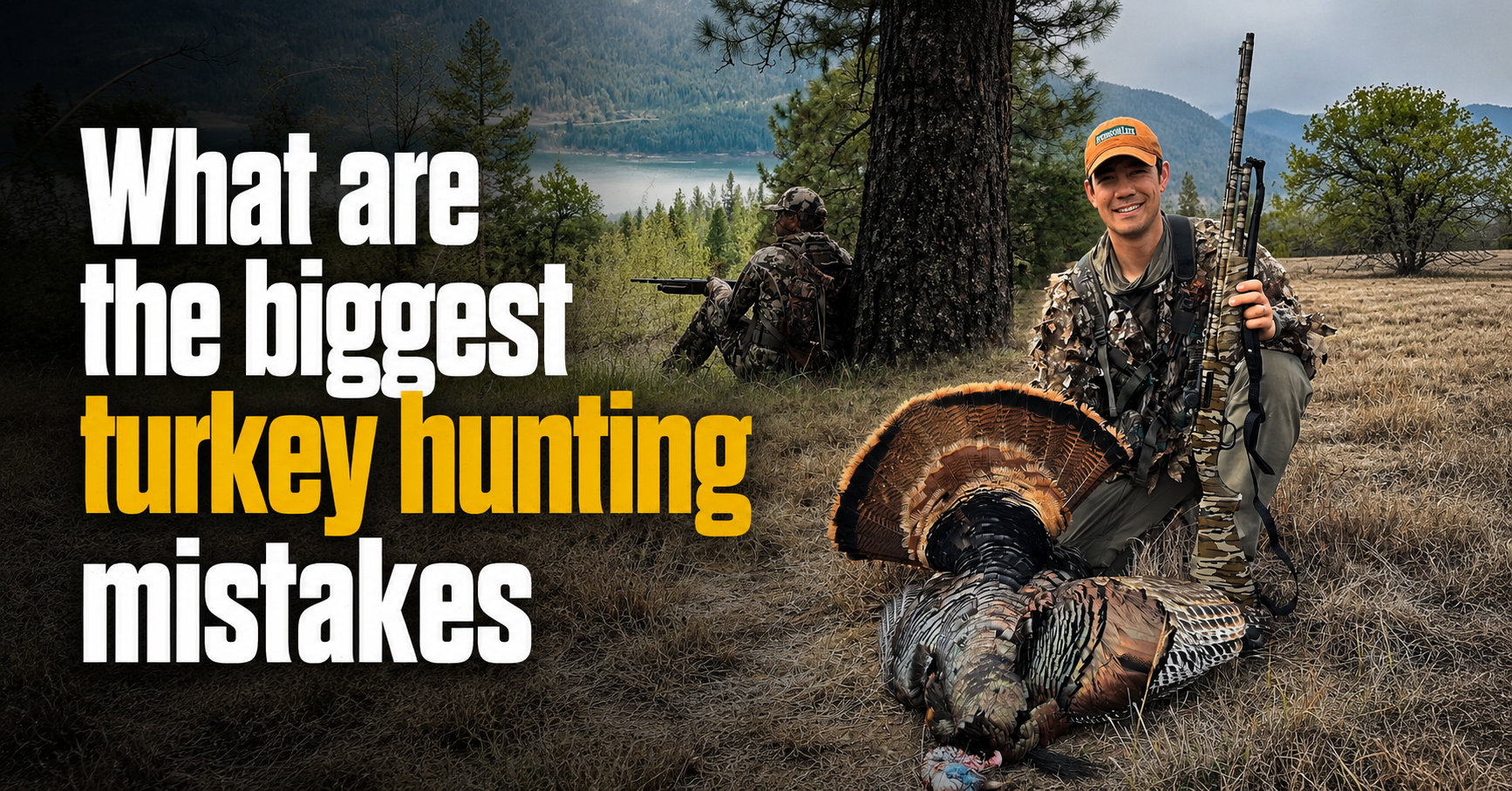

The biggest turkey hunting mistakes are not limited to calling too much or choosing the wrong tree. The most serious errors involve hunting without current legal information, failing to identify the complete target and background, stalking turkey sounds, mishandling a firearm or bow, and taking an opportunity beyond the hunter’s proven ability.
Other mistakes are less immediately dangerous but can ruin an otherwise promising hunt. Hunters may disturb a roost during their approach, call before finding a safe setup, misunderstand flock behavior, leave while a silent gobbler is approaching, expose a realistic decoy during transport, or enter the season without a recovery and meat-care plan.
This guide answers what are the biggest turkey hunting mistakes, explains why they happen, and provides practical corrections for spring and fall hunters. Because turkey laws vary by jurisdiction, official wildlife regulations and property rules always override general online guidance.
Quick Answer
The biggest turkey hunting mistakes are failing to check current regulations, skipping preseason practice, approaching a roost too closely, scouting too little, calling too frequently, calling before choosing a safe setup, moving when a bird is approaching, stalking turkey sounds, using realistic decoys carelessly, and firing before the legal bird and background are completely identified. Hunters also make preventable errors by stretching their effective range, crowding public land, crossing property boundaries, and failing to plan tagging, reporting, recovery, transport, and meat care. The best prevention is a written plan built around hunter education, recent scouting, conservative calling, safe target identification, practiced equipment, patience, and legal recovery.
Biggest Turkey Hunting Mistakes at a Glance
| Mistake | Why It Causes Problems | Better Approach |
|---|---|---|
| Using outdated regulations | Licenses, legal birds, season dates, equipment rules, limits, and reporting requirements can change | Read the current official regulations for the exact season and property |
| Skipping hunter education or mentoring | New hunters may misunderstand firearm handling, field safety, boundaries, and recovery duties | Complete an approved course and hunt with an ethical mentor when possible |
| Failing to pattern or practice | The firearm, bow, sight, choke, or ammunition may not perform as expected | Test the complete hunting system from realistic positions |
| Scouting too little | Calling cannot compensate for hunting where turkeys are not currently traveling | Confirm recent roosting, feeding, travel, and strutting activity |
| Getting too close to the roost | Birds may see, hear, or detect the approach and leave in another direction | Set up along a safe route without entering the roost area |
| Ignoring flock dynamics | A gobbler with hens may behave differently from a solitary bird | Observe which birds are together and adapt expectations |
| Overcalling | Constant calling may sound unnatural and reveal the hunter’s exact position | Call, listen, and allow time for a response |
| Calling before setting up | A nearby bird may answer or approach before the hunter is safely positioned | Choose a background and safe shooting direction before calling |
| Choosing a poor setup | Obstacles, poor visibility, human access, and weak concealment can prevent a safe opportunity | Use a substantial background with a clear, controlled field of view |
| Moving too much | Turkeys can detect sudden movement, particularly at close range | Arrange gear before calling and remain still |
| Leaving too soon | A turkey may stop gobbling but continue approaching silently | Wait and observe before making the equipment safe and relocating |
| Stalking turkey sounds | The sound may be another hunter using a call | Use stationary setups and never fire at sound or movement |
| Using fans or decoys carelessly | A person can be mistaken for a live turkey | Use realistic visual aids cautiously and transport them fully covered |
| Wearing unsafe colors | Red, white, blue, and black may resemble parts of a male turkey | Keep those colors concealed and follow visibility-clothing rules |
| Failing to identify the target | Partial movement, a fan, or color may conceal a person, decoy, or nonlegal bird | Identify the entire legal turkey and everything beyond it |
| Stretching the shot | Field conditions and excitement reduce practical accuracy | Remain within a conservative range established through practice |
| Crowding or trespassing | It creates unsafe encounters, conflicts, and possible violations | Respect access points, other hunters, maps, and property boundaries |
| Having no recovery or meat-care plan | Tagging, transport, reporting, cleanliness, and cooling may be delayed | Prepare legal and logistical steps before entering the field |
Important Safety and Legal Notice
Turkey regulations differ by country, state, province, wildlife-management unit, property, season, weapon type, age, residency, and permit category. In the United States, hunters generally need a hunting license issued by the state where the hunt occurs and must comply with the requirements associated with that license. Most states also require hunter education before a person can purchase a license, although age-based and mentored-hunting provisions vary.
Verify all of the following before hunting:
- Hunting license, turkey permit, tag, stamp, or quota authorization.
- Hunter-education or mentoring requirements.
- Exact season dates and legal hunting hours.
- The current definition of a legal turkey.
- Daily and seasonal harvest limits.
- Permitted firearms, bows, crossbows, or other hunting methods.
- Legal ammunition, shot size, shot material, broadhead, and magazine capacity.
- Calling, electronic-device, baiting, fan, and decoy restrictions.
- Public-property permits, access points, closures, and parking rules.
- Private-land permission and boundary-recovery procedures.
- Required fluorescent orange or other visibility clothing.
- Tagging, harvest reporting, transportation, and evidence-of-sex rules.
Four Basic Firearm-Safety Rules
- Treat every firearm as if it is loaded.
- Keep the muzzle pointed in a safe direction.
- Keep your finger outside the trigger guard until ready to shoot.
- Be certain of the target and what lies in front of and beyond it.
Positive target identification is particularly important during turkey hunting because hunters wear camouflage, remain concealed, and make turkey sounds that can attract other hunters. Reviews of turkey-hunting incidents identify failure to identify the target as a leading cause.
What Are the Biggest Turkey Hunting Mistakes?
1. Hunting Without Reading the Current Regulations
One of the most preventable mistakes is relying on last year’s regulation booklet, advice from another state, or an informal summary. Turkey season dates, permit systems, legal-bird definitions, hunting hours, weapon rules, reporting deadlines, and public-land procedures can change.
A rule that applies on private land may differ from a managed wildlife area. Spring and fall seasons may also have different legal birds, methods, hours, and visibility requirements.
How to Correct It
- Download the current official regulation document.
- Confirm the exact wildlife unit and property.
- Read the sections covering legal birds, weapons, ammunition, access, tagging, and reporting.
- Check emergency closures or rule changes shortly before hunting.
- Contact the wildlife agency when the wording is unclear.
2. Skipping Hunter Education or Going Alone Before You Are Ready
Hunter education covers firearm and archery safety, ethics, wildlife management, game laws, outdoor survival, and first aid. A course establishes a foundation, but a first-time hunter may still benefit from field guidance by an experienced and responsible mentor.
Going alone too early can magnify small problems. A new hunter may be uncertain about boundaries, loading procedures, decoy placement, changing weather, target identification, tagging, or transport.
How to Correct It
- Complete an approved hunter-education course.
- Attend agency or conservation-organization turkey workshops.
- Practice under qualified supervision.
- Ask a mentor to review the entire hunt plan.
- Do not hunt independently until you can operate all equipment safely.
3. Failing to Pattern the Shotgun or Practice With the Bow
A shotgun’s pattern can vary with the firearm, choke, load, shot material, sight, ammunition lot, and distance. Patterning determines whether the pattern is centered and where it becomes inadequate. A factory turkey choke or premium load does not remove the need for testing.
Bowhunters make a similar mistake when they practice only while standing in light clothing. Turkey opportunities often occur from a seated, kneeling, or blind position, where clothing and limited clearance affect movement.
How to Correct It
- Use a safe range with a suitable backstop.
- Wear eye and hearing protection.
- Test the exact shotgun, choke, sight, and hunting load.
- Check both close and farther realistic distances.
- Practice bow shots from the actual field position.
- Establish a conservative personal effective range before hunting.
4. Scouting Too Little or Scouting the Wrong Information
Calling does not create turkeys where none are currently traveling. A hunter may choose a beautiful clearing because it looks suitable while overlooking recent tracks, scratching, droppings, roost activity, feeding areas, and travel routes elsewhere.
Wild turkeys are ground foragers commonly associated with open woodland and interspersed clearings. They travel mainly by walking during daylight and fly into trees to roost at night. Current habitat use depends on local food, cover, disturbance, weather, and season.
How to Correct It
- Listen from a distance near dawn or dusk.
- Look for recent tracks, scratching, feathers, droppings, and dusting areas.
- Observe where birds travel after leaving the roost.
- Connect sign with food, roosting cover, and openings.
- Prepare more than one legal hunting location.
5. Approaching Too Close to the Roost
Hunters often assume that getting closer guarantees a better opportunity. Moving too near a roost can cause birds to see the hunter, hear equipment, detect a flashlight, or fly down in another direction.
The safest effective distance varies with terrain, vegetation, wind, light, and bird position. A fixed number cannot replace observation and judgment.
How to Correct It
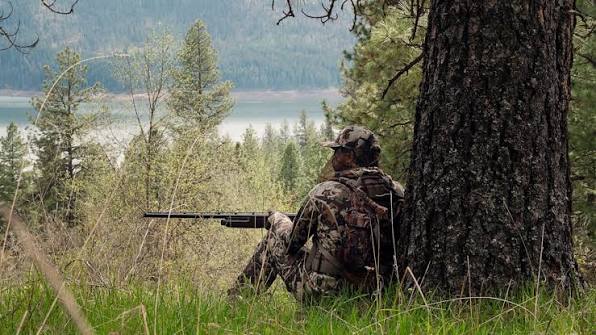
- Locate the general roost area without walking beneath it.
- Use terrain and vegetation to conceal the approach.
- Set up along a likely travel route rather than at the roost tree.
- Allow enough time to move slowly.
- Stop when continuing creates a meaningful risk of disturbing the birds.
6. Arriving Late and Rushing the Entry
Arriving late is not automatically fatal to a hunt, but rushing creates unnecessary noise, unsafe movement, and poor decision-making. A hunter may slam a vehicle door, cross an active feeding area, stumble through unfamiliar terrain, or call before reaching a safe position.
How to Correct It
- Prepare equipment the night before.
- Confirm parking and access in daylight.
- Allow extra time for gates, mud, darkness, and navigation.
- Use a light when necessary for safe travel.
- Choose a later low-impact setup rather than forcing a rushed roost hunt.
7. Ignoring Turkey Flock Dynamics
A common mistake is assuming that every gobbler should respond the same way. A solitary male, a subordinate bird, and a dominant gobbler surrounded by hens may react very differently to the same call.
Courting males gobble to attract females and communicate with competing males. Wild turkeys also maintain social hierarchies, so the relationships among birds can influence whether a gobbler approaches, remains with hens, or avoids another bird.
How to Correct It
- Observe how many birds are present.
- Notice whether hens are traveling toward or away from the gobbler.
- Listen for multiple males.
- Do not assume silence means the bird has left.
- Adapt calling and patience to the observed flock situation.
8. Calling Too Loudly or Too Often
Overcalling is one of the most frequently discussed turkey-hunting mistakes. Constant yelping can sound unnatural, reveal the hunter’s precise location, and prevent the hunter from hearing footsteps, drumming, wingbeats, or another person approaching.
Some birds respond to aggressive calling, while pressured or cautious birds may respond better to soft calls followed by silence. No calling sequence works in every situation.
How to Correct It
- Begin with a few soft yelps or clucks.
- Listen longer than you call.
- Reduce calling when a bird starts approaching.
- Allow silent birds time to arrive.
- Use calling to communicate, not to fill every quiet moment.
9. Calling Before Choosing a Safe Setup
A hunter may stop on a trail, make a quick call, and receive an immediate response from a nearby turkey. The hunter is then forced to move, sit against a poor background, or operate equipment while the bird is already approaching.
How to Correct It
Before calling, identify:
- A substantial tree, rock, bank, or other barrier behind you.
- The safe zone of fire.
- Roads, trails, buildings, vehicles, livestock, and property boundaries.
- Where the bird may appear.
- Where another hunter could approach.
- Whether the equipment can be operated from that position.
10. Choosing a Setup With Poor Visibility or Too Many Obstacles
A setup may offer excellent concealment but leave no unobstructed opportunity. Branches can prevent a shotgun swing, interfere with a bow, hide the background, or cause the hunter to make unnecessary movement.
Another poor setup points toward a road, trail, field entrance, house, parking area, or property boundary. A turkey may use those routes, but so may people.
How to Correct It
- Select the safe shooting direction before evaluating concealment.
- Choose a background wider than your shoulders and taller than your head.
- Maintain enough visibility to detect another hunter.
- Clear only minimal vegetation where legal.
- Pass when the turkey appears outside the predetermined safe zone.
11. Moving Too Much or Reaching for Gear After the Bird Appears
Wild turkeys have highly effective vision, and sudden movement can alert a bird at close range. Hunters often create the problem by leaving calls, binoculars, ammunition, or a rangefinder out of reach.
How to Correct It
- Arrange essential equipment before the first call.
- Use a seat cushion to reduce shifting.
- Keep reflective objects covered.
- Scan primarily with your eyes.
- Delay movement until the bird cannot see it and the direction remains safe.
12. Leaving Too Soon or Putting the Firearm Down
Turkeys do not always gobble as they approach. A bird may answer once, become silent, and continue toward the call. Hunters who immediately stand, unload noisily, or place the firearm beyond reach may reveal themselves to a bird already nearby.
How to Correct It
- Assume a responding bird may approach silently.
- Watch side and rear approaches.
- Wait a reasonable period based on terrain and sign.
- Make the equipment safe before moving.
- Stand slowly only after carefully checking the surroundings.
13. Stalking a Gobble, Yelp, or Other Turkey Sound
Stalking turkey sounds is one of the most dangerous mistakes because the source may be another hunter. Official safety guidance repeatedly instructs hunters not to stalk gobblers and to sit against a substantial tree or barrier while calling.
How to Correct It
- Never fire at sound or movement.
- Use scouting to select stationary setups.
- Assume another hunter may hear the same bird.
- Use binoculars rather than a weapon-mounted optic for identification.
- Leave when the situation cannot be understood safely.
14. Using Gobbler Decoys, Fans, or Reaping Tactics Carelessly
A realistic fan or male decoy can make the person behind it resemble a live turkey. The risk is especially serious on public land, near roads and trails, or anywhere another hunter could approach without being seen.
Local rules governing fans, decoys, and stalking methods vary. Even when a tactic is legal, legality does not automatically make it suitable for every property or situation.
How to Correct It
- Verify current decoy and fan regulations.
- Avoid crawling behind a fan on public land.
- Keep decoys away from roads, trails, and parking areas.
- Maintain visibility in all likely approach directions.
- Hunt without a realistic decoy when the safety risk is uncertain.
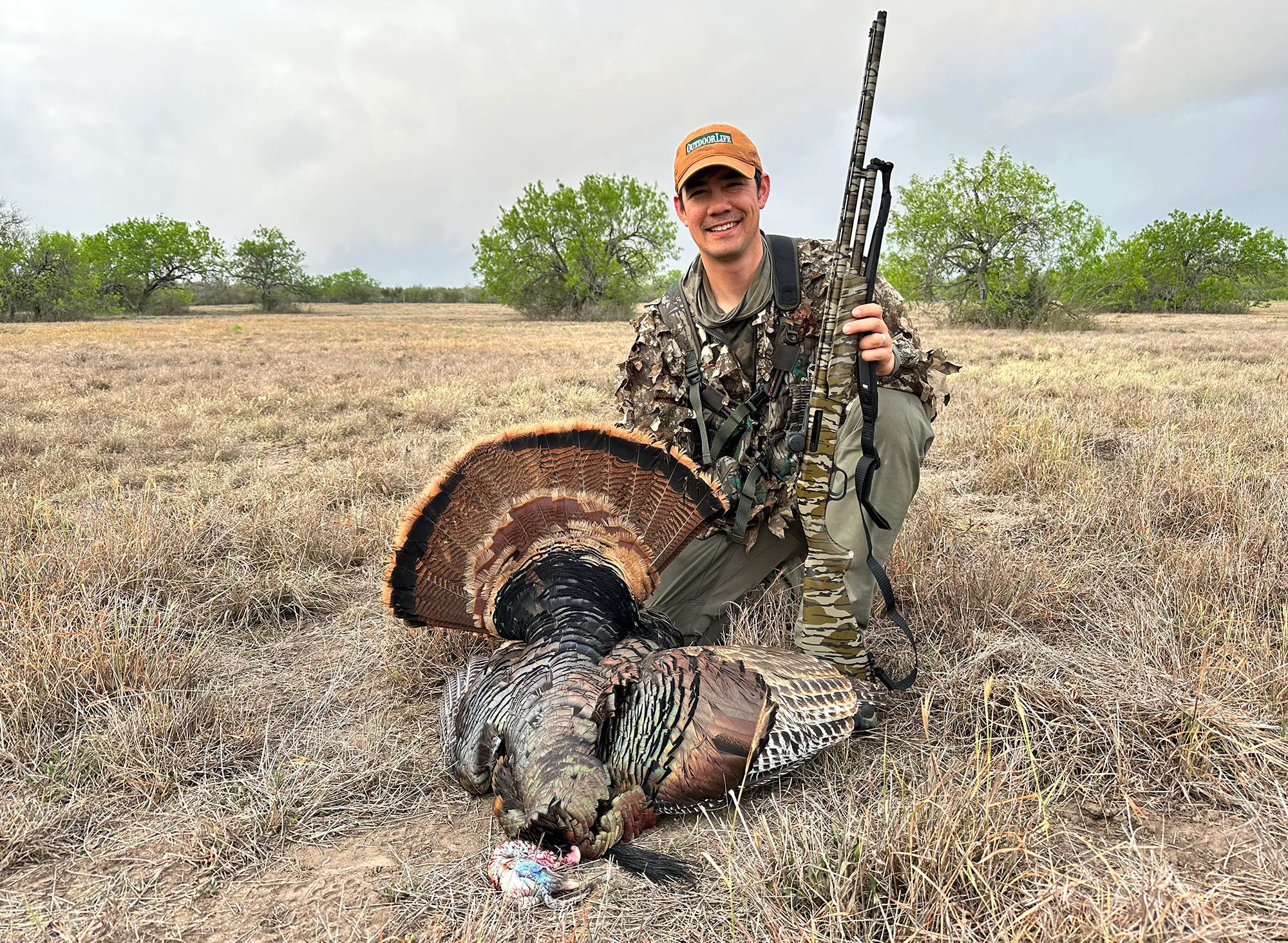
15. Carrying Decoys or a Harvested Turkey in the Open
A hunter carrying an exposed fan, wing, head, or full-bodied decoy can be mistaken for a live bird before the person becomes visible. Safety guidance recommends covering harvested birds and decoys completely during transport.
How to Correct It
- Use a fully enclosed decoy bag.
- Cover the entire harvested bird.
- Use required or recommended fluorescent material during transport.
- Unload before beginning a difficult walk out.
- Avoid routes passing close to active setups.
16. Wearing Red, White, Blue, or Exposed Black
Red, white, blue, and black are associated with visible parts of a male turkey. Safety organizations and wildlife agencies advise hunters to keep these colors from showing during turkey hunts.
How to Correct It
- Inspect hats, socks, shirts, gloves, and pack linings.
- Cover brightly colored labels and equipment.
- Follow local fluorescent-orange requirements.
- Carry legal visibility clothing for movement when appropriate.
- Do not assume camouflage removes the need for visibility awareness.
17. Failing to Identify the Entire Legal Bird and Background
A gobble is not a target. A fan is not a target. Red color, dark movement, or a partial shape is not enough. The hunter must identify the complete bird, determine that it is legal, and confirm that no person, decoy carrier, building, road, trail, vehicle, livestock, or unsafe terrain lies in the direction of the opportunity.
Current official state guidance emphasizes that positive target identification and a safe background are mandatory in every shooting situation.
How to Correct It
- Wait for the entire bird to become visible.
- Use binoculars for uncertain objects.
- Confirm the current legal-bird definition.
- Check the foreground and background again before acting.
- Pass whenever any part of the decision remains uncertain.
18. Taking an Opportunity Beyond Your Proven Ability
Turkey hunters may misjudge distance, aim hurriedly, use an untested choke or load, or assume modern ammunition extends their ability. The appropriate range is the distance at which the exact equipment produces repeatable, ethical results in the hunter’s hands.
NWTF guidance emphasizes patterning the shotgun and determining the performance of the specific setup rather than relying on a universal advertised range.
How to Correct It
- Establish the limit before hunting.
- Use landmarks to judge distance before birds arrive.
- Reduce the limit when the position is unstable.
- Wait for an unobstructed, controlled opportunity.
- Do not allow expensive ammunition to replace shot discipline.
Additional Public-Land Turkey Hunting Mistakes
Crowding Another Hunter
A vehicle at an access point often indicates that someone is already using the area. Parking beside that vehicle and moving toward the same gobble can create interference and a dangerous overlap.
Public-land safety and etiquette require hunters to respect other parties and maintain separation.
Assuming No Vehicle Means No Hunter
Hunters may arrive from another access point, walk from private property with permission, camp nearby, or enter long before daylight. Always assume that another person may be present.
Trusting a Mapping Application Without Verifying Ownership
Digital property maps are useful but can contain delayed or incomplete information. Public land may be interspersed with private property, requiring hunters to use official maps and obtain permission before crossing private parcels.
Walking Toward Every Gobble
Another hunter may already be set up on the bird. Listen for calling, watch for vehicles and equipment, and use a backup location rather than forcing access.
Using Realistic Male Decoys Near Human Access
A male decoy in an open field may be visible from a road, trail, boundary, or neighboring property before the controlling hunter is visible. Choose a safer setup or leave the decoy packed.
Calling Mistakes and Better Responses
| Calling Problem | Possible Explanation | Better Response |
|---|---|---|
| No gobble after calling | No bird nearby, quiet bird, weather, pressure, or poor acoustics | Wait, observe current sign, and try another legal setup later |
| Bird answers but stays in place | It may be with hens, blocked by terrain, or expecting the hen to approach | Reduce calling and remain patient |
| Bird gobbles less as it approaches | It may be closing the distance silently | Stop calling and watch carefully |
| Bird turns away after repeated calls | Calling may be too loud, frequent, or unrealistic | Become quiet and allow the setup to settle |
| Live hens pull the gobbler away | The male is following normal flock behavior | Observe the hens’ travel and consider a future route setup |
| A pressured bird hangs up | It may associate obvious calling and decoys with danger | Use softer calls, fewer visual aids, and a less obvious approach |
| Another hunter responds to the call | The hunter may believe a live turkey is present | Remain still and announce yourself clearly with a human voice |
Setup Mistakes and How to Prevent Them
No Solid Barrier Behind the Hunter
Sit against a large tree, rock, or substantial natural feature that provides support and helps protect the rear of the setup. Avoid narrow saplings or completely exposed brush.
Decoys Outside the Safe Zone
A decoy can attract a bird into a position where the background is unsafe. Place it only where an approaching turkey remains away from trails, roads, houses, livestock, and other hunters.
No Room to Operate the Equipment
Test the position before calling. A bow needs drawing clearance, and a shotgun requires a safe, controlled mounting path.
Sunlight Exposes the Hunter
Direct sunlight can highlight movement, skin, eyewear, and equipment. Use shade and background cover without giving up safe visibility.
The Setup Is Too Close to a Boundary
A responding bird may remain on neighboring property, and a harvested bird may cross the boundary. Plan permission and recovery before hunting near property lines.
Recovery, Reporting, and Meat-Care Mistakes
Rushing Into Unsafe Terrain
Excitement can cause a hunter to cross a fence, creek, steep bank, or thick cover with loaded equipment. Make the firearm or bow safe before moving through obstacles.
Assuming Recovery Authorizes Trespass
An ethical recovery obligation does not automatically permit entry onto private property. Contact the landowner or appropriate authority before crossing a boundary.
Forgetting the Tagging Sequence
Some jurisdictions require immediate tagging or validation before the turkey is moved. Others use electronic reporting. Know the exact sequence before the hunt.
Leaving the Bird in Warm Conditions
Harvested game should be kept clean and cooled promptly. Hunters should prepare gloves, dedicated tools, clean containers, and a cooler or refrigeration plan before hunting.
Handling a Bird That Appeared Sick
The CDC advises hunters not to handle wild birds found dead and to use protective practices when cleaning game. Hunters should avoid eating or drinking while handling birds, clean tools and surfaces, and cook game birds thoroughly.
Pre-Hunt Mistake-Prevention Checklist
Legal Preparation
- Current license, permit, and tag obtained.
- Legal season and hours confirmed.
- Legal-bird definition understood.
- Weapon and ammunition restrictions checked.
- Decoy, fan, calling, and baiting rules reviewed.
- Harvest-reporting process saved.
Equipment Preparation
- Firearm or bow inspected.
- Shotgun pattern or bow accuracy verified.
- Ammunition or arrows confirmed as compatible and legal.
- Optic, sight, sling, rest, and safety equipment inspected.
- Decoys packed in a fully enclosed bag.
- Communication and navigation devices charged.
Land and Access
- Ownership and boundaries confirmed.
- Private-land permission documented.
- Legal parking location identified.
- Primary and backup areas mapped.
- Roads, trails, homes, and livestock marked.
- Recovery permission considered.
Field Safety
- Trip plan shared with a responsible person.
- Weather and terrain reviewed.
- Safe shooting directions established.
- Red, white, blue, and exposed black clothing removed.
- Required visibility clothing packed.
- First aid, water, food, and emergency insulation carried.
After-Harvest Preparation
- Tagging and reporting process understood.
- Clean gloves and dedicated tools packed.
- Bird-covering method prepared.
- Cooling and transportation arranged.
- Processor or home-handling plan confirmed.
Troubleshooting Common Turkey Hunting Problems
| Problem | Possible Causes | What to Check | Safer Next Step |
|---|---|---|---|
| No turkeys are heard | Weather, season phase, pressure, poor listening point, or no birds nearby | Recent sign, habitat, time of day, and alternate access | Use a confirmed travel route or scout another legal area |
| A gobbler will not leave the roost area | Hens, poor setup, terrain, or disturbance | Fly-down direction and flock movement | Allow the bird to leave naturally and hunt a later route |
| A bird answers but does not approach | Live hens, fencing, water, pressure, or overcalling | Terrain and flock composition | Reduce calling and remain patient |
| A turkey becomes silent | It may be approaching, feeding, following hens, or leaving | Side and rear approach routes | Remain still before relocating |
| Bird repeatedly detects the hunter | Movement, glare, poor background, or noisy clothing | Gear placement and concealment | Improve the setup and organize equipment before calling |
| The shotgun pattern is off-center | Sight, mount, fit, choke, load, or equipment problem | Point of impact from a stable range position | Stop hunting with it until inspected and corrected |
| The bow cannot be drawn in the blind | Insufficient clearance or lack of seated practice | Blind size, chair height, and limb clearance | Practice safely and modify only approved equipment placement |
| Another hunter approaches | The hunter may be following your call or decoy | Where the person is located | Remain still and announce yourself clearly with a human voice |
| Another vehicle is at the access point | The primary area may already be occupied | Backup locations and legal access | Choose another area rather than crowding |
| The boundary is uncertain | Outdated mapping, poor markers, or mixed ownership | Official maps and property records | Stop and contact the land manager or owner |
| Recovery crosses private land | The turkey moved across a property line | Ownership and contact information | Obtain permission before entering |
| Weather becomes unsafe | Lightning, flooding, high wind, heat, cold, or poor visibility | Forecast, route, and shelter options | End the hunt before conditions worsen |
What Not to Do While Turkey Hunting
- Do not hunt without current licenses, permits, and legal access.
- Do not fire at a sound, movement, color, fan, or partial silhouette.
- Do not use a weapon-mounted optic to identify an uncertain object.
- Do not stalk gobbles, yelps, clucks, or scratching sounds.
- Do not point the muzzle toward roads, trails, homes, livestock, vehicles, or people.
- Do not rely on a mechanical safety instead of safe handling.
- Do not call before selecting a safe setup.
- Do not carry a turkey decoy or harvested bird exposed.
- Do not wear visible red, white, blue, or black clothing.
- Do not use a realistic fan where another hunter could mistake you for a turkey.
- Do not take an opportunity beyond your tested ability.
- Do not fire through brush or at an obstructed bird.
- Do not crowd another hunting party.
- Do not cross private property without permission.
- Do not delay tagging, reporting, transport compliance, or meat cooling.
Ethical Turkey Hunting and Conservation
Wild turkey restoration is an important wildlife-management success. After historical declines associated with habitat loss and unregulated harvest, wild-caught translocation and habitat-management work helped restore populations across much of the species’ range.
Responsible turkey hunting supports that work through legal participation, reporting, habitat stewardship, and restraint.
- Obey seasons, limits, legal-bird definitions, and reporting rules.
- Practice before hunting.
- Pass on unsafe or uncertain opportunities.
- Make a reasonable legal recovery effort.
- Avoid disturbing nests or handling eggs.
- Do not repeatedly harass roosted birds during scouting.
- Prevent waste and use edible meat responsibly.
- Respect landowners, hunters, and other public-land visitors.
- Remove litter, shells, flagging, and blind material.
- Support habitat and conservation programs when possible.
When to Seek Training or Professional Help
Seek additional guidance when:
- You have not completed hunter education.
- You are unfamiliar with the intended firearm, bow, or crossbow.
- You cannot explain the four basic firearm-safety rules.
- You have not patterned the shotgun or verified bow accuracy.
- You do not understand the current regulations.
- You are uncertain about public or private boundaries.
- You cannot safely identify a legal turkey.
- You are hunting unfamiliar, steep, remote, or flooded terrain.
- Your equipment has been damaged or is malfunctioning.
- You need help with recovery, transport, or meat care.
Useful resources include official hunter-education programs, state or provincial wildlife agencies, certified firearm or archery instructors, experienced ethical mentors, conservation organizations, land managers, qualified gunsmiths, bow technicians, and reputable game processors.
FAQs
1. What is the biggest turkey hunting mistake?
The most dangerous mistake is acting before the entire legal turkey and the foreground and background have been positively identified.
2. What is the most common beginner turkey hunting mistake?
Overcalling is common, but poor setup selection and insufficient practice can be equally important. Beginners should call conservatively after reaching a safe position.
3. Is calling too much bad for turkey hunting?
It can be. Frequent or loud calling may sound unnatural, reveal the hunter’s exact location, and prevent the hunter from hearing an approaching bird or person.
4. How often should I call to a turkey?
There is no fixed schedule. Make a short calling sequence, listen, and allow the bird’s response and local conditions to guide the next decision.
5. Should I stop calling when a gobbler approaches?
Usually, reducing or stopping calling can prevent unnecessary risk once the bird has committed to the setup.
6. Why does a turkey answer but not come closer?
It may be with hens, behind a fence or creek, influenced by hunting pressure, or waiting for the calling hen to approach.
7. Why does a gobbler suddenly stop gobbling?
It may be approaching silently, feeding, following hens, changing direction, or leaving. Silence does not confirm what the bird is doing.
8. Is leaving a setup too soon a mistake?
Yes, when a silent bird may still be approaching. Check every direction and wait before making the equipment safe and relocating.
9. Is getting close to a turkey roost a good strategy?
Getting too close can disturb the birds. Set up along a safe expected route without entering the roost area.
10. Can I use a flashlight near roosted turkeys?
Use lighting as needed for safe travel, but avoid shining it toward known roosted birds. Safety is more important than attempting a completely dark approach.
11. Should I call while scouting?
Calling during preseason scouting may change bird behavior or attract other people. Observation, listening, tracks, scratching, and binoculars are usually lower-impact tools.
12. How much scouting is enough?
Scout until you understand recent roosting, feeding, travel, access, boundaries, and at least one safe backup setup.
13. Is one turkey track enough to choose a setup?
No. Look for multiple forms of recent activity connected to food, roosting cover, and travel routes.
14. Do turkeys use the same roost every night?
They may reuse an area, but weather, disturbance, food, predators, and season can change the exact tree or location.
15. Is a box call good for beginners?
Yes. A box call is generally easy to operate consistently, although every call requires practice.
16. Do I need a mouth call?
No. Mouth calls are hands-free but take time to master. A box or pot call is sufficient for many beginners.
17. Are turkey decoys necessary?
No. A well-scouted travel route or feeding area can be hunted without decoys.
18. Are gobbler decoys dangerous?
They can create identification risks, especially on public land or near human access. Their use should be legal, controlled, and carefully evaluated.
19. Is reaping or fanning safe?
Moving behind a realistic fan can make a hunter resemble a live gobbler. It is particularly hazardous where other hunters may be present.
20. How should I carry a turkey decoy?
Keep it completely enclosed in an opaque bag so no fan, head, wing, or body shape is visible.
21. What colors should turkey hunters avoid?
Avoid visible red, white, blue, and black because these colors can resemble parts of a male turkey.
22. Should turkey hunters wear fluorescent orange?
Follow local requirements. Even where it is not required throughout the hunt, orange may be recommended while moving or transporting a covered bird.
23. Should I stalk a gobbling turkey?
No. The gobble or calling sound may be made by another hunter.
24. What should I do when another hunter approaches?
Remain still and identify yourself clearly with a human voice. Do not wave, stand suddenly, or make turkey sounds.
25. Where should I sit when turkey hunting?
Use a substantial tree, rock, bank, or barrier behind you and choose a shooting direction away from roads, trails, buildings, vehicles, livestock, and people.
26. Is sitting against a small tree safe?
A narrow tree provides little support or protection. A wider, taller natural barrier is preferable.
27. Can I use a ground blind?
Yes where legal. It should be secured, visible to other users when required, and positioned with a controlled shooting direction.
28. Is movement more important than camouflage?
Both matter, but sudden movement can reveal a well-camouflaged hunter. Arrange equipment before calling and remain still.
29. Do I need to pattern a turkey shotgun?
Yes. Patterning confirms point of impact, pattern distribution, and the performance of the exact firearm, choke, sight, and load.
30. Is the tightest choke always best?
No. A very tight choke may create an unforgiving close-range pattern or perform poorly with a particular load.
31. How far should I shoot at a turkey?
Stay within the distance at which your exact legal equipment repeatedly performs adequately and you can identify the bird and background clearly.
32. Can expensive ammunition extend my ethical range?
Ammunition may change pattern performance, but it cannot replace practice, accurate distance judgment, stable equipment, or complete identification.
33. Is a .410 automatically best for a young hunter?
No. Fit, recoil, sight alignment, pattern width, training, supervision, and legal requirements matter more than the gauge label.
34. What if my shotgun pattern is not centered?
Do not hunt with it until the sight, optic, mount, stock fit, choke, load, and firearm have been safely evaluated.
35. What is the biggest bowhunting turkey mistake?
Failing to practice from the actual seated or blind position is common. Hunters should also maintain broadhead safety and a conservative effective range.
36. Is public-land turkey hunting unsafe?
It can be conducted responsibly, but hunters must expect other users, avoid stalking calls, verify boundaries, maintain separation, and use realistic decoys cautiously.
37. What should I do if another vehicle is parked at my access point?
Use a backup location rather than crowding an unknown hunting party.
38. Can I trust a hunting application’s boundary line completely?
Use mapping applications as tools, but verify ownership through official maps, land managers, and visible boundary information.
39. Can I cross private land to reach public land?
Only with legal access or permission. Public ownership beyond a private parcel does not create a right to cross it.
40. Can I enter private land to recover a turkey?
Obtain permission before entering unless an authorized official or applicable law provides another procedure.
41. What should I do immediately after a harvest?
Make the equipment safe, remain aware of other hunters, follow the required tagging sequence, and begin lawful recovery and cooling.
42. Do I have to report a turkey harvest?
Many jurisdictions require reporting, but methods and deadlines vary. Follow the current official instructions.
43. How should I transport a harvested turkey?
Cover it completely and follow all tagging, evidence-of-sex, transportation, and visibility requirements.
44. How should wild turkey meat be handled?
Use clean gloves and tools, prevent cross-contamination, cool the meat promptly, disinfect surfaces, and follow official cooking guidance.
45. What should I do if a turkey appears sick?
Do not handle or consume a bird that appeared sick or was found dead. Report unusual wildlife illness or mortality to the appropriate agency.
46. Is hunting unsuccessful when I do not harvest a turkey?
No. A safe and legal hunt that improves scouting, calling, judgment, and equipment handling is meaningful progress.
47. Can better gear eliminate turkey hunting mistakes?
No. Reliable equipment can help, but it cannot replace training, scouting, patience, legal knowledge, safe identification, and ethical judgment.
48. When should I hunt with a mentor?
Use a mentor when you are new to firearm or bow handling, public-land access, calling, identification, recovery, or meat care.
49. How can I improve after an unsuccessful hunt?
Record the weather, wind, access route, gobbling, flock behavior, calling, setup, pressure, and decisions. Change one evidence-based factor at a time.
50. What is the safest way to avoid turkey hunting mistakes?
Complete hunter education, verify current regulations, practice the complete equipment, scout recent activity, choose the safe setup before calling, and pass whenever identification or background is uncertain.
Final Answer
The answer to what are the biggest turkey hunting mistakes begins with safety. The most serious errors are hunting without current legal information, mishandling equipment, stalking turkey sounds, using realistic fans or decoys carelessly, wearing colors associated with a gobbler, and failing to identify the entire legal bird and background.
The most common field mistakes are scouting too little, getting too close to the roost, ignoring flock dynamics, calling before setting up, overcalling, moving unnecessarily, and leaving while a silent turkey may be approaching. These mistakes are best corrected through preparation, recent observation, conservative calling, patience, and a predetermined safe shooting direction.
After an opportunity, make the equipment safe, respect property boundaries, follow the required tagging and reporting sequence, transport the bird completely covered, and care for edible meat promptly. Official regulations, hunter-education guidance, and manufacturer instructions always take priority over general turkey-hunting advice.