
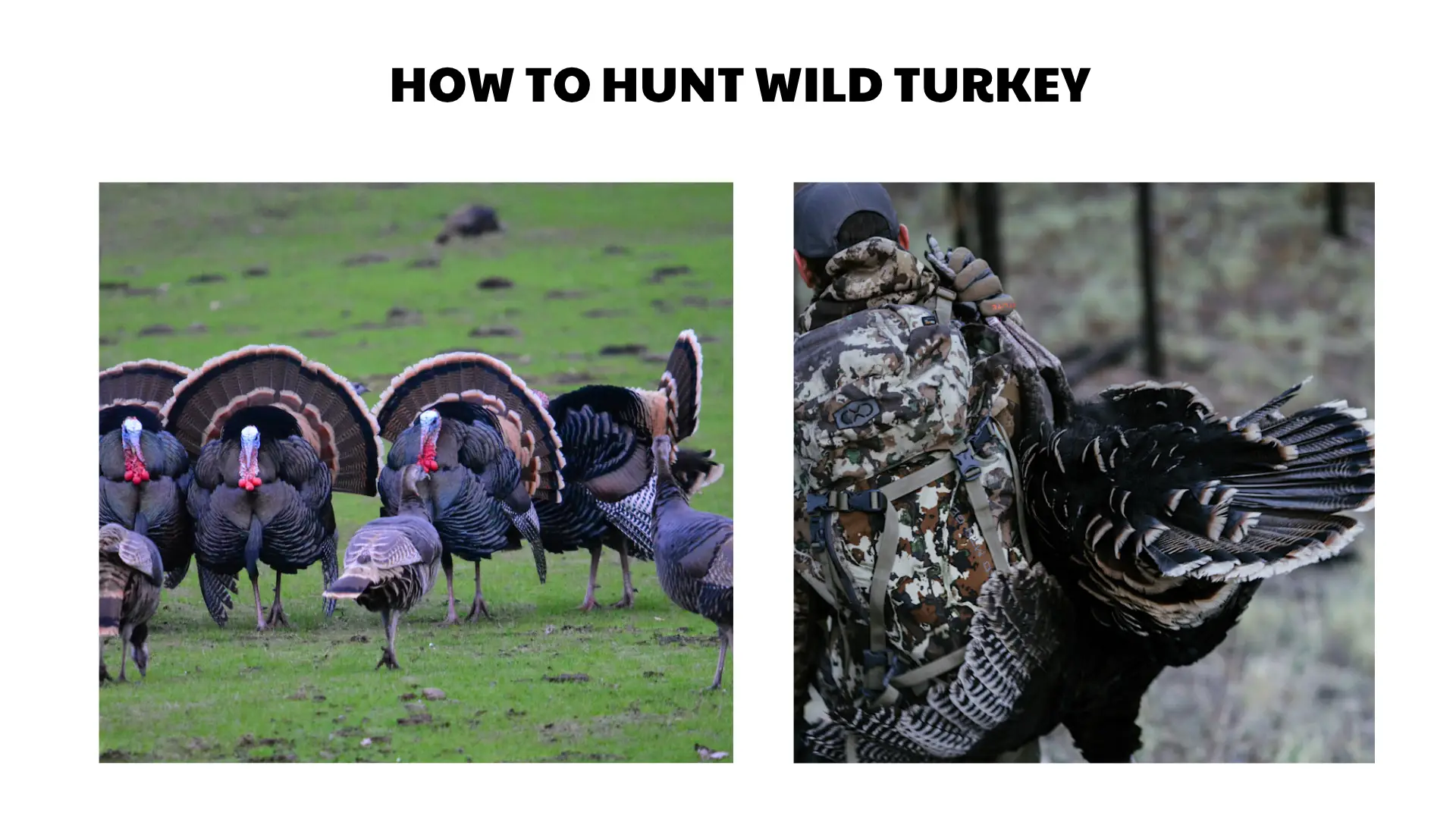

Learning how to hunt wild turkey requires more than buying a call and walking into the woods at daylight. A responsible hunter must understand current regulations, wild turkey behavior, safe firearm or bow handling, legal access, habitat, scouting, calling restraint, setup selection, positive identification, and post-harvest duties.
Quick Answer
To learn how to hunt wild turkey, first verify the current license, permit, tag, season, legal bird, bag limit, weapon, land-access, tagging, and reporting rules with the official wildlife agency. Scout from a distance for roosting cover, feeding areas, travel routes, tracks, scratching, droppings, and regular vocal activity. Practice one simple legal call and choose a stationary setup with a broad view and a completely safe background. Never stalk a turkey sound because the caller may be another hunter, and take an opportunity only after positively identifying a legal bird within your practiced ability.
Important Legal and Safety Notice Before You Hunt
Turkey hunting laws vary by country, state, province, county, management unit, land type, season, age group, and hunting method. Always use the current official regulation source for the exact place you intend to hunt.
- License and permits: Confirm hunter-education eligibility, license type, turkey permits, applications, stamps, and special access requirements.
- Tags and reporting: Learn when and how a tag must be validated or attached and whether online, telephone, station, or biological reporting is required.
- Season and legal hours: Verify exact opening and closing dates, time-of-day rules, youth or special seasons, and closed areas.
- Legal bird and bag limit: Check definitions involving sex, visible features, age class, daily limit, seasonal limit, and possession.
- Weapons and equipment: Confirm legal firearms, ammunition, archery equipment, calls, decoys, blinds, and any restrictions on electronic devices or bait.
- Land access: Use official maps on public land and obtain clear permission before entering private property.
- Visibility clothing: Follow required hunter-orange or other visibility rules, including special instructions for moving or transporting a harvested bird.
- Emergency planning: Check weather, carry navigation and first-aid equipment, share a trip plan, and establish a return time.
Beginners should complete an official hunter-education course and hunt with an experienced, ethical mentor when possible. The U.S. Fish and Wildlife Service explains that hunter education covers firearm and archery safety, game laws, conservation, ethics, outdoor survival, and wilderness first aid. See its Hunter Education Program and then consult the wildlife agency responsible for the exact hunting area.
Turkey-Specific Safety Rules
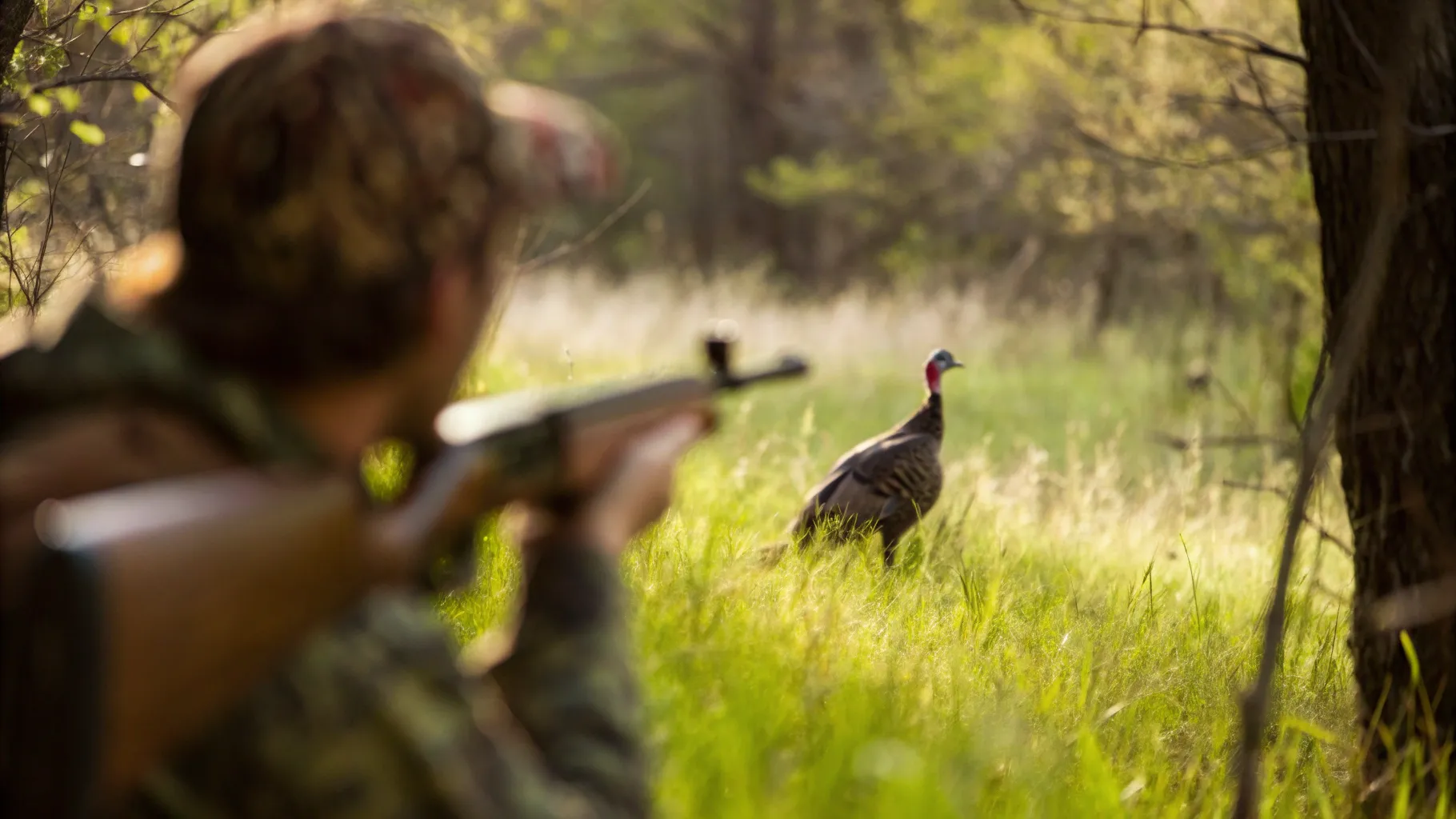
- Never stalk a turkey sound. A person may be making the call.
- Never shoot at noise, movement, color, brush, a silhouette, or an unidentified bird.
- Use binoculars for observation; never use a firearm scope to identify unknown movement.
- Avoid wearing exposed red, white, or blue, which can resemble colors on a turkey’s head and neck.
- Carry decoys and harvested birds fully covered, and use legal visibility clothing while moving.
- Choose a setup with a safe background and no road, trail, home, livestock, vehicle, or person in any possible shot direction.
- If another hunter approaches, remain still and identify yourself in a clear human voice. Do not wave or make turkey sounds.
Understanding Wild Turkey Behavior and Habitat
Wild turkeys are social birds with strong vision and hearing. They use a mixture of forest, openings, brush, field edges, water, and seasonal food sources. The best habitat is not simply one large field or one roost tree; it is a connected landscape that lets birds roost, feed, travel, display, escape danger, and adjust to weather.
Daily Movement
Wild turkeys generally spend the night in trees, leave the roost after daylight, travel to feeding and social areas, and later return toward suitable evening roost habitat. Their exact route and timing change with wind, rain, breeding activity, predators, agricultural work, recreation, and hunting pressure.
Seasonal Changes
Spring hunting often centers on breeding behavior, vocal gobblers, hens, and strutting areas. Fall birds may travel in family groups or larger flocks and can respond differently to calls. Legal bird definitions, weapons, and methods may also change by season, so a spring tactic or rule should never be assumed to apply in fall.
Key Habitat Features
- Roosting cover: Mature trees with suitable limbs and nearby landing areas.
- Feeding habitat: Leaf litter, mast-producing woods, green openings, pasture, insects, seeds, and local agricultural food.
- Travel corridors: Ridges, creek crossings, logging roads, open timber, field corners, and transitions between cover types.
- Strutting areas: Open or lightly covered places where birds can see, display, and communicate.
- Security cover: Brush, broken terrain, timber, or low-disturbance habitat used when birds feel pressured.
- Water and loafing areas: Creeks, ponds, shaded cover, dusting areas, and protected midday habitat.
Wild Turkey Sign
- Tracks: Usually show three forward toes and a smaller rear toe.
- Scratchings: Leaves and loose soil moved aside while birds search for food.
- Droppings: Most useful when fresh and supported by other sign.
- Dusting sites: Dry, shallow depressions used for feather care.
- Feathers: Helpful evidence, but not proof of current daily activity.
- Vocal activity: Gobbles, yelps, clucks, and other sounds heard from safe listening points.
Freshness and context matter. Several current clues connecting roost, food, and travel habitat are more useful than one old track or feather. Avoid repeatedly entering a roost or feeding area merely to confirm that turkeys are present.
What You Need Before You Start
- Current hunting license, wild turkey permit, tags, and official regulations
- Completed hunter education and an experienced ethical mentor when possible
- A legal firearm, bow, ammunition, or broadhead combination
- Range practice and a conservative personal effective distance
- Quiet, weather-appropriate clothing and legally required visibility gear
- Supportive boots matched to terrain and weather
- Binoculars for observation and positive identification
- One simple legal call, such as a box or pot-style call
- Official property map, compass, GPS, or offline mapping tool
- Seat cushion or legal blind for remaining still
- Headlamp, spare batteries, first aid, water, food, and emergency layer
- Clean gloves, game bag, cooler, and basic meat-care supplies
Decoys, specialized camouflage, and multiple calls are optional. Legal credentials, safe equipment, binoculars, navigation, weather protection, one reliable call, and a recovery plan are more important than carrying a large amount of gear.
How to Hunt Wild Turkey: Step-by-Step Guide
1.Check Local Wild Turkey Hunting Laws
Read the current official rules for the exact management unit and property. Confirm hunter education, licenses, permits, tags, season dates, legal hours, legal bird definitions, daily and seasonal limits, weapons, ammunition, calls, decoys, blinds, bait restrictions, access, tagging, reporting, and transport.
Save the current regulation document for offline use. Contact the wildlife agency or land manager when wording is unclear rather than relying on an old article, video, or forum post.
2.Learn Local Wild Turkey Patterns
Study how local birds connect roosting trees, feeding habitat, strutting areas, water, and secure travel cover. Observe from a distance at different times and note how weather, farm work, recreation, predators, and hunting pressure change movement.
Do not assume every gobble indicates a bird that will approach. A turkey may be with hens, remain quiet, circle around terrain, or travel away from calling.
3.Choose a Legal Hunting Area
On public land, mark official access, legal parking, closed zones, property boundaries, roads, trails, buildings, and areas used by non-hunters. Review property-specific permits and weapon restrictions in addition to general regulations.
On private land, obtain permission and discuss boundaries, parking, gates, livestock, homes, other hunters, blinds, and recovery. Never cross neighboring private land without permission.
4.Scout Without Disturbing the Flock
Use maps to identify roosting cover, mature timber, openings, ridges, creek systems, field edges, feeding habitat, and routes connecting them. Confirm the map with distant listening, glassing, tracks, scratching, droppings, feathers, and dusting sites.
Keep scouting low impact. Repeatedly approaching a roost, walking through active feeding areas, or checking the same camera route can change the pattern you hope to hunt.
5.Prepare Calls and Hunting Equipment Safely
Practice one easy call until you can create controlled sounds without large movements. Box calls and pot-style friction calls are often easier for beginners, while mouth calls require more practice. Verify whether electronic calls are legal.
Inspect the firearm or bow according to manufacturer guidance. Pattern a legal shotgun and ammunition combination or practice archery from realistic positions to establish a conservative personal effective distance. Do not modify weapons, ammunition, or safety systems.
6.Plan Weather, Wind, and Entry
Choose a quiet route that avoids the roost, homes, livestock, private property, another hunter’s setup, and unsafe terrain. Leave enough time to travel without rushing in darkness and carry a dependable light where legal.
Wind affects calling distance, hearing, projectile control, blind stability, and falling-limb risk. Rain, fog, heat, cold, and darkness can reduce visibility or judgment. Change the plan when conditions prevent safe travel or positive identification.
7.Select a Safe, Stationary Setup
Choose a stable location with a wide field of view and a safe background. When practical, sit against a tree or natural object wider than your shoulders after checking for dead limbs, insects, unstable ground, and unsafe shot directions.
Do not set up facing a road, trail, home, vehicle, livestock, skyline, or occupied property. If legal decoys are used, place them where the entire approach is visible and carry them fully covered.
8.Call Conservatively and Observe
Begin with a short, simple calling sequence and listen. A wild turkey may answer loudly, approach silently, remain with other birds, or ignore the call. Constant calling is not required and can distract you from watching the area.
Never stalk a turkey sound. The caller may be another hunter. Move only through a legal, preplanned route after safely controlling the firearm or bow.
9.Take Only a Safe, Legal, and Ethical Opportunity
Use binoculars to identify the species and legal features required by current regulations. Confirm the bird, nearby birds, terrain, vegetation, roads, trails, buildings, vehicles, livestock, and people before bringing the weapon into position.
Act only within your practiced ability. Do not shoot at sound, movement, brush, a silhouette, a skyline, or an obscured bird. If the legal identity, angle, distance, or background is uncertain, let the bird leave.
10.Recover, Tag, and Report Legally
Maintain safe weapon control, observe carefully, and follow hunter-education guidance for recovery. Stay alert for other hunters and do not cross a property boundary without permission.
Validate or attach the tag immediately when required and complete any mandatory check-in, online report, telephone report, registration, or biological sampling within the official deadline.
11Transport and Care for the Bird Responsibly
Cover the harvested turkey fully before moving through the field so the bird’s shape, feathers, and head colors cannot be mistaken for a live bird. Wear required or recommended visibility clothing and transport weapons according to local law.
Use clean gloves and tools, protect the bird from dirt and heat, cool the meat promptly, and follow all transport, disease, disposal, and processing requirements.
Best Time, Place, and Conditions for Wild Turkey Hunting
Time of Day
Early morning can help hunters hear birds around roost departure, but later legal hours can also provide opportunities after flocks change activity. The best time depends on current regulations, recent observations, season, weather, breeding activity, food, and hunting pressure.
Seasonal Behavior
Spring hunting often emphasizes breeding behavior and vocal gobblers. Fall birds may travel in family groups or flocks and require different observation and calling decisions. Always match tactics to both current behavior and legal season rules.
Habitat
Productive areas often connect roost trees, feeding habitat, strutting locations, water, and secure travel cover. Field edges are easy to observe, but ridges, open timber, creek bottoms, mature woods, burns, pastures, and interior openings can also matter.
Weather and Wind
Calm conditions make distant sounds easier to hear. Light rain can change where birds feed, while wind reduces hearing and can create falling-limb hazards. Lightning, flooding, extreme heat or cold, heavy fog, and severe wind are reasons to delay or end a hunt.
Hunting Pressure
On public land, turkeys may become quieter or avoid obvious access after repeated encounters. Do not crowd another hunter or approach the same calling bird from a different direction. Prepare alternate legal areas. On private land, coordinate with landowners and other hunters before the season.
Helpful Wild Turkey Hunting Tips
- Listen before moving. A bird may be approaching quietly, and another hunter may be nearby.
- Learn one call well. Controlled, realistic calling is more useful than carrying many calls without practice.
- Scout from a distance. Preserve roost and feeding patterns by limiting unnecessary entry.
- Prepare alternate setups. Wind, other hunters, agriculture, or flock movement can make the first location unsuitable.
- Use binoculars early. Observation and legal identification should occur before moving a weapon.
- Use a broad background. Reduce visible movement while maintaining a safe field of view.
- Keep decoys covered. The same rule applies to a harvested bird during transport.
- Decide your effective distance in practice. Never extend it because a bird appears.
- Record patterns. Note weather, sign, vocal activity, pressure, route, and setup results.
- Pass uncertainty. Restraint is a successful hunting decision.
Common Mistakes to Avoid
Excitement and incomplete preparation cause many preventable errors. Avoid these mistakes:
- Using old regulations or hunting without the correct license, permit, tag, or permission.
- Stalking a gobble, yelp, or turkey call that may be made by another hunter.
- Shooting at sound, color, movement, brush, or a partially identified bird.
- Using a firearm scope instead of binoculars to identify unknown movement.
- Wearing exposed red, white, or blue around turkey habitat.
- Carrying an uncovered decoy or harvested turkey.
- Calling constantly without watching for a silent approach.
- Setting up toward roads, trails, homes, livestock, vehicles, or skylines.
- Moving a weapon before confirming the legal bird and entire background.
- Using untested equipment or exceeding a practiced effective distance.
- Ignoring lightning, wind hazards, fog, flooding, cold, heat, or navigation risk.
- Beginning the hunt without a tagging, reporting, transport, cooling, and meat-care plan.
Troubleshooting Common Problems
| Problem | Possible Cause | What to Do |
|---|---|---|
| You are not hearing or seeing turkeys | Wrong habitat, changed food, weather, pressure, limited scouting, or quiet birds | Review fresh sign, observe another legal time, and check alternate habitat without disturbing roosts. |
| A bird answers but will not approach | It may be with hens, separated by a barrier, suspicious, pressured, or comfortable where it is | Call less, remain patient, and never crawl toward or stalk the sound. |
| A bird stops responding | It may be approaching silently, moving away, disturbed, or no longer interested | Stay still and watch. Move only later through a safe, legal, preplanned route. |
| Another hunter is nearby | Shared public access, the same gobbling bird, or an unseen approach | Keep the weapon safe, identify yourself with a human voice, avoid confrontation, and leave if needed. |
| Property boundaries are unclear | Outdated maps, poor signal, missing signs, or uncertain ownership | Stop before crossing and confirm with official maps, the landowner, or the area manager. |
| Wind makes calls hard to hear | Strong gusts, terrain, or poor calling direction | Use a protected safe setup, listen during calm intervals, or postpone when wind creates hazards. |
| Visibility is poor | Fog, rain, darkness, dense vegetation, or backlighting | Do not shoot. Wait for full identification and a safe background or end the hunt. |
| Your call sounds inconsistent | Limited practice, moisture, damaged surfaces, or an advanced call | Return to a simple call, maintain it according to instructions, and practice away from hunting birds. |
| Equipment fails | Weak batteries, wet gear, damaged bow components, or firearm malfunction | Point the weapon safely, stop the hunt, and follow manufacturer or qualified professional guidance. |
| You are nervous when a bird appears | Excitement, limited practice, or an unstable position | Slow your breathing, repeat the identification and background checklist, and pass if control is uncertain. |
| Recovery reaches private property | The bird crossed a boundary after the shot | Do not trespass. Contact the landowner and seek official guidance when needed. |
| You are unsure about a rule | Conflicting advice or a special local regulation | Do not hunt under an assumption. Contact the responsible wildlife agency or land manager. |
Ethical Hunting and Conservation
Ethical wild turkey hunting is built on legality, preparation, respect, and restraint. A legal season does not make every bird or every angle an acceptable opportunity.
- Respect wild turkeys and avoid unnecessary disturbance to roosting and feeding habitat.
- Obey seasons, legal bird definitions, bag limits, methods, access, and reporting rules.
- Respect landowners, other hunters, non-hunters, livestock, homes, roads, and trails.
- Practice with legal equipment and use a conservative personal effective distance.
- Pass any obstructed, unstable, hurried, distant, or uncertain opportunity.
- Recover carefully, report accurately, cool the meat promptly, and avoid waste.
- Pack out litter and leave gates, roads, and property as instructed.
- Support hunter education, habitat conservation, research, and science-based wildlife management.
When to Get More Training or Professional Guidance
Seek qualified instruction if you have not completed hunter education, have never handled your legal firearm or bow safely, have not practiced from a realistic field position, are unsure about current rules, or cannot identify property boundaries confidently.
Extra help is also appropriate for archery broadhead handling, shotgun patterning, first-time public land hunting, navigation outside cellular service, youth mentoring, severe weather, game recovery, and meat care.
Use official wildlife agencies, certified firearm or archery instructors, recognized hunter-education programs, ethical mentors, conservation organizations, and reputable hunting clubs. A trustworthy instructor should never pressure a hunter to stalk a sound, cross a boundary, or take an uncertain shot.
After the Hunt: Follow-Up, Gear Care, and Learning
Complete all required tagging, reporting, checking, sampling, and documentation. Keep confirmation numbers or physical records for the required period and follow transport and disposal rules.
Clean and store firearms, bows, knives, calls, optics, clothing, decoys, and electronics according to manufacturer instructions. Store firearms unloaded and secured, store ammunition according to law and safe practice, dry wet equipment, and remove damaged safety equipment from service.
Write down weather, wind, vocal activity, tracks, scratching, flock behavior, access, setup direction, calling, other hunters, and any safety concern. Honest field notes help separate reliable local patterns from assumptions.
Recommended Wild Turkey Hunting Gear and Tools
Expensive gear does not replace legal knowledge, safe handling, scouting, or judgment. Choose equipment according to current regulations, terrain, weather, hunting method, skill, safety needs, and budget.
- Legal firearm or archery equipment with approved transport protection
- Legal, compatible hunting ammunition or broadheads
- One dependable box, pot, mouth, or other legal turkey call
- Binoculars for observation and positive identification
- Quiet layered clothing, suitable boots, and required visibility gear
- Official property map, compass, GPS, or offline navigation
- Seat cushion or legal ground blind for controlled movement
- Covered carrying bag for legal decoys
- Headlamp, spare batteries, first aid, water, food, and emergency layer
- Communication device and a trip plan shared with another person
- Clean gloves, game bag, cooler, and meat-care equipment
Affiliate disclosure, when applicable: Product links may earn the publisher a commission from qualifying purchases at no additional cost to the reader. Affiliate links should use rel="sponsored nofollow", and no product should be described as guaranteeing hunting success.
Final Thoughts
Learning how to hunt wild turkey begins with the law, hunter education, safe equipment practice, low-impact scouting, basic calling, and a stationary setup with a completely safe background. Study how birds connect roosting, feeding, strutting, and travel habitat, but avoid repeatedly disturbing the places you plan to hunt.
During the hunt, never stalk a turkey sound, use binoculars for identification, stay within a tested personal distance, and pass any bird or background that is uncertain. After a legal harvest, follow tagging and reporting rules, cover the bird during transport, cool the meat promptly, and review the hunt honestly. Patience and restraint protect people, wildlife, and the future of responsible hunting.
Frequently Asked Questions About How to Hunt Wild Turkey
1. How long does it take to learn how to hunt wild turkey?
A hunter can learn the legal and safety foundations before the first season, but scouting, calling judgment, setup selection, and reading wild turkey behavior improve through repeated practice and ethical field experience.
2. Is wild turkey hunting difficult for a beginner?
It can be challenging because wild turkeys detect movement well, may approach silently, and do not always respond predictably. A beginner can still hunt responsibly by using simple calls, safe stationary setups, and an experienced mentor.
3. Do I need a hunting license to hunt turkey?
In most jurisdictions, a valid hunting license is required, and a separate turkey permit, tag, stamp, or application may also be necessary. Requirements vary, so confirm them with the official wildlife agency for the exact place and season.
4. Do I need hunter education before turkey hunting?
Many locations require hunter education based on age, license history, or hunting method. Even where it is not legally required, a recognized course is strongly recommended because it covers safe handling, wildlife identification, laws, ethics, navigation, and emergency planning.
5. How do I find current turkey hunting regulations?
Use the official wildlife agency website or current printed regulation booklet for your state, province, country, management unit, or public property. Verify season dates, legal hours, sex or age restrictions, bag limits, equipment, tagging, reporting, and access rules.
6. When is turkey hunting season?
Turkey seasons vary by jurisdiction and may include spring, fall, youth, archery, firearm, or special permit periods. Never assume dates from another area or a previous year; check the current official regulations.
7. What is the best time of day to hunt turkey?
Early morning is popular because turkeys often leave roost areas after daylight, but legal and productive opportunities can also occur later. The best time depends on regulations, season, weather, food, flock behavior, pressure, and local observations.
8. Where is the best place to hunt wild turkey?
Look for legal land that connects roosting trees, feeding habitat, openings, water, and secure travel cover. The best setup also has verified access, current sign, clear boundaries, and a safe background.
9. How do I locate wild turkeys before the season?
Listen and glass from a distance, study official maps, and look for tracks, scratching, droppings, feathers, dusting sites, and repeated movement. Avoid repeatedly entering active roost or feeding habitat.
10. What turkey sign should beginners look for?
Useful signs include tracks, droppings, scratching in leaf litter, dusting areas, feathers, travel routes, and repeated sightings. One sign alone is not proof of current use, so look for several fresh clues that connect roosting, feeding, and travel habitat.
11. How can I identify turkey tracks?
Turkey tracks usually show three forward-pointing toes and a smaller rear toe, but size and clarity vary with soil and weather. Compare tracks with other evidence and use a reliable wildlife-identification source rather than relying on one partial print.
12. What does turkey scratching look like?
Turkeys often move leaves and debris while feeding, leaving disturbed patches where material has been pulled or kicked aside. Fresh scratching may reveal damp soil or recently turned leaves, but other animals can create similar disturbance.
13. How do I find a turkey roost?
Listen and observe from a distance, look for large suitable trees near travel and feeding habitat, and note repeated evening or morning activity. Do not crowd the roost, shine lights at birds, or enter prohibited areas, and remember that roost patterns can change.
14. Should I set up directly under a turkey roost?
Usually it is better to remain far enough away to avoid disturbing roosted birds and to preserve a safe field of view. Local rules, terrain, other hunters, and the direction birds naturally travel should determine the legal setup.
15. What turkey calls should a beginner carry?
A simple box call or pot-style friction call is often easy to learn, while mouth calls require more practice. Carry only calls you can operate quietly and confidently, and follow any local restrictions on electronic or amplified calls.
16. How much should I call to a turkey?
There is no fixed amount. Begin conservatively, listen for a response, and match calling intensity to the situation. Constant or aggressive calling can be unnecessary, and any sound may also attract another hunter, so remain alert and never assume an approaching sound is a bird.
17. What sounds should a beginner learn first?
Start with basic hen yelps, clucks, and soft purrs using an easy call. Practice rhythm and control rather than maximum volume, and learn from reputable hunter-education or wildlife resources.
18. Can I use an electronic turkey call?
Electronic-call rules vary widely and may differ by season, land type, or hunter eligibility. Check the current official regulations before carrying or using one.
19. Do I need turkey decoys?
No. Decoys are optional and may be restricted in some places or seasons. They can also create safety concerns if visible to other hunters, so use them only where legal, place them with a safe background, and carry them covered.
20. Where should I place a turkey decoy?
Where legal, place it within your practiced range and where you can clearly see the approach and background. Never place a decoy where a road, trail, house, vehicle, livestock, or another hunter could be in the line of fire.
21. How should I carry a turkey decoy safely?
Keep it fully covered in a bag while moving so another hunter cannot mistake its shape or colors for a live bird. Do not carry an exposed decoy over your shoulder or through thick cover.
22. What clothing is best for turkey hunting?
Choose quiet, weather-appropriate layers and footwear suitable for the terrain. Camouflage may help conceal movement where legal, but required visibility clothing and safe identification rules always take priority.
23. Should turkey hunters wear blaze orange?
Requirements vary. Many safety programs recommend visible orange while entering, leaving, or carrying a harvested bird, even when camouflage is used at the setup. Follow the exact clothing rules for your area and season.
24. Why should turkey hunters avoid red, white, and blue clothing?
Those colors can resemble parts of a wild turkey’s head and neck. Avoid displaying them in turkey habitat, and use legal high-visibility orange when moving if required or recommended by local hunter-education guidance.
25. How important is camouflage for turkey hunting?
Concealing movement and using a solid background usually matter more than owning an expensive pattern. Camouflage never replaces legal visibility requirements, safe target identification, or awareness of other hunters.
26. Do I need a hunting blind?
A blind is optional. It can help conceal beginner movement where legal, but it must be placed with permission, secured for weather, and positioned so every possible shot direction has a safe background.
27. Is it safe to hunt turkey from a tree stand?
Turkey hunting is commonly done from the ground, but if an elevated stand is legal and appropriate, use a full-body harness and an approved climbing system from the time you leave the ground until you return. Follow all manufacturer instructions.
28. How do I choose a safe turkey setup?
Sit against a tree or stable background wider than your shoulders when practical, maintain a broad view, and keep every likely shot direction away from roads, trails, buildings, livestock, vehicles, and other people. Know your exit route before calling.
29. Why should I sit against a large tree?
A broad, stable background can help conceal movement and may provide limited protection from someone approaching from behind. It does not make an unsafe location safe, so complete awareness and a safe field of fire are still required.
30. Should I stalk a gobbling turkey?
Do not stalk turkey sounds. The caller could be another hunter, and moving toward an unidentified sound creates serious risk. Use a safe stationary setup, identify the target visually, and follow local hunter-education guidance.
31. What should I do if another hunter approaches my setup?
Remain still, keep your weapon pointed in a safe direction, and speak clearly in a normal human voice when it is safe to do so. Do not wave, imitate a turkey, or make sudden movements. Leave calmly if the area becomes crowded or unsafe.
32. Can I hunt turkey on public land?
Yes, where the land and season are legally open. Confirm maps, permits, parking, boundaries, weapon zones, and special area rules, and expect other hunters or recreation users to be present.
33. How do I avoid trespassing while turkey hunting?
Use official maps, current parcel information, posted signs, and confirmed landowner permission. Mapping apps can be useful but may contain errors, so stop before crossing any uncertain boundary.
34. Does wind direction matter when hunting turkey?
Wind is usually less important for turkey scent detection than it is for deer, but it affects call audibility, hearing, weather comfort, and safe projectile control. Strong or shifting wind can also make branches and standing timber hazardous.
35. How does rain affect turkey hunting?
Rain can change feeding locations, sound, visibility, and hunter movement. Light rain may not end a hunt, but lightning, flooding, cold exposure, slippery terrain, or poor identification conditions are reasons to leave.
36. What should I do in high wind?
Avoid hazardous timber, unstable blinds, difficult shooting conditions, and areas where you cannot hear other people. If wind prevents safe control, clear identification, or reliable navigation, end the hunt.
37. What firearm safety rules apply to turkey hunting?
Treat every firearm as loaded, keep the muzzle in a safe direction, keep your finger outside the trigger guard until ready, and be certain of the target and everything around and beyond it. Follow manufacturer and official hunter-education guidance.
38. Can I use a rifle for turkey hunting?
Some jurisdictions prohibit rifles for turkey, while others may allow specific equipment in certain seasons. Never assume; verify the current legal weapon and ammunition rules for the exact area.
39. What shotgun and ammunition should I use?
Use only a legal, manufacturer-approved combination suited to your firearm and local turkey regulations. Confirm function and pattern at a lawful range, but do not alter the firearm, ammunition, or safety systems.
40. What does patterning a shotgun mean?
Patterning means safely testing the distribution and point of impact of legal hunting ammunition on a paper target at a proper range. It helps establish a responsible personal distance and reveals whether the equipment performs as expected.
41. Can I bowhunt turkey?
Yes, where archery turkey hunting is legal. Use inspected equipment, transport broadheads safely, practice from realistic positions, obey draw-weight and broadhead rules, and limit shots to your demonstrated ability.
42. How far should I shoot at a turkey?
Only shoot within the distance at which your legal equipment has been safely tested and you can consistently make an ethical shot under field conditions. Your personal effective range may be shorter than another hunter’s.
43. How far should I shoot at a wild turkey?
Only shoot within the distance at which your legal equipment has been safely tested and you can consistently make an ethical shot from a realistic position. Your effective distance may be shorter than another hunter’s.
44. What is an ethical turkey shot opportunity?
The bird must be legal and clearly identified, the path and background must be safe, and the distance and angle must fit your practiced ability. Do not shoot at sound, movement, a skyline, dense brush, or a group you cannot evaluate safely.
45. What should I do immediately after a successful shot?
Keep the weapon controlled and pointed safely, observe the bird, and follow your training for a cautious recovery. Be alert for other hunters, unload or secure equipment as appropriate, and complete tagging or validation exactly as required.
46. Do I have to tag or report a harvested turkey?
Many jurisdictions require immediate tag validation, attachment, check-in, online reporting, or biological sampling. Procedures and deadlines vary, so follow the official instructions for the exact license and location.
47. How should I carry a harvested turkey safely?
Cover the bird completely, especially the head and visible feathers, before moving through the field. Where recommended or required, display blaze orange and keep your weapon unloaded or handled according to local transport rules.
48. How should I care for turkey meat?
Wear clean gloves, use clean tools, protect the meat from dirt and heat, and cool it promptly. Follow disease guidance, transport rules, and safe food-handling practices, and ask an experienced person for help if you are unfamiliar with processing.
49. Can I cross private land to recover a turkey?
Do not cross without permission unless a specific local law clearly authorizes it. Contact the landowner and, when appropriate, a conservation officer or wildlife agency for guidance.
50. What is the most common beginner turkey-hunting mistake?
A common mistake is focusing so much on calling that the hunter overlooks safety, setup, movement, and the possibility of other hunters. A simple legal plan, patient observation, and clear target identification are more important than constant calling.
51. Why do turkeys stop responding to calls?
They may be with other birds, feeding, disturbed, pressured, changing direction, affected by weather, or simply quiet. Do not chase unidentified sounds or cross boundaries; remain patient or move only through a preplanned, legal, safe route.
52. What should I do if I hear a turkey but cannot see it?
Remain in a safe position and wait for visual identification. Never point a weapon toward sound alone, crawl toward movement, or assume the caller is a bird rather than another hunter.
53. How much does beginner turkey hunting cost?
Costs vary by licensing, tags, travel, access, legal equipment, training, clothing, calls, safety gear, and meat care. Begin with legal and safety essentials, borrow suitable gear when lawful, and avoid assuming expensive equipment guarantees success.
54. When should I seek professional instruction?
Get qualified help if you have not completed hunter education, cannot handle the weapon safely, do not understand local law, are unsure about boundaries, cannot pattern or practice properly, or lack a recovery and meat-care plan.
55. How does legal wild turkey hunting support conservation?
Hunting licenses, regulated harvest information, habitat projects, research, and responsible participation can support wildlife management. Ethical hunters also protect habitat, report accurately, avoid waste, and respect public and private land.
Read more: How to Hunt Turkey for Beginners: A Safe Step-by-Step Guide