
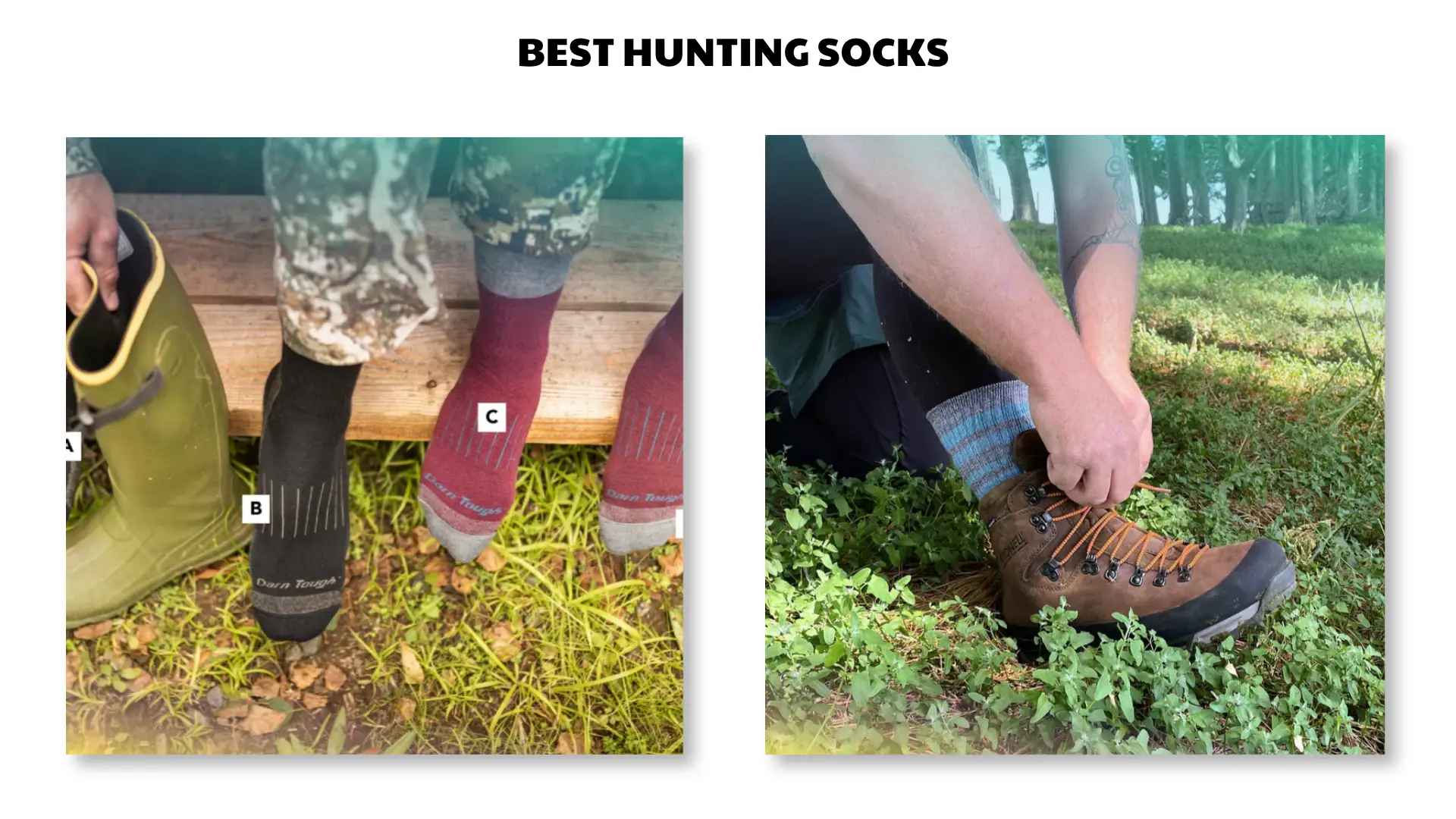

The best hunting socks do more than add softness inside a boot. They help manage sweat, protect high-pressure areas, reduce fabric movement, and keep the boot fitting as intended during long approaches, steep descents, wet mornings, and cold sits.
This guide compares ten outdoor socks for different hunting needs, including backcountry travel, cold-weather stand hunting, warm-season scouting, wool-free use, liner systems, women’s fit, and budget-minded rotation. The strongest choice is not automatically the thickest or most expensive pair. It is the sock that matches your boot volume, weather, activity level, foot shape, and trip length.
No sock guarantees warmth, prevents every blister, or replaces properly fitted boots, foot conditioning, first-aid knowledge, weather planning, and good judgment. Follow manufacturer care instructions and all local hunting, access, firearm, archery, and public-land rules.
Quick Picks
- Best Overall: Darn Tough Hiker Micro Crew Midweight Hiking Socks
- Best for Cold-Weather Stand Hunting: Smartwool Men’s Hunt Classic Edition Maximum Cushion Tall Crew Socks
- Best for Backcountry Hunting: Farm to Feet Damascus Lightweight Technical 3/4 Crew Socks
- Best Budget Multi-Pack: Danish Endurance Merino Wool Light Hiking Socks, 3-Pack
- Best Non-Wool Option: Merrell Moab Hiker Crew Socks
Best Hunting Socks Product Comparison Table
Use this table to narrow the list by weather, movement level, footwear, and fit. “Warm” or “heavy” does not mean a sock will work in a tight boot.
| Product | Best For | Key Features | Important Notes | Check Details |
|---|---|---|---|---|
| Darn Tough Hiker Micro Crew Midweight Hiking Socks | Best Overall | Merino blend, midweight cushioning, micro-crew height, low-profile toe construction | A balanced choice for active hunts; may feel warm in hot weather or tight boots. | Check Price |
| Smartwool Men’s Hunt Classic Edition Maximum Cushion Tall Crew Socks | Best for Cold-Weather Stand Hunting | Tall hunting design, maximum cushioning, merino-rich construction, extended boot coverage | Warm and bulky; confirm that insulated boots still allow toe movement and circulation. | Check Price |
| Wigwam Comfort Hiker Socks F2322 | Best Heavy Merino Option | Heavy cushioning, pile-lined interior, 62% merino wool blend, crew height | Excellent warmth and softness, but too thick for tight footwear. | Check Price |
| Farm to Feet Damascus Lightweight Technical 3/4 Crew Socks | Best for Backcountry Hunting | 44% wool blend, targeted cushioning, close technical fit, 3/4-crew coverage | Supportive fit may feel firm around the calf; size carefully. | Check Price |
| Smartwool Women’s Hike Light Cushion Crew Socks | Best Women’s Lightweight Option | Light cushioning, mesh ventilation, women’s performance fit, merino and recycled nylon blend | Excellent for active or warm hunts; not intended as a deep-winter sock. | Check Price |
| Danish Endurance Merino Wool Light Hiking Socks, 3-Pack | Best Budget Multi-Pack | Light merino blend, three-pair pack, heel and toe cushioning, breathable construction | Good value for mild conditions; not a dedicated extreme-cold option. | Check Price |
| Injinji Liner Crew Toe Socks | Best Liner for Toe Friction | Individual toe sleeves, thin Coolmax blend, crew height, no cushioning | Designed as a liner; requires enough boot volume for a second sock layer. | Check Price |
| Merrell Moab Hiker Crew Socks | Best Non-Wool Option | Synthetic moisture-wicking blend, medium cushioning, arch band, breathable panels | Useful for wool-sensitive users; odor control may differ from merino blends. | Check Price |
| Feetures Elite Light Cushion No-Show Tab Socks | Best for Low-Cut Approach Shoes | Light cushioning, anatomical left/right fit, nylon-spandex blend, heel tab | Not suitable for boots whose collars touch the ankle or lower leg. | Check Price |
| MudGear Premium Compression Socks | Best Compression Option | Knee-high compression design, breathable mesh, cushioned sole, synthetic blend | Compression fit is not appropriate for everyone; calf sizing and medical factors matter. | Check Price |
Best Hunting Socks Reviews
These reviews focus on practical field use rather than assuming one pair is ideal for every hunter. Material percentages and construction descriptions are based on currently available product information; confirm the exact size and color variant before purchase.
1. Darn Tough Hiker Micro Crew Midweight Hiking Socks
Best Overall
The Darn Tough Hiker Micro Crew Midweight is the most balanced option in this guide for hunters who walk long approaches, climb uneven ground, and still spend time sitting or glassing. Its merino-rich blend balances insulation with moisture management, while the midweight construction adds underfoot comfort without moving into bulky winter-sock territory.
Key Features
- Published product information lists a 66% merino wool, 32% nylon, and 2% spandex blend.
- Midweight cushioning protects the sole and helps reduce pressure inside supportive hunting boots.
- Micro-crew height works best with low- to mid-height boots when the cuff stays above the boot collar.
- A close, performance-oriented fit is intended to limit bunching and fabric movement.
Pros
- Versatile enough for many early- and mid-season hunts.
- Merino blend helps manage temperature, sweat, and odor during multi-day use.
- Dense knit and supportive fit suit long approaches and uneven terrain.
Cons
- May be warmer than necessary for hot-weather hunts.
- Midweight cushioning can reduce toe-box room in already snug boots.
Field Notes
Pair these socks with boots that have enough forefoot volume for the cushioning. Test the combination on stairs and descents before a hunt; any toe pressure, heel movement, or cuff rubbing usually becomes more noticeable after several miles. Carry a dry spare pair on wet or high-output days.
Safety and Legal Notes
A sock cannot correct poor boot fit or prevent every blister. Stop and address hot spots early, keep feet dry when practical, and seek medical advice for persistent numbness, discoloration, swelling, or skin damage. Follow all local hunting regulations, land-access rules, and manufacturer instructions.
Best For
Hunters wanting one dependable midweight merino sock for hiking, scouting, deer hunting, elk hunting, and general backcountry use.
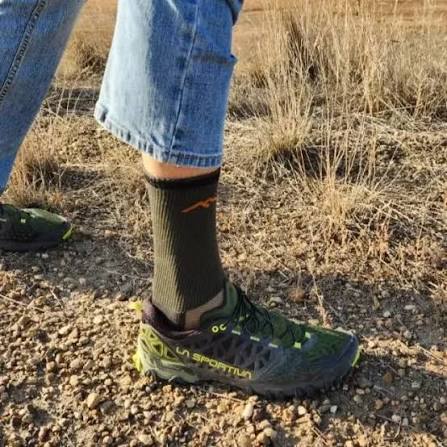
2. Smartwool Men’s Hunt Classic Edition Maximum Cushion Tall Crew Socks
Best for Cold-Weather Stand Hunting
This tall, maximum-cushion Smartwool hunting sock is built around warmth, coverage, and comfort for cold-weather hunts with long stationary periods. The extra cushioning can be useful in roomy pac boots or insulated hunting boots, especially when the day includes a mix of slow walking and extended sits.
Key Features
- Tall crew construction provides coverage for higher hunting and winter boots.
- Maximum-cushion design places substantial padding around the foot and lower leg.
- The merino-rich product family is designed for temperature and moisture management.
- A comfort-oriented knit is intended for hunting and fishing use.
Pros
- Strong option for cold stands, blinds, late-season glassing, and low-output use.
- Tall height helps protect the lower leg from boot-collar friction.
- Generous cushioning can improve comfort in stiff, high-volume boots.
Cons
- Too bulky for many close-fitting mountain boots.
- Can hold more heat and moisture during hard uphill travel.
Field Notes
Warm socks only work when the boot does not compress them. If toes cannot move freely, the combination may feel colder rather than warmer because circulation and insulating air space are reduced. For hunts with a strenuous approach followed by a long sit, consider changing into a dry pair at the stand.
Safety and Legal Notes
Do not stack thick socks until a boot becomes tight. Check feet regularly in extreme cold, and leave the field if numbness, waxy skin, unusual color, or loss of coordination develops. Follow local weather advisories and carry an emergency plan. Follow all local hunting regulations, land-access rules, and manufacturer instructions.
Best For
Late-season deer hunters, waterfowl hunters in roomy boots, and anyone prioritizing warmth during long stationary periods.
3. Wigwam Comfort Hiker Socks F2322
Best Heavy Merino Option
The Wigwam Comfort Hiker is a thick, soft merino option for hunters who need more insulation and underfoot padding than a standard midweight sock provides. Its pile-lined interior traps insulating air and gives the sole a plush feel, making it practical for cold camps, blinds, and moderate hiking in boots with adequate volume.
Key Features
- Published composition lists 62% merino wool, 34% nylon, 2% polyester, and 2% spandex.
- Heavy cushioning and a pile-lined interior add warmth and softness.
- Crew height suits many traditional hunting and hiking boots.
- Synthetic reinforcement supports shape retention and durability.
Pros
- Warm, plush feel for chilly mornings and winter use.
- High merino content supports moisture and odor management.
- Substantial underfoot cushioning helps in stiff boots.
Cons
- May crowd the toe box or raise the heel in fitted boots.
- Heavy construction dries more slowly than a lightweight sock.
Field Notes
Use these only after confirming boot volume. A thick sock that forces the foot forward can create toe impact on descents and heel lift on climbs. For multi-day hunts, rotate pairs and dry them fully rather than relying on one heavy pair throughout the trip.
Safety and Legal Notes
Thick socks do not make footwear waterproof and should not be used to compensate for soaked or poorly fitting boots. Treat persistent cold, pain, or skin breakdown as a medical concern rather than a gear problem. Follow all local hunting regulations, land-access rules, and manufacturer instructions.
Best For
Cold-weather hunters using roomy boots who value warmth and cushioning over minimum bulk.
4. Farm to Feet Damascus Lightweight Technical 3/4 Crew Socks
Best for Backcountry Hunting
The Farm to Feet Damascus is a technical, lower-bulk choice for mobile backcountry hunters. It combines wool with a high proportion of nylon for structure and abrasion resistance, then uses targeted cushioning rather than making the entire sock thick. That approach is useful when miles, boot precision, and faster drying matter more than maximum insulation.
Key Features
- Published composition lists 52% nylon, 44% wool, and 4% spandex.
- Targeted cushioning protects high-pressure zones without excessive bulk.
- A close technical fit helps limit wrinkles and movement inside the boot.
- Three-quarter crew coverage works with many backpacking and mountain-hunting boots.
Pros
- Good balance of durability, support, and temperature control.
- Lower bulk preserves a precise boot fit on steep terrain.
- Suitable for long approaches and multi-day backcountry travel.
Cons
- The supportive cuff may feel tight on larger calves.
- Not the warmest option for long, stationary late-season sits.
Field Notes
This sock works best when the boot already fits well and the hunter wants cushioning only where needed. Check cuff pressure before committing to an all-day hike. On extended trips, rinse when possible, dry away from direct heat, and rotate with a second pair.
Safety and Legal Notes
A firm fit should feel secure, not restrictive. Remove the sock and reassess sizing if it causes numbness, deep cuff marks, tingling, or swelling. Hunters with circulation concerns should consult a qualified medical professional. Follow all local hunting regulations, land-access rules, and manufacturer instructions.
Best For
Elk hunters, backpack hunters, public-land hunters, and anyone covering long distances with a carefully fitted boot.
5. Smartwool Women’s Hike Light Cushion Crew Socks
Best Women’s Lightweight Option
Smartwool’s women’s light-cushion crew is a practical warm-weather and high-output hunting sock. Its lighter knit and ventilation zones favor breathability, while cushioning under the foot adds comfort without taking much space from a properly fitted boot. The women’s-specific sizing may provide a better heel and foot-volume match for some hunters.
Key Features
- Product information lists merino wool, nylon, recycled nylon, and elastane in the fabric blend.
- Light cushioning runs under the foot without creating a heavy winter profile.
- Mesh ventilation zones help release heat and moisture.
- A low-profile toe construction is designed to reduce seam pressure.
Pros
- Breathable choice for turkey season, early archery hunts, and active scouting.
- Light profile works well in precise-fitting boots.
- Available in women’s sizing rather than relying only on unisex conversion.
Cons
- Not warm enough for extended use in severe cold.
- Light cushioning offers less isolation from very stiff boot soles.
Field Notes
Use this sock when overheating and sweat are greater concerns than extreme cold. It can also work as a dry camp or sleep sock on warmer trips. Confirm that the heel sits correctly and that the cuff clears the boot collar.
Safety and Legal Notes
Lightweight socks can still become saturated. Change wet socks, inspect the skin, and dry footwear when possible. Proper hydration, pacing, and weather planning remain more important than any single clothing item. Follow all local hunting regulations, land-access rules, and manufacturer instructions.
Best For
Women hunting in mild weather, active seasons, or fitted hiking-style boots.
6. Danish Endurance Merino Wool Light Hiking Socks, 3-Pack
Best Budget Multi-Pack
This three-pair pack is a practical entry point for beginners who need enough socks to rotate during scouting trips, weekend camps, or mild-season hunts. The light merino blend provides better field function than a basic cotton sock while keeping the per-pair cost lower than many premium technical options.
Key Features
- Published composition lists 38% merino wool, 30% acrylic, 30% polyamide, and 2% elastane.
- Light cushioning is concentrated around the heel, toe, and arch.
- A three-pair pack makes rotation and dry-spare planning easier.
- Lightweight construction favors breathability and faster drying.
Pros
- Useful value for hunters building a complete clothing system.
- Multiple pairs make it easier to change out of damp socks.
- Light profile fits many everyday hiking and hunting boots.
Cons
- Less durable and refined than some premium single-pair options.
- Insulation is limited for severe cold or long stationary hunts.
Field Notes
Treat these as mild-weather or active-use socks rather than deep-winter insulation. The multi-pack is most valuable when one pair is worn, one is drying, and one remains protected as an emergency spare.
Safety and Legal Notes
Do not keep wearing a damp pair simply because the fabric contains wool. Moisture, friction, and poor fit can still damage skin. Replace socks that have thin spots, stretched cuffs, or rough internal wear. Follow all local hunting regulations, land-access rules, and manufacturer instructions.
Best For
Beginners, budget-conscious hunters, scouting trips, and anyone who values multiple dry pairs.
7. Injinji Liner Crew Toe Socks
Best Liner for Toe Friction
The Injinji Liner Crew is not a stand-alone cold-weather hunting sock. It is a thin toe-sock liner that separates the toes and creates an additional friction-management layer under a compatible outer sock. It can be useful for hunters who repeatedly develop hot spots between toes or who have already tested a liner system successfully.
Key Features
- Individual toe sleeves separate skin surfaces that commonly rub together.
- Thin Coolmax polyester, nylon, and Lycra construction manages moisture with minimal bulk.
- Crew height sits under many hunting-sock cuffs.
- No cushioning keeps the liner low profile.
Pros
- Addresses between-toe friction that standard liners cannot isolate.
- Thin, breathable construction dries relatively quickly.
- Can be paired with several outer-sock weights.
Cons
- Takes longer to put on and may feel unfamiliar.
- Two-layer systems can overcrowd a close-fitting boot.
Field Notes
Test the complete liner, outer sock, insole, and boot combination before the hunt. A liner only helps when it lies flat and the boot still has room. Smooth every toe sleeve into place and stop if seams or fabric folds create pressure.
Safety and Legal Notes
Do not use a liner system that causes compression, numbness, or overheating. People with diabetes, neuropathy, poor circulation, or reduced foot sensation should obtain individualized medical guidance for sock and footwear choices. Follow all local hunting regulations, land-access rules, and manufacturer instructions.
Best For
Hunters prone to between-toe rubbing who have enough boot volume for a tested two-sock system.
8. Merrell Moab Hiker Crew Socks
Best Non-Wool Option
The Merrell Moab Hiker Crew is a straightforward synthetic alternative for hunters who avoid wool or want a quick-drying sock for warm conditions. The polyester-heavy blend moves moisture, while an arch band and medium cushioning provide more structure than a basic athletic sock.
Key Features
- Published composition lists 88% polyester, 10% nylon, and 2% Lycra.
- Medium cushioning adds comfort without the bulk of a heavy winter sock.
- An arch band helps the sock remain positioned on the foot.
- Breathable side zones support airflow during active travel.
Pros
- Wool-free choice for users with material preferences or sensitivities.
- Synthetic construction can dry quickly in mild conditions.
- Supportive fit and medium cushioning suit general hiking.
Cons
- May retain odor differently than merino-rich socks.
- Not designed for the coldest stationary hunts.
Field Notes
This is a useful early-season and scouting sock, particularly when boots are ventilated and conditions are warm. Rotate pairs on multi-day trips and rinse sweat and grit out of the fabric to reduce abrasion against the skin.
Safety and Legal Notes
A fast-drying synthetic sock is not waterproof. Once footwear is saturated, change into dry socks when safe, protect feet from cold exposure, and address the cause of water entry. Follow all local hunting regulations, land-access rules, and manufacturer instructions.
Best For
Hunters seeking a wool-free, medium-cushion sock for mild weather and active days.
9. Feetures Elite Light Cushion No-Show Tab Socks
Best for Low-Cut Approach Shoes
The Feetures Elite Light Cushion No-Show Tab is a niche pick for warm-weather scouting, travel, camp wear, or hunting approaches completed in low-cut trail shoes. Its anatomical design and light cushioning provide a precise feel, but the short height makes it a poor choice for traditional hunting boots.
Key Features
- Published composition lists 96% nylon and 4% spandex.
- Anatomical left- and right-foot shaping supports a close fit.
- Light cushioning protects the sole while preserving shoe volume.
- A heel tab helps keep the sock from sliding into low-cut footwear.
Pros
- Low-bulk option for hot weather and fast movement.
- Precise fit works well in trail shoes and lightweight approach footwear.
- Synthetic construction favors moisture movement and quick drying.
Cons
- Insufficient height for most hunting boots.
- Minimal insulation and lower-leg protection.
Field Notes
Use this only when the footwear collar does not rub bare skin. For actual hunting boots, select a micro-crew, crew, or over-the-calf sock that clears the boot collar. The no-show design is best treated as a specialized warm-weather option.
Safety and Legal Notes
Do not accept exposed-skin rubbing to save weight. Friction at the shoe or boot collar can quickly damage skin, particularly when dust and moisture are present. Follow all local hunting regulations, land-access rules, and manufacturer instructions.
Best For
Hot-weather scouting, travel, camp use, and low-cut approach shoes—not conventional tall hunting boots.
10. MudGear Premium Compression Socks
Best Compression Option
MudGear’s knee-high compression sock is included for hunters who prefer a supportive compression feel during travel, long approaches, or post-hunt recovery. It is not a universal replacement for a purpose-built merino boot sock, and its fit should be evaluated carefully before an all-day backcountry use.
Key Features
- Published composition lists 63% nylon, 28% polyester, and 9% spandex.
- Knee-high construction provides extensive lower-leg coverage.
- Mesh components support breathability.
- A cushioned sole adds comfort beneath the foot.
Pros
- Supportive feel may appeal to experienced compression-sock users.
- High coverage can protect the lower leg from boot and clothing friction.
- Synthetic construction is relatively low bulk for its height.
Cons
- Sizing by shoe size may not suit every calf shape.
- Not a substitute for medical-grade compression prescribed by a clinician.
Field Notes
Try these during training and travel before using them on a hunt. They must remain smooth and should not roll into a tight band. Hunters with large calves may need a model sized by both foot and calf circumference.
Safety and Legal Notes
Seek medical advice before using compression socks if you have arterial disease, significant swelling, skin infection, neuropathy, diabetes-related foot concerns, or other circulation problems. Remove the sock if it causes pain, numbness, color change, or worsening symptoms. Follow all local hunting regulations, land-access rules, and manufacturer instructions.
Best For
Experienced compression-sock users seeking knee-high support for travel, approaches, or recovery.
How to Choose the Best Hunting Socks
Choose the Right Type
Lightweight socks are best for high-output movement, warm weather, and close-fitting boots. Midweight socks are the most versatile for mixed activity and changing temperatures. Heavy or maximum-cushion socks suit cold, lower-output use, but only in boots with enough internal room.
Liner socks form a separate category. They are thin layers worn under an outer sock to manage friction or moisture. A liner system must be tested as a complete unit because adding a layer changes boot volume.
Match the Sock to Your Hunting Style
Backcountry elk and mountain hunters usually need low bulk, durable reinforcement, moisture management, and a secure fit for repeated climbing and descending. Deer stand and blind hunters may prioritize warmth and tall coverage, particularly after changing into a dry pair at the destination.
Early archery and turkey seasons often favor light cushioning and ventilation. Waterfowl hunters in rubber or neoprene boots need tall socks that manage sweat, because waterproof footwear can trap moisture even when outside water never enters.
Check Fit, Sizing, and Comfort
Use the manufacturer’s size chart rather than guessing from a generic small, medium, or large label. The heel pocket should align with the heel, and the toe area should lie flat without excess fabric. A cuff may be firm, but it should not cause numbness, deep marks, swelling, or tingling.
Walk uphill, downhill, and on stairs while wearing the exact insole, sock, and boot combination planned for the hunt. Feet often swell during long days, so a system that feels barely acceptable at home may become restrictive in the field.
Consider Weight and Packability
Socks contribute little to total pack weight, yet spare pairs have high practical value. On a multi-day trip, a useful rotation is one pair being worn, one drying, and one protected in a waterproof bag. Lightweight socks pack smaller and dry faster, while heavy socks provide more insulation but retain more moisture and take longer to dry.
Look at Materials and Durability
Merino wool is valued for temperature regulation, moisture management, and odor control. Nylon adds abrasion resistance and structure. Polyester can move moisture and dry quickly. Elastane or spandex helps the sock stay fitted. A blend is generally more durable and stable than a sock made from one fiber alone.
Inspect high-wear areas at the heel, toe, and ball of the foot. Reinforcement, dense knitting, and a stable heel pocket matter more than a marketing claim that does not match your footwear.
Think About Weather Protection
Socks are part of a footwear system, not a waterproof barrier. Warmth depends on sock insulation, boot insulation, available air space, circulation, activity, wind, moisture, and exposure time. A warm sock inside a compressed or saturated boot can perform poorly.
For cold hunts with a strenuous approach, manage sweat before the stationary period. Slow the pace when practical, vent clothing, and change into dry socks at the stand or blind.
Check Boot Compatibility
Higher boots require taller socks so the collar does not rub bare skin. Thick socks require more toe-box and instep volume. Custom insoles, aftermarket footbeds, and orthopedic devices can reduce available space, so test them with the planned sock thickness.
No-show socks are appropriate only for low-cut footwear whose collar does not contact exposed skin. They are usually a poor choice for conventional hunting boots.
Understand Cushioning
Full cushioning adds yarn around much of the foot and may improve comfort in rigid boots. Targeted cushioning adds protection only under pressure zones, preserving ventilation and boot precision. More cushioning is not automatically more supportive, and a sock cannot repair an unstable or badly fitted boot.
Understand Safety and Legal Requirements
Sock selection does not change the need to follow local hunting seasons, licensing, tag limits, blaze-orange rules, firearm and archery safety practices, land-access requirements, and manufacturer instructions. Carry navigation, first aid, water, weather protection, communication, a light source, and a trip plan appropriate to the hunt.
Understand the Product’s Limits
Hunting socks cannot guarantee dry feet, prevent frostbite, eliminate blisters, or make an unsuitable boot safe. They are one component of a system that includes footwear, gaiters, insoles, conditioning, foot care, weather judgment, and timely decisions to turn back.
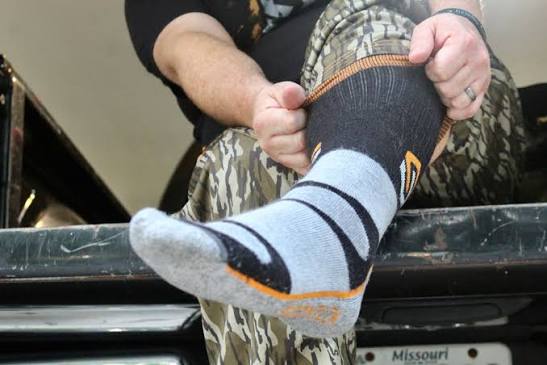
Important Hunting, Outdoor, and Firearm Safety Tips Before You Buy
- Follow local hunting laws, wildlife regulations, public-land rules, private-land permission requirements, firearm safety rules, archery safety rules, and manufacturer instructions.
- Check season dates, licenses, tags, legal equipment rules, blaze-orange requirements, transport rules, and safe-storage requirements before the trip.
- Carry navigation, first aid, water, weather protection, communication tools, a light source, emergency insulation, and a trip plan.
- Test socks with the exact boots and insoles before relying on them in the field.
- Stop at the first hot spot, numbness, unusual pressure, or skin irritation rather than hiking until the problem becomes an injury.
- Keep a dry spare pair protected from rain, creek crossings, and condensation.
- In cold conditions, monitor feet for persistent numbness, pale or waxy skin, color changes, and loss of coordination.
- Do not dry socks on an open flame, hot stove, exhaust component, or other surface that can burn fabric or start a fire.
- Store firearms securely and handle them according to the four basic firearm safety rules. Socks and other clothing should never distract from safe muzzle control and trigger discipline.
- Outdoor gear is not a substitute for training, judgment, preparation, emergency planning, or professional medical care.
Common Mistakes to Avoid
The most common buying mistake is treating warmth as a simple function of thickness. A heavy sock that crowds the boot can create pressure, sweat, and cold toes. Boot volume and circulation matter.
- Buying by brand reputation without checking the model’s exact height, weight, cushioning, and size chart.
- Wearing cotton for long, wet, cold, or high-output hunts.
- Adding two thick pairs to fix a cold boot.
- Ignoring women’s, unisex, wide-foot, and large-calf fit differences.
- Choosing a cuff that ends below the boot collar.
- Taking only one pair on a multi-day hunt.
- Leaving damp socks sealed in a pack overnight.
- Using an untested liner system on opening day.
- Assuming merino means waterproof or that any fabric prevents frostbite.
- Continuing to hike through numbness, hot spots, or broken skin.
Troubleshooting Common Problems
| Problem | Possible Cause | What to Do |
|---|---|---|
| Cold toes | Boot too tight, damp socks, low activity, inadequate insulation, or prolonged exposure | Loosen pressure, change into dry socks, add safe system-level insulation, move when appropriate, and leave dangerous conditions. |
| Heel blister or hot spot | Heel lift, moisture, sock movement, rough seam, or poor boot fit | Stop early, dry and protect the skin, adjust lacing, smooth the sock, and reassess boot fit. |
| Toe impact on descents | Boot too short, foot sliding forward, thick sock, or lacing issue | Do not add more padding. Correct heel hold and toe clearance, and consult a boot fitter if the issue repeats. |
| Socks slide down | Wrong size, stretched elastic, cuff below boot collar, or incompatible calf fit | Try the correct size or a taller, more supportive model and replace worn pairs. |
| Feet stay wet | Sweat, water entry, saturated boot liner, or socks that are too warm | Use a lighter sock, manage pace and ventilation, inspect waterproofing, and rotate dry pairs. |
| Deep cuff marks | Cuff too tight, swelling, or calf mismatch | Remove the sock, try a different cuff or size, and seek medical advice for persistent swelling or circulation symptoms. |
| Fabric bunches underfoot | Sock too large, knit stretched out, or incompatible liner combination | Choose a smaller or more structured size and remove unnecessary layers. |
| Strong odor on multi-day trips | Repeated wear, bacterial buildup, poor drying, or saturated footwear | Rotate pairs, wash or rinse according to care instructions, dry fully, and clean the boot interior. |
When to Get Professional Help
See a qualified boot fitter when heel lift, toe impact, recurring blisters, arch pain, or numbness continues after reasonable sock and lacing changes. Bring the socks, insoles, and boots you actually use so the complete system can be evaluated.
Consult a medical professional for persistent pain, swelling, numbness, skin breakdown, infection, reduced sensation, circulation concerns, or recurring cold injury. Seek urgent care for suspected frostbite, rapidly spreading redness, severe pain, loss of function, or other emergency symptoms.
Contact the manufacturer or retailer when sizing information is unclear, the product arrives with defects, materials differ from the listing, or a care issue may involve warranty coverage. Contact the local wildlife agency, land manager, or appropriate authority for current hunting, access, transport, and equipment rules.
Maintenance and Care Tips
- Read the care label for each model; fiber blends and dryer guidance vary.
- Turn cushioned socks inside out before washing when the manufacturer permits.
- Use mild detergent and avoid bleach or fabric treatments not approved by the maker.
- Air-dry or tumble-dry only at the recommended setting; excessive heat can shrink wool and damage elastic.
- Dry socks fully before storing them or sealing them in a pack.
- Remove grit, seeds, and debris that can abrade the fabric or skin.
- Rotate pairs rather than wearing one pair continuously on a multi-day hunt.
- Inspect heels, toes, seams, and cuffs for thinning, holes, hard repairs, or lost elasticity.
- Store clean socks in a dry location protected from pests.
- Replace a pair when its fit or cushioning no longer supports safe, comfortable use.
Final Verdict
For most hunters, the Darn Tough Hiker Micro Crew Midweight offers the most useful balance of merino content, cushioning, fit, and four-season versatility. Cold, stationary hunters with roomy insulated boots should consider the Smartwool Hunt Maximum Cushion Tall Crew, while mobile backcountry hunters may prefer the lower-bulk Farm to Feet Damascus.
The best hunting socks are the ones that match the entire footwear system. Choose by temperature, movement, boot volume, height, moisture management, and personal fit—not by thickness alone. Test the system before the season, carry a dry spare pair, maintain the socks correctly, and respond early to foot discomfort.
Frequently Asked Questions
1. What are the best hunting socks for most hunters?
A midweight merino-blend crew or micro-crew sock is the most versatile starting point. It should fit smoothly, clear the boot collar, and leave enough room for toe movement.
2. Are merino wool socks good for hunting?
Yes. Merino blends are popular because they manage moisture, provide insulation, and control odor better than many basic fabrics. Nylon and elastane are usually added for durability, shape, and fit.
3. Should hunting socks be thick or thin?
Choose thickness by temperature, activity level, and boot volume. Thin or light socks favor breathability and precise fit, while heavy socks favor insulation but need more room inside the boot.
4. What sock height works best with hunting boots?
The cuff should sit above the boot collar. Micro-crew or crew socks work with many hiking-style boots, while tall crew or over-the-calf socks suit high hunting, rubber, and winter boots.
5. How should hunting socks fit?
They should be snug without restricting circulation. The heel pocket should align with your heel, the toe area should lie flat, and no fabric should bunch under the arch or around the ankle.
6. Can thick socks make feet colder?
Yes. If thick socks make the boot tight, they can reduce toe movement, compress insulation, and restrict circulation. A thinner sock in a properly fitted boot may feel warmer.
7. Are cotton socks suitable for hunting?
Cotton absorbs moisture and dries slowly, so it is usually a poor choice for long, wet, cold, or high-output hunts. Merino blends and technical synthetics are generally more practical.
8. What are the best hunting socks for cold weather?
A tall, heavy or maximum-cushion merino-blend sock can work well in a roomy insulated boot. Warmth also depends on dry feet, boot insulation, circulation, activity, and exposure time.
9. What are the best hunting socks for warm weather?
Choose a light-cushion merino or synthetic sock with ventilation and a secure fit. Avoid excess thickness, and carry a dry pair if your feet sweat heavily.
10. What are the best hunting socks for backcountry hunts?
Look for a durable light- or midweight merino blend with targeted cushioning, a close fit, and quick-drying construction. Pack at least one protected spare pair.
11. What are the best socks for elk hunting?
Elk hunters often benefit from a fitted midweight sock for long climbs and descents. The right choice should preserve boot precision, cushion pressure points, and manage sweat.
12. What are the best socks for deer stand hunting?
For cold, stationary use, choose a warm merino-blend sock that fits inside an insulated boot without compression. Changing into a dry pair after the walk to the stand can improve comfort.
13. What socks work for waterfowl hunting?
Tall merino-blend socks are useful under rubber or neoprene boots, provided the boots fit correctly. Moisture management is important because waterproof boots can trap sweat.
14. What socks work for turkey hunting?
Turkey hunting often involves mild temperatures and frequent walking, so a light or midweight crew sock is usually appropriate. Match the height to the boot and the cushion to the terrain.
15. What socks work for bow hunting?
Bow hunters should prioritize quiet, comfortable movement rather than a special sock label. A secure merino or synthetic blend that prevents bunching and fits the boot is a practical choice.
16. Do hunting socks prevent blisters?
No sock can prevent every blister. A proper sock can reduce moisture, wrinkles, and friction, but boot fit, lacing, foot care, conditioning, terrain, and early hot-spot treatment also matter.
17. Should I wear liner socks for hunting?
Liners can help some hunters by adding a low-friction layer, especially between toes. They only work when the full two-sock system fits without crowding the boot.
18. Are toe socks useful for hunting?
Toe socks can separate rubbing skin surfaces and may help people who develop between-toe hot spots. Test them during training because the feel and fit are different from standard socks.
19. How many pairs of socks should I take hunting?
For a day hunt, one spare pair is a sensible minimum. Multi-day trips usually require enough pairs to rotate between wearing, drying, and keeping one protected for emergencies.
20. Should I change socks during a hunt?
Change when socks become wet, gritty, stretched, or uncomfortable. A dry change before a long stationary period can also help in cold weather.
21. Can I wear two pairs of hunting socks?
Yes, when using a tested liner system and a boot with enough volume. Two thick socks usually create more pressure and heat than benefit.
22. How do I know whether my boots have enough sock volume?
With the planned sock system, your toes should move freely and should not hit the front on descents. The heel should stay controlled without numbness or pressure across the forefoot.
23. Do women’s hunting socks fit differently?
Some women’s models use different size ranges, heel shapes, and foot volumes. Performance depends more on actual fit than the gender label, so compare the brand’s size chart with your foot.
24. Can youth hunters wear adult hunting socks?
Only when the size truly fits. Excess fabric can bunch and create friction, while an overly tight cuff can restrict comfort and circulation.
25. Are hunting socks waterproof?
Most hunting socks are not waterproof. They manage moisture inside the boot, while waterproofing comes primarily from the footwear system and gaiter or pant setup.
26. Do merino socks stay warm when wet?
Wool can retain some insulating function when damp, but wet feet still lose heat and face greater skin risk. Change socks and dry footwear rather than relying on this property.
27. Do hunting socks need cushioning?
Cushioning can reduce pressure under the heel and forefoot, but more is not always better. Select enough cushion for the boot and terrain without changing fit.
28. What is targeted cushioning?
Targeted cushioning places extra yarn under high-pressure zones while keeping other areas thinner. It can provide comfort with less heat and bulk than full cushioning.
29. Are over-the-calf socks better for hunting?
They provide more coverage and can stay above tall boots, but they are warmer and may feel tight on some calves. Choose them for boot height and conditions, not automatically.
30. How important is a seamless toe?
A low-profile or smooth toe seam can reduce pressure and rubbing, especially in precise-fitting boots. The entire sock still needs to lie flat.
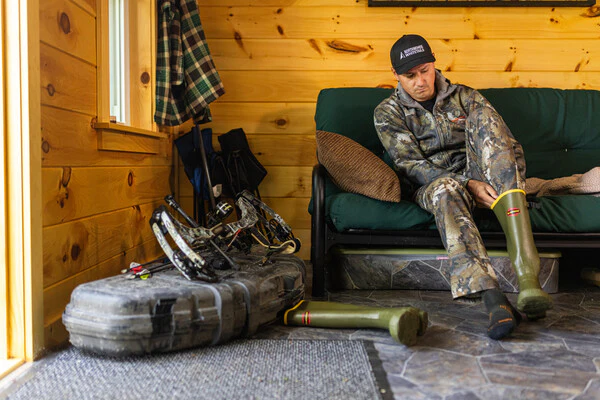
31. What is the best sock material for sweaty feet?
Light merino blends and moisture-wicking synthetics are common choices. Ventilated boots, dry spares, foot hygiene, and pacing are equally important.
32. Do synthetic hunting socks smell more than merino?
Odor performance varies by fiber, treatment, sweat level, and care. Merino is often favored for multi-day odor control, while synthetics may dry faster.
33. How often should hunting socks be washed?
Wash them when dirty, heavily sweated, or according to the manufacturer’s care guidance. On trips, airing and rotating pairs can extend usable time between full washes.
34. How should merino hunting socks be washed?
Follow the label, use a gentle cycle when allowed, and avoid harsh bleach or excessive heat. Turning socks inside out can help clean the cushioned interior.
35. Can hunting socks go in a dryer?
Some can be tumble-dried on low, while others are better air-dried. Follow the specific care label because high heat can shrink fibers and weaken elastic.
36. How should hunting socks be stored?
Store them clean, completely dry, and away from moisture and pests. Avoid leaving them compressed in a damp pack or sealed with muddy gear.
37. When should hunting socks be replaced?
Replace them when cushioning is flattened, elastic no longer holds, thin spots appear, seams become rough, or fit changes enough to create movement.
38. Can I repair a small hole in a hunting sock?
A careful repair can extend casual use, but a ridge or stiff patch may cause friction inside a boot. Test repaired socks before relying on them in the field.
39. Are expensive hunting socks worth it?
Premium socks may provide better fit, durable knitting, material quality, and warranty support. Value still depends on whether the model matches your boot and conditions.
40. What is a good budget hunting sock?
A light merino-blend multi-pack can be a sensible budget choice for mild weather. Prioritize correct fit and enough spare pairs over branding.
41. Should I buy socks before or after hunting boots?
Choose the sock system before final boot fitting whenever possible. Socks change internal volume, heel position, and toe space.
42. How do insoles affect sock choice?
Thicker or high-volume insoles reduce room for socks, while low-volume insoles may leave more space. Test the exact insole, sock, and boot combination together.
43. Can tight sock cuffs cause problems?
Yes. Deep marks, tingling, numbness, swelling, or color change indicate the fit may be too restrictive. Try a different size, cuff design, or professional guidance.
44. Are compression socks good for hunting?
Some experienced users like them for travel or support, but they are not appropriate for everyone. Medical conditions, calf sizing, and boot fit should be considered.
45. Who should ask a clinician before wearing compression socks?
People with arterial disease, significant circulation problems, neuropathy, diabetes-related foot concerns, skin infection, or unexplained swelling should seek individualized advice.
46. What should I do when a hot spot starts?
Stop early, remove the boot, dry and inspect the area, smooth the sock, and adjust the fit. Use an appropriate blister-prevention method from your first-aid plan before skin breaks.
47. Why do my socks slide down in hunting boots?
The sock may be too large, stretched out, too short for the boot, or paired with a boot that rubs the cuff. A better size or taller performance sock often helps.
48. Why do my toes feel numb in hunting boots?
Common causes include tight lacing, thick socks, inadequate boot width, swelling, or cold exposure. Stop and correct the issue; persistent numbness requires professional evaluation.
49. Why are my feet wet even in waterproof boots?
Sweat can accumulate inside waterproof footwear, and water can also enter over the cuff or through damage. Use moisture-managing socks, adjust activity and layers, and inspect the boots.
50. How do I dry socks in the backcountry?
Wring gently when appropriate, air them in a ventilated place, and use body heat cautiously. Keep them away from open flames, stove surfaces, and heat that can damage fibers.
51. Should I sleep in my hunting socks?
A clean, dry, non-restrictive pair can be comfortable in camp. Do not sleep in the damp pair worn all day, and ensure the cuff does not impair comfort or circulation.
52. What should I test before hunting season?
Test sock size, boot volume, lacing, downhill toe clearance, heel hold, drying time, and comfort across realistic mileage. Do not debut an untested system on opening morning.
53. What emergency foot-care items should I carry?
Carry a small first-aid kit with the blister supplies you know how to use, plus a dry sock pair. A kit does not replace training, medical care, navigation, communication, or an emergency plan.
54. Do hunting regulations affect sock choice?
Socks are rarely regulated directly, but the full clothing system may need to meet blaze-orange or other visibility rules. Check current wildlife, land-access, and equipment regulations locally.
55. When should I see a boot fitter or medical professional?
Get help for repeated blisters, persistent pain, numbness, swelling, skin damage, unusual color, or a boot fit you cannot correct. Seek urgent care for signs of frostbite, infection, or serious injury.