
Affiliate disclosure: This article contains Amazon affiliate links. As an Amazon Associate, the site may earn from qualifying purchases at no additional cost to the buyer.
Safety and legal note: Camouflage never replaces required blaze orange or other legally mandated visibility. Obtain proper licenses, follow legal seasons and land-access rules, use all hunting equipment responsibly, and check current federal, state, provincial, local, and property-specific regulations.
Key Takeaways
- Build a system: moisture-managing base layer, adjustable insulation, and a weather shell selected for the forecast.
- Avoid cotton next to skin during cold or wet hunts because it holds moisture and dries slowly.
- Quiet fabric matters for close-range hunting, but fit, temperature control, legal visibility, and weather protection matter just as much.
- Buy enough room for layers without creating loose fabric that catches on brush or interferes with safe equipment use.
- Camouflage never replaces required blaze orange, correct target identification, ethical hunting, or compliance with local laws.
Quick Picks:
- Best Overall: TIDEWE Hunting Clothes for Men with Face Mask on Amazon
- Best Budget Set: NEW VIEW Quiet Hunting Clothes for Men on Amazon
- Best Premium Lightweight Layer: SITKA Gear Core Lightweight Hoody on Amazon
- Best Premium Mid-Layer: SITKA Gear Fanatic Hoody on Amazon
- Best Cold-Weather Jacket: Mossy Oak Sherpa 2.0 Fleece Lined Camo Hunting Jacket on Amazon
- Best Rain Layer: FROGG TOGGS Men’s Classic All-Sport Rain Suit on Amazon
- Best Merino Base-Layer Set: Merino.tech Men’s Merino Wool Base Layer Set on Amazon
- Best Warm-Weather Top: BASSDASH UPF 50+ Men’s Hunting Hoodie with Mask on Amazon
Best Hunting Clothes Comparison Table
| Product | Best For | Type | Season | Weather Role | Fit / Layering | Check Price |
|---|---|---|---|---|---|---|
| TIDEWE Hunting Clothes for Men with Face Mask | Best Overall Hunting Set | Insulated jacket-and-pants set | Cool to cold weather | Water-resistant outer treatment; not a substitute for a dedicated rain shell | Layer-friendly set with adjustable details | Check Price on Amazon |
| NEW VIEW Quiet Hunting Clothes for Men | Best Quiet Value Set | Quiet insulated camo suit | Mid to late season | Water-resistant and wind-blocking design; verify current listing details | Jacket-and-pants sizing with room for base layers | Check Price on Amazon |
| SITKA Gear Core Lightweight Hoody | Best Premium Lightweight Layer | Lightweight hooded base or next-to-skin layer | Warm weather through layered cold-weather use | Fast-drying layer; pair with a shell for wind or rain | Athletic fit designed for unrestricted layering | Check Price on Amazon |
| SITKA Gear Fanatic Hoody | Best Premium Mid-Layer | Technical fleece hoody | Cool weather and layered late season | Breathable insulating layer; outer protection needed in heavy weather | Close, technical fit for clean layering | Check Price on Amazon |
| MOPHOTO 5-in-1 Ghillie Suit | Best 3D Concealment | Leafy or thread-style concealment suit | Mild weather over an appropriate base system | Concealment layer, not a weatherproof shell | Loose overlay intended to fit over clothing | Check Price on Amazon |
| MERIWOOL Men’s Heavyweight Merino Wool Half-Zip Base Layer | Best Heavyweight Merino Top | Heavyweight merino base or mid-layer | Cold weather | Warm, breathable layer; requires an outer shell for precipitation | Close but layerable half-zip top | Check Price on Amazon |
| BASSDASH Invis Men’s Stretch Hunting Pants | Best Stretch Hunting Pants | Stretch soft-shell style hunting pants | Early to mid-season, or layered in cooler weather | Light-weather protection; verify selected variant | Mobility-oriented stretch fit | Check Price on Amazon |
| Mossy Oak Men’s Long Sleeve Cotton Mill Hunt Shirt | Best Traditional Hunting Shirt | Cotton-blend long-sleeve field shirt | Mild weather | Breathable field shirt; not intended for prolonged wet or freezing exposure | Traditional button-front hunting fit | Check Price on Amazon |
| Mossy Oak Sherpa 2.0 Fleece Lined Camo Hunting Jacket | Best Traditional Cold-Weather Jacket | Fleece-lined camouflage jacket | Cold mid to late season | Warm outer or insulation layer; verify rain-protection details | Relaxed enough for base and mid-layers | Check Price on Amazon |
| FROGG TOGGS Men’s Classic All-Sport Rain Suit | Best Rain Layer | Waterproof jacket-and-pants shell | All seasons as emergency or planned rain protection | Waterproof and wind-resistant shell system | Generous fit intended to go over clothing | Check Price on Amazon |
| Merino.tech Men’s Merino Wool Base Layer Set | Best Merino Base-Layer Set | Merino top-and-bottom thermal set | Cool to cold weather | Moisture-managing insulation worn beneath protective layers | Close next-to-skin or low-bulk fit | Check Price on Amazon |
| Allen Company Vanish Camo Balaclava | Best Lightweight Face Cover | Stretch camouflage head and face layer | Mild to cool weather | Light coverage from sun, breeze, and insects; not extreme-cold protection | Stretch-fit head and face covering | Check Price on Amazon |
| LOOGU Men’s Water-Resistant Quiet Camo Hunting Pants | Best Budget Hunting Pants | Quiet multi-pocket camouflage pants | Mild to cool weather | Light water resistance; not a waterproof rain pant | Regular field fit with practical pocketing | Check Price on Amazon |
| Realtree Men’s All-Season Lightweight Hunting Pants | Best Lightweight All-Season Pants | Lightweight moisture-managing camouflage pants | Warm to cool weather with optional base layer | Breathable light protection; add rain gear when needed | Lightweight active fit | Check Price on Amazon |
| BASSDASH UPF 50+ Men’s Hunting Hoodie with Mask | Best Warm-Weather Hunting Top | Lightweight sun-protective hooded shirt | Spring, summer, and early season | Sun and light environmental coverage; not rain or cold protection | Stretch performance-shirt fit | Check Price on Amazon |
The TIDEWE and NEW VIEW sets are the easiest coordinated outer systems for value-focused buyers. SITKA’s Core Lightweight and Fanatic hoodies are premium specialist layers rather than complete outfits. The Mossy Oak Sherpa jacket and heavyweight merino choices favor cold stationary hunts, while BASSDASH and Realtree lightweight garments better suit active or warm conditions. The FROGG TOGGS suit has the clearest dedicated rain role, and the MOPHOTO ghillie suit provides specialist concealment rather than warmth or waterproofing.
How We Selected the Best Hunting Clothes
Selection focused on products that solve distinct clothing-system problems rather than listing 15 similar camouflage suits. The comparison includes established outdoor brands, popular marketplace options, complete sets, individual layers, warm- and cold-weather pieces, and weather protection. No private laboratory results or personal field tests are claimed. When a specification varies by size or listing, the description remains general and encourages the buyer to verify the current product page.
1. TIDEWE Hunting Clothes for Men with Face Mask on Amazon
Best Overall Hunting Set
Short Overview
The TIDEWE hunting set is a practical starting point for hunters who want a coordinated jacket and pants instead of building an outer layer one piece at a time. Its fleece-lined construction is intended for cool and cold conditions, especially when the user will alternate between walking and stationary periods. The set includes hunting-focused details such as multiple pockets, a face-covering option, and access intended to work around common safety-harness arrangements. A quiet outer surface is useful for bowhunting and close-range deer setups, although every fabric should be tested against brush and the rest of the user’s equipment before the season. The water-resistant treatment can handle light moisture better than untreated casual clothing, but prolonged rain still calls for purpose-built waterproof protection. Because both garments are included, buyers should check the jacket, waist, inseam, and layering room rather than choosing size from a casual shirt alone. The set works best as the outer portion of a system worn over a moisture-managing base layer. For buyers who want broad utility, coordinated camouflage, and cold-weather comfort without immediately moving into premium separates, it is the strongest all-around option in this comparison.
Key Features
- Coordinated camouflage jacket and pants
- Fleece-lined construction for cooler hunts
- Multiple storage pockets for small field essentials
- Integrated face-covering and hood-related coverage
- Design details intended to accommodate common hunting use
Pros
- Complete outer-clothing solution in one purchase
- Useful balance of warmth, storage, and concealment
- Good choice for deer stands and ground blinds
- Layer-friendly for changing temperatures
Cons
- May feel too warm during high-output walking
- Water resistance should not be confused with full waterproofing
- A two-piece set may not fit every body equally well in one size
Who It’s Best For
Deer, turkey, and general big-game hunters who want a value-oriented jacket-and-pants system for cool-weather use.
2. NEW VIEW Quiet Hunting Clothes for Men on Amazon
Best Quiet Value Set
Short Overview
The NEW VIEW quiet hunting suit is designed for hunters who place fabric noise and concealment near the top of the buying list. It combines a camo jacket and pants with insulation-oriented construction for cooler conditions. The soft exterior is more suitable for slow movement near game than hard, crinkly rainwear, though no garment is silent in every temperature or against every branch. A removable hood and zippered storage help the set adapt between an open stand, ground blind, and active walk. Its water-resistant design is useful in damp brush and brief light precipitation, but a separate rain layer remains the responsible choice for sustained wet weather. The suit offers an accessible alternative to premium technical systems for hunters who mainly need quiet warmth and practical storage. Buyers should compare the exact selected variation because camouflage pattern, size availability, and minor details can change within marketplace listings. This is a sensible value pick for whitetail hunters who expect cool temperatures and controlled, low-noise movement.
Key Features
- Quiet-touch exterior intended for close-range hunting
- Insulated jacket-and-pants combination
- Removable hood on applicable listing variation
- Zippered pockets for controlled storage
- Multiple camouflage pattern choices on current variants
Pros
- Good concealment-and-warmth package for the money
- Softer surface than many hard-shell garments
- Complete coordinated set
- Useful for stand and blind hunting
Cons
- Not a dedicated waterproof storm system
- Warm construction can trap heat during long hikes
- Marketplace variations require careful size and feature checks
Who It’s Best For
Budget-conscious whitetail and bowhunters seeking a quiet, insulated camouflage set for stationary or low-movement hunts.
3. SITKA Gear Core Lightweight Hoody on Amazon
Best Premium Lightweight Layer
Short Overview
The SITKA Core Lightweight Hoody is a versatile technical layer for hunters who need moisture management, sun coverage, and concealment without heavy insulation. It can serve as a standalone warm-weather top or the first technical layer beneath fleece and outerwear. The hood, integrated face coverage, and long sleeves reduce exposed skin in open terrain and during early-season hunts. Its lightweight synthetic construction is intended to move perspiration away from the body and dry more efficiently than cotton. That makes it especially useful for western spot-and-stalk hunts, turkey hunting, and long approaches where overheating is a bigger concern than insulation. The garment is not a rain jacket or windproof shell, so buyers should view it as one part of a complete clothing system. Premium pricing makes the most sense for hunters who will use the hoody across several seasons and activities. For a refined lightweight layer that works from warm mornings to a cold-weather base system, it is the premium pick.
Key Features
- Lightweight synthetic fabric for moisture management
- Integrated hood and face coverage
- Long-sleeve design for sun and concealment coverage
- Low-bulk construction for layering
- Available in hunting-oriented colors and patterns
Pros
- Highly versatile across seasons
- Low bulk under insulation and shells
- Useful head and face coverage
- Better moisture handling than a cotton hunting shirt
Cons
- Costs more than basic performance shirts
- Provides limited insulation by itself
- Requires an outer shell in sustained wind or rain
Who It’s Best For
Active hunters, western hunters, turkey hunters, and premium buyers who want a lightweight technical foundation for a layered system.
4. SITKA Gear Fanatic Hoody on Amazon
Best Premium Mid-Layer
Short Overview
The SITKA Fanatic Hoody is a technical fleece layer aimed at hunters who want warmth, moisture control, and integrated concealment features in one top. It sits between a lightweight base layer and a heavier jacket, making it useful during variable fall conditions. The hood and built-in face coverage reduce the need to manage a separate mask when game approaches. A fitted construction helps the garment layer under outerwear without excessive bunching around the shoulders and torso. The fabric is better suited to managing activity than a bulky casual sweatshirt, although the exact comfort range depends on wind, humidity, exertion, and the rest of the system. It is particularly useful for whitetail hunters who walk to a stand and then add a warmer outer layer after cooling down. The hoody is not intended to replace a waterproof shell or a high-loft stationary insulation piece in severe cold. It earns the premium mid-layer position because it combines warmth, coverage, and hunting-specific usability without unnecessary bulk.
Key Features
- Technical fleece construction
- Integrated hood and face-mask coverage
- Layer-friendly athletic profile
- Designed for moisture management during activity
- Hunting-specific camouflage and field details
Pros
- Strong balance of warmth and breathability
- Reduces the need for a separate face mask
- Layers cleanly under a jacket
- Useful through a broad part of deer season
Cons
- Premium cost for a mid-layer
- Too warm for many early-season conditions
- Still needs wind and rain protection when weather turns
Who It’s Best For
Whitetail and cool-weather hunters who want a premium fleece layer with integrated head and face coverage.
5. MOPHOTO 5-in-1 Ghillie Suit on Amazon
Best 3D Concealment
Short Overview
The MOPHOTO 5-in-1 Ghillie Suit is a specialist concealment option for hunters who need more visual breakup than a flat camouflage print provides. The kit typically combines upper and lower body pieces with head, equipment-covering, and storage components in a coordinated package. Its three-dimensional texture can disrupt the human outline in brush, field edges, and wooded environments when the pattern matches local vegetation. Because it is an overlay, the suit should be worn over season-appropriate base, insulation, and weather layers rather than treated as complete clothing by itself. Loose material can catch on branches and equipment, so users should practice moving safely and confirm that nothing blocks vision, hearing, or equipment controls. A ghillie suit is most effective when movement is limited and the hunter has also considered background, shadow, wind, and local visibility requirements. It should never cover legally required blaze orange or other mandatory high-visibility garments. For turkey hunting, photography, and carefully planned ground setups, this is the most specialized concealment choice in the list.
Key Features
- Multi-piece three-dimensional camouflage kit
- Loose overlay construction for outline breakup
- Head and upper-body concealment components
- Packable storage bag
- Multiple environment-oriented color options
Pros
- Stronger visual breakup than flat-print clothing
- Complete multi-piece concealment package
- Can be worn over different seasonal layers
- Useful for turkey hunting and stationary ground setups
Cons
- Can snag on brush and equipment
- Does not provide reliable weather protection
- May conflict with blaze-orange laws if used incorrectly
Who It’s Best For
Turkey hunters, wildlife photographers, and stationary ground hunters who need specialized 3D concealment and can manage loose material safely.
6. MERIWOOL Men’s Heavyweight Merino Wool Half-Zip Base Layer on Amazon
Best Heavyweight Merino Top
Short Overview
The MERIWOOL heavyweight half-zip is a cold-weather foundation for hunters who prefer natural-fiber moisture management and warmth. Merino wool is useful in a hunting system because it can manage moisture, remain comfortable across changing activity levels, and resist odor better than many basic synthetic shirts. The half-zip opening allows quick ventilation during a climb or walk to the stand. Its heavier construction is better suited to cold conditions than hot early-season hunts, and active users may still need to remove or vent it to avoid sweating. The top can be worn next to skin or over a lighter base, depending on personal sensitivity and the selected size. Like all wool garments, it requires care around rough hook-and-loop fasteners, sharp brush, and high-heat laundering. It does not block strong wind or sustained rain, so a suitable outer layer remains essential. For hunters who want a warm, odor-conscious merino top for long cold sits, this is the best heavyweight natural-fiber option.
Key Features
- Merino wool construction
- Heavyweight warmth for cold conditions
- Half-zip neck for ventilation
- Natural moisture and odor-management advantages
- Low-profile shape for use beneath outer layers
Pros
- Warm without relying on a bulky casual sweatshirt
- Useful odor management for multi-day use
- Ventilation is easy to adjust
- Comfortable foundation for cold stand hunts
Cons
- Can be too warm for strenuous approaches
- Wool requires more careful laundering and storage
- Not a windproof or waterproof outer garment
Who It’s Best For
Cold-weather stand hunters, campers, and buyers who prefer a warm merino wool top in a layered clothing system.
7. BASSDASH Invis Men’s Stretch Hunting Pants on Amazon
Best Stretch Hunting Pants
Short Overview
BASSDASH Invis stretch hunting pants are built for hunters who need mobility, practical pockets, and a quieter alternative to stiff work pants. The stretch construction is useful when stepping over deadfall, kneeling, climbing slopes, or sitting for long periods. A hunting-focused pocket layout helps keep small items organized without relying entirely on a backpack. The fabric is better suited to mild and cool conditions than severe stationary cold unless combined with a suitable base layer. Any water-resistance claim should be treated as protection from light moisture rather than a guarantee for prolonged rain. The pants are a particularly good fit for turkey hunting, early deer season, scouting, and active spot-and-stalk use. Sizing should be checked with the base layer and belt system the hunter plans to wear. They are the strongest mobility-focused pants here for buyers who want useful field features without the price of premium technical trousers.
Key Features
- Stretch fabric for active movement
- Multiple field-oriented pockets
- Camouflage patterns for common hunting terrain
- Quiet-touch construction compared with many hard shells
- Compatible with lightweight base-layer use
Pros
- Good freedom of movement
- Practical for active hunting and scouting
- Useful storage without excessive bulk
- More affordable than many premium technical pants
Cons
- Not intended as extreme-cold insulation
- Light water resistance is not storm protection
- Fit may vary by waist, thigh, and inseam proportions
Who It’s Best For
Mobile deer and turkey hunters who prioritize stretch, pockets, and a quieter feel in mild to cool weather.
8. Mossy Oak Men’s Long Sleeve Cotton Mill Hunt Shirt on Amazon
Best Traditional Hunting Shirt
Short Overview
The Mossy Oak Cotton Mill Hunt Shirt is a traditional choice for hunters who prefer a button-front field shirt over a technical hoody. Its cotton-rich feel is comfortable in dry, mild conditions and works well for dove fields, turkey season, casual scouting, and camp use. A small amount of stretch improves mobility compared with rigid all-cotton workwear. The familiar pocketed design provides convenient access to small items and can be worn open over a lightweight performance base. Cotton absorbs and holds moisture, so this shirt is not the best next-to-skin option for cold, wet, or remote hunts where drying time matters. It offers useful camouflage and a classic appearance without the specialized construction or cost of a premium technical garment. Buyers should choose it for comfort and traditional styling, not as a substitute for insulation or rain protection. For dry early-season conditions and hunters who like conventional field clothing, it is the best traditional shirt in the group.
Key Features
- Cotton-rich stretch blend
- Long sleeves and button-front construction
- Traditional chest-pocket field design
- Mossy Oak camouflage choices
- Comfortable casual-to-field crossover use
Pros
- Comfortable familiar feel
- Works well in dry mild weather
- Useful for camp and casual outdoor wear
- Classic hunting-shirt layout
Cons
- Cotton dries more slowly than technical synthetics
- Not appropriate as the main cold-and-wet-weather layer
- Limited insulation and wind protection
Who It’s Best For
Traditionalists, dove and turkey hunters, and casual outdoorsmen hunting mainly in dry, mild conditions.
9. Mossy Oak Sherpa 2.0 Fleece Lined Camo Hunting Jacket on Amazon
Best Traditional Cold-Weather Jacket
Short Overview
The Mossy Oak Sherpa 2.0 jacket is a comfort-first cold-weather option for hunters who want substantial fleece warmth in familiar camouflage. Its lined construction is well suited to deer stands, ground blinds, and other low-output situations where heat retention matters more than minimum pack weight. The soft surface is generally more appropriate for quiet whitetail use than a stiff storm shell. A relaxed field fit gives the hunter room for a moisture-wicking base layer and a thin mid-layer, but excessive layering can still restrict movement. The jacket should be vented or carried during a demanding walk to reduce sweat before the stationary part of the hunt. Although it can manage ordinary outdoor exposure, buyers should verify current water-resistance details and carry dedicated rain protection when wet weather is likely. The bulk is a tradeoff: it feels comfortable in a stand but takes more pack space than premium high-efficiency insulation. For traditional late-season warmth at a more accessible price than high-end systems, it is the standout jacket.
Key Features
- Soft fleece or sherpa-style lining
- Camouflage outer fabric
- Layer-friendly cold-weather cut
- Field pockets for accessible storage
- Quiet-oriented construction for stationary hunting
Pros
- Warm and comfortable for long stationary sits
- Soft exterior is suitable for close-range whitetail use
- Simple familiar jacket design
- Good value for cold-weather hunters
Cons
- Bulky for long-distance backpack hunting
- Can cause overheating during strenuous movement
- Should not replace a verified waterproof shell
Who It’s Best For
Whitetail hunters, blind hunters, and late-season users who prioritize soft warmth and traditional styling over ultralight packability.
10. FROGG TOGGS Men’s Classic All-Sport Rain Suit on Amazon
Best Rain Layer
Short Overview
The FROGG TOGGS Classic All-Sport Rain Suit fills the weather-protection role that many quiet camouflage garments cannot. It includes a jacket and pants designed to be worn over existing layers when rain and wind become the main concern. The nonwoven construction is lightweight and packable compared with many heavy coated rain suits. Its roomy fit helps it cover insulation, but buyers should use the manufacturer’s size guidance because ordinary clothing size may lead to an oversized result. The surface can make more noise than brushed hunting fabric, so it is best viewed as weather insurance rather than the quietest close-range bowhunting outer layer. It is also less resistant to thorns and repeated abrasion than rugged premium shells, making careful movement important. The suit adds no meaningful insulation by itself and should be paired with season-appropriate layers. For hunters who need affordable, proven rain protection that can stay in a pack until required, it is the best dedicated rain option.
Key Features
- Waterproof jacket-and-pants set
- Lightweight nonwoven shell material
- Adjustable hood and weather-sealing details
- Generous over-clothing fit
- Packable for emergency use
Pros
- Provides dedicated rain protection
- Light enough to keep in a daypack
- Useful over many different hunting systems
- Strong value for occasional wet-weather use
Cons
- Noisy compared with brushed hunting outerwear
- Can be damaged by thorns and hard abrasion
- Roomy sizing needs careful selection
Who It’s Best For
Hunters who need an affordable waterproof layer for the pack and understand the tradeoff between weather protection, noise, and abrasion resistance.
11. Merino.tech Men’s Merino Wool Base Layer Set on Amazon
Best Merino Base-Layer Set
Short Overview
The Merino.tech base-layer set gives hunters both a top and bottom for building a cold-weather foundation. Merino wool helps manage moisture and odor while providing useful warmth without the clammy feel of wet cotton. A coordinated set is convenient for stand hunters who need insulation across the torso and legs. The selected weight should match activity: heavier wool is better for stationary cold, while lighter versions are more comfortable during long approaches. The garments should fit close enough to move moisture but not so tightly that circulation or mobility is reduced. Wool fibers can be more vulnerable to abrasion and careless washing than basic polyester thermals, so the care instructions matter. This set does not replace a windproof or waterproof outer system. For buyers who want the odor and comfort benefits of merino in a complete base-layer package, it offers the best top-and-bottom solution.
Key Features
- Merino wool top and bottom
- Natural moisture and odor management
- Low-bulk thermal foundation
- Multiple warmth-weight options on applicable listings
- Suitable beneath hunting pants and jackets
Pros
- Complete base-layer system
- Comfortable across changing activity levels
- Useful for multi-day hunts
- Warmer and safer in cold conditions than cotton underwear
Cons
- Requires careful size and fabric-weight selection
- Wool needs appropriate washing and storage
- Can cost more than basic synthetic thermals
Who It’s Best For
Cold-weather hunters and multi-day users who want a coordinated merino top-and-bottom base layer.
12. Allen Company Vanish Camo Balaclava on Amazon
Best Lightweight Face Cover
Short Overview
The Allen Company Vanish balaclava is a simple way to cover exposed skin without adding a heavy hood. It is useful for turkey hunting, archery season, ground blinds, and other situations where the face can stand out against a dark background. The stretch construction fits beneath many hats and hoods and can be packed in a small pocket. Lightweight coverage can also reduce contact with sun, breeze, dust, and insects, although it should not be treated as certified extreme-weather protection. Hunters must verify that the eye opening does not reduce peripheral vision and that the fabric does not interfere with hearing, eyewear, or safe equipment use. Moisture from breath can fog glasses in certain conditions, so users should test the mask with their actual optics before the hunt. It complements a clothing system but does not add the torso or limb insulation provided by the main garments in this guide. For inexpensive, packable face concealment, it is the most practical accessory layer.
Key Features
- Stretch-fit camouflage face and head coverage
- Low-bulk design for use under hats and hoods
- Packable lightweight construction
- Open eye area for visibility
- Useful concealment for turkey and archery hunting
Pros
- Easy to carry as a backup face cover
- Reduces exposed skin in close-range setups
- Works with many existing clothing systems
- Affordable specialist accessory
Cons
- Provides limited cold-weather insulation
- Can contribute to eyewear fogging
- Fit and opening position may not suit every face
Who It’s Best For
Turkey hunters, bowhunters, and blind hunters who need lightweight face concealment without a full hooded garment.
13. LOOGU Men’s Water-Resistant Quiet Camo Hunting Pants on Amazon
Best Budget Hunting Pants
Short Overview
LOOGU hunting pants are a budget-focused choice for buyers who want camouflage, practical storage, and a quieter finish than common utility pants. The multi-pocket design is useful for calls, gloves, small tools, and other items that need controlled access. A matte exterior reduces shine and is better suited to concealment than glossy synthetic workwear. The pants are intended for general deer and turkey hunting in mild to cool weather, with room to add a thin base layer when temperatures fall. Water-resistant construction may help with dew and damp vegetation, but prolonged rain calls for a verified waterproof over-pant. At this price level, buyers should inspect stitching, closures, and pocket placement before relying on the garment in the field. Fit should be checked while kneeling and sitting, not only while standing. For beginners who need functional camo pants without a premium investment, this is the strongest budget selection.
Key Features
- Quiet matte camouflage exterior
- Multiple utility pockets
- Light water-resistant treatment
- General-purpose field cut
- Designed for deer, turkey, and outdoor use
Pros
- Accessible price for a hunting-specific pant
- Useful storage
- Better concealment than ordinary work pants
- Works with a light base layer
Cons
- Not intended for sustained rain
- Less refined fit and materials than premium pants
- Durability should be assessed for local brush conditions
Who It’s Best For
Beginners and occasional hunters who want affordable camouflage pants with quiet fabric and useful pockets.
14. Realtree Men’s All-Season Lightweight Hunting Pants on Amazon
Best Lightweight All-Season Pants
Short Overview
Realtree all-season pants are intended for hunters who want a lighter garment that can be adapted with base layers. Their main advantage is flexibility: worn alone in warm conditions, they reduce bulk, and worn over thermals, they extend into cooler weather. Moisture-managing fabric is preferable to heavy cotton when the hunt involves walking, climbing, or changing temperatures. The camouflage pattern and field-oriented design make them more appropriate for hunting than standard hiking pants. Light fabric is not the same as insulated fabric, so stationary late-season hunters should not rely on these pants alone. Likewise, breathability does not imply waterproof protection. Buyers should inspect the selected variation for pocket configuration, waist design, and sizing because marketplace apparel can change. For a lightweight pant that can anchor an adaptable early-to-mid-season system, this is the most versatile selection.
Key Features
- Lightweight camouflage fabric
- Moisture-management focus
- Compatible with base-layer use
- General-purpose hunting pocket layout
- Suitable for active early and mid-season movement
Pros
- Less bulky during warm-weather hunts
- Easy to adapt with thermal bottoms
- Better moisture control than heavy cotton pants
- Useful for scouting and active hunting
Cons
- Limited warmth when worn alone
- Requires a separate shell for heavy rain
- Light fabric may offer less thorn resistance
Who It’s Best For
Active hunters who want lightweight camo pants that can be worn alone or combined with thermals across several seasons.
15. BASSDASH UPF 50+ Men’s Hunting Hoodie with Mask on Amazon
Best Warm-Weather Hunting Top
Short Overview
The BASSDASH UPF hunting hoodie is designed for warm conditions where sun, insects, sweat, and exposed skin are bigger concerns than insulation. Its lightweight stretch fabric supports movement and dries more efficiently than a traditional cotton shirt. The hood and integrated face covering provide convenient concealment for turkey hunting, early archery season, and open-country scouting. Breathable panels and a loose performance fit help manage heat, but users should still plan water, shade, and rest in hot conditions. Thumb loops can reduce gaps between sleeves and gloves when the design is worn as intended. The top can become a first layer under fleece when mornings are cool, extending its usefulness beyond summer. It does not block cold wind or prolonged rain and should not be mistaken for an insulated hoody. For warm-weather hunting and crossover fishing use, it provides the best combination of coverage, concealment, and low bulk.
Key Features
- UPF-rated sun-protective fabric
- Integrated hood and neck-gaiter style mask
- Lightweight moisture-wicking construction
- Stretch fabric and thumb loops
- Camouflage patterns for hunting use
Pros
- Excellent coverage without heavy insulation
- Useful for turkey and early-season archery
- Dries faster than cotton
- Works as a base layer in cooler weather
Cons
- Not warm enough for cold stationary hunts
- Not a waterproof shell
- Built-in face coverage can feel snug for some users
Who It’s Best For
Turkey hunters, early-season deer hunters, anglers, and active users who need lightweight sun and face coverage.
Buying Guide: How to Choose the Best Hunting Clothes
Think in Layers, Not a Single Outfit
The best hunting clothes work as a system. A base layer moves moisture away from the skin, a mid-layer adds adjustable warmth, and an outer layer manages wind, rain, snow, brush, and concealment. One heavy garment may feel convenient, but it is difficult to regulate when the hunt alternates between walking and sitting. Layering lets you open, remove, or add pieces before sweat becomes a problem. Start with the conditions that create the most risk in your area, then build enough flexibility for the rest of the day.
Match Clothing to Hunting Style
A stationary whitetail hunter usually needs more insulation and quieter outer fabric than a hunter climbing several miles in the mountains. Turkey hunters often value lightweight face coverage, stretch, and three-dimensional concealment. Waterfowl hunters need stronger weather protection and clothing that remains functional around wet ground. Upland hunters need breathability, abrasion resistance, and legally required visibility. Identify how much you walk, how long you sit, and how often you handle brush before comparing patterns or pocket counts.
Choose a Base Layer That Manages Moisture
The base layer should fit close enough to move perspiration without restricting circulation. Merino wool is comfortable across changing conditions and naturally manages odor, while quality synthetics dry quickly and are often more durable. Cotton is comfortable in dry mild weather, but it absorbs moisture and can become a liability when temperatures fall. Select lightweight fabric for active or warm hunts and heavier fabric for cold stationary use. Carry a dry spare on remote trips when getting wet would create a safety concern.
Use Mid-Layers for Adjustable Warmth
Fleece, wool, and active-insulation garments add warmth while allowing moisture to continue moving outward. A useful mid-layer should fit beneath the shell without compressing insulation or restricting the shoulders. Hooded fleece is convenient for face and neck coverage, but stacked hoods can become bulky. Vest layers warm the torso while preserving arm mobility. During a difficult approach, open or remove insulation early rather than waiting until clothing is soaked with sweat.
Separate Insulation From Rain Protection
A warm fleece-lined jacket is not automatically waterproof, and a waterproof shell is not automatically warm. Water-resistant fabric may handle dew or brief light precipitation but can eventually wet through. For sustained rain, use a verified waterproof shell with protected seams and enough room for the layers underneath. In cold rain, keeping insulation dry is a safety priority. Always check the current manufacturer description rather than assuming similar-looking garments offer the same protection.
Evaluate Quietness Realistically
Soft brushed fabric can reduce rustling, which is helpful for bowhunting and close-range whitetail setups. However, no garment remains silent against every branch, backpack strap, seat, or temperature. Test the complete system at home while kneeling, raising the arms, turning the torso, and wearing the planned pack. Zippers, loose pocket contents, hook-and-loop closures, and rain shells can be louder than the main fabric. Slow movement and good setup remain more important than a marketing label.
Prioritize Fit and Full Range of Motion
Try clothing in the position used during the hunt, not only while standing in front of a mirror. Raise the arms, kneel, sit, climb a step, and rotate the torso. The waist should remain secure, sleeves should cover the wrists, and the jacket hem should not ride above the lower back. Leave room for base layers without buying so large that fabric catches or bunches. For online orders, compare body measurements with the current chart and read the return policy before wearing the garment outdoors.
Plan for Temperature and Activity Changes
Air temperature alone does not determine comfort. Wind, humidity, precipitation, sunlight, elevation, activity, and the length of a stationary sit all matter. Dress cool enough for the approach and add insulation after reaching the stand or glassing point. Keep a dry layer in a waterproof bag when conditions can change quickly. Do not rely on clothing to make extreme weather safe; establish turnaround limits and monitor yourself and companions for cold or heat stress.
Choose Camouflage for Background and Distance
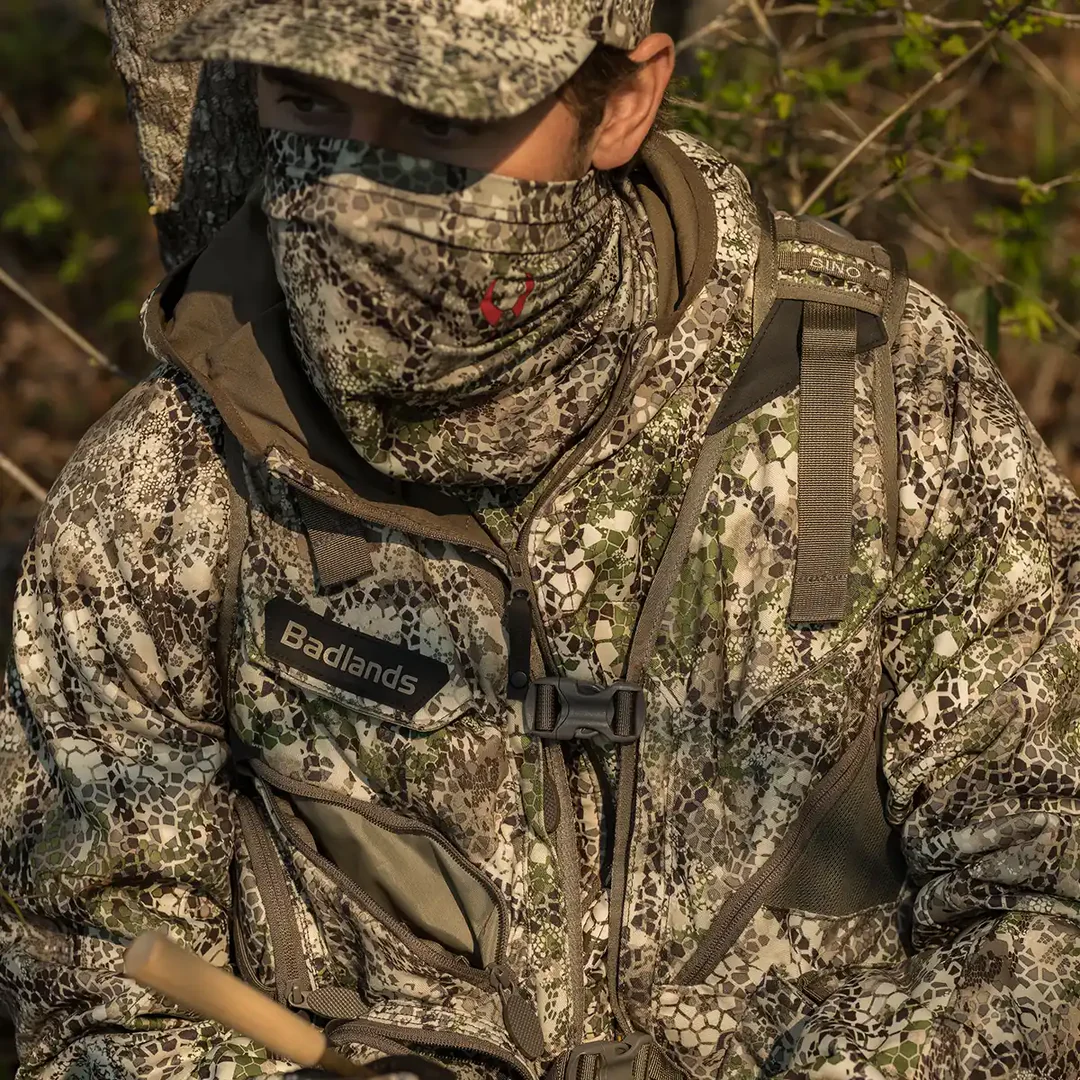
Good camouflage breaks up the human outline and matches the scale and contrast of the environment. Dark patterns can become a solid silhouette in open terrain, while very light patterns may stand out in dense woods. Three-dimensional suits provide additional breakup but can snag and may cover required high-visibility clothing. Movement, shadow, background, and wind are often more important than selecting the newest pattern. Neutral solid colors can also work when they match the environment and regulations allow them.
Check Visibility and Legal Requirements
Many jurisdictions require blaze orange, pink, or another high-visibility color during certain seasons, species, or public-land activities. Requirements can specify the amount, placement, and whether the material must be visible from all directions. Camouflage orange may not satisfy every rule. Consult the current wildlife-agency regulations for the exact hunt and land unit. Clothing recommendations online cannot replace local legal information, and concealment should never make a hunter less visible to other people where visibility is required.
Look at Pockets, Harness Access, and Equipment Compatibility
Pockets should be reachable while seated and should hold items without rattling. A safety-harness opening is useful only when it aligns with the specific harness and is used according to both manufacturers’ instructions. Check whether jacket hems, hoods, cuffs, and masks interfere with a backpack, binocular harness, eyewear, hearing protection, bowstring path, or safe firearm handling. Do not modify garments in a way that weakens a safety system. Organize equipment before the hunt so clothing supports deliberate movement.
Balance Durability and Packability
Thick woven fabric resists brush better but weighs more and dries more slowly. Lightweight synthetics pack small but may be vulnerable to thorns, sparks, and repeated abrasion. Match durability to terrain rather than buying the heaviest garment available. Examine knees, seat, elbows, cuffs, zippers, and pocket corners because these areas receive the most stress. A small repair kit can prevent a minor tear from growing during a multi-day trip.
Consider Scent and Odor Without Overpromising
Clean, dry clothing and good wind awareness are practical scent-management steps. Merino wool can resist odor buildup, and some garments use specialized treatments, but no fabric makes a hunter undetectable. Store clean clothing away from fuel, smoke, food, and strong household odors. Use fragrance-free care products when appropriate and follow garment instructions. Ethical shot selection and wind-based positioning remain more important than any scent-control claim.
Compare Brand Support, Warranty, and Long-Term Value
Value includes fit, frequency of use, repairability, warranty support, and whether the garment integrates with existing layers. Premium apparel can be worthwhile for demanding use, but a lower-cost piece may perform well when its role is clearly defined. Read current warranty language and keep proof of purchase. Check replacement availability before buying unusual proprietary accessories. A versatile layer worn across many seasons can deliver better value than a highly specialized item used once.
Care for Hunting Clothes Correctly
Follow the sewn-in label and manufacturer instructions because heat, bleach, fabric softener, and ordinary detergent can damage wool, water-repellent treatments, stretch fibers, or odor-control finishes. Empty pockets, close fasteners, and repair small damage before washing. Dry every garment completely before storage. Keep wool protected from insects and store rainwear without sharp folds when possible. Reapply a compatible water-repellent treatment only when the manufacturer recommends it.
Common Mistakes to Avoid When Buying Hunting Clothes
- Buying one heavy outfit instead of building an adjustable layering system
- Wearing cotton next to skin during cold, wet, or remote hunts
- Confusing water-resistant fabric with a fully waterproof rain shell
- Choosing size without accounting for base layers, body position, and mobility
- Walking in full insulation and arriving at the stand soaked with sweat
- Prioritizing camouflage pattern over weather protection, quietness, and fit
- Ignoring blaze-orange or other high-visibility requirements
- Assuming scent-control clothing replaces wind awareness
- Failing to test hoods, masks, pockets, and harness access with actual equipment
- Storing damp clothing where mildew, odor, and coating damage can develop
Expert Tips for Using Hunting Clothes
- Start the hike slightly cool and add insulation after activity decreases.
- Pack critical dry layers in a waterproof liner rather than trusting the backpack fabric alone.
- Test the entire clothing system with the same backpack, harness, optics, gloves, and footwear used in the field.
- Use zip openings and removable layers before perspiration becomes heavy.
- Keep legally required high-visibility clothing fully exposed.
- Carry repair tape or a small sewing kit that is compatible with the garment material.
- Dry rainwear, fleece, and base layers completely between hunts.
- Wash wool and technical fabrics according to the label, without unapproved softeners or high heat.
- Check the forecast, but prepare for local wind, elevation, and precipitation changes.
- Follow ethical hunting practices, legal seasons, licensing rules, land-access requirements, and all equipment-safety guidance.
Final Recommendation: Which Hunting Clothes Should You Buy?
For buyers who want one coordinated outer system, the TIDEWE Hunting Clothes set is the best overall choice in this comparison. The NEW VIEW quiet hunting suit is a strong value alternative for cool stationary hunts. Premium buyers should build around the SITKA Core Lightweight Hoody and add the SITKA Fanatic Hoody when more warmth is needed.
Cold-weather hunters should consider the Mossy Oak Sherpa jacket, MERIWOOL half-zip, or Merino.tech set. Warm-weather hunters will get more value from the BASSDASH UPF hoodie and lightweight Realtree pants. Keep the FROGG TOGGS rain suit in the pack when sustained rain is possible, and treat the MOPHOTO ghillie suit as a specialist concealment overlay rather than a weather layer.
The best hunting clothes are the pieces that work together safely. Check current Amazon prices and availability, choose the correct size with your planned layers, and prioritize moisture control, weather protection, quiet movement, mobility, durability, legal visibility, and responsible field use. Share this guide with hunting partners or family members who are building a practical outdoor clothing system.
Frequently Asked Questions About Hunting Clothes
1. What are the best hunting clothes for most hunters?
For most hunters, the best system starts with a moisture-managing base layer, adds a fleece or wool mid-layer, and finishes with a quiet outer layer suited to the weather. A separate waterproof shell should be carried when rain is possible. The exact mix depends on activity, temperature, terrain, and whether the hunt is stationary or mobile.
2. Do I need a complete hunting suit?
A matched jacket-and-pants suit is convenient and provides coordinated camouflage, but it is not mandatory. Separates often fit better and let you choose different insulation for the torso and legs. A complete suit is most useful for beginners who want a simple outer system or hunters who prefer one coordinated purchase.
3. How should I layer hunting clothes?
Wear a fitted base layer to manage moisture, an adjustable mid-layer for warmth, and an outer layer for wind, rain, brush, and concealment. Add a high-loft insulation piece for long stationary periods in severe cold. Remove or vent layers during strenuous movement so sweat does not soak the system.
4. What is the best base-layer material for hunting?
Merino wool and quality synthetic fabrics are the most practical choices. Merino offers comfort and odor management, while synthetics usually dry quickly and resist abrasion well. Choose fabric weight according to temperature and activity rather than assuming the thickest option is always best.
5. Why should hunters avoid cotton in cold weather?
Cotton absorbs moisture and dries slowly. When activity stops, damp cotton can pull heat away from the body and make the wearer colder. It may be comfortable for dry mild-weather hunts, but wool or synthetic layers are safer and more adaptable in cold or wet conditions.
6. Is merino wool better than synthetic fabric?
Neither is universally better. Merino is comfortable, regulates temperature well, and resists odor, while synthetics are usually less expensive, faster drying, and more abrasion resistant. Many hunters use a merino base with synthetic fleece and shell layers to gain advantages from both.
7. What weight merino wool should I buy?
Lightweight merino works well for active and mild-weather use, midweight fabric is versatile for fall, and heavyweight wool is best for cold stationary hunts. Manufacturer weight labels are not perfectly standardized, so compare the actual fabric information. Your activity level and additional layers matter as much as the number.
8. What hunting clothes are best for hot weather?
Choose lightweight, breathable synthetic clothing with sun protection, stretch, and ventilation. A hooded shirt with face coverage can reduce exposed skin without heavy insulation. Use light pants, drink enough water, rest when needed, and do not allow camouflage to hide signs of heat stress.
9. What hunting clothes are best for cold weather?
Use a moisture-managing base layer, warm fleece or wool, high-loft insulation for stationary periods, and a wind-resistant or waterproof outer shell. Protect the head, hands, and feet without restricting circulation. Carry dry backup layers and set conservative limits when weather becomes dangerous.
10. What should I wear for early-season deer hunting?
A lightweight synthetic top, breathable stretch pants, and a thin packable shell are a practical foundation. Add face coverage and insect protection where needed. Choose quiet fabric for close-range archery, and carry a light mid-layer for cool mornings.
11. What should I wear for late-season deer hunting?
Late season normally requires heavier base layers, a warm mid-layer, insulated outer clothing, and protection from wind and precipitation. Stationary hunters need more insulation than active hunters. Walk in with fewer layers and add the warmest pieces after reaching the stand to limit sweat.
12. What clothes are best for turkey hunting?
Turkey hunters benefit from quiet stretch fabric, full skin coverage, gloves, and a face mask or hood. A leafy or ghillie overlay can improve outline breakup but must not block vision, hearing, or safe equipment use. Follow local visibility rules and move carefully around other hunters.
13. What clothes are best for western hunting?
Western hunting usually favors lightweight moisture-managing layers, durable stretch pants, an active mid-layer, and packable rain protection. Because elevation and weather can change rapidly, carry insulation even on a warm start. Prioritize mobility and packability over bulky stationary-hunt garments.
14. What should I wear for waterfowl hunting?
Use waterproof outer layers, warm moisture-managing insulation, and garments that remain functional around wet ground. Avoid clothing that restricts movement in a boat or blind. Follow flotation, wader, firearm, and local waterfowl-safety requirements; clothing alone does not control cold-water risk.
15. Are hunting clothes waterproof?
Some are waterproof, many are only water resistant, and others provide no rain protection. Read the exact product description for membrane, seam, and care information. When sustained rain is possible, carry a dedicated waterproof shell rather than relying on a soft fleece-lined hunting suit.
16. What is the difference between waterproof and water resistant?
Water-resistant fabric sheds limited moisture for a period, while waterproof construction is designed to resist water penetration under more demanding exposure. Seams, zippers, wear, and maintenance affect real performance. A water-resistant hunting jacket should not be treated as a storm shell.
17. Do I need rain gear if my hunting jacket is water resistant?
Yes, when prolonged or heavy rain is possible. Water resistance is useful for dew, damp brush, and brief showers, but it may eventually wet through. Packable rain gear protects insulation and can reduce the risk of becoming dangerously cold.
18. Are quiet hunting clothes really silent?
No garment is silent in every situation. Soft brushed fabric reduces rustle, but zippers, hook-and-loop closures, backpacks, branches, and sudden movement can still create noise. Test the full system and move slowly rather than relying on a silent label.
19. What fabric is quietest for bowhunting?
Brushed polyester, fleece, and soft wool blends are commonly quieter than hard nylon shells. The quietest choice still needs to match weather and temperature. In rain, safety and staying dry may require accepting more shell noise.
20. How should hunting clothes fit?
They should allow full shoulder, hip, and knee movement while remaining close enough to avoid snagging. Base layers should be fitted, insulation should retain loft, and shells should cover underlying layers without excessive bulk. Test the fit while sitting, kneeling, reaching, and wearing all planned equipment.
21. Should I size up for hunting clothes?
Size up only when the manufacturer’s cut does not already allow for layers. Buying too large can create gaps, noise, snagging, and poor moisture transfer. Compare body measurements with the current size chart and test the complete layer system indoors before removing tags.
22. How do I choose hunting pants?
Consider temperature, walking distance, brush, stretch, pocket placement, noise, waist fit, and room for a base layer. Lightweight pants suit active hunts, while lined pants are better for cold stationary use. Add waterproof over-pants when the forecast requires them.
23. Are insulated hunting pants necessary?
They are useful for long cold sits but can cause overheating during hard walking. Many hunters prefer uninsulated outer pants over adjustable thermal bottoms. This approach makes it easier to change warmth without owning separate pants for every temperature.
24. Are bibs better than hunting pants?
Bibs reduce waist gaps and can add torso warmth, which is valuable in very cold conditions. Pants are lighter, easier to vent, and often more convenient for active hunting. Choose according to movement, temperature, and bathroom access in the field.
25. What jacket is best for tree-stand hunting?
A quiet, wind-resistant jacket with enough insulation for stationary exposure is a strong choice. It should fit safely around a properly used harness without blocking attachment points. Follow the harness and stand manufacturers’ instructions and never modify a garment or safety system casually.
26. Can I wear ordinary outdoor clothes for hunting?
Yes, when their color, noise, fit, weather protection, and legal visibility are appropriate. Technical hiking layers can work well beneath hunting outerwear. Hunting-specific garments mainly add camouflage, quieter surfaces, pockets, and equipment-oriented details.
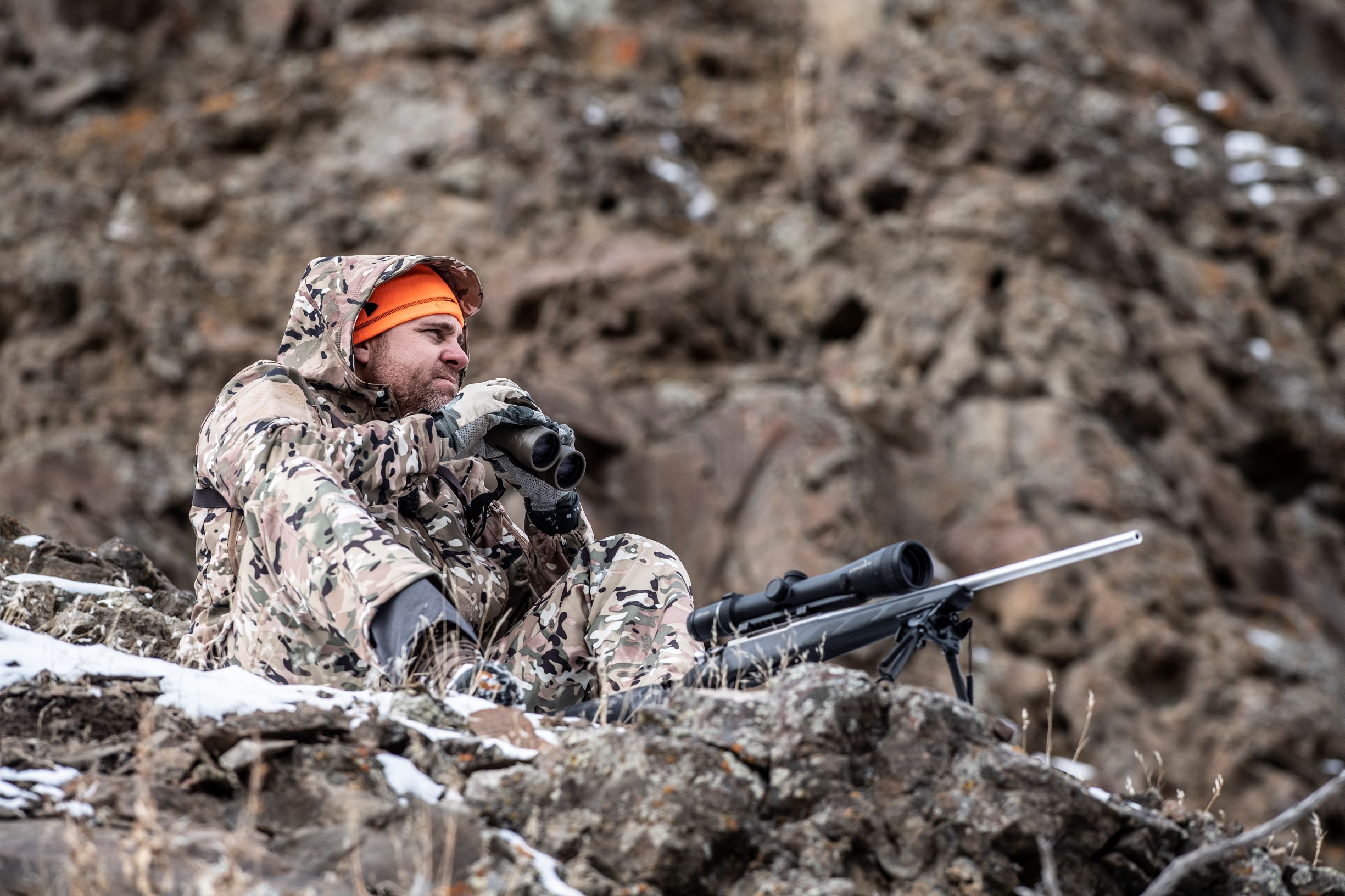
27. Does camouflage pattern really matter?
Pattern helps, but movement, outline, background, wind, and contrast often matter more. Select a pattern with the right lightness and scale for the terrain. Do not let pattern choice override required blaze orange or other visibility rules.
28. Do I need blaze orange over camouflage?
Many seasons and locations require it. Rules may define the minimum area, garment position, and whether the color must be visible from all sides. Check the current wildlife-agency regulations for the species, season, and property before every hunt.
29. Does camouflage blaze orange count legally?
It depends on the jurisdiction. Some rules accept patterned fluorescent material, while others require a continuous area of solid color. Only the responsible wildlife agency can confirm the current requirement. Do not rely on a product title or an old forum post.
30. What should I wear under a ghillie suit?
Wear a complete weather-appropriate layer system beneath it because the ghillie suit mainly provides concealment. Keep the underlying clothing breathable and avoid excessive warmth. Make sure loose material cannot cover required visibility garments or interfere with safe movement.
31. Are ghillie suits safe for hunting?
They can be used responsibly when local rules allow them and the wearer maintains vision, hearing, mobility, and legal visibility. Loose fibers can snag on brush and equipment. Practice in a controlled setting and never allow concealment material to obstruct safe handling.
32. How do I prevent overheating while walking to a stand?
Begin the walk slightly cool, open vents, and carry heavy insulation in a pack. Move at a pace that limits perspiration and add layers after your body cools. Wet base layers can become a serious problem during the stationary portion of the hunt.
33. How can I stay warm without sweating?
Use several adjustable layers instead of one extremely heavy garment. Vent early, slow the pace, and remove insulation before climbing or carrying a heavy load. Add dry warmth once activity decreases and protect the system from wind and precipitation.
34. How many layers should I wear?
There is no fixed number. Most systems use a base, one or two mid-layers, and a shell, with extra stationary insulation in severe cold. The correct combination depends on fabric weight, weather, activity, and personal metabolism.
35. Should hunting clothes be windproof?
Wind protection is important during exposed or stationary hunts because moving air strips away heat. A fully windproof layer can reduce breathability, so active hunters may prefer a breathable soft shell plus a packable wind shell. Match protection to the expected conditions.
36. What is a soft-shell hunting jacket?
A soft shell is a flexible outer or mid-layer that usually balances breathability, stretch, light weather resistance, and quietness. It is more comfortable for active use than many hard shells. It normally does not replace a truly waterproof rain jacket.
37. What is a hard-shell jacket?
A hard shell is a waterproof or highly weather-resistant outer layer designed to protect the layers below. It is usually less quiet and less breathable than soft brushed clothing. Carry it for serious rain, snow, and wind, then vent it during activity.
38. Do hunting clothes need scent control?
Scent-control features can support a routine, but no clothing eliminates human odor or replaces wind awareness. Clean garments, dry storage, fragrance-free care, and careful approach routes are practical. Treat strong marketing claims cautiously.
39. How do I wash hunting clothes?
Follow each garment’s care label. Use an appropriate fragrance-free cleaner when desired, avoid unapproved softener or bleach, close fasteners, and wash wool on the recommended cycle. High heat can damage stretch fabric, membranes, coatings, and wool.
40. Can fabric softener damage hunting clothes?
Yes. It can reduce moisture wicking, affect water-repellent treatments, leave odor, and interfere with some technical fabrics. Use only products approved by the garment manufacturer. When uncertain, choose a cleaner made for the specific material.
41. How do I restore water repellency?
Clean the garment first because dirt and oils reduce performance. If the manufacturer approves it, apply or reactivate a compatible durable water-repellent treatment according to the product instructions. A restored surface treatment does not repair a damaged waterproof membrane or open seam.
42. How should I dry hunting clothes?
Use the care label. Many technical garments and wool layers require low heat, air drying, or flat drying. Make sure clothing is completely dry before storage to reduce odor, mildew, and material damage.
43. How should I store hunting clothes?
Store clean, dry garments in a cool location away from fuel, smoke, food odors, rodents, and direct sunlight. Protect wool from insects. Do not compress lofted insulation for long periods unless the manufacturer says it is acceptable.
44. How long do hunting clothes last?
Service life depends on material, terrain, washing, storage, and frequency of use. Inspect seams, zippers, knees, seat, cuffs, and waterproof areas each season. Repair small damage early and replace garments that no longer provide necessary protection.
45. Are expensive hunting clothes worth it?
Premium clothing can offer better patterning, lower bulk, technical materials, and more refined field details. It is worth the cost when those advantages solve real problems and the garment is used often. Fit and correct layering are more important than the logo.
46. What hunting clothes should a beginner buy first?
Start with a moisture-managing base layer, versatile stretch pants, a quiet midweight jacket, required high-visibility clothing, and rain protection. Add specialized insulation after learning local conditions. This creates a safer and more flexible system than buying one heavy camouflage suit.
47. Can women wear men’s hunting clothes?
Yes, when the fit allows safe unrestricted movement, but men’s cuts may create excess fabric or poor waist, hip, and sleeve placement. Women-specific garments can provide better mobility and layering. Choose by measurements and field position rather than the category name alone.
48. Can youth wear adult hunting clothes?
Only when the garment fits securely and does not create loose cuffs, blocked vision, or trip hazards. Youth-specific sizing is usually safer. Adult supervision, hunter education, legal requirements, and properly fitted safety equipment remain essential.
49. How do I buy hunting clothes on Amazon safely?
Confirm the exact product title, ASIN, selected size, pattern, seller, return eligibility, and current specifications. Read recent reviews for recurring fit or quality issues, but compare them with manufacturer information. Keep packaging until the clothing has been tested indoors with all layers.
50. Can Amazon product listings change?
Yes. Sellers can update images, variations, descriptions, availability, and sometimes the products grouped on a page. Recheck the selected size and color before checkout. An article link identifies a product page, but the buyer must verify the current listing.
51. What should I know about hunting-clothing warranties?
Warranty terms vary by brand and may exclude normal wear, improper washing, abrasion, or unauthorized alteration. Read current terms before buying and keep the receipt. Contact the manufacturer before attempting a structural repair that could void coverage.
52. How do I repair a tear in hunting clothes?
For a small non-structural tear, use a repair method approved for that fabric, such as compatible patch tape or sewing. Waterproof shells may need a specialized patch and seam treatment. Replace or professionally repair garments when damage compromises weather protection or safe equipment compatibility.
53. What cold-weather safety signs should hunters watch for?
Persistent shivering, loss of coordination, confusion, numbness, and unusual fatigue can signal cold stress. Leave the field and seek appropriate help rather than relying on another layer to solve a serious condition. Plan communication, shelter, and turnaround decisions before the hunt.
54. What hot-weather safety signs should hunters watch for?
Headache, dizziness, nausea, confusion, weakness, and stopping sweating in severe heat require immediate attention. Move to a cooler place, use appropriate first aid, and seek emergency care when indicated. Lightweight clothing helps, but hydration, pacing, shade, and judgment are essential.
55. What is the best overall product in this comparison?
The TIDEWE hunting set is the best overall value because it provides a coordinated jacket and pants with warmth, storage, concealment, and hunting-oriented details. The SITKA Core Lightweight Hoody is the premium active layer, the Mossy Oak Sherpa jacket is better for traditional cold-weather comfort, and the FROGG TOGGS suit covers sustained rain. The best personal choice still depends on season, movement, and existing layers.
Read more: 15 Best Hunting Chair Picks for Blinds, Turkey Hunts, and Long Sits