
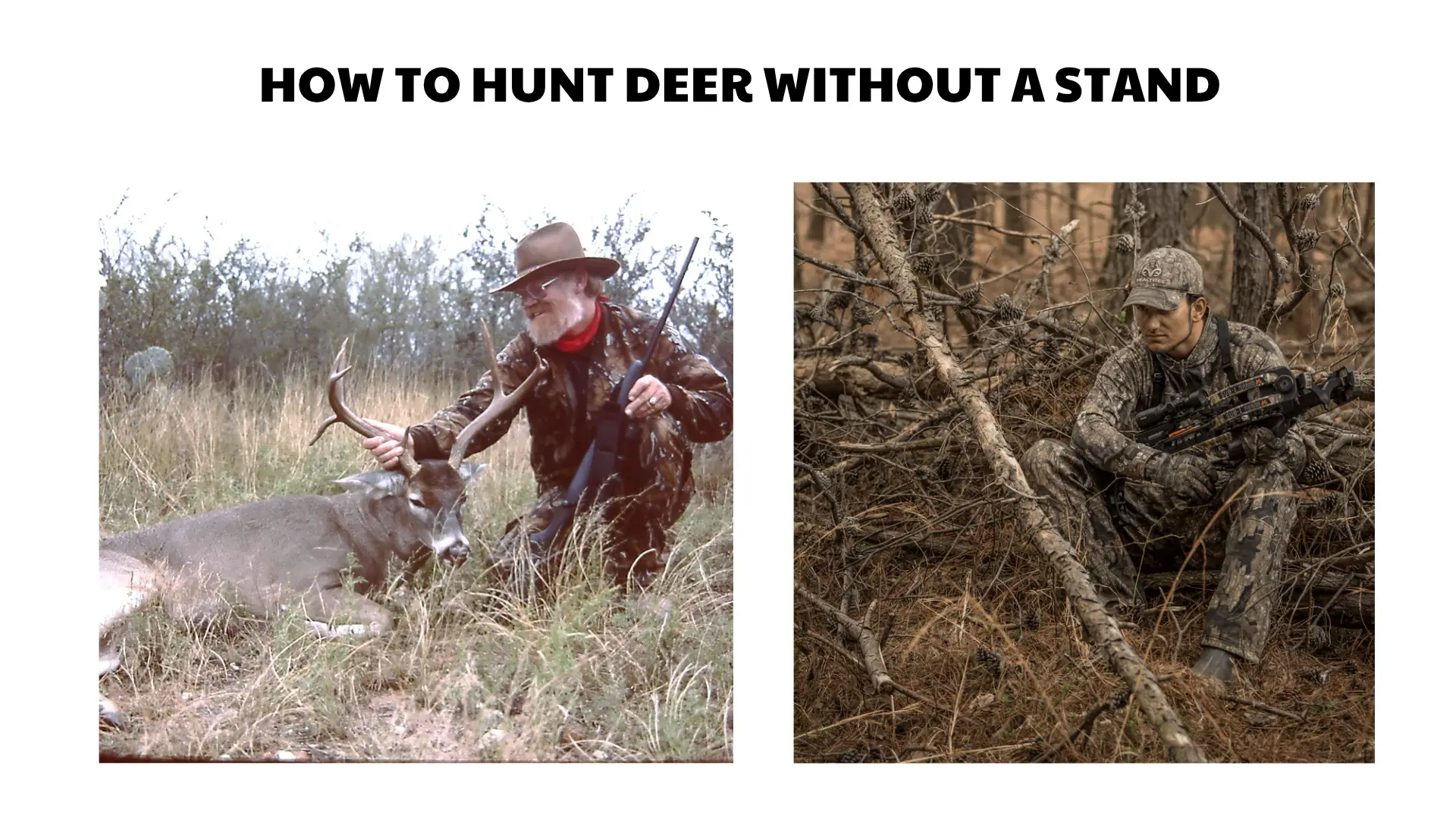

Learning how to hunt deer without a stand means building a safe ground-level strategy instead of relying on an elevated tree stand. You may sit in natural cover, use a legal portable ground blind, or move carefully through suitable habitat by still-hunting.
This guide explains legal preparation, deer behavior, scouting, wind direction, ground setups, still-hunting, firearm and bow safety, ethical shot decisions, recovery, reporting, and responsible meat care. It is written for beginners who want practical guidance without exaggerated promises.
Quick Answer
To understand how to hunt deer without a stand, first obtain every required license, permit, and tag. Scout fresh deer sign, choose a legal ground position with cover behind you, and plan an entry route that keeps your scent away from likely deer travel. Remain still, identify the deer and everything beyond it, and consider a shot only when the animal is legal and the opportunity is within your practiced ability.
Important Legal and Safety Notice Before You Hunt
Hunting regulations vary by country, state, province, county, management unit, land type, season, deer classification, and weapon. Check the current rules issued by the official wildlife agency and the land manager before every hunt.
- License and education: Carry the correct hunting license, permits, identification, and hunter education documentation.
- Tags and reporting: Learn the correct tag-validation, attachment, check-station, and reporting process.
- Season and hours: Confirm exact season dates and legal daily hunting hours.
- Legal equipment: Verify permitted firearms, bows, ammunition, broadheads, and equipment restrictions.
- Land access: Confirm public-land openings or obtain clear private-land permission.
- Visibility: Follow blaze-orange or other visibility requirements.
- Ground blinds: Check placement, labeling, vegetation-cutting, and removal rules.
- Emergency planning: Review weather, navigation, hydration, first aid, communication, and return time.
Beginners should complete an official hunter education course and hunt with an experienced, ethical mentor whenever possible.
Understanding Deer Behavior and Habitat
A strong plan for how to hunt deer without a stand begins with understanding why deer use a location. Deer seek food, water, security cover, comfortable bedding, and efficient travel routes. Their patterns change with seasonal food, leaf cover, weather, breeding activity, and hunting pressure.
Food Sources
Depending on the region and time of year, deer may feed on browse, grasses, forbs, mast, fruit, crops, or managed food plots. Look for fresh tracks and feeding sign along routes connecting food with thicker cover.
Bedding and Security Cover
Bedding areas commonly provide concealment, favorable wind, comfortable temperature, and escape options. Avoid walking through likely bedding cover before the hunt. A position along a transition or travel corridor may cause less disturbance.
Travel Corridors and Funnels
Creek crossings, saddles, benches, fence gaps, inside field corners, narrow cover strips, and habitat edges can concentrate movement. Confirm actual use with several forms of fresh sign rather than relying on one old track.
Useful Deer Sign
- Fresh hoofprints and regularly used trails
- Droppings and browsed vegetation
- Beds in protected cover
- Rubs and scrapes when seasonally relevant
- Tracks connecting food, water, and security cover
- Hair or repeated tracks at legal fence crossings
Three Ways to Hunt Deer Without a Stand
1. Sit in Natural Cover
The simplest method is to sit in front of a broad tree, brush mass, bank, rock formation, or another legal background that breaks up your outline. Cover behind your body is especially important because deer can notice a human silhouette against open sky or light vegetation.
2. Use a Portable Ground Blind
A legal ground blind can conceal small movements and provide limited weather protection. Set it where windows face only safe directions. Close unnecessary openings, avoid blocking trails, and follow public-land rules for labeling, unattended equipment, and removal dates.
3. Still-Hunt Slowly
Still-hunting means moving extremely slowly, stopping often, and spending more time observing than walking. Take a few controlled steps, pause, and scan ahead with binoculars. This method demands strong navigation, target identification, safe weapon handling, and awareness of other hunters.
What You Need Before You Start
- Valid hunting license, permits, tags, and current regulations
- A legal firearm, bow, or other permitted hunting method
- Hunter education and realistic pre-season practice
- Required blaze orange or other visibility clothing
- Quiet, weather-appropriate layers and suitable boots
- Paper map, compass, GPS, or offline hunting map
- First-aid kit, water, food, emergency light, and communication device
- Binoculars for identification without pointing a weapon
- A quiet seat, cushion, legal blind, or stable shooting support
- Clean gloves, game bags, cooler, and basic meat-care supplies
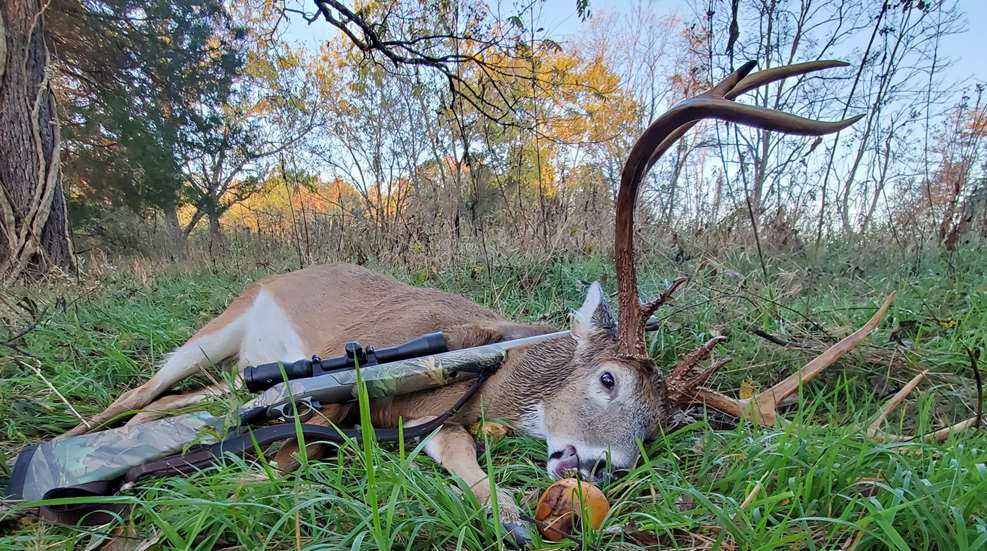
How to Hunt Deer Without a Stand: Step-by-Step
Step 1: Verify Current Regulations
Read the official regulation booklet and property rules. Confirm the season, legal deer category, tag, bag limit, legal hours, weapon restrictions, visibility clothing, blind rules, baiting restrictions, transport requirements, and harvest reporting. Never rely only on an old article or another hunter’s memory.
Step 2: Study Local Deer Patterns
Learn how deer move between food, water, bedding cover, and escape routes. Compare observations from multiple visits because weather, crop harvest, leaf fall, breeding activity, and hunting pressure can change a pattern quickly.
Step 3: Choose a Legal Hunting Area
For public land, verify open units, parking, access points, closures, weapon zones, and boundaries. For private land, obtain permission and discuss gates, livestock, buildings, other hunters, and recovery access. Never enter or shoot across property where you do not have legal access.
Step 4: Scout Fresh Sign
Look for tracks, droppings, trails, beds, feeding sign, rubs, scrapes, crossings, and terrain funnels. Also mark roads, homes, public trails, neighboring properties, and other hazards that affect safe shot direction.
Step 5: Pick the Right Ground Method
Use natural cover for a lightweight stationary setup, a ground blind when legal and useful for hiding movement, or still-hunting when terrain, visibility, pressure, and your experience make slow movement safe. A stationary setup is normally easier for a beginner.
Step 6: Practice From Ground Positions
Practice seated, kneeling, and supported positions while wearing normal hunting clothing. Know the maximum distance at which you can repeatedly maintain safe, accurate control. The field is not the place to test an unfamiliar position.
Step 7: Plan Wind, Weather, Entry, and Exit
Choose an approach that keeps your scent away from expected deer movement and avoids crossing bedding cover or major trails. Consider how hills, creek bottoms, warming slopes, and changing weather may create swirling wind. Share your route and return time with another person.
Step 8: Build a Safe Ground Setup
Place broad cover behind your body and choose a position that allows observation without repeated movement. Every possible shooting direction must have a safe background. Do not cut vegetation, build structures, or leave a blind unless the land rules permit it.
Step 9: Stay Still and Observe
Settle into a comfortable position, scan with your eyes and binoculars, listen, and monitor the wind. Sound alone is never target identification. Move slowly and only when necessary.
Step 10: Confirm a Legal and Ethical Opportunity
Confirm that the deer is legal for your tag and season. Check the animal’s position, distance, intervening vegetation, and background. Do not shoot through brush, at uncertain movement, or toward any person, road, home, vehicle, livestock, water surface, or trail.
Step 11: Follow Recovery and Reporting Rules
After a shot, maintain safe weapon control, observe carefully, and note the animal’s last known location. Follow official hunter education guidance and local recovery law. Stop at property boundaries until permission is obtained. Validate the tag and report the harvest exactly as required.
Step 12: Care for the Harvest Responsibly
Use clean gloves and tools, prevent contamination, cool the meat promptly, and comply with transport, testing, and inspection rules. Seek hands-on instruction from an experienced mentor or qualified processor before your first harvest.
Best Places to Hunt Deer Without a Stand
When planning how to hunt deer without a stand, look for locations where fresh deer movement and safe ground-level visibility overlap. The best-looking opening is not useful when the wind, background, access, or property boundary is unsafe.
- Habitat transitions: Edges between thick cover and more open feeding habitat
- Terrain funnels: Saddles, benches, creek crossings, and narrow cover strips
- Food-to-cover routes: Fresh trails between feeding areas and security cover
- Inside corners: Protected corners where fields or cover types meet
- Overlooked legal cover: Areas away from obvious parking and heavy traffic
Never select a place simply because it is remote. Access, communication, recovery, property boundaries, and a safe return route remain essential.
Best Time and Conditions
Time of day: Deer commonly move near early and late daylight, but legal hours and clear identification come first. Midday movement can occur during breeding activity, weather changes, or heavy pressure.
Wind: A steady crosswind or a wind that carries scent away from deer travel is easier to manage than calm, variable, or swirling air.
Weather: Stable conditions are simplest for beginners. Strong wind, lightning, flooding, extreme cold, heavy rain, and falling branches can make a hunt unsafe.
Season: Food, cover, breeding behavior, and pressure change throughout the season. Continue scouting rather than assuming an early-season location will remain productive.
Wind and Scent Control for Ground Hunters
Wind is central to how to hunt deer without a stand because a ground hunter cannot depend on height to carry scent above nearby deer. Set up downwind or crosswind of the expected travel route and monitor changes throughout the hunt.
Clean clothing, careful storage, and reduced foreign odor may help, but no scent-control product can rescue a setup with the wrong wind. Prepare two or more legal locations so you can choose the correct one for current conditions.
Helpful Tips for Better Results
- Scout your entry and exit routes as carefully as the hunting location.
- Use cover behind you, not only cover in front of you.
- Prepare multiple legal setups for different wind directions.
- Keep binoculars accessible and never scan with a weapon sight.
- Secure zippers, straps, bottles, and other noisy equipment.
- Use a quiet cushion so you can remain still longer.
- Practice setting up a support without unnecessary movement.
- Choose another location rather than crowding another hunter.
- Record weather, wind, sign, pressure, and sightings after each hunt.
- Pass any opportunity that is rushed, unclear, obstructed, or unsafe.
Common Mistakes When Hunting Deer Without a Stand
Many mistakes made while learning how to hunt deer without a stand happen before a deer appears. Poor access, a visible silhouette, uncontrolled scent, or an unsafe shot direction cannot be corrected at the last moment.
- Using outdated regulations
- Hunting without the proper license, tag, permit, or permission
- Ignoring portable-blind and public-land equipment rules
- Sitting against open sky instead of broad background cover
- Entering through bedding cover or crossing active trails
- Ignoring shifting or swirling wind
- Moving too often or carrying loose, noisy equipment
- Scanning with a firearm scope instead of binoculars
- Shooting through brush or toward an uncertain background
- Exceeding a practiced effective range
- Failing to plan recovery, reporting, cooling, and transport
- Continuing in dangerous weather or poor visibility
Troubleshooting Common Problems
| Problem | Possible Cause | What to Do |
|---|---|---|
| No deer sightings | Old sign, weak travel route, poor timing, or hunting pressure | Scout fresh connected sign and try another legal setup. |
| Deer detect you early | Wind, movement, noise, or exposed outline | Improve the wind plan, background cover, and movement control. |
| Wind swirls at the setup | Terrain, warming air, creek bottom, or unstable weather | Use a location with more predictable airflow or end the setup. |
| The blind is too visible | New object, open placement, or excessive open windows | Where legal, place it beside existing cover and close unnecessary windows. |
| Public land is crowded | Popular access or limited open land | Leave calmly and use a pre-scouted alternative. |
| The boundary is unclear | Old map, weak signal, or confusing ownership | Stop and verify with official information or the land manager. |
| Weather reduces visibility | Rain, fog, snow, or fading light | Do not take uncertain shots; return by the safest known route. |
| Equipment fails | Damage, moisture, poor inspection, or battery loss | Secure or unload it safely and stop using unreliable equipment. |
| You become nervous | Limited realistic practice | Slow down, use a stable position, and pass unless fully controlled. |
| Recovery may cross private land | The deer traveled beyond legal access | Stop at the boundary and obtain permission or contact the proper authority. |
Firearm and Bow Safety on the Ground
Firearm Safety
- Treat every firearm as loaded.
- Keep the muzzle pointed in a safe direction.
- Keep your finger outside the trigger guard until ready to shoot.
- Identify the target and everything around and beyond it.
- Follow manufacturer instructions and official hunter education guidance.
Bow Safety
- Inspect the bow, string, arrows, nocks, and accessories.
- Use equipment that meets local legal requirements.
- Keep broadheads covered during transport.
- Know your effective range through repeated practice.
- Never draw toward an unidentified object or unsafe background.
Ground-Level Visibility
A ground hunter may be difficult for another hunter to see. Wear required visibility clothing, avoid positioning yourself where a trail crosses the expected shot direction, and make your presence known safely when another person approaches.
Ethical Hunting and Conservation
Responsible guidance on how to hunt deer without a stand must place wildlife respect, safe decisions, and responsible use of the harvest ahead of success. Legal compliance is the minimum standard, not the entire ethical standard.
- Obey seasons, limits, tags, and land-access restrictions.
- Practice before hunting and remain within your demonstrated ability.
- Pass unsafe, uncertain, obstructed, or poorly positioned opportunities.
- Plan for prompt recovery and responsible meat care.
- Respect gates, crops, livestock, buildings, and property boundaries.
- Avoid crowding or interfering with other hunters.
- Remove litter and temporary equipment as required.
- Support science-based wildlife management and habitat conservation.
When to Get More Training
Seek qualified instruction if you have never handled a firearm or bow, have not completed hunter education, are uncertain about local law, cannot identify property boundaries, lack confidence in ground shooting positions, or will enter unfamiliar terrain.
Official wildlife agencies, certified instructors, hunter education programs, conservation organizations, experienced ethical mentors, and reputable hunting clubs are useful sources of additional training.
After the Hunt: Reporting, Gear Care, and Learning
- Complete every required tag, harvest report, inspection, and transport record.
- Clean and store firearms, bows, knives, optics, and clothing safely.
- Dry wet equipment and inspect the blind, seat, and support for damage.
- Remove portable equipment by the required deadline.
- Record wind, weather, sign, hunting pressure, and deer observations.
- Review whether the entry route and setup protected your scent.
- Select one skill to practice before the next hunt.
- Care for meat promptly and follow local testing guidance.
Recommended Ground-Hunting Gear
You do not need expensive equipment to learn how to hunt deer without a stand. Select gear according to local law, terrain, weather, hunting method, skill level, safety needs, and budget.
- A legal hunting weapon or permitted method
- Quiet, weather-appropriate clothing and suitable boots
- Required visibility clothing
- Binoculars for safe identification
- Map, compass, GPS, or offline hunting application
- A quiet seat, stable support, or legal portable blind
- First-aid kit, water, emergency light, and communication device
- Clean gloves, game bags, cooler, and meat-care supplies
Final Thoughts on How to Hunt Deer Without a Stand
Learning how to hunt deer without a stand begins with current regulations, hunter education, realistic practice, fresh scouting, and legal access. A reliable plan then combines wind direction, quiet entry, broad background cover, patient observation, and disciplined shot decisions.
Natural cover, a portable ground blind, and careful still-hunting can all work when they match the terrain and the hunter’s experience. Choose the safest method, respect wildlife and other land users, and remember that passing an uncertain opportunity is always the correct decision.
Frequently Asked Questions About How to Hunt Deer Without a Stand
1. How long does it take to learn how to hunt deer without a stand?
The basic process can be learned through hunter education, supervised practice, and several scouting trips. Becoming consistently quiet, wind-aware, and observant takes repeated field experience, so beginners should judge progress by safe decisions rather than harvests.
2. Can beginners learn how to hunt deer without a stand?
Yes. A beginner can hunt from natural cover or a ground blind, but should complete hunter education, practice with legal equipment, and hunt with an experienced ethical mentor when possible.
3. Is it effective to learn how to hunt deer without a stand?
It can be effective when the hunter chooses fresh sign, plans for wind, uses cover, controls movement, and remains patient. Ground hunting does not guarantee success and can be more demanding because the hunter and deer are at similar eye level.
4. Do I need a hunting license?
Most regulated hunting areas require a valid hunting license. Depending on the location, you may also need hunter education proof, a deer permit, a zone permit, or other authorization.
5. Do I need a deer tag?
Many jurisdictions require a deer tag before hunting. Verify the correct tag for the season, deer classification, weapon, and management zone, and learn the exact validation and reporting procedure.
6. When is deer hunting season?
Season dates vary by jurisdiction, management unit, weapon, land type, and deer category. Use only the current official regulation publication for the exact place you intend to hunt.
7. What are legal hunting hours?
Legal hunting hours are set locally and may change by season or property. Confirm the exact daily opening and closing times and stop whenever visibility is too poor for certain identification.
8. How do you hunt deer without a stand on public land?
Yes, where public land is officially open to deer hunting. Verify boundaries, access, parking, closures, special permits, weapon zones, blind-placement rules, and other property-specific requirements.
9. Can I ground hunt on private land?
Only with clear landowner permission and any documentation required by local law. Discuss parking, gates, livestock, buildings, boundaries, other hunters, and recovery access before the hunt.
10. What are the main methods for how to hunt deer without a stand?
The main options are sitting in natural cover, using a legal portable ground blind, still-hunting slowly through suitable cover, or watching a safe travel corridor from a ground-level position.
11. Do I need a ground blind?
No. Natural cover can be enough when it hides your outline and allows a safe view. A ground blind may conceal small movements and provide weather protection, but it must be placed legally and safely.
12. How early should I place a ground blind?
Where regulations and land rules allow it, placing a blind before the hunt may give deer time to accept it. On shared public land, same-day portable setups may be required or more respectful, so check the rules.
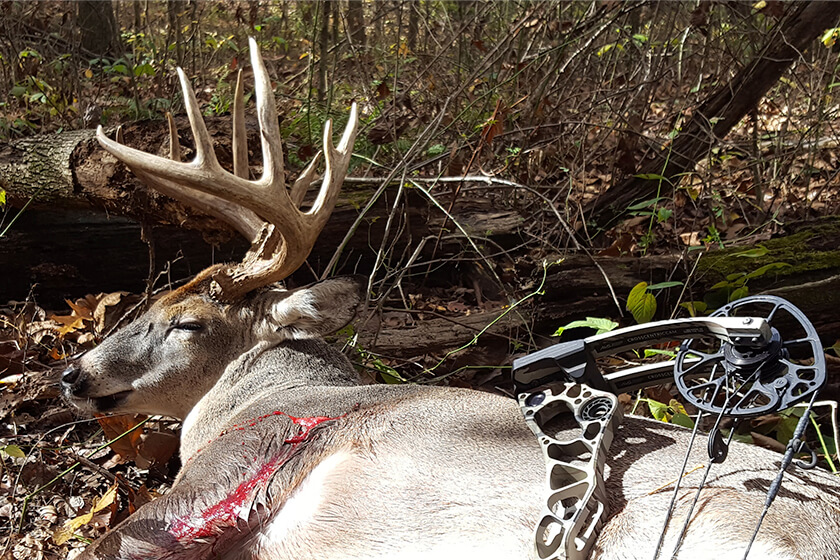
13. Where should you sit when learning how to hunt deer without a stand?
Choose a position downwind or crosswind of a used travel route, with cover behind you, a clear view, a stable shooting position, and a safe background. Avoid skylines, roads, trails, houses, and uncertain property edges.
14. How do I hide my outline on the ground?
Sit in front of a large tree, brush mass, bank, or other legal cover rather than in front of open sky. Keep your body low, cover bright skin when appropriate, and avoid unnecessary movement.
15. What is still-hunting?
Still-hunting means moving very slowly, stopping often, and spending more time observing than walking. It requires strong navigation, target-identification, and weapon-handling skills, especially on shared land.
16. Is still-hunting good for beginners?
A simple stationary ground setup is usually easier for beginners. Still-hunting can be learned gradually with a mentor because movement increases noise, navigation demands, and the chance of encountering other hunters.
17. Is a ground blind better than natural cover?
Neither is always better. A blind can conceal movement, while natural cover is lighter and less noticeable as a new object. The best choice depends on regulations, pressure, terrain, weather, and access.
18. How do I find deer travel routes?
Look for connected tracks, trails, droppings, feeding sign, rubs, scrapes, beds, crossings, and terrain funnels. Several fresh signs forming a pattern are more useful than one isolated track.
19. What deer signs should a beginner learn?
Learn to recognize hoofprints, fresh droppings, browsed plants, beds, rubs, scrapes, and trails connecting food with security cover. Use a regional wildlife guide when species or sign identification is uncertain.
20. How close should I sit to a deer trail?
There is no universal distance. Choose a position that protects the wind, provides a safe angle and background, avoids crowding bedding cover, and keeps any possible shot within your practiced range.
21. Why is wind important when learning how to hunt deer without a stand?
Wind is critical because deer rely heavily on scent. Plan so your scent moves away from expected deer travel, and watch for terrain or temperature changes that cause swirling air.
22. What is a crosswind setup?
A crosswind passes from one side of the hunting position to the other. It can keep the hunter’s scent outside the main travel route while preserving a useful observation angle.
23. Do scent-control products guarantee success?
No. Clean clothing and careful storage may reduce foreign odors, but no product replaces a good wind plan, quiet entry route, and disciplined movement.
24. How quietly should I enter?
Move slowly, secure loose gear, avoid brushing vegetation, and step around dry branches when safe. Do not cross major trails or likely bedding cover unless the access plan requires it and the disturbance is acceptable.
25. What time is best when learning how to hunt deer without a stand?
Deer often move near early and late daylight, but local patterns, weather, food, breeding activity, and pressure matter. Hunt only during legal hours and only when you can identify the target and background.
26. Is morning or evening better?
Either can work. A morning setup needs an entry route that avoids deer already near food or bedding, while an evening setup needs a safe exit after legal light ends.
27. Can deer be hunted at midday?
Yes. Midday movement may occur during breeding activity, changing weather, or heavy pressure. Midday is also useful for carefully changing setups without rushing.
28. Does rain help ground hunting?
Light rain can soften foot noise, but heavy rain may reduce visibility, increase exposure risk, and make recovery harder. Do not hunt when weather exceeds your training or equipment.
29. Is windy weather useful?
A steady moderate wind may cover small sounds and create a predictable scent stream. Strong, gusty, or swirling wind can make conditions unsafe and deer movement less predictable.
30. How does snow affect ground hunting?
Snow can reveal tracks but may increase glare, cold stress, slipping risk, and noise. Dress properly, carry navigation tools, and never follow tracks across closed or private land.
31. What clothing should I wear?
Wear quiet, weather-appropriate layers, suitable boots, and all legally required visibility clothing. Carry rain protection and spare insulation when conditions can change.
32. Do I need blaze orange?
Visibility rules vary by jurisdiction, season, and land type. Wear the required amount and placement, and consider additional visibility when moving through shared hunting areas.
33. What basic equipment do I need?
Carry licenses and tags, legal hunting equipment, binoculars, navigation, water, food, first aid, emergency communication, a light, weather protection, and lawful game-care supplies.
34. Are binoculars important?
Yes. Binoculars allow safe observation and identification without pointing a firearm or bow. Never use a weapon-mounted sight to scan uncertain objects.
35. Should I carry a seat?
A small quiet seat or cushion can help you remain still for longer. It should be stable, easy to transport, and positioned where it does not interfere with safe weapon handling.
36. Can I use shooting sticks?
A legal stable support may improve control. Practice setting it up quietly and using it from realistic positions while keeping the muzzle or arrow pointed safely.
37. How far should I shoot?
Only within the distance at which you have repeatedly demonstrated safe, accurate control under realistic conditions. Brush, wind, angle, unstable positions, or poor visibility should shorten that limit.
38. How do I know whether a deer is legal?
Confirm species, sex, age or antler restrictions, tag type, zone, season, and weapon rules from the current official regulations. If any detail is uncertain, do not shoot.
39. What makes a shot opportunity ethical?
The deer must be clearly identified and legal, the background must be safe, the animal should be in a suitable position, and the opportunity must be within the hunter’s practiced ability.
40. What must be beyond the deer?
The background must safely contain the projectile and be free of people, homes, roads, trails, vehicles, livestock, water surfaces, and uncertain movement.
41. Can I shoot through brush?
No shot should be taken through vegetation that obscures the target, hides the background, or could deflect a projectile. Wait for a completely clear, safe opportunity.
42. What firearm rules should I remember?
Treat every firearm as loaded, keep the muzzle in a safe direction, keep your finger outside the trigger guard until ready, and identify the target and everything beyond it.
43. What bowhunting rules should I remember?
Use legal equipment, inspect the bow and arrows, keep broadheads covered during transport, practice from ground positions, and remain within your personal effective range.
44. How should I carry a firearm while moving?
Use a safe carry method taught by official hunter education, maintain muzzle control, and follow all local loaded-firearm and transport rules. Unload whenever required and before handling obstacles.
45. How do I cross a fence safely?
Follow the method taught in your hunter education course, including unloading and controlling the firearm before crossing. Never cross a boundary without permission.
46. How do I avoid conflicts with other hunters?
Park respectfully, avoid crowding established setups, wear required visibility clothing, communicate calmly, and use another planned location if the area becomes congested.
47. What if I cannot confirm a property boundary?
Stop and verify it using official property information, a land manager, or the landowner. Do not enter, shoot across, or recover game across an uncertain boundary.
48. What if deer keep detecting me?
Recheck wind and thermals, use a different legal approach, improve background cover, reduce movement, and avoid repeatedly pressuring the same location.
49. What if I am not seeing deer?
Return to scouting, confirm fresh sign, review food and cover changes, account for hunting pressure, and try a different legal setup or time.
50. What if the wind changes?
When scent begins blowing toward expected deer movement, relocate only if it is safe and legal or end the setup. Staying in a compromised position usually adds unnecessary pressure.
51. What if another hunter approaches my position?
Make your presence known calmly, keep equipment pointed safely, and reassess the location. Leave if the situation is crowded, confusing, or unsafe.
52. What should I do after taking a shot?
Maintain safe weapon control, observe carefully, note the last known location, and follow official hunter education and local recovery rules. Do not rush into unsafe terrain.
53. Can I use a tracking dog?
Some jurisdictions allow trained tracking dogs under specific conditions while others restrict them. Check current law and use a qualified handler where legal.
54. How do I tag and report a deer?
Follow the exact sequence, method, and deadline stated in the current regulations. Requirements may include immediate tag validation, physical attachment, electronic reporting, or a check station.
55. How should venison be cared for?
Use clean gloves and tools, prevent contamination, cool the meat promptly, and follow transport, testing, and processing rules. Seek hands-on help from a qualified processor or experienced mentor.
Read more: