
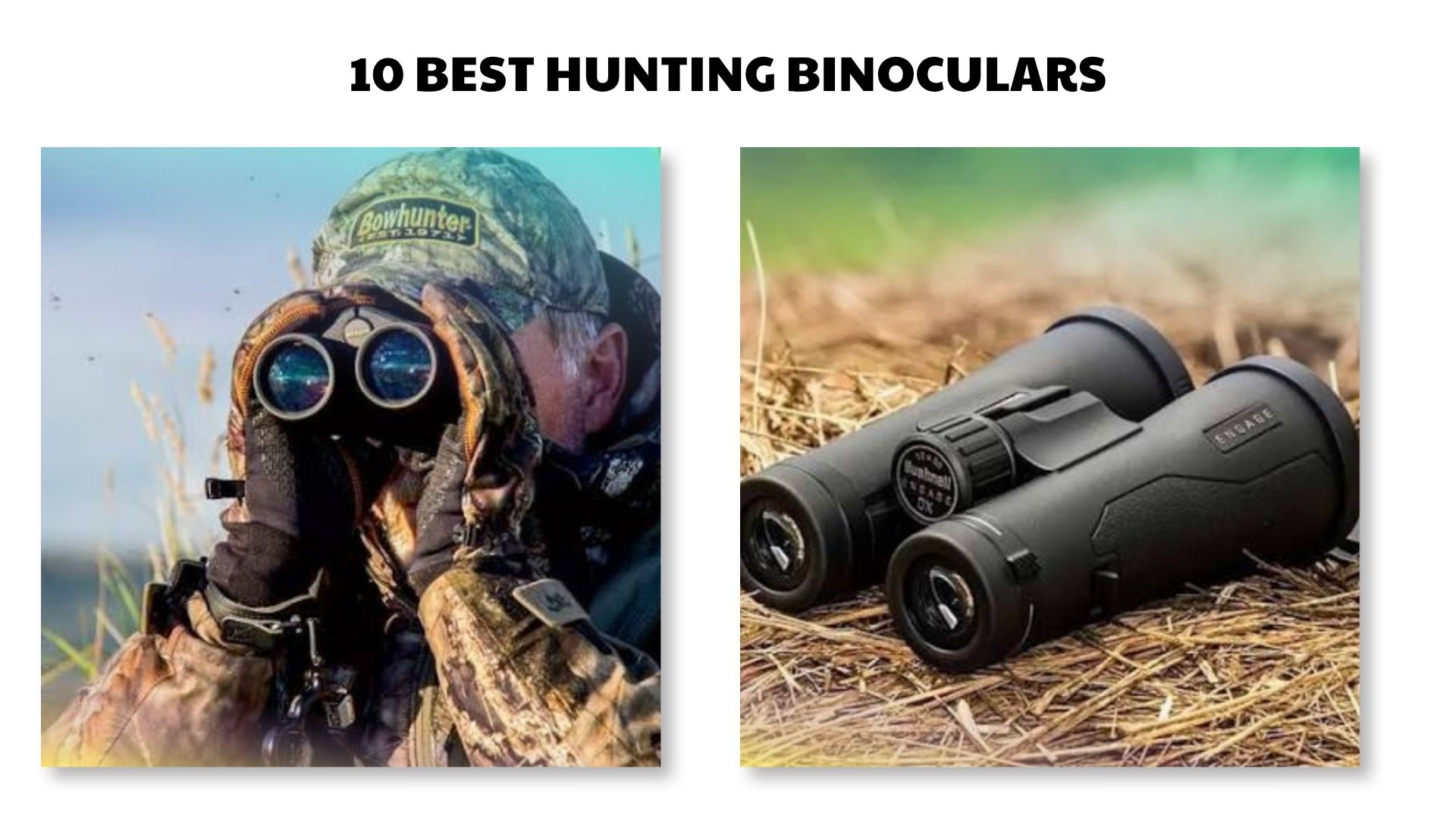

Good binoculars help a hunter observe wildlife, study terrain, verify movement, and make safer decisions without pointing a firearm-mounted optic at an unknown subject. The best hunting binoculars should provide a clear and comfortable image, resist ordinary field weather, fit the user’s face and hands, and match the distances and terrain of the hunt.
This guide compares ten specific binoculars for deer hunting, elk hunting, backcountry glassing, timber, wet weather, beginners, youth users, and long-range observation. The recommendations emphasize useful configurations, practical limitations, safe identification, and responsible hunting rather than exaggerated claims.
Quick Picks
- Best Overall: Vortex Diamondback HD 10×42 Binoculars
- Best Budget Option: Vortex Triumph HD 10×42 Binoculars
- Best for Timber and Steady Handheld Viewing: Leupold BX-1 McKenzie HD 8×42 Binoculars
- Best for Long-Range Glassing: Vortex Viper HD 12×50 Binoculars
- Best for Youth and Small Hands: Vortex Bantam HD 6.5×32 Youth Binoculars
Product Comparison Table
| Product | Best For | Configuration | Key Features | Important Notes | Check Details |
|---|---|---|---|---|---|
| Vortex Diamondback HD 10×42 Binoculars | Best Overall | 10×42 | HD optical system, fully multi-coated lenses, dielectric prism coating, argon purging, tripod adaptability | A balanced all-purpose choice; included GlassPak harness adds value, but premium glass still resolves finer detail better. | Check Price |
| Vortex Triumph HD 10×42 Binoculars | Best Budget Option | 10×42 | HD optical system, fully multi-coated lenses, nitrogen purging, rubber armor, included GlassPak harness | A credible beginner or backup binocular; center sharpness is useful, though contrast and edge clarity trail better glass. | Check Price |
| Leupold BX-1 McKenzie HD 8×42 Binoculars | Best for Timber and Steady Handheld Viewing | 8×42 | 8×42 configuration, HD optical system, roof-prism body, rubber armor, twist-up eyecups | The lower 8x power is easier to hold steady and generally faster for locating moving animals in woodland. | Check Price |
| Athlon Optics Argos G2 UHD 10×42 Binoculars | Best Value UHD Option | 10×42 | UHD optics, 10×42 format, long-eye-relief design, roof prisms, armored weather-ready body | A feature-focused value choice for buyers who want more optical ambition than an entry-level binocular. | Check Price |
| Vortex Viper HD 12×50 Binoculars | Best for Long-Range Glassing | 12×50 | 12×50 high-power format, HD optical system, weather sealing, rubber armor, tripod-compatible design | Excellent reach for open country, but the higher power and larger objectives add shake, size, and weight. | Check Price |
| Bushnell Trophy XLT 10×42 Bone Collector Binocular Bundle | Best Hunting-Focused Bundle | 10×42 | 10×42 roof-prism binocular, rubber armor, hunting-oriented finish, bundled binocular harness | A convenient package for buyers who want both the binocular and a basic carrying system. | Check Price |
| Vortex Crossfire HD 10×42 Binoculars | Best Mid-Budget Workhorse | 10×42 | HD optical system, fully multi-coated lenses, roof-prism body, weather sealing, tripod adaptability | A durable utility choice positioned between the Triumph and Diamondback families. | Check Price |
| Bushnell H2O 7×50 Waterproof Binoculars | Best for Wet Weather and Boat-Based Observation | 7×50 | 7×50 format, waterproof and fog-resistant design, BaK-4 prisms, fully multi-coated optics | Bright and steady in wet conditions, but bulkier than a 42mm roof-prism hunting binocular. | Check Price |
| Vortex Bantam HD 6.5×32 Youth Binoculars | Best for Youth and Small Hands | 6.5×32 | 6.5×32 youth-oriented format, HD optics, compact body, weather sealing, tripod adaptability | Lower power and compact dimensions are easier for young users, but adult supervision remains essential. | Check Price |
| Vortex Copperhead HD 10×42 Binoculars | Best Backup or Truck Binocular | 10×42 | HD optical system, fully multi-coated lenses, rubber armor, weather sealing, straightforward controls | A basic, rugged 10×42 option best judged by its current price relative to nearby Vortex models. | Check Price |
How We Chose These Hunting Binoculars
The shortlist emphasizes established optics brands, useful hunting configurations, weather-ready construction, practical eye adjustments, and specific Amazon.com product pages rather than search or category pages. Products were assigned to different use cases so the list does not pretend that one magnification, size, or price is best for every hunter.
Because we did not personally field-test every unit in every condition, this guide does not claim original hands-on results for all ten products. Product reviews below combine verified listing features with careful analysis of configuration, likely field tradeoffs, and responsible-use considerations. Hands-on fit testing remains strongly recommended.
Best Hunting Binoculars Reviews
1. Vortex Diamondback HD 10×42 Binoculars
Best Overall
The Vortex Diamondback HD 10×42 is the most balanced recommendation in this guide because it combines a useful 10×42 configuration, weather-sealed construction, practical ergonomics, and a chest harness without moving into premium-binocular pricing. It is well suited to deer hunting, elk hunting, scouting field edges, and general public-land use.
Key Features
- 10x magnification with 42mm objective lenses for a practical mix of reach, brightness, and carry weight
- HD optical system with fully multi-coated lenses and dielectric prism coating
- Argon purging and O-ring seals for manufacturer-listed water- and fog-resistant performance
- Rubber armor, twist-up eyecups, center focus, right-eye diopter, and tripod adaptability
- Includes the Vortex GlassPak binocular harness and lens protection
Pros
- Strong balance of optical quality, durability, and price
- Useful for both eastern timber and western open-country hunting
- Harness reduces neck fatigue and protects the binocular while hiking
Cons
- Not as bright or refined at the edges as genuinely premium glass
- 10x magnification can appear shakier than 8x for some users
Field Notes
For most hunters, 10×42 is a sensible one-binocular setup. The Diamondback HD has enough magnification to examine distant openings while remaining manageable from a standing or seated position. A tripod adapter is worth considering for long glassing sessions, especially in open country. Eyeglass wearers should test the eyecup positions carefully to confirm that they can see the full field of view.
Safety and Legal Notes
Use binoculars—not a riflescope—to identify animals, people, buildings, roads, and terrain. Keep every firearm pointed in a safe direction while glassing, and follow local hunting seasons, access rules, blaze-orange requirements, and manufacturer instructions.
Best For
Hunters who want one dependable binocular for deer, elk, scouting, and general outdoor observation.
2. Vortex Triumph HD 10×42 Binoculars
Best Budget Option
The Vortex Triumph HD 10×42 is a practical entry-level choice for a new hunter, a loaner pair, or a truck binocular. It avoids many of the handling and durability compromises associated with anonymous ultra-cheap optics, while the included harness makes the total package especially useful for beginners.
Key Features
- 10×42 configuration for general-purpose hunting and wildlife observation
- HD optical system and fully multi-coated lenses
- Nitrogen-purged, rubber-armored body with manufacturer-listed waterproof and fogproof construction
- Adjustable eyecups, diopter adjustment, center focus, and tripod adaptability
- Includes a neck strap, lens covers, and GlassPak harness
Pros
- Low entry cost from an established optics brand
- Comfortable carry package is included
- Light enough for day hunts, scouting trips, and backup use
Cons
- Softer detail and lower contrast than midrange models
- Narrower-feeling view may slow scanning in thick cover
Field Notes
The Triumph HD works best when expectations are realistic. It can scan field edges, inspect distant shapes, and support basic animal identification, but it will not reveal the same subtle texture, color separation, or dawn-and-dusk detail as higher-grade optics. Focus carefully and rest your elbows or use a tripod when evaluating distant objects.
Safety and Legal Notes
Do not make a legal or ethical shot decision from a vague image. Confirm species, sex, antler or horn requirements, background, and other regulations with adequate light and a stable view. When identification remains uncertain, do not proceed.
Best For
Beginners, occasional hunters, families needing a loaner pair, or experienced hunters wanting an inexpensive backup.
3. Leupold BX-1 McKenzie HD 8×42 Binoculars
Best for Timber and Steady Handheld Viewing
The Leupold BX-1 McKenzie HD 8×42 is a useful alternative to the many 10×42 models in this roundup. Eight-power binoculars usually provide a steadier image, a more forgiving eye position, and faster target acquisition in timber, brush, and mixed habitat.
Key Features
- 8x magnification with 42mm objective lenses
- Roof-prism design with an HD optical system
- Rubber-armored exterior intended for secure field handling
- Twist-up eyecups, center focus, and diopter adjustment
- Full-size format suitable for dawn, daylight, and legal evening observation
Pros
- Steadier handheld image than higher-powered binoculars for many users
- Good configuration for woodland deer and turkey scouting
- Simpler to scan broad areas and follow moving wildlife
Cons
- Less apparent reach than 10x or 12x models in expansive terrain
- Buyers should verify the exact included accessories on the current listing
Field Notes
In dense hardwoods, rolling farmland, or river bottoms, being able to locate an animal quickly often matters more than maximum magnification. The 8×42 format is forgiving when you are breathing hard, wearing gloves, or glassing from an unsupported position. It can also reduce visual fatigue during repeated short observation sessions.
Safety and Legal Notes
Never swing a firearm toward movement to identify it. Keep the firearm controlled and use binoculars independently. Confirm that your observation position does not place you on a road, trail, skyline, or unsafe shooting angle.
Best For
Whitetail hunters, turkey hunters, woodland scouts, eyeglass wearers who prefer a forgiving view, and users sensitive to image shake.
4. Athlon Optics Argos G2 UHD 10×42 Binoculars
Best Value UHD Option
The Athlon Argos G2 UHD 10×42 is aimed at buyers who want a step up in optical specification without paying for a flagship model. Its 10×42 format suits western glassing, farm-country deer observation, and general wildlife use, while the UHD positioning makes it an appealing value comparison against established midrange models.
Key Features
- 10x magnification and 42mm objective lenses
- UHD optical system intended to improve color control and detail
- Roof-prism design with a rubber-armored housing
- Long-eye-relief emphasis for more comfortable positioning
- Suitable for tripod-assisted glassing with the appropriate compatible adapter
Pros
- Competitive feature set for the price class
- Useful magnification for open fields and broken mountain terrain
- Comfort-oriented design can help during longer observation periods
Cons
- Brand support and accessory availability may vary by retailer
- Ten-power viewing still benefits from bracing or tripod use
Field Notes
A value-oriented UHD binocular makes the most sense for hunters who glass often enough to notice the limitations of basic optics but cannot justify premium pricing. Compare the focus feel, eye relief, edge sharpness, and color fringing against another model in person when possible. Small ergonomic differences become important after an hour behind the glass.
Safety and Legal Notes
Optical quality cannot compensate for poor judgment, inadequate light, or an unsafe background. Pause the hunt when legal animal identification cannot be made confidently and within local rules.
Best For
Value-conscious hunters who want a 10×42 UHD-style optical package for frequent scouting and glassing.
5. Vortex Viper HD 12×50 Binoculars
Best for Long-Range Glassing
The Vortex Viper HD 12×50 is the specialized choice in this list. It offers more magnification and larger objective lenses than a standard 8×42 or 10×42, making it better suited to extended observation across basins, prairies, burns, and distant ridgelines.
Key Features
- 12x magnification and 50mm objective lenses
- HD optical system with premium-positioned coatings
- Weather-sealed, rubber-armored field construction
- Adjustable eyecups, diopter control, and center focus
- Tripod-compatible format strongly suited to supported glassing
Pros
- More detail at distance than common 8x and 10x models
- Large objectives support a brighter view than compact high-power optics
- Useful as a lighter alternative to carrying a spotting scope on some hunts
Cons
- Harder to hold steady without support
- Heavier and bulkier for all-day chest carry
Field Notes
Twelve-power binoculars are most effective from a tripod, window mount, or solid rest. Unsupported viewing can make the apparent extra detail disappear behind hand shake. They are less convenient for close timber, quick-moving animals, or users who want one compact binocular for every hunt.
Safety and Legal Notes
High magnification narrows situational awareness. Look away from the binocular regularly to monitor nearby hunters, terrain hazards, weather, livestock, roads, and changing conditions. Never assume distance makes an unsafe background acceptable.
Best For
Western mule deer and elk glassing, pronghorn country, long-range scouting, and hunters who already plan to carry a tripod.
6. Bushnell Trophy XLT 10×42 Bone Collector Binocular Bundle
Best Hunting-Focused Bundle
The Bushnell Trophy XLT 10×42 Bone Collector bundle is appealing because it packages a familiar hunting-oriented binocular with a harness. That can simplify setup for a first season, a gift, or a hunter moving away from an uncomfortable neck strap.
Key Features
- 10×42 full-size binocular configuration
- Roof-prism design with rubber-armored exterior
- Hunting-oriented Bone Collector styling
- Bundle includes a binocular harness
- Center-focus layout with adjustable eyecups
Pros
- Ready-to-carry bundle with fewer accessories to purchase separately
- Common 10×42 format works across many hunting styles
- Rubber armor supports a secure grip in damp or gloved hands
Cons
- Bundle contents and seller details should be checked carefully
- Optical refinement may not match newer premium-coated competitors
Field Notes
The greatest value here is convenience rather than a claim of class-leading glass. Confirm that the exact seller includes the harness, caps, case, and other advertised accessories. Before opening day, adjust the harness over the clothing layers you expect to wear and practice retrieving the binocular silently.
Safety and Legal Notes
Loose harness straps can catch on branches, stands, boat hardware, or vehicle controls. Route and tighten straps so they do not interfere with climbing, firearm handling, paddling, or emergency movement.
Best For
New hunters, gift buyers, and anyone who wants a straightforward binocular-plus-harness package.
7. Vortex Crossfire HD 10×42 Binoculars
Best Mid-Budget Workhorse
The Vortex Crossfire HD 10×42 is a sensible workhorse for hunters who want an established brand and field-ready construction without stretching to higher-tier glass. It fits well as a primary binocular for occasional hunters or as a durable secondary optic.
Key Features
- 10×42 general-purpose configuration
- HD optical system and fully multi-coated air-to-glass surfaces
- Rubber armor and weather-sealed construction
- Twist-up eyecups, center focus, and right-eye diopter
- Tripod adaptability for longer glassing sessions
Pros
- Straightforward controls and familiar ergonomics
- Broad suitability for deer, elk, and scouting
- Reasonable choice for rough use where premium glass may feel too precious
Cons
- Optical performance is below the Diamondback and Viper tiers
- Several Vortex models overlap in price, so current value should be compared
Field Notes
The Crossfire HD is best evaluated against the Triumph and Diamondback at current prices. When the gap to a Diamondback HD is small, the upgrade may be worthwhile. When the Crossfire is meaningfully less expensive, it can be a practical field tool that leaves budget for a quality harness, tripod adapter, first-aid supplies, or navigation gear.
Safety and Legal Notes
Do not let equipment spending displace essential preparation. Carry navigation, water, weather protection, light, communication, first aid, and a trip plan. Binoculars help observation but do not make a hunt safe by themselves.
Best For
Occasional hunters, rough-weather scouting, loaner use, and buyers prioritizing durability over premium resolution.
8. Bushnell H2O 7×50 Waterproof Binoculars
Best for Wet Weather and Boat-Based Observation
The Bushnell H2O 7×50 is a niche but useful option for marshes, boats, wet climates, and stationary observation. Seven-power magnification is easy to hold steady, while 50mm objective lenses provide a large exit pupil and a bright-looking view when conditions are dim.
Key Features
- 7x magnification with 50mm objective lenses
- Manufacturer-listed waterproof and fog-resistant construction
- BaK-4 prisms and fully multi-coated optics
- Large format designed for secure handling in wet environments
- Suitable for wildlife viewing, boating, marsh scouting, and general observation
Pros
- Steady handheld image and generous light-gathering geometry
- Strong fit for boats, blinds, marshes, and rainy climates
- Lower magnification makes scanning and orientation easier
Cons
- Bulkier than common 8×42 or 10×42 roof-prism models
- Less reach for expansive western terrain
Field Notes
This configuration makes more sense for waterfowl scouting, boat travel, or fixed-position observation than for high-mileage mountain hunts. Use a secure floating strap or tether appropriate to the activity, but ensure that any tether cannot trap the user during a capsize or emergency.
Safety and Legal Notes
Follow boating rules, wear an appropriate personal flotation device, check weather and water conditions, and keep optics from interfering with boat handling. Never stand or shift weight unsafely to obtain a better view.
Best For
Waterfowl scouting, wet-weather hunters, boat users, marsh observation, and people who prefer a bright, steady 7x image.
9. Vortex Bantam HD 6.5×32 Youth Binoculars
Best for Youth and Small Hands
The Vortex Bantam HD 6.5×32 is designed around smaller users rather than forcing a child to manage an adult-size 10×42 binocular. The lower magnification is easier to stabilize, the compact body is less tiring, and the wider-feeling view helps beginners find wildlife.
Key Features
- 6.5x magnification with 32mm objective lenses
- Youth-oriented compact chassis and interpupillary adjustment
- HD optical system with protective lens coatings
- Weather-sealed and rubber-armored construction
- Tripod adaptable for supervised observation
Pros
- Better suited to small hands and narrow interpupillary distances
- Lower magnification reduces image shake
- Useful for supervised scouting, wildlife education, and range observation
Cons
- Less detail at long distance than adult 10x models
- Children may outgrow the size or optical needs over time
Field Notes
A youth binocular should fit the child’s face, hands, and attention span. Confirm that the barrels can close enough for a single circular image and that the child can turn the focus wheel without strain. Use a short, safely adjusted strap or harness that does not create a snag or choking hazard.
Safety and Legal Notes
Youth must be directly supervised around hunting equipment, firearms, archery gear, vehicles, boats, stands, and rough terrain. Binocular use should be part of broader instruction in safe observation, wildlife identification, and respectful outdoor behavior.
Best For
Young hunters, small-framed users, family wildlife observation, and supervised outdoor education.
10. Vortex Copperhead HD 10×42 Binoculars
Best Backup or Truck Binocular
The Vortex Copperhead HD 10×42 is a straightforward utility binocular. Its greatest appeal is as a backup, vehicle optic, camp binocular, or loaner that uses the familiar 10×42 format and established Vortex control layout.
Key Features
- 10x magnification and 42mm objective lenses
- HD optical system with fully multi-coated lenses
- Rubber-armored exterior for grip and impact protection
- Weather-sealed construction
- Adjustable eyecups, center focus, and diopter adjustment
Pros
- Simple, familiar 10×42 setup
- Useful as a second binocular for a hunting partner or vehicle
- Established brand support can be preferable to generic alternatives
Cons
- May overlap heavily with Crossfire, Triumph, and Diamondback pricing
- Not the best choice when a higher-tier model costs only slightly more
Field Notes
Compare the live price rather than buying by model name alone. If the Copperhead is substantially discounted, it can be an effective spare. If it approaches Diamondback HD pricing, the better optical package may provide more long-term value for frequent hunters.
Safety and Legal Notes
Do not leave binoculars loose on a dashboard, seat, boat deck, or ATV rack where they can become a projectile or interfere with controls. Store them in a case, protect the lenses, and secure all field equipment before transport.
Best For
Truck storage, camp use, hunting partners, occasional scouting, and buyers who find it at a strong discount.
How to Choose the Best Hunting Binoculars
Choose the Right Magnification
For most hunters, 8x and 10x are the safest starting points. An 8x binocular is easier to hold steady, usually offers a wider field of view, and works well in timber, brush, marshes, and mixed habitat. A 10x binocular provides more apparent reach and is popular for western hunting, farmland, and open terrain.
Twelve-power binoculars can reveal more distant detail, but only when the image is stable. They are better treated as tripod-oriented tools than universal handheld binoculars. Lower powers such as 6.5x or 7x can be excellent for youth, boats, dense cover, and users who prioritize steadiness.
Understand Objective Lens Size
The second number describes objective lens diameter in millimeters. A 10×42 binocular has 10x magnification and 42mm front lenses. Larger objectives can support a brighter image, but optical quality, coatings, exit pupil, eye placement, and available light also matter.
A 42mm binocular is the standard all-around choice. A 32mm model saves weight and bulk but gives up some low-light comfort. A 50mm model can be useful for long glassing sessions or dim conditions, although it adds size and weight.
Match the Binocular to Your Hunting Style
Whitetail and turkey hunters in timber often benefit from 8×42. Western elk, mule deer, and pronghorn hunters frequently prefer 10×42 or tripod-mounted 12×50. Waterfowl scouts may appreciate waterproof 7×50 models from a boat or blind. Backcountry hunters should balance optical quality against every ounce carried.
Saddle, tree-stand, and ground-blind hunters should also consider how the binocular sits against the chest, whether the harness interferes with a safety harness, and how quietly it can be removed.
Prioritize Optical Quality, Not Marketing Labels
Terms such as HD, ED, and UHD can describe meaningful glass or coating choices, but they are not universal performance standards. Compare actual center sharpness, edge sharpness, color fringing, contrast, glare control, focus feel, and eye comfort.
The best test is side-by-side viewing in challenging light. Look at dark branches against a bright sky, shaded timber, distant signs, and textured surfaces. A more expensive binocular should reduce eye strain and reveal detail more easily, not merely carry a premium name.
Check Field of View and Close Focus
A wider field of view makes it easier to locate animals and follow movement. This matters in timber, brush, marshes, and during quick observation. Close focus is less important for big-game hunting but useful for insects, birds, tracks, and general nature study.
Do not compare field-of-view figures unless the units and distance are the same. Manufacturers may list feet at 1,000 yards, meters at 1,000 meters, or angular degrees.
Check Eye Relief and Eyecup Fit
Eye relief is especially important for people who wear glasses. If the eye is too far from the eyepiece, the visible field can shrink. Twist the eyecups down for glasses and test every stop position.
Interpupillary distance also matters. The barrels must adjust until the user sees one clean circular image. Youth and small-framed adults may need a binocular designed to close more narrowly.
Consider Weight, Harness Fit, and Packability
A binocular that feels light in a store can become tiring after several miles. A chest harness transfers weight away from the neck, reduces swinging, protects the lenses, and keeps the optic accessible.
Check whether the harness works over rain gear, insulation, a backpack hip belt, a tree-stand safety harness, or a life jacket. Avoid loose straps that can snag on brush, stands, boats, or vehicle controls.
Look for Weather Resistance and Durable Construction
Hunting binoculars should tolerate rain, condensation, dust, temperature changes, and minor impacts within the limits stated by the manufacturer. Internal gas purging and seals help resist internal fogging, while rubber armor improves grip and exterior protection.
Waterproof does not mean indestructible. Do not submerge a binocular unless the manufacturer explicitly lists a submersion rating. Rinse salt, mud, and grit carefully, and dry the optic before storage.
Decide Whether You Need Tripod Compatibility
A tripod can improve identification, reduce eye strain, and reveal more detail than simply increasing magnification. Even a 10×42 binocular becomes more effective when stabilized.
Verify that the binocular accepts a compatible adapter and that the tripod head can support the optic smoothly. A lightweight field tripod should still be stable enough for wind and uneven ground.
Compare Warranty, Service, and Seller Quality
A warranty can matter because binoculars contain aligned optical systems that are difficult to repair at home. Read the actual warranty terms, exclusions, transfer rules, and service procedure.
Buy from a reputable seller, verify the exact model and configuration, and inspect the binocular promptly. Marketplace listings may combine reviews or variations, so confirm the magnification, objective size, accessories, and seller before ordering.
Understand Safety and Legal Requirements
Binoculars support safe observation, but they do not determine whether a shot is lawful or ethical. Hunters must know seasons, licenses, tags, species rules, land boundaries, permission requirements, legal shooting hours, equipment rules, and blaze-orange requirements.
Use binoculars to identify a subject rather than pointing a firearm-mounted optic at unknown movement. Keep firearms unloaded or in the appropriate safe condition during transport, use secure storage, and follow the four basic firearm safety rules and manufacturer instructions.
Understand the Product’s Limits
No binocular guarantees animal identification, hunting success, legal compliance, or a safe shot. Fog, rain, glare, vegetation, distance, heat shimmer, poor focus, fatigue, and inadequate light can defeat even expensive optics.
When the image is uncertain, move to a safer observation position, stabilize the binocular, wait for better light, consult a guide or wildlife professional, or stop the attempt.
Important Hunting, Outdoor, and Firearm Safety Tips Before You Buy
- Use binoculars to identify unknown movement; never point a firearm or bowsight at something merely to determine what it is.
- Treat every firearm as loaded, keep the muzzle pointed in a safe direction, keep your finger away from the trigger until ready, and know the target and what lies beyond it.
- Follow local seasons, licenses, tags, land-access rules, legal equipment rules, legal shooting hours, blaze-orange requirements, and transport and storage laws.
- Carry navigation, first aid, water, weather protection, communication, a light source, and a trip plan. Optical gear is not a substitute for preparation.
- Use a full-body safety harness with elevated stands and make sure a binocular harness does not interfere with the stand system.
- Wear an appropriate personal flotation device and follow boating rules when glassing from a boat, kayak, or marsh craft.
- Do not look directly at the sun through binoculars. Magnified sunlight can cause permanent eye injury.
- Practice adjusting focus, diopter, eyecups, harness, and tripod before the hunt.
- Stop glassing while walking through hazardous terrain. Move to a stable position before raising the binocular.
- Contact a wildlife agency, land manager, qualified hunting guide, firearms instructor, optics professional, or local authority when legal or technical requirements are unclear.
Common Mistakes to Avoid
- Buying only by magnification: Higher power is not automatically better. Excess magnification narrows the view and amplifies shake.
- Ignoring fit: Eyecup position, eye relief, interpupillary distance, and focus feel can make a technically good binocular uncomfortable.
- Choosing a heavy binocular without a harness: Neck fatigue often causes hunters to leave optics in the pack, where they are less useful.
- Assuming every HD or UHD label is equal: Marketing terms differ between brands; compare real image quality and coatings.
- Waiting until opening day to adjust the diopter: Set and mark the diopter at home, then practice focusing at multiple distances.
- Cleaning dry grit with a shirt: Sand and dust can scratch coatings. Blow or brush debris away before wiping.
- Using a riflescope for identification: This violates safe muzzle discipline. Use binoculars to identify unknown subjects.
- Ignoring seller and variation details: Amazon pages may contain multiple sizes or bundles. Confirm the exact model before purchase.
- Expecting waterproof to mean maintenance-free: Dry the binocular, inspect seals and caps, and store it in a ventilated place.
- Overlooking tripod compatibility: Long glassing sessions often improve more from stabilization than from buying extra magnification.
Another common error is buying a binocular that looks impressive on a specification sheet but does not fit the user. A slightly less powerful model that produces a stable, comfortable, full-field image will usually be more useful than a higher-powered model that causes shaking, blackouts, or eye strain.
Troubleshooting Common Problems
| Problem | Possible Cause | What to Do |
|---|---|---|
| Image will not merge into one circle | Interpupillary distance is incorrect or the binocular is misaligned | Adjust the hinge slowly. If a double image remains after a drop, stop using it and contact the manufacturer. |
| One eye looks sharp and the other blurry | Diopter is not calibrated | Focus one eye with the center wheel, then set the diopter for the other eye according to the manual. |
| Black shadows appear around the view | Eye relief or eyecup position is wrong | Change eyecup height and move the binocular slightly closer to or farther from the eyes. |
| Image shakes too much | Magnification is too high, arms are unsupported, or the user is fatigued | Brace elbows, sit down, use a harness as support, or mount the binocular on a tripod. |
| View is dim at dawn or dusk | Small exit pupil, dirty lenses, low-quality coatings, or insufficient legal light | Clean correctly, stabilize the view, compare another optic, and stop when identification is uncertain or legal light has ended. |
| External lenses fog | Warm moist breath or rapid temperature change | Use an approved anti-fog method, improve airflow, and avoid breathing directly onto the eyepieces. |
| Internal fogging appears | A seal may have failed | Place the binocular in a dry area and contact the manufacturer; do not disassemble it. |
| Focus wheel is stiff | Cold temperature, contamination, or mechanical damage | Allow gradual temperature adjustment, remove exterior debris, and seek service if stiffness persists. |
| Neck or shoulder pain | Poor strap adjustment or too much weight | Use a fitted chest harness, shorten observation sessions, or choose a lighter model. |
| Lens caps keep falling off | Caps are the wrong size or have stretched | Replace them with model-specific caps or use a protective harness with a secure lid. |
| Details remain soft at distance | Heat shimmer, hand shake, focus error, atmospheric haze, or optical limits | Stabilize the binocular, refocus, change position, wait for better conditions, or use a spotting scope. |
| Water spots or salt residue remain | Improper drying after rain or marine use | Follow the manufacturer’s cleaning guidance, use clean water when appropriate, dry fully, and avoid abrasive wiping. |
When to Get Professional Help
Contact the manufacturer or a qualified optics repair service when the binocular shows a persistent double image, internal fogging, a loose prism, a damaged focus mechanism, cracked lenses, coating damage, or a misaligned hinge. Do not open a sealed binocular at home, because internal adjustments require specialized equipment and may affect the warranty.
Consult an eye-care professional if multiple properly adjusted binoculars cause headaches, dizziness, eye pain, or difficulty merging the image. Seek guidance from a hunting guide or wildlife agency when species identification, legal equipment, access boundaries, seasons, or shooting-hour rules are unclear. For firearm handling, storage, transport, or training questions, use a qualified firearms instructor, licensed dealer, or appropriate local authority.
Maintenance and Care Tips
- Blow or brush loose grit from the lenses before wiping.
- Use lens-cleaning fluid approved for coated optics and a clean microfiber cloth.
- Dry rain, snow, mud, and condensation before placing the binocular in long-term storage.
- Rinse salt or corrosive residue only as permitted by the manufacturer, then dry the exterior thoroughly.
- Inspect the focus wheel, hinge, eyecups, diopter, caps, tether points, and harness stitching before each season.
- Do not store a wet binocular in a sealed case.
- Avoid prolonged exposure to extreme dashboard heat or rapid temperature changes.
- Use a padded case during vehicle, ATV, boat, airline, or pack transport.
- Keep lens caps on during dusty travel and when pushing through brush.
- Record the model, serial number, receipt, warranty details, and seller information.
Final Verdict
The Vortex Diamondback HD 10×42 is the best hunting binocular for most readers because it balances useful magnification, weather-ready construction, optical features, tripod adaptability, and an included harness. The Vortex Triumph HD 10×42 is the more affordable beginner or backup choice, while the Leupold BX-1 McKenzie HD 8×42 is better suited to hunters who prioritize steadiness and quick scanning in timber.
For supported long-range glassing, the Vortex Viper HD 12×50 offers specialized reach, but it should be paired with a tripod. Wet-weather and boat users may prefer the steady Bushnell H2O 7×50, while the Vortex Bantam HD 6.5×32 is the most appropriate youth-oriented option.
Choose by terrain, distance, stability, fit, weather, carry weight, and budget—not by magnification alone. Test the eyecups and diopter, practice with a harness or tripod, maintain the lenses correctly, and use the binocular as part of a broader system of safe firearm handling, legal compliance, navigation, emergency preparation, and ethical hunting judgment.
Frequently Asked Questions
1. What are the best hunting binoculars for most hunters?
A weather-sealed 8×42 or 10×42 binocular from an established optics brand is the safest general recommendation. The Vortex Diamondback HD 10×42 is our best-overall balance, while hunters in dense timber may prefer an 8×42.
2. Are 8×42 or 10×42 binoculars better for hunting?
Choose 8×42 for a steadier image, wider-feeling view, and faster scanning. Choose 10×42 for more apparent reach in open terrain. Neither is universally better.
3. Is 10×42 enough for elk hunting?
Yes. A good 10×42 is a common elk-hunting choice. It becomes more effective when mounted on a tripod during long glassing sessions.
4. What binocular magnification is best for deer hunting?
Eight-power works well in timber and mixed farmland, while 10x is useful for large fields, clear-cuts, and western deer country.
5. Are 12×50 binoculars too powerful for hunting?
They can be too shaky for unsupported use. Twelve-power binoculars are best for open country when the hunter plans to use a tripod or solid rest.
6. What do the numbers 10×42 mean?
The first number is magnification, and the second is the objective lens diameter in millimeters. A 10×42 makes the image appear ten times closer and uses 42mm front lenses.
7. Do larger objective lenses always make binoculars brighter?
Not always. Lens quality, coatings, prism design, exit pupil, eye placement, and available light matter. Larger objectives also add weight and bulk.
8. What is exit pupil, and why does it matter?
Exit pupil is objective diameter divided by magnification. A 10×42 has a 4.2mm exit pupil. A larger exit pupil can make eye placement and dim-light viewing more comfortable.
9. What field of view is good for hunting binoculars?
A wider field is generally helpful for finding animals and tracking movement. Compare models using the same units, because brands may list feet, meters, or degrees.
10. Are roof-prism binoculars better than Porro-prism binoculars?
Roof-prism binoculars are slimmer and easier to carry. Porro designs can offer good depth perception and optical value but are usually bulkier.
11. What does HD mean on binoculars?
HD is a manufacturer term, not one universal certification. It may refer to selected glass and coatings, so evaluate the actual image rather than the label alone.
12. What is ED glass?
Extra-low-dispersion glass is designed to reduce color fringing and improve contrast. The total optical system still matters more than one glass label.
13. Are cheap hunting binoculars worth buying?
A carefully selected budget model can be useful for beginners or backup use. Avoid anonymous products with exaggerated specifications, weak support, or unclear weather sealing.
14. How much should I spend on hunting binoculars?
Spend enough to obtain comfortable fit, adequate clarity, weather resistance, and dependable support. Frequent western glassing often justifies more optical investment than occasional stand hunting.
15. Are premium binoculars really better?
Premium models can improve edge sharpness, contrast, glare control, low-light detail, ergonomics, and viewing comfort. The value depends on how often and how long you glass.
16. What are the best hunting binoculars for beginners?
The Vortex Triumph HD 10×42 is a practical budget starting point, while an 8×42 model may be easier for users who struggle with hand shake.
17. What are the best hunting binoculars for low light?
High-quality 8×42, 10×42, 7×50, or 10×50 models can work well. Optical quality and legal shooting hours matter more than objective size alone.
18. Can binoculars see in complete darkness?
Standard optical binoculars cannot create light in complete darkness. Digital night vision and thermal devices are different product categories and may be restricted for hunting in some locations.
19. Are hunting binoculars legal at night?
Possessing binoculars is generally different from legally hunting at night. Night-hunting rules vary widely by species and location, so consult the wildlife agency.
20. Do I need waterproof binoculars for hunting?
Weather sealing is highly desirable because rain, snow, condensation, and temperature changes are common. Verify the manufacturer’s actual rating and limitations.
21. What is the difference between waterproof and fogproof?
Waterproof refers to preventing water entry under stated conditions. Fogproof usually refers to reducing internal condensation through sealing and gas purging. Exterior lenses can still fog.
22. Can I use marine binoculars for hunting?
Yes, especially for waterfowl scouting, boats, and wet climates. Marine-style 7×50 binoculars are steady and bright but can be bulky for mountain travel.
23. What binoculars are best for waterfowl hunting?
A weather-sealed 8×42 or 7×50 works well. Choose a secure carry method that does not interfere with a life jacket, paddling, or boat controls.
24. What binoculars are best for bow hunting?
Compact 8×32, 8×42, or 10×42 models are common. Prioritize quiet handling, close-range scanning, and a harness that does not interfere with the bow or safety equipment.
25. What binoculars are best for backcountry hunting?
A durable 8×42 or 10×42 with strong optics and moderate weight is the usual choice. Use a lightweight harness and consider a compact tripod.
26. Are compact binoculars good for hunting?
They are good when weight is critical, but smaller objective lenses can be less comfortable in low light. Test them at dawn and dusk before relying on them.
27. Should hunting binoculars be tripod adaptable?
Tripod compatibility is highly useful for 10x and almost essential for extended 12x glassing. Stabilization can reveal more detail and reduce eye strain.
28. Can I mount any binocular on a tripod?
No. Some require a threaded adapter, a brand-specific stud, or a clamp. Check compatibility before buying the adapter.
29. What is eye relief?
Eye relief is the distance from the eyepiece at which the full field can be seen. It is especially important for eyeglass wearers.
30. How much eye relief do glasses wearers need?
Many glasses wearers prefer roughly 15mm or more, but frame shape and eyecup design matter. Hands-on testing is the best answer.
31. Why do I see black circles or shadows?
Your eyes are not positioned at the correct eye relief or interpupillary distance. Adjust the eyecups, hinge, and distance from your face.
32. How do I adjust the diopter?
Follow the manufacturer’s instructions. Usually you focus one eye with the center wheel, then use the diopter to match the other eye.
33. Why do binoculars give me a headache?
Possible causes include incorrect diopter, poor alignment, eye strain, a narrow exit pupil, or inadequate eye relief. Stop using them and test another model or consult an eye professional.
34. How can I hold binoculars steadier?
Brace elbows against your chest or knees, lean against a tree, sit down, control breathing, or use a tripod. A harness can also provide light tension.
35. Do binocular harnesses help?
Yes. A harness spreads weight, protects the optic, limits swinging, and keeps binoculars accessible. Fit it so it does not interfere with other safety gear.
36. Can a binocular harness interfere with a tree-stand harness?
Yes. Layering straps incorrectly can restrict movement or compromise safety. Follow the stand-harness instructions and test the complete system at ground level.
37. Are camouflage binoculars better for hunting?
Camouflage finish has little effect on optical performance. Quiet handling, glare control, fit, and legal clothing requirements are more important.
38. Can sunlight damage binoculars?
Never look directly at the sun through binoculars. Concentrated sunlight can cause permanent eye injury and may damage equipment.
39. Can I use binoculars to look through a window?
Yes, but glass can create reflections, distortion, and color shifts. Open the window when safe and practical for a clearer view.
40. Why is the image blurry at long distance?
Possible causes include hand shake, poor focus, heat shimmer, haze, dirty lenses, eye issues, or the optical limits of the binocular.
41. Can heat waves affect binocular performance?
Yes. Atmospheric heat shimmer can obscure detail even through premium optics. Change your viewing angle, glass earlier, or wait for cooler conditions.
42. How should I clean binocular lenses?
Remove dust with an air blower or soft optical brush, then use approved lens solution and a clean microfiber cloth. Do not grind dry grit into the coating.
43. Can I clean binoculars with my shirt?
It is not recommended. Fabric can carry grit, oils, or detergents that scratch or smear optical coatings.
44. How do I stop binoculars from fogging?
Keep them near ambient temperature, avoid breathing on eyepieces, use manufacturer-approved anti-fog products, and improve airflow around your face.
45. What should I do if binoculars fog internally?
Internal fog may indicate seal failure. Dry the exterior, stop opening covers unnecessarily, and contact the manufacturer rather than disassembling the binocular.
46. How should hunting binoculars be stored?
Store them clean and dry in a ventilated, temperature-stable location. Loosen a wet harness, remove trapped moisture, and avoid long-term storage in a hot vehicle.
47. How often should binoculars be serviced?
There is no universal interval. Seek service after a hard impact, persistent double image, internal fogging, focus failure, or loose mechanical parts.
48. Can I repair misaligned binoculars myself?
Home adjustment can worsen collimation and may void the warranty. Contact the manufacturer or a qualified optics repair professional.
49. Are youth binoculars safe?
They can be safe with direct adult supervision, a properly fitted strap, and clear rules. Never allow children to look at the sun or handle hunting equipment unsupervised.
50. What magnification is best for kids?
Lower powers such as 6x to 8x are easier to hold steady and help children find subjects. Fit and interpupillary distance are more important than maximum power.
51. Can binoculars replace a spotting scope?
Sometimes for moderate distances, especially with 12x binoculars on a tripod. A spotting scope still provides more magnification for detailed long-range evaluation.
52. Should I buy rangefinding binoculars?
They can reduce the number of devices carried, but they cost more, use batteries, and may be regulated differently for some hunts. Verify local rules.
53. Are night-vision binoculars good for hunting?
They can assist observation, but legal hunting use varies by species and jurisdiction. Digital devices also depend on batteries and may have limited depth perception.
54. What should I check before the hunting season?
Inspect lenses, hinges, focus, diopter, caps, harness stitching, tripod adapters, and weather seals. Practice identification and confirm current hunting regulations.
55. When should I ask an optics professional for help?
Seek help for double images, internal fogging, damaged coatings, loose prisms, repeated headaches, mounting questions, or uncertainty about whether the binocular fits your eyes.
Read more: