
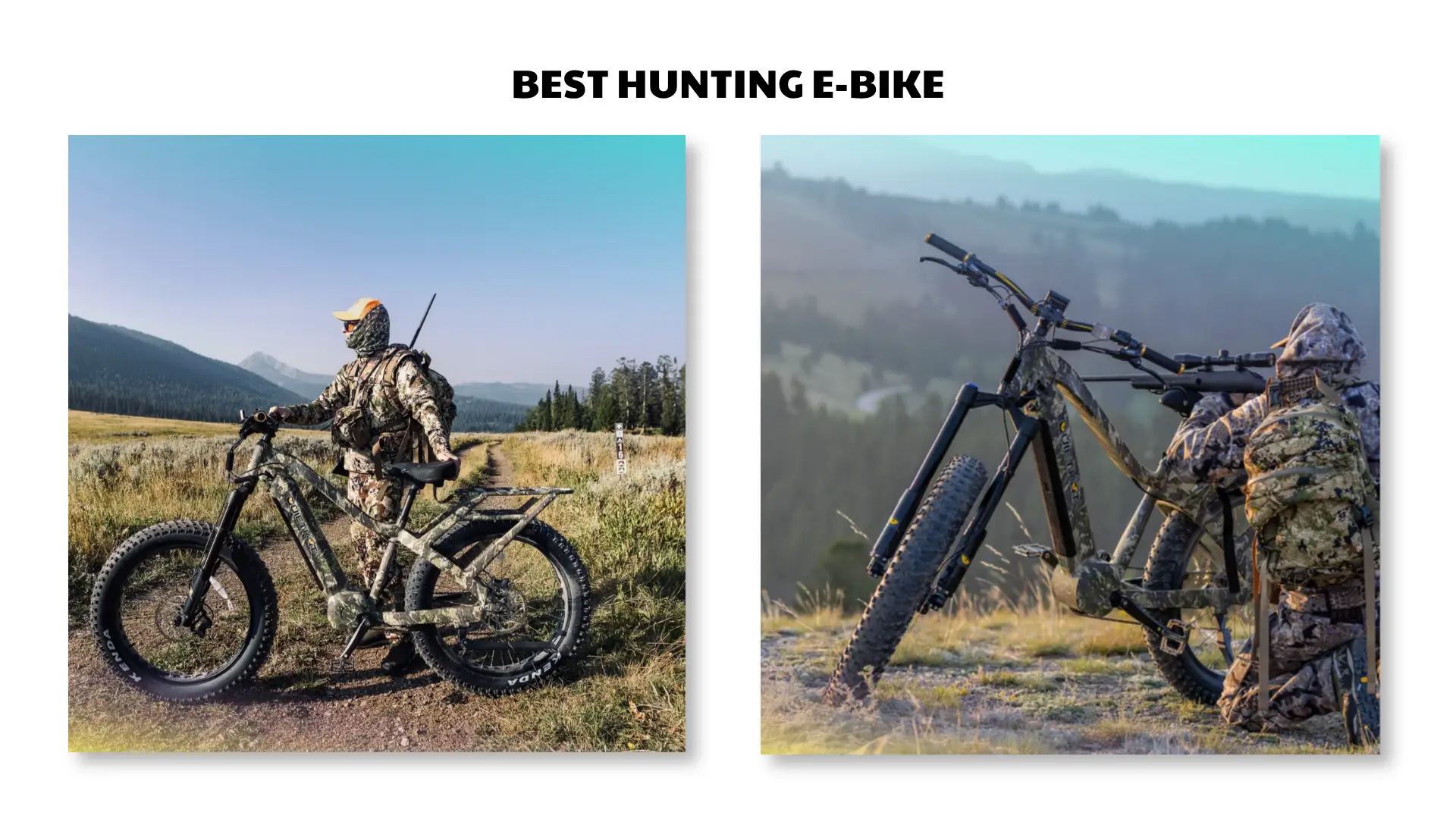
The comparison focuses on frame format, tire size, power delivery, battery arrangement, braking, suspension, cargo usefulness, transport demands, electrical safety, replacement-part support, and overall value. Specifications and marketplace variations can change, so verify the exact seller, ASIN, battery, brake system, certification, included accessories, and return terms before ordering.
Responsible-use note: Hunt only with the proper license and during legal seasons. Confirm e-bike access rules for every road, trail, wildlife area, and property. Follow all firearm or bow transport laws, use a helmet, respect fair-chase principles, and never assume a high-output model is legally classified as a standard electric bicycle.
Key Takeaways
- Choose the legal e-bike class for the land you plan to hunt before comparing power or speed.
- Fat tires improve stability on gravel, mud, sand, and shallow snow, but they increase weight and rolling resistance.
- Plan range conservatively because cold weather, hills, cargo, throttle use, and soft ground reduce battery life.
- Hydraulic brakes, correct fit, serviceable parts, and verified payload limits often matter more than peak wattage.
- The best hunting e-bike depends on terrain, route length, cargo, vehicle storage, local service, and legal access.
- Best Overall: PUCKIPUPPY Labrador Pro on Amazon
- Best Long-Range Pick: FREESKY Alaska Pro Dual-Battery E-Bike on Amazon
- Best for Steep Terrain: PHILODO Falcon Dual-Motor Hunting E-Bike on Amazon
- Best Folding Pick: Jasion Hunter Pro Foldable E-Bike on Amazon
- Best Budget Full-Suspension Pick: TST 1500W Peak Fat-Tire E-Bike on Amazon
- Best for Heavy Riders and Cargo: Jasion Thunder Pro on Amazon
- Best for Beginners: PUCKIPUPPY Beagle on Amazon
- Best High-Power Value: MOVCAN EB60 on Amazon
Best Hunting E-Bike Comparison Table
| Product | Best For | Frame / Tires | Motor / Control | Battery | Cargo / Field Use | Check Price |
|---|---|---|---|---|---|---|
| PUCKIPUPPY Labrador Pro | Best Overall | Full-suspension 26-inch fat-tire frame | Torque-sensing rear-hub system; listing varies by configuration | 48V removable battery; verify current capacity | Rear-rack-ready all-terrain platform | Check Price on Amazon |
| FREESKY Alaska Pro Dual-Battery E-Bike | Best for Long Range | 26-inch fat tires with dual-battery configuration | High-output drive system; confirm class settings | Dual removable battery system | Long-distance platform with rack compatibility | Check Price on Amazon |
| FREESKY Swift Horse Ultra | Best for Rugged Trails | Full-size fat-tire all-terrain frame | High-output Bafang-based configuration on current listing | Large removable battery; verify current option | Rack-compatible trail platform | Check Price on Amazon |
| Jasion Hunter Pro Foldable E-Bike | Best Folding Pick | Foldable 20-by-4-inch fat-tire frame | Peak-output hub motor listed for all-terrain use | Removable battery integrated into folding frame | Compact frame with practical rack options | Check Price on Amazon |
| PUCKIPUPPY Boxer | Best Accessory Package | 26-inch fat-tire full-suspension frame | Moderate-output rear hub motor | 48V removable battery on current listing | Rear rack and bundled utility accessories | Check Price on Amazon |
| PUCKIPUPPY Beagle | Best for Beginners | 26-inch fat-tire hardtail with front suspension | Entry-level hunting-oriented hub motor | Removable 48V battery on current listing | Rear cargo shelf or rack configuration | Check Price on Amazon |
| Qlife Hunter Foldable E-Bike | Best Compact Budget Option | Compact folding frame with 20-by-3-inch tires | Moderate-output hub motor | 48V removable battery on current listing | Integrated rear rack for light gear | Check Price on Amazon |
| PUJH 6000W Dual-Motor Fat-Tire E-Bike | Best Maximum-Power Option | Heavy-duty 26-inch fat-tire dual-motor frame | Dual-motor high-output system | 60V removable battery on current listing | Heavy all-terrain platform; verify rack rating | Check Price on Amazon |
| TST 1500W Peak Fat-Tire E-Bike | Best Budget Full-Suspension Pick | 20-by-4-inch fat-tire full-suspension frame | 750W nominal / 1500W peak listing configuration | 48V removable battery | Compact all-terrain frame with cargo options | Check Price on Amazon |
| DTTZH F6 Fat-Tire E-Bike | Best Value Compact Trail Bike | 20-by-4-inch fat-tire frame | 750W nominal / 1500W peak listing configuration | 48V removable battery | Compact utility layout | Check Price on Amazon |
| PHILODO Falcon Dual-Motor Hunting E-Bike | Best for Steep Terrain | 26-inch fat-tire full-suspension dual-motor frame | Dual-motor 60V platform | Large removable 60V battery | Integrated rack and fender configuration | Check Price on Amazon |
| Jasion Thunder Pro | Best for Heavy Riders and Cargo | 26-inch fat-tire utility frame | High-peak-output rear-hub system | Large removable battery | High listed payload; verify combined limit | Check Price on Amazon |
| YVY 1500W Peak Fat-Tire E-Bike | Best Safety-Focused Budget Pick | 20-inch fat-tire all-terrain frame | 1500W peak listing configuration | Removable battery | Compact utility platform | Check Price on Amazon |
| Gotrax R7 Fat-Tire E-Bike | Best Hunting-Commuter Crossover | Compact fat-tire utility frame | Commuter-oriented hub motor | Removable battery | Built-in rear cargo capability | Check Price on Amazon |
| MOVCAN EB60 | Best High-Power Value | 26-inch fat-tire full-suspension frame | High-output single-motor configuration | Large removable 48V battery | All-terrain mountain-style platform | Check Price on Amazon |
The most reliable choice is not automatically the most powerful one. Full-size 26-inch fat-tire bikes generally provide better rollover comfort and stability, while 20-inch folding or compact models are easier to store and transport. Long-range and dual-motor machines add battery reserve or traction, but they also add weight, charging responsibilities, maintenance, and potential legal restrictions. Compare total fit, braking, verified payload, battery support, rack capacity, terrain, and transport requirements before treating any model as a good value.
15 Best Hunting E-Bike Reviews
1. PUCKIPUPPY Labrador Pro on Amazon
Short Overview
The PUCKIPUPPY Labrador Pro is the most balanced choice in this roundup for hunters who want a capable trail bike without moving immediately to an extremely heavy dual-motor platform. Its full-suspension layout and 26-inch fat tires are better suited to rutted access roads, roots, loose gravel, and wet leaves than a narrow-tire commuter bike. A torque-sensing pedal-assist system is especially useful when you need controlled, low-speed power rather than a sudden surge near a stand or blind. The removable battery makes charging and cold-weather storage easier, although the exact battery specification should be confirmed on the current Amazon variation. The frame is large enough to support practical accessories such as a rear rack, panniers, lights, and a small gear bag. It is still a substantial bike, so loading it into a truck bed or onto a hitch rack requires planning and a rack rated for the full bike weight. For most hunters, the Labrador Pro offers a sensible compromise among traction, comfort, range potential, and manageable power delivery. It is also versatile enough for scouting, camp access, farm roads, and recreational trail riding outside hunting season. Choose it when smooth control and all-day usability matter more than chasing the highest advertised wattage.
Key Features
- Torque-sensing pedal assist for smoother power delivery
- Full-suspension design for rough access roads
- 26-inch fat tires for mixed surfaces
- Removable battery for easier charging and storage
- Accessory-friendly frame for racks and field gear
Pros
- Balanced setup for hunting, scouting, and general trail use
- Natural-feeling pedal assistance at low speed
- Comfortable chassis for ruts, roots, and washboard roads
- Useful platform for adding cargo accessories
Cons
- Heavy compared with a standard mountain bike
- Large frame may not suit smaller storage spaces
- Exact specifications can differ between Amazon variations
Who It’s Best For
Hunters who want one dependable fat-tire e-bike for mixed terrain, moderate cargo, and controlled trail riding rather than a specialized high-speed machine.
2. FREESKY Alaska Pro Dual-Battery E-Bike on Amazon
Short Overview
The FREESKY Alaska Pro stands out for hunters whose first priority is extending practical trail range through a dual-battery design. That extra energy capacity can be valuable when a route includes cold weather, steep grades, soft ground, or a loaded rear rack, all of which reduce real-world range. Its 26-inch fat tires provide a broad contact patch for gravel, sand, light snow, and muddy two-track roads. The bike is best treated as a long-distance utility platform rather than something you will lift frequently over gates or carry upstairs. A dual-battery system also adds charging, storage, and maintenance responsibilities, so both packs should be handled according to the manufacturer’s instructions. Hunters should calculate range conservatively and preserve a reserve for the return trip instead of relying on the maximum advertised figure. Because higher-output configurations may exceed local e-bike class limits, buyers need to confirm legal settings for the land they plan to ride. The Alaska Pro makes the most sense for large properties, long scouting routes, and riders who value endurance more than portability. It is a strong option when getting back to the vehicle with power remaining is more important than having the lightest bike.
Key Features
- Dual-battery layout for extended-range planning
- 26-inch fat tires for loose and uneven terrain
- Suspension-oriented all-terrain frame
- Removable batteries for separate charging
- Cargo-ready design for longer field trips
Pros
- More energy reserve for long access routes
- Stable footprint on gravel, mud, and soft surfaces
- Well suited to repeated scouting loops
- Reduces the need to carry a loose spare battery
Cons
- High total weight can complicate transport
- Two batteries require more careful charging and storage
- May exceed legal e-bike limits in some configurations
Who It’s Best For
Hunters covering long private-land routes, ranch roads, or extended scouting circuits who can transport a heavy bike and need a larger battery reserve.
3. FREESKY Swift Horse Ultra on Amazon
Short Overview
The FREESKY Swift Horse Ultra is aimed at riders who expect frequent hills, rough forest roads, and loose surfaces rather than mostly flat farm lanes. Its full-size fat-tire layout gives it the planted feel many hunters prefer when descending with a pack or riding across broken ground. The current listing emphasizes a high-output Bafang-based drive system, but buyers should verify the exact motor and class configuration before ordering. A large removable battery supports longer days, although terrain, rider weight, temperature, and assist level will determine actual range. This is not a discreetly lightweight bicycle, so a heavy-duty hitch rack or pickup transport is usually more practical than a roof rack. Hydraulic braking and suspension are important checks on a bike in this category because loaded descents create more heat and stopping demand. The Swift Horse Ultra is especially appealing to riders who want stronger climbing support without moving to a dual-motor design. It also has enough general utility for camping access, fishing roads, and recreational trail use. Choose it when technical terrain and climbing control matter more than folding storage or low total weight.
Key Features
- Full-size fat-tire geometry for rough surfaces
- High-output motor platform for climbing support
- Large removable battery configuration
- Suspension setup for broken roads and trail chatter
- Rack-compatible frame for day-hunt cargo
Pros
- Confident feel on steep and loose terrain
- Strong alternative to very heavy dual-motor bikes
- Useful battery capacity for demanding routes
- Versatile for hunting, camping, and trail riding
Cons
- Bulky for apartments or small vehicles
- Specifications may vary by listing option
- Requires careful speed and class setup for legal use
Who It’s Best For
Hunters who regularly face hills, rocky access roads, or uneven trails and want a powerful single-platform bike with full-size tires.
4. Jasion Hunter Pro Foldable E-Bike on Amazon
Short Overview
The Jasion Hunter Pro is a practical choice for hunters who need a fat-tire e-bike that can fit more easily in an SUV, RV, van, or limited garage space. Its folding frame and 20-inch wheels reduce storage length, though the bike remains heavy and should not be confused with a lightweight folding commuter. Wide tires and full suspension help absorb potholes, gravel, roots, and rough camp roads. The compact wheel size gives the bike quick steering, which can be helpful on tight trails but may feel busier than a 26-inch wheel on long, rough descents. A removable battery is convenient for charging indoors and for keeping the pack out of freezing temperatures. The hinge, latch, and battery lock should be checked before every field trip because folding joints add inspection points that fixed-frame bikes do not have. This model works best for day hunts and scouting where vehicle space matters as much as trail capability. It can also serve as a campground or general-purpose utility bike between seasons. Choose it when transport convenience is a real constraint and your routes do not demand the stability of a full-size dual-motor machine.
Key Features
- Folding frame for easier vehicle storage
- 20-by-4-inch fat tires
- Full-suspension comfort on moderate trails
- Removable battery
- Hydraulic-brake configuration on current listing
Pros
- Easier to fit inside many SUVs, vans, and RVs
- Stable fat-tire traction in a compact package
- Comfortable for camp roads and mixed surfaces
- Useful for hunters with limited storage space
Cons
- Still heavy despite the folding frame
- Folding latch requires regular inspection
- Small wheels can feel busy on very rough terrain
Who It’s Best For
Hunters who travel with limited cargo space, camp from an RV, or want a bike that can be stored inside a vehicle instead of on an external rack.
5. PUCKIPUPPY Boxer on Amazon
Short Overview
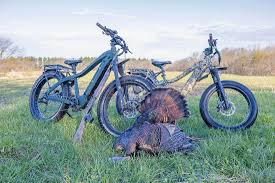
The PUCKIPUPPY Boxer is designed for buyers who want a hunting-oriented package with useful accessories instead of starting with a bare bike. Its 26-inch fat tires and suspension help smooth ruts, wet leaves, gravel, and uneven forest roads. The moderate-output motor is a better fit for controlled trail access than for riders seeking the most aggressive acceleration. A rear rack, fenders, and other included items can reduce the number of separate purchases needed before the first scouting trip. Hunters should still verify the rack’s load rating before carrying dense gear or attaching a trailer. The removable battery simplifies indoor charging and seasonal storage. The Boxer is heavy enough that a suitable hitch rack, loading ramp, or pickup bed is usually the safest transport method. Its camouflage styling may appeal to hunters, but tire noise, chain condition, loose accessories, and rider behavior matter more than paint color for quiet access. Choose it when convenience, comfort, and a ready-to-use field setup matter more than maximum power.
Key Features
- 26-inch fat tires for soft and broken surfaces
- Full-suspension comfort
- Removable 48V battery configuration
- Rear rack and utility accessories
- Hunting-oriented color options
Pros
- Reduces the need for immediate accessory purchases
- Comfortable on logging roads and moderate trails
- Good platform for day-hunt gear
- Beginner-friendly all-terrain layout
Cons
- Heavy to load without assistance
- Bundled accessories still need bolt checks
- Not the strongest option for extreme grades
Who It’s Best For
Hunters who want a complete, comfortable package for day hunts, property checks, and moderate off-road access without building the bike piece by piece.
6. PUCKIPUPPY Beagle on Amazon
Short Overview
The PUCKIPUPPY Beagle is a straightforward entry point for hunters who need help reaching food plots, blinds, and farm-road access points. Its 26-inch fat tires provide more stability on loose gravel, grass, and shallow mud than a conventional commuter tire. Front suspension softens trail chatter, but the hardtail rear end is less comfortable than full suspension on repeated roots and deep ruts. The simpler layout can be easier for a first-time e-bike owner to understand and maintain. A removable battery allows charging away from the bike and makes cold-weather storage more practical. The rear cargo area is useful for a daypack, rain gear, or trail-camera supplies when kept within the manufacturer’s load limit. This model is best for moderate terrain and conservative speeds rather than technical mountain-bike trails. It is also suitable for property maintenance and recreational riding outside hunting season. Choose it when you want a stable, approachable hunting e-bike and do not need dual motors or advanced suspension.
Key Features
- 26-inch fat tires
- Front suspension fork
- Removable battery
- Rear cargo support
- Simple controls for first-time owners
Pros
- Approachable design for beginners
- Stable on grass, gravel, and light mud
- Less complex than a dual-motor model
- Useful for food plots and property checks
Cons
- Hardtail rear can feel firm on rough trails
- Not intended for extreme climbs
- Brake specification should be checked by variation
Who It’s Best For
New e-bike owners, deer hunters on maintained access roads, and landowners who want practical electric assistance without a complex high-power system.
7. Qlife Hunter Foldable E-Bike on Amazon
Short Overview
The Qlife Hunter is a compact, lower-cost option for buyers whose hunting routes are mostly maintained roads, short gravel sections, and gentle farm lanes. Its folding frame makes it easier to store than a full-size 26-inch hunting e-bike. The 20-by-3-inch tires provide more cushion and stability than narrow commuter tires but less flotation than 4-inch fat tires in deep sand, mud, or snow. A rear rack can carry a small daypack, clothing layers, or trail-camera supplies when loaded within the stated limit. The bike’s moderate power is more appropriate for light-duty access than steep, technical backcountry riding. Because compact folding bikes concentrate weight in a small package, buyers should still confirm that they can lift and secure it safely. The hinge, fasteners, brakes, and tire pressure deserve regular checks before field use. This model can double as a campground, neighborhood, or short-commute bike. Choose it when affordability and compact storage matter more than maximum traction or long-range capacity.
Key Features
- Compact folding frame
- 20-by-3-inch tires
- Removable battery
- Rear rack for light cargo
- Simple multi-speed drivetrain
Pros
- Easy to store in smaller spaces
- Useful for short, maintained access routes
- Lower-cost entry into electric trail transport
- Practical for camp and everyday riding
Cons
- Narrower tires than full fat-tire models
- Limited for deep mud, snow, or steep grades
- Compact frame can still be heavy to lift
Who It’s Best For
Budget-focused hunters with short, nontechnical routes who need a folding bike for vehicle storage and light gear hauling.
8. PUJH 6000W Dual-Motor Fat-Tire E-Bike on Amazon
Short Overview
The PUJH dual-motor e-bike is built for buyers who prioritize climbing force and traction on steep or loose private-land routes. With power delivered at both wheels, it can maintain momentum where a modest single-hub bike may spin or slow down. That capability comes with major trade-offs in weight, complexity, battery use, and legal classification. A bike advertised at this output may not qualify as a conventional e-bike on many public roads or trails, so local rules must be checked before use. The dual-motor system also adds controllers, wiring, and service points that require careful inspection. Fat tires and suspension can improve stability, but they do not replace safe speed, proper braking technique, or realistic route planning. This bike is most appropriate on private property or other locations where its configuration is expressly permitted. Transport requires a rack or trailer rated for the full assembled weight, not a lightweight bicycle carrier. Choose it only when you genuinely need steep-grade performance and are prepared for the maintenance and legal responsibilities.
Key Features
- Dual-motor drive for loose or steep terrain
- 60V battery platform on current listing
- 26-inch fat tires
- Full-suspension all-terrain chassis
- Hydraulic-brake configuration
Pros
- Strong traction potential on demanding climbs
- Built for heavy-duty private-land use
- Stable footprint on loose surfaces
- Suitable for riders who need high load headroom
Cons
- Very heavy and difficult to transport
- May not be street- or trail-legal as a standard e-bike
- More electrical and mechanical complexity
Who It’s Best For
Experienced riders using legal private-land routes who need maximum climbing support and understand the transport, service, and regulatory trade-offs.
9. TST 1500W Peak Fat-Tire E-Bike on Amazon
Short Overview
The TST fat-tire e-bike is a value-focused option for hunters who want full suspension and wide tires without paying for a premium hunting-specific brand. Its 20-by-4-inch wheel setup is compact enough for easier vehicle transport while still offering useful flotation on gravel, sand, and shallow mud. The listing presents a 750-watt nominal motor with a higher peak figure, which is adequate for many moderate hills when loads are kept reasonable. Full suspension improves comfort on washboard roads and potholes, although component quality and setup should be inspected carefully after assembly. The removable battery is practical for indoor charging and cold-weather storage. Mechanical brake versions require correct cable tension and pad alignment, especially before riding downhill with cargo. Buyers should verify the current UL certification language, charger, seller, and warranty because Amazon variations can change. This model is best viewed as a budget trail-access bike rather than a substitute for a high-end electric mountain bike. Choose it when cost, compact dimensions, and comfort are more important than premium service support.
Key Features
- 20-by-4-inch fat tires
- Full-suspension frame
- Removable 48V battery
- Multi-speed drivetrain
- Compact format for easier storage
Pros
- Strong feature set for a budget model
- Comfortable on gravel and broken roads
- Compact compared with 26-inch bikes
- Useful for light to moderate hunting access
Cons
- Mechanical brakes need careful adjustment
- Seller support may be less extensive than dealer brands
- Not ideal for repeated extreme climbs
Who It’s Best For
Budget-conscious hunters and campers who ride moderate terrain and are comfortable checking assembly, brakes, and fasteners before use.
10. DTTZH F6 Fat-Tire E-Bike on Amazon
Short Overview
The DTTZH F6 is another compact fat-tire option for hunters who want a manageable footprint for storage and transportation. Its 20-by-4-inch tires provide a stable base on hard-packed dirt, gravel, and uneven campground roads. The motor configuration is intended to provide useful assistance on moderate grades rather than the extreme output of a dual-motor machine. A removable battery is convenient for charging in a cabin, garage, or vehicle-based camp. The current listing references electrical-system safety certification, but buyers should confirm the certification mark and exact model before purchase. Compact fat-tire bikes can feel agile at low speed, though they may transmit more movement on long, rough descents than 26-inch wheels. This model is most suitable for lighter cargo and day-hunt access where the route is known. Regular checks of tire pressure, brake adjustment, folding or frame hardware, and rack bolts remain essential. Choose it when you want a value-oriented bike for moderate trails and do not need a large long-range frame.
Key Features
- 20-by-4-inch fat tires
- Removable 48V battery
- Compact all-terrain geometry
- Multi-speed gearing
- Current listing references UL 2849 testing
Pros
- Compact size for truck, van, or garage storage
- Stable on common camp-road surfaces
- Useful power for moderate hills
- Good fit for day-hunt access
Cons
- Less stable than 26-inch wheels on rough descents
- Limited long-term dealer support information
- Not designed for very heavy cargo
Who It’s Best For
Hunters, campers, and property owners who want a compact fat-tire e-bike for predictable routes, moderate grades, and lighter loads.
11. PHILODO Falcon Dual-Motor Hunting E-Bike on Amazon
Short Overview
The PHILODO Falcon is a heavy-duty dual-motor option for hunters who routinely face steep grades, deep gravel, sand, or snow. Its 26-inch fat tires and full suspension provide a broad, stable platform for rough access roads. The 60V electrical system and dual-drive layout prioritize traction and climbing support over low weight. That performance makes conservative speed control and strong braking especially important when descending with gear. The Falcon is better suited to pickup beds, trailers, or high-capacity hitch racks than to frequent lifting. As with any high-output e-bike, the rider must verify whether the selected mode and configuration are legal on the intended property, road, or trail. The additional motor, controller, and wiring increase service complexity compared with a conventional single-motor bike. For legal private-land use, it can be a capable platform for long grades and soft surfaces where traction is the main challenge. Choose it when terrain is genuinely demanding and you are willing to accept the weight and maintenance burden.
Key Features
- Dual-motor 60V drive platform
- 26-inch fat tires
- Full suspension
- Hydraulic disc brakes
- Rack and fender utility setup
Pros
- Strong traction on steep and loose surfaces
- Stable full-size wheel platform
- Useful for snow, sand, and rough roads
- Integrated utility equipment
Cons
- Very heavy for normal bicycle racks
- High output can create legal restrictions
- Dual-drive system is more complex to service
Who It’s Best For
Experienced hunters on legal private-land routes with steep climbs, loose terrain, and a transport setup capable of handling a very heavy e-bike.
12. Jasion Thunder Pro on Amazon
Short Overview
The Jasion Thunder Pro is designed for riders who need more payload headroom for body weight, clothing, tools, and hunting gear. Its full-size fat-tire frame provides a more planted ride than a compact folding model. The current listing emphasizes a high combined payload, but buyers should verify whether that figure includes the rider, rack cargo, and any trailer tongue weight. A large removable battery is useful for longer access routes and indoor charging. Hydraulic brakes are an important advantage on a heavier bike, especially when descending with cargo. The bike’s high-output settings may exceed conventional Class 1, Class 2, or Class 3 limits, so legal modes should be configured before public use. Fit is just as important as capacity; seat height, reach, standover clearance, and inseam should be checked carefully. This model can work well for larger riders who found smaller e-bikes flexy or underpowered. Choose it when structural headroom, braking, and full-size stability are higher priorities than easy lifting.
Key Features
- High listed payload capacity
- 26-inch fat tires
- Large removable battery
- Hydraulic disc brakes
- Utility-oriented lighting and rack compatibility
Pros
- More capacity headroom for rider and gear
- Stable full-size chassis
- Strong braking configuration
- Suitable for longer mixed-surface routes
Cons
- Heavy to transport
- Fit may be challenging for shorter riders
- High-speed modes may not be legal everywhere
Who It’s Best For
Heavier riders and hunters carrying substantial day gear who need a full-size frame, stronger braking, and more stated payload capacity.
13. YVY 1500W Peak Fat-Tire E-Bike on Amazon
Short Overview
The YVY fat-tire e-bike targets value buyers who want a compact all-terrain setup with safety certification language and hydraulic braking on the current listing. Those details are worth confirming against the exact model number because Amazon sellers sometimes combine several variations on one page. Its 20-inch fat tires are useful for gravel, potholes, hard-packed dirt, and shallow soft ground. The compact frame is easier to store than a full-size hunting bike, but the total weight may still exceed the rating of basic car racks. Hydraulic brakes can provide more consistent lever feel than entry-level mechanical systems when adjusted correctly. The bike is best suited to moderate routes, property checks, and short scouting rides rather than remote backcountry travel. Buyers should also confirm replacement battery availability and whether a local shop will service the electrical system. A conservative assist setting will usually provide better control, less noise, and more useful range. Choose it when you want a budget-friendly compact bike but still place emphasis on braking and documented electrical safety.
Key Features
- 20-inch fat-tire frame
- Hydraulic disc brakes on current listing
- Removable battery
- Current listing references UL safety testing
- Compact utility geometry
Pros
- Good feature mix for budget buyers
- Hydraulic braking configuration
- Compact storage footprint
- Suitable for roads and moderate trails
Cons
- Certification details must be matched to exact model
- Less appropriate for remote backcountry routes
- Replacement-parts network may be limited
Who It’s Best For
Budget-focused hunters who ride maintained roads and moderate trails and want to prioritize hydraulic brakes and clearly documented electrical safety.
14. Gotrax R7 Fat-Tire E-Bike on Amazon
Short Overview
The Gotrax R7 is a sensible crossover for buyers who need one e-bike for weekday errands and occasional hunting-property access. Its compact fat tires improve comfort and stability on gravel and broken pavement without making the bike as large as a 26-inch hunting platform. A built-in cargo area can carry groceries during the week and a small gear bag or clothing layers on a scouting trip. The drive system is better matched to maintained roads and moderate grades than to deep mud or technical mountain trails. A recognized consumer mobility brand may offer a more familiar support path than some short-lived marketplace labels, although local service should still be confirmed. The removable battery supports indoor charging and safer temperature-controlled storage. This bike is easier to justify for riders who will use it frequently outside hunting season. It should not be overloaded simply because it has a rack; the frame and rack limits must be checked separately. Choose it when everyday usefulness and moderate trail access matter more than camouflage or extreme power.
Key Features
- Compact fat-tire utility design
- Integrated rear cargo area
- Removable battery
- Everyday riding geometry
- Suitable for pavement and maintained dirt roads
Pros
- Useful beyond hunting season
- Practical cargo setup
- Compact compared with full-size hunt bikes
- Good for maintained property roads
Cons
- Not intended for deep mud or technical trails
- Less battery reserve than dual-battery models
- Cargo rack limit must be verified
Who It’s Best For
Hunters who also need an everyday utility e-bike and mainly travel on pavement, gravel, and maintained property roads.
15. MOVCAN EB60 on Amazon
Short Overview
The MOVCAN EB60 offers a high-output full-size platform for buyers who want more climbing support than a basic 750-watt commuter-style bike. Its 26-inch fat tires roll more smoothly over roots, ruts, and loose gravel than small-wheel compact models. Full suspension adds comfort on rough access roads, especially when the rider carries a pack. The current listing emphasizes a large removable battery and hydraulic brakes, both useful features for longer and heavier trail rides. Because high peak-power claims do not automatically translate into better control, riders should prioritize smooth assist settings and legal speed limits. The bike’s size and weight require a substantial storage and transport plan. It is suitable for hunting access, camping roads, and recreational off-road use where the route is legal and within the bike’s capabilities. Buyers should confirm the exact seller, warranty process, battery certification, and replacement-part availability. Choose it when you want strong value from a full-size, high-power fat-tire bike and can handle the added bulk.
Key Features
- 26-inch fat tires
- Full-suspension frame
- Large removable battery
- Hydraulic disc brakes on current listing
- High-output single-motor design
Pros
- Strong climbing support for the price category
- Full-size stability on rough roads
- Comfortable suspension layout
- Useful for hunting and general off-road riding
Cons
- Heavy and bulky
- Peak-power marketing requires careful interpretation
- Service network may vary by seller
Who It’s Best For
Value-focused riders who need a full-size fat-tire e-bike for hills and mixed trails but prefer a single-motor design over a heavier dual-motor setup.
Buying Guide: How to Choose the Best Hunting E-Bike
A good hunting e-bike should conserve energy, carry useful gear, and remain predictable on the routes you actually ride. It should not encourage illegal access, unsafe speed, unrealistic range planning, or loads beyond the frame and brakes. Use the factors below to narrow the list before ordering.
Start With the Legal Route, Not the Motor Number
Before comparing motors or batteries, identify exactly where the bike will be used. Private property rules may be different from county roads, state wildlife areas, national forests, and nonmotorized trails. An e-bike that is legal on one road may be prohibited on a nearby trail, and a high-output model may fall outside the local definition of an electric bicycle. Check the land manager’s map, seasonal closures, vehicle restrictions, and permitted e-bike classes. Hunters should also confirm that using a motorized device does not conflict with special-access rules for a season or wildlife area. A legal route plan protects habitat, prevents citations, and keeps access open for other hunters. When in doubt, contact the agency or property manager before the trip and save the relevant map or written guidance offline.
Match the Bike to Your Hunting Style
A treestand hunter using maintained farm lanes has different needs from an elk hunter climbing long mountain roads. For short whitetail access, a moderate single-motor bike with a rear rack may be enough. Long scouting loops favor a larger battery or dual-battery system. Steep private roads may justify stronger torque, hydraulic brakes, and a full-size wheel. Hunters who travel in an SUV or RV may prefer a folding model even if it gives up some stability. Think about how often you will ride, how far the stand is from the vehicle, whether you will tow a trailer, and whether the bike will also be used for fishing, camping, commuting, or property work. The best hunting e-bike is the one that fits the real route rather than the most impressive specification sheet.
Motor Power, Torque, and Control
Motor wattage is easy to advertise, but controlled torque delivery is more useful in the field. A smooth single-motor system can be easier to manage on wet leaves, roots, and narrow trails than a very powerful setup that surges when the throttle is touched. Torque sensors generally respond to how hard you pedal, while cadence sensors mainly detect that the cranks are turning. Both can work, but torque sensing often feels more natural at low speed. Dual motors can improve traction and climbing on legal private-land routes, yet they add weight, complexity, and battery drain. Do not assume that the highest peak wattage is automatically safer or better. Confirm nominal power, peak power, controller settings, available class modes, and whether replacement electrical parts are available.
Battery Capacity and Real-World Range
Advertised range is normally measured under favorable conditions. Hunting use is harder on a battery because of cold temperatures, low tire pressure, mud, hills, stop-and-go riding, cargo, throttle use, and soft surfaces. Plan with a conservative estimate and keep a meaningful reserve for the return trip. A larger battery can reduce range anxiety, but it also increases weight and replacement cost. Dual batteries are useful for long routes, provided both packs are approved for the system and charged with the correct equipment. Avoid mixing batteries, chargers, or adapters that are not authorized by the manufacturer. Store lithium-ion batteries in a dry, temperature-controlled location away from combustible materials, inspect them for damage or swelling, and follow the manual for long-term storage charge.
Fat Tires, Wheel Size, and Terrain
Four-inch fat tires can improve flotation and stability on sand, shallow snow, mud, and loose gravel, but they create more rolling resistance and weight. A 26-inch fat-tire wheel generally rolls over roots and ruts more smoothly, while a 20-inch wheel creates a more compact bike with quicker steering. Three-inch tires are a middle ground for maintained roads and light trails. Tread pattern matters as much as width: open knobs can clear mud better, while closely spaced tread usually rolls more quietly on hard surfaces. Tire pressure should be adjusted within the tire and rim limits for rider weight and terrain. Pressure that is too low can damage rims or make steering vague; pressure that is too high reduces grip and comfort.
Suspension and Ride Comfort
Front suspension is often enough for gravel roads, farm lanes, and moderate trails. Full suspension becomes more valuable on repeated roots, washboard roads, rocky descents, and long rides with a pack. It also adds cost, weight, pivots, and setup requirements. A poorly adjusted full-suspension bike can bob, bottom out, or feel unstable, so learn how to set preload or air pressure according to the manufacturer’s instructions. Do not rely on suspension to compensate for excessive speed. Saddle shape, handlebar position, grips, tire pressure, and frame fit often affect comfort as much as the shock system. For cold hunts, make sure bulky clothing does not restrict steering or interfere with controls.
Brakes for Loaded Descents
Hunting e-bikes are heavy before cargo is added, which makes braking a critical selection factor. Hydraulic disc brakes usually provide stronger, more consistent lever feel with less hand effort than basic mechanical discs, although both systems can work when properly adjusted. Check rotor size, pad availability, hose or cable routing, and whether a local shop can obtain service parts. New brake pads and rotors require a proper bedding-in process before demanding use. Test both brakes with the planned load in a safe area, and never begin a steep descent with an unfamiliar bike. Brake earlier than you would on a normal bicycle, keep speed conservative, and inspect pads more often when riding in mud, grit, or wet conditions.
Payload, Racks, and Trailers
Payload claims should include the rider, clothing, backpack, rack cargo, accessories, and any weight transferred from a trailer. The frame’s total capacity is not automatically the same as the rear rack’s capacity. A rack may be rated for far less than the bicycle, so verify both numbers. Keep dense cargo low and centered, use secure straps, and prevent loose fabric from reaching the wheel or drivetrain. Trailers change braking distance, turning radius, balance, and battery consumption. Confirm that the manufacturer allows trailer use and that the hitch does not interfere with the axle, motor cable, derailleur, or brake. Practice with an equivalent load before relying on the setup during a hunt.
Fit, Sizing, and Winter Clothing
A bike can have excellent components and still be wrong for the rider. Compare the stated rider-height range, standover height, seat-height range, reach, and maximum inseam fit. You should be able to start, stop, and put a foot down while wearing the boots and layers used during hunting season. Thick gloves must still allow reliable use of brake levers, shifter, display buttons, and throttle. Very wide saddles can feel comfortable at first but may interfere with pedaling on long rides. Smaller riders should be cautious with tall, heavy 26-inch frames, while larger riders need enough seat-post insertion and handlebar reach. Whenever possible, test a similar frame size before ordering.
Weight, Transport, and Storage
Many hunting e-bikes weigh far more than conventional bicycles. The weight listed online may exclude the battery, rack, fenders, or accessories, so confirm the fully assembled number. A standard trunk rack may not be rated for a fat-tire e-bike, and roof loading can be unsafe without help. A hitch-mounted platform rack should support the individual bike weight, wheelbase, tire width, and total combined load. Consider a loading ramp if the bike is difficult to lift. Remove the battery only when the manufacturer permits transport that way, and secure both bike and battery against movement. At home, store the bike in a dry location where the battery and charger can be monitored.
Electrical Safety, Certification, and Service
Look for clear documentation that the exact bicycle electrical system, battery, and charger have been evaluated to recognized safety standards, not merely a vague logo in an image. Match the certification to the exact model and variation. Use only the supplied or manufacturer-approved charger, plug directly into an appropriate outlet, and avoid charging unattended or near an exit path. Stop using a battery that is cracked, swollen, unusually hot, wet inside, or emitting odor or noise. Before buying, ask local shops whether they service the brand and whether replacement displays, controllers, batteries, brake pads, tires, and derailleur parts can be ordered. Low purchase cost loses value quickly if basic service parts disappear.
Weather, Cold, and Maintenance
Cold temperatures can reduce available range, while mud, water, and grit accelerate wear. Keep the battery within the manufacturer’s permitted temperature range and allow a cold battery to warm appropriately before charging. Water resistance does not mean the bike can be submerged, pressure-washed, or stored uncovered. After a wet ride, wipe the frame, clean the drivetrain, inspect connectors, dry the brakes, and recharge only when the system is clean and undamaged. Check tire pressure before every trip because temperature changes affect it. Lubricate the chain with a product suitable for the conditions, tighten rack and accessory bolts, and inspect spokes, brake pads, rotors, and motor cables regularly.
Brand Support, Warranty, and Total Value
The lowest advertised price is not always the best value. Compare warranty length, exclusions, return shipping terms, assembly requirements, replacement battery cost, parts availability, and customer-service responsiveness. Large, heavy e-bikes can be expensive to return, so read the policy before opening the box. Check whether the seller or manufacturer provides a real support address, manuals, wiring diagrams, and model-specific parts. Customer reviews are useful for identifying repeated issues, but separate verified fit or service complaints from unrealistic range expectations. Budget for a helmet, lock, suitable transport rack, spare tube or repair materials, pump, tools, lights, and cargo equipment. A slightly more expensive bike with dependable parts support may cost less over several seasons.
Common Mistakes to Avoid When Buying a Hunting E-Bike
- Buying by peak wattage alone: Peak numbers do not reveal low-speed control, legal class, braking, reliability, or serviceability.
- Believing the maximum range claim: Cold, hills, mud, cargo, throttle use, and soft tires can reduce range substantially.
- Ignoring total weight: Many fat-tire e-bikes exceed the limits of ordinary car racks and are difficult to lift alone.
- Confusing frame payload with rack capacity: A high total rating does not mean the rear rack can carry the same weight.
- Skipping fit checks: Seat height, standover, reach, inseam, and winter clothing determine whether the bike is controllable.
- Assuming all trails allow e-bikes: Access rules vary by land manager, trail, season, and e-bike class.
- Overlooking electrical certification: Match certification claims to the exact model, battery, charger, and variation.
- Using an unapproved charger: A plug that fits does not guarantee electrical compatibility or safe charging.
- Failing to plan for parts and service: Confirm replacement batteries, controllers, displays, brake pads, tires, and shop support.
- Testing the bike for the first time on a hunt: Assemble, inspect, bed in the brakes, practice with cargo, and learn real range before the season.
Expert Tips for Using a Hunting E-Bike
- Practice starts, stops, tight turns, and loaded braking on a familiar route before hunting season.
- Use the lowest assist level that handles the terrain comfortably; smooth power saves battery and improves traction.
- Keep a return-range reserve and turn around early when cold, mud, wind, or cargo increase energy use.
- Check both tire pressures, brake operation, battery lock, wheel security, rack bolts, and cargo straps before every ride.
- Carry a model-specific repair kit, offline map, light, communication device, weather layers, and a walking-out plan.
- Store and charge the battery in a dry, monitored location using only approved equipment.
- Secure firearms or bows in a legal purpose-built carrier that cannot interfere with steering, braking, pedals, or wheels.
- Slow down around other trail users and wildlife, stay on designated routes, and avoid soft trails that will rut.
- Clean mud and grit gently, dry the bike, inspect connectors, and lubricate the drivetrain after wet trips.
- Follow legal seasons, licensing requirements, property boundaries, fair-chase principles, and all local e-bike rules.
Final Recommendation
For most buyers, the PUCKIPUPPY Labrador Pro on Amazon is the best overall hunting e-bike in this comparison because it balances fat-tire stability, full-suspension comfort, controlled pedal assistance, removable-battery convenience, and useful cargo compatibility.
Choose the FREESKY Alaska Pro on Amazon when long-range reserve is the main concern. The PHILODO Falcon on Amazon is better suited to steep, loose, legal private-land routes where dual-motor traction is genuinely useful. The Jasion Hunter Pro on Amazon is the strongest fit for folding storage, while the TST fat-tire e-bike on Amazon is a practical budget full-suspension option for moderate routes.
Heavy riders and cargo-focused users should compare the Jasion Thunder Pro on Amazon, while beginners on maintained access roads may prefer the simpler PUCKIPUPPY Beagle on Amazon. Check current Amazon availability, seller details, exact specifications, certification, warranty, and return terms before buying.
Choose based on safety, legal access, fit, braking, battery support, terrain, transport, durability, comfort, and responsible use. Share this guide with hunting partners, landowners, camping groups, or family members comparing electric trail transportation.
Frequently Asked Questions About the Best Hunting E-Bike
1. What makes an e-bike suitable for hunting?
A hunting e-bike should combine controlled power, dependable brakes, practical range, stable tires, and a frame that can carry the rider plus field gear. Quiet operation is useful, but a poorly maintained chain, loose rack, or rattling cargo can make more noise than the motor. Look for a removable battery, clear payload limits, serviceable brakes, suitable tire tread, and enough low-speed control for narrow trails. The best model also fits the legal classification allowed on the property or public land you plan to use. A bike that is too powerful, too heavy, or illegal on the route is not a good hunting choice, regardless of its advertised specifications.
2. Are hunting e-bikes legal on public land?
Legality depends on the land manager, trail designation, e-bike class, season, and local rules. Some motorized roads allow all e-bike classes, while nearby nonmotorized trails may prohibit them. National forests, state wildlife areas, county parks, and private timber lands can all use different policies. A hunting license does not automatically authorize motorized access. Check the current motor-vehicle use map, trail signs, seasonal closures, and any special regulations for the wildlife area. When information is unclear, contact the managing agency before the trip and keep a copy of the relevant guidance or map on your phone for offline reference.
3. Which e-bike class is best for hunting?
Class 1 pedal-assist bikes are often the easiest to use legally because they do not rely on a throttle and typically stop assisting at a lower speed. Class 2 models add a throttle, which can be helpful for starting with a load but may face more trail restrictions. Class 3 bikes provide higher assisted speed and are commonly limited to roads or specific routes. High-output models that exceed standard class definitions may be treated as mopeds or motor vehicles. The best class is therefore the highest class specifically permitted on your route, not the fastest option available online.
4. Is a 750W motor enough for a hunting e-bike?
For many hunters, a well-designed 750W nominal motor is enough for gravel roads, farm lanes, rolling hills, and moderate cargo. Performance depends on torque, gearing, wheel size, controller tuning, total weight, tire pressure, and surface conditions. A smooth 750W system can be more useful than a higher peak-wattage motor that delivers power abruptly. Steep grades, deep sand, soft snow, and heavy trailers may require more torque or a different route. Always compare nominal power and legal class settings rather than relying only on a large peak number in the title.
5. Do I need a dual-motor hunting e-bike?
Most hunters do not need dual motors. A capable single-motor fat-tire bike is simpler, lighter, easier on the battery, and usually easier to keep within common e-bike classifications. Dual motors can help on very steep, loose, or soft private-land routes where front and rear traction are valuable. They also add weight, wiring, controllers, heat, service complexity, and legal concerns. Choose dual motors only after confirming that the route genuinely requires them and that the configuration is permitted. For normal farm roads, logging roads, and maintained trails, a controlled single-motor setup is often the better long-term choice.
6. How much real-world range should I expect?
Real-world range is usually lower than the maximum figure shown in a product listing. Cold weather, throttle use, hills, mud, soft tires, heavy cargo, frequent stops, headwinds, and high assist levels all reduce distance. For hunting, plan conservatively and reserve enough battery to return even if conditions worsen. A useful approach is to treat the first few rides as range tests on familiar routes while carrying a similar load. Record distance, elevation, temperature, assist level, and remaining charge. Never plan a remote trip around the best-case advertised number.
7. Does cold weather reduce e-bike battery range?
Yes. Lithium-ion batteries generally deliver less usable energy in cold conditions, and thick mud, snow, winter clothing, and low tire pressure add more resistance. Keep the battery within the manufacturer’s approved temperature range and store it in a dry, temperature-controlled place when possible. Do not charge a frozen or damaged battery; allow it to return to a permitted charging temperature according to the manual. Plan a larger reserve in winter and avoid relying on the final battery bar. Carrying a second approved battery can help, but only if the bike manufacturer supports that battery and connection method.
8. Are fat tires necessary for hunting?
Fat tires are not mandatory, but they are useful on loose gravel, mud, sand, shallow snow, wet leaves, and rough access roads. They add stability and comfort at low speed, especially when the bike carries cargo. The trade-offs are weight, rolling resistance, larger storage requirements, and more difficult tire repairs. Hunters who ride only paved roads and hard-packed trails may prefer a conventional mountain-bike tire for easier pedaling and transport. Match tire width and tread to the worst surface you regularly encounter instead of assuming wider is always better.
9. Are 20-inch or 26-inch wheels better for hunting?
Twenty-inch wheels make a bike shorter and easier to store, and they can feel agile on tight routes. They are common on folding and compact fat-tire models. Twenty-six-inch wheels roll over roots, ruts, and rocks more smoothly and generally feel more stable on long, rough descents. The larger bike is harder to transport and may not fit smaller riders or storage spaces. Choose 20-inch wheels for compact transport and moderate trails; choose 26-inch wheels for full-size stability and rougher terrain. Fit and total bike weight remain just as important as diameter.
10. Is full suspension worth it on a hunting e-bike?
Full suspension can reduce fatigue on repeated roots, ruts, rocks, and washboard roads, especially when the rider carries a pack. It is less important on smooth farm lanes and maintained gravel, where front suspension and fat tires may provide enough comfort. Full suspension adds weight, cost, pivots, and setup requirements. A poorly adjusted system can feel soft or unstable. Choose it when your route is consistently rough or you have comfort concerns, but do not pay for it solely because it looks more capable. Correct tire pressure and frame fit often provide equal or greater comfort improvements.
11. Are hydraulic brakes better for hunting e-bikes?
Hydraulic disc brakes are generally a strong choice for heavy e-bikes because they can provide consistent lever feel and require less hand force than basic mechanical discs. That is valuable on long descents, wet roads, and loaded rides. They still require maintenance, correct rotor alignment, good pads, and periodic fluid service. Mechanical brakes can work well when adjusted properly and may be easier to repair in remote areas. The key is adequate braking for the total load and terrain, not the label alone. Test and bed in the brakes before the first hunt.
12. How much payload capacity do I need?
Add the rider’s weight, clothing, boots, backpack, water, tools, rack accessories, and any cargo. Include trailer tongue weight if the manufacturer allows towing. Choose a bike with meaningful headroom above that total rather than operating at the maximum every ride. Also check the separate rear-rack rating, because it may be much lower than the frame’s total payload. High payload claims should be matched to the exact model and confirmed in the manual. More capacity does not remove the need for proper tire pressure, braking distance, spoke tension, and balanced cargo.
13. Can I tow a deer cart or trailer with a hunting e-bike?
Only tow a trailer if the bicycle manufacturer permits it and the hitch is designed for the axle, frame, and motor layout. A trailer changes braking distance, cornering, traction, battery use, and handling on side slopes. The load must remain within the bike, rack, hitch, and trailer limits. Practice with an equivalent weight on a safe route before hunting season. Avoid public trails where trailers or motorized use are prohibited. Secure cargo low and evenly, inspect the hitch pin and safety retention, and never let straps or fabric reach the wheel or drivetrain.
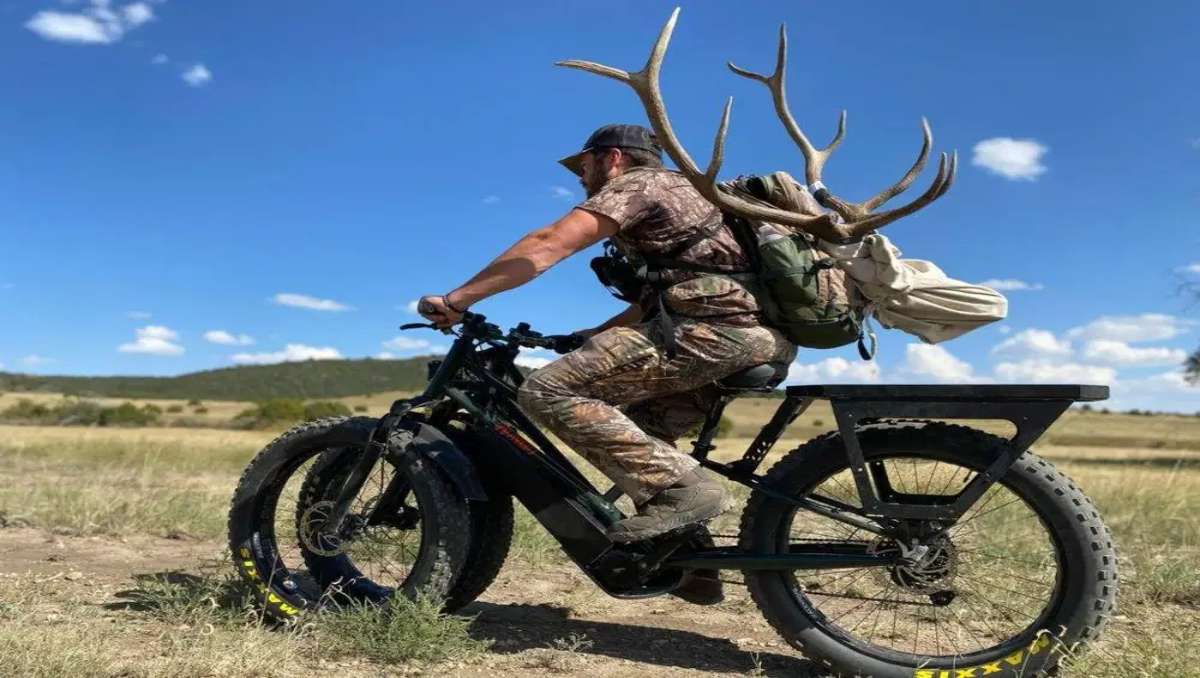
14. Can an e-bike haul harvested game?
An e-bike may help move legal, properly handled game on routes where motorized or e-bike access is permitted, but the load must remain within the bicycle and trailer ratings. Weight distribution, braking, tire pressure, slope, and trail width become critical. Use a suitable trailer rather than balancing a dense load high on a rear rack. Follow local tagging, transport, and carcass-handling rules, and avoid creating trail damage. Plan the extraction route before the hunt and be ready to make multiple trips. An e-bike is a tool, not a guarantee that every recovery route is safe or legal.
15. What battery size is best for hunting?
There is no single ideal size. Short farm-road trips may need only a moderate battery, while long mountain access, cold weather, soft terrain, and cargo justify more capacity. Compare watt-hours rather than voltage or amp-hours alone when possible. Larger packs add weight and replacement cost. Dual batteries can provide range reserve, but they also require approved charging and balancing procedures. Choose enough capacity to complete the route with a conservative reserve, then confirm that replacement batteries are available from the manufacturer. Battery safety and support matter more than chasing the largest number.
16. Can I charge an e-bike battery at hunting camp?
Yes, if you have a stable power source and follow the charger and battery instructions. Charge in a dry, ventilated location away from sleeping areas, exits, fuel, fabric, and combustible gear. Use the original or manufacturer-approved charger and avoid damaged extension cords, improvised adapters, or unattended overnight charging. A generator or inverter must provide suitable, stable output for the charger. Never charge a battery that is wet, cracked, swollen, unusually hot, or has been damaged in a crash. Let a cold battery warm to an approved temperature before charging.
17. What does UL 2849 mean for an e-bike?
UL 2849 is a safety standard for the electrical system of an e-bike, including interactions among the drive system, battery, and charger. Buyers should confirm that the exact model and variation are certified, not merely that a seller uses a UL logo or says individual components were tested. Certification does not make a bike maintenance-free or eliminate fire risk, but it is an important purchasing signal. Also check whether the battery has appropriate certification and use only the approved charger. When uncertain, request the certification details from the manufacturer or verify the model through the certifying organization.
18. How can I verify an Amazon e-bike listing?
Check the exact brand, model, seller, ASIN, frame option, battery size, brake type, and included accessories. Read the newest reviews for repeated issues involving chargers, batteries, missing parts, warranty response, and return shipping. Compare the listing with the manufacturer’s official manual and website. Confirm that the seller provides a real support channel and replacement parts. Be cautious when one page combines multiple unrelated models because ratings may not apply evenly. Save screenshots of the selected variation and specifications before ordering, since marketplace pages can change after purchase.
19. Are Amazon hunting e-bikes reliable?
Some are reliable for their intended use, while others have limited support and inconsistent quality control. Reliability depends on the exact model, seller, electrical system, assembly, and access to replacement parts. Marketplace availability can change quickly, so brand history and service support matter. A budget bike may be a reasonable choice for maintained roads if the buyer can inspect assembly and perform basic maintenance. For remote or demanding use, prioritize proven components, safety certification, brake quality, and a manufacturer that sells batteries and controllers separately. Do not judge reliability from star rating alone.
20. What should I inspect when the bike arrives?
Inspect the box for impact damage before assembly. Check the frame, fork, wheels, spokes, motor cable, battery case, charger, brake rotors, derailleur, folding hinge, and all mounting hardware. Confirm the serial number and model match the order. Tighten fasteners to the manual’s torque values, inflate tires within their limits, align the handlebars, and verify that both brakes stop the wheels. Charge the battery in a safe location and perform a short low-speed test before using higher assist. If the frame, battery, fork, or wiring is damaged, stop and contact the seller rather than attempting a risky repair.
21. Do I need professional assembly?
Professional assembly is a good choice for riders who are not comfortable aligning brakes, setting handlebar and stem bolts, checking spokes, adjusting derailleurs, and verifying torque values. E-bikes are heavy, and a loose front wheel or poorly adjusted brake can cause serious injury. Some local shops will assemble direct-to-consumer bikes, while others will not service uncertified electrical systems. Ask before ordering. Even after professional assembly, the owner should understand basic pre-ride checks. Recheck critical fasteners after the first few rides because parts can settle during initial use.
22. How should I transport a hunting e-bike?
Use a platform rack, pickup bed, van, or trailer rated for the full assembled bike weight and tire width. Do not assume a standard bicycle rack can support a heavy fat-tire e-bike. Check the rack’s per-bike limit, total limit, wheelbase range, hitch rating, and clamp compatibility. Remove the battery only if the manufacturer permits transport that way and secure it inside the vehicle. Use a loading ramp when lifting is unsafe. Keep motor cables, brake rotors, and the derailleur away from tie-down pressure, and recheck straps after a short drive.
23. How do I choose the correct frame size?
Use the manufacturer’s rider-height and inseam chart, then compare standover height, seat range, reach, and handlebar position. Measure while wearing the footwear and clothing used during hunting season. You should be able to start, stop, turn, and place a foot down without losing control. Tall, heavy fat-tire bikes can be difficult for shorter riders even when the seat technically lowers enough. Folding bikes may offer lower frames but can feel compact for taller riders. Whenever possible, test a similar geometry locally before ordering online.
24. Can I ride a hunting e-bike in snow?
Fat-tire e-bikes can work in shallow or packed snow when the route is legal and traction is adequate. Deep powder, hidden ice, frozen ruts, and side slopes can overwhelm even wide tires. Reduce speed, use smooth power, avoid abrupt steering, and keep a larger stopping distance. Battery range will usually decrease in cold weather. Tire pressure may need adjustment within safe limits, but excessively low pressure can damage rims or make handling vague. Clean and dry the bike after exposure to salt, slush, and moisture, and never assume fat tires make ice safe.
25. Can I ride a hunting e-bike in mud?
Light and moderate mud are manageable with suitable tire tread, but deep sticky mud can clog the frame, increase motor load, overheat brakes, and damage trails. Avoid routes where riding will create ruts or violate seasonal closures. Use smooth power to reduce wheelspin, maintain momentum conservatively, and walk the bike when traction is poor. Afterward, remove mud gently without pressure-washing electrical components, dry the drivetrain, inspect brake pads, and lubricate the chain. Mud riding can reduce range substantially, so keep a larger battery reserve.
26. How should I set tire pressure for hunting terrain?
Use the tire and rim limits as the starting point, then adjust for rider weight, cargo, temperature, and surface. Lower pressure can improve grip and comfort on sand, gravel, and soft ground, while higher pressure rolls more efficiently on hard roads. Pressure that is too low can cause rim strikes, tire roll, poor steering, and pinch damage. Pressure that is too high reduces traction and comfort. Check both tires with a gauge before every trip, especially when temperatures change. Record settings that work for common routes rather than guessing each time.
27. What repair tools should I carry?
Carry tools that match the exact bike: the correct hex keys, axle wrench or socket, tire levers, spare tube or approved plug system, compact pump, patch kit, chain quick link, small adjustable wrench, and a way to secure loose cargo. Include a phone, offline map, light, and emergency communication appropriate for the area. High-power or dual-motor bikes may need larger axle tools than ordinary bicycles. Do not perform electrical repairs in the field unless the manufacturer provides a safe procedure. A basic mechanical kit is useful only if you have practiced using it.
28. How often should I service a hunting e-bike?
Service frequency depends on mileage, weather, load, and terrain. Inspect tires, brakes, wheels, controls, battery attachment, and cargo hardware before every ride. Clean and lubricate the drivetrain after wet or muddy use. Check brake pads, rotor condition, spoke tension, chain wear, and fastener torque more often than you would on a light commuter because hunting e-bikes are heavy and often loaded. Follow the manufacturer’s schedule for suspension, hydraulic brakes, and electrical diagnostics. Address unusual noise, heat, play, or power loss immediately rather than waiting for a seasonal tune-up.
29. How do I clean a hunting e-bike?
Turn the bike off, remove the battery only if the manual recommends it, and use a damp cloth, soft brush, and mild bike-safe cleaner. Avoid pressure washers, direct spray at bearings or electrical connectors, and soaking the display, motor, battery, or controller. Remove mud from the drivetrain and brakes carefully. Dry the bike, inspect cables and connectors, lubricate the chain, and wipe away excess lubricant. Do not charge until the bike and battery are dry and undamaged. Cleaning is also a good time to find loose rack bolts, damaged tires, worn pads, or cracked accessories.
30. How should I store the battery between hunting seasons?
Follow the manufacturer’s recommended storage charge and temperature range. Many lithium-ion batteries should not be stored completely full or completely empty for long periods, but the exact target varies by manufacturer. Store the battery in a dry, cool, temperature-controlled location away from direct sunlight, freezing conditions, combustible materials, and exit paths. Inspect it periodically and use only the approved charger. Do not store a damaged, swollen, wet, or unusually hot battery. Keep terminals protected from metal objects and children, and review the manual before reconnecting it after a long storage period.
31. Can I use a different charger?
Use only the charger supplied or specifically approved by the manufacturer for the exact battery. Matching the plug is not enough; voltage, current, communication, polarity, and charging profile must all be compatible. An incorrect charger can damage the battery, create overheating, void the warranty, or cause a fire. Avoid generic adapters and extension setups unless approved. Replace a damaged charger through the manufacturer or authorized seller. Charge on a stable, noncombustible surface in a monitored location and stop if the charger or battery behaves abnormally.
32. How long does an e-bike battery last?
Battery life depends on cell quality, charging habits, temperature, storage, depth of discharge, load, and time. A battery gradually loses capacity even when cared for correctly. Frequent deep discharges, high heat, freezing storage, water damage, and incorrect chargers can shorten life. Rather than relying on a universal number of years or cycles, follow the manufacturer’s guidance and monitor practical range over time. Before buying, check the cost and availability of a replacement pack. A bike is a better long-term value when the correct battery can still be purchased several seasons later.
33. How can I make the battery last longer on a hunt?
Use lower assist when terrain permits, pedal smoothly, maintain correct tire pressure, reduce unnecessary cargo, avoid repeated hard acceleration, and select an efficient gear. Start the day with a properly charged and temperature-conditioned battery. Preserve a return reserve and avoid relying on throttle continuously. Mud, snow, headwinds, cold, and hills may require a slower pace. Do not coast downhill at unsafe speed merely to save energy. Efficient riding is a combination of route planning, smooth control, proper maintenance, and realistic load management.
34. Is a throttle useful for hunting?
A throttle can help start a heavy bike, move through a short difficult section, or reposition without immediate pedal pressure. It also uses battery quickly and may reduce legal trail access compared with a pedal-assist-only Class 1 bike. Abrupt throttle use can spin the tire on wet leaves or loose soil. If the bike has a throttle, practice smooth low-speed input in a safe area and confirm where throttle-equipped bikes are permitted. Do not buy a throttle model without checking local classification rules and the route’s restrictions.
35. Is a torque sensor better than a cadence sensor?
A torque sensor measures how hard the rider pedals and usually delivers assistance in proportion to that effort. This can feel natural and controlled on hills, narrow trails, and low-speed approaches. A cadence sensor mainly detects crank movement and may deliver a more noticeable surge when assistance begins, although good programming can make it smooth. Cadence systems are often less expensive and require less effort from the rider. Neither is automatically superior for every hunter. Choose torque sensing for responsive control and a bicycle-like feel; choose cadence sensing when low-effort cruising and budget matter more.
36. How quiet is a hunting e-bike?
Most e-bikes are quieter than gasoline-powered ATVs, but they are not silent. Motor whine, tire tread, freehub noise, chain movement, brake rub, loose racks, and rattling cargo all contribute. Fat tires can be loud on hard gravel, and high power can spin stones or snap branches. Keep the drivetrain clean, secure gear, adjust brakes, and ride slowly. Quiet access also depends on wind, surface, rider behavior, and route choice. An e-bike should never be used to disregard fair-chase principles, legal shooting distances, or ethical hunting practices.
37. Can I use an e-bike during deer season?
Possibly, but season rules and access rules are separate issues. A valid deer season does not automatically allow e-bikes on every road or trail. Check the wildlife-area regulations, landowner permission, motorized-access restrictions, disabled-hunter provisions if relevant, and any rules about transporting weapons or game. Use the bike only during legal hours and in a manner consistent with fair chase. Keep lights, reflective equipment, and hunter-orange requirements in mind when traveling near roads or other users. Confirm current rules before each season because access policies can change.
38. Can I carry a firearm or bow on an e-bike?
Only in a secure manner that complies with federal, state, local, and land-management rules. The equipment must not interfere with steering, braking, pedaling, the wheels, or the battery. Use a purpose-built case or rack approved for the bike and sporting equipment, and verify that mounting hardware does not damage the frame. Keep the firearm unloaded when required and follow all transport laws. Never hold a firearm or bow while riding. Check fasteners frequently and protect optics, strings, and limbs from vibration, branches, and weather.
39. Should I use a helmet on a hunting e-bike?
Yes. Wear a properly fitted bicycle or e-bike helmet appropriate for the speed and terrain. High-output models may justify additional protection, and some may legally fall into moped or motorcycle categories requiring different equipment. Hunting clothing should not prevent the helmet from sitting correctly. Replace a helmet after a significant impact or according to the manufacturer’s guidance. Eye protection, gloves, visible clothing, and lights are also useful. A quiet trail does not remove the risk of branches, loose gravel, hidden ruts, vehicles, or wildlife.
40. Can a folding e-bike handle hunting trails?
A well-built folding fat-tire e-bike can handle maintained dirt roads, gravel, camp roads, and moderate trails. The hinge and latch add inspection points, and small wheels may feel less stable on deep ruts, large rocks, and fast descents. Folding does not necessarily mean lightweight. Check the hinge before each ride, keep it clean, and follow the manufacturer’s adjustment procedure. A folding model is best when vehicle storage is a major concern and the route is moderate. For repeated technical terrain, a fixed full-size frame may be more appropriate.
41. What is the best hunting e-bike for beginners?
A beginner usually benefits from a moderate single-motor bike with predictable assist, dependable brakes, a removable battery, and tires suited to local roads. Avoid buying the heaviest dual-motor model simply because it has the largest numbers. A torque sensor or well-tuned low assist can make starts smoother. Choose a frame you can mount, stop, transport, and maintain confidently. The PUCKIPUPPY Beagle, TST fat-tire model, or a compact Qlife-style bike may suit lighter-duty routes, while the Labrador Pro offers more comfort for rougher terrain. Legal class and local service remain essential.
42. What is the best hunting e-bike for long range?
Long-range buyers should prioritize usable watt-hours, battery quality, conservative route planning, and efficient control rather than a single advertised mileage number. A dual-battery platform such as the FREESKY Alaska Pro can provide more reserve for large properties and long scouting loops. A large single battery may be simpler for shorter routes. Cold weather, cargo, mud, hills, and throttle use can cut range sharply. Confirm replacement battery availability and safe charging procedures. The best long-range bike is one that finishes the real route with reserve, not the model with the biggest marketing claim.
43. What is the best hunting e-bike for steep hills?
For steep legal routes, prioritize torque, low-speed control, hydraulic brakes, suitable gearing, tire grip, and battery capacity. The PHILODO Falcon, PUJH dual-motor model, and FREESKY Swift Horse Ultra are examples of high-output platforms aimed at demanding terrain. Their weight and power create additional transport, service, and legal concerns. Many hunters can handle normal hills with a quality single-motor bike by using the correct gear and moderate assist. Never climb a route that you cannot descend safely, and confirm that the bike’s configuration is permitted where you ride.
44. What is the best hunting e-bike for heavy riders?
Look for a verified total payload with enough headroom for the rider, winter clothing, water, tools, and cargo. The Jasion Thunder Pro is marketed with a high payload capacity, but the exact limit should be confirmed for the selected model. Frame fit, spoke strength, tire rating, brakes, and rack capacity are equally important. Avoid extending the seat post beyond its minimum insertion mark. Test braking with the planned load and use correct tire pressure. A high number in a listing is not sufficient without clear manufacturer documentation and replacement parts.
45. What is the best hunting e-bike for a budget buyer?
Budget buyers should prioritize safe electrical documentation, dependable brakes, correct fit, and available replacement parts before motor size. The TST, DTTZH F6, Qlife Hunter, and YVY models offer lower-cost approaches for moderate routes. Expect trade-offs in weight, component refinement, dealer support, and long-term parts availability. Set aside money for a helmet, lock, repair kit, transport solution, and professional assembly if needed. A cheaper bike used within its limits can be useful, but a bargain becomes expensive if the battery, controller, or charger cannot be replaced.
46. How important is brand reputation?
Brand reputation matters because e-bikes depend on proprietary batteries, displays, controllers, wiring, and software in addition to normal bicycle parts. A company that answers support requests, publishes manuals, stocks replacement batteries, and honors warranty claims provides real long-term value. Marketplace reviews can reveal patterns, but brand longevity and parts support are more important than a temporary sales rank. Before ordering, search for replacement components and contact support with a model-specific question. A quick, accurate response is a positive signal; vague or nonexistent support is a warning.
47. What warranty terms should I check?
Check coverage for the frame, motor, battery, charger, controller, display, suspension, and wear parts. Read exclusions for water exposure, commercial use, overloading, improper assembly, unauthorized chargers, and modified speed settings. Determine who pays return shipping for a heavy bike or battery and whether labor at a local shop is covered. Confirm the warranty starts from purchase and applies to the Amazon seller you selected. Save the invoice, serial number, photos, and packaging until the bike is inspected and working. Warranty length means little if the claim process is impractical.
48. Should I modify the speed settings?
Do not modify speed, power, controller, battery, or class settings beyond manufacturer-approved options and legal limits. Unauthorized changes can make the bike unsafe, damage components, void the warranty, and change its legal classification. Higher speed increases stopping distance, heat, tire stress, and crash severity. For hunting access, low-speed control and range are usually more valuable than top speed. Use the legal mode required for the route and leave advanced electrical changes to qualified professionals following the manufacturer’s instructions. Never install an incompatible battery or controller.
49. Can I use an e-bike in rain?
Many e-bikes tolerate normal rain and wet roads within their rated protection, but they are not all-weather submersible vehicles. Check the manual for water-resistance limits. Protect the display and battery connections, avoid deep water and pressure washing, and reduce speed because braking and traction are affected. After the ride, dry the bike, inspect electrical areas, clean the drivetrain, and recharge only when the system is dry and undamaged. Heavy rain, flooding, lightning, and freezing conditions may make riding unsafe regardless of the bike’s rating.
50. What common buying mistake should I avoid?
The biggest mistake is buying from the headline specification alone. Peak wattage, maximum range, and top speed do not reveal fit, braking, legal status, service support, battery safety, or transport weight. Another common error is forgetting that rider and cargo weight count together. Buyers also underestimate the cost of a proper rack, helmet, lock, repair tools, and replacement battery. Start with the route, laws, total load, storage, and service plan. Then choose the simplest bike that safely meets those needs. More power is not automatically more useful.
51. How do I decide between the 15 bikes in this guide?
First eliminate any model that is not legal for your route or does not fit your body and transport setup. Next compare terrain: choose a full-size fat-tire bike for rough roads, a folding model for limited storage, a dual-battery bike for long loops, or a moderate hardtail for maintained routes. Add the rider and cargo weight, then check payload and rack limits. Prioritize brakes, battery support, certification, and replacement parts. Finally, compare total ownership cost rather than exact purchase price. The quick-pick labels and table narrow the field, but the best choice is the model that matches your actual hunt.
52. Do hunting e-bikes require registration or insurance?
Requirements depend on the bike’s class, power, speed, throttle, and local law. A standard legal e-bike may not require registration in one state, while a high-output model may be treated as a moped, motor-driven cycle, or off-highway vehicle. Public-land rules can be stricter than road rules. Insurance may not be mandatory, but theft or liability coverage can be valuable for an expensive bike. Check current state and local definitions, land-manager policies, and your home or specialty insurance terms before riding. Do not assume an Amazon product title determines legal classification.
53. Can older hunters benefit from an e-bike?
An e-bike can reduce effort on hills and long approaches, but it also adds weight, speed, balance demands, and complicated controls. Older riders should prioritize a low or step-through frame, predictable assist, strong brakes, comfortable fit, and manageable total weight. Practice starts, stops, tight turns, dismounts, and loading before hunting season. A professional fit and medical guidance may be appropriate for anyone with balance, cardiac, vision, or joint concerns. Electric assistance can expand access, but it should not encourage a rider to enter terrain that exceeds their ability or emergency plan.
54. What safety gear should I carry besides a helmet?
Carry eye protection, gloves, a first-aid kit, light, reflective or high-visibility equipment for road sections, phone or satellite communicator, offline map, water, weather layers, and the tools needed for the bike. Include the battery key and a backup plan for walking out. In cold weather, pack enough insulation to remain safe if the bike fails. A whistle and emergency contact plan are useful. Secure all gear so it cannot enter the wheels or drivetrain. Safety equipment should match the remoteness, weather, wildlife, and legal requirements of the route.
55. How can I use a hunting e-bike responsibly?
Ride only where permitted, stay on designated routes, respect seasonal closures, avoid wet trails that will rut, yield to other users, and keep speed low around people and wildlife. Follow hunting licenses, seasons, weapon-transport laws, fair-chase principles, and property boundaries. Do not use electric assistance to harass, chase, or crowd animals. Pack out waste, minimize noise, and maintain the bike to prevent leaks, broken parts, or abandoned batteries. Responsible use protects habitat and helps preserve future e-bike access. The most capable rider is the one who knows when to slow down, turn around, or walk.
Read more: 15 Best Hunting Duffle Bag Options for Organized Field Gear