
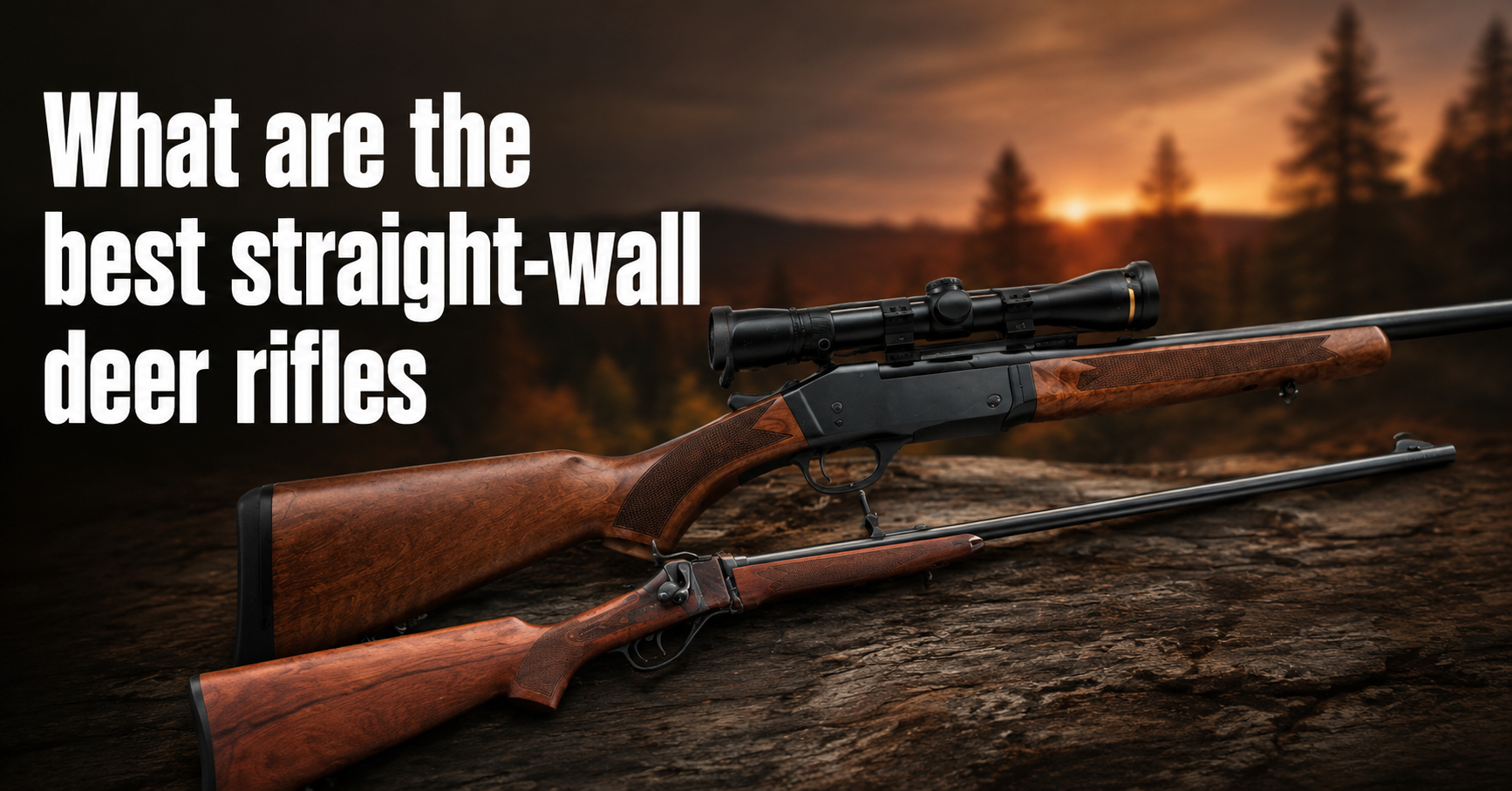

Straight-wall deer rifles became popular because some jurisdictions that restricted traditional bottleneck rifle cartridges began allowing selected centerfire cartridges with comparatively straight cases. The resulting category now includes compact bolt actions, simple single shots, traditional lever guns, and several cartridges designed specifically for short- to medium-distance deer hunting.
The best rifle is not automatically the most powerful model. It is the one that is legal where you hunt, fits your body, produces recoil you can manage, feeds the chosen hunting ammunition reliably, carries comfortably, and delivers consistent accuracy within your demonstrated ability.
This guide answers what are the best straight-wall deer rifles without providing retailer links or encouraging a purchase before the hunter checks current laws. Product details were reviewed against current manufacturer information on July 26, 2026. Model specifications, chamberings, and availability can change.
Quick Answer
For most hunters who can legally use a repeating bolt-action rifle, the Ruger American Rifle Generation II Standard is the strongest all-around option because it combines an adjustable stock fit, factory optics rail, manageable weight, and current .350 Legend, .400 Legend, and .450 Bushmaster chamberings.
The Savage Axis 2 is an excellent lightweight alternative with both right- and left-handed .350 Legend and .400 Legend configurations. Hunters in jurisdictions requiring a true single-shot rifle should consider the Henry H15 Single Shot. For a traditional lever action, the Henry H9 Classic in .360 Buckhammer offers a straight-wall cartridge designed around that action type.
Before choosing any rifle, verify the exact cartridge, action type, magazine restriction, case dimensions, bullet requirements, season, land type, and ammunition rules with the wildlife agency responsible for your hunting location.
Important Legal and Safety Check
A cartridge being commonly described as “straight-wall” does not automatically make it legal for deer hunting. Some jurisdictions specify minimum bullet diameter, case length, cartridge length, muzzle energy, expanding-bullet requirements, action type, magazine capacity, or the exact land and season where rifles may be carried.
Current rules also change. Illinois, for example, permits qualifying centerfire cartridges for deer but generally requires the rifle to function as a single shot in the field. Indiana changed its rules for the 2025–2026 season and now permits centerfire rifle cartridges meeting its minimum bullet-diameter rule on public as well as private land. These very different approaches show why an old “straight-wall state” list is not enough.
Check the current official regulations for:
- Legal cartridge and bullet diameter.
- Maximum or minimum cartridge-case length.
- Minimum energy or factory-load requirements.
- Single-shot, magazine, or action restrictions.
- Public-land versus private-land rules.
- Legal seasons, zones, units, and hunting hours.
- Expanding-bullet and lead-free ammunition requirements.
- Hunter-orange requirements.
- Suppressor, muzzle-device, and transport laws.
- License, permit, tag, and harvest-reporting requirements.
Complete hunter education and obtain qualified instruction before using an unfamiliar rifle. U.S. Fish and Wildlife Service-supported hunter education covers firearm safety, ethics, wildlife management, conservation, laws, outdoor survival, and first aid.
Best Straight-Wall Deer Rifles Comparison
| Rifle | Best For | Action | Verified Straight-Wall Chamberings | Barrel | Approximate Weight | Important Legal Check |
|---|---|---|---|---|---|---|
| Ruger American Gen II Standard | Best overall bolt action | Bolt action | .350 Legend, .400 Legend, .450 Bushmaster | 20 inches | Varies; .350 Legend model is 6.4 pounds | Repeating-rifle and magazine legality |
| Savage Axis 2 | Lightweight and left-handed hunters | Bolt action | .350 Legend, .400 Legend | 18 or 20 inches | About 6 to 6.4 pounds | Action and magazine restrictions |
| Winchester XPR Left-Hand | Dedicated left-handed operation | Bolt action | .350 Legend, .400 Legend, .450 Bushmaster | 22 or 24 inches depending on caliber | Verify selected model | Exact chambering and land rules |
| Ruger American Gen II Ranch | Compact blinds and thick cover | Bolt action | .350 Legend, .400 Legend, .450 Bushmaster | About 16 inches | Verify selected model | Minimum barrel and magazine rules |
| Ruger American Gen II Predator | Box blinds and steadier supported shooting | Bolt action | .350 Legend, .400 Legend | 22 inches | Verify selected model | Repeater legality |
| Henry H15 Single Shot | Single-shot jurisdictions and simple operation | Break action | .350 Legend, .360 Buckhammer, .450 Bushmaster, .45-70, .44 Magnum, .357 Magnum | 22 inches | About 6.7 to 7.2 pounds by chambering | Cartridge dimensions and energy rules |
| Henry H9 Classic | Traditional .360 Buckhammer lever gun | Lever action | .360 Buckhammer | 20 inches | 7.5 pounds | Lever-action legality |
| Marlin 1895 Trapper | Compact .45-70 lever action | Lever action | .45-70 Government | 16.17 inches | 7.1 pounds | .45-70 case-length and action restrictions |
| Marlin 1895 Guide Gun | Traditional woods-oriented .45-70 | Lever action | .45-70 Government | 19.1 inches | 7.4 pounds | .45-70 and repeater legality |
What Is a Straight-Wall Deer Rifle?
A straight-wall deer rifle is a centerfire rifle chambered for a cartridge whose case walls remain relatively straight rather than narrowing through a pronounced shoulder into a smaller neck. Examples include .350 Legend, .360 Buckhammer, .400 Legend, .450 Bushmaster, .45-70 Government, and several revolver cartridges used in suitable rifles.
The category exists partly because selected hunting jurisdictions allow certain straight-wall cartridges where traditional bottleneck rifle cartridges are limited. The intent is often to provide a rifle option suited to typical Midwest or populated-area deer conditions without treating every centerfire rifle cartridge identically.
Legal definitions are not uniform. Illinois currently defines a qualifying straight-wall centerfire cartridge for its rifle-deer rules as .30 caliber or larger and also applies factory-load, muzzle-energy, bullet-type, and single-shot requirements. Another state may use an approved-cartridge list or entirely different criteria.
Choosing the Right Straight-Wall Cartridge
| Cartridge | General Character | Common Rifle Types | Recoil Tendency | Main Consideration |
|---|---|---|---|---|
| .350 Legend | Modern, widely chambered deer cartridge | Bolt action and single shot | Usually the mildest among the major modern options | Confirm magazine reliability and local dimensions |
| .360 Buckhammer | Rimmed cartridge designed for lever actions | Lever action and single shot | Moderate | Ammunition and rifle selection are narrower |
| .400 Legend | Larger-diameter modern Legend cartridge | Bolt action | More than .350 Legend but less than some heavy alternatives | Newer chambering with less established availability |
| .450 Bushmaster | Established large-bore straight-wall cartridge | Bolt action and single shot | Substantial in light rifles | Recoil, rifle weight, and shooter fit |
| .45-70 Government | Historic large-bore cartridge with a broad load range | Lever action and single shot | Ranges from manageable to heavy depending on load and rifle | Not legal under every straight-wall rule |
| .44 Magnum | Compact revolver cartridge used in rifles | Lever action and single shot | Usually moderate | Energy and cartridge-list requirements |
| .357 Magnum | Low-recoil revolver cartridge in compatible rifles | Lever action and single shot | Relatively mild | May not meet every deer-cartridge rule or intended distance |
.350 Legend
.350 Legend is the broadest starting point for many new straight-wall hunters because numerous manufacturers chamber lightweight bolt actions for it. Winchester lists a .357-inch bullet diameter and 1.71-inch case length, but those dimensions still need to be checked against the precise local rule.
Its generally manageable recoil can help beginners practice more comfortably, but cartridge choice does not remove the need for correct rifle fit, a stable shooting position, expanding hunting ammunition, and accurate placement.
.360 Buckhammer
.360 Buckhammer is a rimmed straight-wall cartridge designed around lever-action and single-shot rifles. Remington states that it uses .358-inch bullets and was developed as a modern deer cartridge for typical short- to medium-range woods hunting.
It is especially attractive to hunters who prefer traditional lever actions, but ammunition variety and local availability should be checked before choosing the rifle.
.400 Legend
.400 Legend sits between .350 Legend and the more forceful .450 Bushmaster in many hunters’ decision process. Winchester describes it as a straight-wall cartridge intended to offer more energy than .350 Legend while producing less recoil than .450 Bushmaster in its comparison. Treat these as manufacturer comparisons rather than universal results from every rifle and load.
.450 Bushmaster
.450 Bushmaster remains a widely recognized large-bore option. It can produce noticeably more recoil in a light rifle, so stock fit, recoil-pad design, rifle weight, practice volume, and shooting position deserve careful attention.
.45-70 Government
.45-70 Government is available in many lever and single-shot rifles, but its historic name and straight case do not make it legal everywhere. Some rules limit case length, rifle action, or specific cartridges. Loads also vary significantly, so use only ammunition marked for the exact rifle and follow the firearm manufacturer’s instructions.
1. Best Overall: Ruger American Rifle Generation II Standard
Ruger American Rifle Generation II Standard
For most hunters who can legally carry a repeating bolt action, the Generation II Standard offers the strongest balance of adjustability, weather-oriented finishes, optics readiness, manageable weight, and straight-wall chambering choice.
The current line includes 20-inch models in .350 Legend, .400 Legend, and .450 Bushmaster. The .350 Legend version weighs 6.4 pounds, has a five-round magazine, a factory Picatinny base, an adjustable 12- to 13.75-inch length of pull, a removable comb, a recoil pad, and a Cerakote-finished barreled action.
The adjustable stock is particularly useful when the rifle will be shared among adults of different sizes or used with thick winter clothing. The factory rail also simplifies scope mounting, although correct ring height and eye relief still require careful fitting.
Best For
Hunters wanting one adaptable bolt-action platform for blinds, tree stands, wooded edges, and agricultural ground.
Advantages
- Available in three major straight-wall chamberings.
- Adjustable length of pull supports different shooter sizes.
- Factory Picatinny scope base simplifies optic installation.
- Cerakote finish is practical for damp deer seasons.
- Manageable weight without being extremely light.
- Removable comb allows additional stock-fit adjustment.
Limitations
- A repeating bolt action is not legal in every rifle-deer jurisdiction.
- .450 Bushmaster recoil may be sharp in a rifle of this weight.
- Magazine fit and feeding should be verified with the exact hunting load.
- The included muzzle configuration may not suit every hunter or local rule.
2. Best Lightweight and Ambidextrous Line: Savage Axis 2
The Axis 2 stands out for its low carried weight and unusually broad support for left-handed hunters. Current manufacturer specifications include right- and left-handed .350 Legend and .400 Legend models.
The .350 Legend versions use an 18-inch barrel and weigh approximately 6 to 6.1 pounds. The .400 Legend models use a 20-inch barrel and weigh approximately 6.3 to 6.4 pounds, depending on configuration.
This makes the Axis 2 useful for hunters walking long field edges, carrying climbing equipment, or helping a smaller-framed shooter manage overall rifle weight. Extremely light rifles can feel less steady from unsupported positions and may transmit more recoil, so lighter is not automatically better.
Best For
Hunters prioritizing lower carry weight, left-handed availability, and a straightforward bolt-action platform.
Advantages
- Right- and left-handed straight-wall models are currently listed.
- Approximately six-pound .350 Legend configurations are easy to carry.
- Shorter barrels are convenient in blinds and dense cover.
- .350 and .400 Legend provide two distinct recoil and performance levels.
Limitations
- Low rifle weight may increase perceived recoil.
- The rifle may feel less stable during unsupported shooting.
- Local law may prohibit a repeating bolt action.
- Selected versions and included accessories must be checked carefully.
3. Best Dedicated Left-Hand Model: Winchester XPR Left-Hand
Although some right-handed bolt actions can be operated by left-handed shooters, a true left-hand action generally provides more natural bolt manipulation, safety access, and cartridge ejection.
Winchester currently describes left-handed XPR models in .350 Legend and .400 Legend with 22-inch barrels, plus a .450 Bushmaster option with a 24-inch barrel. The XPR family uses a detachable magazine, drilled-and-tapped receiver, M.O.A. trigger system, recoil pad, and two-position safety.
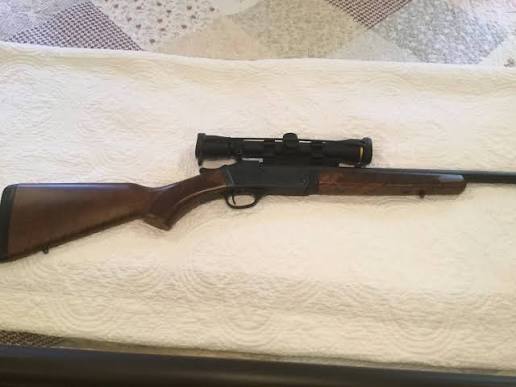
The choice among the three chamberings should be based on legal status, recoil tolerance, ammunition availability, rifle balance, and expected hunting conditions rather than assuming the largest cartridge is automatically best.
Best For
Left-handed hunters who want a conventional bolt-action deer rifle rather than adapting to a right-hand action.
Advantages
- True left-handed action.
- Several major straight-wall chamberings are offered.
- Receiver supports conventional scope mounting.
- Detachable magazine simplifies loading and unloading at appropriate times.
- Longer barrel choices can provide a steadier forward balance.
Limitations
- Longer barrels are less convenient inside compact blinds.
- Availability can vary among left-handed chamberings.
- Magazine-fed operation is restricted in some jurisdictions.
- .450 Bushmaster may be uncomfortable for recoil-sensitive shooters.
4. Best Compact Bolt Action: Ruger American Rifle Generation II Ranch
Ruger American Rifle Generation II Ranch
The Ranch version is intended for hunters who want a short rifle for box blinds, thick brush, vehicles used for lawful transport, and compact storage. Current straight-wall listings include approximately 16-inch barrels in .350 Legend, .400 Legend, and .450 Bushmaster.
Ruger currently lists an available .350 Legend Ranch model with a 16.4-inch barrel, while the .400 Legend uses a 16.1-inch barrel. Availability differs by exact model and magazine style.
A short barrel improves maneuverability but increases muzzle blast and may change ammunition performance compared with published data from longer test barrels. Hearing protection remains important during both practice and hunting where practical.
Best For
Hunters working from confined blinds, dense timber, or short-range setups where overall rifle length matters.
Advantages
- Compact barrel and overall configuration.
- Available in several straight-wall chamberings.
- Short profile is convenient in small blinds.
- Factory optics mounting support.
Limitations
- Short barrels create greater perceived muzzle blast.
- Magazine restrictions may make it illegal in some locations.
- Compact dimensions do not replace proper stock fit.
- Availability varies considerably by model number.
5. Best for Supported Blind and Field Shooting: Ruger American Gen II Predator
Ruger American Rifle Generation II Predator
The Predator version pairs the Generation II action and adjustable stock concept with a longer 22-inch barrel. Current models include .350 Legend and .400 Legend, each using a five-round magazine.
The longer configuration can provide steadier balance from a shooting rail, tripod, or supported seated position. It is less maneuverable than the Ranch model and may be more rifle than necessary for very small blinds.
Best For
Hunters primarily using box blinds, field edges, shooting rails, or other supported positions.
Advantages
- Longer barrel offers a steadier supported feel.
- .350 and .400 Legend choices are available.
- Five-round detachable magazine.
- Factory optics-ready configuration.
- Adjustable Generation II stock system.
Limitations
- Longer than the Standard and Ranch models.
- Less convenient in compact blinds.
- Repeating action may be prohibited.
- Hunters must confirm the selected model’s actual weight and availability.
6. Best Single Shot: Henry H15 Single Shot Rifle
The Henry H15 is one of the most versatile straight-wall rifle families because it includes .350 Legend, .360 Buckhammer, .450 Bushmaster, .45-70 Government, .44 Magnum, and .357 Magnum chamberings.
Every centerfire version uses a break-action, one-round design with a 22-inch barrel. Manufacturer-listed weights range from about 6.69 pounds for the .360 Buckhammer and .450 Bushmaster configurations to 7.18 pounds for the .350 Legend model. The rifles are drilled and tapped for an appropriate scope base.
A purpose-built single shot can be easier to evaluate under laws that restrict field rifles to one round. It also gives a clear visual indication when the action is open. The trade-off is that a follow-up shot requires opening the action and manually loading another cartridge.
Best For
Hunters in single-shot jurisdictions, instructors teaching deliberate operation, and buyers who want broad cartridge choice in a simple platform.
Advantages
- Purpose-built one-round action.
- Wide choice of straight-wall chamberings.
- Open action provides a clear condition check.
- Drilled and tapped for scope use.
- Non-ejecting extractor helps retain fired cases.
- Conventional walnut stock and recoil pad on steel versions.
Limitations
- Slower follow-up operation.
- Stock dimensions may not fit smaller shooters without alteration.
- External hammer operation requires training and strict muzzle control.
- Each cartridge remains subject to separate local rules.
7. Best Traditional Lever Action: Henry H9 Classic in .360 Buckhammer
Henry H9 Classic Rifle in .360 Buckhammer
The H9 Classic combines a traditional walnut-stocked lever action with a modern cartridge created specifically for straight-wall deer hunting. Henry lists the .360 Buckhammer version with a 20-inch barrel, six-round capacity, 7.5-pound weight, adjustable semi-buckhorn sights, and a receiver drilled and tapped for optics.
.360 Buckhammer’s rimmed case is well suited to lever actions. Remington describes it as a .358-inch-bullet cartridge designed around lever-gun operation.
The H9 is attractive for hunters who value traditional handling, but a lever action is not legal in every straight-wall deer zone. Tubular-magazine ammunition must also be approved for that use by the ammunition and firearm manufacturers.
Best For
Traditional lever-gun hunters whose local rules permit repeating rifles and .360 Buckhammer.
Advantages
- Purpose-matched lever-action cartridge.
- Balanced 20-inch woods-rifle configuration.
- Six-round listed capacity.
- Usable iron sights are included.
- Receiver is prepared for an optic mount.
- Moderate rifle weight can help control movement and recoil.
Limitations
- Lever actions are prohibited in some straight-wall seasons.
- .360 Buckhammer ammunition selection is narrower than .350 Legend.
- Traditional stock dimensions may not fit every hunter.
- External hammer use requires familiarity and discipline.
8. Best Compact .45-70 Lever Action: Marlin 1895 Trapper
The Marlin 1895 Trapper is designed for hunters who want a very short, durable .45-70 lever action. The current model uses a 16.17-inch cold-hammer-forged stainless barrel, black laminate stock, adjustable Skinner sights, 5+1 capacity, 34.25-inch overall length, and 7.1-pound weight.
Its compact profile works well in timber and blinds, but .45-70 recoil can be substantial depending on the load. A short barrel also produces significant report. The cartridge’s legality must be verified independently rather than assuming every straight-wall zone accepts it.
Best For
Experienced lever-action hunters wanting a compact stainless .45-70 for close-cover deer conditions.
Advantages
- Very short overall length.
- Stainless-steel construction suits wet conditions.
- Laminate stock is stable and durable.
- Adjustable receiver-mounted sights.
- Threaded barrel with protective cap.
Limitations
- .45-70 recoil varies widely and can be heavy.
- Short barrel produces significant muzzle blast.
- Repeating lever action is not legal everywhere.
- .45-70 may fail local case-length or cartridge-list requirements.
9. Best Traditional .45-70 Woods Rifle: Marlin 1895 Guide Gun
The Guide Gun provides a more traditional .45-70 configuration than the short Trapper. Marlin lists a 19.1-inch barrel, 6+1 capacity, brown laminate stock, blued alloy-steel construction, 37.25-inch overall length, and 7.4-pound weight.
The additional length and weight may make the rifle feel steadier and can moderate perceived recoil compared with an extremely short, light platform. Its blued finish needs careful drying and maintenance after rain or snow.
Best For
Hunters who want a conventional .45-70 lever gun with more forward weight and a longer sighting radius than the Trapper.
Advantages
- Traditional woods-rifle balance.
- Six-round magazine plus chamber capacity.
- Longer barrel than the Trapper.
- Laminate stock resists dimensional changes better than untreated wood.
- Threaded barrel with protective cap.
Limitations
- Heavier and longer than compact alternatives.
- Blued steel needs prompt care after wet weather.
- .45-70 recoil can be substantial.
- Local law may exclude the cartridge or repeating action.
Which Rifle Fits Each Type of Hunter?
| Hunter Profile | Recommended Starting Point | Why | Main Trade-Off |
|---|---|---|---|
| First straight-wall rifle | Ruger American Gen II Standard in .350 Legend | Adjustable fit, manageable weight, broad ammunition support | Repeating action is not legal everywhere |
| Recoil-sensitive hunter | .350 Legend bolt action | Generally milder than larger straight-wall options | Still requires practice and correct fit |
| Left-handed hunter | Savage Axis 2 or Winchester XPR Left-Hand | True left-hand versions are available | Specific chambering availability can vary |
| Single-shot jurisdiction | Henry H15 Single Shot | Purpose-built one-round action | Slower follow-up operation |
| Small blind or dense timber | Ruger American Gen II Ranch | Compact barrel and overall dimensions | Greater muzzle blast |
| Traditional lever-action hunter | Henry H9 Classic .360 Buckhammer | Cartridge was developed for lever actions | Fewer ammunition choices |
| Experienced .45-70 hunter | Marlin 1895 Trapper or Guide Gun | Compact, durable traditional platforms | Recoil and legal restrictions |
| Long sits with a shooting rail | Ruger American Gen II Predator | Longer barrel and steadier supported balance | Less compact for transport and blinds |
How to Evaluate Fit Before Choosing a Rifle
Length of Pull
Length of pull is the distance between the trigger and the rear of the stock. A stock that is too long can make the rifle difficult to shoulder while wearing heavy clothing. A stock that is too short may produce cramped positioning and poor eye relief.
Comb Height
The stock comb should place the eye naturally behind the scope without forcing the hunter to lift or roll the head. Poor comb fit causes inconsistent cheek placement and can make recoil feel less comfortable.
Trigger Reach
The hunter should reach the trigger with the pad of the index finger while maintaining a secure grip. Do not shorten trigger reach through unsafe grip changes.
Rifle Weight
A lighter rifle is easier to carry but generally moves more during unsupported aiming and transmits more recoil. A heavier rifle can feel steadier from a rest but becomes tiring during long walks or climbs.
Balance
A short, muzzle-light rifle is maneuverable. A slightly muzzle-heavy rifle may settle more steadily on a shooting rail. The better balance depends on the hunting method rather than a universal ideal.
Optics for a Straight-Wall Deer Rifle
Most straight-wall deer hunts do not require a large, heavy, high-magnification scope. A compact low-power variable scope can provide a wide field of view in timber while retaining enough magnification for open field edges.
When choosing an optic, evaluate:
- Eye relief under recoil.
- Low-light image quality.
- Field of view at the lowest setting.
- Total weight.
- Ring and base compatibility.
- Stock-comb alignment.
- Simple, visible reticle.
- Weather resistance supported by the manufacturer.
Have a qualified gunsmith or experienced optics professional install the scope when base, ring, screw-length, torque, or eye-relief requirements are unclear.
Practice and Ethical Distance
A manufacturer’s cartridge-range claim is not the hunter’s personal ethical distance. Ethical distance is the farthest range at which the hunter can repeatedly place the selected hunting load into the intended target area from a realistic field position while accounting for wind, light, clothing, time pressure, and the actual support available.
Practice from:
- A bench for initial zero and ammunition evaluation.
- A seated position using shooting sticks.
- A tree-stand or box-blind rail simulation.
- A kneeling position where terrain permits.
- The lowest magnification likely to be used in thick cover.
- The clothing and gloves expected during the season.
Do not take a shot because the cartridge is marketed for a particular distance. Pass whenever the deer, angle, background, support, visibility, or hunter’s confidence is uncertain.
Firearm and Tree-Stand Safety
Apply these four principles every time the rifle is handled:
- Treat every firearm as if it is loaded.
- Keep the muzzle pointed in a safe direction.
- Keep your finger outside the trigger guard until ready to shoot.
- Be certain of the target and what lies beyond it.
IHEA-USA education standards cover the basic rules of firearm safety and responsible handling of bolt, lever, break-action, and other firearm types.
In the Field
- Load only at the appropriate legal and safe time.
- Know whether a cartridge is in the chamber.
- Do not rely on a mechanical safety to prevent unsafe handling.
- Unload before crossing fences, ditches, streams, or difficult obstacles.
- Never pull a rifle toward yourself by the muzzle.
- Do not fire toward roads, homes, vehicles, livestock, people, trails, or uncertain terrain.
- Use eye and hearing protection during range practice.
- Store unloaded firearms securely against unauthorized access.
From an Elevated Stand
- Use a full-body fall-arrest harness.
- Remain connected from the ground until returning safely to the ground.
- Inspect the stand, straps, platform, steps, and lifeline.
- Use a haul line to raise and lower an unloaded rifle.
- Never climb with a loaded firearm.
- Confirm the downward background and where the projectile may travel after passing the target.
Common Buying Mistakes
Buying Before Reading the Current Regulations
A legal cartridge in one county or land type may be prohibited in another. Confirm the rule before selecting the rifle.
Assuming Every Straight-Wall Cartridge Is Legal
Case length, bullet diameter, energy, factory-load, and action restrictions can exclude an otherwise straight-looking cartridge.
Choosing the Most Powerful Cartridge
More recoil can reduce practice quality and create flinching. Choose enough performance for the intended legal hunt while preserving accurate, comfortable shooting.
Ignoring Stock Fit
A poorly fitted rifle is harder to shoulder, aim, and control. Adjustable stocks are especially valuable for growing hunters and families sharing equipment.
Buying a Very Tall Scope Setup
High rings can prevent a consistent cheek position. Use the lowest rings that safely clear the rifle and optic.
Ignoring Ammunition Availability
A rifle is difficult to practice with when hunting ammunition is rarely available locally. Check several legal factory loads before choosing a newer chambering.
Using Incompatible Ammunition
Use only the exact cartridge marked on the rifle barrel. Similar numbers or bullet diameters do not make cartridges interchangeable.
Failing to Test Feeding
Magazine-fed straight-wall cartridges can behave differently with different bullet profiles. Verify reliable operation with the chosen factory hunting load at an authorized range.
Assuming a Short Rifle Is Always Better
A short rifle is convenient but may have greater muzzle blast and less steady balance. Choose it for an actual field need.
Skipping Professional Help
Unsafe trigger adjustments, incorrect scope screws, and improvised magazine modifications can create serious problems. Use a qualified gunsmith.
Troubleshooting Common Problems
| Problem | Possible Cause | What to Check | Safer Next Step |
|---|---|---|---|
| Rifle will not feed smoothly | Magazine, ammunition profile, damaged cartridge, or improper technique | Correct magazine and factory ammunition | Stop using the rifle and contact the manufacturer or gunsmith |
| Groups move between range visits | Loose base, rings, action screws, or damaged optic | Manufacturer torque specifications and optic condition | Unload the rifle and have the mounting system inspected |
| Recoil feels excessive | Poor stock fit, light rifle, heavy load, unsupported position | Length of pull, recoil pad, load, and technique | Seek qualified fitting and use a more manageable legal chambering |
| Scope contacts the eyebrow | Insufficient eye relief or poor shooting position | Ring location, stock fit, and optic specification | Stop firing and have the scope remounted correctly |
| Rifle is difficult to shoulder in winter clothing | Stock is too long | Length of pull and clothing bulk | Adjust the stock or consult a fitter |
| Hunter cannot keep the rifle steady | Rifle too light, excessive magnification, poor support | Shooting rest, stance, and optic setting | Reduce magnification and practice from supported positions |
| Cartridge legality is unclear | Outdated summaries or conflicting online advice | Current official regulation text | Contact the wildlife agency before hunting |
| Single-shot status is uncertain | Detachable or internal magazine remains functional | Exact legal definition and field configuration | Ask the wildlife agency and qualified gunsmith |
| Fired cases are difficult to extract | Dirty chamber, ammunition issue, mechanical fault | Manual, ammunition lot, and chamber condition | Stop firing and obtain professional inspection |
| Rust appears after hunting | Moisture remained under the stock, scope base, or sling | All metal surfaces and storage humidity | Follow manufacturer cleaning guidance and seek repair if pitting is present |
When to Seek Qualified Help
Consult a certified instructor, qualified gunsmith, licensed dealer, wildlife officer, or manufacturer when:
- You have never handled a centerfire rifle.
- You have not completed hunter education.
- The rifle does not fit correctly.
- You are uncertain about cartridge compatibility.
- The safety, trigger, bolt, lever, hammer, or break action behaves abnormally.
- The optic base or screw length is unclear.
- The rifle fails to feed, fire, extract, or eject correctly.
- You need a rifle configured as a legal single shot.
- Current state or local regulations appear inconsistent.
- You are unsure how to transport or store the firearm lawfully.
Final Answer
So, what are the best straight-wall deer rifles? For most hunters who can legally use a repeater, the Ruger American Rifle Generation II Standard is the strongest overall option because it offers adjustable fit, factory optics support, manageable weight, and .350 Legend, .400 Legend, and .450 Bushmaster choices.
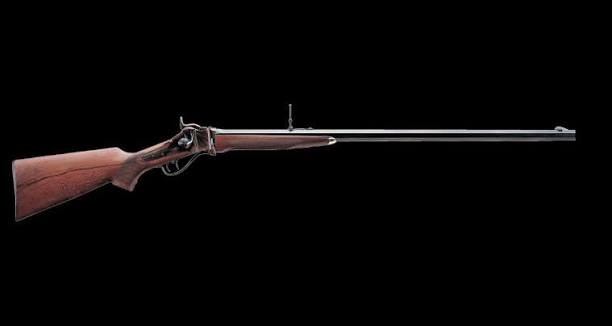
The Savage Axis 2 is especially useful for hunters prioritizing low carried weight or a left-handed action. The Henry H15 Single Shot is the clearest fit where regulations require a one-round rifle. Lever-action hunters should compare the Henry H9 Classic in .360 Buckhammer with the .45-70 Marlin 1895 Trapper and Marlin 1895 Guide Gun.
Do not choose from the model name alone. First confirm the law, then evaluate rifle fit, recoil, ammunition availability, action type, carried weight, expected terrain, optics compatibility, and your demonstrated accuracy. A legal, comfortable rifle that you practice with is more useful than a powerful model you cannot control consistently.
FAQs
1. What is a straight-wall rifle cartridge?
It is a centerfire cartridge with a case that has relatively straight sides rather than a pronounced shoulder and narrow neck. The legal definition varies by jurisdiction.
2. Why do some states allow straight-wall cartridges?
Some jurisdictions introduced them as alternatives to shotgun slugs or muzzleloaders in areas where traditional bottleneck rifle cartridges were restricted. The reasoning and exact rules differ by state.
3. Are straight-wall rifles legal in every state?
No. Some states allow nearly all centerfire rifles, some allow selected straight-wall cartridges, and others impose cartridge, season, land, or action restrictions.
4. Is every straight-wall cartridge legal for deer?
No. A cartridge may fail minimum diameter, case-length, energy, expanding-bullet, or approved-list requirements.
5. What is the best straight-wall rifle for a beginner?
A properly fitted bolt action in .350 Legend is a practical starting point where legal. The Ruger American Gen II Standard and Savage Axis 2 are current examples.
6. What is the best straight-wall rifle for low recoil?
A moderate-weight .350 Legend rifle generally offers less recoil than larger .400 Legend, .450 Bushmaster, or heavy .45-70 combinations. Individual loads and rifle weight still matter.
7. Is .350 Legend enough for deer?
It is designed and commonly loaded for deer hunting. Hunters must use an appropriate expanding factory load, stay within demonstrated accuracy, and comply with local law.
8. Is .400 Legend better than .350 Legend?
It offers a larger projectile and more manufacturer-stated energy, but generally produces more recoil. The better choice depends on shooter comfort, rifle availability, and expected conditions.
9. Is .450 Bushmaster too powerful for deer?
It is a recognized deer cartridge, but its recoil may be unnecessary for a hunter who shoots a milder cartridge more accurately. Power does not compensate for poor placement.
10. Is .45-70 legal in straight-wall states?
Sometimes. Its case dimensions or the rifle’s action type can make it illegal under particular state rules. Verify the exact regulation.
11. What is .360 Buckhammer?
It is a rimmed straight-wall cartridge using .358-inch bullets and designed primarily for lever-action and single-shot deer rifles.
12. Is .360 Buckhammer better than .350 Legend?
Neither is universally better. .360 Buckhammer suits traditional lever actions, while .350 Legend is offered in more bolt-action rifles and commonly has broader ammunition selection.
13. Which straight-wall rifle is best for left-handed hunters?
The Savage Axis 2 and Winchester XPR Left-Hand both have current left-handed straight-wall configurations.
14. Which rifle is best where only single shots are legal?
The Henry H15 is purpose-built as a one-round break-action rifle and comes in several straight-wall chamberings.
15. Can a bolt-action rifle be made into a legal single shot?
Possibly, depending on the law. Do not improvise. Ask the wildlife agency for its legal definition and have any physical modification performed by a qualified gunsmith.
16. Are lever-action rifles legal during straight-wall seasons?
They are legal in some jurisdictions and prohibited in others. A cartridge being legal does not automatically make every action type legal.
17. What barrel length is best?
Short barrels are convenient in blinds and brush, while longer barrels may balance more steadily and reduce muzzle blast. Choose according to the hunting method and manufacturer specifications.
18. Does a longer barrel always increase accuracy?
No. Barrel quality, ammunition, bedding, optics, shooter technique, and consistency matter more than length alone.
19. Are short straight-wall rifles loud?
They can produce significant muzzle blast, especially with larger cartridges. Use hearing protection during practice and where practical during hunting.
20. What scope magnification is best?
A compact low-power variable scope is sufficient for many straight-wall deer conditions. Prioritize field of view, eye relief, weight, and low-light clarity.
21. Can I use a red dot on a straight-wall rifle?
Yes, when the mount is compatible and the expected range suits a nonmagnified sight. Confirm zero with the exact hunting load.
22. How much eye relief do I need?
Enough to prevent contact during recoil from every realistic shooting position. Larger-recoiling cartridges deserve especially careful scope placement.
23. How should I zero the rifle?
Follow the optic and rifle manuals, begin at a safe authorized range, and confirm the zero at the distances relevant to the hunt.
24. Can I use full-metal-jacket ammunition for deer?
It is prohibited in many deer-hunting regulations and is generally unsuitable for ethical game hunting. Use a legal expanding hunting bullet.
25. Can I use ammunition with a similar cartridge name?
No. Use only the exact cartridge designation stamped on the rifle barrel and approved in the manufacturer’s manual.
26. Why does my straight-wall rifle have feeding problems?
Possible causes include the magazine, bullet profile, damaged ammunition, chamber condition, or a mechanical fault. Stop firing and seek manufacturer or gunsmith assistance.
27. Do I need to test multiple hunting loads?
Yes. Rifles can show different accuracy and feeding behavior with different legal factory loads.
28. How far can a straight-wall rifle shoot?
The projectile can travel much farther than an ethical deer-hunting shot. Personal effective distance must be established through practice and a safe background is always required.
29. Are straight-wall rifles safer than bottleneck rifles?
No firearm is inherently safe without responsible handling. Straight-wall rules may reflect local range and land-use policy, but bullets still travel far and require a safe backstop.
30. Is a light rifle better for tree-stand hunting?
It is easier to carry and raise with a haul line, but it may recoil more and move more while aiming. Balance portability against stability.
31. Can I climb with a loaded straight-wall rifle?
No. Unload it and use a haul line after you are secured in the stand. Never carry a loaded firearm while climbing.
32. How often should I check the rifle’s zero?
Check before the season, after changing optics or mounts, after a hard impact, and whenever accuracy appears different.
33. Should I use a muzzle brake?
Only when legal, correctly installed, and appropriate for the rifle. Brakes can reduce recoil but substantially increase noise and blast around the shooter and companions.
34. Can I use a suppressor while deer hunting?
Laws vary by federal, state, local, and land-management jurisdiction. Consult official authorities and a licensed dealer; this guide does not provide purchase or configuration instructions.
35. How should the rifle be stored?
Store it unloaded and secured against unauthorized access, with ammunition controlled separately as appropriate for the household and local law.
36. How should I transport it?
Follow state and local transport laws, keep the firearm unloaded where required, use an appropriate case, and prevent unauthorized access.
37. What is the best rifle for a youth hunter?
A rifle with adjustable length of pull, manageable weight, mild recoil, and direct adult supervision is preferable. Fit and maturity matter more than age alone.
38. Is a single shot safer for a beginner?
Its open action and one-round capacity can simplify condition checks, but safe behavior still depends on training, muzzle control, trigger discipline, and supervision.
39. Should I choose a rifle based on ammunition price?
Cost matters because regular practice is essential, but availability, accuracy, recoil, legality, and reliable feeding are more important than the lowest box price.
40. What is the most important step before choosing a straight-wall deer rifle?
Read the current official regulations for the exact hunting location, season, and land type. Only then compare rifle fit, action, chambering, recoil, and ammunition.
Read more: