
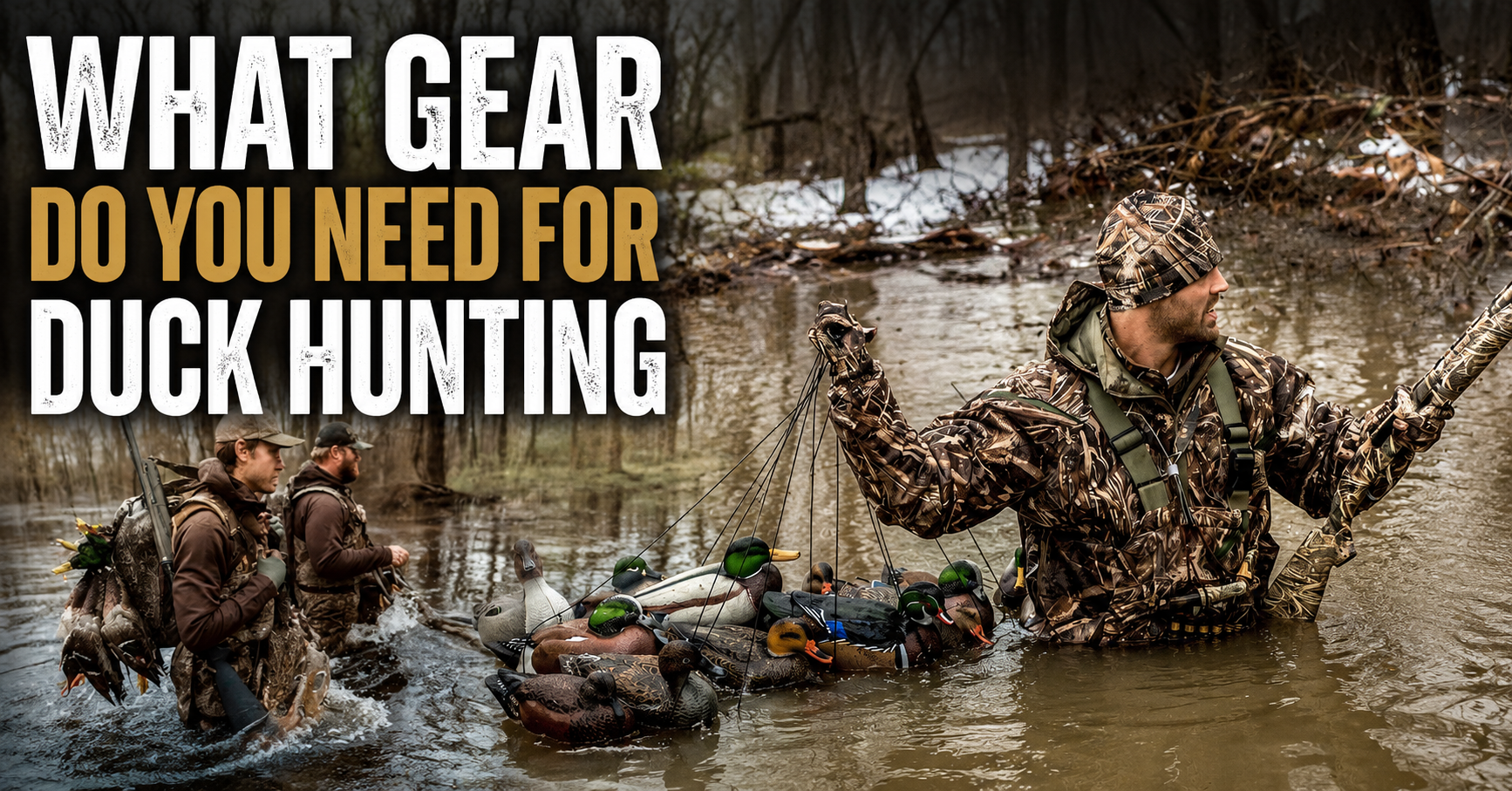

Duck hunting combines firearms, water, cold weather, low light, mud, changing regulations, and the responsibility to recover every bird taken. That makes preparation more important than simply buying camouflage and decoys. A safe beginner setup starts with legal documents, a suitable and legally configured shotgun, approved nontoxic ammunition, eye and hearing protection, weather-appropriate clothing, and a reliable retrieval plan.
The exact gear changes with location. A walk-in pond, flooded timber hole, tidal marsh, layout blind, guided field hunt, and open-water boat each demand different equipment. This guide gives a practical United States-focused foundation, but current federal, state, tribal, refuge, and property rules always override general advice.
Quick Answer
For duck hunting, you generally need the required licenses, permits, HIP certification, and Federal Duck Stamp when applicable; a legal shotgun; approved nontoxic shells matched to that gun; eye and hearing protection; weatherproof clothing; and a safe way to retrieve downed birds. Most hunters also use camouflage, decoys, calls, a blind or natural concealment, a waterproof gear bag, and basic navigation and emergency supplies. Waders are essential only when the location requires wading, and a properly fitted life jacket is essential around boats, deep water, current, or other drowning hazards. Before packing, check the current regulations and scout the site’s water depth, access, weather, and retrieval conditions.
Duck Hunting Gear at a Glance
| Item | Purpose | Essential or Optional? | What to Check |
|---|---|---|---|
| Licenses, stamps, permits, HIP | Legal authorization | Required as applicable | Age, location, species, season, property, and current-year validity |
| Legal shotgun | Humane harvest within proven ability | Essential for shotgun hunting | Gauge, chamber, condition, capacity, transport, and local restrictions |
| Approved nontoxic shotshells | Legal waterfowl ammunition | Required in the U.S. | Shot material, gauge, shell length, choke compatibility, and property limits |
| Eye and hearing protection | Reduces firearm-related injury risk | Essential | Fit, situational awareness, weather resistance, and communication |
| Warm, waterproof layers | Controls moisture and cold exposure | Essential | Forecast, wind, water temperature, fit, and spare dry layer |
| Waders or waterproof boots | Wet-ground access | Site-dependent | Depth, current, footing, insulation, belt, leaks, and safe exit |
| Decoys and rigging | Creates a visible landing setup | Useful, not always essential | Species, water depth, line length, weights, transport, and local rules |
| Duck call | Adds controlled vocal attraction | Optional | Species, skill, restraint, and any restrictions |
| Blind or concealment | Hides movement and outline | Usually useful | Permission, vegetation rules, visibility, muzzle clearance, and exit route |
| Retrieval equipment | Recovers birds and reduces waste | Essential plan | Dog, pole, boat, depth, current, boundaries, and legal access |
| Navigation and emergency kit | Supports safe return and response | Essential | Offline map, light, whistle, phone, first aid, fire kit, and emergency contact |
Important Safety and Legal Notice
Waterfowl rules change by season, state, management area, refuge, and species. Check the current hunting digest and site-specific rules before every hunt. In the United States, hunters generally need a state hunting license and HIP participation, while hunters age 16 or older need a current signed Federal Duck Stamp or valid E-Stamp. State duck stamps, access permits, reservations, hunter education, reporting, or additional validations may also apply.
The U.S. Fish and Wildlife Service requires approved nontoxic shot for waterfowl and coot hunting. Standard federal rules generally limit a shotgun to three shells total unless a specific exception applies. Shooting hours, bag limits, species restrictions, baiting law, transport, tagging, possession, refuge rules, and retrieval requirements must all be verified from official sources.
Treat every firearm as loaded, keep the muzzle pointed in a safe direction, keep your finger outside the trigger guard until ready to shoot, and be certain of the target and everything around and beyond it. In a blind or boat, agree on safe zones of fire before loading. Mechanical safeties do not replace safe handling.
1. Licenses, Stamps, and Documents
Legal paperwork is the first item on the checklist because no gear can make an unauthorized hunt lawful. Depending on age and location, your field documents may include:
- A current state hunting license
- Hunter education proof or an approved apprentice credential
- Harvest Information Program registration or validation
- A current signed Federal Duck Stamp or valid E-Stamp for hunters age 16 and older
- A state migratory bird or waterfowl stamp
- Refuge, wildlife-area, reservation, lottery, parking, or access permits
- Government-issued identification where required
- Landowner permission for private property
- Any required harvest report, tag, or check-station materials
Download licenses and maps for offline use, but confirm whether digital display is accepted. A store receipt is not automatically a valid substitute for an authorized Federal E-Stamp or signed physical stamp. Review current dates, shooting hours, zones, species limits, and area closures the night before the hunt.
2. A Legal, Reliable Shotgun
A shotgun is the standard firearm for duck hunting. Common gauges include 12 and 20, but the right choice is the one that is legal, fits the hunter, operates reliably, and can be handled safely. A poorly fitting gun can make mounting inconsistent and recoil uncomfortable. New hunters benefit more from instruction and supervised practice than from a premium model.
Confirm the chamber marking and use only the gauge and shell length specified by the firearm manufacturer. Make sure the gun is in sound condition, the bore is clear, the action functions correctly, and the choke is compatible with the selected nontoxic shot. If condition or compatibility is uncertain, have a qualified gunsmith inspect it.
For regular U.S. migratory bird hunting, a repeating shotgun generally must be incapable of holding more than three shells total unless a specific regulation creates an exception. Verify that any required plug is installed correctly. Transport, case, vehicle, and loaded-firearm rules vary by jurisdiction and property.
3. Approved Nontoxic Shotshells
Lead shot is not legal for U.S. waterfowl hunting. Carry only shot types approved by the U.S. Fish and Wildlife Service and allowed by the state or property. Steel is widely available, while bismuth and tungsten-based options may offer different performance and cost. “Nontoxic” is a legal classification, so do not assume an unfamiliar alloy qualifies.
Match ammunition to the firearm’s gauge and chamber. Confirm that the choke and barrel are approved for the shot material, pellet size, and load. Pattern the gun on paper at realistic distances in a lawful range setting to learn how the load and choke distribute pellets. Do not select shells solely by advertising, velocity, or a friend’s setup.
Keep shells dry and organized. Many public areas limit the number of shells a hunter may possess, so check site rules. Pack out empty hulls; they are litter and can harm habitat.
4. Eye and Hearing Protection
Shotguns can permanently damage hearing, and a blind or boat places companions close to the muzzle blast. Use hearing protection that preserves enough situational awareness for safe communication. Electronic earmuffs or suitable hunting earplugs can help, but they must fit correctly and stay usable in rain and cold.
Impact-rated shooting glasses protect against debris, branches, burnt powder, action spray, and accidental contact with rigging. Choose clear or low-light lenses before sunrise and avoid dark lenses that impair target identification.
5. Clothing for Cold, Wind, and Water
Duck hunters often remain still in exposed wetlands, making moisture and wind management critical. Dress in layers:
- Base layer: Moves moisture away from skin; avoid cotton in cold, wet conditions.
- Insulating layer: Fleece, wool, or synthetic insulation appropriate to the temperature and activity.
- Outer layer: Wind-resistant and waterproof or water-resistant protection matched to rain, spray, and vegetation.
- Extremities: Warm hat, neck protection, gloves that still permit safe firearm handling, and dry socks.
- Spare clothing: A dry insulating layer and socks kept in a waterproof bag.
Camouflage helps break up outline and movement, but concealment and stillness often matter more than owning a perfect pattern. Some hunts or transit situations require blaze orange or another visible color, so check current rules.
6. Waders, Boots, and Wading Safety
Chest waders are useful in shallow marshes, flooded timber, and muddy launches, but they are not mandatory for every duck hunt. Dry-field and shoreline hunters may need only insulated waterproof boots. Choose footwear after scouting water depth, bottom type, current, access, and temperature.
Waders should fit without restricting climbing or kneeling. Use a secure wading belt where appropriate, check for leaks, and avoid overloading chest pockets. A wading staff can help test depth and footing. Never assume familiar water is unchanged; holes, channels, soft mud, submerged wire, ice, and current can create unexpected hazards.
Do not wade beyond your ability or into current, deep water, breaking ice, or uncertain bottom. Waders are not flotation devices. Wear a suitable personal flotation device when drowning risk exists, and use a safer retrieval method rather than entering dangerous water.
7. Decoys and Rigging
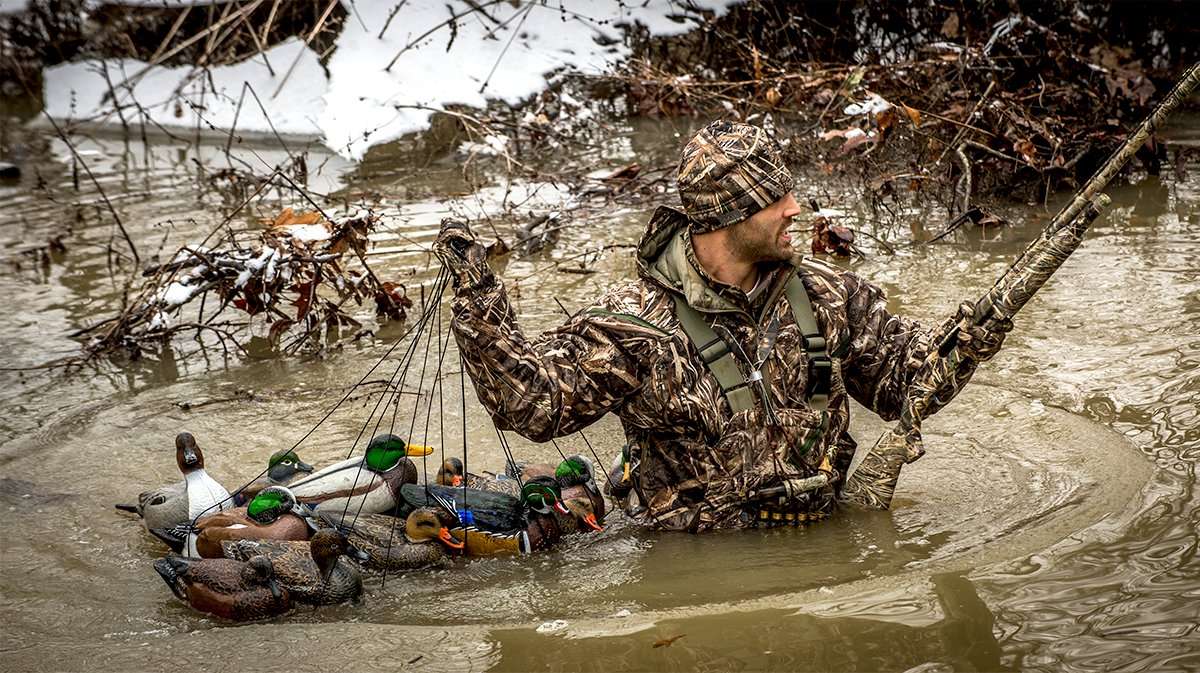
A modest, well-placed decoy spread is enough to begin. Exact numbers vary with habitat, bird behavior, carrying distance, hunting pressure, and local rules. Six to twelve versatile duck decoys can be easier for a walk-in hunter to manage than several dozen.
Rigging requires lines long enough for the water, appropriate weights, secure knots or clips, and storage that prevents tangles. Mark equipment where required or useful. A decoy bag or slotted carrier makes transport easier. Motion devices can be effective, but electronic or motorized decoy rules vary, and some areas restrict them.
Set decoys only where you can retrieve them without trespassing or unsafe wading. Leave open water where birds can approach, and make sure the layout does not encourage shooting toward people, roads, structures, or occupied blinds.
8. Duck Calls
A basic mallard-style call can be useful, but it is optional. Beginners often call too loudly or too frequently. Learn a few controlled notes from a qualified instructor and watch how birds respond. Sometimes remaining quiet is the better choice.
Keep the call on a lanyard and bring a simple backup if freezing conditions can affect reeds. Recorded or electronically amplified bird calls are generally prohibited for regular migratory bird hunting under federal rules, with limited exceptions that must be verified.
9. Blind and Concealment Gear
Concealment may be a permanent public blind, portable panel, layout blind, boat blind, natural cover, or simply a well-chosen shaded position. Hide the human outline, exposed face and hands, shiny equipment, and unnecessary movement while maintaining a clear view and safe muzzle path.
Check whether cutting or attaching vegetation is permitted. Do not damage habitat or build an unauthorized structure. Every blind needs a stable floor, safe entry and exit, firearm organization, and agreed shooting zones. Keep muzzles outside or safely clear of fabric and people before firing.
10. A Responsible Retrieval System
Federal guidance requires hunters to make a reasonable effort to retrieve birds killed or crippled and keep them in custody. Plan recovery before the first shot. Options include a trained retriever under control, a boat operated safely and legally, a long-handled retrieval pole in shallow water, or hunting only where safe foot retrieval is realistic.
A dog is valuable but not mandatory. Dogs need obedience, conditioning, cold-water awareness, a first aid plan, visible identification, and protection appropriate to conditions. Never send a dog into dangerous current, thin ice, heavy boat traffic, or water that exceeds its ability.
Mark where a bird falls, unload or secure the firearm as appropriate, and begin recovery promptly without violating property boundaries or closed areas. Obtain permission rather than trespassing. Passing on shots that create an unsafe or unlikely recovery is part of ethical hunting.
11. Navigation and Emergency Equipment
- Charged phone in a waterproof case
- Offline map, compass, and knowledge of how to use them
- Headlamp plus backup light and batteries
- Whistle or other legal signaling device
- Compact first aid kit and any personal medication
- Emergency blanket or bivy and fire-starting supplies used only where safe and legal
- Drinking water and high-energy food
- Small repair kit, cord, and multitool appropriate to the hunt
- Emergency contact and written hunt plan left with a responsible person
Electronics can fail in cold, moisture, or weak coverage. Know the route in daylight when possible, carry redundant navigation, and establish a turnaround time. Check weather, wind, tides, river flow, and sunrise before leaving.
12. Boat-Specific Duck Hunting Gear
A hunting boat adds major risk and legal obligations. Carry a properly fitted, serviceable life jacket for every person and wear it, especially in cold water, darkness, rough conditions, or underway. Follow all federal, state, and local boating equipment requirements, which may include navigation lights, sound signaling, registration, fire extinguisher, throwable flotation, and other items based on vessel type and size.
Also consider:
- Kill switch lanyard where applicable
- Anchor and line suitable for the water
- Bilge pump, bailer, and drain-plug check
- Spare propulsion or paddle when practical
- Waterproof communication and emergency locator for remote water
- Dry bag with spare clothes
- Capacity plate limits and careful weight distribution
- Motor, fuel, battery, and trailer inspection before departure
Do not overload the boat with hunters, dogs, decoys, guns, and gear. Keep firearms unloaded and cased during transport as required, control muzzles, and establish safe handling procedures before anyone boards. Cold-water immersion can quickly become life-threatening.
Gear by Hunting Situation
| Hunt Type | Priority Gear | Main Risk to Plan For |
|---|---|---|
| Guided field hunt | Legal documents, shotgun, nontoxic shells, eye/ear protection, warm layers, boots, seat, snacks | Unclear shooting zones and assuming the guide supplies every legal item |
| Walk-in marsh | Waders, belt, staff, light decoys, waterproof pack, offline map, retrieval plan | Deep holes, mud, cold water, darkness, and excessive pack weight |
| Flooded timber | Waders, staff, headlamp, compact decoys, tree and boundary awareness | Submerged obstacles, changing depth, falling limbs, and unsafe shooting angles |
| Shoreline pond | Waterproof boots, concealment, modest decoy spread, retrieval pole or dog | Birds falling into water beyond safe reach |
| Boat hunt | Life jackets, required boat equipment, navigation lights, anchor, dry bag, communication | Overloading, weather, cold-water immersion, firearm handling, and mechanical failure |
| Tidal marsh | Tide information, navigation, flotation, suitable boat or safe access plan, emergency communication | Rapid water changes, current, mud, fog, and being stranded |
A Beginner’s Minimal Duck Hunting Checklist
For a first hunt with an experienced mentor or guide, keep the kit manageable:
- Complete hunter education and obtain every required license, stamp, HIP validation, and permit.
- Use a legally configured, properly fitting shotgun you have practiced with.
- Carry approved nontoxic shells compatible with the shotgun and choke.
- Wear eye and hearing protection.
- Dress in weather-appropriate layers and waterproof footwear selected for the site.
- Carry a light, phone, offline map, whistle, water, food, first aid, and spare dry insulation.
- Agree on safe zones of fire and a retrieval plan with the mentor before loading.
- Borrow decoys, calls, blinds, or specialty equipment until you understand what your local hunting requires.
You do not need the most expensive equipment to hunt responsibly. Choose gear based on the species, terrain, weather, local regulations, fit, safety, reliability, maintenance requirements, and your actual experience.
What Not to Do
- Do not hunt before confirming current season dates, shooting hours, species limits, and site rules.
- Do not possess lead shot or an unapproved shot material while waterfowl hunting.
- Do not fire at sound, silhouettes, or movement without positive species and target identification.
- Do not swing a muzzle across a companion, dog, boat, road, building, or occupied blind.
- Do not wade into unknown depth, current, soft mud, or thin ice to save equipment or recover a bird.
- Do not overload a boat or treat waders as flotation.
- Do not take a shot beyond your proven ability or where recovery is unlikely.
- Do not trespass, enter a closed area, damage vegetation, or hunt over bait.
- Do not leave hulls, line, food packaging, or other litter in the wetland.
- Do not rely on camouflage or a firearm’s safety mechanism as a substitute for judgment and training.
Common Beginner Gear Mistakes
- Buying before scouting: Water depth and access determine whether you need boots, chest waders, a boat, or neither.
- Carrying too many decoys: A large load increases fatigue and wading risk; start with a manageable spread.
- Skipping pattern practice: The same shotgun can distribute different nontoxic loads very differently.
- Wearing cotton in cold wet weather: Cotton holds moisture and can accelerate heat loss.
- Forgetting dry storage: Licenses, electronics, medicine, spare layers, and matches need waterproof protection.
- Ignoring hands and feet: Wet socks and gloves quickly make a hunt unsafe and miserable.
- No recovery plan: The location where a bird may fall must be considered before taking the shot.
- Depending entirely on a phone: Batteries, screens, and service can fail; carry a map or compass and know the route.
Pre-Hunt Gear Inspection
Inspect equipment several days before the hunt, not at the launch in darkness. Confirm the shotgun is unloaded, then follow the manufacturer’s maintenance instructions. Check bore condition, action, plug, choke, sling, case, and ammunition compatibility. Do not force a stuck choke or attempt repairs beyond your skill.
Leak-test waders safely, examine boot soles, charge electronics, replace weak batteries, untangle decoy lines, inspect boat systems, and verify every document. Dry and clean gear after the hunt. Separate wet clothing, air out waders away from high heat, rinse equipment exposed to saltwater as recommended, and store firearms and ammunition securely and separately according to local law.
Ethical Gear Choices and Conservation
Gear should support clean decisions, not encourage marginal shots. Pattern knowledge, stable footing, clear visibility, and a realistic recovery method matter more than carrying extra gadgets. A trained dog, boat, or retrieval pole can reduce loss only when used within safe conditions.
Federal Duck Stamp revenue supports wetland habitat, and nontoxic-shot requirements reduce poisoning of birds that ingest spent pellets. Hunters can further protect wetlands by retrieving hulls and line, avoiding unnecessary vegetation damage, cleaning boats and waders to reduce the spread of invasive species, respecting closures, and reporting harvest accurately.
Final Answer
What gear do you need for duck hunting? Start with valid licenses, HIP participation, stamps and permits; a legal, well-fitting shotgun; approved nontoxic ammunition; eye and hearing protection; weatherproof layers; and a safe retrieval plan. Add waders or waterproof boots, decoys, calls, concealment, navigation, first aid, lights, and emergency supplies based on the site. Boat and deep-water hunts require proper flotation and legally required boating equipment. Scout first, practice safely, hunt with an experienced mentor, and let current official regulations—not a generic checklist—make the final decision about what enters the field.
FAQs
1. What is the essential gear for a first duck hunt?
Bring every required document, a legal shotgun, approved nontoxic shells, eye and hearing protection, suitable clothing and footwear, navigation, emergency basics, and a retrieval plan. Borrow specialty gear when possible.
2. Do you need a special license to hunt ducks?
Usually yes. Requirements commonly include a state hunting license, HIP participation, and applicable state permits or stamps. U.S. hunters age 16 and older generally need a current Federal Duck Stamp or E-Stamp.
3. What is HIP certification?
The Harvest Information Program collects migratory bird harvest information. Registration or validation is generally required for migratory bird hunters, but the process appears differently on state licensing systems.
4. Do you need a Federal Duck Stamp?
In the United States, migratory waterfowl hunters age 16 or older generally must carry a current signed physical Federal Duck Stamp or valid E-Stamp. Verify current rules and exceptions.
5. Can you duck hunt with lead shot?
No. U.S. waterfowl and coot hunting requires shot approved as nontoxic by the U.S. Fish and Wildlife Service. State and property rules may be even more restrictive.
6. Is steel shot required for duck hunting?
Steel is a common approved option, but it is not the only approved nontoxic material. Check the current federal list, state rules, and firearm and choke compatibility.
7. What shotgun gauge is best for a beginner?
There is no universal best gauge. A properly fitting 12- or 20-gauge shotgun is common, but recoil tolerance, ammunition availability, safe handling, and legal configuration matter more than popularity.
8. How many shells can a duck hunting shotgun hold?
Under standard U.S. federal migratory bird rules, a repeating shotgun generally must be limited to three shells total unless a specific exception applies. Verify state, season, and property rules.
9. What choke should a beginner use for duck hunting?
The appropriate choke depends on the shotgun, approved shot material, load, expected distance, and pattern results. Consult the manufacturers and pattern the combination rather than choosing by name alone.
10. How many decoys does a beginner need?
A small portable spread of about six to twelve general-purpose decoys can be enough for many walk-in hunts. Habitat, hunting pressure, species, and local regulations may call for a different approach.
11. Do you need decoys to hunt ducks?
Not always. Pass-shooting or jump-shooting where legal may not use them, while blind hunting often benefits from them. Every method still requires safe identification, legal shots, and a recovery plan.
12. Do you need a duck call?
No. A call is useful only when the hunter can use it with restraint. Poor or excessive calling may discourage birds, and electronic calls are generally prohibited during regular seasons.
13. Do you need waders for duck hunting?
Only when access and retrieval require them. Dry-field, shoreline, and some blind hunts need waterproof boots instead. Scout depth, footing, and current before deciding.
14. Are chest waders dangerous?
They can contribute to drowning risk when hunters enter deep water, current, mud, or ice. Use a belt where appropriate, wear flotation when risk exists, and never regard waders as a life jacket.
15. Should you wear a life jacket while duck hunting?
Wear a properly fitted life jacket in boats and whenever cold water, depth, current, unstable footing, or local law makes flotation necessary. Inflatable models have use limitations that must be understood.
16. What clothes should you wear for duck hunting?
Use moisture-managing base layers, weather-appropriate insulation, a windproof and waterproof outer layer, warm headwear, gloves, and dry socks. Adjust for walking effort and avoid overheating before sitting still.
17. Is camouflage required?
Usually not as a universal legal requirement, though specific hunts may have clothing rules. Natural colors, concealment, and controlling movement often matter more than a particular camouflage brand.
18. Do duck hunters need orange clothing?
Requirements vary by state, property, season, and nearby hunting activity. Check the current rule; visible orange may be required during transit or overlapping firearm seasons even if camouflage is used at the blind.
19. What gloves work for duck hunting?
Choose gloves that provide warmth and grip without interfering with trigger-finger discipline, controls, loading, or safe handling. Waterproof overmitts can protect hands between shooting opportunities.
20. What should be in a duck hunting backpack?
Pack documents, water, food, first aid, personal medicine, headlamp, backup light, phone, map, compass, whistle, spare dry layers, gloves, repair items, and any property-required equipment.
21. What kind of hearing protection is best?
Use well-fitted protection with an appropriate noise reduction rating. Electronic models can preserve communication, but waterproofing, battery life, fit with headwear, and safe situational awareness matter.
22. Do you need shooting glasses?
Yes, impact-rated eye protection is a sensible safety item. Clear or low-light lenses help maintain visibility during dawn conditions.
23. Do you need a dog for duck hunting?
No. You do need a safe and legal way to retrieve birds. A trained dog can be excellent, but a boat, pole, or carefully selected shallow-water location may provide alternatives.
24. What gear does a duck hunting dog need?
Depending on conditions, consider identification, a properly fitted protective vest, safe transport restraint, water, towel, first aid supplies, and cold-weather care. Training and control are more important than accessories.
25. What gear is needed for flooded timber?
Common priorities are waders, a belt, wading staff, light, compact decoys, navigation, and a retrieval plan. Watch for holes, submerged obstacles, current, falling limbs, and other hunters.
26. What gear is needed for field duck hunting?
Use legal documents, firearm and ammunition, protection, weatherproof layers, boots, concealment or a legal blind, decoys if used, a seat, and emergency supplies. Waders may be unnecessary.
27. What gear is needed for boat duck hunting?
In addition to hunting gear, carry and use required flotation, navigation lights, sound signals, anchor, emergency communication, dry clothing, and all vessel-specific safety equipment. Never exceed capacity.
28. How do you keep duck hunting gear dry?
Use roll-top dry bags or waterproof cases for electronics, documents, medicine, and spare clothing. Inspect seals, close bags correctly, and never assume a backpack is submersible.
29. What should you bring for cold-weather duck hunting?
Add insulation, wind protection, spare gloves and socks, a dry layer, warm food or drink, emergency shelter, and a shorter exposure plan. Monitor every hunter and dog for cold stress.
30. Do you need a rangefinder for duck hunting?
It is optional. Using one during scouting can help establish visual distance references, but it does not replace pattern practice, judgment, or passing on uncertain shots.
31. Are electronic decoys legal?
Rules vary by state, season, property, and device. Check current official regulations before carrying a motorized or electronic decoy into the field.
32. Can you use an electronic duck call?
Recorded or electronically amplified calls are generally prohibited for regular U.S. migratory bird hunting, subject to limited authorized exceptions. Use current official rules, not retailer claims.
33. How should you carry a shotgun in a blind?
Use a stable position that maintains muzzle control, protects the firearm from mud, and follows local loading rules. Agree on handling procedures and zones of fire before anyone loads.
34. What is the most overlooked duck hunting item?
A retrieval plan is often overlooked. Hunters may focus on attracting birds without considering water depth, current, property boundaries, wounded birds, and how recovery will occur safely.
35. Can a beginner duck hunt alone?
A new hunter is safer learning with an experienced, responsible mentor or guide. Water, firearms, darkness, identification, navigation, and complex regulations create risks that gear alone cannot solve.
36. How should duck hunting gear be cleaned?
Follow manufacturer instructions, dry wet equipment fully, remove mud, rinse salt exposure as appropriate, inspect waders and decoy lines, and clean and secure the unloaded firearm correctly.
37. How can you avoid spreading invasive species?
Clean, drain, and dry boats, waders, decoys, dogs’ gear, and equipment according to local aquatic invasive species guidance before moving between waters.
38. What official source should beginners check?
Start with the state fish and wildlife agency for the current digest and access rules, then review U.S. Fish and Wildlife Service migratory bird and nontoxic-shot requirements.
Read more:
What Gear Do You Need for Elk Hunting? Complete Checklist