
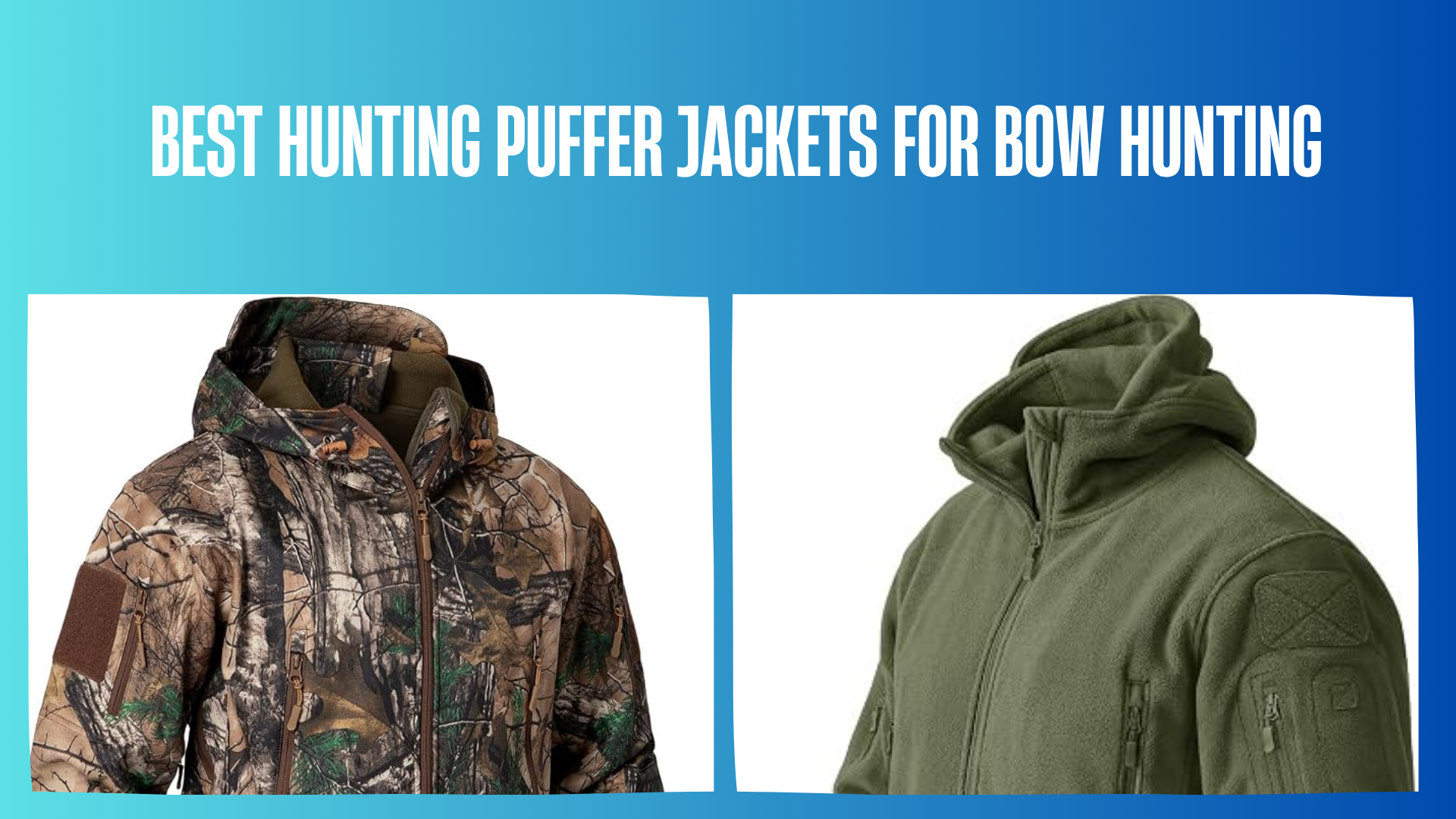

Cold-weather bowhunting creates a difficult clothing problem. You may generate plenty of body heat walking to your hunting location, then cool down quickly once you stop moving. A jacket that feels comfortable during the hike can become inadequate during a long sit, while a heavily insulated coat can cause overheating before you arrive.
The best hunting puffer jackets for bow hunting solve that problem through efficient insulation, manageable bulk, useful weather protection, and enough shoulder mobility for a natural draw. Packability can be especially valuable because a hunter can carry an insulating jacket during the approach and put it on after settling into position.
Bowhunters also need to think beyond warmth. Puffy sleeves, loose cuffs, stiff outer fabrics, large hoods, and bulky chest areas can interfere with comfortable shooting movement. Before hunting in any insulated jacket, test it with your complete layering system and confirm that you can safely reach full draw without changing your normal form.
Quick Picks
- Best Overall Puffer-Style Pick: Mooselander Realtree Packable Puffer Jacket — Combines hunting-oriented camouflage with the portability that makes a puffer useful during changing activity levels.
- Best Insulated Everyday Option: TACVASEN Men’s Insulated Puffer Jacket — A straightforward insulated design for hunters who want warmth without moving to a large hunting parka.
- Best for Colder, Wetter Conditions: HOT SHOT Insulated Waterproof Hunting Jacket — A more substantial hunting-oriented option when protection and insulation matter more than minimum bulk.
- Best Lightweight Packable Alternative: Pioneer Camp Packable Lightweight Jacket — Useful for hunters who want an insulating layer that is easier to carry when not needed.
- Best Hunting-Specific Camouflage Alternative: Mossy Oak Men’s Hunting Jacket — A field-oriented option for hunters prioritizing established camouflage patterns.
- Best for Flexible Outdoor Use: TIDEWE Outdoor Hunting Jacket — A general outdoor choice for hunters who want one jacket for hunting, trekking, and other cold-weather activities.
Cold-Weather Bowhunting Jacket Comparison
| Product | Jacket Style | Best Use | Relative Bulk | Bowhunting Advantage | Main Trade-Off |
|---|---|---|---|---|---|
| TACVASEN B0FJM9NQJF | Insulated puffer | Cool to cold weather | Moderate | Insulation without full parka bulk | Puffy sleeves require clearance checks |
| Camouflage Windbreaker B0H6NZ9KZD | Weather shell | Wind and changing weather | Light to moderate | Weather-oriented outer coverage | Less insulation than a true puffer |
| Mooselander B0FVFPLRMD | Packable hunting puffer | Mobile-to-stationary hunts | Moderate | Packability plus hunting camouflage | Check fabric noise before close-range use |
| HOT SHOT B096BMWH7L | Insulated hunting jacket | Cold or damp conditions | Moderate to substantial | Hunting-specific warmth | May be excessive during active approaches |
| Mossy Oak B07KFM2ZJP | Camouflage hunting jacket | General hunting | Moderate | Hunting-focused patterns | Exact insulation depends on variation |
| NEW VIEW B0D5CG6K2S | Hunting outerwear | Cool-weather field use | Moderate | Purpose-oriented hunting design | Confirm exact insulation before ordering |
| Pioneer Camp B0C32PLKVC | Packable lightweight jacket | Layering and backpack carry | Light | Easy to carry until needed | May need additional insulation in deep cold |
| NEW VIEW B0D77FFVWH | Hunting jacket | General cold-weather hunting | Moderate | Field-focused outer layer | Check exact model details and fit |
| Yufawow B0FKMLBLC7 | Waterproof windbreaker | Wind and moisture | Light to moderate | Useful protective shell | Not a dedicated insulated puffer |
| TIDEWE B09V7CNT3K | Outdoor hunting jacket | Mixed outdoor use | Moderate | Versatile layering option | General outdoor design rather than pure puffer |
| TACVASEN B01GZKR47K | Hunting outerwear | Windy, cool conditions | Moderate | Useful outer-layer versatility | Less puffer-focused than B0FJM9NQJF |
| CRYSULLY B0788K45J5 | Tactical outdoor jacket | General outdoor cold weather | Moderate | Layering and outdoor versatility | Extra tactical features may add bulk |
| CARWORNIC B0C9ZZNWTB | Camouflage softshell | Cool, windy weather | Moderate | Good outer-shell alternative | Not a true puffer jacket |
Why Puffers Work Differently for Bowhunting
They provide warmth efficiently
A puffer-style jacket traps insulating air around the torso and arms. That can provide useful warmth without requiring the dense construction of some traditional hunting coats.
This makes puffers especially useful for hunters who alternate between active movement and extended stationary periods.
They can be carried instead of worn during the approach
A packable insulated jacket can stay in a backpack during strenuous movement. After reaching the hunting location, the hunter can add it before body temperature drops significantly.
This approach can help reduce overheating and moisture buildup inside the clothing system.
Bulk still matters at full draw
Insulation that provides warmth also increases garment volume. Pay particular attention to the bow-side forearm, elbow, shoulder, upper chest, and collar.
A warm jacket that repeatedly interferes with normal shooting movement is not a good bowhunting layer, regardless of how comfortable it feels while sitting.
1. TACVASEN Men’s Insulated Puffer Jacket B0FJM9NQJF
This TACVASEN model is one of the clearest puffer-style options in the supplied group. It is designed around insulation and weather resistance rather than the heavier construction of a traditional hunting parka.
For bowhunters, that makes it useful as a cold-weather layer that can be worn over a base layer or light midlayer. The most important fit question is whether the insulated sleeves remain controlled enough around the bow arm.

It is a better match for cool and cold conditions than for warm early-season hunting. Hunters who walk substantial distances may prefer to carry it until reaching their stand or other hunting location.
Pros
- True insulated puffer-style construction matches the target use well.
- Provides more warmth than an uninsulated wind shell.
- Can function as part of a modular cold-weather layering system.
- Suitable for hunters who want insulation without a full-length parka.
Cons
- Puffy sleeves can create more bow-arm bulk than a fitted softshell.
- May become too warm during strenuous approaches.
- Fabric noise should be checked before close-range bowhunting.
2. Camouflage Waterproof Windbreaker Hunting Jacket B0H6NZ9KZD
This camouflage jacket leans more toward weather protection than classic puffer insulation. That makes it better viewed as an outer shell alternative for hunters dealing with wind or moisture rather than the warmest choice for stationary late-season hunts.

The advantage is potentially lower bulk. Less insulation around the arms can make normal archery movement easier, particularly when temperatures are moderate.
Hunters looking specifically for maximum warmth should pair this type of shell with an insulating midlayer or choose a more dedicated puffer.
Pros
- Camouflage design is appropriate for hunting environments.
- Windbreaker-style construction can be useful in exposed conditions.
- Lower insulation bulk may make shoulder movement easier.
Cons
- Not a dedicated insulated puffer jacket.
- May need an additional insulating layer in cold stationary conditions.
- Weather-shell fabric should be checked for noise before hunting.
3. Mooselander Realtree Packable Puffer Jacket
The Mooselander Realtree Packable Puffer Jacket is arguably the strongest conceptual match in this list because it combines three useful traits: puffer-style insulation, packability, and hunting-specific camouflage.
Packability is especially valuable for bowhunters who hike into their hunting area. Keeping insulation packed during the active portion of the approach can help prevent overheating. Once movement slows, the jacket can be added as a warmer outer or midlayer.
Realtree camouflage also means the jacket does not need to be hidden underneath another camouflage shell simply to make it hunting appropriate.

The main concern is typical of lightweight puffers: smooth synthetic face fabrics can sometimes produce more movement noise than brushed hunting materials. Check the jacket in a quiet environment before relying on it at close range.
Pros
- Combines puffer insulation with hunting-specific Realtree camouflage.
- Packable design is useful for active approaches followed by stationary sits.
- Can reduce the need to hike while wearing all cold-weather insulation.
- Purpose aligns closely with cold-weather bowhunting needs.
- Useful as a standalone jacket or insulating component in a larger layering system.
Cons
- Puffer face fabric may be more audible than brushed fleece or softshell material.
- Insulated sleeves require clearance checks around the bow arm.
- A separate weather shell may still be useful in sustained precipitation.
4. HOT SHOT Insulated Waterproof Hunting Jacket
The HOT SHOT option is aimed more directly at hunters who expect cold or damp conditions. Its insulated, weather-oriented design makes it a stronger candidate for stationary hunting than a thin packable layer.
This type of jacket is most useful when maintaining warmth after reaching the stand or blind is a higher priority than minimizing every ounce of clothing bulk.

For bowhunting, make sure the insulated shoulder and arm areas do not become restrictive over your normal base and midlayers. Test the jacket from both standing and seated shooting positions.
Pros
- Hunting-specific design suits cold-weather field use.
- Insulated construction is useful during long stationary periods.
- Weather-oriented outer protection can reduce reliance on separate light shells.
- Better suited to colder conditions than lightweight windbreakers.
Cons
- More insulation can increase bulk around the shoulders and arms.
- May be too warm for long active approaches.
- Hunters should verify that the outer fabric is quiet enough for close-range use.
5. Mossy Oak Men’s Hunting Jacket B07KFM2ZJP
The Mossy Oak jacket appeals primarily to hunters who want field-oriented camouflage rather than adapting a general outdoor coat. Multiple hunting patterns can make it easier to match the jacket to woodland, brush, or other local vegetation.

For bowhunting, camouflage is only one part of the decision. Check how closely the sleeves fit, how the shoulders move at full draw, and whether the outer fabric stays reasonably quiet when your arms move.
This model is a good alternative for someone who prioritizes hunting-specific clothing but does not necessarily require a conventional packable puffer.
Pros
- Hunting-specific camouflage patterns suit field use.
- Can integrate naturally with other Mossy Oak-patterned hunting clothing.
- Designed more directly for hunters than generic casual outerwear.
- Suitable for buyers prioritizing concealment as well as warmth.
Cons
- Exact insulation characteristics can depend on the selected version.
- Not every variation may offer the packability of a dedicated puffer.
- Fit still needs to be checked through the complete draw cycle.
6. NEW VIEW Men’s Hunting Clothes Jacket B0D5CG6K2S
This NEW VIEW model is a hunting-oriented jacket rather than a purely casual insulated coat. That makes it useful for buyers who want outerwear designed around field use but are flexible about whether the jacket follows a traditional quilted-puffer format.
It can be considered for cool-weather bowhunting where concealment, weather resistance, and general hunting practicality matter alongside warmth.

Because model details can vary, shoppers should compare the selected size and version carefully before deciding how much room is available for insulation underneath.
Pros
- Purpose is aligned with hunting rather than casual-only use.
- Can serve as a cool-weather outer layer.
- Potentially more field-oriented than standard fashion puffers.
Cons
- Not clearly positioned as a classic packable puffer.
- Exact insulation and layering characteristics should be checked on the selected variation.
- Hunters should confirm sleeve clearance with their normal shooting form.
7. Pioneer Camp Packable Lightweight Jacket
The Pioneer Camp jacket makes sense for hunters who prioritize portability. A lightweight packable layer can be especially useful when the morning begins with a long walk but the temperature will feel much colder once you stop moving.
Instead of wearing the jacket during the approach, it can remain packed until needed. This also makes it a practical backup layer for unpredictable temperature changes.

The trade-off is warmth. Lightweight packable jackets generally fill a different role than substantial late-season hunting coats and may need to be combined with other insulating layers.
Pros
- Packable construction is convenient for backpack carry.
- Lower bulk can make the draw cycle easier than with a large hunting parka.
- Useful as an emergency or supplemental insulating layer.
- Well suited to hunters who change layers throughout the day.
Cons
- May not provide enough warmth alone during long freezing-weather sits.
- General outdoor styling may offer less concealment than hunting-specific camouflage.
- Light synthetic shells can be more audible than soft hunting fabrics.
8. NEW VIEW Men’s Hunting Jacket B0D77FFVWH
This second NEW VIEW option gives hunters another hunting-specific outerwear choice from the supplied list. It is best viewed as a general cold-weather hunting layer whose suitability for bowhunting depends heavily on sleeve fit and shoulder mobility.
If you regularly wear a thick fleece or insulated vest underneath, test those layers together before deciding on size. Too little space can restrict the draw, while excessive sizing can leave unnecessary fabric around the arms.

Pros
- Hunting-focused design is appropriate for field use.
- Can be incorporated into a layered cold-weather clothing system.
- Provides an alternative fit to the other NEW VIEW model.
Cons
- Exact warmth level should be confirmed for the selected version.
- May not pack as compactly as a dedicated lightweight puffer.
- Bow-arm sleeve fit needs individual testing.
9. Yufawow Waterproof Windbreaker Outdoor Jacket
The Yufawow model is more accurately treated as a weather shell than as a true puffer. Its place in a bowhunting system is therefore different: it can help manage wind and moisture while insulation comes from the layers beneath it.
This approach has one important advantage. Hunters can separate weather protection from warmth instead of relying on a single heavy jacket for both jobs.
It is more attractive for wet or windy transitional conditions than for hunters specifically seeking maximum puffer insulation.

Pros
- Weather-oriented design is useful when wind and moisture are priorities.
- Can be combined with separate insulating layers.
- Less insulation bulk may improve shoulder movement.
Cons
- Not a dedicated puffer or heavily insulated jacket.
- Requires additional layers for colder stationary hunts.
- Windbreaker materials may produce more movement noise than brushed fabrics.
10. TIDEWE Outdoor Hunting Jacket B09V7CNT3K
TIDEWE offers a more general outdoor and hunting-oriented alternative for buyers who want one jacket to cover hunting, trekking, climbing, and similar activities.

That versatility can be useful for mobile bowhunters. A jacket designed around outdoor movement is often easier to integrate with hiking-based hunting than a very heavy stationary-use coat.
For colder conditions, its role may depend on how much insulation you wear underneath. Hunters should avoid creating so much total layering bulk that the shoulders become restricted.
Pros
- Versatile outdoor design suits several active uses.
- Can work well for mobile hunting and scouting.
- Provides a practical alternative to highly specialized hunting coats.
- Useful for buyers who want one jacket for multiple outdoor activities.
Cons
- Less specifically puffer-focused than the Mooselander or TACVASEN insulated options.
- May require extra insulation for stationary late-season use.
- Fit should be checked while wearing the planned hunting layers.
11. TACVASEN Men’s Hunting Outerwear Windproof Jacket
This TACVASEN model emphasizes outdoor and wind protection more than classic puffer construction. For a bowhunter, that makes it an alternative outer shell when cold wind is the main challenge but excessive insulation is unnecessary.

Compared with the insulated TACVASEN puffer earlier in this guide, this model makes more sense for hunters who prefer to control warmth using separate base and midlayers.
Pros
- Wind-oriented outerwear can improve comfort during exposed sits.
- Separate layering allows hunters to adjust insulation more precisely.
- Suitable for hunting as well as other outdoor activities.
Cons
- Not as directly aligned with puffer-jacket search intent.
- May require substantial midlayer insulation in cold weather.
- Extra outdoor features should be checked for unnecessary noise.
12. CRYSULLY Men’s Tactical Hunting Mountaineering Windbreaker Jacket
The CRYSULLY jacket is aimed broadly at hunting, mountaineering, and tactical-style outdoor use. It may appeal to buyers who prioritize storage and general outdoor versatility over minimum bowhunting bulk.
The biggest consideration is feature density. Pockets, zipper pulls, hood adjustments, and other hardware can be convenient but may also create unnecessary sound or bulk when the hunter is trying to move quietly.

Keep frequently used items organized, but avoid loading chest and sleeve pockets with hard objects that can shift during the draw.
Pros
- Designed for a range of outdoor activities.
- Multiple storage features can keep small essentials accessible.
- Useful for hunters who also want hiking or mountaineering versatility.
Cons
- Tactical-style features may add unnecessary bulk for minimalist bowhunting.
- Extra zipper hardware can introduce additional noise sources.
- Not a dedicated lightweight puffer.
13. CARWORNIC Men’s Waterproof Softshell Camouflage Hunting Jacket
The CARWORNIC jacket is a softshell alternative rather than a traditional puffer. It belongs in this comparison because some bowhunters may benefit more from quieter, lower-bulk softshell construction than from maximum insulated loft.
Its camouflage styling, weather-oriented construction, and moderate layering potential make it a practical choice during cool conditions where a full puffer may be unnecessary.
For truly cold stationary hunting, however, a softshell usually needs more insulation underneath than a dedicated puffer.

Pros
- Softshell construction can reduce bulk around the arms.
- Camouflage styling suits hunting environments.
- Useful in cool and windy transitional weather.
- Can be easier to shoot in than a very bulky insulated coat.
Cons
- Not a true puffer jacket.
- May require an insulated midlayer in colder weather.
- Weather resistance does not replace a dedicated rain shell in every condition.
A Weather-First Guide to Choosing Your Jacket
Mild but windy weather
A full puffer may be unnecessary when temperatures are cool rather than cold. A softshell or wind-resistant hunting jacket can block moving air while maintaining better breathability and lower arm bulk.
CARWORNIC, Yufawow, and the wind-oriented TACVASEN model fit this role more naturally than the heavier insulated choices.
Cold mornings with a long walk in
Packability becomes especially useful when you will hike before sitting. Carry the insulated layer during strenuous activity, then add it before you cool down.
The Mooselander and Pioneer Camp designs are particularly appealing for this strategy.
Cold stationary hunts
Insulation matters more when movement drops. TACVASEN’s insulated puffer and HOT SHOT’s hunting-oriented insulated jacket are stronger candidates when maintaining warmth takes priority over minimum bulk.
Wet and cold conditions
Do not assume every puffer is designed for prolonged rain. Check the manufacturer’s exact weather-protection claims. In sustained precipitation, a separate waterproof shell may provide more dependable outer protection while the puffer supplies insulation underneath.
How to Layer a Puffer for Bow Hunting
Base layer
The base layer should help manage moisture next to the skin. Avoid arriving at your hunting location with damp clothing whenever possible.
Midlayer
A fleece or other insulating midlayer lets you fine-tune warmth. On moderate days, it may be enough without the puffer during active movement.
Puffer layer
The puffer supplies efficient insulation. It can be worn as the outer layer in suitable dry conditions or underneath a weather shell when additional protection is necessary.
Weather shell
A dedicated shell can be added when wind, snow, or rain exceeds what the insulated jacket is designed to handle.
Every extra layer affects fit. Test the complete system at full draw rather than assuming a jacket that fits well over a T-shirt will still move properly over winter layers.
Bow-Arm Clearance Matters More Than Maximum Loft
Heavy insulation around the forearm and elbow can create unnecessary volume. The bow-side sleeve should remain controlled rather than hanging loosely around the arm.
Check cuff adjustment, sleeve diameter, and overall fit before hunting. Do not make improvised modifications that restrict circulation or damage the garment.
The goal is simple: normal, safe shooting movement without clothing forcing you to change your form.
Common Puffer Jacket Mistakes
Wearing the puffer during the entire hike
When conditions allow, carrying an insulating layer during strenuous movement can help reduce overheating and moisture buildup.
Buying too large for layering
Extra room is useful, but excessive fabric can create bulky shoulders and loose sleeves. Size according to the manufacturer’s chart and your actual intended layers.
Ignoring fabric noise
Many lightweight puffers use smooth synthetic face fabrics. Move your arms through a full shooting motion in a quiet environment to determine whether the sound level is acceptable for your hunting style.
Assuming every puffer is waterproof
Insulation and waterproofing are separate characteristics. Check the exact manufacturer’s description rather than assuming quilted outerwear can handle prolonged rain.
Using the warmest jacket regardless of activity
A jacket suitable for a long late-season sit can be uncomfortable during an active early-season hunt. Match insulation to both temperature and activity level.
Never testing the hood
A hood can affect peripheral vision, hearing, head movement, and anchor position. Test it both raised and lowered.
Care and Storage
- Follow the care label for the specific jacket.
- Empty pockets and secure closures before washing when instructed.
- Avoid unapproved high heat that could affect synthetic fabrics or insulation.
- Allow insulated jackets to dry completely before long-term storage.
- Do not store a damp jacket compressed in a backpack.
- Check zippers, cuffs, and drawcords periodically.
- Repair small fabric damage before insulation loss becomes more significant.
- Keep hunting clothing away from fuel, harsh chemicals, and strong household odors when practical.
Frequently Asked Questions
1. Are puffer jackets good for bow hunting?
Yes, particularly in cold weather. Their main advantages are efficient insulation and, for some designs, good packability. The main concerns are sleeve bulk and fabric noise.
2. What makes a hunting puffer different from a normal puffer?
Hunting-oriented models may offer camouflage patterns, field-focused pockets, quieter materials, or fits designed around outdoor layering. Features vary by model.
3. Should a bowhunter wear a puffer during the walk in?
Not always. During strenuous movement, carrying the puffer can help prevent overheating. Add it when activity decreases if conditions permit.
4. What is the best puffer jacket in this list for bow hunting?
The Mooselander Realtree Packable Puffer Jacket is one of the strongest matches because it combines packability, insulation, and hunting-specific camouflage.
5. Are puffer jackets too bulky for archery?
Some can be. Test the jacket at full draw and check the shoulders, elbows, cuffs, and bow-side forearm.
6. Should bowhunting clothing fit tightly?
It should control excess fabric without restricting normal movement or circulation. Extremely tight clothing can limit comfortable shoulder movement.
7. Should I size up for winter bowhunting layers?
Use the manufacturer’s size chart and account for your actual layers. Do not automatically size up if doing so creates excessive sleeve or torso bulk.
8. Are packable puffers warm enough for late-season hunting?
They can be useful components of a late-season system, but very cold stationary conditions may require additional insulation.
9. Is down or synthetic insulation better for hunting?
Both have advantages. The supplied file does not establish insulation materials for every product, so check each current listing before comparing fill types.
10. Does a puffer need to be camouflage?
Not necessarily if it is worn beneath a camouflage outer shell. A camouflage puffer can be more convenient when it serves as the outer layer.
11. Can I wear a puffer under a softshell?
Yes, provided the combination does not compress the insulation excessively or restrict movement. Test the complete system before hunting.
12. Can I wear a puffer under a rain jacket?
Yes. This can combine insulation with weather protection, as long as the outer shell has enough room for the puffer.
13. Is a softshell warmer than a puffer?
Not necessarily. Softshells usually emphasize flexibility and weather resistance, while puffers emphasize insulation. Actual warmth varies by product.
14. Is a puffer quieter than a rain shell?
It depends on the face fabric. Some puffers are relatively quiet while others produce noticeable synthetic rustling.
15. How do I test jacket noise?
Wear your complete system in a quiet environment and slowly move through the same arm and torso motions you use while hunting.
16. Can a jacket affect my anchor point?
Yes. Bulky collars, hoods, or shoulder insulation can change how comfortably you reach your normal anchor.
17. Should I hunt with the hood up?
Only if it does not interfere with hearing, vision, head rotation, or normal shooting posture.
18. What jacket works best for active bowhunting?
A lighter, packable jacket or low-bulk weather layer usually makes more sense than a heavy insulated coat during frequent movement.
19. What jacket works best for long tree-stand sits?
A warmer insulated option generally becomes more valuable because the body generates less heat while stationary.
20. Should I wear several thin layers or one heavy jacket?
Layering is often more flexible because individual pieces can be added or removed as activity and weather change.
21. Can too many layers restrict my draw?
Yes. Multiple layers can create tightness across the shoulders even when each garment fits correctly on its own.
22. Is wind protection important in a puffer jacket?
Yes, especially during stationary hunts. Wind can remove heat quickly, so an appropriate outer layer may improve comfort substantially.
23. Is waterproofing essential?
It depends on the forecast and location. For prolonged rain, a dedicated waterproof layer may be more appropriate than relying solely on an insulated puffer.
24. Can I use a normal hiking puffer for hunting?
Yes, if its fit, noise, weather performance, and color are appropriate for your hunting conditions.
25. Why do hunters carry their puffer in a backpack?
Carrying insulation during the approach can reduce overheating and lets the hunter add warmth once movement decreases.
26. How should a bow-side sleeve fit?
It should allow free movement while keeping unnecessary material controlled around the forearm and elbow.
27. Are tactical jackets good alternatives to puffers?
They can be for milder conditions, but they often emphasize storage and weather resistance rather than packable insulation.
28. What should I check before taking a new jacket hunting?
Check fit, full-draw mobility, sleeve clearance, hood position, pocket noise, zipper noise, layering room, weather suitability, and the manufacturer’s care instructions.
29. How should I store a puffer jacket?
Keep it clean and completely dry. Follow manufacturer guidance and avoid leaving damp insulation compressed for long periods.
30. What is more important for bowhunting: warmth or mobility?
Both matter. The best system provides enough warmth for the conditions without forcing the hunter to alter normal, safe shooting movement.
31. Can a puffer replace a full winter hunting system?
Not necessarily. In very cold conditions, it may function as only one insulating component alongside appropriate base layers, midlayers, and weather protection.
32. What is the advantage of a camouflage packable puffer?
It combines portable insulation with an outer appearance already suited to hunting, reducing the need for another camouflage layer in suitable weather.
Conclusion
When comparing the best hunting puffer jackets for bow hunting, the most useful question is not simply which jacket is warmest. Bowhunters need insulation that fits into a complete system without creating excessive sleeve bulk, restricting the shoulders, or forcing changes to normal shooting posture.
For the strongest overall combination of hunting relevance and puffer practicality, Mooselander Realtree Packable Puffer Jacket stands out because its packable design and hunting-specific camouflage make it particularly well suited to active approaches followed by stationary periods. Its main trade-off is that hunters should check the synthetic outer fabric for acceptable noise in close-range situations.
For hunters who prioritize straightforward insulation, TACVASEN Men’s Insulated Puffer Jacket is another strong option. The main consideration is controlling insulated sleeve bulk around the bow arm.
For colder hunts where field-oriented insulation and weather protection are more important than minimum pack size, HOT SHOT Insulated Waterproof Hunting Jacket is the more substantial alternative.
A cheapest-product recommendation is not included because current comparable Amazon pricing was not validated for this article. Amazon pricing, availability, sizing, colors, and variations can change, so confirm the current listing details before ordering.
Test any new jacket with your complete hunting clothing system before entering the field. Practice safe equipment handling and follow all applicable seasons, licensing requirements, equipment regulations, land-access rules, and hunter-education guidance for your location.
Read more: