
Quick Answer
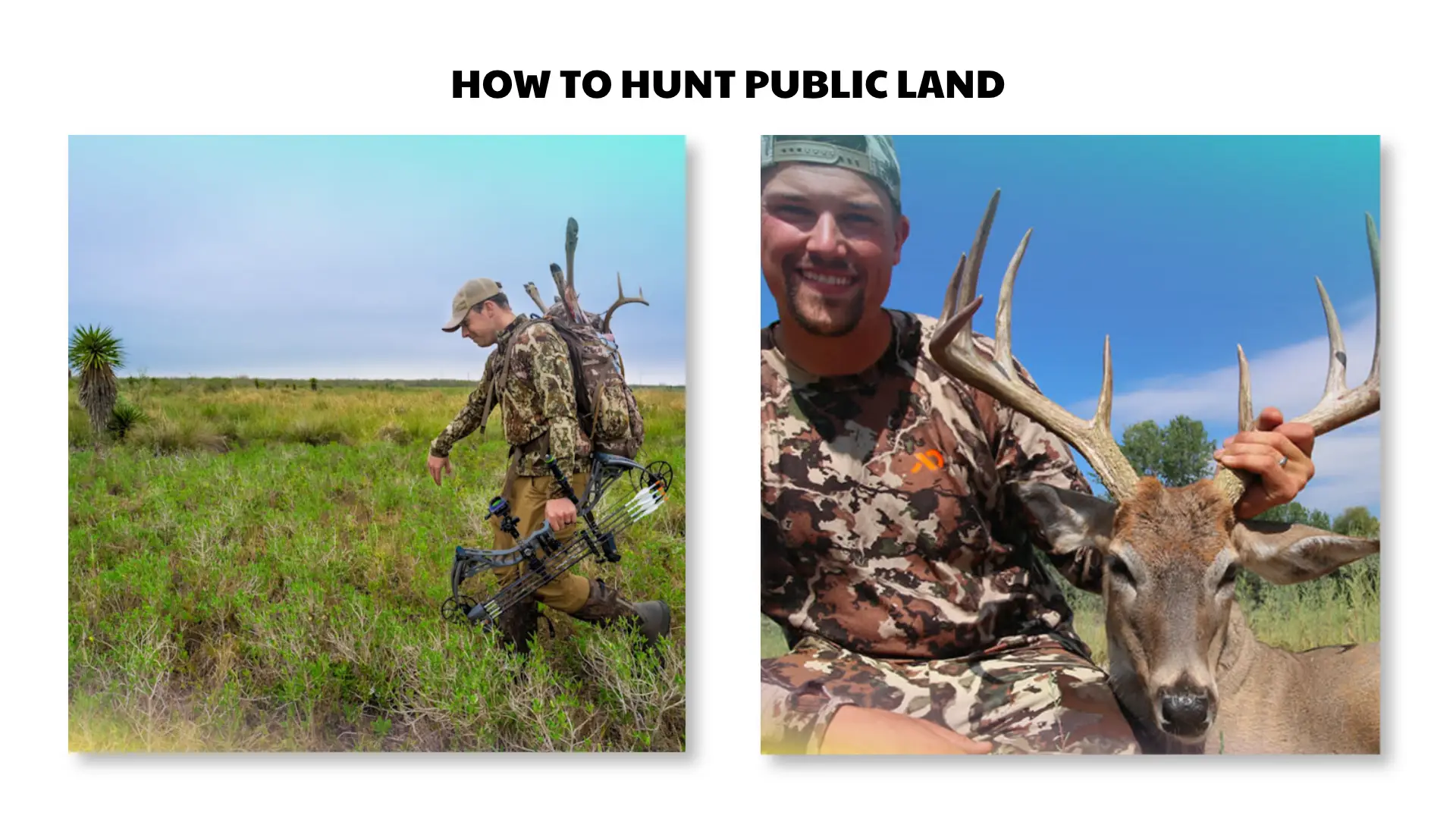
To hunt public land, first identify the land manager and confirm that the exact parcel, species, season, weapon, and access route are open. Obtain every required license, tag, permit, draw result, or hunter-education credential; then study official maps, scout current animal sign and human pressure, and prepare backup locations. Set up only where roads, trails, camps, livestock, private land, buildings, and other users remain outside the safe shooting area. Take only a legal, positively identified, recoverable opportunity within your practiced ability.
Important Legal and Safety Notice Before You Hunt
Hunting laws vary by country, state, province, county, species, season, land manager, unit, and weapon. The Bureau of Land Management hunting page and the U.S. Forest Service hunting guidance both emphasize lawful, locally informed use. Always verify the current rules with the wildlife agency and the office managing the property.
- License and tags: Confirm the species license, tag, permit, draw result, validations, and hunter-education requirement.
- Season: Verify unit boundaries, dates, legal hours, bag limits, weapon season, and sex or age restrictions.
- Land status: Confirm ownership, managing agency, legal access, closures, private inholdings, and safety zones.
- Weapon rules: Check firearm, bow, muzzleloader, ammunition, magazine, transport, vehicle, and discharge restrictions.
- Public access: Use only legal roads, trails, easements, gates, launches, and parking locations.
- Visibility: Follow blaze-orange or other required clothing rules.
- Tree stands: Follow placement and removal rules and use a full-body safety harness.
- Reporting: Verify tagging, evidence-of-sex, check-in, disease-testing, reporting, and transport requirements.
- Emergency plan: Prepare for weather, wildfire, navigation failure, injury, vehicle trouble, and limited communication.
Never shoot toward roads, trails, homes, camps, vehicles, livestock, workers, hikers, buildings, power lines, boats, other hunters, or unclear movement. Public land is shared. Stop immediately whenever the target, background, boundary, or recovery route is uncertain.
Understanding Public Land and Game Habitat
BLM Lands
The Bureau of Land Management provides hunting and fishing opportunities on many properties, but local closures, travel plans, fire restrictions, recreation sites, and state wildlife laws still apply. Confirm the exact field office and parcel before traveling.
National Forests and Grasslands
National forests and grasslands can support deer, elk, turkey, small game, upland birds, predators, and other species. Campgrounds, developed recreation sites, roads, seasonal gates, wilderness rules, and local ranger-district restrictions require separate attention.
State Wildlife Areas and Game Lands
These areas may be managed specifically for habitat and hunting, but they can use quota hunts, drawings, check stations, weapon restrictions, special open days, parking rules, or designated units.
National Wildlife Refuges
Some refuges allow carefully managed hunting in designated areas, while other portions remain closed as sanctuaries. Refuge-specific brochures and signs control access.
County, Municipal, and Other Public Lands
Local government land, water-district property, reservoirs, and parks can appear public on a map but may prohibit hunting or firearm discharge. Written manager confirmation is essential.
Habitat Varies by Species
Big game, turkey, upland birds, small game, predators, and waterfowl use different combinations of food, water, cover, elevation, edge habitat, travel corridors, bedding or roosting areas, and seasonal ranges. Select the legal species first, then identify the habitat it currently uses.
What You Need Before You Start
- Current hunting license and tags
- Required permits or draw confirmation
- Current wildlife regulations
- Current land-manager map and rules
- Legal firearm, bow, or hunting method
- Legal ammunition or arrows
- Required visibility clothing
- Weather-appropriate clothing and boots
- Full-body harness for elevated stands
- Binoculars or appropriate optics
- Offline maps, paper map, and compass
- GPS or hunting app as a secondary tool
- First aid and emergency signaling
- Reliable communication device
- Headlamp and backup light
- Water, food, and weather protection
- Game-care gloves, bags, and tools
- Cooler or cooling plan
- Vehicle recovery and seasonal road supplies
- Shared trip plan and turnaround time
Core rule: A public-land layer can help identify who owns a parcel. It does not prove that hunting is open, that a road is public, that motorized travel is permitted, or that a legal access route exists.
How to Hunt Public Land: Step-by-Step Guide
Step 1: Identify the Land Manager and Confirm Hunting Is Allowed
Public ownership does not automatically mean every parcel is open to hunting. Identify whether the land is managed by a state wildlife agency, the Bureau of Land Management, the U.S. Forest Service, a national wildlife refuge, a county, a municipality, a water district, or another agency. Read the current unit brochure, closure notices, travel rules, fire restrictions, and species-specific regulations before planning the hunt.
Step 2: Verify Licenses, Tags, Permits, Seasons, and Weapon Rules
Use the official wildlife agency for the exact species, unit, date, method, and season. Confirm the hunting license, tag or permit, application or draw result, hunter education requirement, legal hours, bag or possession limits, weapon and ammunition restrictions, blaze-orange rules, check-in or reporting duties, carcass transport rules, and any special public-land permit. Do not rely on last year’s regulations.
Step 3: Confirm a Legal Access Route
A public parcel may be landlocked by private property or reachable only through a legal road, trail, easement, river, or agency access point. Verify the route with official maps and the managing agency. Do not cross private land, open a private gate, drive a closed road, or assume that a visible two-track is public. Obtain landowner permission when the legal route crosses private property.
Step 4: Study Maps and Mark Critical Boundaries
Use the manager’s official map first, then compare it with topographic maps, aerial imagery, and public-land datasets. Mark property lines, private inholdings, closed refuges, safety zones, roads, trails, campgrounds, buildings, livestock areas, seasonal gates, motorized-route limits, water sources, steep terrain, and emergency exits. Download maps for offline use and carry a paper backup.
Step 5: Select the Target Species and Learn Its Habitat
Public-land strategy depends on the legal game species. Deer may use bedding cover, feeding areas, water, and travel corridors; elk may shift with elevation, pressure, and forage; turkey may use roosts, openings, and feeding routes; small game may concentrate around edge habitat; and waterfowl may use wetlands, rivers, and agricultural interfaces. Study current local behavior rather than assuming one pattern applies everywhere.
Step 6: Scout Sign, Pressure, and Human Use
Scout tracks, droppings, feeding sign, bedding or roosting habitat, trails, rubs, scrapes, wallows, rooting, feathers, water access, and fresh movement where relevant to the species. Also record vehicles, boot tracks, camps, trail cameras, popular glassing points, target-shooting areas, hikers, cyclists, livestock, and seasonal work. Public-land scouting must account for wildlife and people.
Step 7: Build Primary, Backup, and Exit Plans
Prepare more than one legal hunting area because another party, a closure, weather, fire activity, livestock movement, road conditions, or changing game patterns may disrupt the first choice. Define parking, entry time, wind direction, communication, turnaround time, and emergency exit for each plan. Moving to a backup is safer than crowding another hunter or forcing a poor setup.
Step 8: Enter Quietly and Set Up With a Safe Background
Park without blocking gates, roads, trailers, or emergency access. Follow motorized-use rules and travel quietly on foot where required. Choose a blind, stand, glassing point, still-hunting route, or natural cover that keeps roads, trails, camps, buildings, livestock, and other users outside every shooting direction. Use a full-body harness in an elevated tree stand and inspect the stand before use.
Step 9: Stay Patient and Continuously Recheck the Area
Public land is shared. Conditions can change after the hunt begins as hikers, hunters, vehicles, livestock, or workers enter the area. Keep the firearm or bow controlled, identify all movement, and update the safe background before every opportunity. Do not shoot at sound, brush movement, silhouettes, or an animal crossing a road, trail, property line, or crowded area.
Step 10: Take Only a Legal, Ethical, Recoverable Opportunity
Act only after confirming the species, sex or class when regulated, tag validity, season, legal weapon, safe background, and a distance within your practiced ability. Consider terrain, property boundaries, weather, daylight, and the recovery route before the shot. Pass when identification, range, angle, background, or recovery is uncertain.
Step 11: Recover, Tag, Report, Care for the Harvest, and Leave No Trace
Begin recovery promptly and stay inside legal boundaries. Follow tagging, evidence-of-sex, check-station, chronic-wasting-disease, harvest-reporting, and transport requirements where applicable. Use clean gloves and tools, cool edible meat promptly, and avoid waste. Remove flagging where required, pack out trash and spent cases, close gates as directed, and record lessons for the next hunt.
Best Time, Place, and Conditions for Public-Land Hunting
Before the Season
Use the preseason to complete hunter education, apply for tags, inspect equipment, pattern the firearm or confirm bow accuracy, verify maps, scout access, and learn the land manager’s rules. Do not wait until opening morning to discover a closed road or invalid tag.
Opening Periods
Opening days often create more vehicle and foot traffic. Game may move away from roads, campgrounds, trailheads, and obvious habitat. Prepare backups and maintain greater awareness of other users.
Midweek and Low-Pressure Periods
Some areas receive less pressure on weekdays or after the opening rush, but weather, migration, work schedules, and local popularity can change that pattern. Scout the actual conditions.
Wind and Weather
Wind affects scent, sound, game movement, fire behavior, tree hazards, and shooting stability. Heat, snow, fog, lightning, floodwater, wildfire smoke, and muddy roads can turn a reasonable plan into an unsafe one.
Near Access Versus Remote Terrain
Remote terrain is not automatically better. Overlooked cover near legal access can hold game, while long routes increase navigation, injury, meat-care, and pack-out risks. Match distance to ability and recovery resources.
Public and Private Boundaries
Animals often move across ownership lines. Hunt far enough inside the public boundary that a legal opportunity and recovery are realistic without trespass.
Helpful Tips for Better Results
- Call the local land-management office when access, closures, or maps are unclear.
- Download official maps and regulations before entering areas without cell service.
- Carry a paper map, compass, and spare power source.
- Scout parking areas and trailheads as carefully as wildlife habitat.
- Prepare at least two legal backup locations.
- Walk farther only when the route, terrain, weather, and recovery plan remain realistic.
- Use pressure to predict where animals may relocate, not as a reason to crowd other hunters.
- Keep vehicles on legal routes and obey seasonal road closures.
- Wear required visibility clothing and add visibility during pack-out when appropriate.
- Tell a responsible person where you are going and when to call for help.
- Stop early enough to complete recovery and exit safely.
- Leave gates, campsites, trails, and parking areas cleaner than you found them.
Common Mistakes to Avoid
- Assuming all public land is open to hunting.
- Using a mapping app without checking official agency rules.
- Crossing private land without permission.
- Ignoring landlocked parcels and questionable roads.
- Driving around a closed gate or off a designated route.
- Hunting without a valid tag, permit, or draw result.
- Relying on last year’s season or weapon rules.
- Crowding another hunter or occupied setup.
- Shooting toward a trail, road, camp, vehicle, or unclear background.
- Overestimating physical ability or pack-out capacity.
- Ignoring heat, wildfire, snow, lightning, or road conditions.
- Placing a tree stand without checking rules or using a harness.
- Crossing a private boundary during recovery.
- Failing to tag, report, cool, or transport game correctly.
Troubleshooting Common Problems
| Problem | Possible Cause | What to Do |
|---|---|---|
| The parcel appears public but has no obvious access | It may be landlocked, the road may be private, or access may be seasonal | Contact the land manager and use only a confirmed public road, trail, easement, or landowner-approved route. |
| Another hunter is at the planned location | Popular access, opening-day pressure, or limited parking | Use a backup plan and maintain safe separation instead of crowding the area. |
| The app boundary differs from signs | Outdated data, GPS error, survey differences, or a recent closure | Follow official signs and agency instructions and contact the land manager before proceeding. |
| Game sign is old or absent | Seasonal movement, pressure, weather, food change, or limited scouting | Expand scouting to current food, cover, water, and lower-pressure legal areas. |
| Animals detect the hunter | Wind, noise, movement, skyline exposure, or poor entry route | Change the entry, reduce movement, use terrain cover, and keep the wind favorable. |
| Road or gate is closed | Seasonal travel plan, fire danger, maintenance, weather, or resource protection | Do not bypass the closure. Use a legal alternate route or another unit. |
| Weather makes the exit difficult | Snow, heat, lightning, flooding, fog, wind, or muddy roads | End the hunt early and use the safest planned exit before conditions worsen. |
| A hiker or vehicle enters the shooting area | Shared public use | Do not shoot. Control the firearm or bow and wait until the entire area is safe. |
| The animal crosses onto private land | Setup was close to a boundary or the animal moved during recovery | Do not trespass. Contact the landowner or wildlife agency and follow local recovery rules. |
| The pack-out is harder than expected | Distance, heat, steep terrain, heavy load, or poor planning | Cool the harvest, use lawful assistance, make controlled trips, and seek help before exhaustion becomes an emergency. |
| You are unsure about a tag or reporting rule | Regulations differ by species, unit, or method | Do not guess. Contact the official wildlife agency or a conservation officer. |
| Phone navigation fails | No service, dead battery, water damage, or app error | Use the paper map and compass, follow the known exit, and activate the trip-plan procedure if necessary. |
Ethical Hunting and Conservation
Public-land behavior influences wildlife, land managers, nearby landowners, other hunters, and non-hunting visitors. Ethical conduct protects long-term access.
- Obey wildlife laws and land-manager rules.
- Respect closures, travel plans, gates, seasonal roads, and private inholdings.
- Maintain safe spacing from hunters and other recreationists.
- Practice enough to know a conservative effective range.
- Pass on unsafe, uncertain, distant, or unrecoverable opportunities.
- Avoid waste and care for edible meat promptly.
- Do not damage trees, signs, fences, roads, water sources, or habitat.
- Report wildfire, dangerous conditions, and wildlife violations appropriately.
- Pack out trash, spent cases, flagging where required, and camp waste.
- Support conservation through licenses, habitat programs, and volunteer work.
Review the U.S. Fish and Wildlife Service hunter responsibilities and the local land manager’s current guidance.
When to Get More Training or Professional Guidance
Seek help before hunting independently when you are new to firearms or bows, public-land maps, tag systems, remote navigation, tree stands, boats, mountain weather, species identification, game recovery, meat care, or local access law.
- Official hunter education courses
- State or provincial wildlife agencies
- BLM field offices and Forest Service ranger districts
- Refuge and wildlife-area staff
- Certified firearm, bow, and tree-stand instructors
- Experienced ethical mentors or licensed guides
- Search-and-rescue, wilderness first aid, and navigation courses
After the Hunt: Follow-Up, Gear Care, and Learning
- Unload and transport weapons according to law and manufacturer guidance.
- Complete tagging, validation, check-in, reporting, and disease-testing duties.
- Keep the harvest clean and cool and follow food-safety guidance.
- Clean and inspect firearms, bows, stands, optics, boots, and navigation equipment.
- Record access, wind, weather, sign, pressure, animal movement, and recovery time.
- Update offline maps with confirmed roads, closures, boundaries, and hazards.
- Remove stands, blinds, flagging, and equipment when required.
- Report damaged facilities, unsafe hazards, or illegal activity to the proper agency.
- Thank landowners when private permission or access assistance was provided.
- Leave roads, trails, camps, gates, and parking areas cleaner than you found them.
Recommended Hunting Gear and Tools to Consider
You do not need the most expensive equipment to hunt responsibly. Choose gear based on the legal species and method, terrain, weather, access distance, navigation needs, recovery plan, physical ability, and budget.
- A legal firearm, bow, or approved hunting method
- Legal ammunition, arrows, and required safety equipment
- Quality boots suited to the terrain and season
- Weather layers and required visibility clothing
- Binoculars or optics for safe observation
- Official offline maps, paper map, compass, GPS, or app
- First aid, emergency communication, headlamp, and signaling
- Full-body tree-stand harness when applicable
- Water, food, sun protection, and emergency insulation
- Game bags, clean gloves, cooling supplies, and transport equipment
- Vehicle safety equipment for seasonal public roads
- Trash bags for spent cases, packaging, and camp waste
Final Thoughts
Learning how to hunt public land means learning two systems at once: wildlife regulations and land-access rules. Identify the manager, confirm the legal route, obtain the correct license and tag, study official maps, scout animals and people, prepare backups, protect every shooting direction, and plan recovery before acting.
A hunt with no harvest is better than trespass, an invalid tag, a closed-road violation, crowding, an unsafe shot, or an impossible pack-out. Preparation, patience, restraint, and respect help preserve public hunting opportunities.
Frequently Asked Questions
1. How long does it take to learn how to hunt public land?
A beginner can learn legal and safety basics through hunter education and mentored trips. Reading maps, scouting pressure, understanding boundaries, and planning recovery improve over several seasons.
2. What does public land hunting mean?
It means hunting on land managed by a government or public agency where the specific parcel, season, species, and method are legally open.
3. Is all government-owned land open to hunting?
No. Parks, refuges, recreation sites, safety zones, municipal lands, and closed management units may prohibit or restrict hunting.
4. Who manages public hunting land?
Managers can include state wildlife agencies, BLM, the U.S. Forest Service, national wildlife refuges, counties, municipalities, and other public entities.
5. How do I find public hunting land?
Use official wildlife-agency maps, BLM and Forest Service pages, refuge maps, county records, and the USGS PAD-US Data Explorer as planning resources.
6. Can I trust a hunting app boundary?
Treat an app as a planning aid, not final legal authority. Compare it with official maps, signs, deeds, easements, and land-manager guidance.
7. Do I need a hunting license on public land?
Yes in most jurisdictions. The public ownership of the land does not remove state or provincial licensing requirements.
8. Do I need a tag or species permit?
Many big-game and some limited-entry hunts require tags, permits, applications, or draw results. Requirements vary by species and unit.
9. What is a draw hunt?
A draw allocates a limited number of permits through an application process. Deadlines, preference systems, and rules vary by agency.
10. Can I buy a tag after arriving?
Sometimes, but limited tags may sell out or require an earlier application. Confirm availability and validation before traveling.
11. When is hunting season on public land?
Dates vary by species, unit, weapon, agency, and year. A property may have a shorter season than surrounding private land.
12. Are legal shooting hours the same everywhere?
No. Hours can vary by species and jurisdiction, and individual properties may impose additional access times.
13. Can I hunt public land without hunter education?
Many jurisdictions require hunter education based on age or license history. Even where exempt, formal training is strongly recommended.
14. Can nonresidents hunt public land?
Often yes, but nonresident licenses, tags, quotas, fees, and application systems can differ from resident requirements.
15. Is public land free to hunt?
Some parcels have no land-use fee, but licenses, tags, permits, parking, access passes, or reservation fees may still apply.
16. Can I cross private land to reach public land?
Not without a legal public easement or landowner permission. A public parcel behind private property may be legally inaccessible.
17. What is landlocked public land?
It is publicly owned land without a confirmed legal public route from a road, trail, waterway, or adjoining public parcel.
18. Is corner crossing legal?
The legal status can be complex and location-specific. Do not assume it is allowed; obtain current local legal guidance before attempting it.
19. Can I drive anywhere on BLM land?
No. Motorized travel is governed by designated roads, travel-management plans, seasonal closures, and local restrictions.
20. Can I use an ATV or UTV?
Only where the vehicle, route, season, registration, and use are legal. Off-route travel may be prohibited.
21. Can I camp on public hunting land?
Camping rules vary by manager and site. Check stay limits, fire restrictions, food storage, sanitation, and designated-area rules.
22. Can I target shoot near my hunting area?
Target shooting and hunting can have different rules. Never assume one is allowed because the other is allowed.
23. How do I scout public land?
Study maps, visit legal access points, glass from a distance, and look for current tracks, droppings, feeding sign, cover, water, travel routes, and human pressure.
24. Should I scout during hunting season?
It can be useful when legal, but avoid disrupting active hunters, pushing game unnecessarily, or entering restricted areas.
25. What animal signs should beginners learn?
Learn species-specific tracks, droppings, beds, trails, feeding sign, rubs, scrapes, wallows, roost sign, feathers, and fresh disturbance.
26. How does hunting pressure affect animals?
Pressure can shift movement to thicker cover, steeper terrain, private boundaries, nighttime hours, or overlooked habitat.
27. How far should I walk from a road?
There is no universal distance. Go only as far as navigation, terrain, weather, daylight, and recovery capacity allow.
28. Is the deepest backcountry always best?
No. Game may use overlooked habitat close to access, while remote terrain can create serious recovery and emergency challenges.
29. How early should I arrive?
Arrive early enough to park legally, verify the route, and reach the setup without rushing, while obeying access-hour restrictions.
30. Can I save a public-land spot with gear?
Usually not unless the managing agency has a specific reservation system. Unattended gear may be prohibited or considered abandoned.
31. What should I do if another hunter is there first?
Use a backup plan, communicate calmly, and maintain safe separation. Do not crowd or create overlapping shooting directions.
32. How much space should I give other hunters?
There is no universal distance. Use terrain, visibility, weapon range, travel routes, and local rules to maintain a clearly safe buffer.
33. Should I wear blaze orange?
Wear it whenever required and consider additional visibility during shared-use access or pack-out, consistent with local law and the hunting method.
34. How should firearms be carried on public land?
Keep the muzzle in a safe direction, the action open or unloaded when appropriate, and follow transport, vehicle, road, and property rules.
35. Can I shoot across a road or trail?
Do not shoot toward or across roads, occupied trails, vehicles, people, buildings, livestock, or any uncertain background.
36. Can I use a tree stand?
Only where allowed. Use a full-body harness, inspect the stand, follow equipment-removal rules, and never damage trees with prohibited hardware.
37. Can I leave a tree stand overnight?
Rules vary. Some managers require identification, limit dates, prohibit permanent placement, or require daily removal.
38. Can I use trail cameras?
Trail-camera rules vary and can change. Some agencies restrict placement, duration, wireless transmission, or use during hunting seasons.
39. Can I use bait?
Baiting rules vary by species, state, federal property, disease zone, and season. Never bait unless current regulations clearly allow it.
40. Can I hunt near livestock?
Only where legal and safe. Never shoot toward livestock, workers, buildings, equipment, or occupied ranch facilities.
41. What if hikers enter the area?
Public lands are shared. Do not shoot, control the firearm or bow, and wait until the entire area and background are safe.
42. How do I avoid getting lost?
Carry official offline maps, a paper map, compass, spare power, marked waypoints, and a trip plan shared with another person.
43. What if there is no cell service?
Use offline navigation and a separate communication or signaling method suited to the remoteness and risk.
44. What weather is unsafe for public-land hunting?
Lightning, wildfire, floodwater, extreme heat or cold, dense fog, high wind, heavy snow, and impassable roads can require ending the hunt.
45. How do I plan for wildfire restrictions?
Check current fire closures, vehicle restrictions, campfire rules, smoke conditions, and evacuation routes with the land manager.
46. Can I hunt close to a property boundary?
It may be legal, but the shot and recovery must remain lawful. Set up farther inside the boundary when crossing is likely.
47. What if an animal crosses onto private land?
Do not trespass. Mark the location, contact the landowner, and ask the wildlife agency about local recovery procedures.
48. How far should I shoot?
Use only the distance at which you can identify the target, confirm the background, perform consistently, and recover the animal ethically.
49. What should I do immediately after harvest?
Follow tagging or validation rules, begin legal recovery and cooling, maintain required evidence, and complete check-in or reporting.
50. Do I need to report a harvest?
Many jurisdictions require reporting for certain species or permits. Deadlines and methods vary, so verify before hunting.
51. How should game meat be cared for?
Use clean gloves and tools, prevent contamination, cool edible meat promptly, and follow official food-safety and transport guidance.
52. What is wanton waste?
Definitions vary, but laws generally require reasonable recovery efforts and prohibit wasting usable portions of game.
53. What is the biggest public-land hunting mistake?
The biggest mistake is assuming public ownership means unrestricted access and use. Every parcel, route, species, method, and season must be verified.
54. How can hunters support public-land conservation?
Buy required licenses and stamps, follow travel rules, report violations, volunteer for habitat projects, pack out trash, and respect closures.
55. When should I hire a guide or seek a mentor?
Seek help when new to maps, tags, firearm or bow safety, remote terrain, species identification, recovery, or local public-land rules.
Read more: How to Hunt Ducks on Public Land: A Beginner-Friendly Guide