
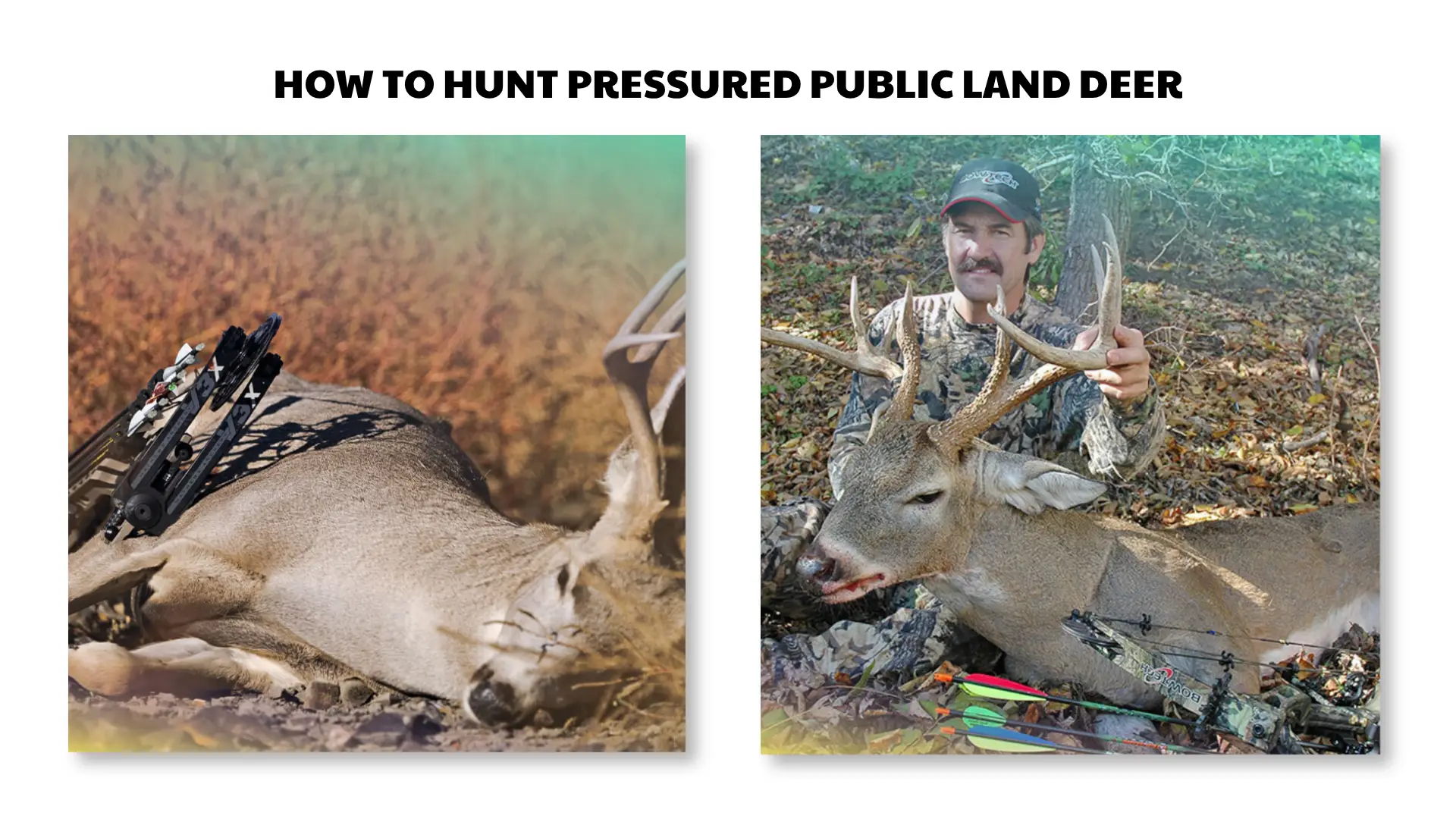

Quick Answer
To hunt pressured public land deer, confirm the parcel, access route, license, tag, season, method, and reporting rules first. Scout fresh deer sign together with parking, foot traffic, stands, and easy access, then choose a legal setup near current security cover or a travel transition that can be entered with a favorable wind. Keep a backup for each wind and for occupied locations, use a safe background, and take only a positively identified deer within your practiced ability and legal recovery area. Pressure creates opportunities only when the hunter remains patient and restrained.
Important Legal and Safety Notice Before You Hunt
Deer laws vary by country, state, province, county, unit, property, season, weapon, and disease zone. Public-land managers can add rules for roads, stands, bait, cameras, camping, vehicle use, and access. The Bureau of Land Management hunting page and U.S. Forest Service hunting guidance are starting points, not substitutes for the current local regulations.
- License and tag: Verify the exact deer license, tag, permit, draw result, unit, sex or antler criteria, and season.
- Weapon: Confirm legal firearm, bow, muzzleloader, ammunition, magazine, broadhead, draw-weight, transport, and discharge rules.
- Legal hours: Know the official time standard and daily legal hunting period.
- Access: Confirm public ownership, legal road or easement, parking, seasonal gates, private inholdings, and closed units.
- Visibility: Follow hunter-orange or other clothing requirements.
- Equipment: Check stand, blind, camera, baiting, scent, motorized access, and overnight-placement rules.
- Recovery: Know tagging, evidence, tracking-dog, private-property, reporting, testing, and carcass-transport requirements.
- Emergency plan: Prepare for weather, wildfire, falls, navigation failure, limited service, injury, and vehicle trouble.
Never shoot toward roads, trails, homes, buildings, camps, people, vehicles, livestock, workers, power lines, other hunters, or unclear movement. Never climb with a loaded firearm or unprotected broadhead. If the deer, background, distance, boundary, or recovery path is uncertain, do not shoot.
Understanding Pressured Public Land Deer and Their Habitat
What Hunting Pressure Can Change
Research-based deer education shows that deer may use out-of-the-way locations during hunting season. Pressure can change visible movement, route choice, cover use, and timing, but individual deer and landscapes differ. Treat pressure as one factor alongside food, weather, breeding season, habitat, and population density.
Security Cover
Security cover can include young forest, briars, brush, tall grass, wet ground, steep side slopes, cutover edges, creek heads, or small overlooked pockets. The feature matters because it reduces repeated disturbance, not because every thick area holds deer.
Bedding Areas
Beds are useful only when connected to fresh tracks, droppings, hair, nearby browse, escape cover, wind, or recent movement. A suspected bedding area can be ruined by repeated scouting, so begin with an observation or transition setup when possible.
Food and Staging Cover
Mast, browse, crops near legal boundaries, openings, woody edges, and seasonal plants can influence movement. Pressured deer may wait in cover before entering exposed food during legal light. Scout the secure transition rather than assuming the center of the food source is best.
Travel Corridors and Terrain
Benches, saddles, points, drainage heads, creek crossings, inside corners, edge transitions, and narrow strips of cover can connect bedding, food, and water. Current tracks are more reliable than the appearance of a feature on a map.
Human Access
Roads, gates, parking areas, trailheads, logging roads, hiking trails, camps, and easy ridge walks shape public-land use. Some deer move away from repeated traffic; others use overlooked habitat near it. Scout both possibilities.
What You Need Before You Start
- Current hunting license, deer tag, and permits
- Current wildlife regulations
- Current land-manager map and rules
- Legal firearm, bow, or muzzleloader
- Legal ammunition, arrows, and protected broadheads
- Required hunter-orange or visibility clothing
- Weather layers and suitable boots
- Full-body fall-arrest system for elevated stands
- Haul line and inspected stand equipment
- Binoculars or appropriate optics
- Offline map, paper map, and compass
- GPS or hunting app as a secondary tool
- Headlamp and backup light
- First aid and emergency signaling
- Reliable communication device
- Food, water, and emergency insulation
- Clean game-care gloves and tools
- Game bags and cooling plan
- Shared trip plan and turnaround time
- Primary and backup access routes
Map rule: A public-land layer can identify likely ownership. It does not prove a road is public, a gate may be passed, hunting is open, a stand may be left, or the parcel has legal access.
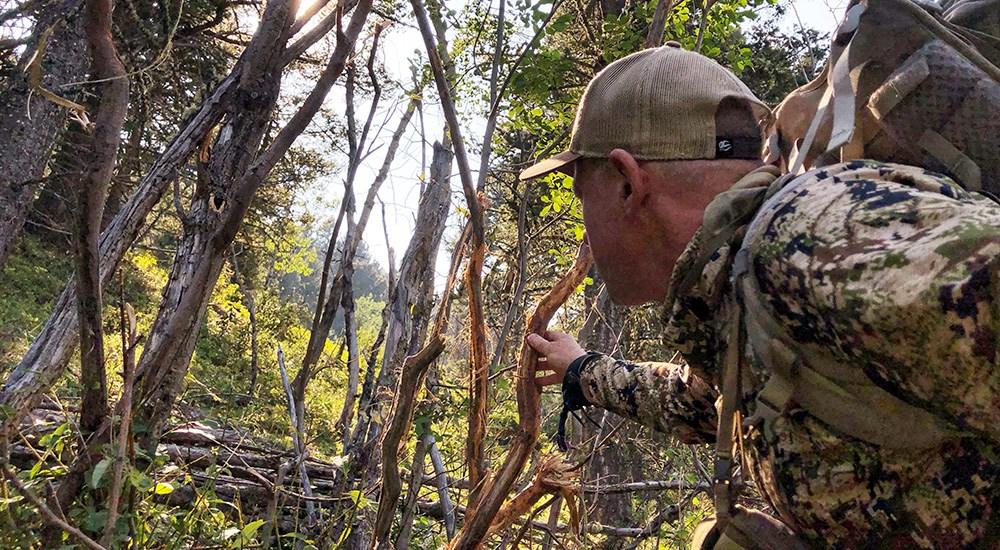
How to Hunt Pressured Public Land Deer: Step-by-Step Guide
Step 1: Verify Current Deer and Public-Land Regulations
Identify the wildlife agency, land manager, deer unit, and exact parcel before planning a hunt. Confirm the hunting license, valid deer tag or permit, season dates, legal hours, antlered or antlerless rules, weapon and ammunition restrictions, hunter-orange requirements, baiting and scent rules, tree-stand and trail-camera rules, road closures, camping limits, disease-zone rules, tagging, reporting, evidence-of-sex, and transport requirements. A public-land layer does not prove that the parcel, road, or method is open.
Step 2: Complete Hunter Education and Define a Realistic Range
Complete required hunter education and seek an experienced ethical mentor. Practice with the legal firearm or bow from field positions until a conservative personal effective range is clear. For bowhunting, verify legal equipment rules, protect broadheads during transport, and never extend range because a pressured deer offers only a brief opportunity.
Step 3: Study the Map Before Studying Deer Sign
Mark legal parking, public roads, walk-in routes, private inholdings, closed units, safety zones, trails, campgrounds, buildings, steep terrain, water, likely hunter access, and emergency exits. Look for cover transitions, benches, points, saddles, drainage heads, creek crossings, islands of cover, and habitat edges that may connect bedding security to food or water. Confirm every access route with the land manager.
Step 4: Scout Human Pressure as Carefully as Deer
Record vehicles, boot tracks, stand sites, flagging, trimmed lanes, trail-camera locations, target-shooting areas, camps, and the easiest routes from each parking area. These observations do not prove where every hunter will go, but they help identify places where deer may avoid repeated disturbance. Respect other hunters’ legal equipment and never tamper with it.
Step 5: Find Fresh Deer Sign, Not Just Impressive Sign
Prioritize current tracks, fresh droppings, recently used trails, active feeding sign, newly disturbed leaves, fresh rubs or scrapes, and beds with recent use. Large old rubs and worn trails can be visually appealing yet irrelevant to today’s movement. Connect fresh sign to security cover, wind, food, water, terrain, and a legal recovery route.
Step 6: Identify Security Cover and Low-Impact Observation Points
Pressured deer may use thick regeneration, brushy edges, steep side slopes, wet cover, overlooked pockets near access, or terrain that discourages repeated human entry. Do not force entry into every suspected bedding area. Start with a distant glassing point, observation sit, trail edge, or downwind transition that can be hunted without contaminating the entire location.
Step 7: Plan Wind, Thermals, Entry, and Exit Together
Use the actual forecast and terrain rather than a simple compass arrow. Morning and evening temperature changes can affect local air movement in hills and drainages. Choose an entry that keeps wind and noise away from the likely deer location, avoids crossing the primary trail, and allows a safe exit without walking through feeding or bedding cover.
Step 8: Select a Setup With a Safe Background and Recovery Plan
Choose a ground blind, natural cover, still-hunting route, saddle, or legal tree stand that fits the terrain and weapon. Keep roads, trails, homes, vehicles, livestock, camps, and other hunters outside the shooting direction. Before hunting from an elevated stand, inspect the equipment, use a full-body fall-arrest system from the ground up, maintain three points of contact, and raise an unloaded firearm or bow with a haul line.
Step 9: Hunt the Conditions Instead of a Fixed Calendar
Use wind, weather, current food, recent pressure, and fresh sign to decide when and where to hunt. A cold front, rain, snow, changing crops, mast availability, rut phase, or opening-week pressure may alter movement, but no condition guarantees daytime activity. Rest a sensitive spot when entry would expose the hunter or send scent into security cover.
Step 10: Stay Patient and Recheck the Shared Landscape
Public land can change during a sit. Hikers, hunters, dogs, vehicles, workers, or livestock may enter the area. Keep the firearm or bow controlled and re-evaluate the target, background, property boundary, and recovery path before every opportunity. Never shoot at sound, brush movement, a partial silhouette, or a deer crossing a road, trail, or unsafe opening.
Step 11: Take Only a Legal, Ethical, Recoverable Opportunity
Confirm the animal is a legal deer for the tag, unit, season, and method. Act only when the background is safe, the distance and angle are within practiced ability, and the likely recovery remains on legal accessible ground. Pass when identification, antler criteria, range, angle, weather, daylight, neighboring hunters, or recovery is uncertain.
Step 12: Recover, Tag, Report, and Care for the Harvest
Follow the required waiting, tracking, tagging, validation, check-station, reporting, testing, and transport rules for the jurisdiction. Mark the last known location, use a methodical legal search, and do not cross private property without permission. Wear visibility clothing when appropriate during recovery. Use clean gloves and tools, cool edible meat promptly, and follow current CWD testing and carcass-movement guidance.
Best Time, Place, and Conditions for This Hunt
Preseason
Use preseason visits to verify access, inspect roads, observe habitat, identify pressure, practice shooting, and create backup plans. Avoid turning every suspected bedding area into a high-disturbance scouting project.
Opening Days
Opening pressure can change movement rapidly. Watch where vehicles stop, where hunters enter, and which legal areas receive little use. Do not use other hunters as intentional drivers without their knowledge or create unsafe crossing directions.
After the Opening Rush
Fresh sign after several days of pressure may reveal current security cover and travel routes more accurately than preseason sign. Quiet observation can be more useful than immediately hanging a stand.
Rut Periods
Breeding activity can increase movement, but it does not override safety, wind, property boundaries, tag rules, or current sign. Rut timing and intensity vary by location and year.
Late Season
Food, thermal cover, weather, and efficient movement often become important. Cold, snow, ice, and shorter daylight increase access and recovery risk.
Wind and Thermals
Use stable conditions when possible. In hills, local air can rise as slopes warm and sink as they cool. Leave when the setup begins sending scent into the expected deer location.
Near Access or Remote
The best place is the legal location with fresh sign, secure habitat, a clean wind, safe shooting, and a realistic recovery. That location may be close to a road or several miles away.
Helpful Tips for Better Results
- Scout parking lots, trailheads, and obvious access routes before choosing a deer setup.
- Prioritize fresh tracks and droppings over large but weathered rubs.
- Keep several legal backup areas for different wind directions.
- Consider overlooked cover near access as well as remote terrain.
- Avoid crossing the trail you expect deer to use.
- Use the wind as the primary scent-control tool.
- Enter only as early as needed to move safely and quietly.
- Make the first sit count when a location is sensitive to disturbance.
- Keep the stand or blind profile simple and easy to remove.
- Use a full-body fall-arrest system for every elevated-stand hunt.
- Mark private boundaries and likely recovery obstacles before hunting.
- Leave before weather, darkness, fatigue, or access conditions make recovery unsafe.
Common Mistakes to Avoid
- Assuming public ownership automatically provides legal access.
- Hunting old rubs without current tracks or droppings.
- Walking directly through the bedding or feeding area before the sit.
- Ignoring parking lots, boot tracks, stands, and recreational traffic.
- Believing farther from the road always means better hunting.
- Using scent products instead of protecting the wind.
- Hunting the same stand repeatedly with the same exposed entry.
- Crowding another hunter or creating overlapping shooting directions.
- Climbing without a full-body fall-arrest system.
- Carrying a loaded firearm while climbing.
- Taking a rushed shot at a partial or moving silhouette.
- Setting up too close to a private boundary for reliable recovery.
- Underestimating heat, steep terrain, darkness, and pack-out distance.
- Failing to tag, report, test, cool, or transport the deer correctly.
Troubleshooting Common Problems
| Problem | Possible Cause | What to Do |
|---|---|---|
| Fresh sign disappears after opening day | Deer shifted because of pressure, food changes, weather, or repeated access | Rescout security cover and transition routes instead of sitting the old sign repeatedly. |
| Deer consistently approach from downwind | The setup exposes scent or the wind swirls in the terrain | Move to a more stable wind position and change the entry route rather than relying on scent products. |
| Only nighttime trail-camera activity appears | The camera may be near an exposed food source or heavily pressured trail | Scout legal staging cover, secondary trails, and terrain closer to secure daytime cover. |
| Another hunter occupies the planned spot | Popular access or limited parking | Use a backup area and maintain safe separation; do not crowd the setup. |
| The app boundary conflicts with signs | Outdated data, GPS error, new closure, or survey differences | Follow official signs and land-manager instructions and stop until the boundary is confirmed. |
| The stand location is noisy to enter | Dry leaves, brush, steep terrain, or an exposed route | Choose another route, wait for suitable conditions, or use a lower-impact ground setup. |
| Wind changes during the sit | Front passage, terrain thermal, or unstable forecast | Leave before scent contaminates the key area or the shooting background becomes unsafe. |
| Deer detect movement in the stand | Poor backdrop, skyline exposure, excessive repositioning, or reflective gear | Improve the background, reduce movement, and prepare equipment before likely movement periods. |
| A hiker enters the shooting area | Shared public access | Do not shoot. Control the weapon and wait until the complete area and background are safe. |
| A deer crosses onto private land | The setup is too close to the boundary or recovery moved off public land | Do not trespass. Contact the landowner and wildlife agency for lawful recovery guidance. |
| Recovery becomes difficult after dark | Poor landmarking, limited light, weather, or a rushed opportunity | Mark the last location, follow legal recovery guidance, and seek qualified help rather than creating an unsafe search. |
| The pack-out exceeds physical capacity | Distance, heat, steep terrain, heavy equipment, or inadequate planning | Cool the harvest, use lawful assistance, make controlled trips, and seek help before exhaustion becomes an emergency. |
Ethical Hunting and Conservation
Ethical deer hunting on shared public land is measured by legality, safety, restraint, recovery, meat care, and respect for other users—not by how aggressively a hunter enters cover.
- Obey seasons, tags, antler criteria, weapon rules, and access restrictions.
- Respect private inholdings, easements, roads, gates, and closures.
- Do not interfere with another hunter’s legal stand, camera, blind, or hunt.
- Maintain safe spacing from hunters, hikers, workers, camps, and livestock.
- Practice enough to know a conservative effective range.
- Pass on unsafe, uncertain, distant, or unrecoverable opportunities.
- Make reasonable legal recovery efforts and avoid waste.
- Follow CWD testing and carcass-transport guidance.
- Remove stands, flagging, trash, and equipment when required.
- Support habitat and public access through licenses and conservation programs.
Review official hunter ethics guidance, current land-manager rules, and the wildlife agency’s deer regulations before each season.
When to Get More Training or Professional Guidance
Seek additional help when you are new to public-land maps, deer tags, firearms, bows, elevated stands, remote navigation, terrain, shot placement, tracking, recovery, CWD rules, venison care, or local access law.
- Official hunter education courses
- State or provincial wildlife agencies
- BLM field offices and Forest Service ranger districts
- Certified firearm and bow instructors
- Tree-stand safety courses and manufacturer instruction
- Experienced ethical public-land mentors
- Qualified tracking-dog teams where legal
- Wilderness first aid and navigation courses
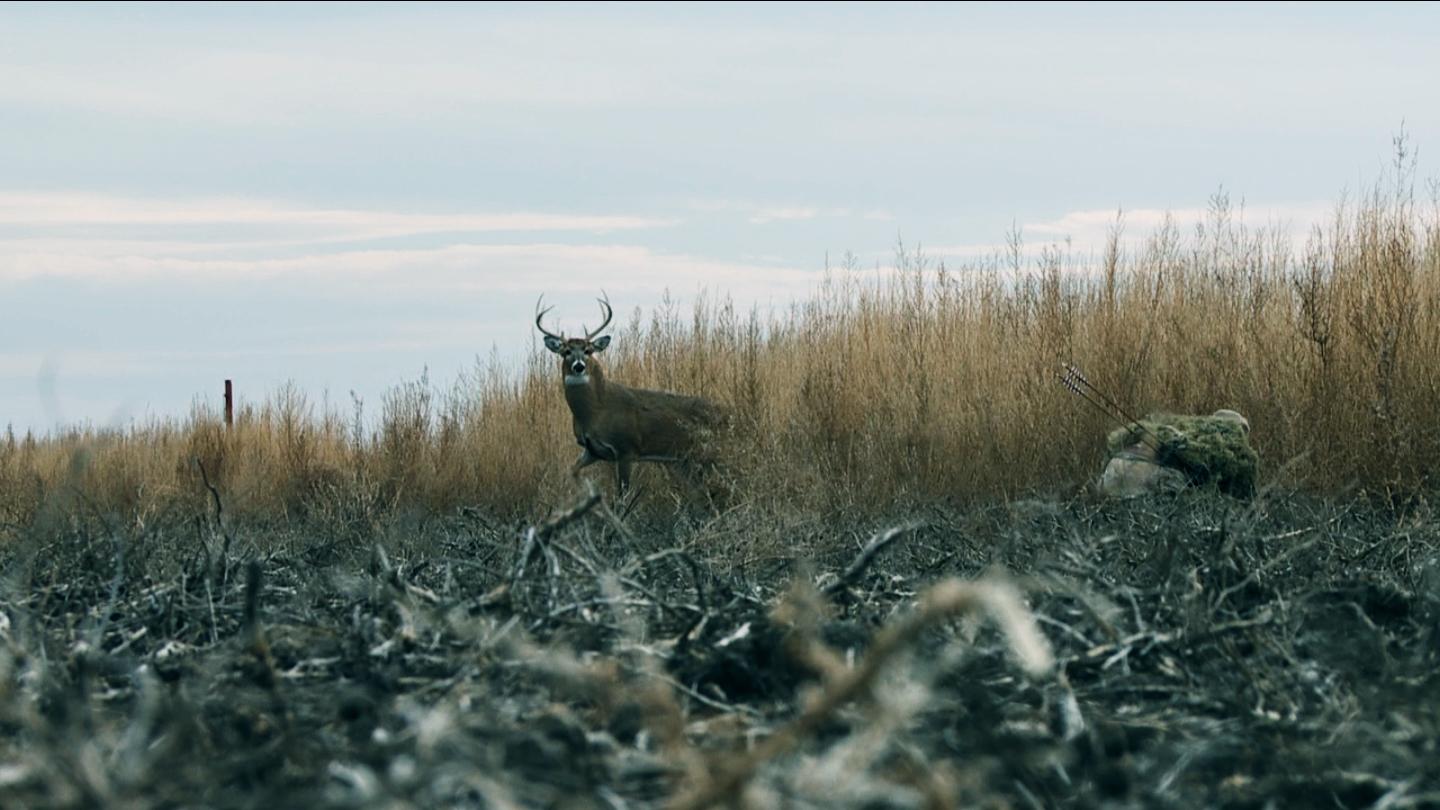
After the Hunt: Follow-Up, Gear Care, and Learning
- Unload and transport the weapon according to law and manufacturer guidance.
- Complete tagging, validation, reporting, testing, and check-station duties.
- Keep edible meat clean and cool and follow food-safety guidance.
- Clean and inspect firearms, bows, stands, harnesses, optics, boots, and lights.
- Record wind, thermals, weather, access, sign, pressure, movement, and recovery.
- Update maps with confirmed boundaries, legal routes, closures, and hazards.
- Remove stands, blinds, cameras, flagging, and equipment when required.
- Report dangerous conditions or wildlife violations to the proper agency.
- Review every uncertain identification, range, and recovery decision.
- Leave parking, trails, camps, and habitat cleaner than you found them.
Recommended Hunting Gear and Tools to Consider
Expensive equipment does not replace fresh sign, legal access, a favorable wind, and sound judgment. Choose gear according to the legal season, method, terrain, weather, stand type, navigation needs, physical ability, and recovery plan.
- A legal firearm, bow, or muzzleloader that fits the hunter
- Legal ammunition, arrows, protected broadheads, and safety equipment
- Required visibility clothing
- Quality boots and weather layers
- A full-body fall-arrest system for elevated stands
- A lightweight legal stand, saddle, blind, or ground seat when appropriate
- Binoculars or optics for safe identification
- Official offline maps, paper map, compass, GPS, or app
- Headlamp, first aid, signaling, and emergency communication
- Water, food, insulation, and weather protection
- Clean game-care gloves, tools, game bags, and cooling supplies
- Pack or transport system matched to the terrain and legal rules
Final Thoughts
Learning how to hunt pressured public land deer is not about finding a secret trick. It is the repeatable process of confirming access, reading fresh deer and human sign, understanding security cover, protecting the wind, choosing a low-impact entry, preparing backups, maintaining a safe background, and passing when recovery is uncertain.
Pressure can move deer, but it can also tempt hunters into crowding, reckless access, unsafe stands, or rushed shots. Legal preparation, patience, restraint, and respect for wildlife and other users remain the better strategy.
Frequently Asked Questions
1. How long does it take to learn how to hunt pressured public land deer?
The legal and safety basics can be learned through hunter education and mentored hunts. Reading fresh sign, pressure, wind, bedding security, and recovery routes improves over multiple seasons.
2. What is a pressured public land deer?
It is a deer living where repeated hunting or recreation affects when, where, or how cautiously it moves. Individual responses vary.
3. Do pressured deer always go deep into the woods?
No. Some use remote cover, while others use overlooked pockets near roads, buildings, or access where hunters rarely stop.
4. Does hunting pressure make deer nocturnal?
Pressure can reduce visible daytime movement in exposed places, but deer may still move during legal light in secure cover or along different routes.
5. Do I need a hunting license?
Yes in most jurisdictions. Verify the correct resident or nonresident deer license and all required endorsements.
6. Do I need a deer tag?
Most deer seasons require a valid tag, permit, authorization, or harvest record for the exact unit, season, sex, and method.
7. When is public land deer season?
Dates vary by state or province, deer unit, weapon, tag type, and property. Use the current official regulations.
8. Are public-land rules different from private-land rules?
They can be. Public land may add access, stand, baiting, camping, vehicle, trail-camera, or check-in restrictions.
9. Can I hunt any parcel shown as public?
No. Confirm that hunting is open, the species and method are allowed, and a legal access route exists.
10. Can I cross private land to reach public land?
Not without a public easement or landowner permission. Public ownership behind private property does not authorize trespass.
11. How do I find pressured public land deer?
Combine fresh deer sign with maps of food, water, cover, terrain, access, and recent human use.
12. What deer sign matters most?
Fresh tracks, droppings, beds, feeding sign, newly used trails, and current rub or scrape activity are more useful than old sign.
13. Are big rubs always a good stand location?
No. A large rub may be old or made at night. Confirm recent use, wind, cover, and a safe approach.
14. How do I identify a bedding area?
Look for repeated beds, nearby escape cover, favorable wind or visibility, connecting trails, droppings, and fresh tracks.
15. Should I enter a bedding area?
Only when legal, conditions are favorable, and the expected benefit justifies the risk of disturbance. Beginners often do better starting on a transition.
16. What is security cover?
It is habitat that gives deer concealment and distance from repeated disturbance, such as thick growth, brush, steep terrain, or wet cover.
17. What is a transition route?
It is a path between bedding security, staging cover, food, water, or another habitat type.
18. What is staging cover?
It is secure cover where deer may pause before entering a more exposed feeding area.
19. Should I hunt near parking lots?
Sometimes overlooked cover near legal access holds deer, but the setup must remain safely away from roads, vehicles, and people.
20. Is walking farther always better?
No. Distance can reduce pressure but increases navigation, recovery, and pack-out difficulty. Fresh sign and safe access matter more.
21. How does opening-day pressure affect deer?
Vehicles and hunters can change movement routes, timing, and preferred cover. Observe the new pattern rather than assuming preseason behavior continues.
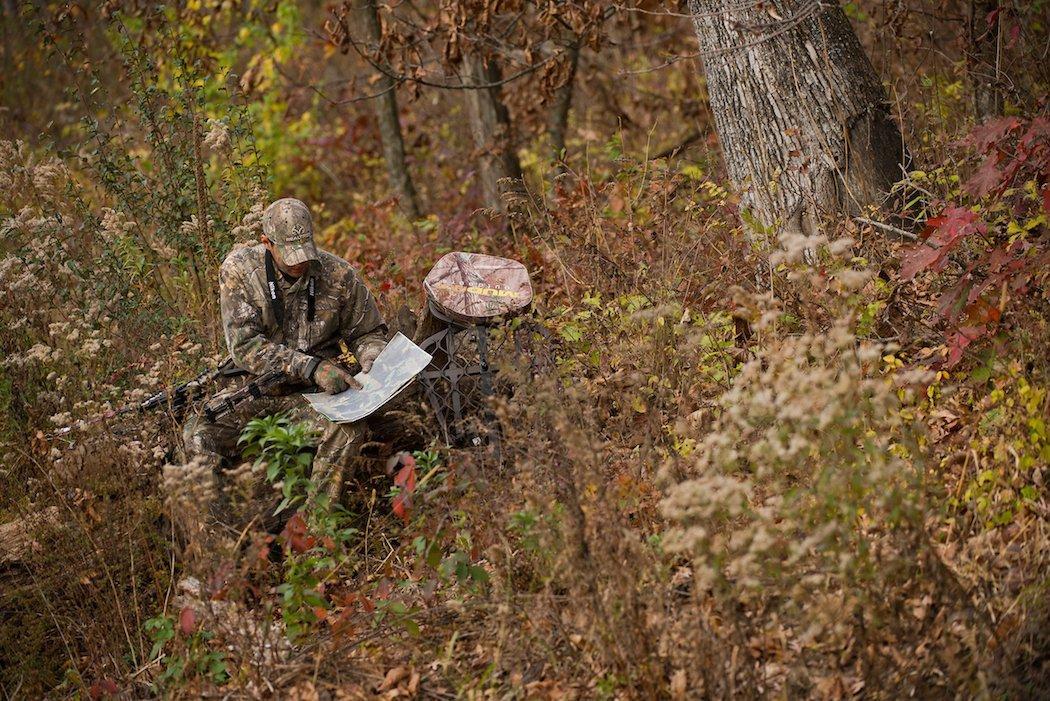
22. Should I scout during the season?
Yes when legal and low impact. Use fresh sign and observation without repeatedly disturbing the exact area you intend to hunt.
23. How often should I hunt one stand?
There is no universal schedule. Rest the site when access, wind, or repeated disturbance is likely to educate deer.
24. Does scent control work?
Clean clothing and careful gear can reduce odor, but no product replaces using a favorable wind and low-impact entry.
25. How should I use the wind?
Keep expected deer locations and travel routes upwind or crosswind of the hunter and entry route whenever possible.
26. What are thermals?
Thermals are local air movements caused by temperature differences, often rising as slopes warm and sinking as they cool.
27. Can wind swirl in valleys?
Yes. Drainages, ridges, vegetation, and changing temperatures can make local airflow unstable. Observe conditions at the setup.
28. What is the best time to hunt pressured deer?
There is no universal best time. Hunt when fresh sign, wind, access, food, weather, and legal light align.
29. Is midday hunting worthwhile?
It can be, especially during the rut or when pressure changes movement. Success still depends on current local evidence.
30. Does rain help deer hunting?
Light rain can reduce noise and scent persistence, but heavy rain may create visibility, tracking, hypothermia, and road hazards.
31. Does snow help?
Snow can reveal tracks and movement, but deep snow, cold, ice, and poor roads increase safety and recovery demands.
32. Should I hunt food sources?
Food can be useful, but exposed public-land food sources may receive heavy pressure or mostly nighttime use. Check nearby staging cover.
33. Should I hunt water?
Water can matter during heat, drought, or dry terrain, but local regulations and current sign should guide the setup.
34. How do mast crops affect deer?
Acorns and other mast can spread or concentrate feeding activity. Availability varies greatly by year and location.
35. Do I need a tree stand?
No. Ground blinds, natural cover, still-hunting, and legal observation setups can work when matched to terrain and safety.
36. How high should a tree stand be?
There is no universal height. Follow manufacturer guidance, public-land rules, tree condition, cover, shooting angle, and safe recovery ability.
37. Do I need a safety harness?
Use a full-body fall-arrest system whenever climbing into, hunting from, or descending an elevated stand.
38. How do I get a firearm into a stand?
Unload it completely and use an appropriate haul line after the hunter is safely attached and positioned.
39. Can I leave a stand on public land?
Rules vary by manager and date. Some require identification or daily removal and prohibit damaging trees.
40. Can I use trail cameras?
Rules can change by state, property, season, and wireless capability. Check current public-land regulations.
41. Can I bait public land deer?
Never assume baiting is legal. It may be prohibited by the wildlife agency, land manager, or disease-zone rules.
42. Can I use attractant scent?
Only when legal. Deer can react unpredictably, and attractants do not replace wind control or positive identification.
43. Should I wear hunter orange?
Wear it whenever required and consider visibility during access and recovery when compatible with current law and method.
44. How far should I shoot?
Only within the distance at which you can identify the deer, confirm the background, perform consistently, and recover it ethically.
45. What is an ethical shot opportunity?
It is a legal, positively identified deer within practiced range, with a safe background, suitable angle, and realistic recovery.
46. What if another hunter is nearby?
Communicate calmly, keep safe separation, and move if shooting directions, access, or recovery could overlap.
47. What if a hiker walks through the area?
Public land is shared. Do not shoot and keep the weapon controlled until the person and background are completely safe.
48. What if the deer crosses onto private land?
Do not trespass. Mark the location, contact the landowner, and follow the wildlife agency’s recovery procedure.
49. What should I do after a shot?
Follow hunter-education guidance, mark the last location, assess the situation calmly, and begin a legal methodical recovery.
50. When must I tag a deer?
Timing and method vary by jurisdiction. Some require immediate validation, while others use electronic reporting. Know the rule before hunting.
51. Do I need to report the harvest?
Many jurisdictions require deer reporting within a specific period. Confirm the deadline and required information.
52. What is CWD?
Chronic wasting disease is a prion disease affecting deer and related animals. Follow current testing and carcass-transport guidance.
53. Should I eat meat from a CWD-positive deer?
Follow official public-health and wildlife-agency guidance. CDC recommends considering testing in affected areas and not eating meat from an animal that tests positive.
54. How do I care for venison?
Use clean gloves and tools, prevent contamination, cool edible meat promptly, and follow food-safety and transport requirements.
55. What is the biggest mistake with pressured deer?
The biggest mistake is repeatedly hunting old sign with the same exposed access while ignoring current pressure, wind, and recovery limits.
Read more: How to Hunt Public Land: A Beginner-Friendly Guide