
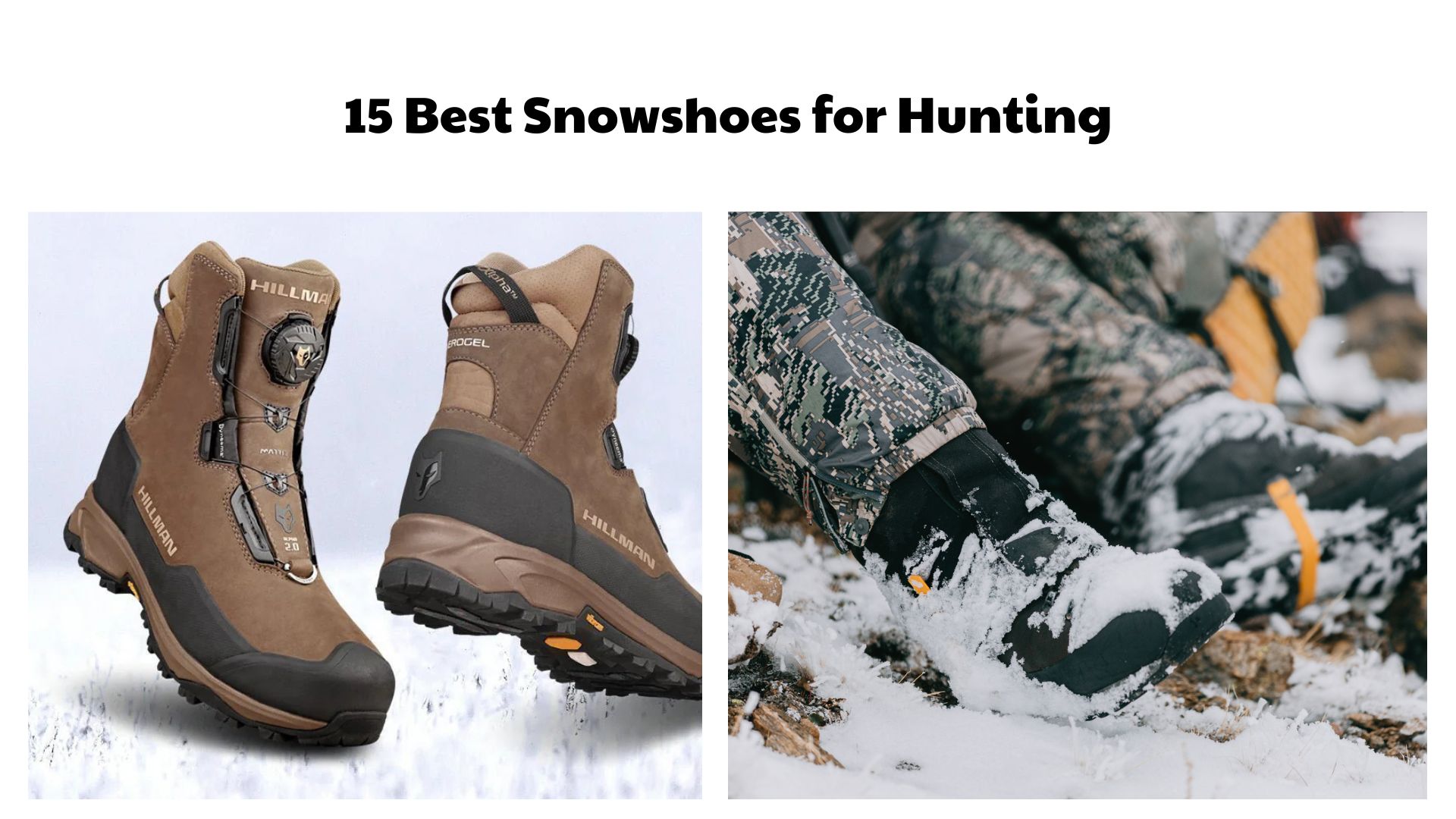
The best snowshoes for hunting help you move through winter terrain without sinking deeply into snow, wasting energy, or losing traction on crust, hills, and frozen approaches. For winter hunters, snowshoes are not just recreational gear. They can help with access to stands, predator calling spots, shed hunting areas, traplines, backcountry camp routes, and remote scouting locations when snow is too deep for normal boots.
Choosing snowshoes for hunting is different from choosing snowshoes for casual trail walking. Hunters often carry extra weight, move off trail, cross uneven terrain, and need dependable traction while wearing heavy winter boots. Quiet movement, secure bindings, flotation, durability, and weight capacity matter more than trendy design.
This guide compares 15 snowshoes that can fit different winter hunting needs, including backcountry snowshoes, deep-snow snowshoes, beginner kits, mountain-terrain models, lightweight trail snowshoes, and budget-friendly options. The products are compared by frame material, deck construction, flotation, binding design, traction, packability, terrain use, comfort, customer feedback, brand reputation, and overall value.
Always hunt legally and responsibly. Follow federal, state, and local hunting laws, carry the proper license and tags, obey legal seasons and land access rules, and practice ethical hunting. Snowshoes can improve winter mobility, but they do not replace safe planning, navigation, winter clothing, emergency gear, or sound judgment in cold weather.
Quick Picks:
- Best Overall: MSR Lightning Ascent Snowshoes on Amazon
- Best Budget Option: Retrospec Drifter Snowshoes on Amazon
- Best Premium Pick: Atlas Range-MTN Snowshoes on Amazon
- Best for Deep Snow: Tubbs Mountaineer Snowshoes on Amazon
- Best for Beginners: MSR Evo Trail Snowshoes on Amazon
Comparison Table: 15 Best Snowshoes for Hunting
| Product | Best For | Material / Frame | Size / Capacity Focus | Key Features | Weather / Terrain Use | Check Price |
|---|---|---|---|---|---|---|
| MSR Lightning Ascent | Best Overall | Aluminum frame with synthetic deck | Multiple lengths for different loads | Aggressive traction, secure binding, backcountry-focused design | Mountain terrain, icy crust, off-trail hunting access | Check Price on Amazon |
| MSR Evo Ascent | Best Rugged Backcountry Pick | Molded deck with steel traction | 22-inch base with tail compatibility | Durable deck, aggressive crampons, backcountry traction | Variable snow, packed trails, off-trail approaches | Check Price on Amazon |
| MSR Evo Trail | Best Beginner MSR Pick | Injection-molded deck | 22-inch trail size | Simple bindings, durable platform, reliable trail traction | Packed snow, rolling terrain, beginner hunting access | Check Price on Amazon |
| Tubbs Mountaineer | Best for Deep Snow | Aluminum tubular frame | Available in larger sizes | Large surface area, heel lift, strong flotation | Deep powder, off-trail routes, heavy winter loads | Check Price on Amazon |
| Tubbs Xplore | Best Recreational Hunting Access | Aluminum frame | 25-inch and larger options | Easy binding, light feel, approachable design | Packed trails, rolling terrain, short winter access | Check Price on Amazon |
| Atlas Range-MTN | Best Premium Mountain Pick | Aluminum/synthetic frame | Multiple sizes depending on load | BOA-style fit, mountain traction, supportive platform | Mountain terrain, steep approaches, mixed winter conditions | Check Price on Amazon |
| Atlas Helium Trail | Best Lightweight Trail Pick | Composite Helium deck | Trail sizes for different loads | Lightweight deck, easy binding, heel lift | Packed trails, rolling terrain, moderate hunting access | Check Price on Amazon |
| Crescent Moon Gold 10 | Best Traditional Backcountry Shape | Aluminum frame with deck | Large backcountry footprint | Teardrop shape, strong flotation, large binding | Deep snow, rolling backcountry, moderate climbs | Check Price on Amazon |
| Retrospec Drifter | Best Budget Option | Aluminum alloy frame | Multiple lengths | Ratchet bindings, carry bag, beginner-friendly setup | Trails, rolling terrain, light hunting access | Check Price on Amazon |
| G2 GO2GETHER Lightweight Snowshoes | Best Kit Option | Aluminum and HDPE-style deck | 21, 25, 30, and 36-inch options | Kit format, poles, carry bag, multiple sizes | Beginner trails, camp use, moderate snow | Check Price on Amazon |
| G2 GO2GETHER 36-Inch Snowshoes | Best Large-Size Budget Pick | Aluminum frame | 36-inch deep-snow size | Large platform, poles included, budget-friendly flotation | Deeper snow, heavier loads, moderate terrain | Check Price on Amazon |
| G2 Mountain Terrain | Best Budget Mountain-Style Pick | Aluminum frame with synthetic deck | 30-inch option | Mountain-style traction, poles, carry bag | Rolling terrain, light backcountry, hunting camp use | Check Price on Amazon |
| Tubbs Panoramic | Best Versatile Trail-to-Backcountry Pick | Aluminum frame with flexible deck | Multiple sizes | Comfortable stride, quick adjustment, moderate traction | Trail, rolling terrain, moderate backcountry | Check Price on Amazon |
| MSR Revo Explore | Best Easy-Binding MSR Pick | Molded deck with metal traction | Multiple sizes depending on model | Fast binding, good traction, versatile trail design | Rolling terrain, packed snow, mixed winter routes | Check Price on Amazon |
| Crescent Moon Gold 13 | Best Smaller-Frame Snowshoe | Aluminum frame with deck | Shorter frame option | Comfortable binding, trail-friendly design, maneuverable frame | Packed trails, lighter users, moderate terrain | Check Price on Amazon |
Overall, hunters who travel off trail or carry heavy winter gear should prioritize flotation, traction, and binding security over low price alone. Large snowshoes help in deep powder, while compact snowshoes are easier to walk with on packed trails. Mountain-style snowshoes offer stronger traction for sidehills and crust, while budget kits are best for beginners, camp use, and moderate terrain. For hunting, always consider your body weight plus pack, firearm or bow, layers, optics, and any harvested game you may need to pack out.
1. MSR Lightning Ascent Snowshoes on Amazon
Short Overview
The MSR Lightning Ascent is one of the best snowshoes for hunting when the route includes steep terrain, crusted snow, sidehills, and backcountry access. It is designed for winter users who need strong traction and reliable control rather than a simple flat-trail snowshoe. Hunters who glass from ridges, access predator calling spots, or move through uneven mountain terrain may appreciate its aggressive grip. The lightweight frame also helps when snowshoes need to be strapped to a pack. The binding design is made to hold winter boots securely, which matters when wearing insulated hunting boots. It is not the cheapest snowshoe, but it targets serious winter travel. For hunters who need premium traction, packability, and backcountry confidence, it is a top overall pick. Always select the correct length for your total load, including your body weight, pack, clothing, weapon, and gear.
Key Features
- Backcountry and mountaineering snowshoe design
- Aggressive traction for crust, slopes, and sidehills
- Secure binding compatible with winter boots
- Lightweight frame for easier pack carry
- Multiple lengths for different user and gear loads
Pros
- Excellent choice for serious winter hunters
- Strong traction for challenging terrain
- Good packability compared with larger deep-snow models
- Reliable premium snowshoe from a respected brand
Cons
- Premium model may cost more
- May be more technical than beginners need
- Smaller sizes may not float as well in deep powder with heavy loads
Who It’s Best For
This snowshoe is best for backcountry hunters, winter hikers, predator hunters, elk or deer hunters in snowy mountains, and outdoor users who need dependable traction and control in demanding terrain.
2. MSR Evo Ascent Snowshoes on Amazon
Short Overview
The MSR Evo Ascent is a rugged snowshoe for hunters who want backcountry capability without moving to the highest-priced premium option. It uses a durable molded deck that can handle rough winter use, which is helpful around brush, crusted snow, and mixed terrain. The traction system is useful when routes include climbs, descents, and uneven ground. Hunters who want a compact platform for packed snow and variable conditions may find it practical. The 22-inch size is easy to walk in, but heavier hunters or hunters carrying large packs should consider flotation tails or a larger snowshoe option when available. It is especially useful when conditions switch between packed trail, firm snow, and short off-trail approaches. The binding works with winter boots and is simple enough for field use. For hunters who want a rugged, proven MSR design, the Evo Ascent is a strong choice.
Key Features
- Durable molded snowshoe deck
- Steel traction for variable terrain
- Backcountry-focused design
- Compact size for easier stride
- Compatible with flotation tails on supported models
Pros
- Rugged construction for field use
- Good traction for rolling and variable terrain
- Compact and easy to carry on a pack
- Strong value for serious snowshoe users
Cons
- Base size may not be ideal for deep powder with heavy packs
- Bindings can take practice with gloves
- Not as floaty as longer tubular-frame models
Who It’s Best For
This snowshoe is best for hunters who need rugged traction, compact carry, and reliable winter access for mixed snow conditions, rolling terrain, and moderate backcountry routes.
3. MSR Evo Trail Snowshoes on Amazon
Short Overview
The MSR Evo Trail is a simple and durable option for hunters who need snowshoes for trails, rolling terrain, and moderate winter access. It is a good beginner-friendly MSR model because the design is not overly complicated. The molded deck is durable and easy to maintain, while the steel traction gives useful grip on packed snow and crust. Hunters who walk to stands, check cameras, access winter camps, or move through broken trail may find it very practical. It is not the deepest-powder option in this guide, especially with heavy packs. However, it is easy to use, easy to carry, and reliable for common winter conditions. The binding design is glove-friendly enough for most users after practice. For beginners and casual winter hunters, it is a strong starting point.
Key Features
- Injection-molded durable deck
- Steel traction rails and crampon-style grip
- Simple binding design
- Good for packed trails and rolling terrain
- Compact and easy to strap to a pack
Pros
- Beginner-friendly and easy to use
- Durable construction for regular winter use
- Good traction for moderate terrain
- Strong value from a respected snowshoe brand
Cons
- Not ideal for very deep powder with heavy hunting loads
- Less technical than mountain snowshoes
- Limited flotation compared with longer models
Who It’s Best For
This snowshoe is best for beginner hunters, winter campers, landowners, and outdoor users who need dependable snowshoes for moderate terrain and packed winter routes.
4. Tubbs Mountaineer Snowshoes on Amazon
Short Overview
The Tubbs Mountaineer is one of the best snowshoes for hunting in deep snow because it offers a large platform and strong flotation. Hunters carrying heavy packs, winter clothing, optics, food, and emergency gear often need more surface area than casual trail users. The Mountaineer is built for off-trail travel, powder, and demanding winter terrain. Its traditional tubular frame and deck design gives dependable lift in soft snow. It is not the lightest snowshoe, so hunters who mostly stay on packed trails may prefer a lighter model. However, when the snow is deep and unconsolidated, flotation matters more than compact size. The heel lift is helpful on sustained climbs. For hunters who break trail in powder, this is one of the most practical choices.
Key Features
- Large tubular frame for deep-snow flotation
- Backcountry-style traction
- Heel lift for climbing support
- Secure binding for winter boots
- Multiple sizes for different load needs
Pros
- Excellent option for deep powder and heavy loads
- Good for off-trail winter hunting access
- Large surface area improves flotation
- Practical for backcountry and camp use
Cons
- Bulkier than compact trail snowshoes
- Heavier than minimalist options
- May feel clunky on packed trails
Who It’s Best For
This snowshoe is best for hunters who travel through deep snow, carry heavy winter gear, or need reliable flotation for backcountry access, winter scouting, and off-trail movement.
5. Tubbs Xplore Snowshoes on Amazon
Short Overview
The Tubbs Xplore is a recreational snowshoe that can work well for hunters who need simple snow access rather than technical backcountry performance. It is best for packed trails, rolling terrain, and short winter routes to stands, cabins, and camp areas. The frame is lightweight enough for beginners to manage. The binding is designed to be easy to use, which helps when wearing gloves in cold weather. It is not the best snowshoe for steep icy slopes or deep powder with a heavy hunting pack. However, it is practical for hunters who want a reliable entry-level option from a known snowshoe brand. The Xplore can also serve family winter hikes, camp chores, and snow-covered property use. For moderate terrain, it is a good approachable choice.
Key Features
- Lightweight recreational snowshoe design
- Aluminum frame construction
- Simple binding system
- Good for rolling terrain and packed trails
- Beginner-friendly setup
Pros
- Easy for beginners to use
- Good for short hunting access routes
- Lightweight and simple
- Useful for camp, trails, and property use
Cons
- Not ideal for steep mountain terrain
- Limited deep-snow flotation with heavy loads
- Less aggressive traction than technical models
Who It’s Best For
This snowshoe is best for beginner snowshoers, casual hunters, landowners, and campers who need easy snow travel on moderate winter terrain.
6. Atlas Range-MTN Snowshoes on Amazon
Short Overview
The Atlas Range-MTN is a premium snowshoe for hunters who need strong traction, secure fit, and mountain-capable performance. It is designed for technical winter travel where footing matters on sidehills, crust, and steep approaches. The binding system is one of its main benefits because a secure fit helps reduce wasted movement and improves control. Hunters who glass from ridges, access remote basins, or cross uneven backcountry routes may appreciate the performance-focused design. It is not a budget snowshoe, but it is built for more demanding users. The frame and traction system are better suited to serious winter terrain than basic recreational kits. For hunting, it makes sense when reliability and control matter more than low cost. It is a strong premium alternative to MSR’s technical models.
Key Features
- Mountain-terrain snowshoe design
- Secure dial-style binding system
- Strong traction for variable snow
- Supportive platform for backcountry routes
- Premium construction for serious winter use
Pros
- Excellent control for technical terrain
- Secure fit over winter boots
- Good option for backcountry hunting access
- Premium build quality
Cons
- Premium price category
- May be more technical than casual users need
- Availability and sizing can vary
Who It’s Best For
This snowshoe is best for experienced hunters, winter hikers, and backcountry users who need secure bindings, strong traction, and mountain-ready winter travel performance.
7. Atlas Helium Trail Snowshoes on Amazon
Short Overview
The Atlas Helium Trail is a lightweight snowshoe for hunters who mostly travel on packed trails, rolling terrain, and moderate winter access routes. Its composite deck helps reduce weight and sheds snow well compared with some traditional decks. The binding is designed for straightforward entry and exit, which is helpful when gearing up in cold conditions. It is not the best choice for bottomless powder or heavy pack-outs, but it is very useful for scouting, camp access, and moderate snow travel. Hunters who prioritize low weight and easy walking may prefer it over larger powder snowshoes. The heel lift can help on moderate climbs. It also works well for winter hiking and family outdoor use. For lightweight trail-focused hunting access, it is a strong choice.
Key Features
- Lightweight Helium composite deck
- Easy two-buckle binding style
- Heel lift for climbs
- Good for packed trails and rolling terrain
- Trail-focused design for lower fatigue
Pros
- Lightweight and easy to walk in
- Good for scouting and moderate terrain
- Easy entry and exit
- Useful beyond hunting season
Cons
- Not ideal for deep powder with heavy loads
- Less technical than mountain snowshoes
- Best for trail and rolling terrain
Who It’s Best For
This snowshoe is best for hunters who need lightweight trail snowshoes for scouting, checking cameras, winter hiking, camp access, and moderate snow-covered routes.
8. Crescent Moon Gold 10 Backcountry Snowshoes on Amazon
Short Overview
The Crescent Moon Gold 10 is a backcountry snowshoe with a large footprint and teardrop-style shape. It is especially useful for hunters who need flotation in softer snow but still want a more maneuverable shape than some traditional long snowshoes. The large platform helps distribute weight, which matters when carrying winter hunting gear. It is better for deep snow and rolling backcountry than for steep icy mountain terrain. Hunters who travel through open woods, meadows, and backcountry approaches may like the float. The binding is designed for winter boots and field use. It is not the lightest option in this guide, but it solves the problem of sinking in soft snow. For hunters who prioritize flotation over aggressive climbing grip, it is a useful pick.
Key Features
- Large backcountry snowshoe footprint
- Teardrop-style frame shape
- Designed for deep snow flotation
- Binding suited to winter boots
- Useful for rolling backcountry terrain
Pros
- Good flotation for soft snow
- Useful for hunters carrying extra gear
- Maneuverable shape for a larger snowshoe
- Practical for open woods and meadows
Cons
- Not the best for steep icy terrain
- Can feel large on packed trails
- Heavier than compact trail models
Who It’s Best For
This snowshoe is best for hunters who need flotation in deep or soft snow and spend most of their winter travel on rolling backcountry routes rather than steep icy climbs.
9. Retrospec Drifter Snowshoes on Amazon
Short Overview
The Retrospec Drifter is a budget-friendly snowshoe for beginners, casual hunters, and winter campers who need basic snow travel without spending premium money. It is a practical option for packed trails, moderate terrain, cabin access, landowner use, and short hunting approaches. The aluminum frame and polyethylene-style deck provide a traditional snowshoe setup at an accessible price point. The ratchet binding is familiar and easy for many users to understand. It is not meant for extreme backcountry terrain, deep powder with heavy loads, or hard alpine conditions. However, it is a useful starter kit for people who are new to snowshoeing. The included carry bag is helpful for storage and transport. For value-focused buyers, it is one of the best budget options.
Key Features
- Lightweight aluminum frame
- Polyethylene-style deck
- Double ratchet binding system
- Carry bag included
- Multiple sizes for different user weights
Pros
- Budget-friendly entry point
- Easy for beginners to use
- Useful for trails and moderate winter access
- Good storage and transport setup
Cons
- Not built for extreme backcountry use
- Less durable than premium technical snowshoes
- Limited traction for steep icy terrain
Who It’s Best For
This snowshoe is best for beginners, casual hunters, campers, and budget buyers who need affordable snowshoes for moderate terrain and light winter field use.
10. G2 GO2GETHER Lightweight Snowshoes on Amazon
Short Overview
The G2 GO2GETHER Lightweight Snowshoes are a kit-style option for hunters who want snowshoes, poles, and storage accessories in one purchase. They are practical for beginners, camp users, and people who need a simple setup for moderate winter terrain. The multiple size options help buyers match the snowshoe to body weight and gear load. The aluminum frame and HDPE-style deck are common in budget snowshoe kits. These snowshoes are not intended to compete with premium backcountry models, but they can be useful for trail access and snowy property use. Hunters who only need occasional snowshoes may appreciate the value. The poles can help with balance when carrying a pack or crossing uneven snow. For starter winter hunting access, they are worth considering.
Key Features
- Snowshoe kit with poles and carry bag
- Multiple length options
- Aluminum frame with synthetic deck
- Ratchet-style binding
- Beginner-friendly outdoor setup
Pros
- Good kit for beginners
- Multiple sizes for different loads
- Useful for camp, trails, and moderate hunting access
- Budget-friendly compared with premium models
Cons
- Not ideal for technical backcountry terrain
- May not match premium snowshoe durability
- Bindings and accessories may require adjustment practice
Who It’s Best For
This snowshoe kit is best for beginner hunters, winter campers, and budget-focused users who want a complete basic setup for moderate snow travel.
11. G2 GO2GETHER 36-Inch Snowshoes Set on Amazon
Short Overview
The G2 GO2GETHER 36-Inch Snowshoes Set is a budget-friendly large snowshoe option for users who need more flotation. The 36-inch length is useful when the total load is heavier or the snow is softer. Hunters carrying winter packs, extra layers, optics, food, and field gear often need a larger platform than casual trail walkers. This set can help reduce sinking in deeper snow compared with smaller budget models. It is not a premium technical snowshoe, and it is not the best choice for steep icy terrain. However, for open ground, rolling terrain, and moderate backcountry routes, the size can be useful. The included poles help with balance. For budget buyers who need larger flotation, it is a practical option.
Key Features
- Large 36-inch snowshoe size
- Aluminum frame construction
- Designed for heavier loads and deeper snow
- Poles included in set
- Budget-friendly flotation option
Pros
- Large platform helps in softer snow
- Good for heavier users or gear loads
- Budget-friendly compared with premium deep-snow models
- Useful for open winter terrain and camp access
Cons
- Longer frame can feel clunky on packed trails
- Not a technical mountain snowshoe
- Build quality may not match premium brands
Who It’s Best For
This snowshoe is best for budget-conscious hunters who need a longer snowshoe for deeper snow, heavier loads, and moderate winter travel.
12. G2 Mountain Terrain Snowshoes on Amazon
Short Overview
The G2 Mountain Terrain Snowshoes are designed as a budget-friendly mountain-style option for users who want more traction than a basic recreational kit. They can be useful for hunters who travel rolling terrain, moderate hills, camp routes, and winter access trails. The 30-inch size gives more flotation than smaller trail models while remaining easier to manage than very long snowshoes. This model is not a replacement for premium MSR, Atlas, or Tubbs technical models in serious alpine conditions. However, it can serve hunters who need occasional winter access without a premium investment. The kit format is convenient for beginners. The traction setup helps on moderate inclines. For affordable mountain-style use, it is worth comparing.
Key Features
- 30-inch mountain-style snowshoe
- Aluminum frame with synthetic deck
- Budget-friendly traction design
- Poles and carry bag often included by listing
- Useful for moderate terrain and camp access
Pros
- Affordable alternative to premium mountain snowshoes
- Good size for moderate flotation
- Useful for hunters and campers on rolling terrain
- Beginner-friendly kit format
Cons
- Not ideal for steep technical terrain
- May not match premium durability
- Can feel bulky for packed trails
Who It’s Best For
This snowshoe is best for hunters and winter campers who need an affordable mountain-style snowshoe for moderate hills, camp access, and occasional off-trail travel.
13. Tubbs Panoramic Snowshoes on Amazon
Short Overview
The Tubbs Panoramic is a versatile snowshoe for hunters who want a balance between trail comfort and moderate backcountry capability. It is not the most aggressive mountaineering snowshoe, but it is more capable than many beginner-only models. The design is aimed at comfortable walking, secure fit, and dependable traction across mixed terrain. Hunters who move between trails, open woods, and rolling snow-covered ground may find it practical. The binding system is one of its standout points because easy adjustment matters in cold weather. It also works well for winter hiking, camp use, and family snowshoe trips. It is not the deepest-powder specialist in this guide. For balanced winter utility, it is a strong mid-range option.
Key Features
- Versatile trail-to-backcountry design
- Aluminum frame with flexible deck
- Comfort-focused binding system
- Heel lift on many versions
- Useful for rolling terrain and moderate winter routes
Pros
- Good balance of comfort and capability
- Easy to put on and adjust
- Useful for trails and moderate backcountry use
- Strong general-purpose snowshoe
Cons
- Not the best for steep icy mountaineering
- Not the best for very deep powder with heavy loads
- Availability and size options may vary
Who It’s Best For
This snowshoe is best for hunters, hikers, and campers who want a versatile snowshoe for mixed winter terrain, moderate backcountry routes, and trail access.
14. MSR Revo Explore Snowshoes on Amazon
Short Overview
The MSR Revo Explore is a versatile snowshoe for users who want MSR traction and durability with a faster binding system. It is useful for hunters who need a reliable winter tool for rolling terrain, packed trails, and moderate off-trail access. The binding is easier and quicker for many users than classic strap systems, which helps when adjusting in cold weather. The deck and traction design provide more ruggedness than many recreational-only snowshoes. It is not the best flotation choice for very deep snow with heavy packs, but it performs well across many common winter conditions. Hunters who want one snowshoe for scouting, winter hiking, and camp access may find it practical. It is also a good option for users who dislike complicated bindings. For versatility and ease of use, it is a strong MSR pick.
Key Features
- Rugged snowshoe deck
- Fast-adjusting binding system
- Good traction for mixed winter conditions
- Useful for rolling terrain and trails
- Designed for easier all-day use
Pros
- Easier binding adjustment than some technical models
- Good all-around traction
- Useful for hunters, hikers, and winter campers
- Dependable MSR build quality
Cons
- Not the top choice for deep powder with heavy loads
- May feel stiff on groomed trails
- Availability can vary by size and gender model
Who It’s Best For
This snowshoe is best for hunters who want a versatile MSR snowshoe with easier bindings for rolling terrain, trail access, scouting, and moderate winter routes.
15. Crescent Moon Gold 13 Snowshoes on Amazon
Short Overview
The Crescent Moon Gold 13 is a smaller-frame snowshoe that can work well for lighter users, women hunters, teens, or anyone who needs a more maneuverable snowshoe for packed trails and moderate terrain. Its shorter size makes walking feel easier than larger deep-powder models. It is not the best option for heavy packs, deep powder, or large winter loads. However, for moderate snow, trail access, and lighter body weights, it can be very practical. The binding design focuses on comfort and ease of use. Hunters who value maneuverability over maximum flotation may like it. It can also work well for camp chores, winter walks, and scouting near packed access routes. For smaller users, it is a useful alternative to oversized unisex snowshoes.
Key Features
- Smaller, maneuverable snowshoe frame
- Comfort-focused binding system
- Trail-friendly design
- Good for lighter users and moderate terrain
- Useful for winter hiking and hunting access
Pros
- Easier to walk in for smaller users
- Good maneuverability
- Comfortable for moderate snow travel
- Useful for trails, camp, and scouting
Cons
- Limited flotation for heavy hunting loads
- Not ideal for deep powder
- Not a technical mountain snowshoe
Who It’s Best For
This snowshoe is best for lighter hunters, women hunters, teens, and outdoor users who want a smaller, easier-walking snowshoe for packed trails and moderate winter terrain.
Buying Guide: How to Choose the Best Snowshoes for Hunting
Start With Total Load
The first rule when choosing snowshoes for hunting is to consider total load, not just body weight. Your winter clothing, pack, food, water, optics, game calls, weapon, extra layers, emergency gear, and harvested game can all add weight. More weight requires more flotation. If you choose snowshoes that are too small, you will sink deeper and burn energy quickly.
Choose the Right Terrain Category
Snowshoes generally fall into flat terrain, rolling terrain, and mountain terrain categories. Flat-terrain models are best for easy access routes and beginners. Rolling-terrain models add more traction and support for hills and mixed conditions. Mountain-terrain models are best for steep, icy, off-trail, or backcountry hunting routes. For hunting, rolling or mountain snowshoes are often more useful than basic recreational models.
Understand Flotation
Flotation is the ability of a snowshoe to keep you from sinking deeply into snow. Longer and wider snowshoes usually float better. However, bigger snowshoes can be harder to maneuver in brush, timber, and packed trails. Hunters in deep powder should choose larger snowshoes. Hunters on packed snowmobile trails or broken paths can often use smaller, more agile models.
Look at Traction
Traction matters when crossing crusted snow, hillsides, frozen creek edges, and uneven terrain. Toe crampons help on climbs. Heel traction helps on descents. Side rails and aggressive frame traction help on traverses. If you hunt mountain terrain or icy slopes, do not choose a weak flat-trail snowshoe. Strong traction improves safety and control.
Choose Secure Bindings
Bindings must hold your winter boots securely without creating pressure points. A binding that loosens during a hunt can waste energy and create a safety issue. Look for bindings that are glove-friendly, adjustable, and compatible with insulated hunting boots. Practice using them at home before going into the field.
Consider Noise
Hunters should think about noise more than casual snowshoers. Some snowshoes are louder on crust, ice, or hardpack. Aluminum frames, plastic decks, and aggressive crampons can all make noise. No snowshoe is silent, but a secure fit and controlled walking style can reduce unnecessary clanking, scraping, and slapping.
Balance Weight and Durability
Lightweight snowshoes are easier to carry and less tiring over long distances. However, ultralight designs may not always be best for brush, rocks, frozen crust, or heavy packs. Backcountry hunters should look for a balance of manageable weight and strong construction. If you often strap snowshoes to a pack, compact weight matters.
Pick the Right Size
Most snowshoes are sized by length, and many listings provide a recommended load range. Always include your gear weight when choosing size. If you are between sizes and hunt deep powder, choose more flotation. If you mostly use packed trails, the smaller size may feel easier to walk in.
Think About Snow Type
Light powder, wet snow, crust, packed trails, and icy slopes all feel different. Deep powder requires surface area. Wet snow can stick and add weight. Crust requires traction. Packed trails reward lighter and narrower snowshoes. Match your snowshoe to your most common winter conditions.
Consider Packability
Hunters often carry snowshoes before reaching deep snow. Compact snowshoes are easier to lash to a pack. Large 36-inch snowshoes float better but are bulkier in timber. If your route includes brush, deadfall, and tight timber, a narrower snowshoe may be easier to manage.
Use Poles for Balance
Trekking poles can help when crossing uneven snow, climbing, descending, or carrying a pack. Many budget kits include poles. Premium snowshoes often do not. Hunters carrying rifles, bows, or optics should think carefully about balance and hand use. Use poles safely and avoid interfering with firearm or bow handling.
Maintain Your Snowshoes
After each trip, clear ice and snow from the bindings, crampons, and deck. Dry them before storage. Check straps, rivets, buckles, decking, and traction teeth before each hunt. Cold temperatures make small gear failures more serious. Carry basic repair items when going far from the trailhead.
Plan for Winter Safety
Snowshoes are not a complete winter safety system. Carry navigation, extra layers, water, food, headlamp, fire-starting gear, first aid, and emergency communication where appropriate. Watch for thin ice, avalanche terrain, freezing rain, and sudden weather changes. Tell someone where you are going before backcountry trips.
Follow Hunting Laws and Ethics
Snowshoes can help you access remote winter hunting areas, but access does not mean permission. Follow land rules, licensing requirements, legal seasons, bag limits, weapon regulations, and conservation laws. Use snowshoes to hunt responsibly, not to pressure wildlife illegally or access closed areas.
Final Recommendation
The best overall pick is the MSR Lightning Ascent Snowshoes on Amazon because they offer excellent traction, backcountry control, secure bindings, and strong performance for serious winter hunting access.
For rugged backcountry value, the MSR Evo Ascent Snowshoes on Amazon are a practical choice. For deep snow and heavy loads, compare the Tubbs Mountaineer Snowshoes on Amazon and Crescent Moon Gold 10 Backcountry Snowshoes on Amazon. For beginners, the MSR Evo Trail Snowshoes on Amazon and Retrospec Drifter Snowshoes on Amazon are easier entry points.
Choose based on total load, snow depth, terrain, binding compatibility, traction, packability, and responsible outdoor use. Check current Amazon availability, product details, sizing, seller information, and recent customer reviews before buying. Share this guide with hunting partners, winter campers, trappers, landowners, or family members who need reliable snow travel gear.
FAQs About the Best Snowshoes for Hunting
1. What are the best snowshoes for hunting?
The best snowshoes for hunting are models that provide enough flotation for your total load, strong traction for uneven terrain, secure bindings for winter boots, and durable construction for off-trail use. Backcountry and mountain-terrain snowshoes are usually better for serious hunting than basic flat-trail models.
2. Do hunters really need snowshoes?
Hunters may need snowshoes when snow is deep enough that normal boots sink badly. Snowshoes help distribute weight and reduce post-holing. They are useful for winter scouting, predator hunting, shed hunting, stand access, trapping routes, and remote camp travel.
3. How do snowshoes work?
Snowshoes spread your weight over a larger surface area so your feet do not sink as deeply into snow. This improves flotation and helps you move more efficiently. They do not make snow travel effortless, but they can save energy in deep snow.
4. What size snowshoes do I need for hunting?
Choose size based on total load and snow depth. Total load includes your body weight, clothing, pack, weapon, optics, food, water, and any gear you carry. Deep powder and heavy loads require larger snowshoes, while packed trails allow smaller snowshoes.
5. Are bigger snowshoes always better?
No. Bigger snowshoes float better, but they can feel awkward in timber, brush, packed trails, or tight terrain. Hunters should choose the smallest size that still provides enough flotation for their load and snow conditions.
6. What type of snowshoe is best for deep snow?
Deep snow usually requires longer and wider snowshoes with a larger deck. Tubular-frame models and backcountry designs with more surface area can help hunters stay higher in soft powder, especially when carrying heavy winter gear.
7. What type of snowshoe is best for mountain hunting?
Mountain hunting requires snowshoes with aggressive traction, secure bindings, heel lifts, and good sidehill control. Mountain-terrain snowshoes are better than basic recreational models for steep or crusted terrain.
8. Are budget snowshoes good for hunting?
Budget snowshoes can work for beginners, camp use, packed trails, and moderate terrain. They are not usually the best choice for serious backcountry hunting, heavy loads, steep icy slopes, or frequent hard use.
9. Are MSR snowshoes good for hunting?
MSR snowshoes are popular for winter travel because many models offer strong traction, durable decks, and reliable bindings. Models like Lightning Ascent, Evo Ascent, Evo Trail, and Revo Explore can fit different hunting access needs.
10. Are Tubbs snowshoes good for hunting?
Tubbs snowshoes can be good for hunters, especially models designed for deep snow or backcountry use. The Mountaineer is useful for flotation in powder, while Xplore and Panoramic-style models suit easier trails and moderate terrain.
11. Are Atlas snowshoes good for hunting?
Atlas snowshoes can be good for hunting because they offer trail, mountain, and backcountry-style designs. Models like Range-MTN and Helium Trail can work for hunters depending on terrain, load, and snow conditions.
12. Do snowshoes work on ice?
Snowshoes can help on crusted or firm snow if they have good crampons and traction rails. They are not a replacement for crampons or ice-specific safety gear on steep hard ice. Use caution in icy conditions.
13. Do snowshoes work in wet snow?
Snowshoes work in wet snow, but wet snow can stick to decks and add weight. Choose snowshoes with good decking, traction, and enough flotation. Be prepared for more effort than dry powder conditions.
14. Are snowshoes quiet enough for hunting?
No snowshoe is completely silent. They can scrape, crunch, or slap depending on snow conditions. Hunters should move slowly, choose secure bindings, avoid unnecessary contact with brush or rocks, and use terrain to reduce noise.
15. Can I use snowshoes while carrying a rifle?
Yes, but safe firearm handling is essential. Keep the firearm pointed in a safe direction, follow all laws and range/hunting safety rules, and avoid unsafe movement on steep or slippery terrain. Snowshoes can affect balance, so move carefully.
16. Can I use snowshoes while bowhunting?
Yes, snowshoes can help bowhunters access snowy areas, but they may affect stealth and stance. Practice moving and stopping before hunting. Always follow legal seasons, equipment rules, and ethical shot selection.
17. Do snowshoes help with scent control?
Snowshoes do not provide scent control. They help with winter mobility. Hunters still need to manage wind direction, clothing storage, access routes, and personal scent practices.
18. Do I need poles with hunting snowshoes?
Poles are highly useful for balance, especially when carrying a pack or crossing uneven snow. They help on climbs and descents. However, hunters must manage poles safely around firearms, bows, and dense brush.
19. What bindings are best for hunting snowshoes?
The best bindings are secure, glove-friendly, and compatible with insulated hunting boots. They should not loosen easily or create pressure points. Practice using them before entering the field.
20. Should I choose BOA-style bindings?
BOA-style or dial-style bindings can be quick and convenient, especially with gloves. However, traditional strap systems can be rugged and simple. Choose the binding that feels secure with your winter boots.
21. Can snowshoe bindings fit bulky hunting boots?
Many snowshoes fit winter boots, but not all bindings handle bulky insulated hunting boots equally well. Check the product listing and customer feedback. Test your boots with the snowshoes before a long trip.
22. Are heel lifts important?
Heel lifts are useful when climbing hills because they reduce calf strain. Hunters traveling rolling or mountain terrain may benefit from them. Flat-terrain users may not need them as much.
23. What is flotation?
Flotation describes how well snowshoes keep you on top of snow. More flotation comes from more surface area. Hunters with heavy packs or deep snow need better flotation than casual trail users.
24. What is a crampon on a snowshoe?
A crampon is the metal tooth or claw system under the snowshoe that grips snow and crust. Toe crampons help on climbs, while heel and side traction help with descents and traverses.
25. Are aluminum snowshoes good?
Aluminum snowshoes are common and practical. They can provide a good balance of weight, durability, and flotation. Tubular aluminum frames are especially common in traditional snowshoe designs.
26. Are plastic deck snowshoes good?
Plastic or molded deck snowshoes can be durable, compact, and easy to carry. They often offer strong traction on packed and variable snow. Some can feel louder than softer deck designs.
27. Are foam snowshoes good for hunting?
Foam snowshoes can be comfortable and quiet on packed trails, but they are usually not the best for deep powder, heavy packs, or rugged backcountry hunting. They may suit casual access and recreational use.
28. Can I use trail snowshoes for hunting?
Trail snowshoes can work for hunting if you stay on packed trails, snowmobile routes, logging roads, or moderate rolling terrain. Off-trail hunting in deep snow usually requires more flotation and traction.
29. Can I use running snowshoes for hunting?
Running snowshoes are usually not ideal for hunting. They are small, light, and designed for speed on packed conditions. Hunters carrying gear usually need more flotation and durability.
30. What snowshoes are best for heavy hunters?
Heavy hunters or hunters carrying heavy packs should choose longer snowshoes with higher recommended load ratings. Consider 30-inch or 36-inch models depending on snow depth and terrain.
31. What snowshoes are best for deep powder?
Deep powder requires large surface area. Models like Tubbs Mountaineer, Crescent Moon Gold 10, and longer G2 snowshoes can help provide more flotation. Choose size based on total load.
32. What snowshoes are best for packed trails?
For packed trails, smaller and lighter snowshoes are easier to walk in. MSR Evo Trail, Atlas Helium Trail, Tubbs Xplore, and similar trail models can work well for packed routes and moderate hunting access.
33. What snowshoes are best for steep terrain?
Steep terrain requires aggressive traction, heel lifts, and secure bindings. MSR Lightning Ascent, Atlas Range-MTN, and MSR Evo Ascent-style models are better suited to challenging terrain than flat-trail snowshoes.
34. How do I walk in snowshoes?
Walk with a slightly wider stance than normal, lift each snowshoe enough to clear the snow, and avoid stepping on your own frame. Start slowly on flat terrain before carrying hunting gear into the field.
35. Are snowshoes hard to use?
Snowshoes are beginner-friendly on flat terrain, but deep snow, heavy packs, steep slopes, and icy conditions are more challenging. Practice near home or camp before relying on them for a remote hunt.
36. How do I prevent tripping in snowshoes?
Use the correct size, adjust bindings securely, and avoid overly wide steps. Keep pole tips clear of the frames. Practice turning, backing up, and stepping over brush before a serious trip.
37. Can I climb hills with snowshoes?
Yes, especially if the snowshoes have good toe crampons and heel lifts. Move slowly and avoid terrain that exceeds your ability. Hard icy slopes may require different gear and caution.
38. Can I descend hills with snowshoes?
Yes, but descending can be harder than climbing. Use heel traction, poles, and short controlled steps. Avoid steep icy slopes unless you have the right equipment and experience.
39. Are snowshoes safe for frozen lakes?
Snowshoes do not make ice safe. Always check ice conditions, avoid unknown ice, and follow local safety guidance. Deep snow can hide weak ice and hazards.
40. Should I carry snowshoes on my pack?
Yes, if snow conditions vary along the route. Compact snowshoes are easier to strap to a pack. Make sure they do not catch on brush or interfere with safe firearm or bow handling.
41. How do I maintain snowshoes?
Clean snow and ice from bindings and traction after each trip. Dry them before storage. Inspect straps, buckles, rivets, decking, and crampons before every winter outing.
42. Can snowshoe straps break in cold weather?
Any strap or binding can fail, especially with age, cold, or abuse. Inspect bindings before use and carry basic repair items when traveling far from the trailhead.
43. Are snowshoes good for survival gear?
Snowshoes can be useful winter survival gear in snowy regions, especially for remote cabins, vehicles, aircraft, or hunting camps. Choose durable models that match your region’s snow conditions.
44. Are snowshoes better than skis for hunting?
Snowshoes are easier to use in tight timber, steep brush, and slow hunting movement. Skis can be faster on open terrain but require more skill and space. Many hunters prefer snowshoes for slow off-trail access.
45. Can I use snowshoes with a backpack?
Yes, but your pack weight affects flotation. Include pack weight when choosing snowshoe size. Use poles for balance and adjust your pace to avoid fatigue.
46. What should I check on Amazon before buying?
Check size, load rating, binding style, frame material, included accessories, seller details, return policy, and recent reviews. Make sure the listing is a real product page, not a search result or sponsored redirect.
47. Are Amazon reviews helpful for snowshoes?
Amazon reviews can help identify patterns about sizing, bindings, durability, flotation, and comfort. Focus on recent reviews from users with similar weight, terrain, and snow conditions.
48. Should I buy a snowshoe kit?
A kit can be useful for beginners because it may include poles and a carry bag. However, serious hunters may prefer buying higher-quality snowshoes and separate poles based on specific needs.
49. Are expensive snowshoes worth it?
Premium snowshoes can be worth it for backcountry hunters, mountain terrain, frequent winter use, and heavy loads. Budget snowshoes can be enough for occasional trail use and short access routes.
50. What are the most important snowshoe features for hunting?
The most important features are flotation, traction, secure bindings, winter-boot compatibility, durability, packability, and correct size. Hunters should also consider noise, terrain, and total gear load.
51. Can I use snowshoes for shed hunting?
Yes, snowshoes can be useful for shed hunting in late winter and early spring when snow remains deep. Follow local wildlife regulations and avoid stressing wintering animals.
52. Can snowshoes help with predator hunting?
Snowshoes can help predator hunters access calling areas in deep snow. Move carefully, manage noise, and follow all hunting laws, seasons, and firearm safety rules.
53. Can snowshoes help with trapping routes?
Snowshoes can help trappers move along snowy routes, but trapping laws vary by location. Always follow local trapping regulations, seasons, permits, and ethical practices.
54. What is the best value snowshoe for hunting?
The best value depends on terrain. For serious backcountry use, value may mean a durable MSR, Atlas, or Tubbs model. For beginners, a budget snowshoe kit can be enough for moderate terrain.
55. What is the safest way to choose hunting snowshoes?
The safest approach is to match snowshoes to total load, terrain, snow depth, and experience level. Choose secure bindings, adequate flotation, and reliable traction. Practice before hunting, carry winter safety gear, and always follow legal and ethical hunting practices.
Read more:
- How to Hunt Crows: Legal, Safe, and Beginner-Friendly Crow Hunting Guide
- 15 Best Hunting Boots for Wide Feet: Waterproof, Insulated & Field-Ready Picks