
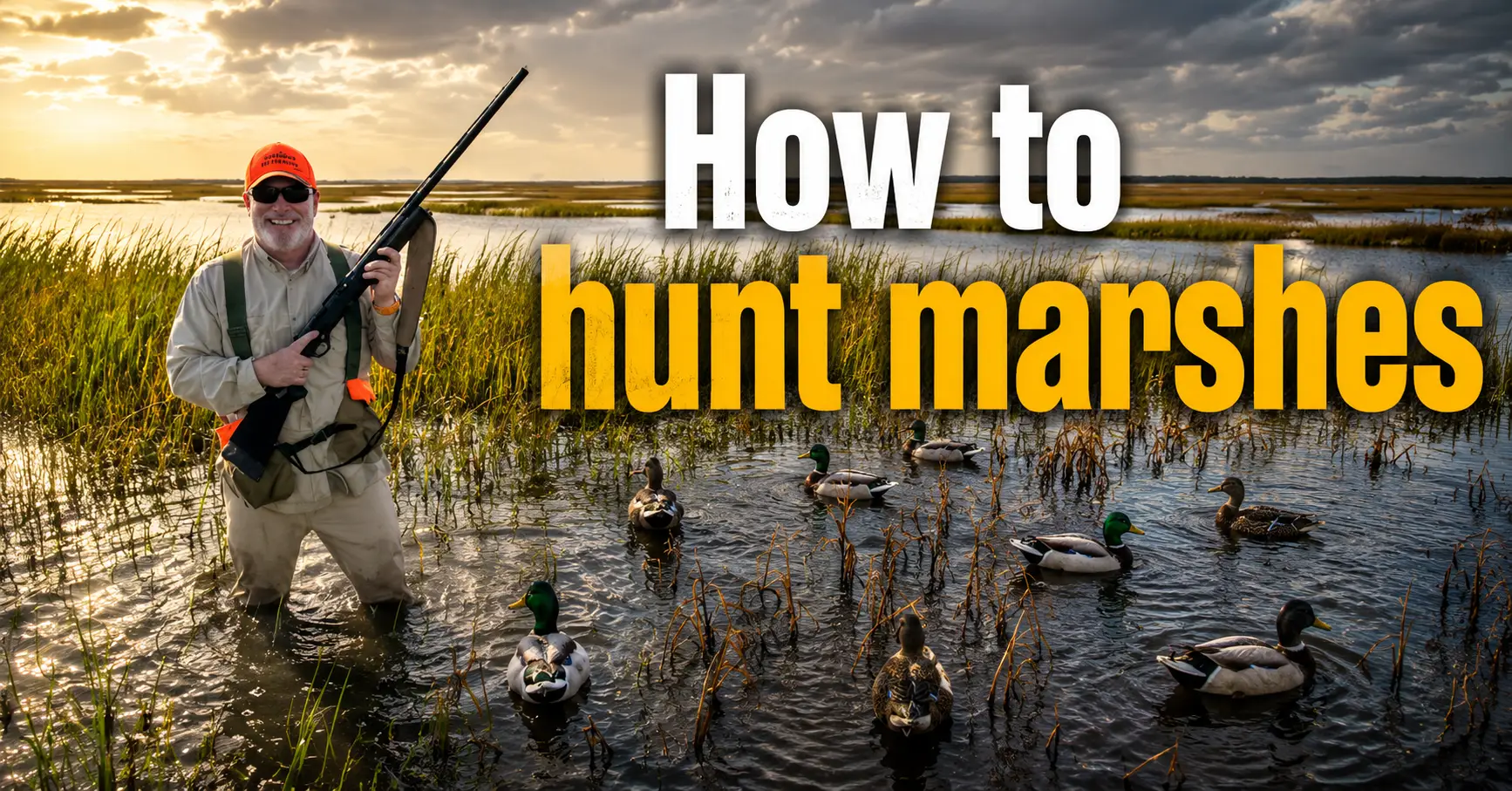

Learning how to hunt marshes requires more than finding wet ground and thick reeds. Marshes are dynamic habitats where water depth, mud, vegetation, tides, wind, weather, access, and animal movement can change quickly.
This guide explains how to read marsh structure, identify legal access, scout dry islands and crossings, plan safe entry and exit routes, select a responsible setup, and make ethical decisions. It is designed for beginners, but every hunter should adapt the advice to the species, local regulations, weather, terrain, and personal skill level.
Quick Answer
To hunt marshes responsibly, first verify that the species, season, weapon, access route, and property are legal. Scout the wet-to-dry transitions, raised islands, points of cover, ditch crossings, levees, and trails connecting marsh security cover to surrounding food or timber. Plan your approach around wind, water level, footing, weather, and a reliable exit route, then take only a clearly identified, legal shot with a safe background and a realistic recovery plan.
Important Legal and Safety Notice Before You Hunt
Hunting laws vary by country, state, province, county, species, season, land type, and weapon. Check the official wildlife agency and land manager for current rules before every trip.
- Carry required licenses, permits, tags, stamps, and identification.
- Confirm season dates, legal hunting hours, bag limits, reporting, and transport rules.
- Verify legal firearms, bows, ammunition, broadheads, boats, motors, blinds, and access methods.
- Confirm public boundaries or obtain private-land permission.
- Wear required visibility clothing and species-specific safety equipment.
- Treat every firearm as loaded, control the muzzle, and keep the safety engaged until ready to act.
- Identify the target and everything beyond it.
- Never shoot toward people, boats, roads, homes, livestock, vehicles, levees, public trails, or unclear movement.
- Use a full-body harness and approved fall-arrest system in a tree stand.
- Carry navigation, first aid, water, weather protection, signaling equipment, and emergency communication.
Water safety: Marsh mud, hidden channels, submerged holes, unstable vegetation mats, strong current, cold water, thin ice, and changing tides can be life-threatening. Do not enter conditions beyond your training, equipment, or physical ability.
Understanding Marsh Habitat
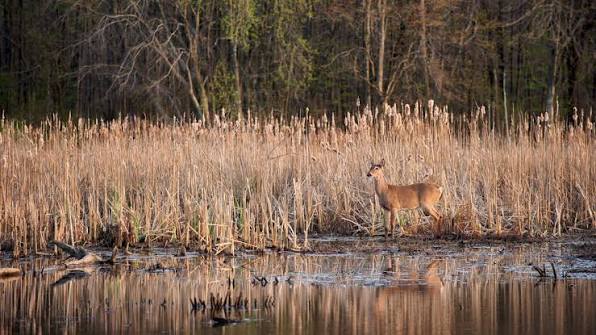
A marsh is not one uniform field of reeds. It may contain shallow water, cattails, grasses, brush, creek channels, mudflats, beaver activity, scattered trees, old dikes, raised islands, flooded timber, and upland edges. Each feature influences food, cover, visibility, footing, and travel.
Animals generally choose routes that balance safety and efficiency. They may travel along firm margins, cross channels at narrow points, bed on dry hummocks, use dense reeds for security, or follow ditches toward surrounding timber and fields. The best hunting location is often a transition or bottleneck rather than the center of the wetland.
Wet-to-Dry Transitions
The boundary between saturated marsh and firmer upland is one of the first places to inspect. It may provide browse, tracks, trails, and easier travel while keeping animals close to dense escape cover.
Dry Islands, Hummocks, and Raised Ground
Small elevated areas can provide bedding, resting, feeding, and observation cover. Their value increases when they are surrounded by deep mud, water, or thick reeds because access becomes limited to a few trails or crossings.
Channels, Ditches, and Creek Bends
Waterways can block movement or guide it. Animals may cross where banks are low, bottoms are firm, vegetation forms a bridge, or a beaver dam creates a narrow route. Creek bends and ditch intersections can connect several habitat types.
Cattail Points and Recessed Corners
A point of reeds extending toward open water or upland can direct movement around its end. An inside corner where dry cover pushes into the marsh may also collect trails. Scout both the visible outside edge and routes just inside the cover.
Dikes, Levees, Old Roads, and Berms
Raised human-made features often provide firm travel and visibility. They can also receive heavy human use, so verify access rules and never treat a road, levee, or trail as a safe shooting direction.
High-Value Marsh Features and Fresh Sign to Scout
Begin with maps and aerial imagery, then confirm conditions on the ground. Aerial photographs may not show recent flooding, plant growth, beaver activity, blocked channels, or damaged access.
High-Value Features
- Dry islands and elevated hummocks
- Narrow strips of firm ground between wet areas
- Ditch, creek, fence, and beaver-dam crossings
- Cattail points, inside corners, and brushy pockets
- Marsh edges adjoining timber, fields, pines, or young growth
- Levee intersections, old road bends, and raised berms
- Trails connecting food, security cover, water, and bedding habitat
Fresh Sign Worth Prioritizing
- Sharp, recent tracks in mud or soft soil
- Current droppings and fresh feeding disturbance
- Newly bent, rubbed, or broken vegetation
- Active trails with repeated impressions or exposed mud
- Fresh beds on dry hummocks or islands
- Recent rubs, scrapes, feathers, rooting, or other species-specific sign
One track or old trail is not enough to build a complete plan. Combine sign with water depth, wind, access, terrain, food, season, hunting pressure, and the safety of the shooting background.
What You Need Before You Start
- Valid license, permits, tags, stamps, and current regulation knowledge
- A legal hunting weapon that you can operate safely and accurately
- Required blaze orange or other visibility clothing
- Waterproof boots or properly fitted waders suited to the conditions
- Wading belt and a walking staff when appropriate
- Personal flotation device for boating or deep-water access
- Paper map, compass, GPS, and protected backup power
- Binoculars for safe observation and identification
- Weatherproof layers, gloves, first aid kit, water, food, and headlamp
- Whistle, emergency communication, and a shared trip plan
- Clean gloves, game bags, cooler, and legal transport supplies
How to Hunt Marshes: Step-by-Step Guide
Step 1: Check Current Laws and Managed-Area Rules
Confirm species, season, legal hours, licenses, tags, weapon rules, harvest reporting, refuge closures, boat restrictions, blind rules, parking, and legal access. Marsh wildlife areas may have regulations not found on surrounding land.
Step 2: Study Aerial, Topographic, and Property Maps
Mark boundaries, legal parking, launches, dikes, channels, islands, nearby homes, public trails, and private parcels. Save the map offline and carry a paper backup.
Step 3: Check Water, Tide, Ice, and Weather Conditions
Review recent rain, flooding, drought, tides, wind, temperature, current, and official warnings. Conditions from a previous scouting trip may no longer exist.
Step 4: Scout from the Outside In
Begin at edges, high ground, levees, and observation points. Use binoculars to reduce unnecessary disturbance before walking through reeds or water.
Step 5: Find Firm Travel and Current Sign
Test footing carefully and look for multiple fresh clues at crossings, points, island approaches, and dry transitions. Do not follow a trail into water or mud that exceeds your safe ability.
Step 6: Build Primary and Backup Access Routes
Plan an entry, exit, and emergency alternative. Avoid relying on a single channel, tide window, battery, bridge, or crossing.
Step 7: Plan Around Wind and Scent
Choose a setup that keeps your scent away from expected movement. Open marsh winds can be steady, but reed walls, islands, and temperature changes may create turbulence.
Step 8: Select a Stable and Legal Setup
Use a tree stand, ground blind, natural cover, levee position, or still-hunting route only where allowed. Confirm firm footing, concealment, safe lanes, and an exit that remains usable after dark.
Step 9: Settle In and Observe Patiently
Marsh vegetation can hide most of an animal. Use binoculars, watch small openings and crossing points, control movement, and listen without assuming every sound is game.
Step 10: Confirm Target, Background, and Recovery
Take action only after identifying a legal animal and confirming an unobstructed path, safe background, stable position, practiced range, and realistic recovery route.
Step 11: Follow Legal Recovery, Tagging, and Reporting Rules
Mark the last known position, respect property boundaries, avoid unsafe water, validate the tag as required, and complete reporting. Seek lawful assistance when conditions exceed your capability.
Step 12: Care for the Harvest and Wetland Responsibly
Use clean equipment, cool the meat promptly, follow transport rules, and pack out trash, flagging, cord, and temporary materials. Avoid unnecessary damage to fragile wetland vegetation.
Best Places and Conditions for Marsh Hunting
| Factor | What to Look For | Why It Matters |
|---|---|---|
| Elevation | Dry islands, hummocks, dikes, berms, and firm margins | High ground may provide bedding, travel, observation, and safer footing. |
| Transitions | Marsh beside timber, fields, brush, or young growth | Edges combine food, security, and movement structure. |
| Crossings | Narrow channels, firm bottoms, beaver dams, and ditch intersections | Limited crossing options can concentrate travel. |
| Wind | Crosswind or slightly favorable wind relative to expected movement | Reduces the chance of scent reaching animals before they enter view. |
| Water level | Stable, known conditions with safe access and exit | Water changes trails, habitat use, footing, and recovery options. |
| Pressure | Legal areas away from obvious parking and crowded dikes | Animals and hunters may shift toward less disturbed routes. |
Helpful Tips for Better Results
- Scout after rain or water changes to learn which routes remain usable.
- Mark hazards and alternate exits before hunting in darkness.
- Use binoculars before entering open or flooded areas.
- Keep electronics, fire-starting supplies, and spare clothing waterproof.
- Prepare different setups for different wind and water conditions.
- Do not let fresh sign tempt you into unsafe footing or illegal access.
- Record water level, weather, wind, and trail activity after every trip.
Common Mistakes to Avoid
- Using old aerial imagery without confirming current water conditions
- Entering without checking regulations, closures, or property boundaries
- Trusting floating vegetation or reeds as firm ground
- Relying on one electronic navigation device
- Ignoring tides, cold water, fog, or rising wind
- Walking through the best bedding cover while scouting
- Setting up with no safe recovery or exit plan
- Shooting at sound or movement hidden by reeds
- Handling a weapon in an unstable boat or while losing balance
- Crossing private land or closed refuge habitat without permission
Troubleshooting Common Problems
| Problem | Possible Cause | What to Do |
|---|---|---|
| No game is visible | Old sign, wrong water level, pressure, poor timing, or unsuitable wind | Re-scout active crossings and higher ground, then use a legal backup setup. |
| Animals detect you early | Wind, noisy reeds, exposed approach, or disturbed water | Change the route, reduce movement, and wait for a better wind. |
| Access becomes flooded | Rain, tide, dam change, or rising water | Use the planned alternate route or end the hunt before conditions worsen. |
| You lose your direction | Uniform vegetation, fog, darkness, or device failure | Stop, use map and compass, return to a known landmark, and call for help if needed. |
| Other hunters are close | Limited access or popular dikes and crossings | Communicate safely, do not crowd the setup, and relocate if separation is uncertain. |
| Wind shifts after setup | Weather change or local turbulence | Move to a prepared alternative or leave without crossing active cover. |
| Recovery route is unsafe | Deep water, current, mud, ice, or private boundary | Do not proceed; seek lawful help from the land manager, conservation officer, mentor, or recovery service. |
Ethical Hunting and Marsh Conservation
Wetlands provide breeding, feeding, migration, and security habitat for many species. Ethical hunters minimize unnecessary disturbance, obey closures and bag limits, use established legal access when possible, and avoid damaging fragile vegetation or nesting areas.
Respect landowners, other hunters, anglers, birdwatchers, boaters, and workers. Practice before the season, pass uncertain shots, recover game responsibly, complete required reporting, use the harvest, and leave the marsh cleaner than you found it.
When to Get More Training or Professional Guidance
Seek instruction when you are unfamiliar with firearms, bows, boats, waders, marsh navigation, cold-water safety, tree stands, legal boundaries, game recovery, or meat care. Official hunter education, boating education, certified instructors, wildlife agencies, and experienced ethical mentors are appropriate sources.
After the Hunt: Gear Care and Learning
- Unload, clean, transport, and store weapons according to law and manufacturer guidance.
- Rinse and dry boots, waders, flotation equipment, packs, and metal tools.
- Inspect waders, straps, stands, boat equipment, and first aid supplies.
- Clean mud and plant material from gear to reduce the spread of invasive species.
- Complete harvest reports and maintain required records.
- Update maps with hazards, safe crossings, water levels, and current sign.
Frequently Asked Questions: How to Hunt Marshes
1. What does hunting marshes mean?
Hunting marshes means pursuing legal game in wetland habitat containing grasses, reeds, cattails, shallow water, mud, brush, channels, ditches, and scattered dry ground. The strategy usually centers on locating firm travel routes, dry bedding cover, habitat edges, safe access, and favorable wind.
2. What game species may use marsh habitat?
Depending on the region and regulations, marshes may be used by deer, waterfowl, wild turkey, feral hogs, small game, and other legal species. Always verify the open species, season, permits, legal methods, and identification requirements before hunting.
3. Are marshes good places to hunt deer?
They can be. Marsh edges, cattail points, brushy islands, drainage crossings, and narrow strips of dry cover may provide food, security, and travel routes. Productivity depends on water level, season, pressure, vegetation, and surrounding upland habitat.
4. What marsh features should I scout first?
Start with transitions between wet and dry ground, islands, points of cover, ditch crossings, beaver dams, levees, old roads, creek bends, narrow necks, and trails connecting marsh cover with upland food or bedding areas.
5. Why are dry islands important in a marsh?
Small islands or elevated hummocks can provide bedding, resting, feeding, or observation cover surrounded by difficult terrain. Animals may use only a few reliable routes to reach them, which can make nearby travel more predictable.
6. How do I identify firm ground in a marsh?
Look for mature woody vegetation, established animal trails, raised root systems, old dikes, gravel roads, and visible elevation changes. Test footing carefully with a walking staff, and never assume vegetation means the soil beneath it is stable.
7. What is a marsh edge?
A marsh edge is the transition between wetland vegetation and another habitat type, such as hardwoods, brush, fields, pines, or higher ground. These boundaries may combine feeding opportunities, security cover, and easier travel.
8. How does water level affect marsh hunting?
Water level can open or close access routes, cover trails, concentrate animals on higher ground, and change where food is available. Recent rain, drought, snowmelt, dam releases, wind, and tides can make old scouting information unreliable.
9. Do tides matter in coastal marshes?
Yes. Tides can change channel depth, current, mud exposure, boat access, and the safety of return routes. Consult reliable local tide information and land-manager guidance, and allow a safety margin rather than planning around the exact predicted minute.
10. What time of day is best for hunting marshes?
Early morning and late afternoon are common movement periods, but the best time varies by species, season, pressure, weather, and legal hunting hours. Some animals may move during midday when pressure or breeding behavior changes normal patterns.
11. How important is wind direction in a marsh?
Wind is important because open wetland can carry scent a long distance, while reeds, trees, and channels may create swirling air. Set up so your scent does not blow toward expected bedding cover, feeding areas, or the trail you plan to watch.
12. Can thermals affect a marsh setup?
Yes, especially where marshes meet slopes, dikes, wooded islands, or creek bottoms. Cooling air may settle toward low wet areas, while warming air may rise toward surrounding higher ground.
13. How can I enter a marsh quietly?
Use firm routes, take slow controlled steps, secure loose equipment, avoid breaking reeds unnecessarily, and pause often. When practical, use an access route hidden by vegetation or terrain and keep the wind away from likely animal locations.
14. Should I walk through water to hide my scent?
Water does not eliminate scent, and wading may create noise, leave disturbance, damage habitat, or expose you to deep mud and hidden hazards. Choose a route primarily for legality, footing, wind, and safety.
15. What footwear is best for marsh hunting?
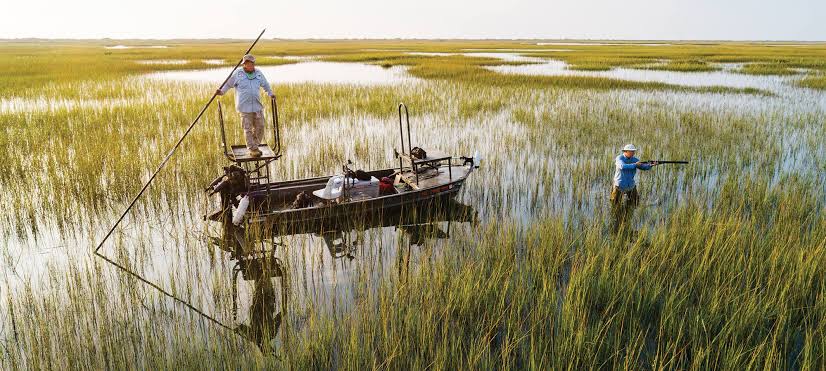
The choice depends on depth, temperature, bottom type, and distance. Waterproof boots may suit shallow wet ground, while properly fitted waders may be needed for deeper areas. Waders do not replace a flotation device where boating or deep water is involved.
16. Are chest waders safe for marsh hunting?
They can be used safely when suited to the conditions, but deep water, current, cold, entanglement, and hidden holes remain serious hazards. Use a wading belt, move slowly, know the route, and avoid conditions beyond your training and equipment.
17. Should I use a walking staff in a marsh?
A sturdy staff can help test depth and bottom firmness before each step. It can also improve balance, but it should not encourage you to enter water or mud that is too deep, unstable, cold, or fast moving.
18. Can I use a tree stand near a marsh?
Yes, where legal and where a healthy, suitable tree provides a safe view of an edge or crossing. Use a full-body harness and approved fall-arrest system, inspect the tree and stand, and keep the setup away from unstable or flooded roots.
19. Can I use a ground blind in marsh cover?
Yes, if legal and placed on firm ground without blocking channels, levees, roads, or public trails. Secure it for wind, keep the interior organized, and confirm that every opening faces a safe shooting background.
20. How can I avoid getting lost in a marsh?
Carry a paper map and compass in addition to GPS, mark the vehicle and legal access point, save several exit routes, and note major channels, dikes, tree lines, and islands. Tell someone your route and return time.
21. Why is navigation difficult in marshes?
Reeds and cattails can block distant landmarks, channels can curve, water levels can change, and similar-looking cover can make direction difficult to judge. Darkness, fog, snow, and wind increase the risk.
22. What should I do if my route floods or becomes impassable?
Do not force the crossing. Use a planned alternate route, return to known firm ground, or end the hunt. Contact emergency services if you cannot exit safely.
23. What signs show animals are using a marsh now?
Fresh tracks in mud, current droppings, newly bent vegetation, recent browsing, active crossings, fresh beds, rubs, scrapes, feathers, rooting, or trails with repeated use may indicate current activity.
24. How do I tell an active trail from an old marsh trail?
Active trails often have fresh tracks, recently pressed or broken vegetation, clean mud impressions, new droppings, or repeated disturbance. Water and wind can preserve or erase sign, so compare several clues.
25. Are ditch crossings good places to scout?
They can be valuable because animals may prefer shallow, narrow, firm, or obstructed crossing points. Check both banks and nearby cover, but avoid any setup that directs a shot along a ditch, road, or public route.
26. How does hunting pressure change marsh movement?
Pressure may push animals toward thicker reeds, isolated islands, secondary crossings, or movement during less disturbed periods. Avoid crowding other hunters and maintain safe separation even when sign is concentrated.
27. Can I hunt a marsh on public land?
Often yes, but access, weapon, boat, blind, parking, and seasonal rules vary. Verify the parcel, boundaries, refuge closures, managed-hunt rules, and whether adjacent private land limits access.
28. Can I cross private property to reach a public marsh?
Not without legal access or permission. Public ownership of the marsh does not create a right to cross surrounding private property.
29. What should I know before using a boat or canoe?
Confirm legal launch and motor rules, check weather and water conditions, wear an appropriate personal flotation device, balance the load, secure weapons safely, carry signaling equipment, and avoid overloading or standing unnecessarily.
30. How should a firearm be transported in a boat?
Follow local law and official hunter-education guidance. Keep the firearm in a safe condition, control the muzzle, prevent it from shifting, and never handle or discharge it while the boat is unstable or people are in unsafe positions.
31. What makes a safe shooting lane in marsh habitat?
A safe lane provides clear target identification, an unobstructed path, and a reliable background. Never shoot at movement in reeds, across an occupied channel, along a levee, toward boats, roads, homes, livestock, or other hunters.
32. What is an ethical shot opportunity in a marsh?
It is a legal opportunity at a clearly identified animal within your practiced ability, with stable footing, a safe background, and a realistic recovery plan. Pass whenever visibility, balance, distance, species identification, or recovery is uncertain.
33. How should I plan game recovery in a marsh?
Before hunting, identify safe routes, property boundaries, water hazards, legal tracking options, and equipment needed for transport. After a legal shot, mark the last known location and follow current recovery, tagging, and reporting rules.
34. What if recovery would require crossing unsafe water?
Do not risk drowning, hypothermia, or entrapment. Seek assistance from a conservation officer, land manager, experienced mentor, or legal recovery service as appropriate.
35. What weather makes marsh hunting unsafe?
Lightning, dense fog, high wind, sudden cold, extreme heat, flooding, strong current, thin ice, freezing rain, and rapidly rising water can make marsh travel dangerous. Leave early rather than waiting for conditions to become critical.
36. Is marsh ice safe to walk on?
Ice thickness and strength can vary greatly around vegetation, springs, currents, channels, and changing water levels. Do not assume appearance or cold weather makes ice safe; follow official local ice-safety guidance and avoid uncertain ice.
37. What should I do after a successful harvest?
Follow tagging and reporting requirements, use clean gloves and tools, cool the meat promptly, comply with transport rules, and avoid waste. Protect the wetland by packing out all equipment and trash.
38. When should a beginner get more training?
Seek help if you are unfamiliar with weapons, waders, boats, marsh navigation, cold-water safety, property boundaries, recovery, or meat care. Hunter education and an experienced ethical mentor are especially valuable in wetland terrain.
39. How can I improve after each marsh hunt?
Record water level, wind, weather, access, fresh sign, sightings, pressure, and route safety. Compare these notes over time and update backup routes whenever conditions change.