
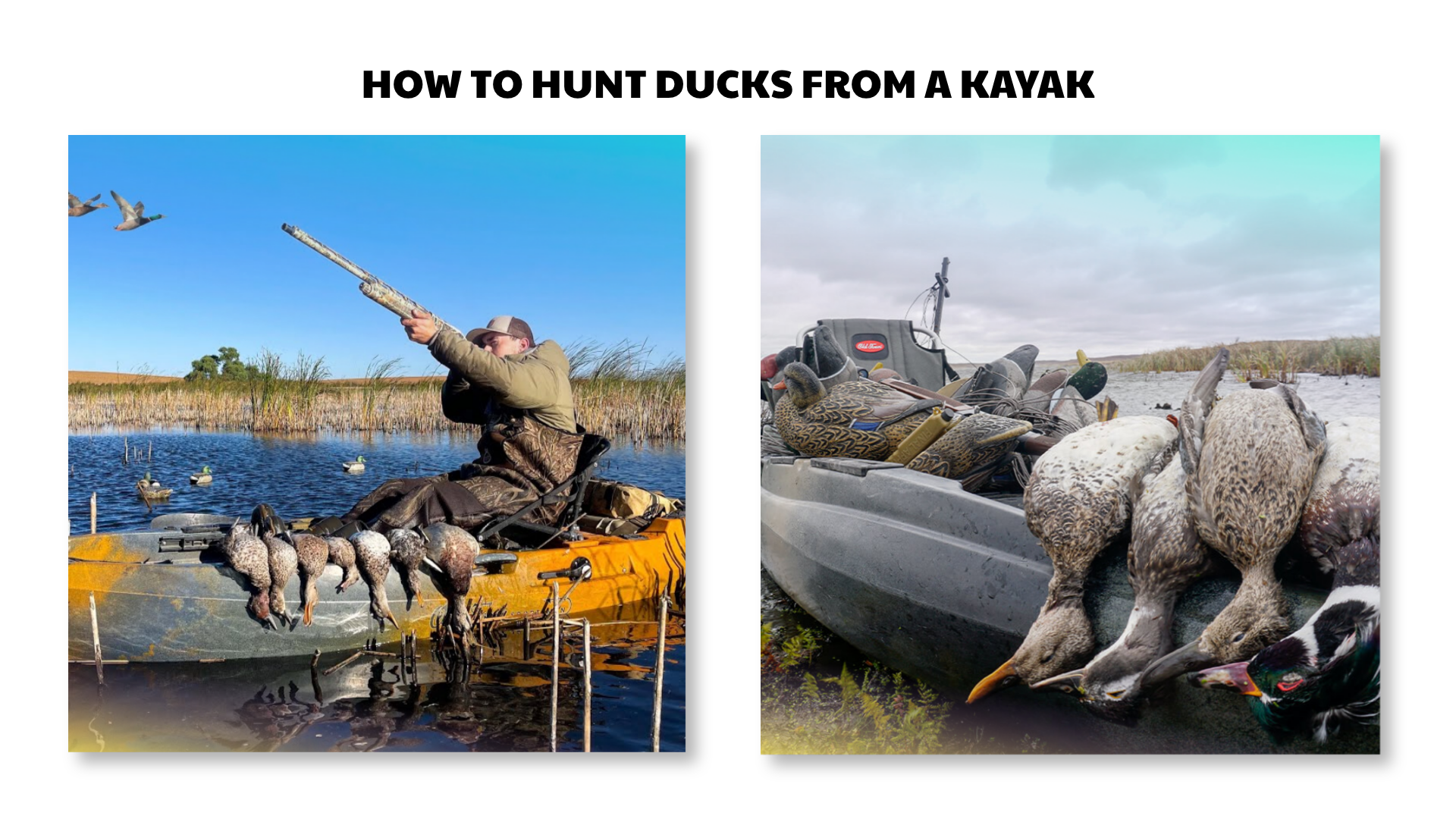

Quick Answer
To hunt ducks from a kayak, verify all hunting, boating, firearm, launch, access, and reporting rules first. Use a stable kayak operated well within its load capacity, wear an approved PFD, secure the firearm and equipment, and choose sheltered water below your skill and weather limits. Scout the route in daylight, establish a stable legal shooting position, and take only positively identified, close, recoverable opportunities. Practice paddling and self-rescue before adding hunting gear.
Important Legal and Safety Notice Before You Hunt
Waterfowl and boating rules vary by country, state, province, flyway, property, waterbody, vessel type, and season. The U.S. Fish and Wildlife Service migratory-bird regulations page explains the federal process, while annual frameworks and local rules determine exact dates and limits.
- Hunting documents: Verify the license, HIP or equivalent registration, permits, validations, and property check-in.
- Federal Duck Stamp: Most U.S. waterfowl hunters age 16 or older need a current Federal Duck Stamp or E-Stamp.
- Season and limits: Confirm species, sex, zone, dates, legal hours, daily limit, and possession limit.
- Ammunition: U.S. waterfowl hunting requires approved nontoxic shot.
- Kayak rules: Verify registration, lighting, signaling, motor, launch, PFD, navigation, and water-access requirements.
- Firearm rules: Confirm legal transport, casing, loading, discharge, boat-position, and shotgun-capacity rules.
- Property access: Confirm boundaries, refuge closures, retrieval rights, parking, and launch hours.
- Reporting: Verify tagging, band reporting, harvest reporting, property check-out, and transport documentation.
Wear a properly fitted approved PFD and never rely on hunting clothing or waders for flotation. Do not launch into conditions beyond your training. Never handle or fire a shotgun while the kayak is unstable, and never shoot toward people, roads, homes, boats, livestock, dogs, trails, docks, or unclear movement.
Understanding Kayak Hunting Conditions and Duck Habitat
Beginner-Friendly Water
Sheltered marsh channels, shallow backwaters, protected pond edges, small lakes, and calm creek systems can be suitable when legal access, nearby landing options, and the bottom and route are known.
High-Risk Water
Surf, open coastal water, large wind-exposed lakes, fast rivers, floodwater, shipping channels, strong tide, thin ice, and remote water without safe exits demand advanced skills and may be inappropriate for kayak hunting.
Dabbling Ducks
Mallards, teal, gadwalls, pintails, shovelers, wood ducks, and other dabblers often use shallow wetlands, flooded vegetation, marsh edges, and sheltered creeks that can be accessible to a carefully managed kayak.
Diving Ducks
Scaup, canvasbacks, ring-necked ducks, redheads, goldeneyes, and other divers often use deeper open water. Their habitat can expose a kayak hunter to wind, waves, cold, current, and longer recovery distances.
Wind, Current, and Fetch
Wind over a long stretch of open water builds waves, known as fetch. Current and tide can move the kayak, decoys, or a bird away from the setup. Conservative route and weather decisions matter more than predicted bird movement.
What You Need Before You Start
- Current license, permits, stamps, and regulations
- Stable kayak suited to the water and load
- Properly fitted approved PFD
- Legal shotgun and approved nontoxic ammunition
- Secure water-resistant firearm case
- Paddle plus lawful spare or backup option
- Required lights and signaling equipment
- Whistle and waterproof communication
- Offline map, compass, GPS, or app
- Weather-appropriate immersion clothing
- Dry clothing in a waterproof bag
- First aid and emergency equipment
- Small secured decoy spread
- Anchor system suitable for the kayak
- Legal concealment that preserves exits
- Water, food, and sun protection
- Game-care gloves, bags, and cooler plan
- Repair kit appropriate to the craft
- Written float plan
- Alternative landing and exit route
Core rule: Master the kayak before combining it with a shotgun, decoys, cold-weather clothing, darkness, and harvested birds. Equipment does not replace paddling judgment.
How to Hunt Ducks From a Kayak: Step-by-Step Guide
Step 1: Check Hunting, Boating, and Property Rules
Verify the hunting license, HIP or equivalent registration, stamps, permits, season dates, legal hours, daily and possession limits, approved nontoxic ammunition, shotgun capacity, baiting rules, harvest reporting, kayak registration, lighting, PFD, launch, motor, firearm transport, and property-specific restrictions. Rules vary by jurisdiction, waterbody, refuge, and season.
Step 2: Complete Hunter Education and Paddling Training
Complete required hunter education and learn firearm safety from a qualified instructor. Before adding hunting equipment, become confident launching, landing, turning, stopping, bracing, re-entering, and paddling the kayak in controlled conditions. Beginners should learn with an experienced ethical mentor and take a recognized paddling or boating-safety course.
Step 3: Choose a Suitable Kayak and Respect Its Capacity
Use a stable kayak designed for the water, weather, hunter size, and equipment load. Read the manufacturer instructions and capacity plate or specification. Count the hunter, clothing, firearm, ammunition, PFD, paddle, decoys, anchor, blind material, emergency gear, and harvested birds. Never treat the published maximum as a comfortable operating target.
Step 4: Wear the Correct PFD and Dress for Immersion
Wear a properly fitted, approved PFD throughout the trip. Dress for the water temperature rather than only the air temperature, because cold-water immersion can quickly reduce breathing control, movement, and judgment. Secure loose clothing and avoid equipment that prevents safe movement or re-entry.
Step 5: Choose Conservative Water
Start on sheltered ponds, marsh channels, small lakes, backwaters, and protected shorelines with legal access, known depth, limited current, low boat traffic, and nearby landing options. Avoid surf, large open water, strong river current, shipping channels, thin ice, dense fog, lightning, and conditions beyond the paddler’s skill.
Step 6: Scout Launches, Routes, Birds, and Exit Points
Scout in daylight. Confirm launch hours, parking, boundaries, refuge closures, shallow hazards, submerged timber, mud, current, tides, motor traffic, wind exposure, alternative landings, and cell coverage. Observe where ducks feed, rest, and travel without disturbing them. Save an offline map and share a float plan.
Step 7: Organize and Secure the Load
Place heavy gear low and near the kayak’s center. Keep the bow and stern balanced and preserve access to the paddle, PFD, whistle, light, communication device, and first aid. Secure decoys and bags so they cannot shift, tangle around the paddler, obstruct an exit, or sink. Avoid loose loops of line.
Step 8: Transport and Handle the Firearm Safely
Follow every local firearm and boating rule. Keep the muzzle in a safe direction and the action open and unloaded during transport whenever required or prudent. Use a secure water-resistant case that does not block emergency movement. Load only at a legal, stable hunting position and never manipulate the firearm while the kayak is drifting, turning, or unstable.
Step 9: Set Up Without Sacrificing Stability
Choose a legal sheltered position where the kayak can remain stable, such as firm shallow cover, a protected shoreline, or another approved setup. Anchor only with equipment and techniques suited to the craft and conditions. Keep the kayak oriented so wind, current, recoil, reaching, and bird recovery do not pull it broadside into danger. Never stand unless the craft is specifically designed for it and conditions are controlled.
Step 10: Take Only Safe, Legal, Recoverable Opportunities
Identify the species and legal status before raising the firearm. Confirm the background, nearby boats, people, roads, buildings, dogs, and other hunters. Shoot only within a conservative practiced range and a narrow safe arc. Avoid twisting far behind the seat, shooting across the bow of another craft, or taking a shot that places the bird in unsafe water.
Step 11: Recover, Report, and Return Safely
Mark the landing location and control the firearm before moving. Paddle deliberately and keep weight centered during recovery. Do not reach so far that the kayak becomes unstable; use a suitable tool only when lawful and safe. Complete required tagging, reporting, band reporting, and check-out. Leave early enough to return before darkness or worsening weather makes navigation unsafe.
Best Time, Place, and Conditions for Kayak Duck Hunting
Time of Day
Ducks often move near morning and evening, but low light also increases navigation, collision, and identification risk. Beginners should use familiar routes and leave enough daylight for recovery and return.
Wind
A light manageable wind may help bird movement and conceal sound, but increasing wind can create waves, prevent an upwind return, drag an anchor, and expose the hunter to cold spray.
Temperature
Cold water deserves special respect even when the air feels mild. Dress for immersion and avoid hunting when re-entry, self-rescue, or reaching shore would be doubtful.
Public Water
Public water can include navigation channels, motor traffic, refuge closures, launch rules, assigned units, and competing users. A camouflaged kayak can be difficult for other boaters to see.
Private Water
Obtain clear permission for launching, crossing shorelines, anchoring, shooting, and retrieval. Water access does not automatically create legal access to adjacent land.
Helpful Tips for Better Results
- Practice paddling the fully loaded kayak before opening day.
- Wear the PFD from launch to landing, not only while crossing deep water.
- Keep the paddle immediately reachable even when the firearm is in use.
- Use fewer decoys when extra weight or retrieval time reduces safety.
- Store heavy gear low and close to the center of the kayak.
- Secure every loose line to reduce entanglement risk.
- Use a conservative personal wind and wave limit and do not exceed it.
- Avoid standing, kneeling high, or twisting behind the seat.
- Plan at least one alternative landing point before launching.
- Carry a waterproof whistle, light, communication device, and dry clothing.
- Tell a responsible person the route, launch, vehicle, and return time.
- Leave before fog, lightning, current, ice, darkness, or wind becomes difficult.
Common Mistakes to Avoid
- Learning to paddle during the hunting season instead of beforehand.
- Loading to the kayak’s maximum capacity.
- Carrying the PFD instead of wearing it.
- Placing heavy decoy bags high on the bow or stern.
- Leaving loose line where it can entangle feet, paddle, or firearm.
- Handling the shotgun while the kayak is drifting or unstable.
- Standing or twisting far behind the seat.
- Launching into open water because the forecast looks acceptable.
- Ignoring wind direction on the return trip.
- Using concealment that blocks vision, paddling, or emergency exit.
- Hunting too close to navigation channels, docks, roads, or other boats.
- Taking a shot that leads into unsafe recovery water.
- Continuing after fog, lightning, waves, ice, or fatigue increases.
- Failing to share a float plan.
Troubleshooting Common Problems
| Problem | Possible Cause | What to Do |
|---|---|---|
| The kayak feels unstable | Excess weight, high-mounted gear, poor trim, waves, or sudden movement | Return to shore, reduce and rebalance the load, and do not hunt until stability is reliable. |
| The bow turns away from the intended direction | Wind, current, poor anchoring, or unbalanced trim | Control the craft before handling the firearm and reposition only when it is safe. |
| Decoy lines tangle around gear | Loose line, crowded deck, or poor storage | Stop in a safe position, control the firearm, and reorganize lines before continuing. |
| Water enters the cockpit or deck | Waves, overloaded kayak, damaged hatch, or poor launch | Return to the nearest safe landing and inspect the craft before relaunching. |
| The paddle is out of reach | It was placed under gear or drifted away | Use a paddle leash only if it does not create entanglement, and always keep the paddle in a dedicated reachable position. |
| The anchor drags | Wrong anchor, poor bottom, wind, current, or too much scope | Do not handle the firearm until the craft is controlled; relocate or stop hunting. |
| Birds land behind the kayak | Setup orientation or wind changed | Do not twist into an unsafe shot. Reorient the kayak or pass. |
| Another boat enters the area | Shared waterway or limited visibility | Unload or open the action, communicate when appropriate, and wait until a safe separation exists. |
| Fog develops | Rapid weather change | Stop hunting, secure the firearm, use navigation and signaling equipment, and move to the safest known landing. |
| Cold water affects dexterity | Inadequate immersion clothing or prolonged exposure | End the trip, get dry and warm, and seek medical help if symptoms persist or worsen. |
| A bird is beyond a safe reach | Poor shot selection, wind, current, or open-water drift | Do not lean dangerously. Control the craft and use a safer lawful recovery approach. |
| The return trip is harder than expected | Headwind, current, fatigue, excess load, or worsening weather | Use the nearest safe legal landing and activate the float-plan or emergency procedure if needed. |
Ethical Hunting and Conservation
Kayak hunting is ethical only when the paddler’s skill, vessel, load, weather, firearm handling, shot range, and recovery plan all support a safe outcome. Reaching remote water does not create a responsibility to hunt it when conditions are poor.
- Obey seasons, species limits, boating rules, and refuge closures.
- Wear the PFD and operate within the kayak’s practical capacity.
- Identify the individual duck and background before acting.
- Pass on distant, mixed, obscured, or unrecoverable birds.
- Avoid disturbing roosts and closed resting areas.
- Respect landowners, anglers, paddlers, boaters, and other hunters.
- Avoid waste and use the harvest responsibly.
- Pack out shells, line, food packaging, and blind material.
- Support wetlands through licenses, stamps, and habitat programs.
Review the U.S. Fish and Wildlife Service hunter responsibilities and the U.S. Coast Guard life-jacket guidance.
When to Get More Training or Professional Guidance
Seek training when you are new to paddling, capsize recovery, cold water, wind and current, navigation, anchoring, firearm transport, waterfowl identification, public-water law, or emergency signaling.
- Official hunter education courses
- State or provincial wildlife agencies
- Certified firearm and shotgun instructors
- Recognized paddling and boating-safety courses
- Experienced ethical kayak hunters
- Refuge and wildlife-area staff
- Local marine patrol or boating agencies
After the Hunt: Follow-Up, Gear Care, and Learning
- Unload and transport the firearm according to law and manufacturer guidance.
- Rinse, dry, and inspect the kayak, hatches, fittings, anchor system, and paddle.
- Dry the PFD, clothing, blind material, decoys, lines, and storage bags.
- Clean and dry the firearm after exposure to water, mud, vegetation, or salt.
- Complete tagging, harvest reporting, band reporting, and property check-out.
- Keep the harvest clean and cool and follow food-safety guidance.
- Record wind, waves, current, load, route, birds, and return effort.
- Remove equipment that was not worth its weight or deck space.
- Repair damage before the next launch.
- Leave the launch and hunting area cleaner than you found them.
Recommended Hunting Gear and Tools to Consider
You do not need the most expensive kayak or largest decoy spread. Choose equipment according to manufacturer limits, water, weather, hunting method, safety needs, paddling skill, and local law.
- A stable kayak appropriate to the intended water
- A properly fitted approved PFD
- A dependable paddle and legal signaling equipment
- A legal shotgun that fits and can be controlled safely
- Approved nontoxic ammunition patterned with that shotgun
- A secure water-resistant firearm case
- Compact decoys with organized line storage
- A kayak-appropriate anchor or positioning system
- Weatherproof and immersion-appropriate clothing
- Offline navigation and waterproof communication
- First aid, dry clothing, light, whistle, food, and water
- Clean game-care gloves, bags, and cooler plan
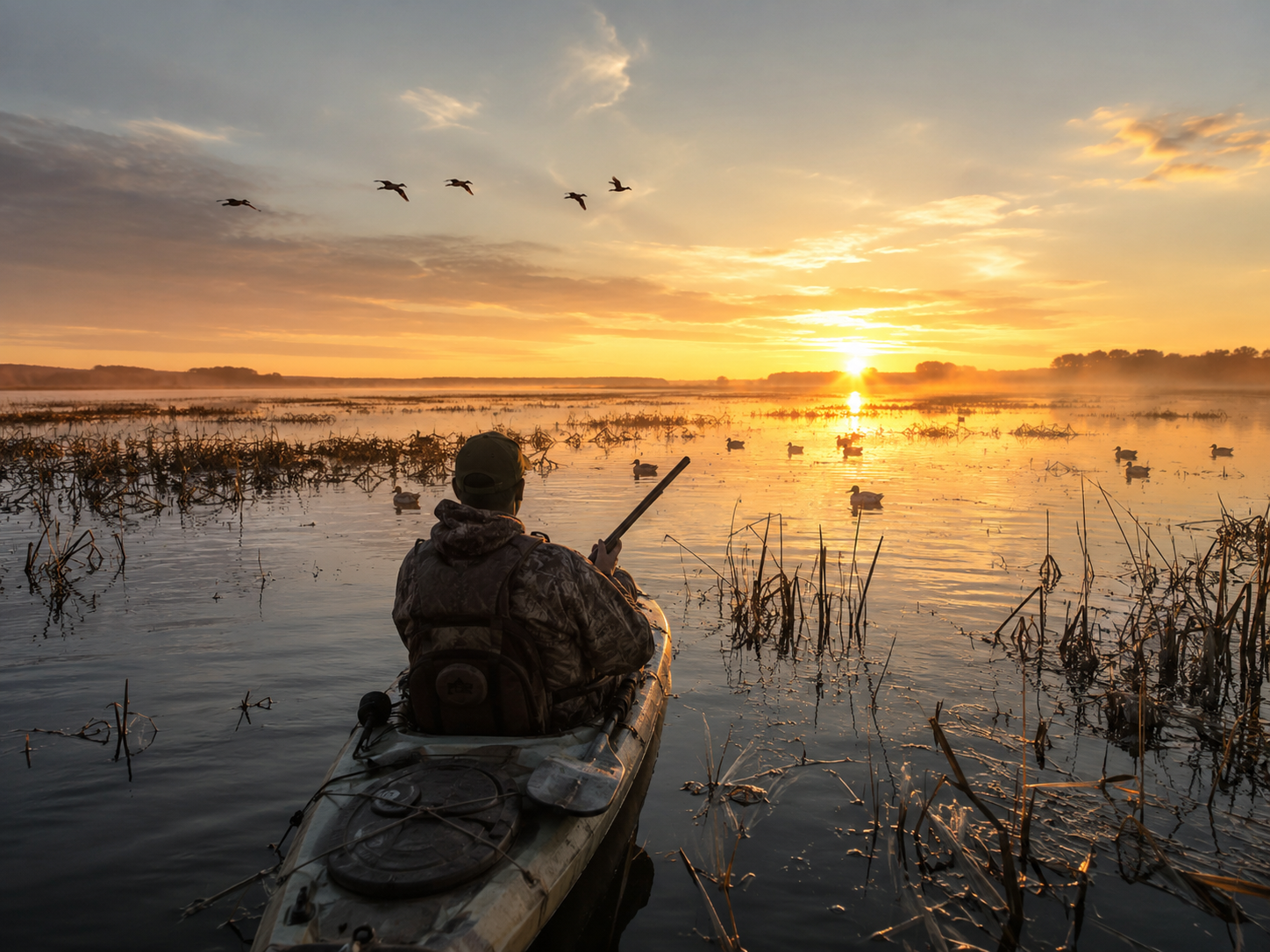
Final Thoughts
Learning how to hunt ducks from a kayak is primarily a boating-safety and judgment skill. Build paddling competence first, operate below the kayak’s practical capacity, wear the PFD, secure the load, choose protected water, establish a stable shooting position, and take only close, identified, recoverable opportunities.
A safe return with no harvest is better than launching into water, weather, darkness, or cold beyond your training. Patience, restraint, and respect for the water are the foundations of responsible kayak duck hunting.
Frequently Asked Questions
1. How long does it take to learn how to hunt ducks from a kayak?
A beginner should first become a competent paddler without hunting gear. Hunter education, paddling practice, rescue training, and mentored trips may take several outings before a safe solo hunt.
2. Is it legal to hunt ducks from a kayak?
It is legal in many places, but firearm discharge, boat positioning, motor use, access, refuge, and local waterbody rules vary. Verify every current rule.
3. Do I need a hunting license?
Most jurisdictions require a hunting license plus migratory-bird validations, permits, stamps, or registrations.
4. Do I need a Federal Duck Stamp?
Most U.S. migratory-waterfowl hunters age 16 or older must possess a current Federal Duck Stamp or valid electronic equivalent.
5. What is HIP registration?
The Harvest Information Program identifies U.S. migratory-bird hunters for harvest surveys. Complete the current state procedure before hunting.
6. Do I need to register my kayak?
Registration rules vary by jurisdiction and may depend on length, propulsion, or whether a motor is attached. Check the boating agency.
7. Do I need lights on a kayak?
Lighting and signaling rules vary by location and time. Carry the legally required equipment and use it correctly.
8. What ammunition is legal for ducks?
In the United States, approved nontoxic shot is required for waterfowl hunting. Other jurisdictions maintain their own rules.
9. Can I use lead shot?
Do not assume lead is legal. Lead shot is prohibited for U.S. waterfowl hunting and restricted in many other regions.
10. How many shells can the shotgun hold?
U.S. federal migratory-bird rules generally limit a shotgun to three shells total unless an official exception applies.
11. When is duck season?
Season dates vary by species, flyway, zone, state or province, property, and year. Check the current official publication.
12. What are legal shooting hours?
Legal hours are set by regulation and often relate to sunrise or sunset. Confirm the exact date and property rule.
13. What type of kayak is best?
A stable kayak matched to the water, hunter, equipment, and manufacturer capacity is more important than a specific brand or hull style.
14. Is a sit-on-top kayak better?
Sit-on-top designs can offer easy drainage and deck access, but suitability depends on stability, weather, water temperature, storage, and paddler skill.
15. Can I use an inflatable kayak?
Only when the manufacturer permits the intended use and the craft is suitable for cold, sharp vegetation, equipment load, and firearm transport. Many situations make it impractical.
16. How much weight can the kayak carry?
Use the manufacturer capacity and include every item. Operate well below the maximum when possible because weather and movement reduce stability.
17. Should I wear a PFD?
Yes. Wear a properly fitted approved PFD throughout the trip. Carrying it on deck is not the same as wearing it.
18. What should I wear in cold water?
Dress for immersion using layers or specialized cold-water clothing appropriate to the conditions, and carry dry backup clothing.
19. Can waders be worn in a kayak?
They can be used in some conditions, but they are not flotation. A properly fitted PFD, controlled clothing, and re-entry practice remain essential.
20. Should I paddle alone?
Beginners are safer with an experienced partner. Solo paddlers should use conservative water, a float plan, communication, and strict weather limits.
21. What is a float plan?
It is a written or shared plan listing the launch, route, destination, vehicle, people, equipment, and expected return time.
22. How should the firearm be transported?
Follow local law and manufacturer guidance. Keep it unloaded and secured in a safe water-resistant case during travel when required or prudent.
23. When should the firearm be loaded?
Only at a legal stable hunting position when the background, shooting arc, and kayak control are established.
24. Can I shoot while drifting?
Drifting reduces control and can alter the background. Beginners should avoid handling or firing a shotgun until the kayak is stable and legally positioned.
25. Can I stand and shoot?
Standing greatly raises the center of gravity. Do not stand unless the kayak is designed for it, the manufacturer allows it, and conditions are controlled.
26. Can I shoot behind the seat?
Avoid twisting far behind the seat because it can destabilize the kayak and sweep an unsafe muzzle direction. Reposition or pass.
27. How does recoil affect a kayak?
Recoil and sudden upper-body movement can change balance and orientation, especially in a narrow or poorly trimmed craft.
28. Do I need an anchor?
Not always. If used, the anchor system must be appropriate to the kayak, bottom, current, and wind and must allow a quick safe release.
29. Where should an anchor be attached?
Use only manufacturer-approved rigging and a position suited to the conditions. Incorrect anchoring can turn a kayak broadside or pull it underwater.
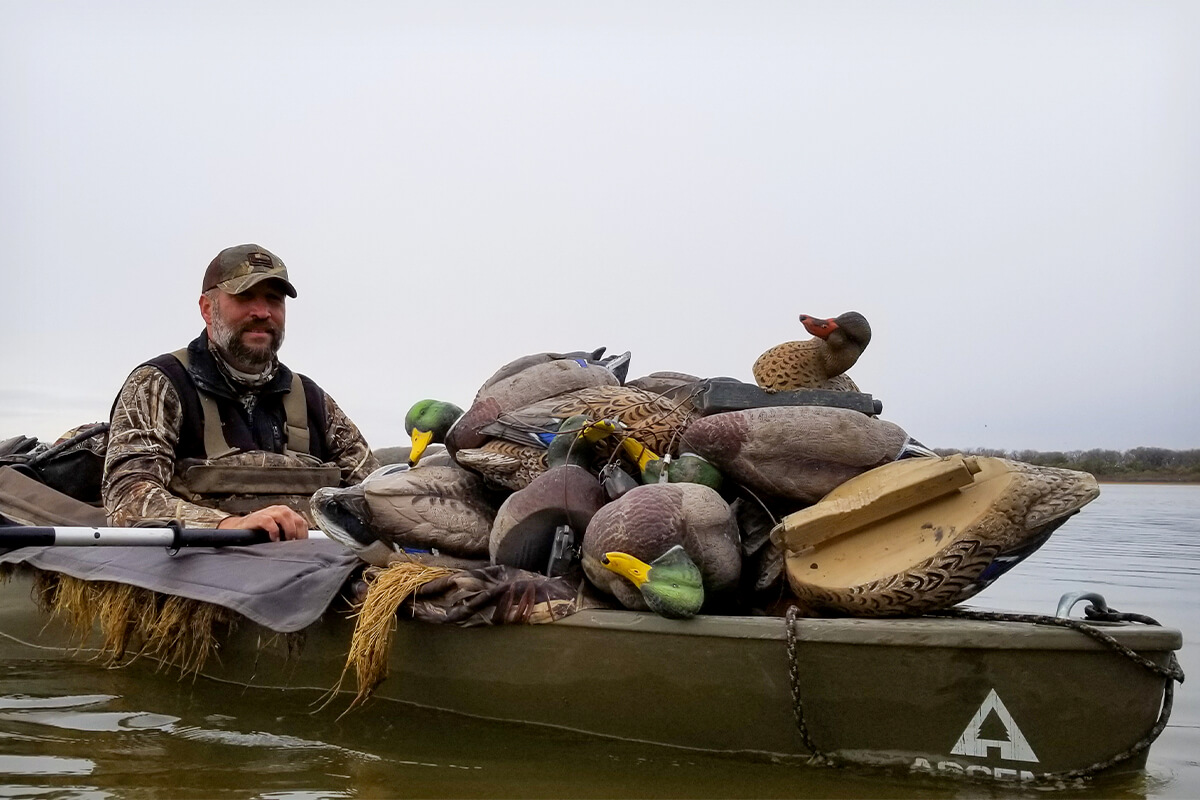
30. How should decoys be carried?
Use secured bags or compartments that keep weight low and prevent lines from tangling around the paddler, paddle, firearm, or emergency equipment.
31. How many decoys can I carry?
Carry only the number that keeps the kayak within a safe load and can be deployed and retrieved without fatigue or deck clutter.
32. Do I need a kayak blind?
No. A blind can help concealment, but it must not obstruct paddling, vision, exits, PFD function, firearm control, or emergency re-entry.
33. Can natural vegetation be added?
Only where property rules allow it and without damaging protected vegetation. Never block the paddler’s exit or view.
34. Where are good kayak hunting locations?
Sheltered marsh channels, backwaters, protected pond edges, and small shallow areas with legal access and nearby landing options are beginner-friendly.
35. What water should beginners avoid?
Avoid surf, open bays, large lakes in wind, fast rivers, shipping channels, floodwater, thin ice, and remote water without safe exits.
36. How much wind is too much?
There is no universal number. Use a conservative personal limit based on training, craft, load, fetch, temperature, current, and available landings.
37. How do waves affect a loaded kayak?
Waves reduce stability, increase water entry, shift gear, and make shooting and recovery less predictable.
38. Can I hunt in fog?
Only when navigation, species identification, safe background, and other boat visibility remain reliable. Dense fog is a reason to stop.
39. Can I hunt around ice?
Ice can damage a kayak, block routes, create cold-water hazards, and make re-entry difficult. Beginners should avoid icy conditions.
40. How do I launch safely in darkness?
Inspect the launch in daylight, use legal lighting, keep the firearm unloaded and cased, wear the PFD, and avoid steep or icy banks.
41. How do I keep the kayak balanced?
Place heavy gear low and near the center, distribute weight evenly, secure all items, and avoid sudden reaching or twisting.
42. How do I keep decoy lines from tangling?
Use organized line systems, secured bags, minimal loose loops, and a clear deck layout.
43. Should I use a paddle leash?
It can keep the paddle nearby but may create entanglement. Use one only when appropriate and arranged so it cannot trap the paddler.
44. What emergency gear should I carry?
Carry required PFD and signaling equipment, waterproof communication, whistle, light, first aid, dry clothing, navigation, and a repair or evacuation plan.
45. How do I recover a duck from a kayak?
Control the firearm, mark the bird, approach slowly, keep weight centered, and avoid leaning beyond the kayak’s stable limit.
46. Can I use a landing net?
A suitable net can reduce reaching when lawful, secured, and easy to use without destabilizing the kayak.
47. What if the bird drifts into rough water?
Do not follow into conditions beyond your skill. Use a safer lawful method, seek help, and follow local recovery rules.
48. What if the kayak capsizes?
Prioritize breathing, flotation, staying with the craft when appropriate, signaling, and reaching safety. Rescue skills should be practiced before hunting.
49. Can I attach a motor?
Only when the kayak is designed for it and all registration, lighting, horsepower, access, and motor restrictions are satisfied.
50. How do I avoid other boats?
Use visible legal lighting, remain outside navigation channels, monitor traffic continuously, and never assume another operator can see a camouflaged kayak.
51. How far should I shoot?
Use only the distance where species identification, background, consistent performance, and safe recovery are all reliable.
52. What should I do after recovering a duck?
Confirm species and limit, complete required tags or reports, keep it clean and cool, and secure it without unbalancing the kayak.
53. How should duck meat be cared for?
Keep the harvest clean and cool promptly, use clean gloves and tools, prevent cross-contamination, and follow official food-safety guidance.
54. What is the biggest kayak-hunting mistake?
The biggest mistake is combining too much gear, insufficient paddling skill, poor weather judgment, and firearm handling on an unstable craft.
55. When should I seek professional training?
Seek training when new to paddling, self-rescue, cold water, firearm handling, navigation, public-water rules, or waterfowl identification.
Read more: How to Hunt Ducks Without Decoys: A Beginner-Friendly Guide