

Quick Answer
To learn how to hunt rats, first check local laws for pest control, firearm or airgun discharge, trapping, poisons, property permission, night activity, and animal disposal. Then scout for droppings, gnaw marks, burrows, greasy rub marks, tracks, nesting material, food damage, and travel routes near food, water, and shelter. In many homes, barns, and neighborhoods, sanitation, exclusion, traps, and licensed pest control are safer and more appropriate than shooting. If any legal shooting method is used, it must be done only with permission, a safe backstop, clear target identification, and strict disease precautions.
Important Legal and Safety Notice Before You Hunt
Rat-control rules vary by country, state, province, city, county, land type, property type, weapon type, and pest-control method. Before attempting to hunt rats, readers must check their official wildlife agency, local police or sheriff rules, municipal ordinances, agricultural authority, public-health department, and pest-control regulations for current license, permit, weapon, trap, poison, land access, reporting, disposal, and safety requirements.
In many urban or suburban areas, discharging a firearm, air rifle, pellet gun, BB gun, or bow may be illegal or unsafe. Even on private property, local discharge ordinances, livestock safety, neighbor safety, building damage, ricochet risk, and animal-cruelty laws may apply. Poison use is also heavily regulated and can harm children, pets, livestock, raptors, owls, foxes, cats, dogs, and other non-target animals if misused.
- Hunting license and permits: Confirm whether rat control requires a hunting license, pest-control license, landowner permission, or municipal approval.
- Tags or harvest reporting: Rats usually do not require game tags, but some properties, public lands, farms, or agencies may have reporting or disposal rules.
- Legal season and legal hours: Rats are often handled as pests rather than seasonal game, but night activity, lights, shooting hours, and public-space rules may still be regulated.
- Legal weapons and ammunition: Verify whether firearms, air rifles, pellet guns, bows, crossbows, traps, or other methods are legal for your exact location.
- Public land or private land access: Do not enter private land, farms, barns, warehouses, alleys, or public facilities without permission.
- Required clothing or visibility rules: Wear visibility clothing when working around farms, barns, low light, machinery, or shared property.
- Safe firearm or bow handling: Never shoot toward homes, roads, livestock, pets, people, vehicles, hard surfaces, water, metal, concrete, or unclear movement.
- Weather, navigation, and emergency planning: For outdoor rat control, plan for darkness, uneven ground, old boards, nails, livestock, machinery, and contaminated areas.
- Disease precautions: Wear gloves, avoid bites, avoid contact with urine and droppings, do not sweep or vacuum rodent waste, and disinfect contaminated areas safely.
Understanding the Game Species and Its Habitat

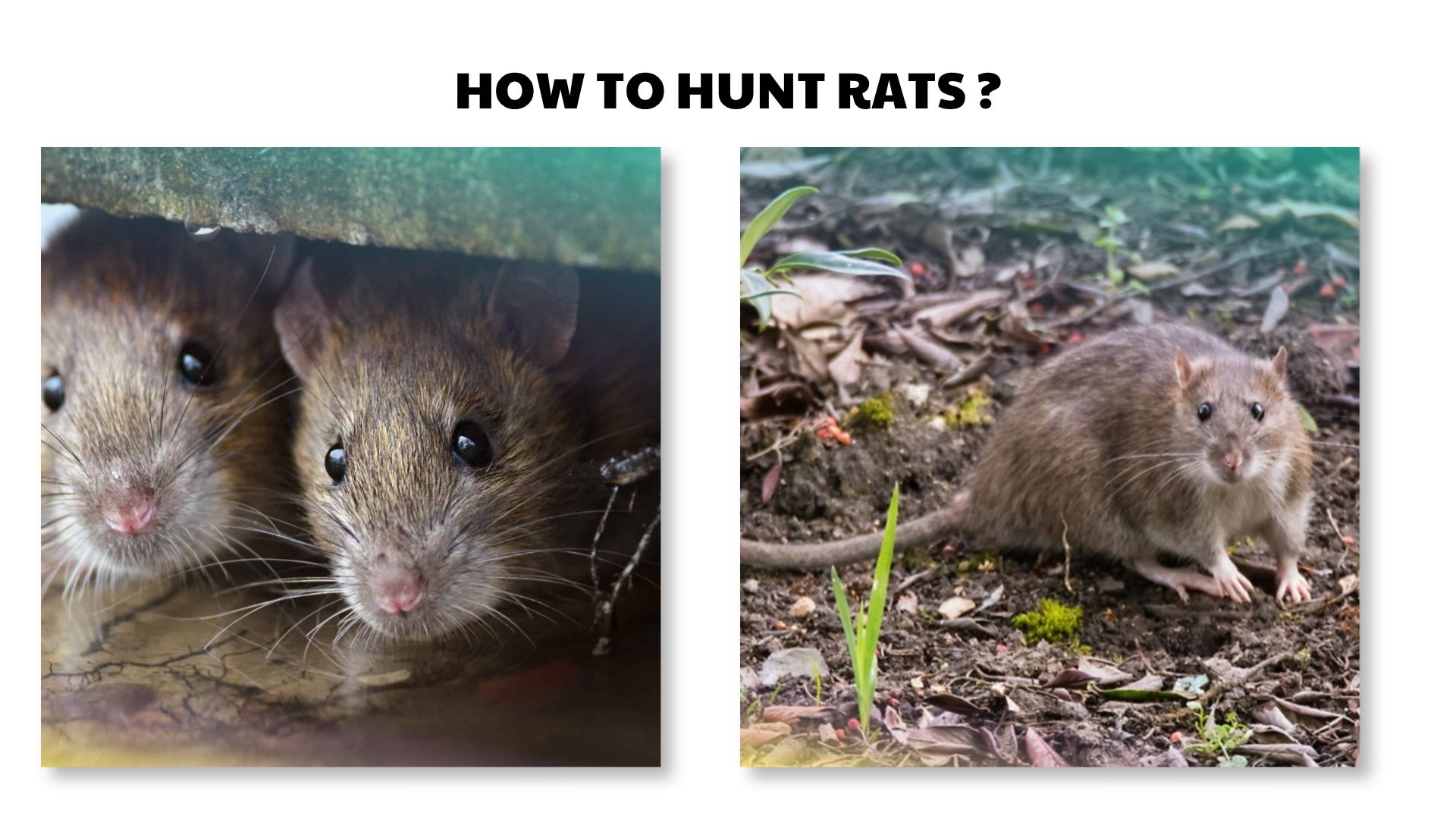
The likely target species for this keyword is the rat, most commonly the Norway rat or the roof rat in many human environments. Rats are not typical game animals. They are adaptable rodents that live close to food, water, shelter, and human activity.
Norway rats are often associated with burrows, building foundations, trash areas, feed storage, livestock pens, woodpiles, basements, crawl spaces, and ground-level shelter. Roof rats are stronger climbers and are often associated with attics, rafters, trees, dense vegetation, walls, false ceilings, roofs, and upper parts of buildings.
Rats are usually most active at night or during low-disturbance periods, but visible daytime activity may occur when populations are high, food is scarce, or cover is disturbed. They use repeated routes along walls, fences, pipes, feed bins, drains, pallets, brush piles, and building edges. They prefer travel routes where one side of the body touches cover.
Rats feed on grain, livestock feed, pet food, garbage, fruit, vegetables, birdseed, compost, spilled feed, eggs, stored food, and many other available foods. They need shelter and water, and they reproduce quickly when conditions are favorable. Hunting alone rarely solves a rat problem if food, water, shelter, and entry points remain available.
Beginner sign to recognize includes droppings, gnaw marks, burrows, greasy rub marks along walls, tracks in dust or mud, damaged feed sacks, shredded nesting material, urine odor, scratching sounds, runways, and sightings near food or shelter. Fresh sign matters more than old sign.
What You Need Before You Start
- Valid license, permit, written property permission, and current regulation knowledge if any hunting method is used
- Legal pest-control method allowed in your exact area
- Hunter orange or visibility clothing if working around farms, barns, low light, or shared property
- Weather-appropriate clothing, washable outerwear, and boots that can handle mud, manure, spilled feed, drains, and debris
- Navigation tools such as a map, property layout, flashlight, or GPS if working on large farms or rural properties
- First aid kit, water, gloves, disinfectant, and emergency communication
- Binoculars or optics only if useful for safe observation in outdoor rural areas
- Heavy gloves, disposable gloves, eye protection, and a mask or respirator when appropriate for cleanup
- Commercial traps or professional pest-control tools only where legal and used according to label or professional guidance
- Secure trash containers, feed storage bins, exclusion materials, and sanitation supplies
- Game bags are generally not relevant because rats should not be treated as food game; disposal should follow local health rules
- Cooler and meat care supplies are generally not recommended for rats because disease risk and public-health concerns make consumption inappropriate in most contexts
how to hunt rats: Step-by-Step Guide
Step 1: Check Local Hunting Laws First
Start by confirming whether rat control is regulated as hunting, pest control, nuisance wildlife removal, property maintenance, or public-health work in your area. Check local ordinances for firearm discharge, airgun use, bow use, trapping, poisoning, animal disposal, and work near homes, roads, schools, farms, food businesses, and public places.
Do not assume that rats can be shot anywhere because they are pests. Many cities and towns prohibit discharging air rifles, pellet guns, BB guns, firearms, and bows within city limits or near roads and buildings. Commercial pest control may require licensing. Poison use must follow product labels and local law.
Step 2: Learn the Animal’s Patterns
Rats usually move between food, water, shelter, nesting areas, and safe travel routes. They often follow walls, fence lines, beams, pipes, pallets, feed bins, drains, brush edges, and building foundations. Their movement is usually more predictable than random.
Norway rats often use ground-level routes and burrows. Roof rats often climb and use overhead routes. Watch for sign at feeding areas, water sources, nesting sites, entry holes, and travel lanes. The goal is not only to find rats but to understand why rats are present.
Step 3: Choose a Legal Hunting Area
Legal rat control may occur on private farms, barns, grain storage areas, livestock facilities, chicken coops, rural properties, orchards, warehouses, or other places where the owner has given permission and the method is lawful. Public areas, alleys, parks, roadsides, vacant lots, drains, and commercial properties may require special approval or professional service.
Do not trespass. Do not enter buildings, farms, sheds, warehouses, or barns without permission. If rats are in a shared building, rental property, restaurant, school, apartment, or commercial food area, contact the property owner, public-health authority, or licensed pest-control professional rather than attempting informal hunting.
Step 4: Scout Before the Hunt
Scout safely before choosing any control method. Look for droppings, gnaw marks, burrows, rub marks, tracks, damaged feed bags, nesting material, urine odor, scratching sounds, and repeated runways. Use a flashlight to inspect edges, corners, under pallets, around feed bins, along walls, and near trash or compost areas.
Do not stir up droppings, nests, or dust. Rodent waste can carry disease. Wear gloves, avoid touching contaminated material, and follow public-health cleanup guidance. If the infestation is heavy, in a food facility, inside a home, or around children, pets, or livestock feed, professional pest control is often safer.
Step 5: Prepare Your Gear Safely
Prepare only legal and appropriate gear for the location. In many rat-control situations, the safest tools are sanitation, exclusion, secure storage, commercial traps, and professional pest management. Shooting methods should never be used indoors, near hard surfaces, near people, near pets, around livestock, near roads, or anywhere a safe backstop is not guaranteed.
If a legal shooting method is used on rural private property, follow all firearm or airgun safety rules. Do not modify weapons, make ammunition, bypass safety features, use illegal ammunition, or use homemade devices. Follow manufacturer instructions, practice safely, and use only methods allowed by law.
Step 6: Plan for Wind, Weather, and Entry Route
Wind direction is not usually as important for rats as it is for deer, but airflow matters for odor, dust, disease exposure, and safety. Avoid working in enclosed contaminated areas without ventilation and appropriate protection. Do not sweep or vacuum rodent droppings because that can spread contaminated particles into the air.
Plan an entry route that avoids livestock, machinery, nails, loose boards, unstable floors, contaminated feed, electrical hazards, and confined spaces. If working at night where legal, use adequate lighting for walking and identification, but confirm that lights and night methods are lawful.
Step 7: Set Up Carefully
Rat “hunting setup” should begin with safety and pest-control planning. Identify the rats’ travel route, food source, shelter, entry point, and safe control zone. Remove people, pets, and livestock from the area before any control work begins.
If using traps, use legal commercial devices according to instructions and place them where children, pets, livestock, and non-target wildlife cannot access them. If using a legal shooting method outdoors, use only a safe earth backstop and avoid concrete, metal, water, stone, glass, walls, pipes, tanks, equipment, and any surface that can ricochet.
Step 8: Stay Patient and Observe
Rats are cautious and may avoid new objects or disturbances. Observe movement patterns from a safe distance. Watch for repeated routes rather than chasing rats through buildings or clutter. Chasing increases the risk of bites, falls, unsafe shots, and contamination.
Never reach into holes, under pallets, into nests, or behind equipment with bare hands. Do not corner rats or handle live rats. Bites and scratches can transmit disease, and frightened rats may act unpredictably.
Step 9: Take Only a Safe, Legal, and Ethical Shot Opportunity
Only use a shooting method if it is legal, necessary, humane, and completely safe. The target must be clearly identified as a rat, the background must be safe, and there must be no risk to people, pets, livestock, buildings, roads, vehicles, utilities, food storage, or non-target wildlife.
Do not shoot at noise, shadows, movement, or eyeshine without clear identification. Do not shoot indoors, toward hard surfaces, near feed equipment, near gas lines, near electrical systems, near water tanks, near animals, or in any direction where the projectile could travel unpredictably.
Step 10: Follow Legal Recovery and Reporting Rules
After a rat is removed legally, avoid bare-hand contact. Wear disposable gloves and follow local disposal rules. In many areas, dead rats should be sealed in a bag and placed in approved waste disposal, but local public-health or waste rules may vary.
Do not use rats for meat. Do not feed dead rats to pets, livestock, or wildlife. If poison was used anywhere on the property, carcasses can pose secondary poisoning risks to scavengers, pets, and predators, so follow the product label and local disposal rules carefully.
Step 11: Handle the Game Responsibly
For rats, responsible handling means disease-safe disposal, not traditional meat care. Wear gloves, avoid contact with blood, urine, droppings, saliva, fleas, and nesting material. Wash hands, disinfect tools, and clean contaminated surfaces using public-health guidance.
After removal, focus on prevention. Seal entry points, remove food and water, store feed securely, clean spills, manage trash, reduce clutter, and monitor for new sign. Hunting or trapping rats without prevention usually leads to more rats returning.
Best Time, Place, and Conditions for This Hunt
The best time to locate rats is often after dark or during quiet periods because rats are usually more active when human activity is low. However, night control methods, lights, airguns, and firearms may be regulated. Always verify legal hours and legal methods before planning any nighttime activity.
The best places to scout include feed rooms, grain storage, barns, chicken coops, compost areas, garbage storage, garden edges, woodpiles, sheds, crawl spaces, drains, foundation edges, rafters, attics, and walls where rats have food, water, shelter, and safe travel routes.
Weather matters because rain, cold, heat, and seasonal food changes can move rats toward shelter or stored food. Outdoor rats may move into buildings during cold or wet periods. Dry, dusty conditions can increase cleanup concerns around droppings and nesting material.
Private land and farms may allow planned rat control with permission and safe conditions. Public land, urban areas, alleys, shared buildings, rental properties, restaurants, schools, and public facilities usually require official approval or professional pest control. Local laws and public-health rules matter more than general advice.
Helpful Tips for Better Results
- Start with sanitation and exclusion because removing food, water, and shelter is the foundation of rat control.
- Check local laws before using any firearm, airgun, trap, poison, light, or night method.
- Get written permission before working on private farms, barns, warehouses, or rural property.
- Wear gloves and avoid direct contact with droppings, urine, nests, saliva, fleas, and carcasses.
- Never sweep or vacuum rodent droppings or nesting material.
- Do not shoot indoors or toward concrete, metal, water, equipment, glass, walls, or any hard surface.
- Keep children, pets, livestock, and non-target wildlife away from traps, bait stations, and control areas.
- Store feed, pet food, birdseed, grain, and garbage in sealed containers.
- Seal entry holes and gaps after confirming rats are not trapped inside living spaces.
- Use professional pest control for heavy infestations, food businesses, apartments, schools, or unsafe locations.
- Keep records of sign, entry points, food sources, control actions, and follow-up inspections.
- Continue monitoring after the first success because rats can return if conditions remain attractive.
Common Mistakes to Avoid
Rat hunting and rat control often fail because people focus only on removing individual rats while ignoring food, water, shelter, and entry points. A few removed rats will not solve a larger infestation if the property still supports them.
- Not checking current regulations: Firearm, airgun, trapping, poison, and pest-control laws can vary by city, county, and property type.
- Using unsafe shooting methods: Shooting indoors or near hard surfaces, buildings, livestock, roads, or people is dangerous and often illegal.
- Hunting without permission: Farms, warehouses, alleys, rentals, and commercial properties require owner or legal authority approval.
- Ignoring sanitation: Rats return quickly when food, garbage, feed, water, and shelter remain available.
- Handling rats bare-handed: Rats, droppings, urine, saliva, nesting material, and fleas can expose people to disease.
- Sweeping or vacuuming droppings: This can spread contaminated particles into the air.
- Using poison carelessly: Rodenticides can harm children, pets, livestock, and non-target wildlife if misused.
- Moving too quickly in cluttered areas: Old boards, nails, holes, manure, machinery, and unstable floors can cause injuries.
- Not practicing enough before any legal shooting method: Poor accuracy and poor backstop judgment create serious safety risks.
- Taking unsafe or unethical shots: Never shoot at unclear movement, shadows, or rats near non-target animals.
- Not planning disposal: Carcasses must be handled and disposed of according to local health rules.
- Failing to follow up: Rat control requires monitoring, exclusion, sanitation, and repeated inspection.
Troubleshooting Common Problems
| Problem | Possible Cause | What to Do |
|---|---|---|
| You are not seeing any rats | Rats may be active at night, avoiding disturbance, using hidden routes, or staying near food and shelter | Look for fresh droppings, tracks, rub marks, gnaw marks, burrows, and damaged feed rather than relying only on sightings. |
| Rats keep coming back | Food, water, shelter, garbage, feed, or entry points remain available | Improve sanitation, seal entry points, secure feed, manage trash, and consider professional pest control. |
| You are unsure whether shooting is legal | Local firearm, airgun, pest-control, or municipal rules may restrict discharge | Do not shoot until you confirm legality with local authorities and property owners. |
| The background is unsafe | Buildings, concrete, metal, water, equipment, livestock, roads, or people are nearby | Do not shoot. Use sanitation, exclusion, traps, or professional pest control instead. |
| There are droppings in a shed or barn | Rats are using the area for feeding, travel, or nesting | Ventilate if appropriate, wear gloves, do not sweep or vacuum, disinfect safely, and remove attractants. |
| Pets or children may access the area | Control tools may be exposed or the site is not secured | Do not use unsafe devices or poisons. Use tamper-resistant professional methods or hire a licensed pest-control operator. |
| Rats avoid traps or control areas | Rats are cautious, food competition exists, or placements are poor | Focus on travel routes, remove alternate food, use legal commercial tools correctly, and get professional help if needed. |
| You find a large infestation | Long-term food, shelter, and entry-point problems | Call professional pest control and address sanitation, exclusion, and building maintenance. |
| You are worried about disease | Rodent waste, bites, fleas, or carcasses may expose people to pathogens | Avoid contact, wear protective gear, follow public-health cleanup guidance, and seek medical advice after bites or exposure. |
| You feel nervous about handling equipment | Limited experience with firearms, airguns, traps, or contaminated areas | Stop and get training, hire a professional, or use safer prevention steps such as sanitation and exclusion. |
Ethical Hunting and Conservation
Ethical rat hunting is really ethical pest control. Rats can damage property, contaminate food, harm livestock operations, and spread disease, but control should still be legal, humane, targeted, and safe. Reckless killing, unsafe shooting, careless poison use, and harm to non-target animals are not responsible control.
- Respect wildlife and domestic animals by avoiding harm to non-target species.
- Respect landowners by getting permission and following property rules.
- Respect neighbors by avoiding noise, unsafe shooting, trespassing, and careless disposal.
- Obey all local laws for weapons, traps, rodenticides, access, disposal, and pest control.
- Avoid waste and contamination by handling carcasses safely and cleaning properly.
- Practice before using any legal shooting method and know your safe effective range.
- Pass on unsafe or uncertain shots immediately.
- Support conservation by avoiding poison misuse that harms owls, hawks, foxes, cats, dogs, and other non-target animals.
- Leave barns, sheds, farms, and outdoor areas cleaner and safer than you found them.
When to Get More Training or Professional Guidance
Beginners should seek more training or professional guidance when they have never handled a firearm or airgun, have not completed hunter education, are unsure about local laws, do not understand property boundaries, are not confident in safe shooting, are working around buildings or livestock, or need help with disease-safe cleanup and disposal.
Professional pest control is strongly recommended for heavy infestations, indoor infestations, restaurants, food-storage areas, schools, apartments, rental properties, hospitals, warehouses, farms with major feed contamination, situations involving children or pets, and cases where poison, trapping, exclusion, or sanitation must be coordinated safely.
Good learning sources include official hunter education courses, local wildlife agencies, public-health departments, agricultural extension offices, certified pest-control operators, experienced ethical mentors, and reputable farm biosecurity resources.
After the Hunt: Follow-Up, Gear Care, and Learning
After any legal rat-control activity, unload and store firearms or airguns safely according to law and manufacturer instructions. If using traps, secure or remove them when the control session is over so children, pets, livestock, and non-target animals are not harmed.
Wear gloves when handling carcasses or contaminated materials. Follow local disposal rules. Clean and disinfect reusable tools, boots, gloves, and surfaces according to public-health guidance. Wash hands thoroughly after cleanup.
Review what worked and what did not. Record where rats were active, what food sources were available, which entry points were found, where droppings appeared, and whether sanitation or exclusion improved the problem. Continue monitoring for new sign.
The most important follow-up is prevention. Secure garbage, store feed in sealed containers, remove clutter, repair holes, trim vegetation near buildings, clean spilled grain, manage compost, and block entry routes. Long-term rat control depends on making the property less attractive to rats.
Recommended Hunting Gear and Tools to Consider
You do not always need expensive gear to control rats responsibly. Choose gear based on your local laws, property type, safety needs, pest level, skill level, and budget. In many situations, prevention and professional pest control are safer than hunting methods.
- Legal control method allowed in your area
- Quality boots for barns, farms, sheds, mud, manure, debris, and uneven ground
- Weather-appropriate clothing and visibility gear if working outdoors or around farm traffic
- Flashlight or headlamp for inspection, not for illegal night shooting
- Navigation tools such as a map, property layout, GPS, or hunting app for large rural properties
- First aid kit and emergency communication
- Disposable gloves, heavy gloves, eye protection, disinfectant, and safe cleanup supplies
- Sealed feed bins, trash containers, exclusion materials, and sanitation tools
- Commercial traps or tamper-resistant pest-control tools where legal and used according to instructions
- Licensed pest-control service for large, indoor, commercial, or high-risk infestations
Final Thoughts
Learning how to hunt rats should begin with safety, legality, and prevention. Rats are usually a pest-control problem, not a traditional hunting opportunity. Before taking action, verify local laws, get permission, identify the rat species and sign, protect people and pets, and decide whether sanitation, exclusion, traps, or professional pest control are more appropriate than any shooting method.
When rat control is legal and necessary, act carefully. Avoid unsafe shots, avoid bare-hand contact, avoid poison misuse, avoid contaminated dust, and focus on the conditions that allowed rats to thrive. Responsible rat control protects health, property, livestock, wildlife, and the surrounding community.
FAQs
1. How long does it take to learn how to hunt rats?
A beginner can learn the basic safety and scouting process quickly, but responsible rat control requires understanding local laws, disease precautions, sanitation, exclusion, and safe control methods.
2. Is hunting rats legal?
It depends on your location, property type, and method. Some areas allow pest control, but firearm, airgun, trap, poison, and night rules may be strict.
3. Do I need a hunting license to hunt rats?
Some areas may require a hunting license or pest-control authorization, while others treat rats under nuisance-pest rules. Check local law before acting.
4. Are rats considered game animals?
Usually no. Rats are normally treated as pests or nuisance animals, not food-game animals. Rules still vary by jurisdiction.
5. Is there a rat hunting season?
Rats often do not have a traditional game season, but local rules may restrict methods, hours, locations, and property access.
6. Can I shoot rats in my backyard?
Only if local law allows it and the situation is completely safe. Many cities prohibit airgun, BB gun, or firearm discharge in yards.
7. Can I use an air rifle for rats?
Air rifle laws vary by location. Even where legal, an air rifle must not be used near people, pets, livestock, roads, buildings, or hard surfaces without a safe backstop.
8. Can I use a firearm for rats?
Firearms are usually inappropriate and often illegal around homes, barns, and neighborhoods. Check local law and never shoot without a safe backstop.
9. Can I use a bow for rats?
Bow use for rats may be illegal, unsafe, or impractical in many places. Check regulations and never shoot near people, pets, livestock, or buildings.
10. Can I hunt rats at night?
Night activity rules vary. Lights, night shooting, and weapons may be regulated or prohibited. Confirm local law before any nighttime activity.
11. Is spotlighting rats legal?
Spotlighting or using artificial lights for pest control can be restricted. Do not use lights for hunting unless local law clearly allows it.
12. Where do rats usually live?
Rats live near food, water, and shelter. Common places include barns, sheds, grain bins, trash areas, crawl spaces, attics, foundations, drains, compost, and feed rooms.
13. What is the difference between Norway rats and roof rats?
Norway rats are often ground-oriented and may burrow near foundations or feed areas. Roof rats are strong climbers and often use attics, rafters, trees, and overhead routes.
14. What do rats eat?
Rats eat grain, feed, pet food, garbage, fruit, vegetables, birdseed, compost, eggs, stored food, and many other available foods.
15. What are common rat signs?
Common signs include droppings, gnaw marks, burrows, rub marks, tracks, urine odor, shredded nesting material, damaged feed bags, and scratching sounds.
16. How do I scout for rats?
Inspect food sources, walls, foundations, feed rooms, trash areas, water sources, burrows, and hidden travel routes. Avoid disturbing droppings or nests.
17. What do rat droppings look like?
Rat droppings are usually dark, pellet-shaped, and found near feeding, travel, or nesting areas. Do not touch them with bare hands.
18. Should I sweep rat droppings?
No. Sweeping can stir contaminated particles into the air. Follow public-health guidance for disinfecting and cleaning rodent waste.
19. Should I vacuum rat droppings?
No. Vacuuming can spread contaminated dust. Use safe cleanup methods recommended by public-health authorities.
20. Can rats carry diseases?
Yes. Rats and other rodents can spread diseases through urine, droppings, saliva, bites, scratches, fleas, and contaminated food or surfaces.
21. What diseases are linked to rats?
Rodents may be associated with diseases such as leptospirosis, rat-bite fever, salmonellosis, hantavirus, and other illnesses depending on region and exposure.
22. What should I do if a rat bites me?
Wash the wound and seek medical advice promptly. Rat bites can transmit infection and should not be ignored.
23. Should I wear gloves when handling rats?
Yes. Wear disposable gloves and avoid contact with blood, urine, droppings, saliva, fleas, and nesting material.
24. Can I eat rats after hunting them?
No. In normal pest-control contexts, rats should not be treated as food game because of disease and contamination risks.
25. How should I dispose of dead rats?
Wear gloves and follow local waste and public-health rules. Many areas recommend sealed disposal, but rules vary.
26. Are rat poisons safe?
Rodenticides can be dangerous if misused. They can harm children, pets, livestock, and non-target wildlife. Always follow the label or hire a professional.
27. Should I use homemade poison?
No. Homemade poisons can be illegal, cruel, ineffective, and dangerous to people, pets, livestock, and wildlife.
28. Are traps better than shooting rats?
In many homes, barns, and neighborhoods, traps, sanitation, exclusion, and professional pest control are safer and more effective than shooting.
29. Can I use traps for rats?
Commercial traps may be legal and effective when used correctly. Keep them away from children, pets, livestock, and non-target wildlife.
30. Is baiting rats legal?
Bait use depends on the product and local rules. Food baits, traps, and rodenticides must be used legally and safely.
31. Why do rats keep returning?
Rats return when food, water, shelter, and entry points remain available. Long-term control requires sanitation and exclusion.
32. How do I keep rats away after hunting them?
Seal holes, store feed securely, manage garbage, remove clutter, clean spills, reduce water sources, and monitor for new sign.
33. What is exclusion in rat control?
Exclusion means blocking entry points so rats cannot enter buildings, feed rooms, crawl spaces, attics, or storage areas.
34. What is sanitation in rat control?
Sanitation means removing food, water, clutter, garbage, spilled feed, and shelter that help rats survive and reproduce.
35. Can I hunt rats in a barn?
Only if the property owner allows it, the method is legal, and the area is completely safe. Shooting in barns is often unsafe because of hard surfaces, livestock, equipment, and fire risk.
36. Can I hunt rats around chickens?
Be extremely cautious. Do not shoot near chickens, coops, feed, waterers, wiring, or people. Sanitation, exclusion, and safe traps are often better.
37. Can I hunt rats near livestock?
Only with landowner permission and a completely safe method. Never shoot toward livestock, feed equipment, barns, fences, or water systems.
38. Can I hunt rats in a city?
Urban rat control usually requires sanitation, building maintenance, traps, and professional pest control. Shooting is commonly illegal or unsafe in cities.
39. Can I hunt rats on public land?
Public land rules vary, but informal rat hunting is often not appropriate. Check the managing agency before taking any action.
40. Do I need private land permission?
Yes. Never enter farms, barns, sheds, warehouses, alleys, vacant lots, or private property without permission.
41. What is the safest way to find rat travel routes?
Look along walls, foundations, pipes, feed bins, trash areas, fence lines, burrow entrances, and rub-marked edges without disturbing waste or nests.
42. What time are rats most active?
Rats are often most active at night or during quiet periods, but daytime sightings may happen when populations are high or disturbed.
43. Does wind direction matter for rat hunting?
Wind is less important than with big game, but airflow matters for odor, dust, and disease exposure during cleanup.
44. Does scent control matter for rats?
Scent control is not the main issue. Food removal, sanitation, exclusion, and safe control methods matter more.
45. Do I need a blind for rat hunting?
No. Rat control usually requires inspection, sanitation, exclusion, traps, or professional service, not traditional hunting blinds.
46. Do I need a tree stand for rat hunting?
No. Tree stands are not relevant for rat control and could create unnecessary safety risk.
47. What should I pack for outdoor rat control?
Pack gloves, first aid, flashlight, water, communication, disinfectant supplies, property map, and any legal tools allowed for the site.
48. When should I call professional pest control?
Call a professional for indoor infestations, large infestations, food businesses, rental properties, schools, apartments, or situations involving children, pets, livestock, or poison.
49. What if rats are in my attic?
Do not shoot or chase rats in an attic. Use exclusion, sanitation, safe traps, and professional pest control if needed.
50. What if rats are in a restaurant or food business?
Contact licensed pest control and follow public-health regulations. Food businesses require professional sanitation, exclusion, monitoring, and documentation.
51. Is rat hunting expensive?
Costs vary. Sanitation and exclusion may be inexpensive, while professional pest control, building repairs, and farm-scale control may cost more.
52. What is the biggest beginner mistake in rat hunting?
The biggest mistake is treating rat control like target shooting instead of a legal, public-health, sanitation, and safety problem.
53. Can kids help with rat hunting?
Children should not handle rats, traps, poisons, firearms, droppings, or contaminated materials. Keep them away from control areas.
54. How does responsible rat control help conservation?
Responsible control avoids poison misuse, protects non-target wildlife, reduces contamination, and prevents harm to owls, hawks, pets, and other animals.
55. What is the best way to improve at rat control?
Learn local laws, study rat sign, improve sanitation, seal entry points, monitor regularly, use safe legal tools, and call professionals when the situation is beyond your skill.
Read more: