
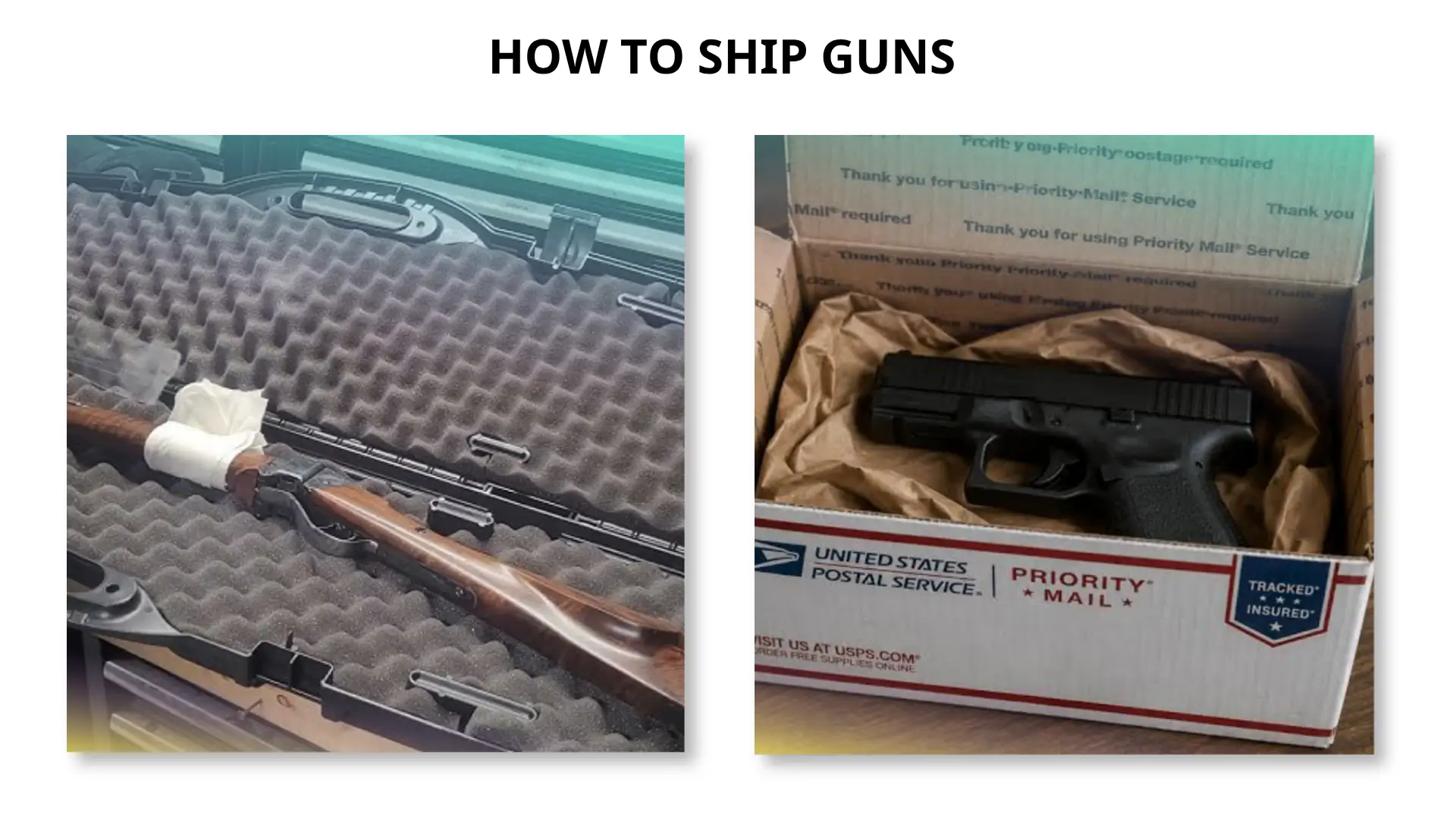

Learning how to ship guns is mostly a legal-compliance task, not an ordinary packing job. The lawful route depends on who is shipping, what type of firearm is involved, who will receive it, the states involved, and the carrier’s current contract rules.
This guide explains a conservative process for lawful domestic U.S. shipments to a licensed dealer, gunsmith, or manufacturer. It does not cover evading transfer requirements, hiding a shipment from a carrier, illegal private transfers, or international export procedures.
Quick Answer
For most private firearm owners, the safest way to ship a gun is to contact the receiving FFL, gunsmith, or manufacturer before doing anything. Ask that licensee to confirm that the shipment is lawful, provide the exact address and documentation, and identify a carrier that will accept the package under its current policy. Unload the firearm completely, remove all ammunition, secure it in a rigid case inside a plain outer carton, use the required signature service, and keep complete records.
Current Carrier Rules at a Glance
| Carrier | Private Non-FFL Shipper | Important Current Conditions |
|---|---|---|
| USPS | Limited | Current official guidance allows qualifying rifles and shotguns in certain lawful shipments. Handguns remain nonmailable for ordinary nonlicensees under the official material reviewed for this article. |
| UPS | Generally not independently eligible | UPS accepts firearm products only under an approved contractual program for qualifying licensed shippers. An approved FFL or manufacturer may provide a compliant return label. |
| FedEx | No | FedEx states that non-FFLs and unapproved shippers are prohibited from shipping firearms. Approved FFL shippers must execute a compliance agreement. |
Do not rely on old forum posts, a retail clerk’s informal opinion, or a label purchased through a generic shipping website.
Before You Ship: Identify the Legal Scenario
- Sale or transfer to an out-of-state person: arrange delivery to an FFL who will perform the lawful transfer.
- Repair or warranty service: obtain written instructions and, when available, a prepaid compliant label from the licensed gunsmith or manufacturer.
- Shipment to an FFL: verify the license and exact shipping address before sending.
- Shipment to yourself: do not assume this is automatically accepted by a carrier; verify federal, state, and carrier rules first.
- NFA firearm, suppressor, machine gun, short-barreled firearm, or other specially regulated item: stop and contact ATF and a qualified FFL/SOT.
- International destination: use qualified export counsel and licensed exporters. Ordinary domestic procedures are not enough.
How to Ship Guns: Step-by-Step
Step 1: Confirm That the Recipient May Legally Receive the Firearm
Do not ship until the recipient’s legal role is clear. For an interstate sale or transfer, the destination is usually a licensed dealer rather than the buyer’s home. For a repair, confirm that the gunsmith or manufacturer is properly licensed and willing to receive the firearm.
Step 2: Check Federal, State, and Local Law
Review the law in the sender’s location, the recipient’s location, and any relevant transfer jurisdiction. State rules may regulate waiting periods, dealer processing, permits, firearm models, magazine capacity, registration, or shipping procedures.
Step 3: Verify the FFL and Shipping Address
Use ATF’s official FFL verification tools when applicable. Independently contact the dealer through a trusted website or phone number. Criminals sometimes send altered license images or substitute fraudulent shipping addresses.
Step 4: Get Written Shipping Instructions
Ask the receiving FFL, manufacturer, or gunsmith which carrier and service to use, what identification or documentation to include, whether a prepaid label will be issued, and how the return shipment will be handled.
Step 5: Choose a Carrier That Will Actually Accept the Shipment
Carrier rules can be stricter than federal law. UPS currently restricts firearm products to approved licensed contractual shippers. FedEx currently prohibits unapproved and non-FFL firearm shippers. USPS has separate rules for handguns and long guns.
Step 6: Unload and Inspect the Firearm
Point the firearm in a safe direction and follow the manufacturer’s unloading procedure. Remove the magazine, open the action, check the chamber or cylinder, and physically and visually verify that no ammunition remains. Keep ammunition in another area while packing.
Step 7: Prevent Movement and Protect the Firearm
Use a sturdy case or protective inner container. Cushion the firearm so it cannot shift, strike the case, or protrude through the packaging. A chamber flag or lock may be added when suitable, but it does not replace proper unloading.
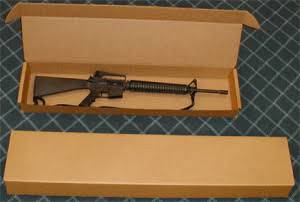
Step 8: Place the Inner Case in a Plain Outer Carton
Use a new or structurally sound corrugated box appropriate for the weight. Fill empty spaces, close all seams securely, and avoid exterior firearm names, logos, model numbers, or other identifying marks.
Step 9: Keep Ammunition Out of the Package
Do not place loose cartridges, loaded magazines, or ammunition boxes inside the firearm package. Ammunition is regulated separately as hazardous material and must follow a carrier’s dedicated ammunition policy.
Step 10: Create the Correct Label and Signature Service
Use the exact recipient address supplied by the FFL. Choose the signature level required by the carrier or shipping agreement. Do not route the package to an access point, locker, hotel, or alternate address unless the carrier and FFL expressly authorize it.
Step 11: Tender the Package Through an Authorized Channel
Follow the carrier’s instructions for pickup or staffed acceptance. Never place a firearm package in an unattended drop box. Do not ask a retail employee to misclassify the package or omit a required declaration.
Step 12: Save the Complete Paper Trail
Retain the serial number, photographs, FFL verification, written instructions, shipping receipt, tracking record, signature confirmation, and correspondence. Monitor the package until delivery is confirmed.
Safe Packing Checklist
- Recipient and address independently verified
- Shipment approved by receiving FFL
- Firearm completely unloaded
- No ammunition in the package
- Magazine removed when practical
- Action secured according to manufacturer guidance
- Firearm protected in a rigid inner case
- No movement inside the package
- Strong plain outer carton
- No firearm-identifying exterior markings
- Correct carrier-approved label
- Required adult or direct signature selected
- Tracking and declared value considered
- Serial number and condition documented
- Receipt and delivery confirmation retained
USPS Rules: Handguns Versus Long Guns
Current ATF guidance states that a nonlicensee may mail a lawful rifle or shotgun to a resident of the same state or to a licensee in any state, while handguns are not mailable by ordinary nonlicensees. USPS Publication 52 contains the detailed definitions, eligibility rules, documentation, and packaging requirements.
There have been public proposals concerning handgun mailability, but a proposal is not the same as a final effective rule. Check the current text of USPS Publication 52, Section 43 immediately before mailing.
UPS Rules
UPS currently accepts firearm products only as a contractual service from approved qualifying licensees. UPS defines firearm products broadly to include firearms and many parts. Its policy requires compliant packaging, non-descriptive outer labeling, adult signature and direct-delivery services, and separate shipment of ammunition.
Review the current UPS firearm policy. A private owner returning a firearm should follow a compliant label and instructions issued by the approved manufacturer or FFL.
FedEx Rules
FedEx currently allows approved FFL customers to seek authorization through a FedEx account executive and execute a firearm shipping compliance agreement. FedEx states that non-FFLs and other unapproved shippers are prohibited from shipping firearms.
Approved shipments must be unloaded, packaged securely, placed in a plain outer box, and sent with an appropriate signature requirement. Review the current FedEx firearm shipping page.
Common Mistakes to Avoid
- Shipping directly to an out-of-state private buyer.
- Assuming federal legality guarantees carrier acceptance.
- Using a generic online label without checking firearm restrictions.
- Failing to verify the receiving FFL and address.
- Including ammunition in the firearm package.
- Using an exterior box with firearm branding.
- Leaving the package in an unattended drop box.
- Misrepresenting the contents to the carrier.
- Using an access point, locker, hotel, or rerouted destination.
- Shipping an NFA firearm without specialized guidance.
- Relying on outdated advice after carrier policies have changed.
Troubleshooting Common Problems
| Problem | Likely Cause | What to Do |
|---|---|---|
| Carrier website will not create a label | The account is not approved for firearm shipments | Contact the receiving FFL or manufacturer and request a compliant label or shipping method. |
| Retail location refuses the package | The location is not authorized, or the shipment does not meet policy | Do not argue or conceal the contents. Contact the carrier’s regulated-goods department or the receiving FFL. |
| FFL address does not match | Outdated, fraudulent, or incomplete information | Stop the shipment and independently verify the license and address. |
| Package contains ammunition | Packing oversight | Remove all ammunition and follow a separate hazardous-material process if shipping ammunition lawfully. |
| Package is lost or delayed | Carrier exception, damage, or routing issue | Notify the carrier and receiving FFL immediately and preserve all records. Contact authorities when instructed. |
| Destination law is unclear | State or local restrictions | Do not ship. Consult the destination FFL, state authority, ATF, or qualified legal counsel. |
When to Use an FFL Instead of Shipping It Yourself
Using a local FFL is often the simplest option when the carrier will not accept a private shipment, the firearm is being sold across state lines, the destination has complex restrictions, the firearm is unusually valuable, or the item may fall under the National Firearms Act. The dealer can confirm eligibility, prepare records, choose an approved carrier, and coordinate with the receiving FFL.
What to Do if a Shipment Is Lost, Stolen, or Damaged
- Contact the carrier immediately using the tracking number.
- Notify the receiving FFL or manufacturer.
- Preserve photographs, receipts, serial numbers, and all communications.
- Follow the carrier’s claim procedure.
- Contact local law enforcement and ATF when required or advised.
- Do not publish the full serial number publicly.
Official Resources
- ATF: May a nonlicensee ship a firearm through USPS?
- ATF Federal Firearms License resources
- USPS Publication 52: Firearms
- UPS: How to Ship Firearms
- FedEx: How to Ship Firearms
Final Thoughts
The safest answer to how to ship guns is to begin with the receiving licensee, not the cardboard box. Verify the transaction, destination, FFL, carrier eligibility, and current law before packing. Keep the firearm unloaded, keep ammunition separate, use a plain and secure package, require the correct signature, and retain complete records. When any part of the process is uncertain, stop and use a qualified FFL rather than improvising.
Frequently Asked Questions
Can a private individual ship a firearm?
Sometimes, but eligibility depends on the firearm, sender, recipient, state law, federal law, and the carrier’s current policy. A private individual should confirm the receiving FFL’s instructions before packing anything.
Can I ship a gun directly to another person in another state?
Generally, an unlicensed person may not transfer a firearm directly to an unlicensed resident of another state. The usual lawful route is shipment to a Federal Firearms Licensee who completes the required transfer.
Can I mail a handgun through USPS?
Under the current official federal and USPS guidance referenced in this article, ordinary nonlicensees should not mail handguns. Because rules are under active review, verify the current USPS Publication 52 and ATF guidance before acting.
Can I mail a rifle or shotgun through USPS?
A nonlicensee may be able to mail a lawful rifle or shotgun to a resident of the same state or to an FFL, subject to USPS rules and all state and local laws. Confirm eligibility at the time of mailing.
Can a non-FFL ship a firearm with UPS?
UPS currently limits firearm-product shipping to approved contractual shippers who hold qualifying federal licenses. A private individual normally needs an approved FFL or manufacturer to provide a compliant return label or handle the shipment.
Can a non-FFL ship a firearm with FedEx?
FedEx currently states that unapproved shippers and shippers without an FFL are prohibited from shipping firearms through FedEx.
Can I ship a gun to myself in another state?
Federal guidance has historically recognized limited situations involving shipment to yourself for lawful activity without transferring ownership, but carrier policies may still block the shipment. Confirm with ATF, the destination state, and the carrier before proceeding.
Can I ship a firearm to a gunsmith?
Often yes, when the gunsmith is properly licensed and provides shipping instructions. The gunsmith or manufacturer should confirm the exact address, carrier, return process, and required documentation.
Can a manufacturer send my repaired firearm back to me?
In many lawful repair situations, a licensed manufacturer or gunsmith may return the same firearm to its owner, but the licensee must determine whether the transaction and destination are lawful.
Should ammunition be packed in the same box?
No. Carrier rules generally require ammunition to be shipped separately, and ammunition is regulated as hazardous material. Follow the carrier’s dedicated ammunition rules.
Does the firearm need to be unloaded?
Yes. Verify the chamber, magazine well, cylinder, and all ammunition storage areas are empty before packing. Keep ammunition out of the firearm package.
Should I use a hard case?
A rigid case inside a strong outer carton is a practical choice. The firearm should not move inside the package, and the outer box should not reveal the contents.
Can the outside box say firearm or gun?
Carrier and federal guidance generally call for a non-descriptive outer package. Do not place markings on the exterior that identify the contents as a firearm.
Is an adult signature required?
UPS requires Adult Signature Required and Direct Delivery Only for firearm shipments under its approved program. FedEx approved firearm shipments require an adult or direct signature option. Follow the exact carrier agreement.
Can I leave the package at a drop box?
Do not use an unattended drop box unless the carrier’s current firearm policy expressly allows it. Approved firearm shipments usually have specific pickup or staffed-location requirements.
Can I use The UPS Store?
Only in limited situations described by UPS, such as an approved shipper providing a compliant, prepaid return label. Follow the instructions supplied by the approved FFL, manufacturer, or UPS agreement.
Can FedEx Office pack the firearm for me?
FedEx states that its team members cannot pack firearm shipments or create firearm labels. Approved shipments must arrive pre-packaged and pre-labeled.
Do I have to tell the carrier the package contains a firearm?
Federal law and carrier agreements may require notification to the carrier in particular circumstances. Never misrepresent the contents. Follow the exact declaration process provided by the carrier or receiving FFL.
Do I need a copy of the receiving dealer’s FFL?
The receiving dealer should provide the information or verification method needed for the shipment. Do not rely on an unverified emailed image alone; confirm the dealer and shipping address through an official method.
How can I verify an FFL?
Use ATF’s official FFL eZ Check service when applicable and independently contact the dealer using trusted contact information.
Can I ship a firearm to a P.O. box?
Do not assume a P.O. box is acceptable. Use only the address approved by the receiving licensee and carrier.
Can I ship internationally?
International firearm shipments involve export controls, import permits, customs rules, and carrier restrictions. Do not attempt an international shipment without qualified export and legal guidance.
Can I ship an NFA firearm?
NFA firearms and suppressors involve additional federal registration and transfer requirements. Contact ATF and a qualified FFL/SOT before moving or shipping any regulated item.
Is a firearm frame or receiver treated like a firearm?
Yes. Federal and postal definitions generally treat the regulated frame or receiver as a firearm. Do not ship it as an ordinary unregulated part.
Can I ship gun parts?
Some parts are not firearms under federal law, but carrier policies may define and restrict firearm parts more broadly. State and local laws may also regulate magazines and other components.
Can I ship magazines?
Magazine laws vary widely, and carriers may classify magazines as firearm parts. Verify destination restrictions and carrier policy before shipping.
Can I ship a scope?
A standalone scope is generally not a firearm, and UPS states that scopes are excluded from its definition of firearm products. Other laws and carrier restrictions can still apply.
Can I ship an antique firearm?
Antique-firearm treatment depends on exact legal definitions and configuration. Do not assume age alone makes an item unregulated; confirm with ATF, USPS, the carrier, and destination law.
Can I ship a muzzleloader?
Some muzzleloaders may fall outside the federal firearm definition, while others do not. Carrier rules and state laws can be stricter, so verify the exact model and configuration.
Can I ship a firearm for a sale within my state?
Federal law may allow some intrastate transfers between eligible residents, but state law may require an FFL, permit, waiting period, background check, or other procedure. Use an FFL when uncertain.
What if the buyer cannot legally possess firearms?
Do not ship or transfer the firearm. Contact the receiving FFL or legal counsel if eligibility is unclear.
What if the package is lost?
Contact the carrier and receiving FFL immediately, preserve tracking and serial-number records, and follow instructions from law enforcement or ATF when appropriate.
Should I insure the shipment?
Consider declared value or insurance where available, but read exclusions carefully. Coverage does not make an otherwise prohibited shipment lawful.
Should I photograph the firearm before shipping?
Documenting the firearm’s condition, serial number, packaging, and tracking information can help with records and claims. Store those records securely.
What records should I keep?
Keep the recipient’s details, FFL verification, serial number, carrier receipt, tracking number, delivery confirmation, photographs, and relevant correspondence.
Can I reuse a branded firearm box?
A manufacturer’s box may be used inside a plain, sturdy outer carton if the carrier permits it. The outer package should be non-descriptive and sufficiently protective.
Can I ship a loaded magazine separately in the same carton?
No. Do not place loaded magazines or loose ammunition in the firearm carton. Ammunition must follow separate hazardous-material rules.
Should I put a lock through the action?
A chamber flag, cable lock, or other safe condition indicator may help prevent movement or confusion, but it does not replace unloading, secure packaging, and carrier compliance.
Can I ship to a hotel or temporary address?
Do not do so without written confirmation from the carrier, receiving FFL, and applicable authorities. Temporary destinations create possession, delivery, and identity-verification complications.
Can I reroute a firearm package after shipment?
UPS states that firearm-product shipments are not eligible for delivery-change or rerouting requests. Other carriers may impose similar restrictions.
Read more: How to Hunt in Cold Weather: A Safe, Practical Guide for Beginners