
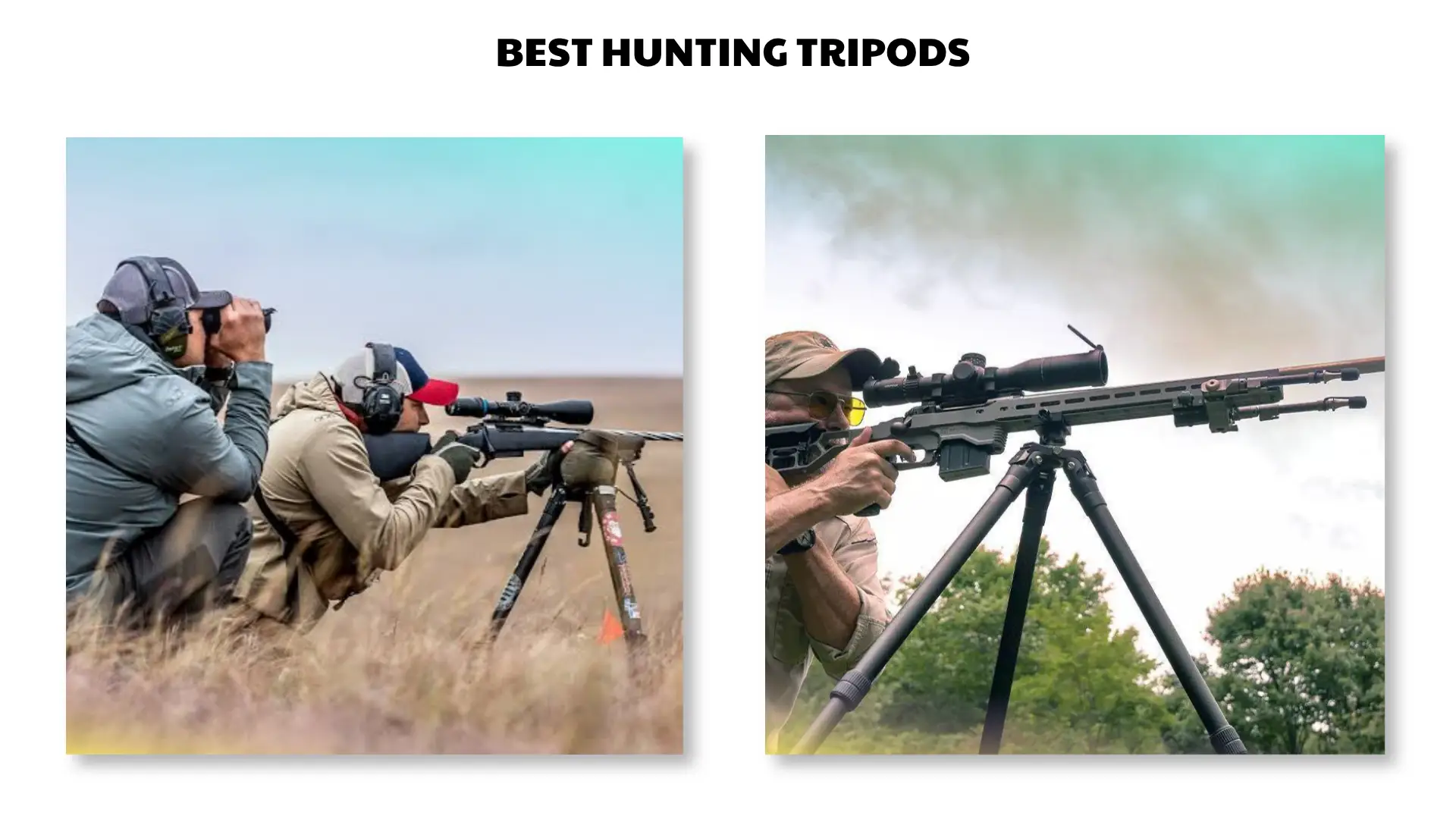

The best hunting tripods give binoculars, spotting scopes, cameras, and compatible field accessories a stable platform without adding unnecessary weight or complexity. A good tripod can reduce eye fatigue during long glassing sessions, make high-magnification details easier to see, and help a hunter observe terrain carefully before making a safe and lawful decision.
This guide compares ten tripods for backcountry glassing, vehicle-supported observation, large spotting scopes, compact binocular setups, photography, and budget-conscious beginners. The right choice depends on optic weight, head type, height, folded length, leg construction, weather, terrain, and how far the system must be carried.
A tripod cannot replace ethical judgment, proper training, firearm safety, a safe background, or compliance with hunting regulations. Any use with a firearm-rest accessory must be specifically supported by the manufacturers, legal in the location, and practiced under qualified instruction.
Safety reminder: Keep mounted optics secure, control the tripod on slopes and in wind, and never let tripod legs, straps, handles, or adapters interfere with muzzle direction, trigger discipline, exits, or safe movement.
Quick Picks
- Best Overall for Spotting Scopes: Manfrotto Befree 3-Way Live Advanced Tripod
- Best Budget Option: Manfrotto Element MII Aluminum Tripod
- Best Ultralight Carbon Option: Vanguard VEO 3GO 235CB Carbon Tripod
- Best Premium Stability: 3 Legged Thing Winston 2.0 Carbon Fiber Tripod
- Best Tall Vehicle-Supported Tripod: SmallRig AD-01 Heavy-Duty Fluid Head Tripod
Best Hunting Tripods Product Comparison Table
Published payload ratings are only one part of tripod performance. A long spotting scope, wind, uneven ground, a raised center column, and a loose adapter can make a system unstable even below the stated rating.
| Product | Best For | Key Features | Important Notes | Check Details |
|---|---|---|---|---|
| Manfrotto Befree 3-Way Live Advanced Tripod | Best Overall for Spotting Scopes | Aluminum; 4 leg sections; about 59.4 in max height; about 15.7 in folded; 3-way fluid head | Smooth, precise head for glassing; heavier and bulkier than a simple ball-head travel tripod. | Check Details |
| Manfrotto Befree Advanced AS Tripod | Best Versatile Lightweight Tripod | Aluminum configuration; 4 leg sections; about 59 in max height; about 15.7 in folded; Arca-type ball head | Compact and versatile, but a ball head is less precise for slow spotting-scope tracking than a fluid head. | Check Details |
| 3 Legged Thing Winston 2.0 Carbon Fiber Tripod | Best Premium Stability | Carbon fiber; 3 leg sections; about 76.4 in max height; about 24 in folded; high published payload | Exceptionally tall and strong, but longer when folded and more expensive than backcountry-focused options. | Check Details |
| 3 Legged Thing Punks Brian 2.0 Carbon Fiber Tripod | Best Tall Backcountry Tripod | Carbon fiber; 5 leg sections; about 73.2 in max height; about 16.5 in folded; about 3.7 lb | Very tall for its folded size, but five leg sections and a long center column require careful setup. | Check Details |
| Peak Design Travel Tripod | Best Compact Packed Profile | 5-section travel design; about 60 in max height; about 15.4 in folded; compact low-profile head | Packs exceptionally small, but the proprietary low-profile design may require adapters for some optics plates. | Check Details |
| Manfrotto Element MII Aluminum Tripod | Best Budget Option | Aluminum; 4 leg sections; about 63 in max height; about 16.7 in folded; about 3.4 lb | Good basic value, but less refined and less vibration-resistant than premium carbon systems. | Check Details |
| Freewell FW-T1 Carbon Fiber Travel Tripod | Best Feature-Rich Carbon Tripod | Carbon-fiber travel design; 5-section legs; convertible monopod; ball head; multi-angle legs | Highly versatile, but its many controls take practice and it is not intended for extremely heavy optic systems. | Check Details |
| Vanguard VEO 3GO 235CB Carbon Tripod | Best Ultralight Carbon Option | Carbon fiber; 5 leg sections; about 54.3 in max height; about 13 in folded; about 2.3 lb; 4 kg rated load | Very light and compact, but short height and thin lower sections limit stability with large scopes. | Check Details |
| Benro Rhino 05C VX20 Carbon Fiber Tripod | Best Compact Rugged Carbon Option | Carbon fiber; 5 leg sections; about 54.9 in max height; about 13.8 in folded; about 2.7 lb; 10 kg rated load | Good rigidity for its size, but five leg sections take time and full extension reduces stability. | Check Details |
| SmallRig AD-01 Heavy-Duty Fluid Head Tripod | Best Tall Vehicle-Supported Tripod | Aluminum video-style tripod; about 73.2 in max height; fluid head; spreader; about 6.3 lb | Tall and smooth for observation, but bulky and heavy for backpack hunting. | Check Details |
Best Hunting Tripods Reviews
These reviews focus on glassing, observation, optics stability, photography, compatibility, and responsible field use. Verify the exact Amazon variant because head type, material, color, included plates, and accessories may differ.
1. Manfrotto Befree 3-Way Live Advanced Tripod
Best Overall for Spotting Scopes
The Manfrotto Befree 3-Way Live Advanced is the most balanced choice here for hunters who primarily use a spotting scope. Its three-way fluid head allows controlled pan and tilt movements, which is useful when scanning ridgelines, checking distant terrain, or following wildlife without repeatedly unlocking every axis. It is compact enough for a pack or vehicle but still feels more purpose-built for optics than a basic camera tripod.
Key Features
- Four-section aluminum legs with a compact travel-oriented fold.
- Three-way fluid head for controlled pan, tilt, and leveling adjustments.
- Quick-release plate designed for fast removal of compatible optics or cameras.
- Independent leg angles help on slopes and uneven glassing positions.
Pros
- Fluid head is easier to aim precisely than many basic ball heads.
- Good balance of packed size, working height, and support.
- Useful for spotting scopes, cameras, and binocular adapters.
Cons
- Heavier than the lightest carbon-fiber options.
- Three-way head takes more packed space than a compact ball head.
Field Notes
This is a practical tripod for truck-access hunts, day hunts, and moderate backcountry carries. Keep the center column as low as practical when using high magnification, and spread the legs wide enough that wind or accidental contact will not tip the setup.
Safety and Legal Notes
Confirm the optic, plate, and head are fully locked before releasing your hands. If used with a lawful firearm-rest accessory, keep the firearm unloaded until the hunting situation and local law permit otherwise, maintain safe muzzle direction, and follow qualified instruction and manufacturer guidance. Follow current hunting regulations, land-access rules, range rules, and all product instructions.
Best For
Hunters who want a complete, optics-friendly tripod kit with smoother movement than a basic ball head.
2. Manfrotto Befree Advanced AS Tripod
Best Versatile Lightweight Tripod
The Befree Advanced AS is a strong all-around choice for hunters who switch between a camera, binocular adapter, and compact spotting scope. Its compact travel form and Arca-style compatibility make it easier to build a shared mounting system across several pieces of field gear.
Key Features
- Compact four-section travel legs.
- Ball head with separate panning control and friction adjustment.
- Arca-style quick-release compatibility on the linked configuration.
- Multiple leg-angle positions for uneven ground.
Pros
- Quick to reposition for general observation and photography.
- Compact enough for many hunting packs.
- Broad accessory compatibility compared with proprietary-only plates.
Cons
- Ball movement can feel abrupt with a large angled spotting scope.
- Maximum stability decreases when the center column is fully extended.
Field Notes
This tripod is most useful when one support must serve several roles. Mark or standardize your quick-release plates before the hunt so the spotting scope, camera, and binocular adapter can be swapped without searching for tools.
Safety and Legal Notes
Do not exceed the lowest load rating in the tripod, head, plate, clamp, or adapter chain. Tighten every connection and test it close to the ground before placing expensive optics at full height. Follow current hunting regulations, land-access rules, range rules, and all product instructions.
Best For
Mobile hunters who want one compact tripod for optics, photography, and general outdoor use.
3. 3 Legged Thing Winston 2.0 Carbon Fiber Tripod
Best Premium Stability
The Winston 2.0 is for hunters who prioritize rigidity, height, and long-term build quality. Three-section carbon legs reduce the number of joints compared with many compact five-section travel tripods, helping the platform remain steady under larger spotting scopes and camera systems.
Key Features
- Three-section carbon-fiber legs.
- Tall working height for standing glassing positions.
- High published payload capacity for demanding optics setups.
- Removable leg and modular configuration options.
Pros
- Strong, rigid platform for large spotting scopes.
- Excellent height for tall users and standing observation.
- Carbon construction balances strength and carried weight.
Cons
- Longer folded package can be awkward on smaller packs.
- Premium price is difficult to justify for occasional use.
Field Notes
Use the tall height only when terrain or vegetation requires it. For the sharpest high-magnification view, lower the legs and center column, sit or kneel behind the scope, and keep the tripod sheltered from direct wind when possible.
Safety and Legal Notes
A high load rating does not make the setup impossible to tip. Keep the legs fully deployed, avoid narrow stances, and do not leave mounted optics unattended in wind, around children, or near steep drop-offs. Follow current hunting regulations, land-access rules, range rules, and all product instructions.
Best For
Dedicated glassers using large spotting scopes who value height and rigidity over minimum packed length.
4. 3 Legged Thing Punks Brian 2.0 Carbon Fiber Tripod
Best Tall Backcountry Tripod
The Brian 2.0 is a useful option for tall hunters who still need a packable carbon tripod. It folds short enough to strap to many packs yet reaches a standing height that shorter travel tripods cannot match. The tradeoff is a greater number of leg locks and reduced stiffness when every section and the center column are fully extended.
Key Features
- Five-section carbon-fiber legs for compact storage.
- Tall maximum working height.
- Convertible monopod capability.
- Ball head suited to cameras, binocular adapters, and compact scopes.
Pros
- Impressive height-to-folded-length ratio.
- Versatile for glassing, photography, and camp documentation.
- Carbon construction keeps weight reasonable for its height.
Cons
- More leg sections mean slower deployment and more locks to inspect.
- Full extension is less rigid than a shorter three-section design.
Field Notes
Deploy only the thicker upper leg sections when seated glassing is enough. Save the thinnest sections and center column for situations where height is truly needed. This improves stability and reduces setup time.
Safety and Legal Notes
Check every twist lock by hand before mounting optics. Do not carry the tripod with valuable gear attached while crossing rocks, deadfall, streams, or steep ground. Follow current hunting regulations, land-access rules, range rules, and all product instructions.
Best For
Tall backpack hunters who need a compact folded package and flexible standing or seated observation.
5. Peak Design Travel Tripod
Best Compact Packed Profile
The Peak Design Travel Tripod is notable for eliminating much of the empty space between folded legs and the center column. That slim profile can fit inside or alongside a hunting pack more cleanly than many round, bulky tripod kits. It is best for hunters who value pack organization and use compact optics.
Key Features
- Space-efficient folded design with low-profile head.
- Five-section legs and compact center column.
- Integrated phone holder for field photography or documentation.
- Quick-release system that can be adapted to common plates.
Pros
- One of the easiest full-height tripods to pack neatly.
- Fast leg deployment and clean controls.
- Useful for cameras, phones, binoculars, and compact spotting scopes.
Cons
- Costs more than many conventional travel tripods.
- Some spotting scopes or long plates may need a compatible adapter.
Field Notes
Its slim package is valuable when exterior pack space is already occupied by a bow, trekking poles, or a spotting scope. Before the hunt, confirm that the optic plate does not interfere with the head controls.
Safety and Legal Notes
The compact head must be positively locked before you step away. Avoid using the center column as a carrying handle for mounted optics unless the manufacturer specifically permits it. Follow current hunting regulations, land-access rules, range rules, and all product instructions.
Best For
Hunters who prioritize a narrow folded profile and carry compact to medium optics.
6. Manfrotto Element MII Aluminum Tripod
Best Budget Option
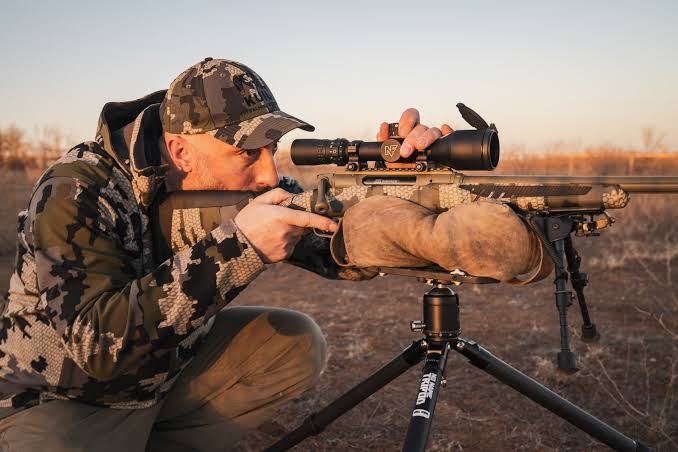
The Element MII is a sensible starter tripod for hunters who need a stable platform for binoculars, a compact spotting scope, or a camera without paying for carbon fiber. It covers the basics well and is easier to trust than an anonymous ultra-cheap tripod with uncertain locks and plate quality.
Key Features
- Four-section aluminum legs.
- Compact travel fold and included ball head.
- Independent leg-angle positions.
- Quick-release plate for fast optic or camera removal.
Pros
- Accessible price from an established tripod brand.
- Adequate height for many seated and standing users.
- Simple controls suit beginners.
Cons
- Aluminum feels colder and carries more weight than comparable carbon.
- Basic ball head is not ideal for precise high-magnification panning.
Field Notes
This is best for day hunts, range observation, scouting from a vehicle, and beginners learning what features matter. Add a compatible fluid head later if slow spotting-scope movement becomes a priority.
Safety and Legal Notes
Budget does not mean disposable. Inspect the plate screw, leg locks, feet, and head tension before every trip, and replace damaged parts rather than improvising a repair under expensive optics. Follow current hunting regulations, land-access rules, range rules, and all product instructions.
Best For
Beginners and budget-conscious hunters using binoculars, cameras, or modest spotting scopes.
7. Freewell FW-T1 Carbon Fiber Travel Tripod
Best Feature-Rich Carbon Tripod
The Freewell FW-T1 combines carbon legs, a convertible monopod, phone support, accessory mounting, and a versatile ball head. It suits hunters who document trips, use multiple optics, and want one lightweight support for several tasks.
Key Features
- Carbon-fiber and aluminum-alloy construction.
- Detachable leg converts to a monopod.
- Quick-release plate can support a phone in the intended configuration.
- Multiple leg angles and accessory mounting points.
Pros
- Broad feature set for glassing, photography, and video.
- Carbon construction supports mobile use.
- Monopod conversion helps in tight spaces.
Cons
- Multiple levers and locks require familiarity.
- More features create more points that must be checked and maintained.
Field Notes
Practice swapping between tripod and monopod mode at home. In the field, avoid unnecessary conversions in snow, mud, or darkness where small hardware can be lost.
Safety and Legal Notes
Use only manufacturer-approved mounting threads and accessories. An accessory arm changes the balance of the tripod, so keep loads light, spread the legs fully, and never create a top-heavy setup. Follow current hunting regulations, land-access rules, range rules, and all product instructions.
Best For
Hunters who want carbon portability plus phone, camera, binocular, and monopod versatility.
8. Vanguard VEO 3GO 235CB Carbon Tripod
Best Ultralight Carbon Option
The VEO 3GO 235CB is a strong choice for ounce-conscious hunters using binoculars, a compact camera, or a small spotting scope. It folds to roughly a foot and weighs little compared with full-size glassing tripods.
Key Features
- Five-section carbon-fiber legs.
- Very short folded length.
- Convertible monopod and smartphone-support features.
- Rubber and spiked-foot options on the product family.
Pros
- Easy to carry deep into the backcountry.
- Compact enough for smaller daypacks.
- Useful multi-purpose configuration for lightweight gear.
Cons
- Modest published load rating compared with heavier tripods.
- Shorter working height and thinner lower legs are less stable in wind.
Field Notes
This tripod performs best from a seated or kneeling glassing position with the center column low. Avoid pairing it with a large 80- or 85-mm spotting scope unless the complete system remains within ratings and is stable in actual conditions.
Safety and Legal Notes
Do not assume a tripod is safe simply because the optic is below the stated load. Wind leverage, uneven ground, and a long angled scope can still cause tipping. Follow current hunting regulations, land-access rules, range rules, and all product instructions.
Best For
Backcountry hunters carrying lightweight binocular or compact spotting-scope systems.
9. Benro Rhino 05C VX20 Carbon Fiber Tripod
Best Compact Rugged Carbon Option
The Benro Rhino 05C VX20 is a compact carbon tripod that retains a relatively substantial published load rating. Its secondary panning axis and compact folded length make it useful for hunters who want controlled glassing and panoramic photography without carrying a full-size support.
Key Features
- Five-section carbon-fiber legs.
- Compact folded length and travel-oriented ball head.
- Secondary panning axis below the quick-release platform.
- Monopod conversion on the Rhino product family.
Pros
- Strong size-to-rigidity balance.
- Compact enough for backcountry packs.
- Secondary pan control is useful after leveling.
Cons
- Many locks slow setup and pack-down.
- Maximum height is limited and full extension is less rigid.
Field Notes
The secondary pan axis can help scan a horizon without disturbing ball-head tilt, but only after the platform is level. Use thicker leg sections first and extend the smallest sections only when needed.
Safety and Legal Notes
Keep hands clear of leg joints while collapsing the tripod. Clean grit from twist locks rather than forcing them, which can damage threads or create a false sense of tightness. Follow current hunting regulations, land-access rules, range rules, and all product instructions.
Best For
Hunters who want a short packed carbon tripod with better support than the lightest ultracompact models.
10. SmallRig AD-01 Heavy-Duty Fluid Head Tripod
Best Tall Vehicle-Supported Tripod
The SmallRig AD-01 is a tall video-style tripod with a fluid head and leg spreader. It is not a true backcountry choice, but it can work well for vehicle-accessible glassing points, base camps, wildlife observation, and range spotting where smooth movement and standing height matter more than carried weight.
Key Features
- Fluid pan-and-tilt head with a long control handle.
- Tall working height for standing observation.
- Leg spreader improves consistent stance on level ground.
- Quick-release system associated with common video plates.
Pros
- Smooth movement for following wildlife with a spotting scope.
- Tall enough for many standing users.
- Good value for vehicle-supported observation.
Cons
- Too heavy and long for normal backpack hunting.
- Video-style spreader is less adaptable on steep, irregular ground.
Field Notes
Use it from roads, camp, blinds with adequate floor space, or level observation points. On natural terrain, confirm all feet contact the ground and do not force the spreader into an unstable shape.
Safety and Legal Notes
The long pan handle can catch on clothing or gear. Position it so it cannot pull the tripod over, block a walkway, or interfere with safe firearm handling. Follow current hunting regulations, land-access rules, range rules, and all product instructions.
Best For
Vehicle-supported hunters, group observation, range spotting, and tall users who do not need backpack portability.
How to Choose the Best Hunting Tripod
Choose the Right Type
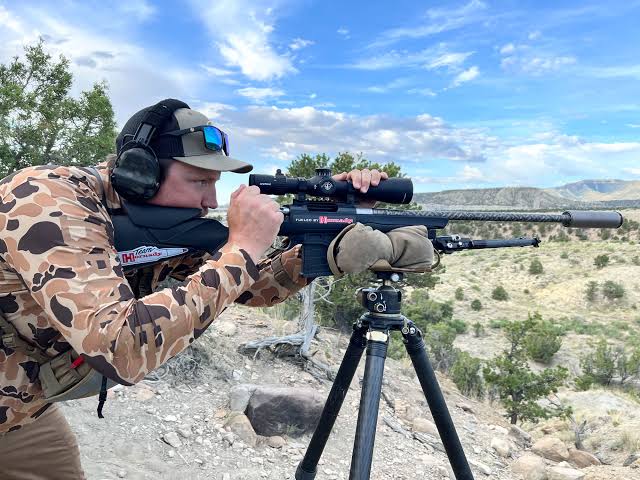
A compact travel tripod is best for binoculars, cameras, and small spotting scopes. A heavier three-section tripod is more stable with large optics. Video-style tripods provide smooth fluid movement but are usually too bulky for backpack hunting. Dedicated shooting-rest tripods should only be considered when the complete system is manufacturer-approved, lawful, and used with qualified training.
Match the Tripod to Your Hunting Style
Backcountry elk hunters usually prioritize carbon construction, short folded length, and seated glassing height. Deer hunters working near a truck or blind can accept more weight for a smoother head and greater stability. Waterfowl hunters should consider mud, salt, blind space, and cleaning requirements. Bow hunters should keep legs and pan handles outside the bow’s movement path.
Match the Tripod to the Optic
A binocular adapter places relatively little weight on the head, while a large angled spotting scope creates substantial leverage. Use the complete system weight and consider balance, not only the optic’s listed mass. A strong head is often more important than an extreme leg payload rating.
Choose the Right Head
Fluid and pan-and-tilt heads are ideal for slow, precise scanning. Ball heads are compact and quick but can move abruptly when supporting an off-center scope. A separate panning base can make horizon scans easier after the platform is leveled.
Check Height, Fit, and Comfort
Standing height is convenient, but lower setups are more stable and usually lighter. Many western hunters glass seated behind a compact tripod. Check the height with the center column down because published maximum height may depend on a less-stable full extension.
Consider Weight and Packability
Compare tripod weight with folded length and folded diameter. A short but bulky tripod may be harder to pack than a slightly longer, slimmer model. Include the head, optic adapter, plate, tools, and protective case in total system weight.
Compare Carbon Fiber and Aluminum
Carbon fiber usually saves weight and can damp vibration well, but it costs more. Aluminum is less expensive, durable, and often provides excellent stability for the money. Cracked carbon and bent aluminum both require service or replacement.
Check Leg Sections and Locks
Three-section legs are fast and rigid. Five-section legs fold shorter but use thinner tubes and more locks. Twist locks resist snagging, while flip locks provide a visible open-or-closed position. Test controls with gloves and cold hands.
Check Plate and Adapter Compatibility
Confirm thread size, quick-release standard, plate length, anti-twist surface, and clearance around the optic. Arca-style systems are common, but not every plate fits every clamp equally well. Never force incompatible parts.
Think About Terrain and Weather
Independent leg angles help on slopes, rocks, snow, and cramped observation points. Spiked feet may improve grip on soft ground, while rubber feet are safer on rock and floors. Wind resistance improves when the tripod is lower, wider, and shielded by terrain.
Understand Safety and Legal Requirements
Follow local seasons, licenses, tags, blaze-orange rules, public-land regulations, private-land permission requirements, firearm transport and storage laws, range rules, and manufacturer instructions. A tripod does not make an unsafe direction, uncertain target, or inadequate background acceptable.
Understand the Product’s Limits
No tripod guarantees a clear image, a stable shot, safe handling, or hunting success. Wind, loose ground, damaged locks, poor adapters, fatigue, and rushed setup can defeat even expensive equipment. Practice with the complete system before the hunt.
Important Hunting, Outdoor, and Firearm Safety Tips Before You Buy
- Follow all hunting laws, access rules, firearm safety rules, range rules, and manufacturer instructions.
- Check season dates, licenses, tags, legal equipment, blaze-orange requirements, transport rules, and storage laws.
- Use only compatible heads, plates, clamps, optic adapters, and firearm-rest accessories.
- Keep the tripod’s center of gravity inside the triangle formed by the feet.
- Do not leave mounted optics unattended in wind, near edges, around children, or where wildlife or livestock may contact them.
- Keep tripod legs, handles, straps, and accessories clear of walkways and exits.
- When firearms are present, maintain safe muzzle direction and keep fingers outside the trigger guard until legally and ethically ready to fire.
- Do not improvise a firearm clamp or exceed the approved load of any component.
- Carry navigation, first aid, water, weather protection, communication, a light source, and a trip plan.
- Practice tripod deployment before relying on it in darkness, snow, steep terrain, or time-sensitive situations.
- Outdoor gear is not a substitute for training, preparation, judgment, and the decision not to proceed when conditions are unsafe.
Common Mistakes to Avoid
The most common mistake is buying by maximum payload alone. Real performance also depends on head strength, plate fit, leg diameter, center-column use, wind, optic length, and setup height.
- Choosing the lightest tripod without considering optic size.
- Assuming every Arca-style plate and clamp is identical.
- Extending the center column before using the thicker leg sections.
- Using a ball head that cannot control an off-center spotting scope.
- Failing to practice setup with gloves or cold hands.
- Leaving valuable optics mounted while carrying the tripod.
- Ignoring loose screws, slipping locks, cracks, or bent parts.
- Setting up on a slope without checking the center of gravity.
- Allowing handles or legs to interfere with safe firearm or bow movement.
- Using improvised firearm-rest attachments or violating land and hunting rules.
- Waiting until the hunt to test plates, adapters, and tools.
Troubleshooting Common Problems
| Problem | Possible Cause | What to Do |
|---|---|---|
| Image shakes at high magnification | Wind, raised center column, thin lower sections, loose plate, or touching the scope | Lower and widen the tripod, retract the column, tighten connections, shelter from wind, and allow vibration to settle. |
| Scope droops after locking | Head overloaded, poor balance, insufficient friction, or loose plate | Rebalance the plate, increase approved friction, tighten the plate, or use a stronger head. |
| Tripod tips easily | Narrow stance, uneven ground, high center of gravity, or wind | Spread and shorten the legs, move to stable ground, and never leave the system unattended. |
| Leg slowly collapses | Dirty, worn, loose, or damaged lock | Remove the load, clean and adjust according to the manual, and replace damaged parts. |
| Quick-release plate rotates | Loose screw or poor anti-twist contact | Stop use, tighten with the correct tool, and use a compatible anti-twist plate when available. |
| Head movement is jerky | Wrong friction, contamination, cold grease, or overload | Adjust approved tension, clean externally, or choose a suitable fluid head. |
| Twist lock feels gritty | Sand, mud, or dried debris | Disassemble only as instructed, clean and dry the parts, and avoid forcing the lock. |
| Tripod is too short | Travel design chosen for standing use | Glass seated, use terrain for elevation, or select a taller tripod rather than overextending an unstable column. |
| Tripod is too heavy | Vehicle-oriented legs or oversized head | Reduce unnecessary accessories, share the load, or select a lighter system that still safely supports the optic. |
When to Get Professional Help
Contact the tripod, optic, head, or adapter manufacturer when plate standards, load ratings, thread sizes, replacement parts, or structural damage are unclear. An optics dealer can help balance a large spotting scope and identify a suitable head.
Seek qualified firearm instruction before using any tripod-supported firearm-rest system. Consult a licensed dealer, wildlife agency, land manager, or local authority for questions about legal equipment, transport, storage, seasons, tags, access, and range rules.
Stop using the tripod and arrange service when carbon tubes crack, aluminum legs bend, locks slip, threads strip, or the head cannot hold the load reliably.
Maintenance and Care Tips
- Brush off dry dirt before collapsing the legs.
- Rinse salt, mud, or fine sand only as the manufacturer permits.
- Dry legs and locks fully before storage.
- Inspect plate screws, clamps, feet, leg locks, hinges, and head tension before each trip.
- Use only manufacturer-approved lubricants and service methods.
- Keep quick-release plates attached to assigned optics or stored in a labeled pouch.
- Protect carbon tubes from sharp impacts and crushing loads.
- Do not store a wet tripod inside a sealed hunting pack.
- Keep solvents, insect repellent, and firearm-cleaning chemicals away from finishes and seals.
- Replace cracked, bent, stripped, or slipping components before field use.
Final Verdict
For most hunters using a spotting scope, the Manfrotto Befree 3-Way Live Advanced offers the best balance of smooth aiming, compact storage, and practical stability. The Vanguard VEO 3GO 235CB is better for ultralight binocular or compact-scope systems, while the 3 Legged Thing Winston 2.0 is the premium choice for large optics and maximum height. Beginners can start with the Manfrotto Element MII.
The best hunting tripods are stable enough for the optic, light enough to carry, compact enough to pack, and simple enough to deploy safely. Test the complete system, use compatible adapters, keep the center column low, maintain every lock, and follow all hunting laws and safe firearm-handling practices.
Frequently Asked Questions
1. What is the best hunting tripod for most hunters?
A compact aluminum or carbon tripod with independent leg angles and a fluid or controlled ball head is the best general choice. The Manfrotto Befree 3-Way Live Advanced is especially useful for spotting scopes.
2. What is a hunting tripod used for?
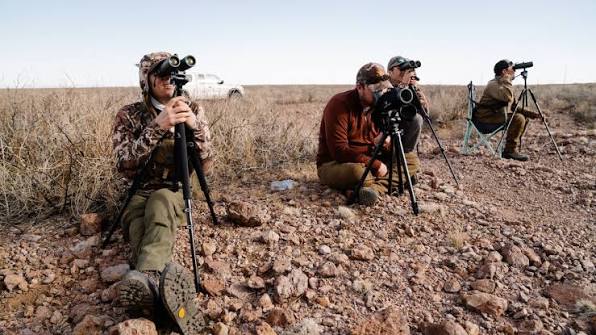
Hunters use tripods to stabilize spotting scopes, binoculars, cameras, rangefinders with compatible adapters, and lawful observation or rest accessories. The main purpose is steadier, less tiring observation.
3. Is a hunting tripod different from a camera tripod?
Not always. Many excellent hunting tripods began as camera supports. Hunting use places extra emphasis on packability, weather resistance, quiet controls, independent leg angles, and compatibility with optics adapters.
4. What is the best tripod for a spotting scope?
A stable tripod with a fluid, pan-and-tilt, or carefully controlled ball head works well. Large scopes need thicker legs and a stronger head than compact scopes.
5. What is the best tripod for binocular glassing?
A lightweight carbon or aluminum travel tripod is usually sufficient when paired with a secure binocular adapter. Seated height, low weight, and a smooth head matter more than extreme payload.
6. Can I mount binoculars on any tripod?
Only with a compatible binocular tripod adapter or built-in mounting stud. Confirm the binocular, adapter, plate, and head all fit securely.
7. What head type is best for hunting optics?
A fluid or pan-and-tilt head offers precise scanning with a spotting scope. A ball head is faster and more compact but can move abruptly when supporting a large angled scope.
8. Is an Arca-Swiss plate useful for hunting?
Yes. Arca-style compatibility can simplify switching between optics, cameras, and adapters. However, dimensions vary, so test every plate and clamp rather than assuming universal fit.
9. What tripod height do I need?
Choose based on whether you glass seated, kneeling, or standing. Stability is usually better at lower heights, so do not buy solely by maximum extension.
10. Should a tripod reach eye level without the center column?
That is helpful for standing observation because extending the center column adds vibration. Backcountry hunters often accept a shorter tripod and glass while seated to save weight.
11. How much tripod load capacity do I need?
The complete optic, adapter, plate, and head must stay below every component’s rating. Allow extra margin for wind, long scopes, and uneven terrain rather than matching the rating exactly.
12. Does a high load rating guarantee stability?
No. Tube diameter, leg sections, center-column extension, head design, wind, and ground conditions all affect real stability.
13. Is carbon fiber better than aluminum?
Carbon fiber is generally lighter and can damp vibration well, but costs more. Aluminum is affordable, durable, and often provides excellent stability for the money.
14. Is aluminum too heavy for backcountry hunting?
Not necessarily. A compact aluminum tripod can be reasonable for day hunts and shared loads. For long, steep trips, carbon fiber may justify its higher cost.
15. How many leg sections are best?
Three sections usually provide faster setup and more rigidity. Four or five sections fold shorter, but add locks and thinner lower tubes.
16. Are twist locks or flip locks better?
Both can work. Twist locks pack cleanly and can be operated together, while flip locks provide visible open-or-closed status. Choose the style you can use reliably with cold or gloved hands.
17. Do tripod feet matter?
Yes. Rubber feet work on rock and hard surfaces, while spikes can grip soil or snow. Use only the foot configuration recommended by the manufacturer.
18. What is a center column?
It is the vertical post beneath the head. Raising it increases height but also increases leverage and vibration, so keep it low for high-magnification glassing.
19. Should I hang weight from the tripod?
Only if the manufacturer provides an approved hook and conditions are calm enough that the weight will not swing. A moving bag can make vibration or tipping worse.
20. How do I stabilize a tripod in wind?
Lower the tripod, widen the legs, keep the center column down, shelter it behind terrain, and avoid touching the scope. Never leave it unattended in gusty conditions.
21. What is the best backcountry hunting tripod?
A carbon tripod around two to four pounds with a short folded length is a practical target. The exact choice depends on optic size and how far it will be carried.
22. What is the best budget hunting tripod?
The Manfrotto Element MII is a good entry-level choice because it provides established-brand locks, legs, and a complete head without premium carbon pricing.
23. What is the best premium hunting tripod?
A strong carbon model such as the 3 Legged Thing Winston 2.0 suits hunters using large optics and prioritizing rigidity and height.
24. What is the lightest useful hunting tripod?
Ultralight carbon models can be useful for binoculars and compact scopes, but the lightest option is not always stable enough for wind or large optics.
25. How short should a hunting tripod fold?
It should fit inside the pack or strap securely without extending far above or below it. Folded diameter and shape matter as much as length.
26. Can a travel tripod support an 80mm spotting scope?
Some can, but a large scope creates leverage that may exceed what the head handles comfortably. Check ratings, plate fit, wind performance, and stability at realistic height.
27. Do I need a fluid head for a spotting scope?
It is not mandatory, but a fluid head makes small pan and tilt adjustments easier and reduces sudden movement at high magnification.
28. Can I replace the tripod head?
Many tripods use a standard threaded head mount, while some integrated designs do not. Verify the model before buying if future head upgrades matter.
29. What is a leveling base?
A leveling base lets the head platform be leveled without repeatedly changing leg length. This is useful for smooth horizontal panning.
30. What is a bowl tripod?
A bowl system allows quick leveling of a video-style head. It is useful for fluid panning but typically adds weight and bulk.
31. Can I use a tripod in a ground blind?
Yes, if the leg spread and pan handle fit without blocking exits or contacting the blind fabric. A compact center-column or tabletop configuration may work better.
32. Can I use a tripod in a tree stand?
Only when the stand manufacturer and local rules permit it and the tripod can be secured without creating a trip, drop, or firearm-handling hazard. Most standard tripods are not designed for elevated platforms.
33. Can I use a tripod while waterfowl hunting?
It can support optics on stable land or in a suitable blind, but saltwater, mud, and sand require careful cleaning. Never place a normal tripod where it compromises boat or blind safety.
34. What tripod is best for elk hunting?
Elk hunters often choose compact carbon legs for long approaches and seated glassing. Match the tripod to the spotting scope rather than choosing the lightest model automatically.
35. What tripod is best for deer hunting?
For vehicle or blind-based deer hunting, an aluminum tripod with a smooth head is practical. Mobile public-land hunters may prefer a shorter carbon model.
36. What tripod is best for bow hunting?
A quiet, compact tripod for binoculars or a spotting scope is useful. Keep it positioned so legs and handles do not interfere with bow movement or safe broadhead storage.
37. Can a hunting tripod be used as a shooting rest?
Only with a compatible, manufacturer-approved rest or mounting system and where lawful. Obtain qualified instruction, maintain safe muzzle direction, and follow all firearm safety rules.
38. Should I clamp a firearm directly into a camera tripod?
No. Use only a purpose-built, compatible system whose manufacturer authorizes the load and attachment. Improvised clamps can damage equipment and create unsafe handling.
39. Does a tripod make a shot ethical?
No. A tripod cannot replace judgment, training, a safe background, legal equipment, a realistic distance, and the decision not to shoot when conditions are uncertain.
40. How should I carry a tripod with a firearm?
Carry and secure each item according to its manufacturer and local law. Do not allow a tripod, sling, or pan handle to interfere with muzzle control, trigger discipline, or access to the firearm’s safety.
41. How do I keep tripod locks quiet?
Practice controlled setup, keep locks clean, avoid snapping flip locks, and prevent metal parts from striking rocks or other gear. Do not lubricate with an unapproved product.
42. Will camouflage make a tripod better?
Color matters less than stable setup, controlled movement, legal visibility clothing, and good field behavior. Do not cover controls or locks with material that prevents inspection.
43. Can I paint a tripod?
Painting may damage seals, markings, threads, and warranty coverage. Ask the manufacturer first and never coat locking surfaces or load-bearing interfaces.
44. How do I set a tripod on a slope?
Adjust each leg independently, keep the center of gravity inside the leg triangle, and place a leg toward the downhill side when practical. Test stability close to the ground.
45. How do I set a tripod on snow?
Use appropriate feet or snow baskets if supported, compact the surface, and check for sinking. Keep moisture out of locks and do not leave the setup unattended.
46. How do I set a tripod on rock?
Use rubber feet, spread the legs securely, and avoid edges or loose stones. A leg can slide suddenly if it is placed on smooth, angled rock.
47. Why does my spotting scope shake on the tripod?
Common causes include extended center column, thin lower leg sections, loose plates, weak head tension, wind, and touching the focus control. Lower and retighten the system.
48. Why does the scope droop after I lock the head?
The head may be overloaded, poorly balanced, or insufficiently tensioned. Reposition the plate, increase approved friction, or use a stronger head.
49. Why does the quick-release plate loosen?
The screw may not be fully tightened, the anti-twist surface may not match, or repeated panning may be rotating the mount. Stop use and correct the connection before remounting.
50. Why are tripod legs slipping?
Locks may be dirty, worn, incorrectly adjusted, or damaged. Clean and service them according to the manual rather than overtightening or adding improvised shims.
51. Can I repair a cracked carbon tripod leg?
Do not rely on a field repair for load-bearing use. Contact the manufacturer or an authorized service provider and replace damaged structural components.
52. How should I clean a hunting tripod?
Brush off dry dirt, wipe the legs, and follow the manual for disassembly or rinsing. Sand and grit should be removed promptly from locks and joints.
53. How should I store a tripod?
Store it clean, dry, unlocked or lightly tensioned as recommended, and away from corrosive chemicals, extreme heat, and heavy objects.
54. When should I replace a tripod?
Replace or professionally service it when legs crack, locks slip, the head will not hold, plates deform, threads strip, or corrosion affects structural parts.
55. When should I contact an optics professional or instructor?
Get help when adapter compatibility, head balance, optic mounting, firearm-rest use, or safe field setup is unclear. Contact wildlife agencies or local authorities for current legal questions.