
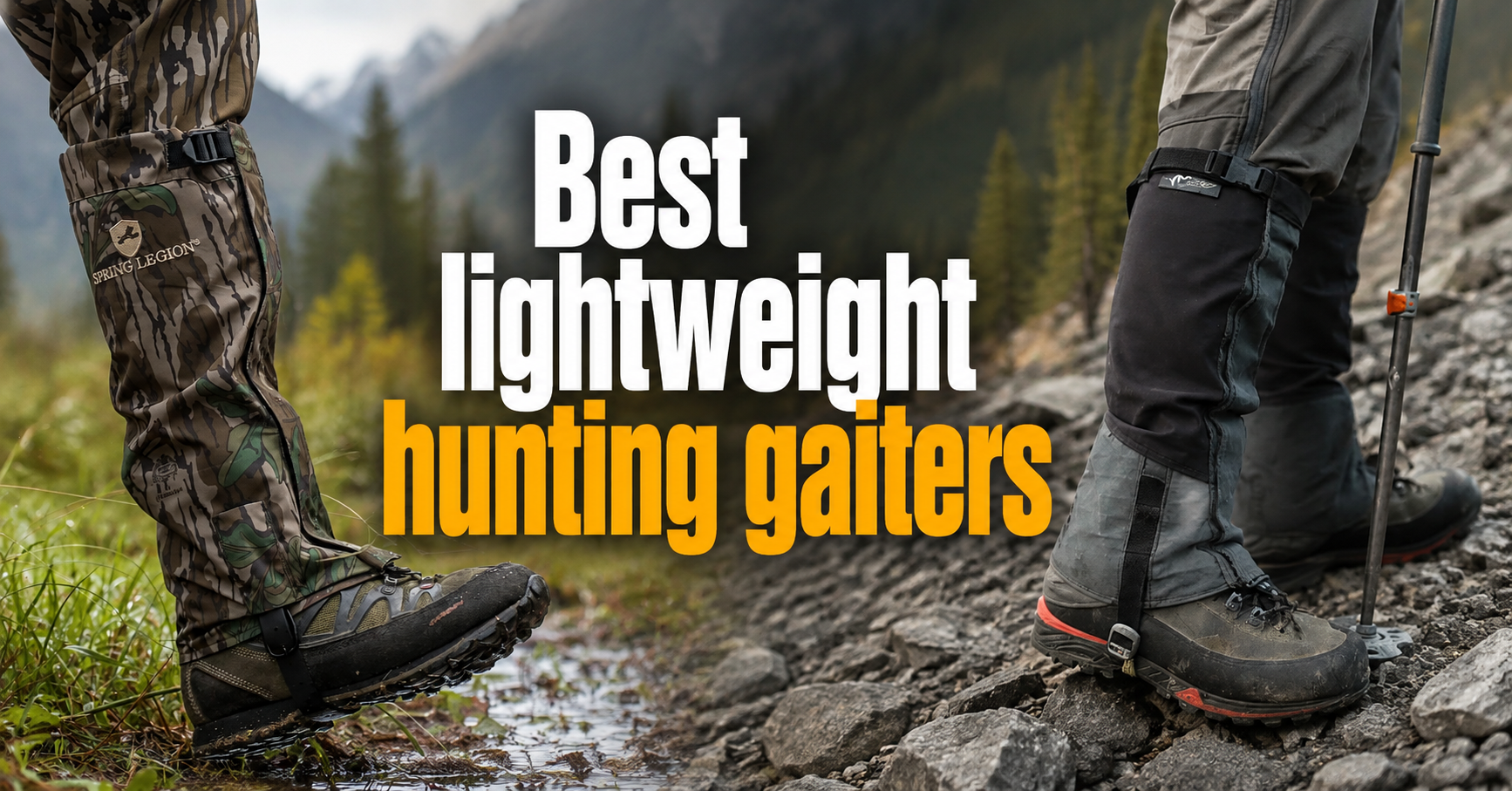

A gaiter that slips under your boot, traps heat, or rustles through brush can become more distracting than the mud and debris it was supposed to block. The best lightweight hunting gaiters balance coverage, secure boot attachment, mobility, weather protection, and durability without adding unnecessary bulk.
This comparison covers 14 unique products from the supplied list. Fabric gaiters are generally the better match for active hunting, wet vegetation, snow, and trail debris. Rigid snake gaiters and longer chaps provide more structure for snake-prone or thorn-heavy terrain, but they are usually warmer and less flexible. Product waterproofing and snake-protection statements below are manufacturer claims, not guarantees.
Quick Picks
- Best Overall for Active Hunters: King’s Camo XKG Leg Gaiter — A hunting-specific option from a lightweight technical clothing line.
- Best Lightweight General-Purpose Option: Azarxis Hiking Gaiters — Packable fabric gaiters with adjustable calf and boot attachments.
- Best for Snake-Prone Brush: QOGIR Snake Gaiters for Hunting — Rigid-panel coverage for hunters who prioritize lower-leg protection over maximum flexibility.
- Best Camo Snake-Gaiter Option: QOGIR Snake Gaiters for Hunting, Bark Camo — Protective construction in a hunting-oriented camouflage variation.
- Best Reinforced Fabric Design: Adjustable Waterproof and Breathable Hiking Gaiters — A tall fabric design with reinforced underfoot straps.
- Best Simple Trail-Debris Barrier: Uponauot Waterproof Gators for Hiking Boots and Shoes — A low-bulk choice for dust, scree, light snow, and vegetation.
Disclosure: Gunscorner.com may earn a commission from qualifying purchases made through Amazon affiliate links, at no additional cost to you.
Choose by Hazard, Not by Marketing Label
| Primary Field Problem | Preferred Gaiter Type | Important Trade-Off |
|---|---|---|
| Seeds, gravel, dust, and light brush | Lightweight fabric gaiter | Less puncture protection than a rigid design |
| Wet grass, mud, and shallow snow | Tall coated-fabric gaiter | Can trap perspiration during strenuous travel |
| Thorns and abrasive undergrowth | Reinforced Oxford-fabric gaiter | Heavier fabric may be warmer and noisier |
| Known snake habitat | Purpose-built rigid gaiter or chap | More bulk, stiffness, and heat |
| Long, steep approaches | Flexible, breathable, securely fitted gaiter | Light materials may wear faster at straps and seams |
Best Lightweight Hunting Gaiters Comparison
| Product | Design | Best For | Weather Positioning | Fit System | Mobility | Main Trade-Off | Availability |
|---|---|---|---|---|---|---|---|
| QOGIR Snake Gaiters for Hunting | Rigid-panel gaiter | Snake-prone brush | Listing claims a water-resistant protective exterior | Adjustable straps and buckles | Moderate to low | Stiffer than fabric gaiters | Check price |
| NatureBlend Hunting Gaiters | Tall fabric gaiter | Mud, snow, and wet vegetation | Marketed as waterproof | Top adjustment and upgraded foot strap | High | Newer listing with limited long-term evidence | Check price |
| QOGIR Hunting Gaiters Boot Gaiters | Adjustable fabric gaiter | General hunting and snow | Marketed as waterproof | Calf adjustment and instep strap | High | Not a rigid snake gaiter | Check price |
| Waterproof Adjustable Leg Gaiters for Men and Women | Tall nylon/polyester gaiter | Mixed-weather recreation | Marketed as waterproof | Adjustable boot and leg fit | High | Generic listing provides limited technical detail | Check price |
| Adjustable Waterproof and Breathable Hiking Gaiters | Reinforced Oxford-fabric gaiter | Abrasive brush and wet ground | Listing claims waterproof and breathable performance | Adjustable wrap and reinforced instep strap | High | Heavy fabric can retain more heat | Check price |
| QOGIR Snake Gaiters for Hunting, Bark Camo | Rigid-panel gaiter | Camo-oriented snake-country use | Protective outer construction | Adjustable straps and buckles | Moderate to low | Bulkier than ordinary hunting gaiters | Check price |
| GearOZ Snake Gaiters | Structured snake gaiter | Lower-leg coverage in heavy brush | Listing claims waterproof protection | Multiple buckles with adjustable calf fit | Moderate to low | Warm and rigid for long approaches | Check price |
| Uponauot Waterproof Gators for Hiking Boots and Shoes | Lightweight polyester gaiter | Scree, dust, seeds, and light snow | Marketed as waterproof | Drawcord, closure, and underfoot cord | High | Cord-style foot attachment needs careful management | Check price |
| Leg Gaiters for Men and Women, Waterproof Adjustable Gators | Fabric snow gaiter | Hiking, hunting, and trekking | Marketed as waterproof | Adjustable closure and boot attachment | High | Specifications may differ by selected variation | Check price |
| HiMagics Waterproof Snow Gaiters for Boots | Long fabric gaiter | Snow, sand, mud, and outdoor work | Marketed for water and snow protection | Adjustable long-leg coverage | High | Limited verified construction information | Check price |
| Anewkle Snake Guard Chaps | Extended protective chaps | Hunters wanting coverage beyond the calf | Listing claims a waterproof exterior | Adjustable one-size design | Low to moderate | More coverage means more bulk and heat | Check price |
| Azarxis Hiking Gaiters | 600D Oxford-fabric gaiter | Lightweight all-season use | Manufacturer claims coated weather protection | Top drawcord, lace hook, and TPU strap | High | Fabric is not designed as rigid snake armor | Check price |
| QOGIR Snake Gaiters for Hunting, Camouflage | Polycarbonate-panel gaiter | General snake-country hunting | Protective exterior | Adjustable straps | Moderate to low | Panel structure limits ankle flexibility | Check price |
| King’s Camo XKG Leg Gaiter | Technical hunting gaiter | Active backcountry hunting | Designed for changing field conditions | Boot-covering hunting fit | High | Not purpose-built snake armor | Check price |
1. Best for Snake-Prone Brush: QOGIR Snake Gaiters for Hunting
The QOGIR Snake Gaiters for Hunting are substantially different from lightweight fabric boot covers. The listing describes 13 overlapping rigid panels, adjustable straps, and a coated Oxford-fabric exterior. This structure is intended to place a firmer barrier around the lower leg when traveling through snake habitat, cactus, thorns, or dense brush.

The panels make these gaiters comparatively stiff, so they are a specialist choice rather than the best option for every mile-intensive hunt. Wear them with durable over-the-ankle boots and pants, confirm complete coverage around the ankle, and practice walking before entering uneven terrain. The manufacturer markets them for snake-bite protection, but no gaiter can guarantee that a strike will not penetrate or reach an uncovered area.
Pros
- Rigid-panel construction provides more structure than ordinary fabric gaiters.
- Adjustable straps accommodate different boots and calf layers.
- Lower-leg coverage also helps against thorns and abrasive vegetation.
- Panels can be rolled or nested for transport more easily than full-length chaps.
Cons
- Stiffer and warmer than lightweight fabric gaiters.
- Does not protect the entire foot, knee, or upper leg.
- Manufacturer protection claims are not a guarantee against every snake strike.
2. NatureBlend Hunting Gaiters
NatureBlend Hunting Gaiters target the more common hunting problems of wet vegetation, mud, snow, and debris entering a boot. Their flexible fabric format should permit a more natural stride than rigid protective gaiters, while the upgraded rubber foot strap is intended to keep the lower edge from riding upward.

This is a relatively new listing, so there is less evidence about long-term seam, closure, and strap durability. The product is marketed as waterproof, but hunters should treat that as a listing claim rather than an immersion guarantee. It remains important to pair the gaiters with weather-appropriate boots and rainwear.
Pros
- Hunting-oriented tall coverage for mud, vegetation, and snow.
- Flexible design favors walking mobility.
- Upgraded rubber foot strap is intended to improve boot retention.
Cons
- Newer product with limited long-term durability information.
- Water can still enter through the boot, top opening, or closure.
- Not presented as rigid snake-protection equipment.
3. Best Simple Fabric Option: QOGIR Hunting Gaiters Boot Gaiters
These QOGIR Hunting Gaiters use a conventional flexible boot-gaiter format rather than the brand’s rigid snake-gaiter construction. That makes them more suitable for hunters seeking snow, mud, rain, and debris coverage without restricting the lower leg as much.
The adjustable format can work across different pants and boots, but the calf opening and underfoot strap must both be set correctly. Excess tension can cause pressure or premature strap wear, while a loose setup allows the gaiter to rotate or creep upward.
Pros
- Flexible construction supports a natural walking stride.
- Tall coverage helps keep vegetation and loose debris away from boot openings.
- Adjustable components support use with different hunting layers.
- Less bulky than QOGIR’s rigid-panel models.
Cons
- Does not offer the structured coverage of a purpose-built snake gaiter.
- Weather performance depends on closure alignment and boot compatibility.
- Underfoot hardware remains a potential wear point.
4. Waterproof Adjustable Leg Gaiters for Men and Women
This unisex nylon/polyester design is positioned for hunting, hiking, climbing, snowshoeing, sand, and mud. Its broad intended-use range makes it a reasonable general-purpose candidate, especially for someone who wants one flexible pair for several outdoor activities.

The listing provides fewer distinctive construction details than the strongest products in this comparison. Buyers should therefore examine the current size chart, closure photos, strap material, and selected variation before ordering. Choose it for basic coverage rather than specialized snake or heavy-thorn protection.
Pros
- Flexible design suits varied outdoor activities.
- Adjustability supports use by men and women with different boot systems.
- Tall coverage can reduce mud, sand, and snow intrusion.
Cons
- Limited verified information about fabric density and hardware durability.
- Generic sizing can make careful calf measurement especially important.
- Waterproof wording does not establish protection during immersion.
5. Best Reinforced Fabric Design: Adjustable Waterproof and Breathable Hiking Gaiters
These tall hiking and hunting gaiters combine an adjustable wrap with reinforced instep straps. The listing identifies a heavy Oxford-fabric construction and markets it for both waterproofing and breathability. The practical attraction is a fabric gaiter that offers more abrasion resistance than a thin trail cover while remaining more flexible than rigid armor.

This model fits hunters crossing wet brush, snow, and rough vegetation, but a dense coated fabric may feel warmer during steep approaches. “Breathable” does not mean perspiration-free, particularly when the top is cinched tightly or the gaiter overlaps insulated clothing.
Pros
- Reinforced instep straps address a common gaiter wear point.
- Dense Oxford fabric should resist brush better than thin trail material.
- Adjustable wrap accommodates multiple boot and clothing combinations.
- Tall construction offers useful wet-grass and snow coverage.
Cons
- Heavier fabric may run warmer during high-output travel.
- Waterproof and breathable performance remains a manufacturer claim.
- Thicker construction may create more movement noise than a soft, thin gaiter.
6. Best Bark-Camo Protective Option: QOGIR Snake Gaiters for Hunting, Bark Camo
This Bark Camo QOGIR variation combines the brand’s structured lower-leg format with a woodland-oriented exterior. It is most relevant to hunters who want rigid protective coverage but prefer a pattern that blends better with common hunting clothing.

Color should remain a secondary consideration behind verified fit and coverage. Check that the lower edge overlaps the boot correctly, that no strap projects far enough to snag, and that the panels do not interfere with ankle movement on steep or rocky ground.
Pros
- Bark camouflage coordinates with woodland hunting clothing.
- Rigid-panel design offers structured lower-leg coverage.
- Adjustable straps permit fit changes for seasonal layers.
Cons
- Less flexible than a standard fabric hunting gaiter.
- Camouflage does not compensate for poor fit or incomplete coverage.
- Snake-protection claims should not be interpreted as a safety guarantee.
7. GearOZ Snake Gaiters
GearOZ Snake Gaiters use a structured polypropylene-based guard with multiple buckles and an adjustable calf range. The design targets hunters, land workers, and hikers who need more resistance to lower-leg punctures and impacts than a soft gaiter can provide.

Multiple buckles allow fit adjustment but also require a deliberate pre-hunt check. Loose strap ends can catch vegetation, while excessive tightening can create pressure during long walks. These gaiters are more appropriate for deliberate movement through known snake habitat than fast, high-mileage travel.
Pros
- Structured material provides firmer lower-leg coverage than cloth.
- Multiple buckles allow the fit to be adjusted at different points.
- Suitable for brush, thorns, and snake-aware outdoor work.
- Unisex design can be shared when calf and boot fit are compatible.
Cons
- Multiple buckles take longer to fit than a single fabric closure.
- Rigid construction can trap heat and reduce ankle freedom.
- Protection does not extend across every part of the foot or leg.
8. Best Low-Bulk Debris Barrier: Uponauot Waterproof Gators for Hiking Boots and Shoes
The Uponauot gaiters use lightweight, low-stretch polyester and fold into a compact package. They are aimed at the everyday nuisance side of gaiter use: scree, dust, seeds, snow, and mud entering the boot rather than heavy protective work.
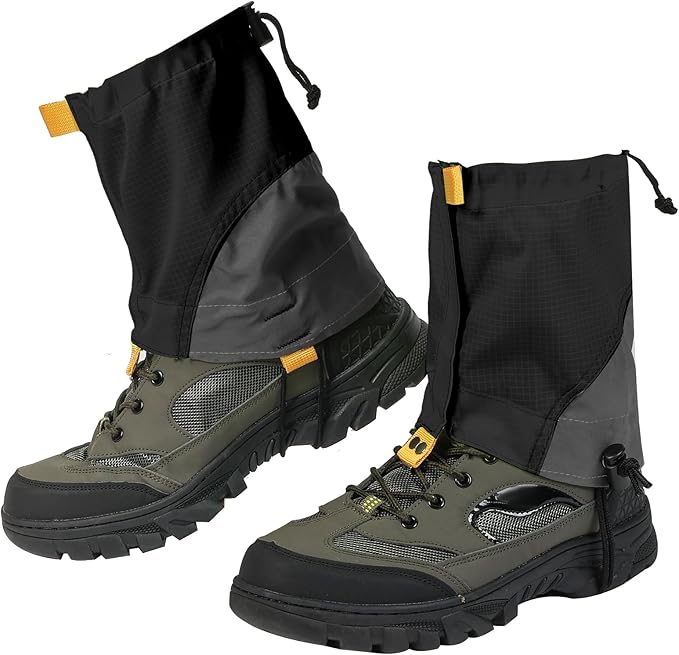
The cord-style underfoot attachment deserves attention. Tie or secure any excess so it cannot create a trip hazard, and route the cord through the boot’s heel or instep recess instead of across an exposed outsole lug. This is a practical lightweight candidate when ventilation and packability matter more than armor.
Pros
- Lightweight polyester minimizes carried and worn bulk.
- Compact storage suits daypacks and emergency gear bags.
- Useful for loose trail material and light vegetation.
- Flexible construction preserves ankle movement.
Cons
- Cord-style underfoot attachment can loosen or wear on abrasive ground.
- Excess cord must be secured to prevent snagging or tripping.
- Thin construction is less suitable for severe thorns or snake hazards.
9. Leg Gaiters for Men and Women, Waterproof Adjustable Gators
These adjustable gaiters are offered in multiple sizes and variations, including a camouflage zipper configuration. Their conventional snow-gaiter shape makes them suitable for hunters who need flexible coverage over hiking or hunting boots.

Because closure type and appearance may differ by variation, confirm that the selected option matches the listing photographs and size chart. A zipper can provide quick entry, but it should lie flat and operate without excessive force before the gaiter is taken into wet or freezing conditions.
Pros
- Multiple size and appearance options support different users.
- Flexible construction is appropriate for walking and trekking.
- Camouflage variation may coordinate with hunting clothing.
Cons
- Features may vary with the selected size or closure configuration.
- Zippers require cleaning after exposure to grit and mud.
- Listing waterproof language does not guarantee dry feet in deep water.
10. HiMagics Waterproof Snow Gaiters for Boots
HiMagics positions these long gaiters for hunting, hiking, snow, sand, rain, and outdoor work. The height should appeal to hunters who regularly move through wet grass or snow deep enough to overwhelm a low ankle cover.

Available product information is less detailed than it is for established technical models, so prospective buyers should inspect the current underfoot attachment, closure orientation, calf range, and care directions. Their strongest case is broad, uncomplicated coverage rather than a verified specialized performance advantage.
Pros
- Long coverage is useful in snow and wet vegetation.
- Flexible design suits hunting and general outdoor work.
- Sand and loose debris protection adds warm-weather utility.
Cons
- Limited verified information about fabric and hardware specifications.
- Tall coverage may retain heat on strenuous approaches.
- Current variation details require careful confirmation before ordering.
11. Best Extended Coverage: Anewkle Snake Guard Chaps
Anewkle Snake Guard Chaps extend protective coverage beyond the area addressed by ordinary calf gaiters. The Mountain Camo design is marketed for hunting and snake-bite protection, making it relevant to people moving through tall vegetation or brush where a lower gaiter may leave too much leg exposed.

Greater coverage increases weight, heat retention, and potential interference with movement. Before hunting, check that the chaps do not obstruct knee flexion, boot traction, access to required equipment, or safe climbing. Treat the manufacturer’s protective language as risk reduction rather than a promise of injury prevention.
Pros
- Extends coverage higher than conventional calf gaiters.
- Mountain camouflage is oriented toward hunting environments.
- Adjustable sizing accommodates changes in clothing layers.
- Structured coverage can also help with thorns and heavy brush.
Cons
- Bulkier and warmer than lower-leg gaiters.
- May be excessive for maintained trails and high-mileage approaches.
- Must be checked for interference with knee movement and climbing.
- Does not guarantee prevention of a snake bite.
12. Best Lightweight General-Purpose Option: Azarxis Hiking Gaiters
Azarxis Hiking Gaiters are made from 600D Oxford fabric and use a top drawcord, front hook-and-loop closure, boot-lace hook, and adjustable TPU instep strap. That combination gives them a useful middle ground between thin trail gaiters and rigid protective guards.

The listing describes a coated waterproof construction, abrasion resistance, and a packable format. In practical terms, they suit hunters who want defense against wet vegetation, snow, mud, and moderate brush while maintaining a flexible stride. They are not a substitute for certified or purpose-built snake-protection equipment.
Pros
- 600D Oxford fabric balances abrasion resistance and flexibility.
- Top drawcord, lace hook, and instep strap secure three important fit points.
- Available size options improve the chance of a close calf fit.
- Packable construction suits mobile and backcountry hunters.
- Flexible enough for four-season recreational use.
Cons
- TPU straps can wear when repeatedly exposed to sharp rock.
- Hook-and-loop closures collect seeds, hair, and fine debris.
- Manufacturer waterproofing claims do not make the gaiters suitable for immersion.
13. QOGIR Snake Gaiters for Hunting, Camouflage
This camouflage QOGIR model uses the brand’s familiar segmented polycarbonate-panel format. It is intended for lower-leg protection during hunting, hiking, and outdoor work in areas where snakes, cactus, briars, and sticks are credible concerns.
The segmented arrangement allows more movement than a single rigid shell, but it will still feel different from fabric. Adjust the panels and straps while wearing the exact boots and trousers planned for the hunt, then walk, kneel, and climb on safe ground to identify rubbing or strap movement.

Pros
- Segmented polycarbonate construction provides structured coverage.
- Camouflage exterior is compatible with common hunting clothing.
- Adjustable format can accommodate seasonal pants.
- Also shields the shin from moderate brush and trail impacts.
Cons
- Heavier and less breathable than fabric gaiters.
- One-size adjustability may not fit every calf shape securely.
- Rigid coverage cannot eliminate snake-bite risk.
14. Best Overall for Active Hunters: King’s Camo XKG Leg Gaiter
The King’s Camo XKG Leg Gaiter earns the strongest overall recommendation for active hunting because it belongs to a technical clothing system developed around lightweight mobility, changing weather, and rugged terrain. It is a hunting-specific choice rather than a generic outdoor gaiter relabeled for the category.

This model makes the most sense for mobile hunters who need to keep debris, mud, and light precipitation away from boots without adopting rigid snake armor. Its main limitation is specialization in ordinary field protection: hunters facing a documented puncture or snake hazard should select purpose-built protective equipment instead.
Pros
- Designed within a lightweight technical hunting clothing line.
- Hunting-specific construction prioritizes field mobility.
- Polyester material is comparatively straightforward to maintain.
- Suitable for active approaches and changing terrain.
- Coordinates with King’s Camo hunting apparel.
Cons
- Not designed as rigid snake-protection equipment.
- Technical fabric can still retain moisture during sustained exertion.
- Boot and calf compatibility should be confirmed for the chosen size.
How to Fit Hunting Gaiters Correctly
- Wear the complete system: Measure and fit gaiters over the boots, socks, pants, and base layers used during the hunt.
- Confirm orientation: Lace hooks normally face forward, while buckles and loose strap ends should be positioned where they will not strike the opposite leg.
- Set the instep strap: Route it through the boot’s heel or instep recess. It should prevent upward movement without affecting outsole contact.
- Attach the lace hook: Connect it to a secure lower lace so the gaiter covers the boot tongue without pulling excessively.
- Close from the bottom upward: Align hook-and-loop panels or zippers without wrinkles that could create channels for debris and water.
- Cinch the calf gently: The top should block debris without restricting circulation or creating a painful pressure band.
- Perform a movement check: Walk uphill and downhill, squat, kneel, step over a log, and climb a few safe steps.
- Recheck after ten minutes: Fabric settles and straps can loosen once movement begins.
Pre-Purchase Questions for Lightweight Hunting Gaiters
- What is the main hazard? Select flexible fabric for debris and weather, reinforced fabric for brush, or purpose-built rigid protection for known snake habitat.
- How far will you walk? Long approaches place greater importance on low weight, ventilation, quiet fabric, and ankle mobility.
- Which boots will you wear? Deep heel arches help protect underfoot straps. Smooth or oversized soles may create fit problems.
- How large is your calf over hunting pants? Measure at the widest point while wearing all planned layers.
- Will you use insulated clothing? Allow room for late-season pants without relying on overstretched closures.
- Is silence important? Stiff coated fabric, rigid panels, loose buckles, and unsecured strap ends can create noise.
- How wet is the terrain? Gaiters can cover the boot opening, but they cannot correct leaking boots or protect during water deeper than their top edge.
- Can worn components be replaced? Underfoot straps, buckles, hooks, and closures commonly fail before the main fabric.
Safety Limits and Responsible Hunting Use
Gaiters are supplementary equipment. They do not replace suitable boots, long pants, route planning, first aid, navigation, communication, weather protection, or sound judgment. Inspect the route and weather, follow land-access rules, share a trip plan, and comply with all applicable seasons, licenses, tags, equipment regulations, and firearm-transport requirements.
Rigid gaiters and chaps can reduce exposure in snake habitat, but no product makes careless movement safe. The CDC and NIOSH snake-safety guidance advises maintaining awareness, avoiding places where hands or feet cannot be seen, and never handling or attempting to trap a snake. If bitten, move away from striking distance and obtain emergency medical help immediately. Do not cut the wound, suck out venom, apply ice, or use a tourniquet.
Gaiters may reduce gaps through which ticks reach clothing, but they are not an insect-repellent guarantee. The CDC’s tick-prevention guidance recommends a broader approach that may include treating boots and clothing with an appropriate 0.5% permethrin product according to its label. Never apply clothing-only treatments directly to skin, and confirm that a chemical treatment is compatible with the gaiter manufacturer’s care instructions.
Common Gaiter Mistakes and Practical Fixes
| Mistake | Likely Result | Practical Fix |
|---|---|---|
| Buying by shoe size alone | Top opening is too tight or too loose | Measure calf circumference over the intended clothing layers. |
| Running the strap across exposed tread | Rapid abrasion or reduced traction | Place the strap in the boot’s protected instep or heel recess. |
| Overtightening the top cinch | Pressure, discomfort, and restricted circulation | Use only enough tension to close the gap. |
| Leaving straps or cords loose | Snagging, noise, or a trip hazard | Secure every loose end after final adjustment. |
| Expecting gaiters to fix leaking boots | Wet socks despite covered ankles | Use weather-appropriate boots and maintain their waterproofing system. |
| Assuming all gaiters protect against snakes | False confidence in hazardous terrain | Use only purpose-built protective equipment and continue following snake-avoidance practices. |
| Putting gaiters away wet | Odor, coating damage, corrosion, or mildew | Clean and air-dry them completely before storage. |
| Skipping a movement test | Rubbing or strap failure far from the trailhead | Wear the complete system on a short local walk before hunting. |
Troubleshooting Fit and Field Problems
Gaiter slides down the calf
Check whether the selected size is too large, then clean the closure and adjust the top retention slightly. Do not compensate by cinching hard enough to cause numbness or leave a deep pressure mark.
Lower edge rides above the boot
Shorten the instep strap gradually and confirm that the lace hook is connected. If maximum adjustment still allows movement, the gaiter may be incompatible with the boot shape.
Instep strap wears quickly
Move it into a protected sole recess and remove embedded grit after each trip. Replace a frayed strap with a manufacturer-approved component before the next hunt.
Water enters around the closure
Remove dirt from the closure, align it without folds, and ensure rain pants overlap the gaiter’s upper edge appropriately. Persistent entry may reflect worn coating, seam damage, or conditions beyond the product’s design.
Feet and lower legs become excessively warm
Loosen only the upper adjustment during safe travel, reduce unnecessary insulation, or choose a more breathable fabric gaiter. Never loosen protective gaiters while actively crossing a known hazard area.
Rigid panels rub the ankle
Reposition the gaiter, alter strap tension evenly, and confirm boot height. Stop using the product if rubbing affects balance, circulation, or safe movement; contact the manufacturer when the fit cannot be corrected.
Gaiters make too much noise
Secure loose straps, clean grit from overlapping surfaces, and test whether the noise comes from fabric, buckles, or contact between the legs. A softer gaiter may be more appropriate for close-range, quiet movement.
Cleaning, Inspection, and Storage
- Brush away dry mud, seeds, and grit before washing.
- Follow the product label; avoid machine washing unless the manufacturer permits it.
- Use mild soap and cool or lukewarm water rather than solvents or aggressive stain treatments.
- Clean hook-and-loop closures, zipper teeth, lace hooks, and buckles carefully.
- Air-dry away from direct flame, heaters, and prolonged intense sunlight.
- Inspect seams, coatings, panels, straps, cords, and buckles after every demanding trip.
- Replace damaged retention components before field use instead of improvising a repair that could fail or snag.
- Store fabric gaiters clean and loose; avoid sharply creasing coated material.
- Store rigid gaiters without crushing or deforming their protective panels.
Frequently Asked Questions
1. What are hunting gaiters used for?
They cover the junction between pants and boots to limit entry by mud, snow, seeds, gravel, rain, and vegetation. Reinforced or rigid models may also add protection against brush, thorns, and specific puncture hazards.
2. What makes a hunting gaiter lightweight?
Lightweight models usually use flexible synthetic fabric, limited hardware, and packable construction. Actual weight is only one factor; low bulk and unrestricted ankle movement also matter during long approaches.
3. Are lightweight gaiters durable enough for hunting?
They can be durable enough for trails, wet grass, mud, and moderate brush. Repeated contact with cactus, sharp rock, severe thorns, or dense deadfall may justify heavier reinforced material.
4. Are all hunting gaiters snake resistant?
No. Ordinary fabric gaiters primarily manage weather and debris. Only products specifically designed and supported for snake-related protection should be considered for that purpose, and none eliminates risk.
5. Can snake gaiters guarantee protection from a bite?
No. A strike may reach an uncovered area, exploit a gap, or exceed a product’s design. Protective gaiters must be combined with awareness, suitable boots, long pants, and avoidance of snakes.
6. Are rigid snake gaiters comfortable for long walks?
Comfort varies with fit, temperature, boot height, and terrain. Rigid panels generally restrict movement and retain more heat than fabric, so test them on a short walk before a long hunt.
7. Should gaiters go over or under rain pants?
For rain falling from above, placing the rain-pant cuff over the gaiter top may help shed water outside. The best arrangement depends on garment design, so test the overlap before the trip.
8. Do gaiters make boots waterproof?
No. They can reduce water reaching the boot opening, but they cannot repair leaking uppers, seams, membranes, or soles. Water can also enter above the gaiter or during deep crossings.
9. Are waterproof gaiters suitable for stream crossings?
They may help with splashes and shallow contact, but they are not waders. Water above the top edge or prolonged immersion can reach clothing and boots.
10. How high should hunting gaiters be?
Low gaiters suit dust and gravel, while mid-calf or knee-height designs offer more coverage for snow, rain, wet vegetation, and brush. Taller models generally add warmth and bulk.
11. How do I measure for gaiters?
Measure the widest part of the calf while wearing the pants and base layers planned for hunting. Compare that number and the boot size with the current manufacturer chart.
12. Should gaiters fit tightly?
They should be close enough to prevent sliding and reduce gaps, but not so tight that they restrict circulation, cause numbness, or create painful pressure.
13. Can one gaiter size fit every boot?
No. Sole width, boot height, heel recess, lacing pattern, and calf shape affect compatibility. Adjustable gaiters cover a range, but they are not universally compatible.
14. Where should the underfoot strap sit?
Place it in a protected instep or heel recess where it will not contact the ground excessively or interfere with traction. Follow the manufacturer’s orientation instructions.
15. How tight should the instep strap be?
Use enough tension to stop the gaiter riding upward. Excessive tension accelerates wear and can distort the gaiter or affect comfort.
16. Why does my gaiter rotate while walking?
Common causes include loose calf adjustment, an incorrectly routed strap, a disconnected lace hook, or a size that is too large for the boot and leg.
17. Are zipper gaiters better than hook-and-loop gaiters?
Zippers offer a defined closure and quick operation when clean. Hook-and-loop systems tolerate some adjustment but collect seeds and debris. Either can work when maintained and aligned properly.
18. Do hunting gaiters reduce ticks?
Covering the boot-pant gap may create an additional physical barrier, but gaiters do not guarantee tick prevention. Use repellents and treated gear according to official guidance and conduct post-hunt tick checks.
19. Can I apply permethrin to gaiters?
Only if the treatment label and gaiter care instructions permit it. Apply clothing treatments exactly as directed, never directly to skin, and allow treated gear to dry fully before use.
20. Are gaiters useful in warm weather?
Yes, especially for dust, seeds, insects, and wet morning vegetation. Choose a light fabric, avoid unnecessary insulation, and monitor heat and perspiration.
21. Are gaiters useful in snow?
Tall gaiters help keep loose snow away from boot openings and lower pants. They do not add enough insulation to replace appropriate socks, boots, and cold-weather clothing.
22. Can gaiters prevent burrs and grass seeds entering boots?
A close-fitting fabric gaiter is well suited to that task. Ensure the lower edge covers the tongue and the upper opening closes around the pants without a large gap.
23. Do gaiters protect hunting pants from briars?
Reinforced gaiters can shield the lower portion of pants from moderate abrasion. Sharp or dense briars may still puncture fabric or catch seams and straps.
24. Are camouflage gaiters necessary?
Not usually. Fit, movement, noise, and coverage matter more. Camouflage can help coordinate a clothing system, but a moving or noisy gaiter remains noticeable.
25. Which gaiters are best for long backcountry approaches?
Prioritize low bulk, secure straps, quiet fabric, ventilation, and unrestricted ankle movement. The King’s Camo XKG and Azarxis designs are stronger matches here than rigid protective chaps.
26. Which gaiters are better for snake country?
A purpose-built rigid gaiter or chap is more appropriate than an ordinary weather gaiter. Verify current manufacturer information, coverage, fit, and any testing or certification claims before relying on it.
27. Should snake gaiters be worn with snake boots?
That depends on the terrain, product instructions, and desired coverage. Ensure overlapping equipment does not create gaps, pressure points, poor traction, or restricted movement.
28. Can I wear gaiters with trail-running shoes?
Some lightweight gaiters can work with shoes that provide a secure lace point and strap recess. Mesh or low footwear offers less weather, ankle, and puncture protection than sturdy hunting boots.
29. Can gaiters be worn over insulated pants?
Yes, if the calf opening accommodates the added thickness without excessive compression. Measure while wearing the actual insulated layers.
30. How often should I inspect gaiters?
Check them before and after every hunt, and again after any fall, snag, or contact with sharp rock. Focus on underfoot straps, buckles, hooks, closures, seams, coatings, and protective panels.
31. When should an underfoot strap be replaced?
Replace it when it is deeply abraded, cracked, stretched, partially cut, or no longer holds adjustment. Do not wait for it to fail during a hunt.
32. Can gaiters be machine washed?
Only when the care label permits it. Hand cleaning is often safer for coatings, closures, straps, and rigid panels.
33. How should wet gaiters be dried?
Open all closures, remove loose dirt, and air-dry them in a ventilated area. Avoid direct flame, high heat, and placing coated fabric on a hot surface.
34. Why is the inside of my gaiter damp?
Perspiration can condense inside coated fabric, especially during strenuous travel. Loosen the top safely, adjust clothing layers, or choose a more breathable design.
35. When should I contact the manufacturer?
Contact the manufacturer when sizing information conflicts, replacement parts are unavailable, a protective panel is damaged, a closure repeatedly fails, or a safety-related claim needs clarification.
36. What should I do if a snake bites through or around a gaiter?
Move away from striking distance and seek emergency medical help immediately. Do not wait for symptoms, handle the snake, cut the wound, apply ice, attempt suction, or use a tourniquet.
Conclusion
Among these best lightweight hunting gaiters, the King’s Camo XKG Leg Gaiter is the strongest overall choice for active hunters because it comes from a hunting-specific technical system focused on mobility and changing field conditions. Its main limitation is that it is not rigid snake-protection equipment.
For a packable, flexible alternative, the Azarxis Hiking Gaiters combine 600D Oxford fabric with a top drawcord, lace hook, and replaceable-wear-point style instep system. Hunters entering known snake habitat should instead consider a purpose-built option such as the QOGIR Snake Gaiters for Hunting, while recognizing the added stiffness and the absence of any absolute safety guarantee.
A reliable lowest-priced option could not be confirmed from comparable live variations. Amazon pricing, availability, specifications, and selected colors or sizes can change, so verify the current product page and manufacturer instructions before ordering. Regardless of model, test the complete boot-and-gaiter system before hunting and continue following local laws, route-planning practices, and wildlife-safety guidance.
Read more: