
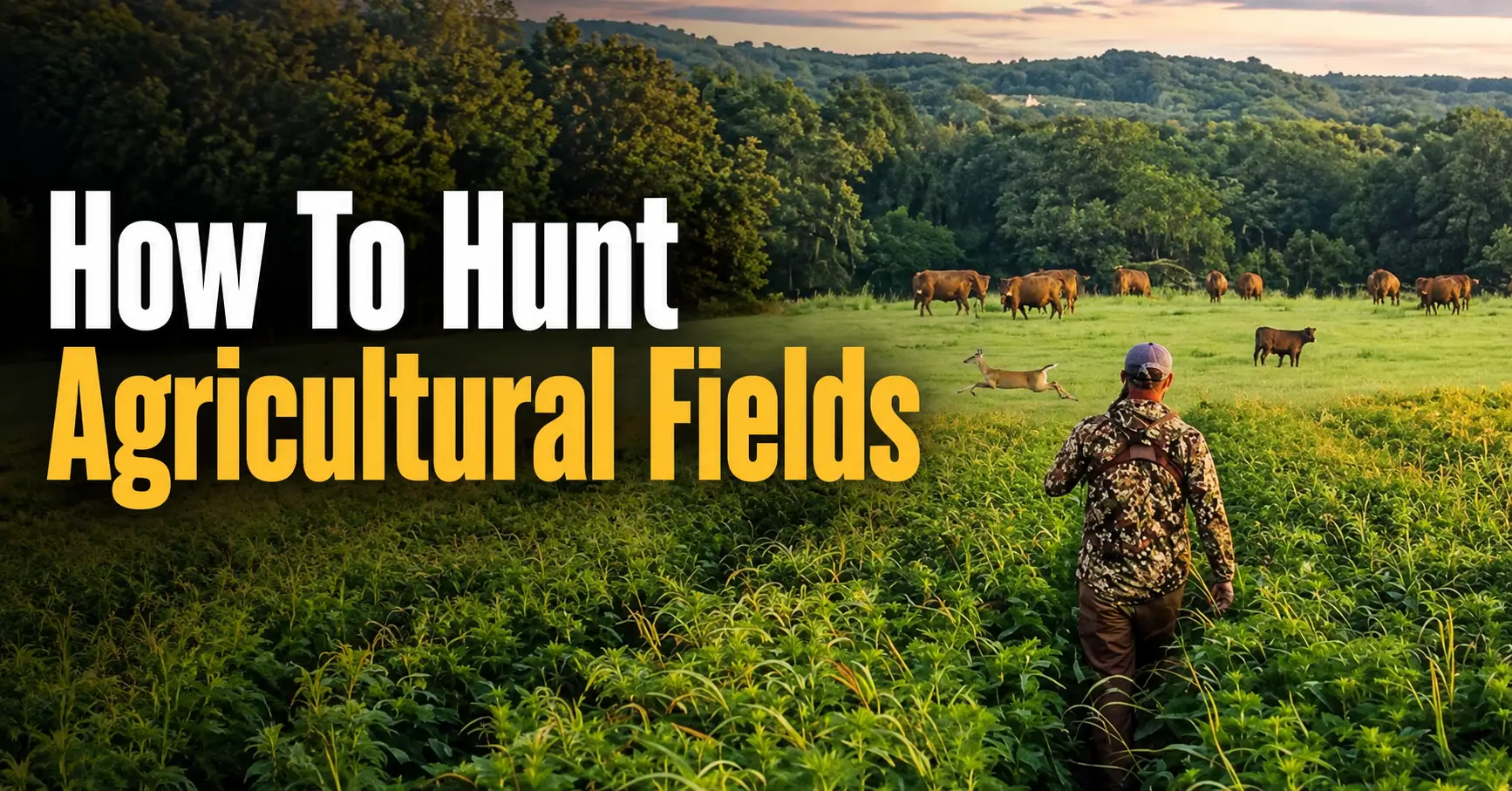

Learning how to hunt agricultural fields involves much more than sitting where crops meet timber. Farm landscapes change quickly as crops grow, mature, dry, and are harvested. Deer movement also shifts with mast, weather, breeding activity, hunting pressure, farm machinery, and the amount of secure cover between bedding areas and food.
This guide focuses on white-tailed deer around corn, soybeans, hay, alfalfa, cereal grains, pastures, orchards, and similar agricultural habitat. It is written for beginners who want a legal, safe, ethical approach that respects wildlife, landowners, crops, livestock, neighbors, and other hunters.
Quick Answer
To hunt agricultural fields, first verify licenses, tags, seasons, legal equipment, access, baiting rules, and landowner permission. Scout the field perimeter for concentrated entry trails, fence gaps, corners, staging cover, bedding routes, and fresh sign, then choose a setup that works with the wind and has a known backstop. Plan both entry and exit so you do not cross the field, disturb bedding cover, interfere with farm operations, or become trapped by deer after legal light. Only take a clearly legal opportunity within your practiced ability, and never shoot toward roads, homes, livestock, machinery, people, or unknown ground.
Important Legal and Safety Notice Before You Hunt
Hunting laws and agricultural-property rules vary by jurisdiction, season, species, land type, and hunting method. Verify all current requirements with the official wildlife agency and the landowner or property manager.
- Confirm licenses, permits, tags, legal hours, bag limits, harvest reporting, and transport requirements.
- Confirm legal firearms, bows, ammunition, equipment, blinds, tree stands, trail cameras, and baiting rules.
- Obtain permission for private land and clarify boundaries, guests, parking, recovery, and neighboring properties.
- Ask about planting, spraying, irrigation, livestock, harvesting, grain storage, and machinery schedules.
- Use required blaze orange or other visibility clothing.
- Identify the target and the complete background. Never shoot across a crest or toward an unknown field edge.
- Use a full-body harness and lifeline for elevated stands and raise an unloaded weapon with a haul line.
- Complete hunter education and hunt with an experienced ethical mentor when possible.
Understanding Agricultural Fields as Deer Habitat
Agricultural fields can provide high-quality seasonal food, but the open crop is only one part of the pattern. Deer also need secure bedding, water, escape cover, low-disturbance travel, and places to pause before entering exposed ground.
The most useful hunting location is often not the middle of the food source. It may be:
- A wooded trail connecting bedding cover to the field
- A brushy staging area just inside the timber
- A fence gap or low crossing used repeatedly
- A secluded inside corner
- A hedgerow that links two blocks of cover
- A creek, drainage, ditch, or terrace that crosses the field
- A small overlooked opening before the main field
How Crop Type and Farm Timing Change Deer Movement
| Field Type | What May Attract Deer | What Changes the Pattern | Scouting Focus |
|---|---|---|---|
| Standing corn | Food, concealment, bedding, and travel cover | Harvest, wind damage, machinery, pressure, and neighboring food | End rows, waterways, field corners, missing rows, tracks, and cover connections |
| Harvested corn | Waste grain and easier travel | Tillage, heavy pressure, snowfall, and grain availability | Entry trails, sheltered corners, overlooked stubble, and routes to secure cover |
| Green soybeans | Leaves and tender growth | Yellowing, maturity, dry-down, and nearby mast | Browsing intensity, secluded corners, and daylight entry points |
| Mature or harvested soybeans | Pods, residue, and exposed grain | Harvest efficiency, weather, and competing crops | Spilled areas, edge trails, and post-harvest pattern changes |
| Hay or alfalfa | Consistent green forage | Cutting schedule, regrowth, drought, and livestock use | Fresh browse, field-edge trails, and secure staging cover |
| Winter wheat or cereal grains | Young green growth | Planting date, germination, weather, and legal season timing | Most heavily browsed portions and nearby bedding routes |
| Pasture | Grass, forbs, edge browse, and travel | Livestock rotation, mowing, fencing, and human activity | Livestock-free sections, fence gaps, shade, and cover transitions |
| Orchard | Fruit, browse, grass, and edge cover | Harvest, human activity, pruning, and fallen-fruit availability | Entry runs, secluded rows, and safe backstops beyond the orchard |
These are general patterns, not guarantees. Confirm current use with tracks, droppings, browse, observation, legal trail cameras, and recent landowner information.
Field Features Worth Scouting
Inside Corners
An inside corner occurs where timber or cover projects into a field. It can shorten the distance between secure cover and food and may concentrate entry trails.
Fence Gaps and Low Crossings
Repeated crossings often show tracks, hair, worn soil, and trails. Never cut, lower, or modify a fence without written permission.
Hedgerows and Shelterbelts
Linear cover can connect bedding areas, fields, waterways, and neighboring woodlots. It can also hide roads, people, homes, and livestock beyond your view.
Drainages and Grassed Waterways
These routes may let deer cross open ground with more cover. They can hold unstable air and may be wet, steep, or used by farm vehicles.
Field Islands
A small patch of brush, trees, rock, or wet ground inside a field may provide security or a travel waypoint. Confirm safe access and background before considering it.
Staging Cover
Thick cover between bedding and the field can hold deer before dark. Fresh browse, rubs, scrapes, and multiple trails may reveal the best side.
Terrain Breaks
Terraces, ditches, knobs, creek banks, and subtle rises can hide movement. They also complicate the background because the ground may fall away beyond the animal.
Farm Access Lanes
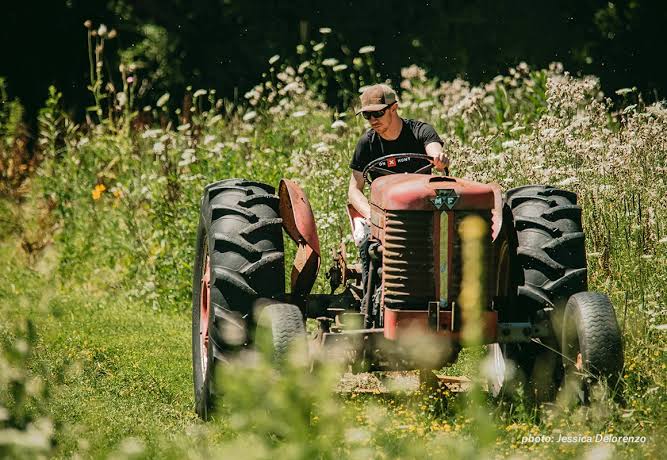
Deer may use quiet lanes, but machinery and workers have priority. Never block, damage, or place equipment in an operational route.
What You Need Before You Start
Legal and Access Documents
- Current license, permits, and tags
- Official regulations and property rules
- Written or clearly documented landowner permission
- Boundary, safety-zone, recovery, and reporting information
Navigation and Farm Awareness
- Offline property map and compass
- Marked homes, roads, barns, livestock, and neighboring parcels
- Landowner-approved parking and walking routes
- Current farm work and equipment schedule
Safety Equipment
- Required visibility clothing
- First aid kit and emergency contacts
- Headlamp and backup power
- Full-body harness and lifeline for elevated stands
Observation and Weather Tools
- Binoculars
- Legal wind indicator
- Weather-appropriate clothing and boots
- Notebook or legal mapping application
Hunting Equipment
- Legal, properly maintained firearm or bow
- Manufacturer-approved case and transport equipment
- Safe haul line for elevated setups
- Legal blind or stand approved for the property
Recovery and Meat Care
- Clean gloves and tools
- Game bags and cooling plan
- Landowner-approved removal route
- Legal reporting and transport supplies
How to Hunt Agricultural Fields: Step-by-Step Guide
1
Verify Regulations for the Exact Species and Property
Check licenses, tags, season dates, legal hours, bag limits, methods, equipment, baiting, stands, cameras, harvest reporting, disease rules, and transport. Rules for deer are not automatically the same as rules for migratory birds or other game.
2
Obtain Clear Landowner Permission
Discuss where you may park, walk, hunt, place equipment, bring a guest, and recover game. Ask about neighboring homes, livestock, workers, farm dogs, crop-damage concerns, and any area that is off limits.
3
Learn the Crop Calendar
Ask what is planted, when it may be cut or harvested, where equipment enters, and whether spraying, irrigation, livestock rotation, or hauling is scheduled. Do not rely on last year’s timing.
4
Map Food, Cover, Water, and Boundaries
Mark the field, timber, brush, creek, drainage, fence, roads, homes, barns, public trails, property lines, neighboring parcels, and potential backstops. Eliminate unsafe shooting directions before scouting a stand.
5
Scout the Perimeter Without Damaging Crops
Use approved routes and look for concentrated tracks, trails, droppings, browse, rubs, scrapes, fence hair, crossings, and staging cover. Avoid walking through planted rows or wet soil without permission.
6
Connect Field Entry to Bedding Cover
Follow the travel pattern away from the crop at a legal, low-impact distance. A heavily used entrance is more useful when you understand where the deer are coming from and when they reach it.
7
Plan for Wind and Temperature Changes
Choose a setup where the forecast wind and likely thermal movement carry scent away from bedding, staging cover, and field-entry trails. Test wind repeatedly near corners, ditches, buildings, and timber edges.
8
Design a Quiet Entry and Exit
Use a route screened by terrain, hedgerow, ditch, or timber when legal and safe. Plan how to leave if deer are feeding in the field after legal light without crossing among them or walking through crops.
9
Select a Safe Setup With a Known Backstop
Confirm every possible shooting direction. A large open field is not automatically safe; bullets or arrows can leave the property, cross roads, or travel toward hidden people, livestock, buildings, and machinery.
10
Install a Blind or Stand Responsibly
Get approval before cutting vegetation, attaching equipment, driving stakes, or leaving a structure. Avoid drainage, machinery paths, fences, irrigation, utility lines, and crop rows. Use a full-body harness and lifeline for elevated stands.
11
Observe With Binoculars and Stay Patient
Identify movement with optics, not a firearm scope. Watch entry timing, group behavior, field position, wind, workers, vehicles, livestock, and other hunters. Be prepared to pass or leave when conditions change.
12
Take Only a Legal, Safe, Ethical Opportunity
Act only when the species and legal animal are positively identified, the background is reliable, the field is clear, the opportunity is within your practiced range, and recovery is realistic. Avoid rushed, obstructed, distant, running, or uncertain opportunities.
13
Follow Recovery, Tagging, and Reporting Rules
Complete required tagging and reporting promptly. Stop at property boundaries and obtain permission before crossing. Choose a recovery route that protects crops, fences, livestock, roads, and equipment.
14
Care for the Harvest and the Property
Use clean tools and gloves, cool edible meat promptly, remove all waste as required, close gates, pack out trash, and inform the landowner of the outcome and any issue you observed.
Wind, Thermals, Entry, and Exit Around Open Fields
Field hunting is often decided by access. Deer may be able to see or smell a hunter crossing open ground long before the hunter reaches the setup.
Prevailing Wind
Use the general forecast to shortlist locations, but confirm local flow in person. Timber edges, crop height, hedgerows, barns, terraces, and valleys can redirect wind.
Evening Cooling
Cooling air may settle toward ditches, creek bottoms, and low field corners. A setup that works in the afternoon can begin carrying scent into a lower entry trail near sunset.
Morning Warming
As sunlight warms an edge, air may rise along slopes and timber. Cloud cover, crop canopy, water, and strong regional wind can delay or overpower the pattern.
Entry Planning
- Do not cross the destination field when deer may already be present.
- Avoid walking the same trail deer use between bedding and food.
- Use cover and terrain without entering planted rows unless approved.
- Arrive early enough to move slowly and handle obstacles safely.
Exit Planning
- Choose a screened route that does not require walking through feeding deer.
- Coordinate with the landowner before using any vehicle or farm-equipment-related exit strategy.
- Never remain beyond legal requirements simply to avoid disturbance.
- Use lighting safely after legal hours and keep the weapon handled according to law.
Best Time, Place, and Conditions for Agricultural-Field Hunting
| Situation | Potential Opportunity | Main Limitation | Responsible Approach |
|---|---|---|---|
| Early growing season | Predictable green forage | Heat, insects, and changing plant preference | Scout fresh browsing and prepare cooling and hydration. |
| Pre-harvest standing crops | Food and secure cover | Limited visibility and deer bedding within crops | Focus on legal edges, waterways, corners, and safe observation. |
| Immediately after harvest | Residue, waste grain, and exposed travel | Heavy machinery, people, abrupt pattern changes | Coordinate closely with the farmer and rescout before hunting. |
| Cold front | Possible increase in feeding movement | Wind changes and exposure | Use a stable safe setup and carry appropriate clothing. |
| Strong wind | May favor sheltered field sides | Falling limbs, unstable blinds, difficult shooting | Avoid hazardous trees and anchor approved blinds correctly. |
| Rain or wet soil | Quieter woods and visible tracks | Crop damage, stuck vehicles, mud, and recovery difficulty | Stay off fields and lanes when the landowner requests it. |
| Heavy hunting pressure | Movement may shift to secluded staging cover | Other hunters and reduced daylight use | Increase visibility, communicate, and use backup locations. |
Morning and evening are common movement periods, but legal hours, crop stage, pressure, weather, breeding behavior, and local deer patterns determine when a field is actually useful.
Agricultural-Field Setup Options
Inside the Timber
A setup just inside cover may catch deer before they enter the open field. It can also provide a safer exit, but avoid pushing too close to bedding and confirm the background through vegetation.
Field-Edge Tree Stand
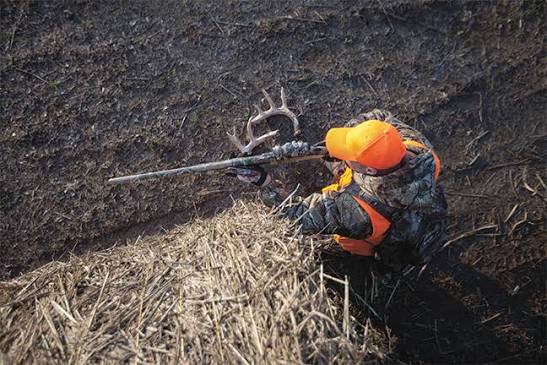
An elevated view can improve observation where legal. Use a full-body harness and lifeline, inspect the tree and stand, and ensure every shooting lane ends in a safe background.
Ground Blind
A ground blind works where trees are limited. Obtain permission, anchor it, make it visible to other hunters as required, and position it where machinery cannot strike it.
Hedgerow or Shelterbelt
Linear cover may connect bedding and feeding areas. Confirm ownership, neighboring homes, road locations, livestock use, and whether the hedgerow conceals people or vehicles.
Field Corner
Corners can concentrate travel, but obvious corners are easily pressured and often have swirling wind. Scout multiple approaches rather than choosing the closest tree.
Staging Area
A small opening or brushy zone before the main crop may produce earlier legal movement. Protect it from repeated entry and hunt only with a workable wind.
How to Work Responsibly With Farmers and Landowners
Permission is a relationship, not a one-time transaction. Agricultural operations change daily, and the landowner’s safety and livelihood come first.
- Ask where to park and whether wet-weather access changes.
- Request a current map of boundaries and no-hunt areas.
- Discuss homes, workers, tenants, neighboring hunters, livestock, and farm dogs.
- Ask when planting, spraying, mowing, harvesting, hauling, irrigation, or livestock movement is expected.
- Clarify whether stands, blinds, cameras, trimming, screws, nails, or vehicles are allowed.
- Leave gates exactly as instructed and never cut fences or crops.
- Report damaged equipment, broken fences, sick livestock, trespass, or unsafe conditions.
- Share harvest information when requested and thank the landowner.
Helpful Tips for Better Results
- Scout the transition between crop and secure cover, not only the open field.
- Track crop stage and harvest date alongside deer sign.
- Use binoculars instead of pointing a firearm at distant movement.
- Keep several legal setups for different winds and farm schedules.
- Favor concentrated, fresh sign over one dramatic track or rub.
- Check the field from a distance before walking to the setup.
- Avoid hunting when the only exit crosses the feeding area.
- Mark every road, home, trail, barn, livestock area, and neighboring parcel.
- Practice at realistic distances and positions before the season.
- Pass whenever target identity, legality, background, range, or recovery is uncertain.
Common Mistakes to Avoid
- Assuming permission covers every field: Confirm each parcel and boundary.
- Ignoring the farm calendar: Harvest and machinery can change the pattern and create danger overnight.
- Walking across planted crops: Use only approved routes.
- Setting up on the first entry trail: Look for concentrated sign and solve the wind first.
- Hunting directly over the destination food every time: Pressure may push movement after legal light.
- Forgetting the exit: Deer may enter behind or around you.
- Treating open ground as a safe backstop: A projectile can cross the entire field and leave the property.
- Leaving a blind in a machinery route: Coordinate placement and removal.
- Assuming spilled grain is always legal: Baiting rules vary by species and jurisdiction.
- Crossing a property line during recovery: Stop and obtain permission.
Troubleshooting Common Problems
| Problem | Possible Cause | What to Do |
|---|---|---|
| Deer enter after legal light | Pressure, exposed edge, setup too close to the destination, or poor access | Move toward a legal staging route without disturbing bedding and preserve the best wind. |
| Deer stop using the field | Harvest, mast drop, crop maturity, machinery, predators, or hunting pressure | Rescout alternative foods and neighboring cover rather than waiting on an old pattern. |
| Wind swirls at the corner | Timber, hedgerow, buildings, terrain, and cooling air interact | Move to a simpler edge or farther inside cover where airflow is more stable. |
| You cannot leave without disturbing deer | Poor exit design | Use the pre-approved screened route; for future hunts, select a setup with independent access and exit. |
| Farm machinery arrives | Schedule changed or work was delayed | Unload and leave by the safe approved route. Never compete with equipment for space. |
| Livestock enter the area | Rotation or gate change | Do not shoot. Follow the landowner’s instructions and relocate or end the hunt. |
| Unknown grain is scattered | Normal farming, livestock feed, spill, or possible bait | Do not hunt until the wildlife agency and landowner clarify legality. |
| Another hunter is nearby | Shared permission or boundary confusion | Communicate safely, increase visibility, and use a backup area rather than crowding. |
| Game crosses a boundary | Normal movement after the opportunity | Stop at the line and obtain permission or agency assistance according to local rules. |
Ethical Hunting and Conservation on Farmland
Responsible agricultural-field hunting balances wildlife management with private property, food production, rural safety, and respect for the animal.
- Obey seasons, limits, legal hours, methods, tags, and reporting rules.
- Take only opportunities with a clear target, safe background, and realistic recovery.
- Protect crops, soil, water, fences, livestock, buildings, equipment, and roads.
- Do not leave waste, flagging, cartridges, broadhead packaging, or damaged vegetation.
- Use the harvest responsibly and cool edible meat promptly.
- Respect other hunters, neighbors, workers, and non-hunting recreationists.
- Support habitat and wildlife management through lawful participation.
When to Get More Training or Professional Guidance
Seek help when you have not completed hunter education, are new to a firearm or bow, do not understand property boundaries, are unsure about baiting or crop-damage rules, cannot identify a safe background, or need recovery or meat-care assistance.
Useful sources include the official wildlife agency, certified hunter education instructors, conservation officers, landowners, farm managers, experienced ethical mentors, and legal tracking services where available.
After the Hunt: Follow-Up, Gear Care, and Learning
- Complete tagging and harvest reporting accurately and on time.
- Use the approved route to remove equipment and any lawful harvest.
- Clean mud, crop residue, and moisture from boots, optics, stands, blinds, and tools.
- Unload, transport, clean, and store firearms or bows according to law and manufacturer instructions.
- Record crop stage, harvest activity, wind, entry trails, sightings, pressure, and access conditions.
- Tell the landowner when you have left and report any issue.
- Review what worked and update backup setups before the next hunt.
Recommended Hunting Gear and Tools to Consider
Expensive gear does not guarantee success. Choose dependable equipment that matches the law, property, crop, weather, hunting method, and your skill level.
- Legal hunting firearm or bow used according to manufacturer instructions
- Required visibility clothing
- Binoculars for safe identification
- Offline property map, compass, GPS or phone, and backup power
- Legal wind indicator
- Supportive boots and weather-appropriate layers
- Headlamp, first aid kit, water, food, and emergency communication
- Full-body harness, lifeline, and haul line for elevated stands
- Landowner-approved ground blind or stand
- Clean gloves, game bags, and cooling equipment
Final Thoughts
The most reliable way to learn how to hunt agricultural fields is to study the entire farm system rather than stare at the crop. Verify the law and permission, learn the crop calendar, connect bedding and staging cover to field-entry routes, account for wind, protect the entry and exit, and reject every unsafe shooting direction.
Conditions change with planting, growth, harvest, weather, pressure, and farm work. Stay flexible, communicate with the landowner, respect crops and livestock, and pass any opportunity that is not clearly legal, safe, ethical, and recoverable.
Frequently Asked Questions
1. What does hunting agricultural fields mean?
It usually means hunting legal game around cropland, hay fields, pastures, orchards, or similar farm habitat. This guide focuses mainly on white-tailed deer using fields as seasonal food sources and travel destinations.
2. What species is this guide mainly about?
The primary species is white-tailed deer. Agricultural-field rules and tactics for migratory birds, wild turkeys, hogs, or other game can differ substantially, so verify species-specific regulations.
3. Do I need permission to hunt a farm field?
Yes on private property. Obtain clear permission from the landowner or authorized manager and discuss boundaries, parking, livestock, gates, crop protection, equipment, recovery, and guest policies.
4. Do I still need a license on private farmland?
Usually yes. Private-land permission does not replace hunting licenses, permits, tags, season rules, legal hours, reporting, or weapon restrictions.
5. What is the best agricultural crop for deer hunting?
There is no universal best crop. Deer use crops according to plant stage, harvest timing, alternative foods, weather, pressure, cover, and local farming practices.
6. Do deer prefer standing corn or harvested corn?
Both can be attractive for different reasons. Standing corn may provide food and cover, while harvested fields can expose leftover grain and make travel easier to observe.
7. Are soybean fields good for deer hunting?
Soybeans can be attractive during green growth and after maturity or harvest, but use changes as leaves yellow, pods dry, nearby mast drops, and pressure increases.
8. Are hay and alfalfa fields useful?
They can provide consistent forage when actively growing, especially where nearby cover gives deer a secure approach. Cutting schedules can change use quickly.
9. Are winter wheat or cereal-grain fields useful?
Young green growth can attract deer where legal hunting seasons overlap. Confirm the field is part of a normal agricultural operation and obtain permission before entering.
10. Should I hunt directly on the field edge?
Sometimes, but a setup slightly inside adjacent cover may intercept deer before they reach the open field and may reduce the risk of being surrounded at the end of legal light.
11. What is staging cover?
Staging cover is secure vegetation between bedding areas and a major food source where deer may pause, browse, or wait before entering an open field.
12. How do I find deer entry trails?
Walk the legal perimeter and look for concentrated tracks, worn trails, hair on fences, low crossings, droppings, rubs, scrapes, and repeated routes between cover and crops.
13. What is a fence crossing?
It is a spot where deer regularly pass through, under, or over a fence. Do not damage or alter the fence, and never assume the crossing gives legal access.
14. How far inside the woods should I set up?
Use fresh sign, visibility, wind, access, and your practiced range. A short distance inside cover may catch earlier movement, but going too deep can disturb bedding areas.
15. How does crop harvest change deer movement?
Harvest removes cover, changes available food, increases machinery activity, and may shift deer toward leftover grain, field corners, neighboring cover, or different farms.
16. Should I contact the farmer about harvest timing?
Yes. Coordinate so your vehicle, blind, stand, or presence never interferes with planting, spraying, harvesting, livestock movement, or equipment routes.
17. Can I hunt while farm machinery is operating?
Do not hunt close to active machinery unless the landowner has explicitly coordinated a safe plan. Operators may not see you, and noise, dust, debris, and changing traffic create hazards.
18. Where should I park on agricultural property?
Park only where the landowner directs. Keep lanes, gates, field entrances, equipment routes, grain access, livestock areas, and emergency access clear.
19. How important is wind direction near a field?
It is critical. Plan so scent does not blow toward expected bedding, staging cover, field-entry trails, livestock, homes, or other hunters.
20. Why does wind swirl near field corners?
Corners combine timber edges, hedgerows, buildings, terrain, and temperature changes. These structures can bend wind and create unstable scent movement.
21. How do evening thermals affect field hunting?
As the ground cools, air may settle toward lower areas. Local terrain, crops, woods, water, clouds, and regional wind can change the pattern, so check airflow repeatedly.
22. What is the safest background for a shot near a field?
A known earthen backstop with no road, building, livestock, machinery, person, trail, or hidden low ground beyond it. Never shoot at a skylined animal or across an uncertain field.
23. Can I shoot across a large open field?
Only if it is legal, the target is positively identified, the distance is within your verified ability, and the complete background is known and safe. Large fields often hide roads or properties beyond the visible edge.
24. Can I use a riflescope to identify movement?
No. Use binoculars for observation. Point a firearm only at a target you have already identified and intend to shoot legally.
25. Is a ground blind useful on a field?
Yes where legal and approved by the landowner. Place it early when possible, anchor it securely, keep it visible to other hunters as required, and never block farm operations.
26. Is a tree stand useful on a field edge?
Yes where legal and suitable trees exist. Use a full-body harness and lifeline, remain connected from the ground up and back down, and raise an unloaded weapon with a haul line.
27. What if there are no trees on the field edge?
Use a legal ground blind, natural cover, a safe observation position, or an approved elevated structure. Do not attach equipment to utility poles, farm structures, or fences without authorization.
28. What clothing should I wear?
Wear weather-appropriate quiet layers, supportive boots, and all required blaze orange or visibility clothing. Farms can expose hunters to mud, sharp stubble, wire, dust, chemicals, and temperature swings.
29. How can I enter without alerting deer?
Use a landowner-approved route that avoids field-entry trails, bedding cover, skyline exposure, noisy debris, and scent blowing into the expected movement corridor.
30. How do I leave after deer enter the field?
Plan the exit before hunting. Wait when legal and safe, use a route screened from the field, or coordinate a non-hunting pickup with the landowner when permitted and appropriate.
31. Should I hunt a field every evening?
Repeated pressure can shift movement later or to another entry point. Rotate setups, protect the best wind, and avoid entering when conditions are poor.
32. How do public agricultural fields differ from private farms?
Public fields may have property-specific rules, shared access, more pressure, and restrictions on stands, blinds, parking, crops, or entry. Private farms require permission and coordination with operations.
33. Are crop-damage permits the same as regular hunting?
No. Damage-control permits and landowner programs can have separate eligibility, dates, methods, reporting, and supervision. Follow the issuing agency’s exact terms.
34. Can I hunt over spilled grain?
Rules depend on species and jurisdiction. Normal agricultural practices may be treated differently from intentionally placed bait, especially for migratory birds. Ask the wildlife agency before hunting.
35. What if I find an unknown pile of grain?
Do not hunt the area until the landowner and wildlife agency clarify whether it is a lawful normal agricultural practice or prohibited bait.
36. What should I do if game crosses onto neighboring land?
Stop at the boundary. Obtain permission and follow local recovery rules; do not trespass even during recovery.
37. How should I handle a successful deer harvest near crops?
Follow tagging and reporting rules, use clean gloves and tools, cool edible meat promptly, avoid contaminating crops or water, and use the landowner-approved removal route.
38. How can I reduce damage to the farm?
Stay on approved routes, avoid wet fields, close gates, protect crops and fences, pack out waste, keep vehicles off planted ground, and report damaged property immediately.
39. What is the biggest beginner mistake?
Setting up where the field looks good without first solving permission, boundaries, wind, entry, exit, backstop, farm activity, and recovery.
40. Where can I verify local agricultural-field hunting rules?
Use the official wildlife agency, property manager, landowner, hunter education program, conservation officer, and any written access agreement for the exact property.