
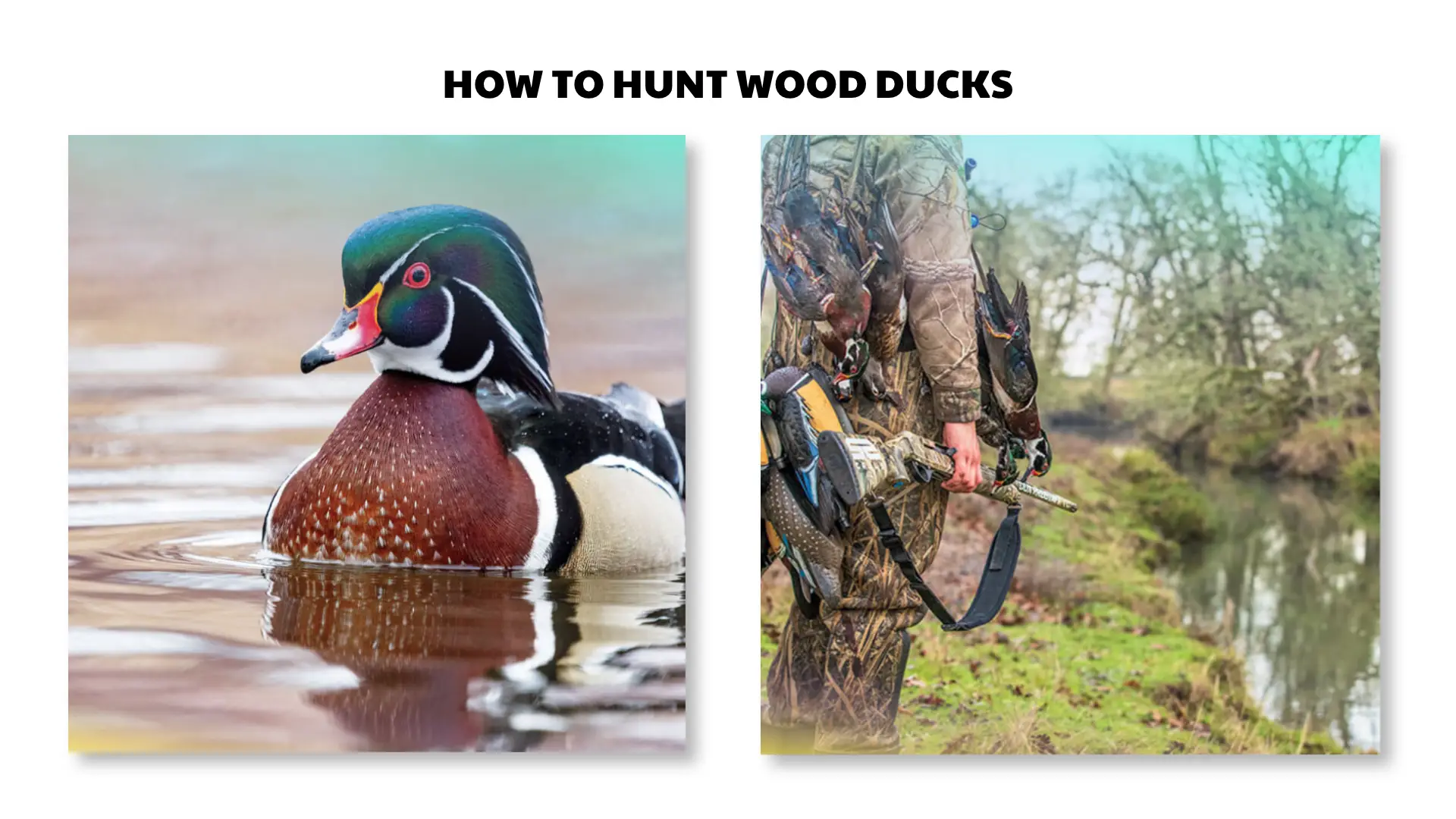

Quick Answer
To hunt wood ducks responsibly, verify every current license, stamp, season, limit, ammunition, access, and reporting rule with the official wildlife agency. Scout wooded swamps, beaver ponds, creeks, flooded hardwoods, and backwaters to learn regular flight routes. Set a small concealed spread beside a clear opening, keep shooting zones narrow and safe, and take only positively identified opportunities within your practiced ability. Plan retrieval and cold-water safety before legal shooting time.
Important Legal and Safety Notice Before You Hunt
Hunting laws vary by country, state, province, county, flyway, zone, refuge, land type, species, date, and method. Regulations change every season. Use the current official booklet and property rules rather than relying on a general guide.
- Licenses and permits: Verify the hunting license, migratory-bird validation, HIP registration or equivalent, state or provincial permits, and property permits.
- Duck Stamp: In the United States, many waterfowl hunters age 16 or older need a current Federal Duck Stamp or E-Stamp.
- Season and limits: Confirm the exact zone, dates, legal hours, daily bag limit, possession limit, and species restrictions.
- Ammunition: Use only approved legal ammunition. U.S. waterfowl hunting requires approved nontoxic shot.
- Firearm rules: Confirm legal gauge, shotgun capacity, transport, boat, refuge, and casing requirements.
- Methods: Verify rules for baiting, electronic calls, motorized devices, boats, dogs, blinds, and agricultural land.
- Access: Confirm public boundaries or obtain clear private-land permission, including retrieval rights.
- Visibility: Follow blaze-orange or other visibility requirements during access and mixed hunting seasons.
- Water safety: Wear a PFD in boats and whenever conditions require it. Avoid thin ice, deep mud, current, flooding, and overloaded craft.
- Firearm safety: Keep the muzzle controlled, action open until ready, finger off the trigger, and identify the target and background.
Wooded wetlands create short sight lines. Never shoot through branches or toward roads, homes, trails, vehicles, livestock, boats, other blinds, dogs, people, or unclear movement. A fast bird is not a reason to rush identification or swing outside an assigned shooting lane.
Understanding Wood Ducks and Their Habitat
The wood duck, Aix sponsa, is a cavity-nesting dabbling duck strongly associated with forested water. The U.S. Fish and Wildlife Service wood duck profile describes the species and its conservation recovery, while the Cornell Lab guide provides identification and life-history information.
Preferred Habitat
Wood ducks commonly use wooded swamps, beaver ponds, freshwater marshes, creeks, forested rivers, backwaters, and ponds near mature trees. The North Carolina Wildlife Resources Commission highlights wooded swamps, beaver ponds, streams, rivers, and dense brood cover as important habitat.
Food
Wood ducks eat seeds, fruits, acorns, aquatic plants, and aquatic or terrestrial invertebrates. Local food availability and water levels can shift feeding locations quickly.
Movement
They may move quickly between wooded roosting, loafing, and feeding areas around morning and evening. Their compact body and large eyes help them move through timber, which means beginners often hear or see them only briefly.
Identification
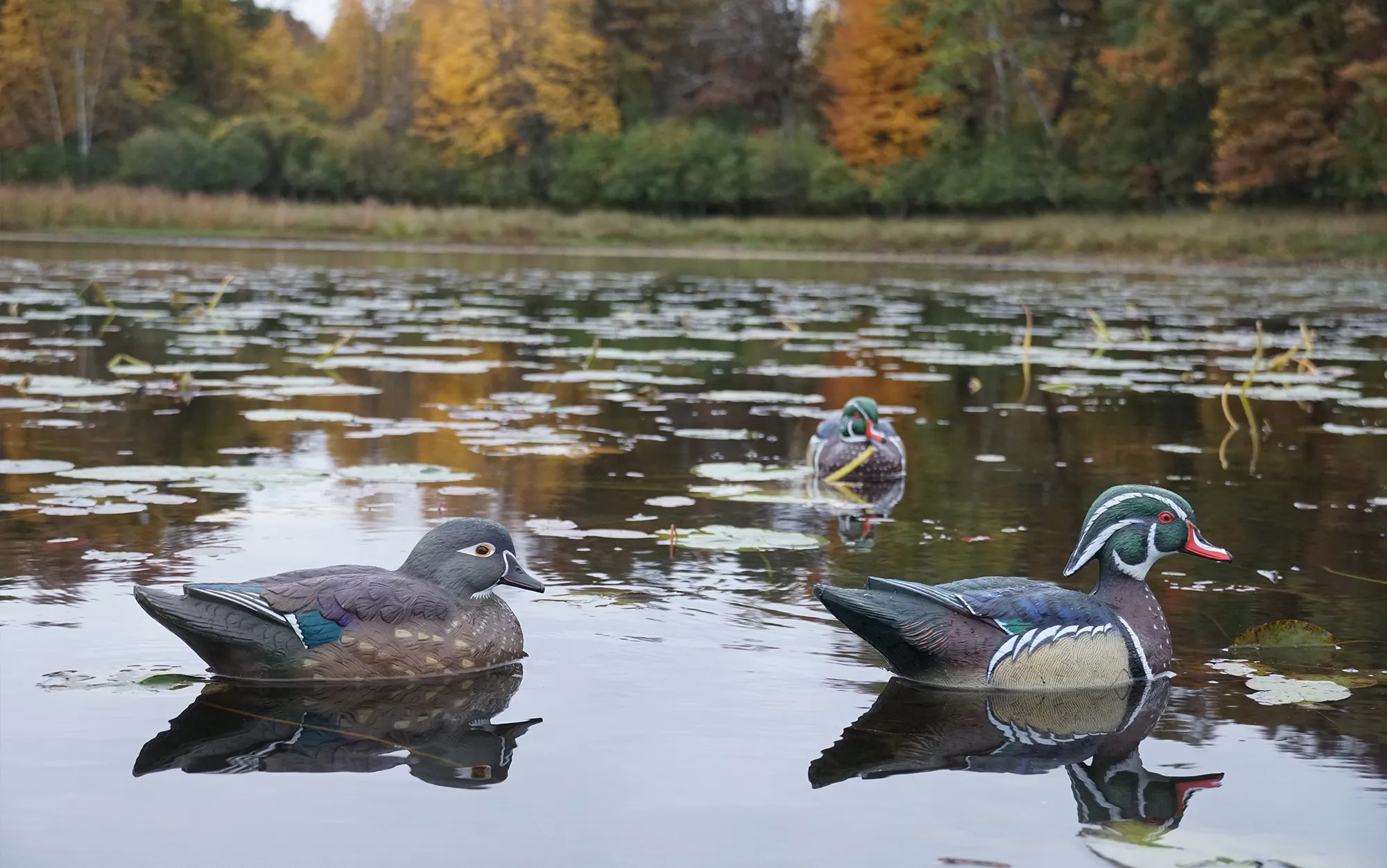
Adult drakes in breeding plumage have an ornate crest, iridescent head colors, bold white facial markings, a reddish bill, chestnut breast, and patterned sides. Hens are gray-brown with a pale eye ring and crest. Juveniles, eclipse plumage, shade, and fast flight require extra caution.
Conservation History
Wood duck populations declined severely because of habitat loss and overharvest but recovered through legal protection, wetland conservation, and nest-box programs. Responsible hunting should support continued habitat and population management.
What You Need Before You Start
- Current license and waterfowl permits
- HIP registration or local equivalent
- Required stamps
- Current regulation booklet
- Legal shotgun and approved nontoxic ammunition
- Eye and hearing protection
- Weatherproof layered clothing
- Waterproof boots or appropriate waders
- PFD for boating or hazardous water
- Small realistic decoy spread
- Legal hand-operated call if desired
- Low-profile blind or legal natural cover
- Offline map, compass, GPS, or hunting app
- Headlamp for access before legal time
- First aid and emergency signaling
- Dry backup clothing
- Food and drinking water
- Communication device and trip plan
- Clean gloves and game-care supplies
- Cooler or legal cooling plan
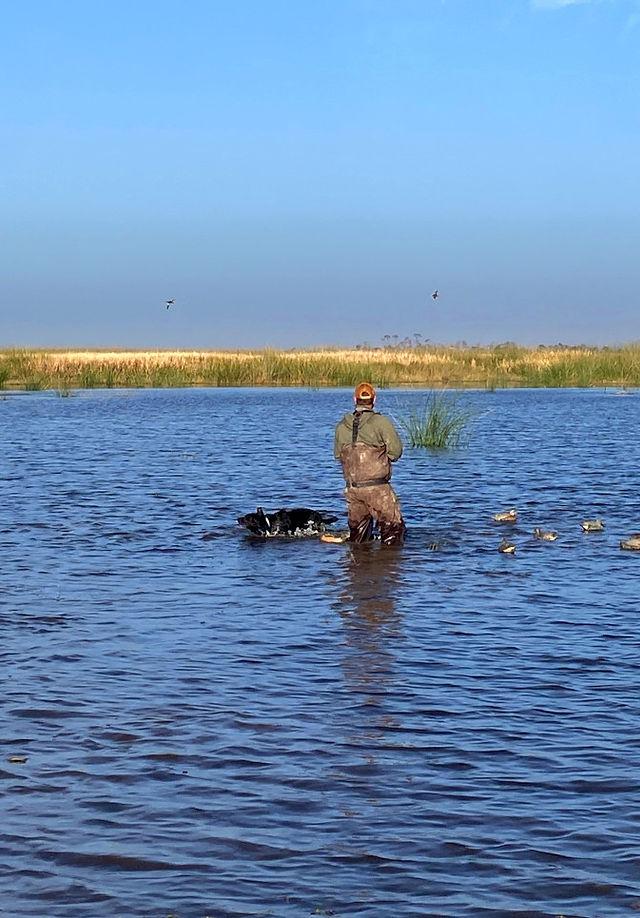
How to Hunt Wood Ducks: Step-by-Step Guide
Step 1: Check Current Hunting Laws
Use the official wildlife agency for the exact country, state or province, flyway, zone, public property, and date. Verify the hunting license, migratory-bird validation, HIP registration or equivalent, Federal Duck Stamp where applicable, season dates, legal hours, daily and possession limits, species restrictions, approved nontoxic ammunition, shotgun capacity, baiting rules, electronic-call rules, blind rules, reporting, and transport. Save the current regulations offline before leaving home.
Step 2: Complete Hunter Education and Practice
Complete required hunter education and seek an experienced ethical waterfowl mentor. Practice safe loading and unloading, muzzle control, target identification, patterning, and shooting from realistic but controlled field positions. A hunt should not be the first time you handle the shotgun, boat, waders, or personal flotation device.
Step 3: Learn Wood Duck Identification and Behavior
Study adult drakes, hens, juveniles, eclipse plumage, and similar ducks. Wood ducks are compact cavity-nesting dabblers adapted to wooded wetlands. They can fly quickly through branches and often appear suddenly along narrow creeks, beaver ponds, flooded timber, backwaters, and forested river edges. Positive identification must come before any decision to shoot.
Step 4: Choose a Legal Hunting Area
Use official public-land maps or obtain clear private-land permission. Confirm property boundaries, refuge closures, parking, launch access, assigned-blind rules, retrieval rights, nearby houses, roads, trails, livestock, and other hunters. Never cross private property or a closed refuge to hunt or recover a bird.
Step 5: Scout Feeding, Resting, and Flight Routes
Observe from a distance during legal access hours. Note wooded creek bends, beaver ponds, flooded hardwoods, acorn-producing trees, shallow backwaters, quiet loafing areas, feathers, tracks, droppings, and repeated flight paths. Record the time, wind, water level, weather, species mix, and hunting pressure. Avoid repeatedly flushing birds from a resting site.
Step 6: Prepare the Correct Gear
Pack licenses, legal nontoxic ammunition, a safe and properly fitted shotgun, eye and hearing protection, weatherproof layers, gloves, boots or waders, a PFD when boating or conditions require it, a small wood-duck or mixed-dabbler decoy spread, a legal hand call if desired, concealment material, navigation, first aid, communication, dry clothes, and game-care supplies. Keep the load light enough for safe travel through mud, brush, and water.
Step 7: Plan Wind, Weather, Entry, and Exit
Wooded water can hide sudden depth changes, roots, current, mud, and fallen timber. Plan a quiet route in daylight when possible, mark the safe return path, and tell someone where you are going. Consider wind for bird approach and decoy motion, but never place the blind where the expected shot points toward a road, home, trail, boat, partner, dog, or neighboring blind.
Step 8: Set Up a Small, Safe Hunting Position
Wood ducks often use confined water, so a large decoy spread is not always necessary. Place a few realistic decoys where they can be seen from the flight route and leave an open pocket inside your practiced range. Blend into natural cover without cutting prohibited vegetation or blocking your exit. Assign shooting zones before legal time.
Step 9: Stay Still, Observe, and Call Sparingly
Wood ducks may move quickly and offer little warning. Remain still, listen for wingbeats and calls, and scan openings rather than swinging the muzzle through brush. A species-appropriate hand call can be used lightly, but scouting and concealment are more important. Stop calling when birds are approaching or reacting negatively.
Step 10: Take Only a Safe, Legal, Ethical Opportunity
Act only after positive species identification, confirmation that the bird is legal, a clear safe background, a defined shooting lane, and confidence that the opportunity is within your practiced ability. Do not shoot through branches, toward uncertain movement, or at a low angle that threatens people, dogs, boats, roads, buildings, or livestock. Passing is the correct choice whenever anything is unclear.
Step 11: Recover, Report, and Care for the Harvest
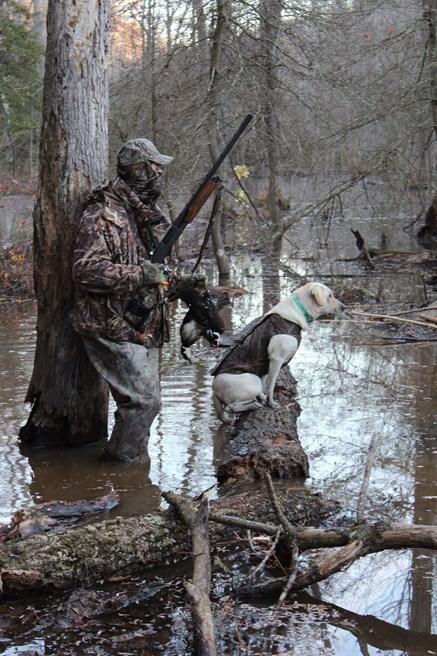
Plan recovery before the shot. Use a trained dog, safe boat, or legal wading route without entering dangerous current, deep mud, cold water, or private land. Complete any required tagging, refuge check-out, or harvest reporting. Keep the bird clean and cool, follow possession and transport rules, and use the meat responsibly.
Best Time, Place, and Conditions for Wood Duck Hunting
Time of Day
Morning and evening movement is common, especially along regular creek and pond flight routes. Local scouting is more reliable than a universal schedule. Always remain inside legal shooting hours.
Seasonal Timing
Resident and early-migrating wood ducks may use small forested wetlands before colder weather shifts them. Migration timing differs by latitude, weather, and habitat. Check local agency reports and recent observations.
Place
Productive habitat can include quiet beaver ponds, wooded creeks, flooded hardwoods, forested river bends, marsh edges, and shallow backwaters with food and cover. A small legal opening on a regular flight path can be more useful than a large open-water setup.
Wind
Wind influences approach, decoy movement, sound, and boat control. In timber, creek direction and tree openings can matter as much as the prevailing wind. Recheck the safe background whenever wind changes.
Weather
Cloud cover, rain, cold fronts, and changing water can affect movement, but no condition guarantees success. Lightning, floodwater, falling limbs, fog, freezing spray, and strong wind are reasons to leave.
Hunting Pressure
Wood ducks may shift to quieter tributaries, private wetlands, or closed refuges after disturbance. Avoid repeatedly pushing birds from important resting areas.
Public Versus Private Land
Public areas may require drawings, check stations, assigned blinds, access times, or special permits. Private land can reduce pressure but requires permission, boundary knowledge, and retrieval agreements.
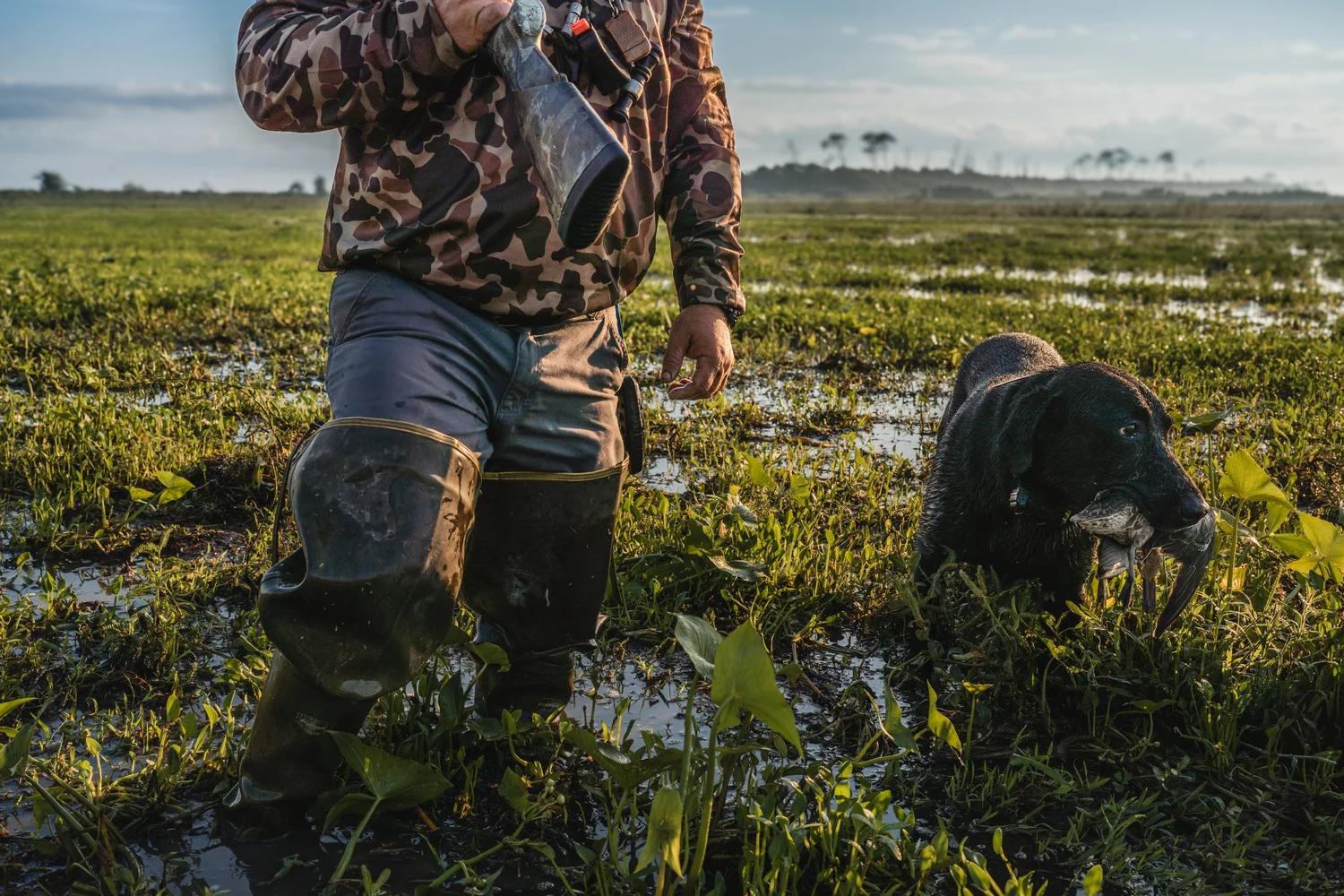
Helpful Tips for Better Results
- Scout the exact creek, pond, or backwater instead of assuming every wooded wetland holds birds.
- Arrive early enough to settle quietly without racing through dark timber or water.
- Use a small decoy spread that is easy to set and retrieve safely.
- Choose openings that provide a clear background rather than shooting through limbs.
- Hide facial shine and hand movement; wood ducks can appear at close range.
- Pattern your legal shotgun and nontoxic load before the season.
- Keep calling simple and let the birds’ response guide you.
- Use a PFD in boats and whenever cold or deep water creates a risk.
- Carry an offline map because wooded creek systems can look similar in low light.
- Discuss shooting lanes, dog position, and commands before birds arrive.
- Mark the safe recovery route before taking any opportunity.
- Leave early when flooding, lightning, fog, current, ice, or cold makes the area unsafe.
Common Mistakes to Avoid
- Using last season’s regulations.
- Failing to complete licenses, HIP, stamps, or property permits.
- Hunting near grain or feed without confirming baiting legality.
- Carrying unapproved ammunition or an unlawful shotgun configuration.
- Choosing a setup with branches or unknown areas behind the birds.
- Using too many decoys in a very small opening.
- Calling constantly instead of watching the birds.
- Moving the firearm before the bird is positively identified.
- Swinging outside assigned shooting lanes.
- Taking rushed opportunities through timber.
- Entering deep, flooded, icy, muddy, or fast water for recovery.
- Crossing private land or closed refuge boundaries.
- Ignoring lightning, flooding, fog, wind, and cold exposure.
- Failing to report, identify, cool, or transport the harvest legally.
Troubleshooting Common Problems
| Problem | Possible Cause | What to Do |
|---|---|---|
| You are not seeing wood ducks | Wrong creek or pond, poor timing, heavy pressure, changing water, or limited scouting | Observe several legal locations at morning and evening transitions and move to another legal area rather than overcalling. |
| Birds pass above the canopy but do not enter | The setup is outside the regular flight route or the opening is too small | Scout the actual route and reposition to a legal opening with safe shooting lanes. |
| Wood ducks flare before reaching the decoys | Movement, exposed faces, visible gear, unnatural blind shape, or pressure | Freeze movement, improve concealment, reduce calling, and keep the blind low and natural. |
| Birds arrive too quickly for identification | Confined timber and fast flight | Keep the firearm controlled, identify early, and pass rather than making a rushed decision. |
| Decoys are difficult to see | Heavy shade, vegetation, poor placement, or too much cover | Place a few decoys in a legal open pocket visible from the flight path without blocking recovery. |
| No wind moves the spread | Protected timber or calm conditions | Use fewer well-spaced decoys and legal non-electronic movement where permitted; never use prohibited devices. |
| Another group is close by | Crowded public access or unclear spacing | Communicate calmly, protect safe shooting zones, follow property rules, and move when separation is inadequate. |
| The property boundary is uncertain | Flooding, creek bends, poor maps, or private inholdings | Do not enter or shoot across it. Confirm with official maps, the landowner, or the managing agency. |
| The boat or motor fails | Battery, fuel, mechanical, propeller, or cold-weather problem | Wear PFDs, use the emergency plan, call for help, and avoid risky repairs in deep or cold water. |
| Fog or heavy rain reduces visibility | Rapid weather change | Stop hunting and unload when target identification or the background is uncertain. Navigate to safety early. |
| A bird is down beyond a safe wading route | Deep water, current, mud, logs, ice, or private property | Do not risk a life or trespass. Mark the location and use a safer legal recovery method. |
| The call sounds unnatural | Too much volume, poor technique, wet reeds, or lack of practice | Use fewer sounds, maintain the call as directed, and practice away from the hunting area. |
Ethical Hunting and Conservation
Ethical hunting means accepting that a legal bird is not automatically a safe or recoverable opportunity. Wooded wetlands require special restraint because visibility and background can disappear quickly.
- Respect seasons, limits, refuges, and protected species.
- Practice until your safe personal effective range is clear.
- Identify every bird before deciding to shoot.
- Pass on birds hidden by branches or flying outside the safe lane.
- Plan legal recovery before acting.
- Avoid waste and use the harvest responsibly.
- Respect landowners, other hunters, anglers, boaters, and birdwatchers.
- Do not disturb nest boxes or closed resting habitat.
- Pack out shells, line, food wrappers, and blind material.
- Support wetland and bottomland forest conservation through licenses, stamps, and habitat programs.
The recovery of wood ducks is closely tied to habitat protection, hunting regulation, and nest-box programs. Follow the broader U.S. Fish and Wildlife Service hunter responsibilities and local ethical-hunting guidance.
When to Get More Training or Professional Guidance
Seek help before hunting independently when you have not completed hunter education, have limited shotgun experience, cannot identify common ducks, are new to boats or waders, do not understand boundaries, or are uncertain about recovery and game care.
After the Hunt: Follow-Up, Gear Care, and Learning
- Unload and transport firearms according to law and manufacturer instructions.
- Clean and dry the shotgun after exposure to water, mud, and vegetation.
- Dry waders, PFDs, boots, decoys, lines, calls, and blind material before storage.
- Inspect boats, plugs, motors, lights, anchors, batteries, and emergency equipment.
- Complete required check-out, reporting, band reporting, and possession records.
- Keep the harvest clean and cool and follow food-safety guidance.
- Record weather, water depth, acorn or food conditions, flight routes, species mix, and pressure.
- Review every rushed or uncertain moment and improve the plan before returning.
- Replace damaged safety equipment rather than improvising repairs.
- Thank landowners and leave the area cleaner than you found it.
Recommended Hunting Gear and Tools to Consider
You do not need expensive equipment to hunt responsibly. Choose gear based on local law, water depth, timber, weather, access, safety needs, skill, and budget.
- A legal shotgun that fits and can be controlled safely
- Approved nontoxic ammunition patterned with that shotgun
- Eye and hearing protection
- A properly fitted PFD
- Weatherproof layers and dry backup clothing
- Waders or boots suited to the water and temperature
- A small realistic wood duck or dabbling-duck decoy spread
- A simple legal hand-operated wood duck call
- Low-profile concealment appropriate to the property
- Offline maps, compass, GPS, and property information
- First aid, whistle, light, and emergency communication
- Clean game-care gloves, bags, and cooler
Final Thoughts
Learning how to hunt wood ducks requires legal preparation, careful identification, focused scouting, conservative water and firearm safety, a small well-placed setup, controlled observation, ethical shot discipline, and a realistic recovery plan. Wood ducks are fast, but the hunter’s decisions should never be rushed.
Success depends on habitat, migration, weather, water levels, hunting pressure, regulations, skill, patience, and restraint. A safe and lawful day with no harvest is always better than an uncertain shot or dangerous recovery.
Frequently Asked Questions
1. How long does it take to learn how to hunt wood ducks?
A beginner can learn the legal and safety basics through hunter education and several mentored outings. Identification, scouting, small-water navigation, calling judgment, and ethical shot discipline improve over multiple hunts and seasons.
2. Do I need a license to hunt wood ducks?
Yes in most jurisdictions. Verify the hunting license, migratory-bird validation, permits, stamps, and exemptions with the official wildlife agency where you will hunt.
3. Do I need a Federal Duck Stamp in the United States?
Most U.S. waterfowl hunters age 16 or older must possess a current Federal Duck Stamp or valid electronic equivalent. Check current federal and state instructions.
4. What is HIP registration?
The Harvest Information Program identifies migratory-bird hunters for harvest surveys in the United States. Registration procedures vary by state.
5. Do I need an individual tag for each wood duck?
Many jurisdictions do not use an individual carcass tag for every duck, but license, bag, possession, reporting, identification, and transport rules still apply.
6. When is wood duck hunting season?
Dates vary by country, state or province, zone, and year. Use the current official regulation booklet rather than dates from an old article.
7. What is the daily bag limit for wood ducks?
The limit varies by jurisdiction and season and can change. Check the official current species table for the exact location and date.
8. What are legal shooting hours?
Legal waterfowl hours are set by regulation and often relate to local sunrise or sunset. Confirm the exact rule and never guess in low light.
9. What ammunition is legal for wood ducks?
In the United States, approved nontoxic shot is required for waterfowl hunting. Other regions have their own approved-ammunition rules.
10. Can I use lead shot for wood ducks?
Do not assume lead is legal. It is prohibited for U.S. waterfowl hunting and restricted in many other jurisdictions.
11. What shotgun gauge is best for a beginner?
Choose a legal shotgun that fits well, can be controlled safely, and has been patterned with approved ammunition. Fit and practice matter more than maximum power.
12. How many shells can a waterfowl shotgun hold?
U.S. federal migratory-bird rules generally limit a shotgun to three shells total unless a specific exception applies. Verify all current rules.
13. Can I use an electronic duck call?
Recorded or electronically amplified calls are commonly prohibited for migratory-game-bird hunting. Check the exact jurisdiction and property rules.
14. Can I hunt wood ducks over bait?
Waterfowl hunting over bait is prohibited in the United States and illegal in many other places. Leave when the legality of grain, feed, or manipulated food is uncertain.
15. Can I hunt wood ducks on public land?
Yes where allowed, but drawings, permits, assigned blinds, check stations, launch rules, access times, and refuge restrictions may apply.
16. Can I hunt wood ducks on private land?
Only with clear permission and legal access. Confirm boundaries, parking, gates, livestock concerns, and retrieval rights.
17. Where do wood ducks live?
They commonly use wooded swamps, beaver ponds, freshwater marshes, creeks, forested rivers, backwaters, and ponds near mature trees.
18. Why are they called wood ducks?
They are strongly associated with forested wetlands, perch in trees, and nest in natural tree cavities or properly managed nest boxes.
19. What do wood ducks eat?
They eat seeds, fruits, acorns, aquatic plants, and aquatic or terrestrial invertebrates, depending on season and location.
20. When are wood ducks most active?
They often move during morning and evening transitions between feeding and resting areas, but weather, migration, and pressure can alter the pattern.
21. Do wood ducks migrate?
Many populations migrate, while some southern birds remain resident or move shorter distances. Local seasonal patterns should be confirmed through scouting.
22. How do I identify a drake wood duck?
An adult drake in breeding plumage has an ornate crested head with iridescent colors, bold white facial lines, a reddish bill, and patterned chest and flanks.
23. How do I identify a hen wood duck?
A hen is mostly gray-brown with a distinctive pale eye ring and crested head. Juveniles and poor light can make identification more difficult.
24. What ducks can be confused with wood ducks?
Hens and juveniles can be confused with other small dabbling ducks or hooded mergansers in poor light. Study bills, body shape, eye pattern, wing pattern, and flight.
25. Why is species identification so important?
Bag limits and seasons differ, and protected or restricted birds may share the same water. Never shoot at a silhouette, sound, or unidentified flock.
26. What gear does a beginner need?
Bring all licenses, legal ammunition, a safe fitted shotgun, eye and hearing protection, weatherproof clothing, boots or waders, PFD where needed, navigation, first aid, communication, and basic recovery and game-care gear.
27. Do I need waders?
Not always. Bank blinds, boats, and dry access may avoid wading. When using waders, understand depth, mud, current, cold-water, and emergency risks.
28. Should I wear a PFD?
Wear an appropriate PFD in boats and whenever regulations or conditions require it. Cold water, darkness, dogs, gear, and flooded timber increase risk.
29. What clothing is best?
Use quiet weatherproof layers that remain warm when damp and comply with visibility rules. Carry dry backup layers in cold conditions.
30. Do I need camouflage?
Camouflage can help, but remaining still, hiding faces and hands, and blending the blind into legal local cover are more important.
31. How many decoys should I use?
A few realistic wood duck or mixed-dabbler decoys may be enough on small water. Use only what you can set and retrieve safely.
32. How should I arrange the decoys?
Place them in an open, visible pocket that suggests relaxed birds and leaves a safe approach and recovery route inside your practiced range.
33. Do wood ducks land into the wind?
They often use the wind to control approach, but trees, creek direction, sun, pressure, and existing flight paths can influence them.
34. Do I need a wood duck call?
No. Good scouting, concealment, and location often matter more. A legal hand call can be used sparingly when you know the correct sound.
35. What call should a beginner learn?
Learn a simple species-appropriate contact or confidence sound from a reputable instructor or mentor. Avoid loud, continuous calling.
36. When should I stop calling?
Stop or reduce calling when birds are approaching, have committed to the opening, or react negatively.
37. How early should I arrive?
Arrive early enough to navigate safely, confirm the boundary, set equipment, and settle before legal time without rushing through darkness.
38. How do I scout wood ducks?
Watch wooded wetlands from a distance, note flight routes and timing, identify feeding and resting water, record wind and water levels, and confirm legal access.
39. What signs should I look for?
Repeated flights, feathers, tracks in soft mud, droppings, acorns or other food, loafing birds, and quiet creek bends can indicate use.
40. Can I scout at midday?
Yes where access rules allow. Midday scouting can reveal safe routes, water depth, cover, and resting habitat without interfering with peak movement.
41. How does hunting pressure affect wood ducks?
Pressure can shift them to quieter creeks, private water, later movement, or closed refuges. Avoid repeatedly disturbing a resting area.
42. What weather is best?
No weather guarantees success. Manageable wind and changing conditions may increase movement, but lightning, flooding, fog, ice, and extreme cold are safety hazards.
43. Is rain good for wood duck hunting?
Light rain may change movement and reduce glare, but heavy rain, flooding, lightning, falling limbs, and cold exposure can make wooded wetlands dangerous.
44. Can I hunt in fog?
Only when visibility allows positive identification and a safe background. Stop when birds, trees, partners, or neighboring areas cannot be seen clearly.
45. How do I stay safe in flooded timber?
Wear a PFD when appropriate, travel slowly, watch for hidden stumps and current, use a marked route, carry communication, and avoid overloaded boats.
46. How should firearms be handled in a small blind?
Keep the muzzle in a safe direction, action open until ready, finger off the trigger, and assign narrow shooting zones that never cross partners or dogs.
47. Why are shooting lanes important in timber?
Branches and narrow openings can hide people, boats, dogs, roads, and buildings. A clear lane reduces unsafe swinging and uncertain backgrounds.
48. Should I shoot through tree branches?
No. Branches can deflect shot, hide the background, and create an unethical or unsafe opportunity.
49. How far should I shoot?
Use only the distance at which you can identify the bird, maintain a safe background, and demonstrate consistent performance with your patterned equipment.
50. How do I recover a wood duck?
Plan recovery before shooting and use a trained dog, safe boat, or legal shallow-water route without risking deep water, current, mud, ice, or trespass.
51. What if the bird lands on private property?
Do not trespass. Mark the location, contact the landowner or managing agency, and follow local retrieval and wanton-waste rules.
52. What should I do after a successful hunt?
Complete required reporting, maintain legal identification and possession records, cool the bird promptly, transport it lawfully, and use the meat responsibly.
53. How should the meat be cared for?
Keep the harvest clean and cool, use clean gloves and tools, avoid cross-contamination, and follow official food-safety guidance.
54. Do I need to report a banded wood duck?
Report a recovered federal band through the official bird-band reporting system and keep all harvest records required by your wildlife agency.
55. When should I ask for a mentor or instructor?
Seek help when new to firearms, boats, waders, wooded-water navigation, species identification, public-land rules, calling, recovery, or game care.