
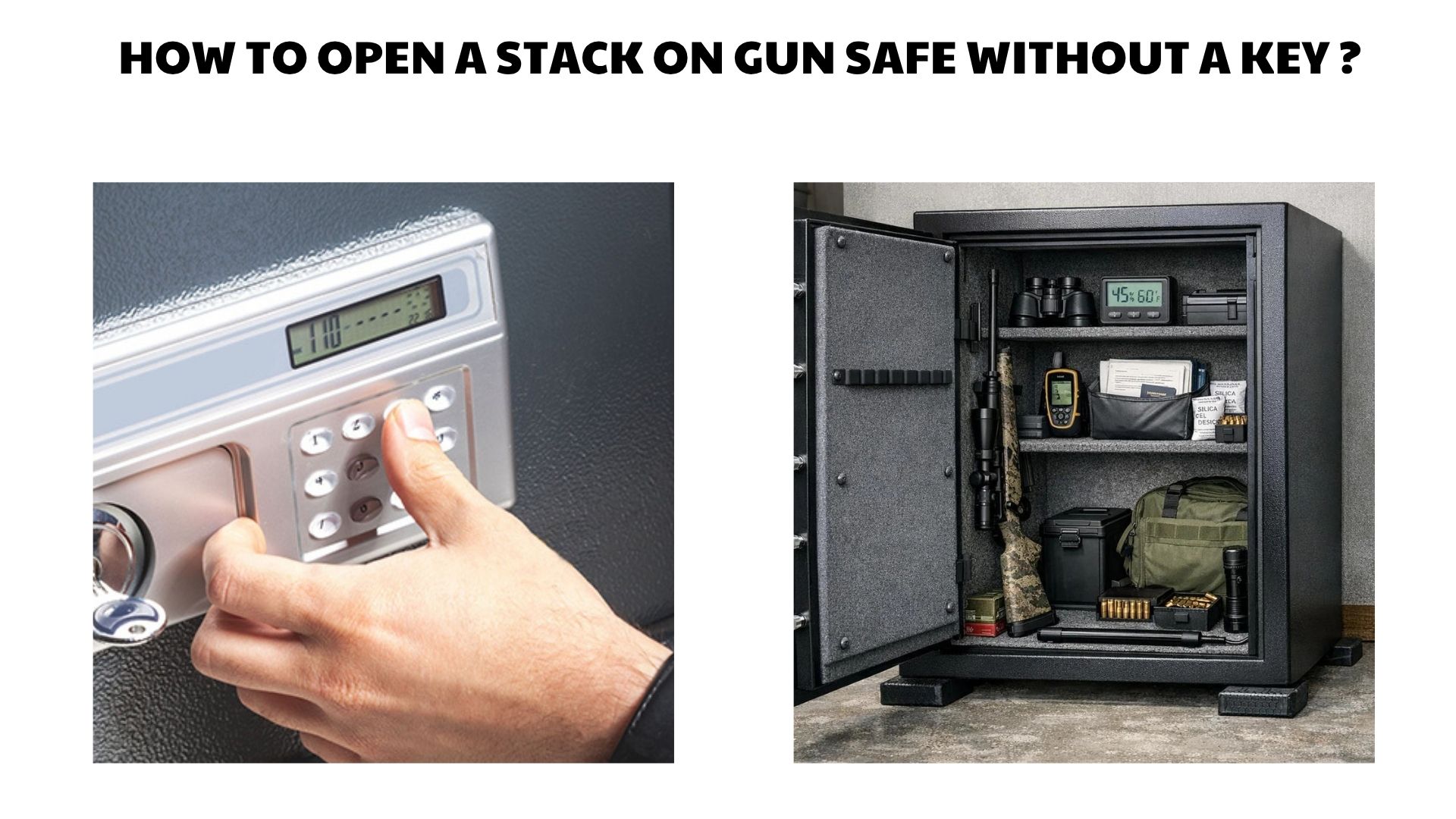

Learning how to open a Stack-On gun safe without a key should always begin with lawful owner recovery, not forced entry. A lost key, missing backup key, dead battery, inherited safe, or forgotten access method can be stressful, especially when firearms, ammunition, documents, or valuables are inside. But trying to pick, pry, drill, decode, bypass, or force a safe open can damage the safe, create legal problems, and expose firearms to unauthorized access.
This guide explains safe, responsible options for a Stack-On gun safe lockout: checking the owner’s manual, finding the model and serial number, preparing proof of ownership, requesting manufacturer support, using only manufacturer-approved recovery methods, and contacting a licensed locksmith when needed.
Safe firearm storage matters before, during, and after any lockout. The U.S. Department of Justice advises firearm owners to obey federal, state, and local laws, treat every firearm as loaded, unload firearms before storing, store unloaded firearms in a locked cabinet, safe, gun vault, or storage case, and keep ammunition locked away from firearms.
Quick Answer
If you need to know how to open a Stack-On gun safe without a key, the safest legal answer is to stop trying to force it, check the owner’s manual, look for the safe model and serial number, gather proof of ownership, and contact Stack-On customer service or a licensed locksmith. Stack-On-related replacement key and combination request documentation states that ownership verification is required before receiving a replacement key or combination confirmation. Do not pick, pry, drill, decode, manipulate, or bypass the safe lock. If firearms are inside, keep unauthorized users away and verify current firearm storage laws before moving or handling anything.
Important Firearm Safety and Legal Notice
Firearm storage, access control, vehicle transport, safe installation, lockout recovery, child access prevention, and ammunition storage laws vary by country, state, province, county, city, residence type, firearm type, user status, and household situation. Always verify current laws with official government sources, local law enforcement, qualified firearm law professionals, or other official legal sources before storing, transporting, removing, or handling firearms.
- Check current local firearm storage laws before changing how firearms are stored.
- Verify vehicle firearm transport laws if firearms must be moved after the safe is opened.
- Follow child access prevention rules and keep children away from the safe.
- Review lease, landlord, or property manager rules if the Stack-On safe is in an apartment or rental home.
- Read the Stack-On owner’s manual before attempting battery replacement, key replacement, combination support, or lock troubleshooting.
- Prepare proof of ownership before requesting replacement keys, combination confirmation, or locksmith service.
- Do not share safe access information, key codes, combinations, serial numbers, or lock details with unauthorized people.
- Do not attempt lock picking, drilling, prying, decoding, forced entry, or bypass techniques.
- Use safe firearm handling rules before removing firearms after lawful access is restored.
- Call Stack-On support, a licensed locksmith, a qualified firearm safety professional, or local legal authority when needed.
Johns Hopkins Center for Gun Violence Solutions summarizes safe storage as keeping firearms locked and unloaded, storing ammunition separately, and keeping keys or combinations inaccessible to children, adolescents, and people at elevated risk of harm.
Understanding the Gun Safe Topic
A Stack-On gun safe or security cabinet may use a keyed lock, digital keypad, backup key, combination system, or a model-specific access method. If the key is lost, the correct path depends on the exact product type, model number, serial number, proof of ownership, and manufacturer support process.
Being locked out can happen for many normal reasons: a lost key, a missing backup key, a dead keypad battery, a forgotten combination, a safe inherited from a family member, old paperwork, a moved safe, or misplaced purchase records. None of those situations justify unsafe forced-entry methods.
Stack-On’s customer service page directs customers to support options, and Stack-On-related replacement key/combination request documentation says ownership verification is required to receive a replacement key or confirm a combination. That documentation asks the owner to provide identifying and ownership information, including valid identification and proof of original purchase. Requirements can change, so readers should use current Stack-On support instructions rather than relying on old copies of forms.
The responsible owner’s goal is to prove ownership, recover access through approved channels, keep firearms secure, prevent unauthorized access, and prevent the same lockout from happening again.
What You Need Before You Start
- Stack-On owner’s manual or manufacturer documentation
- Current knowledge of local firearm storage and transport laws
- Proof of ownership, such as receipt, registration, invoice, warranty record, estate document, or other lawful ownership record
- Safe model number, serial number, key number, or unit description if visible and safe to access
- Valid identification if manufacturer or locksmith support requires it
- Basic firearm safety knowledge before handling firearms after the safe is opened
- Fresh batteries if the Stack-On model uses a digital keypad and the manual allows battery replacement
- Manufacturer-approved backup key or replacement key process if available
- Secure temporary storage plan for firearms and ammunition after lawful access is restored
- Stack-On customer service contact information from the current official support page
- Licensed locksmith or safe technician contact information if manufacturer support recommends professional service
- Secure document folder for manuals, receipts, warranty records, serial numbers, support notes, and future key records
How to Open a Stack-On Gun Safe Without a Key: Step-by-Step Guide
Step 1: Check Laws, Manuals, and Safety Requirements First
Before attempting any recovery step, confirm that you are the lawful owner or an authorized person responsible for the Stack-On safe. Review current firearm storage laws in your location, especially if firearms may need to be removed, transported, or temporarily stored after access is restored.
Find the owner’s manual if possible. The manual is the safest source for model-specific information about batteries, backup keys, replacement keys, lockout procedures, and support steps. Do not use online bypass videos or unofficial forced-entry advice.
Step 2: Make the Area Safe
Keep children, visitors, pets, and unauthorized users away from the safe. Do not discuss access details around people who should not know them. If firearms may be inside, prepare a secure temporary storage plan before the safe is opened.
Step 3: Identify the Safe Type and Situation
Look for the Stack-On product type. It may be a security cabinet, gun cabinet, lockbox, biometric safe, digital keypad safe, or keyed safe. Without forcing anything, look for a model number, serial number, key number, product label, receipt, manual, or warranty record.
Do not remove lock parts, pry the door, drill the lock, or test random access methods. You are only gathering information needed for support.
Step 4: Choose the Safest Practical Approach
The safest practical approach is manufacturer-approved recovery. For a lost Stack-On key, that usually means using current Stack-On support instructions, preparing proof of ownership, and requesting a replacement key or approved service option. If the safe uses a digital keypad and the issue is a dead battery, follow the manual’s battery guidance only.
Step 5: Prepare Proof of Ownership
Stack-On-related replacement key and combination request documentation states that ownership verification is required. It references documentation such as valid identification, original purchase receipt, owner signature, and notarization. Exact requirements may change, so use the current support instructions from Stack-On before sending documents.
Step 6: Contact Stack-On Customer Service
Use the current Stack-On customer service page to request help. Provide only the information requested by official support, such as the model, serial number, key number if applicable, unit description, and ownership documentation. Do not post this information publicly.
Step 7: Use Only Manufacturer-Approved Recovery
If Stack-On provides a replacement key process, combination support, authorized service process, or approved troubleshooting step, follow those instructions carefully. Do not use methods that involve lock picking, prying, drilling, decoding, manipulating, forcing, or exploiting the safe.
Step 8: Contact a Licensed Locksmith if Needed
If manufacturer support recommends professional help, contact a licensed locksmith or safe technician. Choose someone who verifies ownership, works with safes, and follows legal procedures. Avoid anyone who offers suspicious access help without documentation.
Step 9: Test the Safe Before Returning Firearms
After lawful access is restored, test the safe with the door open if the manual allows it. Confirm the key, lock, keypad, bolts, door, and handle work smoothly. If the safe does not operate reliably, do not rely on it for firearm storage until the issue is resolved.
Step 10: Build a Maintenance and Safety Routine
Record the safe model, serial number, key number if applicable, battery schedule, support records, and maintenance dates in a secure location outside the safe. Store backup keys where unauthorized users cannot access them. Review who has access to the safe and update your storage habits if needed.
Best Setup, Location, or Conditions for This Gun Safe Task
The best condition for resolving a Stack-On gun safe lockout is a calm, private, well-lit area where children, visitors, and unauthorized users cannot watch or interfere. Do not attempt lockout recovery while rushed, angry, distracted, or under pressure.
- Keep the safe stable and do not move it unless professional help says it is necessary.
- Work from official support guidance, not online bypass content.
- Keep proof of ownership ready before contacting support or a locksmith.
- Use fresh manufacturer-recommended batteries only if the model has an electronic keypad and the manual allows battery replacement.
- Plan safe firearm handling before access is restored.
- Choose a dry, discreet, temperature-stable storage location after the lockout is resolved.
- Keep safe keys and combinations separate from the safe and inaccessible to children or unauthorized users.
- Call a licensed locksmith or safe manufacturer support if the lock, key, keypad, ownership status, or legal situation is unclear.
Helpful Tips for Better Results
- Stop searching for bypass tricks and start with official Stack-On support.
- Keep the owner’s manual in a secure place outside the safe.
- Take a photo of the safe label, model number, and serial number for your private records.
- Store purchase receipts, warranty details, and ownership documents securely.
- Use only manufacturer-approved replacement key or combination support processes.
- Choose a licensed locksmith who verifies ownership before providing service.
- After access is restored, test the safe with the door open before locking it again.
- Keep backup keys away from children, visitors, prohibited persons, and unauthorized users.
- Review firearm storage laws periodically because laws can change.
- Do not publish safe access details, key codes, serial numbers, or lock photos online.
Common Mistakes to Avoid
The biggest mistake is treating a missing Stack-On key as a reason to defeat the safe. A safe is designed to prevent unauthorized access, and forced entry can create safety, legal, warranty, and security problems.
- Trying to pick, pry, drill, decode, manipulate, or force the safe open.
- Watching bypass videos and applying unsafe methods to a firearm safe.
- Sharing serial numbers, key numbers, or access details publicly.
- Failing to prove ownership before asking for replacement keys or locksmith help.
- Hiring an unverified person who does not require ownership documentation.
- Assuming all Stack-On models use the same recovery process.
- Ignoring the owner’s manual.
- Using the wrong batteries or forcing open keypad parts on an electronic model.
- Leaving firearms accessible after the safe is opened.
- Letting children or unauthorized users watch the recovery process.
- Keeping the replacement key in an obvious place.
- Locking the safe again before testing the recovered access method.
- Assuming one firearm storage law applies everywhere.
Troubleshooting Common Problems
| Problem | Possible Cause | What to Do |
|---|---|---|
| The Stack-On key is lost | Misplaced key, inherited safe, old storage records, or key stored inside the safe | Gather proof of ownership, model information, serial number, and contact Stack-On support for the approved replacement process. |
| The safe has a digital keypad but the backup key is missing | Lost override key, dead battery, or poor key storage | Follow the manual for battery replacement if available, then contact Stack-On support or a licensed locksmith. Do not bypass the lock. |
| The owner cannot find the model number | Label is hidden, paperwork is missing, or the safe is old | Look for receipts, warranty records, manuals, or visible exterior labels without forcing any part of the safe. |
| The safe was inherited | Ownership records, keys, or combinations were not transferred | Gather estate documents or lawful ownership records and contact Stack-On support or a licensed locksmith. |
| The digital keypad does not respond | Dead battery, weak battery, keypad issue, or electronic failure | Check the manual, replace batteries only if the manual allows it, and contact support if the keypad remains inactive. |
| The safe door does not close smoothly after access is restored | Obstruction, shifted interior item, bolt issue, or door alignment problem | Test with the door open, clear obstructions, and contact support if the door or lock does not operate normally. |
| The lock feels damaged | Wear, attempted forced entry, corrosion, or mechanical failure | Stop using it for firearm storage until Stack-On support or a licensed locksmith evaluates it. |
| Proof of ownership is missing | Old safe, private sale, inherited safe, or lost receipt | Ask Stack-On support what documentation is acceptable. Consider legal guidance for inherited or disputed ownership. |
| Legal rules are unclear | Different laws by location, firearm type, residence type, or user status | Check official government sources, local law enforcement, or a qualified firearm law professional before moving or storing firearms. |
| A locksmith wants to force the safe open immediately | Possible lack of safe experience, severe lock failure, or destructive service recommendation | Ask about ownership verification, manufacturer guidance, warranty impact, and non-destructive approved options before agreeing. |
Responsible Firearm Storage and Home Safety
A Stack-On gun safe lockout should not distract from the purpose of safe gun storage: preventing unauthorized access, child access, theft, unsafe handling, and misuse. A safe is only one part of a responsible storage system.
Responsible firearm storage includes keeping firearms locked, controlling keys and combinations, storing ammunition securely, keeping access away from children and unauthorized users, inspecting the safe, and reviewing local laws. DOJ guidance states that keys and combinations to gun storage and ammunition storage should be kept separate and out of reach of children, at-risk persons, and prohibited persons.
Layered home security may include a gun safe or cabinet, cable locks where appropriate, alarms, cameras, strong doors, good lighting, responsible household rules, and secure documentation. No safe guarantees complete theft prevention or legal compliance on its own.
When to Get Professional Help
Get professional help when the lockout cannot be solved through the owner’s manual, official Stack-On support, replacement key process, or manufacturer-approved recovery method.
- You are unsure about firearm storage or transport laws.
- You cannot prove the safe is yours.
- The safe was inherited and ownership documents are unclear.
- The key is lost and no approved replacement method is immediately available.
- The lock, keypad, biometric scanner, or mechanical mechanism is malfunctioning.
- The safe contains firearms and you are not confident in safe firearm handling after opening.
- The safe has fire damage, water damage, corrosion, impact damage, or attempted forced-entry damage.
- The safe is very heavy and may need to be moved for service.
- The safe is in a rental, apartment, vehicle, or location with legal or property restrictions.
- Any suggested method involves picking, drilling, prying, decoding, manipulation, or forced entry.
Helpful contacts may include Stack-On customer service, a licensed locksmith, an authorized safe technician, a qualified firearm safety instructor, a landlord or property manager, a local legal authority, or a qualified firearm law professional.
Long-Term Maintenance, Safety Checks, and Recordkeeping
After lawful access is restored, prevent the next lockout with better documentation and maintenance. A simple recordkeeping routine can save time, reduce stress, and improve safety.
- Record the Stack-On model number, serial number, and key number if applicable.
- Keep the owner’s manual in a secure location outside the safe.
- Store proof of ownership, receipts, warranty details, and support records securely.
- Keep backup keys secure and inaccessible to unauthorized users.
- Replace digital keypad batteries on a schedule if your model uses batteries.
- Test the lock with the door open after battery changes or key replacement.
- Review who has access to keys, codes, or combinations.
- Use a hygrometer and humidity control if firearms are stored long-term.
- Inspect firearms for rust according to manufacturer guidance.
- Review local firearm storage laws periodically.
Recommended Gun Safe Gear and Tools to Consider
You do not always need expensive gear to store firearms responsibly. Choose products based on your local laws, safe type, firearm type, humidity level, home layout, vehicle needs, security risks, and budget.
- Gun safe, Stack-On cabinet, or lockbox that fits your firearm storage needs
- Secure document folder for manuals, receipts, warranty details, serial numbers, and proof of ownership
- Fresh manufacturer-recommended batteries for digital keypad models
- Secure backup key storage solution
- Hygrometer for monitoring humidity
- Desiccant packs or rechargeable dehumidifier
- Electric dehumidifier rod if approved for your safe and setup
- Safe organizer or non-moisture-holding storage accessories
- Alarm sensor or home security device if appropriate
- Licensed locksmith or safe technician contact information
If affiliate links are included in a published version of this article, use clear disclosure language and proper link attributes such as rel=”nofollow sponsored”.
Final Thoughts
Knowing how to open a Stack-On gun safe without a key should mean knowing the responsible, legal recovery path. Start with the owner’s manual, identify the model and serial number, gather proof of ownership, contact Stack-On support, use only approved replacement key or recovery steps, and call a licensed locksmith when needed.
Do not pick, pry, drill, decode, manipulate, or force open the safe. Those methods can damage the safe, create legal concerns, expose firearms to unauthorized access, and undermine responsible firearm storage.
The best long-term solution is prevention: secure records, protected backup keys, reliable battery schedules for digital models, careful access control, legal compliance, and consistent safe-storage habits.
FAQs
1. How long does it take to learn how to open a Stack-On gun safe without a key?
You can learn the safe legal options quickly, but actual access depends on the model, ownership documentation, replacement key process, manufacturer support, and whether a licensed locksmith is needed.
2. Can I open a Stack-On gun safe without a key?
A lawful owner may be able to regain access through Stack-On support, replacement key request, approved backup access, or licensed locksmith service. This article does not provide bypass methods.
3. What should I do first if I lost my Stack-On safe key?
Stop trying to force the safe. Find the owner’s manual, model number, serial number, key number if visible, proof of ownership, and contact Stack-On support.
4. Does Stack-On require proof of ownership for replacement keys?
Stack-On-related replacement key documentation states that ownership verification is required before receiving a replacement key or combination confirmation. Current requirements should be verified with Stack-On support.
5. Can I get a replacement key from Stack-On?
Possibly, depending on the model, key information, ownership proof, and current support process. Contact Stack-On customer service for the current requirements.
6. What information should I have before calling Stack-On?
Have the model number, serial number, key number if available, unit description, proof of ownership, and identification ready.
7. What if I do not know the model number?
Look for exterior labels, manuals, receipts, warranty records, or purchase emails. Do not force open panels or remove lock parts.
8. What if the safe was inherited?
Gather estate documents or other lawful ownership records, then contact Stack-On support or a licensed locksmith for legal recovery options.
9. Can a locksmith open a Stack-On safe?
A licensed locksmith or safe technician may be able to help after verifying ownership. Choose someone qualified and legally compliant.
10. Should a locksmith ask for proof of ownership?
Yes. Ownership verification helps prevent unauthorized access and protects both the owner and locksmith.
11. Can I pick the lock on a Stack-On safe?
No. This article does not provide lock-picking instructions. Use manufacturer support or a licensed locksmith.
12. Can I drill the lock if I own the safe?
Do not drill the safe yourself. Destructive methods can damage the safe, create legal concerns, and should only be evaluated by qualified professionals when lawful and necessary.
13. Can I pry open a Stack-On gun safe?
No. Prying is unsafe, may damage the safe, and can create unauthorized firearm access risk.
14. Are there online bypass tricks for Stack-On safes?
Do not use bypass tricks or vulnerability content. Those methods can be unsafe, illegal, and harmful to responsible storage.
15. What if my Stack-On safe has a digital keypad?
Check the manual. If the issue is battery-related, follow the approved battery replacement method. If the backup key is missing, contact Stack-On support.
16. What if the keypad battery is dead and I lost the key?
Follow the manual first. If you cannot restore power through approved methods, gather proof of ownership and contact Stack-On support or a licensed locksmith.
17. Can I remove the keypad to open the safe?
Only follow the manual for battery replacement or approved maintenance. Do not force keypad parts or attempt bypass methods.
18. What if the backup key is locked inside the safe?
Gather proof of ownership and contact Stack-On support or a licensed locksmith. Do not force the safe open.
19. Should I keep backup keys near the safe?
Backup keys should be secure and inaccessible to unauthorized users. Do not leave them in obvious places.
20. Should I store the safe manual inside the safe?
Keep a copy of the manual in a secure location outside the safe so you can access it during a lockout.
21. What if I lost the receipt?
Ask Stack-On support what alternative ownership documentation may be acceptable. For inherited or disputed ownership, legal guidance may be needed.
22. Can I use a third-party replacement key seller?
Use caution. Manufacturer support or a verified locksmith is usually safer. Never share sensitive safe details with untrusted sources.
23. Is it legal to open my own locked gun safe?
Legal issues depend on ownership, location, firearm status, and local laws. If there is uncertainty, contact local legal authorities or a qualified firearm law professional.
24. What if someone else asks me to open their Stack-On safe?
Do not help unless lawful ownership and authorization are clear. A licensed locksmith or manufacturer support should handle verification.
25. What if firearms are inside the locked safe?
Plan for safe handling before the safe is opened. Keep unauthorized users away and follow firearm safety rules when access is restored.
26. Should firearms be unloaded after opening the safe?
Follow safe firearm handling rules and local law. DOJ guidance advises unloading firearms before storage and storing unloaded firearms in locked storage.
27. Should ammunition be stored separately?
Many safe-storage recommendations advise keeping ammunition locked away from firearms, and some locations may require it. Check current local law.
28. Can children be nearby during lockout recovery?
No. Children should be kept away from the safe, keys, documents, firearms, ammunition, and any recovery process.
29. Can I move the safe while locked out?
Only if it can be moved safely and legally. Heavy safes should be moved by professional safe movers, especially on stairs.
30. What if the safe is in an apartment?
Check lease terms, landlord rules, building policies, and local firearm storage laws before moving, drilling, anchoring, or arranging locksmith service.
31. Can a Stack-On safe be used in a vehicle?
Some lockboxes may be used for transport or temporary storage depending on model and law, but vehicle firearm storage laws vary widely. Check official legal sources.
32. What if the safe is visible to others?
Keep the safe discreet when practical. Do not advertise its location, contents, serial numbers, or lock details.
33. Can humidity affect a Stack-On gun safe?
Yes. Moisture can contribute to rust, corrosion, musty odors, and electronic issues. Use a hygrometer and safe-approved humidity control when needed.
34. Should I use a dehumidifier after opening the safe?
If firearms are stored long-term or humidity is high, consider desiccant, a rechargeable dehumidifier, or an approved electric dehumidifier rod.
35. What if I see rust after opening the safe?
Follow firearm manufacturer cleaning guidance or consult a qualified gunsmith if rust is significant. Improve humidity control before restocking the safe.
36. Should I change storage habits after a lockout?
Yes. Improve key control, documentation, battery schedules, and access management so the lockout does not happen again.
37. Can I keep the key in a drawer?
Only if the drawer is secure from unauthorized users. Backup keys should not be easily found by children, visitors, or prohibited persons.
38. Should I label the backup key?
A label may help you, but it can also help unauthorized users. Use a secure system that does not reveal safe access information.
39. Can I keep key photos on my phone?
Be careful. Photos of keys, labels, serial numbers, or access details can create security risks if your phone or cloud account is compromised.
40. What if the lock is damaged?
Stop using the safe for firearm storage until Stack-On support or a licensed locksmith evaluates and repairs the issue.
41. What if the safe door opens but will not lock again?
Do not rely on it for firearm storage. Check for obstructions, test with the door open, and contact support if the problem continues.
42. What if the key turns but the door will not open?
Do not force it. There may be an internal obstruction or lock issue. Contact Stack-On support or a licensed locksmith.
43. What if the key broke in the lock?
Do not dig into the lock with improvised tools. Contact a licensed locksmith or Stack-On support.
44. Can oil fix a stuck lock?
Do not apply lubricant unless the manual recommends it. Wrong products can damage locks or attract debris.
45. How often should I check backup keys?
Check periodically that backup keys are accounted for, secure, and inaccessible to unauthorized users.
46. How often should I replace keypad batteries?
Follow the manufacturer’s recommendation. Many owners replace batteries proactively before they fail.
47. Should I register my safe?
If Stack-On or the retailer offers registration, it may help with future support. Keep your own records regardless.
48. Can I post my lockout problem online with pictures?
Avoid posting serial numbers, key codes, lock photos, or access details. Public information can create security risks.
49. What if I bought the safe used?
Ask the seller for keys, manuals, receipts, and written transfer details. If locked, contact manufacturer support or a licensed locksmith with ownership documentation.
50. What if a locksmith wants to drill immediately?
Ask about proof-of-ownership verification, manufacturer guidance, warranty impact, and whether non-destructive approved options exist.
51. Can a safe be considered unreliable after forced-entry attempts?
Yes. Forced attempts can damage locks, doors, bolts, hinges, and fire or security features. Have it inspected before reuse.
52. Should I replace a damaged Stack-On safe?
If the lock, body, door, or security function is compromised, replacement may be safer than continued use. Ask manufacturer support or a qualified safe technician.
53. What is the best way to prevent losing the key again?
Use secure key storage, keep private records, maintain proof of ownership, and review who has access to keys.
54. What is the safest professional to call?
Start with Stack-On customer service. If physical service is needed, use a licensed locksmith or safe technician who verifies ownership.
55. What is the most responsible answer to how to open a Stack-On gun safe without a key?
The most responsible answer is to use lawful owner recovery only: manual, proof of ownership, Stack-On support, approved replacement key process, and licensed locksmith help when needed.
Read more: