
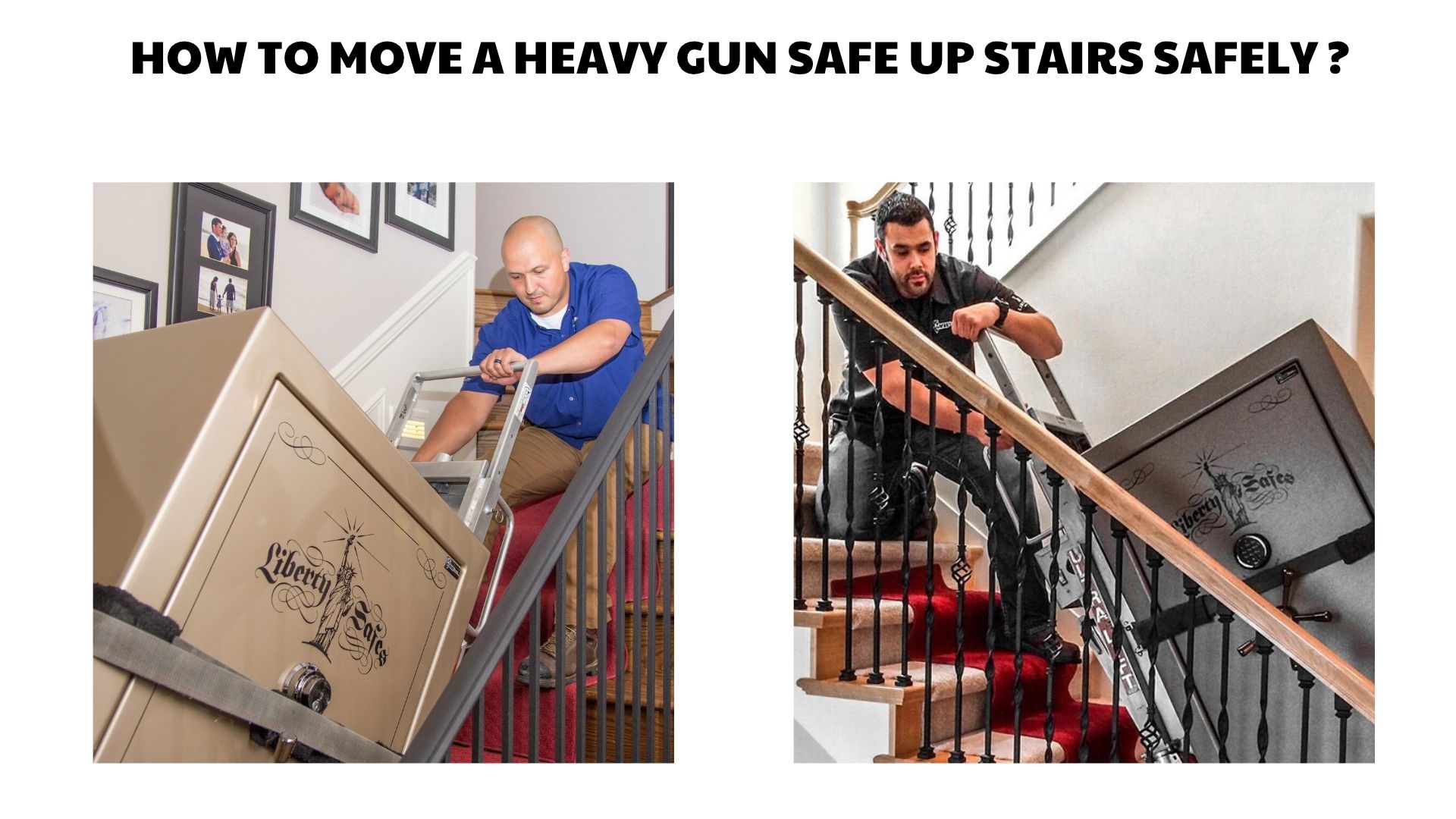

Learning how to move a heavy gun safe up stairs is mostly about knowing when not to do it yourself. A large gun safe can weigh hundreds or even thousands of pounds, and stairs add serious risks: crushing injuries, falls, stair damage, wall damage, floor overload, tipping, lock damage, and unsafe firearm access.
This guide explains how to plan the move, protect firearms, evaluate stair and floor concerns, work with professional safe movers, reduce property damage, and set up the safe responsibly after it reaches the upper floor. It is written for responsible firearm owners, homeowners, renters, and beginners who want safe, legal, practical guidance without risky DIY shortcuts.
Before moving any safe that contains firearms, follow safe firearm handling rules, secure firearms from unauthorized users, and verify current firearm storage and transport laws in your location. Official safe-storage guidance commonly emphasizes locking firearms, keeping them unloaded when not in use, and storing ammunition securely away from firearms.
Quick Answer
The safest way to move a heavy gun safe up stairs is to unload it completely, secure firearms separately and legally, measure the path, check stair and floor support, protect the home, and hire professional safe movers with proper equipment. Do not attempt to muscle a heavy safe upstairs with untrained helpers, improvised straps, or standard household dollies. Stairs greatly increase tipping, crushing, and structural risks. If the safe is large, unusually heavy, going through tight turns, or moving into an apartment or upper floor, professional help is the responsible choice.
Important Firearm Safety and Legal Notice
Firearm storage, vehicle transport, moving, safe installation, child access prevention, and access control laws vary by country, state, province, county, city, firearm type, user status, and residence type. This article provides general safety information only. Always verify current laws with official government sources, local legal authorities, qualified firearm law professionals, or local law enforcement before moving or storing firearms.
- Check current local firearm storage laws before removing firearms from the safe.
- Verify firearm transport laws if firearms will leave the home during the move.
- Follow child access prevention rules and keep children away from the moving area.
- Review lease terms, HOA rules, or landlord restrictions if the safe is in an apartment or rental property.
- Read the gun safe manufacturer’s manual before moving, removing doors, anchoring, or reinstalling accessories.
- Check floor, stair, landing, wall, and doorway concerns before moving a heavy safe upstairs.
- Unload firearms before moving or handling them unless a specific lawful safety protocol says otherwise.
- Store ammunition separately when appropriate or required by local law.
- Protect combinations, digital keypad codes, and backup keys during the move.
- Call professional safe movers, a structural professional, a qualified installer, or legal authority when needed.
The ATF advises keeping the muzzle pointed in a safe direction, keeping the finger outside the trigger guard while cleaning or unloading, and removing the magazine or ammunition source during unloading procedures.
Understanding the Gun Safe Topic
Moving a heavy gun safe upstairs is different from moving a couch, appliance, or normal cabinet. Gun safes are dense, top-heavy when tilted, difficult to grip, and often heavier than they look. The door can add significant weight, the center of gravity can shift quickly, and a stairway gives the safe a path to slide, tip, or fall.
The main risk is not simply “lifting something heavy.” The bigger issue is controlling a large concentrated load on a slope, around turns, and across surfaces that may not be designed for that kind of moving stress. OSHA’s material-handling guidance warns against twisting while lifting and recommends keeping loads close to the body when lifting; it also notes that stair-climbing hand trucks can be used for transporting materials on stairs in appropriate workplace settings.
For homeowners, that does not mean every staircase is safe for a gun safe. Residential stairs, older homes, narrow landings, weak railings, slick steps, tight turns, and unknown floor structures can make the move unsafe. A professional safe mover or structural professional can evaluate risks that a beginner may miss.
A responsible owner should also think beyond the move. The final upstairs location must support the safe, allow safe door operation, prevent tipping, reduce unauthorized access, limit humidity exposure, and comply with firearm storage laws.
What You Need Before You Start
- Gun safe owner’s manual or manufacturer documentation
- Current knowledge of local firearm storage and transport laws
- Basic firearm safety knowledge before handling or storing firearms
- Secure temporary storage plan for unloaded firearms
- Secure temporary storage plan for ammunition
- Safe model, dimensions, and approximate weight from manufacturer documentation
- Measuring tape for doors, halls, turns, stair width, stair height, and landing space
- Floor and stair protection materials approved by the moving team
- Professional safe movers with appropriate equipment for stairs
- Structural professional or qualified contractor if floor or stair strength is uncertain
- Landlord or property manager permission if the home is a rental or apartment
- Document folder for safe records, serial number, receipt, warranty, and installation notes
How to Move a Heavy Gun Safe Up Stairs: Step-by-Step Guide
Step 1: Check Laws, Manuals, and Safety Requirements First
Before moving the safe, review local firearm storage and transport laws. If firearms must be removed from the safe, they still need to be stored and handled legally. Read the gun safe manual to confirm moving guidance, door-removal warnings, anchoring instructions, warranty limits, and electronic lock precautions.
Step 2: Make the Area Safe
Keep children, visitors, pets, and unauthorized users away from the work area. Remove distractions. If firearms are inside the safe, handle them using safe firearm handling rules, verify they are unloaded when appropriate, and place them in a secure temporary location that unauthorized users cannot access.
Step 3: Empty the Safe Completely
Remove firearms, ammunition, documents, accessories, shelves, loose organizers, dehumidifiers, and anything that can shift. A safe that is already heavy becomes more dangerous when loose items move during stair transport. Keep firearms and ammunition controlled, locked, and separated when appropriate or legally required.
Step 4: Confirm the Safe’s Weight and Dimensions
Find the safe’s approximate weight and dimensions from the manufacturer, receipt, manual, or product label. Do not guess. The moving method, staffing, equipment, stair protection, and floor evaluation all depend on the actual safe size and weight.
Step 5: Measure the Full Moving Path
Measure doorways, hallway turns, stair width, ceiling clearance, railings, landings, and the final room entrance. Pay attention to tight turns where the safe could become trapped. If the safe cannot fit through the path with safe clearance, do not force it.
Step 6: Check Stair and Floor Concerns
Consider whether the stairs, landing, and upper floor can handle the safe’s concentrated weight during movement and after installation. Older homes, damaged stairs, narrow landings, floating stairs, weak railings, and uncertain framing should be evaluated by a qualified professional. Do not rely on guesswork.
Step 7: Choose the Safest Practical Approach
For most heavy gun safes going upstairs, the safest practical approach is hiring professional safe movers. A professional team can evaluate the route, use appropriate equipment, protect stairs, coordinate controlled movement, and reduce the chance of injury or property damage. This is especially important for multi-level homes, apartments, tight turns, high-value safes, and safes that exceed what ordinary movers are trained to handle.
Step 8: Prepare the Home Before Movers Arrive
Clear the path from the entry point to the final location. Remove rugs, loose mats, small furniture, wall decorations, fragile items, and tripping hazards. Confirm parking access, elevator rules if relevant, building policies, and whether the moving company needs special access instructions.
Step 9: Let Trained Movers Control the Stair Move
Do not crowd the movers, pull from unsafe angles, stand below the safe, or try to “help” unless the professional team specifically instructs you. A heavy safe on stairs can shift suddenly. Stay clear, keep unauthorized people away, and let the trained movers use their equipment and plan.
Step 10: Inspect the Safe and Home After the Move
After the safe reaches the upstairs location, inspect the door, lock, keypad, hinges, shelves, finish, floor, walls, stairs, and landing. Check whether the safe sits level and whether the door opens without rubbing. Document any damage immediately.
Step 11: Reinstall, Reorganize, and Test Safely
Reinstall shelves, organizers, dehumidifier accessories, and interior items according to the manual. Test the lock and door while the safe is empty. If the safe will be anchored, follow manufacturer guidance and use a qualified installer when structural, lease, or drilling concerns exist.
Step 12: Build a Long-Term Safety Routine
After the move, update your records with the new location, moving date, safe condition, battery schedule, humidity readings, and maintenance notes. Review who has access to the safe, where backup keys are stored, and whether the new location supports responsible firearm storage.
Best Setup, Location, or Conditions for This Gun Safe Task
The best setup for moving a heavy gun safe upstairs is a planned move handled by professional safe movers, with the safe empty, the path measured, the stairs evaluated, and the final location chosen before the move begins.
- Choose a dry, level, structurally appropriate upstairs location.
- Avoid placing the safe near bathrooms, laundry areas, exterior moisture, or flood-prone spaces.
- Do not place a heavy safe on questionable flooring without professional evaluation.
- Choose a location where the door can open fully and safely.
- Keep the safe discreet but accessible to authorized users.
- Consider child access prevention, theft deterrence, and emergency access for authorized users.
- Use humidity control if the upstairs room has seasonal moisture changes.
- Confirm lease, landlord, HOA, or building rules before moving a safe into an apartment or upper-floor rental.
- Use professional installation if anchoring, stair moving, tight turns, or structural concerns are involved.
Helpful Tips for Better Results
- Hire movers who specifically handle safes, not only general household furniture.
- Ask the moving company whether they have experience with stairs, landings, and heavy safes.
- Remove firearms, ammunition, shelves, and loose accessories before the move.
- Take photos of the safe, stairs, walls, and floors before the move for documentation.
- Measure the entire route before scheduling the move.
- Choose the final safe location before the movers arrive.
- Keep children, pets, visitors, and bystanders away from the moving area.
- Do not stand below the safe while it is being moved on stairs.
- Do not use improvised straps, weak dollies, or untrained helpers for a heavy upstairs move.
- Review humidity control, anchoring, and access control after the safe is installed.
Common Mistakes to Avoid
The most dangerous mistake is treating a heavy gun safe like ordinary furniture. A safe can tip, slide, crush, damage stairs, or injure people quickly if the move is not controlled.
- Trying to move a heavy safe upstairs without professional safe movers.
- Leaving firearms, ammunition, shelves, or loose accessories inside the safe.
- Failing to check current firearm storage or transport laws before moving firearms.
- Ignoring the manufacturer’s moving and installation guidance.
- Guessing the safe’s weight instead of checking documentation.
- Failing to measure stair width, landings, turns, and doorway clearance.
- Assuming the upper floor can support the safe without evaluation.
- Using a standard household dolly that is not rated or appropriate for stair safe moving.
- Standing below the safe on stairs.
- Letting children, pets, or visitors near the moving route.
- Dragging the safe across floors without protection.
- Damaging the lock, keypad, hinges, or door by pushing or pulling from unsafe points.
- Violating apartment lease rules or building restrictions.
- Installing the safe upstairs in a humid, unstable, or hard-to-access location.
- Skipping anchoring, tipping prevention, or professional installation when needed.
Troubleshooting Common Problems
| Problem | Possible Cause | What to Do |
|---|---|---|
| The safe is too heavy to move safely | Safe weight exceeds what untrained helpers or ordinary equipment can control | Stop the move and hire professional safe movers with stair-moving experience. |
| The stairs feel weak or unstable | Old construction, damage, narrow stairs, loose railing, or unknown structure | Do not proceed. Contact a qualified contractor or structural professional before moving the safe. |
| The safe will not fit around a landing | Insufficient turning clearance or incorrect measurements | Stop before forcing it. Ask professional movers to reassess the route or choose another location. |
| The safe starts to tip | Poor balance, wrong equipment, untrained handling, or steep stair angle | Clear people from the area and let trained movers control the situation. Do not try to catch a falling safe. |
| The safe door does not close smoothly after moving | Door shift, uneven placement, obstruction, or movement-related damage | Check for interior obstructions, confirm the safe is level, and contact the manufacturer if the issue remains. |
| Digital keypad does not respond after the move | Battery issue, impact, loose connection, or lock malfunction | Follow the manual, replace batteries if appropriate, and contact manufacturer support or a licensed locksmith. Do not attempt bypass methods. |
| Walls or stairs are damaged | Insufficient protection, tight turns, or uncontrolled movement | Document the damage, contact the mover if applicable, and repair structural damage before relying on the area. |
| The upstairs floor feels uneven | Floor deflection, old flooring, or concentrated safe weight | Do not load the safe with contents yet. Consult a structural professional or qualified contractor. |
| The apartment lease does not allow heavy safes or bolting | Rental restrictions, property damage concerns, or building rules | Contact the landlord or property manager and choose a compliant storage solution. |
| Legal rules are unclear during firearm transport | Different laws by location, firearm type, permit status, or vehicle use | Check official legal sources, local authorities, or a qualified firearm law professional before moving firearms. |
Responsible Firearm Storage and Home Safety
Moving the safe safely is only one part of responsible firearm ownership. Firearms must remain secured from children, visitors, unauthorized users, and prohibited persons during the move and after the safe is installed upstairs.
Responsible storage includes safe handling before storage, secure access codes, backup key control, ammunition storage considerations, regular lock maintenance, humidity control, and periodic legal review. The Department of Justice safe-storage guide advises keeping ammunition locked in a secure location away from firearms.
Layered security can include a quality gun safe, proper placement, professional anchoring where appropriate, alarm sensors, cameras, lighting, strong doors, and responsible access habits. No safe is theft-proof, and no location is legally universal. Storage choices should match local laws, household risks, safe type, home layout, and responsible ownership goals.
When to Get Professional Help
Professional help is strongly recommended for moving a heavy gun safe upstairs. The heavier the safe, the tighter the route, and the more uncertain the building structure, the more important professional support becomes.
- The safe is too heavy for ordinary movers or untrained helpers.
- The safe must go upstairs or downstairs.
- The path includes tight turns, narrow landings, old stairs, or fragile flooring.
- The upper floor or stair structure may not support the safe.
- The safe must be anchored after the move.
- The safe is in an apartment, rental home, or multi-unit building.
- You are unsure about firearm storage or transport laws.
- You are not confident in safe firearm handling.
- The lock, keypad, biometric scanner, or mechanical dial is malfunctioning.
- The safe has fire damage, water damage, or movement-related damage.
Helpful professionals may include professional safe movers, safe manufacturer support, licensed locksmiths, professional safe installers, qualified contractors, structural professionals, landlords or property managers, local legal authorities, and reputable firearm safety organizations.
Long-Term Maintenance, Safety Checks, and Recordkeeping
After moving a heavy gun safe upstairs, do not immediately treat the job as finished. Check the safe, the floor, the door operation, the lock, and the surrounding area after installation.
- Confirm the safe sits level and stable.
- Check that the door opens and closes smoothly.
- Test lock operation safely with the door open when appropriate.
- Replace keypad batteries if the move exposed a weak battery issue.
- Inspect the floor, stairs, walls, and trim for damage.
- Monitor humidity inside the safe with a hygrometer.
- Inspect firearms for rust according to manufacturer guidance.
- Protect backup keys and codes from unauthorized users.
- Update safe records, serial numbers, receipt, moving date, and installation notes.
- Review local storage laws periodically because rules can change.
Recommended Gun Safe Gear and Tools to Consider
You do not always need expensive gear to store firearms responsibly, but moving a heavy gun safe upstairs is not the place to improvise. Choose equipment and services based on safe weight, stair design, home layout, legal requirements, and professional guidance.
- Professional safe moving service with stair experience
- Manufacturer documentation with safe weight and dimensions
- Measuring tape for route planning
- Floor and stair protection materials approved by the mover
- Hygrometer for monitoring humidity after installation
- Desiccant packs or rechargeable dehumidifier
- Electric dehumidifier rod if approved for your safe and setup
- Safe organizer or non-moisture-holding storage accessories
- Alarm sensor or home security device if appropriate
- Backup batteries for electronic locks
- Document folder for manuals, receipts, warranty details, and proof of ownership
If affiliate links are included in a published version of this article, use clear disclosure language and proper link attributes such as rel=”nofollow sponsored”.
Final Thoughts
Knowing how to move a heavy gun safe up stairs begins with respect for the risk. The safest plan is to unload the safe, secure firearms legally, measure the route, evaluate stairs and floors, protect the home, and hire professional safe movers with the right equipment and experience.
Do not rush the move, rely on untrained helpers, or assume a heavy safe can be controlled on stairs with ordinary household tools. After the safe is upstairs, inspect the lock, door, floor, humidity control, access control, and final storage setup.
A responsible move protects people first, then firearms, property, and the safe. Legal compliance, safe firearm handling, manufacturer instructions, and professional help should guide every step.
FAQs
1. How long does it take to learn how to move a heavy gun safe up stairs?
You can learn the planning basics quickly, but the actual move should usually be handled by professional safe movers. Stairs make heavy safe moving dangerous for beginners.
2. Should I move a heavy gun safe upstairs myself?
In most cases, no. Heavy safes on stairs create serious crushing, tipping, fall, and property damage risks. Professional safe movers are strongly recommended.
3. Why is moving a gun safe upstairs so dangerous?
A safe is dense, difficult to grip, and hard to control on an incline. If it shifts, tips, or slides, it can injure people and damage stairs, walls, and floors.
4. Should I empty the gun safe before moving it?
Yes. Remove firearms, ammunition, shelves, documents, accessories, and loose items before moving the safe.
5. What should I do with firearms during the move?
Handle them safely, verify they are unloaded when appropriate, and secure them in a lawful temporary storage location away from unauthorized users.
6. Should ammunition be moved separately?
Often, yes. Store and transport ammunition according to local law and responsible safe-storage practices.
7. Do firearm storage laws apply during a safe move?
Yes. Firearms still need to be handled, stored, and transported legally during the move.
8. Do I need to check transport laws if firearms stay inside my home?
You should still check local storage rules. If firearms leave the home, vehicle transport laws may also apply.
9. Can regular movers move a gun safe upstairs?
Some general movers may not be trained or equipped for heavy safes. Ask specifically about safe-moving experience, stair equipment, and insurance.
10. What is a professional safe mover?
A professional safe mover is a mover trained to handle heavy safes, dense loads, stair routes, tight turns, and safe-specific property protection.
11. What should I ask a safe mover before hiring?
Ask about safe weight limits, stair experience, equipment, insurance, route assessment, floor protection, and whether they handle your type of safe.
12. Can an appliance dolly move a gun safe upstairs?
Ordinary appliance dollies may not be appropriate for heavy safes. Professional movers use equipment suited to the safe, stairs, and route.
13. What is a stair-climbing hand truck?
It is equipment designed to help move loads on stairs. OSHA material-handling guidance mentions stair-climbing hand trucks for transporting materials on stairs in appropriate settings, but beginners should not assume this makes a heavy safe move safe.
14. How do I know if my stairs can support a gun safe?
You usually need a qualified contractor, structural professional, or experienced safe mover to evaluate the stairs, landing, and upper floor.
15. Can a gun safe damage stairs?
Yes. A heavy safe can dent treads, break edges, damage railings, crack trim, or stress the stair structure if moved improperly.
16. Can a gun safe damage the upper floor?
Yes. A heavy safe creates a concentrated load. The floor should be evaluated if the safe is very heavy or the structure is uncertain.
17. Where is the best upstairs location for a gun safe?
Choose a dry, level, structurally appropriate, discreet, and accessible location that supports responsible firearm storage and safe door operation.
18. Should I put a gun safe near a wall upstairs?
Often, placement near structural support may be considered, but you should not guess. Ask a structural professional if weight support is uncertain.
19. Can I put a gun safe in an upstairs closet?
Possibly, but check floor support, closet dimensions, door clearance, humidity, ventilation, and whether the safe can be moved there safely.
20. Can I move a gun safe upstairs in an apartment?
Only after checking lease terms, building rules, floor load concerns, stair or elevator access, and local firearm storage laws.
21. Do landlords need to approve a gun safe?
In rentals, landlord or property manager approval may be needed, especially for heavy safes, floor protection, elevator use, or anchoring.
22. Should I remove the safe door before moving?
Only if the manufacturer allows it and trained professionals handle it. Safe doors can be extremely heavy and dangerous to remove incorrectly.
23. Can removing the door void the warranty?
It may, depending on the safe manufacturer. Check the manual or contact manufacturer support before removing parts.
24. Can I use friends to help move the safe?
Untrained helpers increase injury risk. Heavy safe stair moves should usually be handled by professional safe movers.
25. What should I measure before moving?
Measure safe dimensions, doorways, hallways, stair width, stair height, ceiling clearance, landings, turns, and final room access.
26. Should I protect floors before moving?
Yes. Use floor and stair protection recommended by the moving team to reduce scratches, dents, and other damage.
27. Can I slide a gun safe upstairs?
No. Sliding a heavy safe on stairs is dangerous and can cause loss of control, injury, or property damage.
28. Can I use straps to move a safe upstairs?
Only trained professionals should use appropriate moving straps. Improvised strap use can fail or cause serious injury.
29. Can a safe tip over during a stair move?
Yes. Safes can tip if balance, angle, equipment, or control is poor. Keep people clear and use professional movers.
30. Should people stand below the safe on stairs?
No. Standing below a heavy safe during a stair move is extremely dangerous.
31. What if the safe starts slipping?
Do not try to catch it yourself. Clear the area and let trained movers manage the situation.
32. How do I reduce wall damage?
Measure carefully, clear the route, remove fragile items, and use professional movers who can protect corners, walls, and trim.
33. Should I move the safe during bad weather?
Avoid unnecessary moisture, slick surfaces, and rushed conditions. Rain or snow can make moving and firearm protection harder.
34. Can humidity affect the safe after moving upstairs?
Yes. Use a hygrometer and humidity-control products if the new location has moisture or temperature changes.
35. Should I anchor the safe upstairs?
Anchoring can improve stability and theft deterrence when done properly, but it depends on the safe, floor type, lease rules, and manufacturer guidance.
36. Can anchoring damage the floor?
Yes. Anchoring can damage flooring or affect structural elements if done incorrectly. Use a qualified installer when needed.
37. Should I check for wires or plumbing before anchoring?
Yes. Avoid drilling into electrical wiring, plumbing, HVAC lines, or structural hazards. Hire a professional if unsure.
38. Does moving a safe affect the lock?
It can if the safe is jarred, dropped, tilted improperly, or damaged. Test the lock safely after the move.
39. What if the digital keypad fails after moving?
Follow the manual, replace batteries if appropriate, and contact the manufacturer or a licensed locksmith. Do not attempt bypass methods.
40. What records should I keep after the move?
Keep the safe model, serial number, moving date, mover information, installation notes, warranty details, and photos of the final setup.
41. Should I photograph the safe before moving?
Yes. Photos can document pre-move condition and help with damage claims if needed.
42. Can I store firearms in the safe immediately after moving?
First inspect the safe, test the door and lock, check the location, monitor humidity, and confirm the setup is secure.
43. How do I prevent unauthorized access during the move?
Keep firearms secured in a locked temporary location, control keys and codes, and keep unauthorized people away from the work area.
44. Should I change the safe code after movers leave?
If anyone may have seen or learned access information, change the code according to the manual and keep it private.
45. Can a safe be too heavy for an upstairs room?
Yes. Some safes may be too heavy for certain floors or locations. Get professional evaluation if there is any doubt.
46. What if the safe blocks a doorway or exit?
Choose another location. A gun safe should not block emergency exits, hallways, or safe movement through the home.
47. Can a gun safe be moved by elevator?
Possibly, but check elevator weight limits, building rules, door clearance, and mover guidance before attempting it.
48. Should I tell movers there are firearms?
Do not leave firearms in the safe. Discuss safe-moving logistics with the company while keeping firearms legally secured and inaccessible.
49. Is safe moving covered by insurance?
Coverage varies by mover and policy. Ask the moving company about insurance before the job.
50. What if the safe is visible during the move?
Plan discreet scheduling and access when practical. Avoid advertising the safe’s location or contents.
51. Can I move a small gun safe upstairs myself?
A small lockbox may be manageable, but still unload it, secure firearms, and use safe lifting practices. Heavy safes are different and usually need professionals.
52. What is the biggest mistake when moving a gun safe upstairs?
The biggest mistake is underestimating the weight and trying to do the move with untrained helpers or improvised equipment.
53. When should I call the safe manufacturer?
Call the manufacturer before removing doors, moving unusual models, anchoring, servicing locks, or using accessories that may affect the warranty.
54. When should I call a structural professional?
Call one when the safe is very heavy, the home is older, the stairs seem weak, the floor support is uncertain, or the safe will sit upstairs long-term.
55. What is the safest answer to how to move a heavy gun safe up stairs?
The safest answer is to unload the safe, secure firearms legally, plan the route, check structural concerns, and hire professional safe movers instead of attempting a risky DIY stair move.
Read more: