
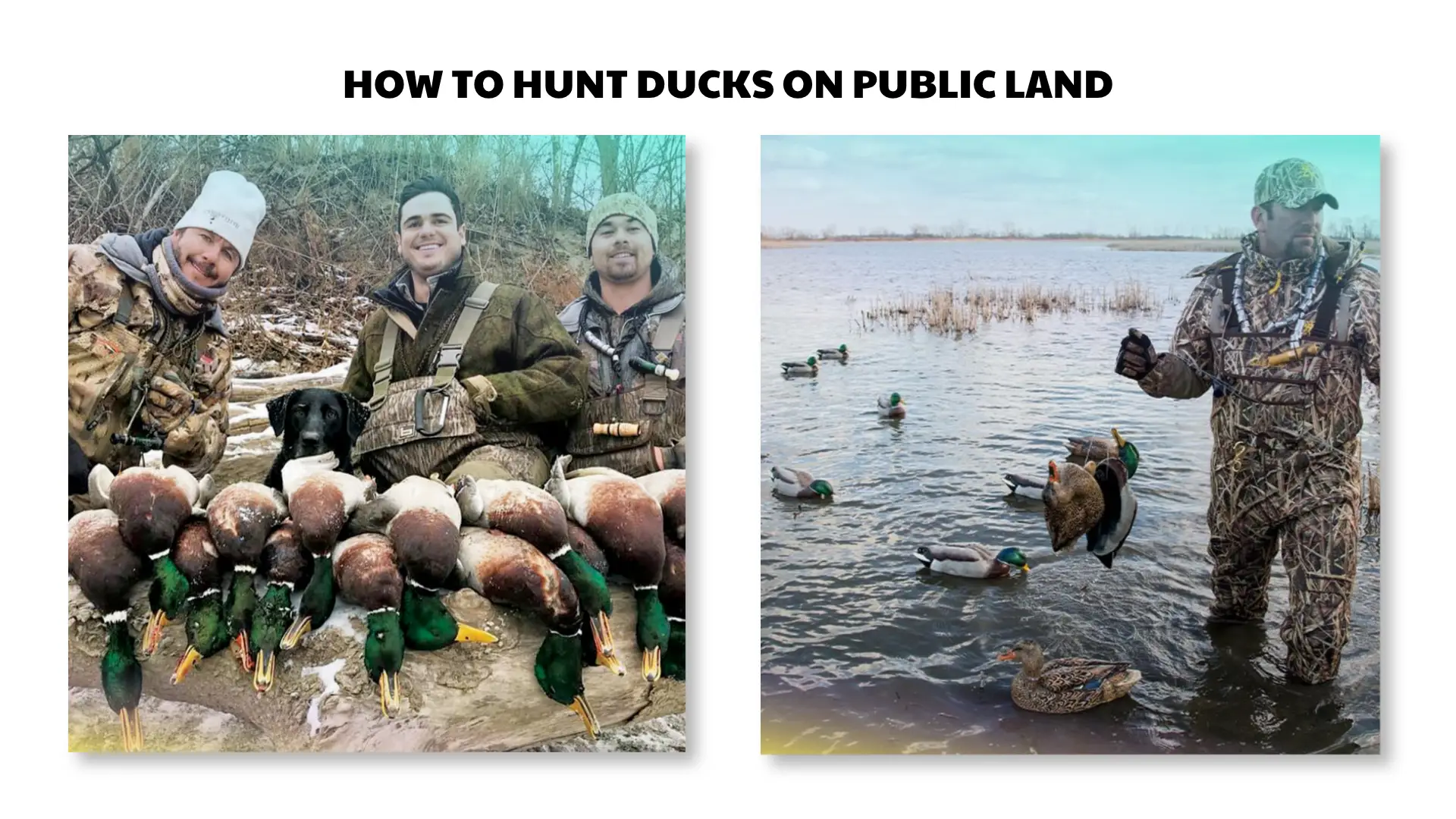

Quick Answer
To hunt ducks on public land, first confirm that the exact property and hunt unit are open, then obtain every required license, stamp, permit, reservation, or check-in document. Study the official map, scout bird use and water conditions, and prepare backup locations because parking, pressure, closures, and assigned units can change the plan. Set up only where your shooting lanes and recovery area remain safely separated from roads, trails, boats, buildings, private property, sanctuaries, and other hunters. Follow check-out and reporting rules and pack out everything you carry in.
Important Legal and Safety Notice Before You Hunt
Public-land rules vary by managing agency, state or province, flyway, property, unit, species, date, and access method. The U.S. Fish and Wildlife Service migratory-bird regulations page explains the federal framework, but a refuge, wildlife area, BLM parcel, state wetland, county property, or other site can impose additional restrictions.
- Ownership versus access: Verify that the parcel is public, legally accessible, and open to waterfowl hunting.
- Documents: Confirm licenses, HIP or equivalent registration, validations, permits, reservations, and check-in requirements.
- Federal Duck Stamp: Most U.S. waterfowl hunters age 16 or older need a current Federal Duck Stamp or E-Stamp.
- Season and limits: Confirm open days, legal hours, species restrictions, daily limits, possession limits, and unit closures.
- Ammunition: U.S. waterfowl hunting requires approved nontoxic shot.
- Property rules: Check shell limits, blinds, stakes, decoys, motors, boats, dogs, vegetation, camping, and equipment removal.
- Access: Use designated parking, launches, trails, check stations, and legal public easements.
- Safety zones: Identify roads, buildings, trails, levees, boat channels, private inholdings, and closed sanctuaries.
- Reporting: Complete check-out cards, harvest reporting, tagging, band reporting, and transport records.
Public land must be shared safely. Never shoot toward people, roads, parking areas, homes, vehicles, livestock, trails, levees, boats, dogs, power lines, neighboring spreads, or unclear movement. If another party creates an overlapping shooting lane, move rather than compete for the location.
Understanding Public-Land Duck Habitat and Access
Managed Wetlands
State wildlife areas and refuges may manage water depth, moist-soil vegetation, flooded crops, marsh openings, and sanctuary zones. Hunt units can open on limited days or through drawings, reservations, or assigned blinds.
Rivers, Lakes, and Reservoirs
Public water may provide broad access but can involve private shorelines, boat traffic, navigation channels, launch restrictions, current, waves, and uncertain recovery rights.
Federal and State Lands
National wildlife refuges, BLM lands, state wildlife areas, forests, and local properties have different purposes and rules. Use agency-specific maps. The BLM Public Lands Access Data and USGS PAD-US Data Explorer can support planning, but they do not replace the manager’s hunting regulations.
Private Inholdings and Access Easements
A public parcel can be surrounded by private land or contain private inholdings. Access is legal only through a public road, launch, trail, or valid easement unless the landowner grants permission.
Sanctuaries and Closed Units
Closed resting areas protect birds and distribute opportunity. Never shoot into, enter, or retrieve through a closure unless property staff specifically authorize it.
Hunting Pressure
Ducks on public land may change flight height, timing, feeding areas, and preferred cover after repeated disturbance. Scouting several units and hunting patiently is more effective than crowding one popular location.
What You Need Before You Start
- Current hunting license, permits, and validations
- HIP registration or local equivalent
- Required stamps
- Current statewide regulations
- Current property brochure and map
- Reservation, drawing, or check-in documents
- Legal shotgun and approved nontoxic ammunition
- Eye and hearing protection
- Weather-appropriate clothing
- Suitable boots or waders
- PFD for boats and hazardous water
- Manageable decoy spread and legal calls
- Low-impact blind or permitted concealment
- Offline map, compass, GPS, or app
- Paper map and boundary notes
- First aid and emergency signaling
- Reliable communication device
- Dry clothing, food, and water
- Clean game-care supplies
- Backup access and exit plan
Core rule: “Public land” answers who manages the property. It does not answer where you may park, cross, hunt, launch, build a blind, use a motor, discharge a firearm, or retrieve a bird. Verify each action separately.
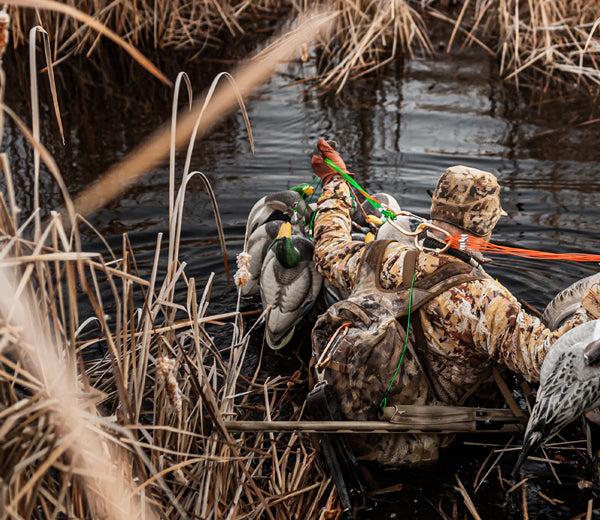
How to Hunt Ducks on Public Land: Step-by-Step Guide
Step 1: Confirm the Land Is Open to Waterfowl Hunting
Public ownership does not automatically mean that duck hunting is allowed. Identify the managing agency and read the current property brochure, map, emergency notices, seasonal closures, sanctuary boundaries, and species rules. Confirm whether the area uses permits, reservations, lotteries, daily drawings, assigned blinds, numbered stakes, free-roam units, check stations, or walk-in access.
Step 2: Verify Every License, Stamp, and Regulation
Check the official wildlife agency for the exact flyway, zone, date, species, and property. Verify the hunting license, HIP registration or equivalent, Federal Duck Stamp where applicable, state validations, daily and possession limits, legal shooting hours, approved nontoxic ammunition, shotgun capacity, baiting rules, reporting, transport, and property-specific shell or equipment limits.
Step 3: Study Maps, Boundaries, and Legal Access
Compare the manager’s official map with current road, water, and land-status information. Mark parking areas, check stations, open hunt units, closed refuges, safety zones, private inholdings, launch sites, legal trails, gates, levees, canals, and emergency exits. A mapping app is useful, but the managing agency’s signs, brochure, and instructions control access.
Step 4: Scout Without Disturbing Birds or Other Users
Observe from legal roads, overlooks, trails, or open water where permitted. Record duck species, flight direction, feeding and resting areas, water depth, vegetation, mud, wind, current, boat traffic, and hunting pressure. Avoid entering closed sanctuaries or repeatedly flushing birds simply to improve a future setup.
Step 5: Build More Than One Hunt Plan
Prepare a primary location, backup unit, and safe exit plan. Public-land access can change because of drawings, crowded parking, low water, ice, wildfire restrictions, maintenance, flood conditions, or another party arriving first. Never pressure another group or enter an unsafe conflict to claim a spot.
Step 6: Arrive, Park, and Check In Correctly
Use only designated parking, launches, and entry times. Complete permits, check-in cards, vehicle passes, or digital procedures exactly as required. Do not block gates, farm roads, ramps, emergency access, or another vehicle. Keep the firearm unloaded and handled according to local rules while moving through parking areas, safety zones, and check stations.
Step 7: Choose a Setup With Safe Separation
Select a legal position with a clear background, reliable recovery, and enough separation from occupied blinds, boats, trails, roads, buildings, livestock, anglers, and other hunters. Speak calmly with nearby groups and agree on safe directions when appropriate. If shooting arcs could overlap, move rather than argue.
Step 8: Use a Low-Impact, Manageable Spread
Carry only the decoys, blind material, calls, and equipment you can deploy and retrieve safely. Match the spread to the habitat and leave an open landing pocket inside a recoverable area. Do not cut live vegetation, build permanent structures, leave material overnight, or use motorized devices where prohibited.
Step 9: Stay Patient and Identify Every Bird
Public-land pressure can make ducks approach high, circle widely, or arrive from unexpected directions. Keep the muzzle controlled, remain aware of other users, and identify species and legal status before acting. Never shoot toward movement, sound, vegetation, another spread, a low boat, or birds silhouetted against an unsafe background.
Step 10: Take Only a Safe, Ethical, Recoverable Opportunity
Use a conservative practiced range and a defined shooting lane. Pass on long, mixed, obscured, crossing, or unrecoverable opportunities. Account for wind, current, water depth, vegetation, refuge boundaries, and private property before every shot. Public pressure does not justify rushing or competing for birds.
Step 11: Recover, Report, Clean Up, and Leave on Time
Begin a prompt legal recovery using a trained dog, safe wading route, or suitable boat without entering dangerous water, closed habitat, or private land. Complete check-out, tagging, harvest reporting, or band reporting. Pack out shells, line, food packaging, blind material, and every piece of gear. Follow closing times and leave the parking area safely.
Best Time, Place, and Conditions for Public-Land Duck Hunting
Open Days and Access Times
Some properties open daily, while others allow hunting only on selected weekdays, weekends, reservation dates, or managed hunt periods. Entry and exit times can differ from legal shooting hours.
Early and Late Season
Early seasons may offer warmer access and more local birds, while later periods can bring migration, ice, cold water, and changing unit closures. Property water management may be more important than calendar assumptions.
Weather and Wind
Wind can improve bird movement but can also create waves, dangerous boat travel, drifting decoys, and difficult recovery. Fog, lightning, floodwater, severe cold, heat, and thin ice are reasons to stop.
Low-Pressure Units
Less convenient units, longer legal walk-ins, smaller openings, and overlooked access points can receive fewer hunters. Never use a route that crosses private land or a closed refuge.
Weekday Versus Weekend
Weekdays may be less crowded, but public pressure depends on weather, migration, drawings, holidays, and local schedules. Always prepare a backup.
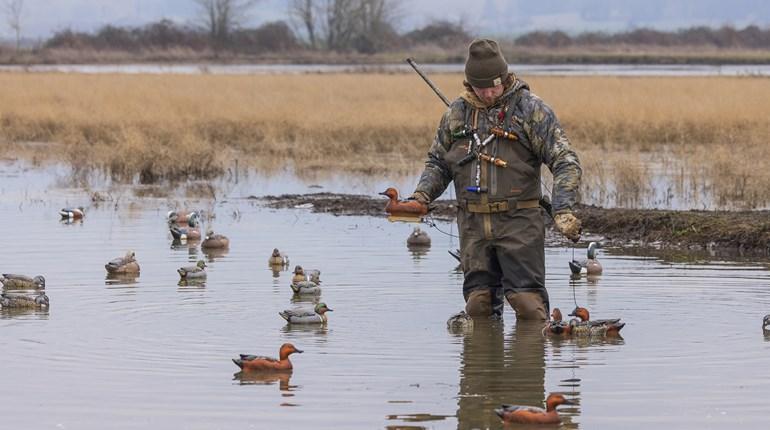
Helpful Tips for Better Results
- Download the current property map and regulations before losing cell service.
- Carry a paper backup map and mark private inholdings and sanctuary boundaries.
- Scout several legal access points instead of relying on one popular parking lot.
- Prepare a second and third setup before opening morning.
- Use a smaller spread when a long walk or uncertain weather makes retrieval difficult.
- Communicate calmly with nearby hunters before legal shooting time.
- Keep all shooting lanes away from trails, roads, boats, and neighboring spreads.
- Pattern the legal shotgun with approved nontoxic ammunition before the season.
- Move when another party creates an unsafe overlap rather than arguing over a location.
- Record water levels, pressure, wind, and bird use after each trip.
- Carry enough lighting, navigation, dry clothing, water, and emergency communication.
- Leave early when fog, lightning, wind, current, ice, flooding, or darkness threatens the exit.
Common Mistakes to Avoid
- Assuming every public parcel is open to hunting.
- Reading statewide regulations but ignoring the property brochure.
- Using an outdated map or app boundary.
- Crossing private land to reach public water.
- Arriving without a backup location.
- Blocking gates, launches, roads, or other vehicles.
- Crowding an occupied blind or creating overlapping shooting arcs.
- Entering a sanctuary or closed unit during recovery.
- Cutting vegetation or leaving blind material where prohibited.
- Leaving decoys or equipment overnight without authorization.
- Taking long shots because other hunters are nearby.
- Ignoring current, mud, fog, ice, or boat traffic.
- Failing to check out or report the harvest.
- Leaving shells, line, food packaging, or equipment behind.
Troubleshooting Common Problems
| Problem | Possible Cause | What to Do |
|---|---|---|
| The preferred unit is already occupied | Heavy pressure, late arrival, or a popular access point | Use the prepared backup plan and maintain safe separation instead of crowding the group. |
| The parking lot is full | Opening-day demand, permit limits, or restricted parking | Use another legal access point or hunt another day; never block a gate, road, or vehicle. |
| The map and ground signs seem different | Updated closure, maintenance, flooding, or outdated map data | Follow current signs and contact the managing agency before entering. |
| Ducks avoid the spread | Pressure, visible movement, poor concealment, or an unnatural setup | Reduce movement, lower the blind profile, simplify the spread, and avoid constant calling. |
| Another group sets up too close | Crowded free-roam area or unclear communication | Discuss safe arcs calmly and move when separation remains inadequate. |
| Birds land inside a closed refuge | The setup is near a sanctuary boundary or wind changed | Do not shoot or enter the closure; reposition farther from the boundary. |
| A bird crosses onto private property | The setup is too close to an inholding or boundary | Do not trespass. Contact the landowner or managing agency and follow recovery rules. |
| Water is deeper than expected | Changing levels, hidden channel, or incomplete scouting | Back out, stop wading, and use a safer legal route or different unit. |
| Fog hides other hunters | Weather changed after setup | Stop hunting, control the firearm, signal when appropriate, and leave by the safest known route. |
| A boat route becomes unsafe | Wind, waves, current, ice, motor problem, or low visibility | Stop hunting and use the nearest safe legal landing or emergency plan. |
| You are unsure about a local rule | Property brochure and statewide rules differ | Do not guess. Ask refuge staff, a wildlife officer, or the managing agency. |
| Gear must be left behind to meet closing time | Overpacking, late recovery, or long exit route | Begin packing earlier and carry a smaller system next time; do not intentionally abandon equipment. |
Ethical Hunting and Conservation
Public-land ethics are visible to every hunter, land manager, landowner, and non-hunting visitor. Respectful conduct protects access and reduces conflict.
- Obey federal, state, and property-specific regulations.
- Respect permits, drawings, check-in procedures, and assigned units.
- Maintain safe separation and communicate calmly.
- Pass on unsafe, uncertain, distant, or unrecoverable opportunities.
- Avoid disturbing sanctuary and closed resting habitat.
- Respect private inholdings, legal easements, gates, crops, and livestock.
- Use the harvest responsibly and avoid waste.
- Report bands through the official program.
- Pack out every shell, line, wrapper, stake, and blind component.
- Support public wetlands through licenses, stamps, habitat work, and volunteer cleanups.
Review the U.S. Fish and Wildlife Service hunter responsibilities and the rules issued by the property manager.
When to Get More Training or Professional Guidance
Seek additional help when you are new to firearm safety, waterfowl identification, public-land maps, drawings, free-roam etiquette, waders, boats, cold water, or property-specific recovery rules.
- Official hunter education courses
- State or provincial wildlife agencies
- Refuge and wildlife-area staff
- Certified firearm and shotgun instructors
- Experienced ethical public-land mentors
- Boating and cold-water safety courses
- Reputable conservation organizations and hunting clubs
After the Hunt: Follow-Up, Gear Care, and Learning
- Unload and transport the firearm according to law and property rules.
- Complete check-out, tagging, harvest reporting, and band reporting.
- Clean and dry the firearm after exposure to water, mud, vegetation, or salt.
- Dry boots, waders, PFDs, decoys, lines, calls, and blind material.
- Inspect boats, paddles, motors, batteries, lights, anchors, and trailers.
- Keep the harvest clean and cool and follow food-safety guidance.
- Record unit, parking, water level, wind, weather, birds, pressure, and recovery.
- Update offline maps with closures, hazards, and legal access lessons.
- Report damaged signs, unsafe facilities, or wildlife violations to the agency.
- Leave the parking area, launch, blind, and wetland cleaner than you found them.
Recommended Hunting Gear and Tools to Consider
You do not need the largest spread or most expensive equipment. Choose gear based on the property rules, access distance, water, weather, safety needs, recovery method, and your ability to remove everything before closing time.
- A legal shotgun that fits and can be controlled safely
- Approved nontoxic ammunition patterned with that shotgun
- Eye and hearing protection
- Weatherproof clothing and suitable footwear
- A properly fitted PFD for water access
- A compact manageable decoy spread
- A low-impact legal blind or concealment system
- Offline maps, compass, GPS, and paper property map
- Waterproof communication, light, whistle, and first aid
- Dry clothing, food, drinking water, and emergency supplies
- Clean game-care gloves, bags, and cooler
- Trash bag for shells, line, packaging, and blind material
Final Thoughts
Learning how to hunt ducks on public land means learning how to share a regulated resource safely. Confirm the property is open, understand every map and rule, prepare backup access, scout without disturbing birds, maintain separation, use a manageable setup, identify each duck, and plan legal recovery before shooting.
A quiet hunt with no harvest is better than trespass, crowding, unsafe shooting, or entering a sanctuary. Patience, preparation, and respect help protect public access for the next hunter and the next season.
Frequently Asked Questions
1. How long does it take to learn how to hunt ducks on public land?
The legal and safety basics can be learned through hunter education and mentored trips. Maps, access systems, pressure, species identification, and recovery planning take repeated field experience.
2. Is all public land open to duck hunting?
No. Public ownership does not automatically allow hunting. The managing agency may close areas, restrict species, or require special permits.
3. How do I find public land that allows duck hunting?
Start with the official wildlife agency, refuge, wildlife-area, BLM, forest, or local land-manager website and verify the current property brochure.
4. Can a hunting app prove legal access?
Apps are useful planning tools but can be outdated or imprecise. Confirm boundaries and access with the managing agency, current signs, and official maps.
5. Do I need a hunting license?
Most jurisdictions require a hunting license plus migratory-bird validations, permits, stamps, or registrations.
6. Do I need a Federal Duck Stamp?
Most U.S. migratory-waterfowl hunters age 16 or older must possess a current Federal Duck Stamp or valid electronic equivalent.
7. What is HIP registration?
The Harvest Information Program identifies U.S. migratory-bird hunters for harvest surveys. Complete the current state procedure before hunting.
8. Do public areas require extra permits?
Many do. Requirements can include reservations, lotteries, daily drawings, refuge permits, vehicle passes, check-in cards, or unit assignments.
9. When is public-land duck season?
Dates vary by flyway, zone, species, state or province, and property. A public area may use shorter or different open days than the statewide season.
10. What are legal shooting hours?
Hours are set by regulation and can be further restricted by the property. Check the exact date and unit.
11. What ammunition is legal?
In the United States, approved nontoxic shot is required for waterfowl hunting. A property may impose additional ammunition or shell limits.
12. Can I use lead shot?
Do not assume lead is legal. Lead shot is prohibited for U.S. waterfowl hunting and restricted in many other jurisdictions.
13. How many shells can my shotgun hold?
U.S. federal migratory-bird rules generally limit a shotgun to three shells total unless an official exception applies.
14. What is a daily drawing?
It is a property process that assigns access, blinds, stakes, or hunt units shortly before the hunt. Procedures vary by location.
15. What is a reservation or lottery hunt?
It is a limited-access system in which hunters apply before the season or hunt date for a permit or assigned opportunity.
16. What is a free-roam area?
It is an open hunt unit where permitted hunters select legal positions rather than receiving a fixed blind. Spacing and property rules still apply.
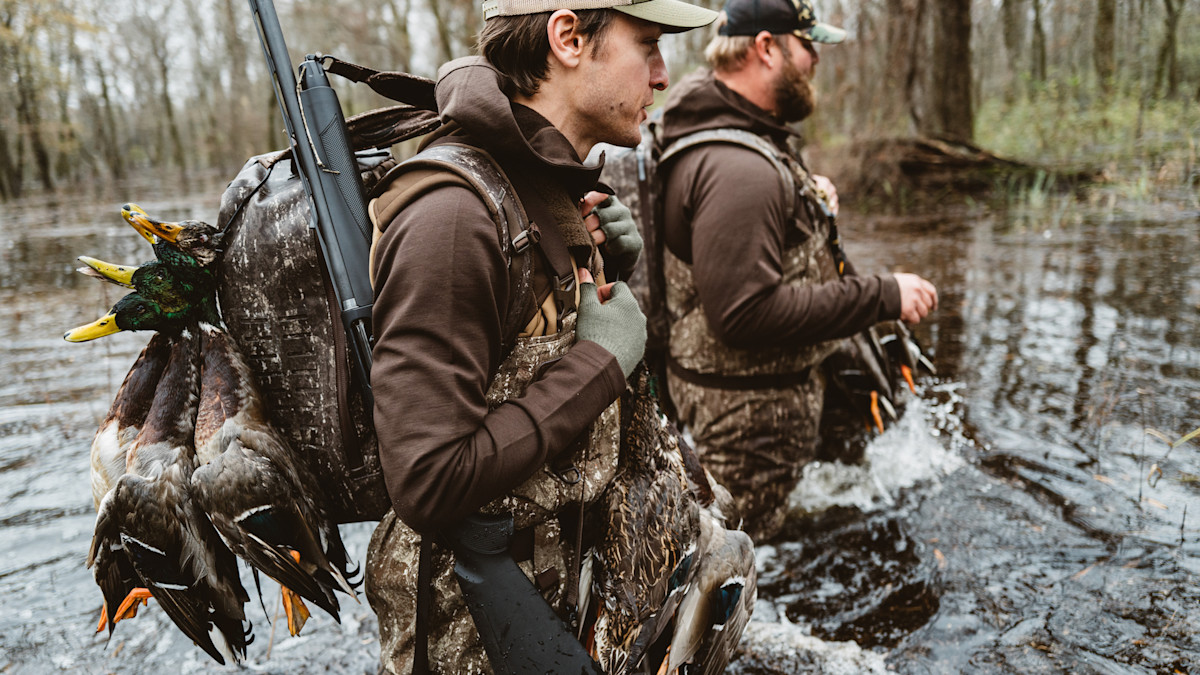
17. What is a fixed-blind area?
Hunters use designated blinds or stakes and must follow the assigned location, occupancy, access, and equipment rules.
18. How early should I arrive?
Arrive early enough to park, check in, review closures, walk or launch safely, and settle before legal time without violating entry rules.
19. Can I sleep in the parking lot?
Only when the managing agency and local law allow it. Many areas prohibit overnight parking or camping.
20. Can I save a public hunting spot?
Usually not unless an official reservation or assigned-blind system says otherwise. Unattended gear may be prohibited.
21. How close can I set up to another hunter?
There is no universal distance. Follow property rules and maintain enough separation that shooting lanes, recovery, and communication are safe.
22. What should I do if someone is in my planned spot?
Use a backup location. Do not crowd, threaten, block access, or create overlapping shooting lanes.
23. How do I communicate with nearby hunters?
Speak calmly before legal time, identify each group’s intended directions, and move if safe separation cannot be established.
24. Can I cross private land to reach public land?
Not without permission or a legal public easement. Public ownership behind private property does not authorize trespass.
25. What is a private inholding?
It is privately owned land surrounded by or located within a larger public-land area. Its boundaries and access rights must be respected.
26. Can I enter a refuge sanctuary to recover a duck?
Do not enter a closed sanctuary unless the managing agency specifically authorizes it. Contact staff for instructions.
27. Can I hunt from a public road or levee?
Only where the property and local law explicitly permit it. Many roads, levees, and safety zones prohibit firearm discharge.
28. Can I use a boat on public hunting land?
Only where legal. Check launches, motors, speed, navigation, PFD, lighting, area closures, and retrieval rules.
29. Can I use a kayak?
Yes where legal and suitable, but the paddler must follow boating rules, wear appropriate safety equipment, and avoid water beyond their training.
30. Can I build a blind?
Only when the property allows it. Permanent structures, cutting vegetation, nails, wire, or leaving materials may be prohibited.
31. Can I use natural vegetation for concealment?
Only where collection and cutting are allowed. Use loose dead material when permitted and remove artificial material after the hunt.
32. Can I leave decoys overnight?
Many public areas prohibit unattended or overnight equipment. Check the property rules.
33. Are motorized decoys legal?
Rules vary by state, season, and property. Verify current restrictions before carrying one.
34. Can I use an electronic call?
Recorded or electronically amplified calls are commonly prohibited for regular migratory-bird hunting. Check all current rules.
35. How do I scout public land?
Study official maps, observe birds from legal locations, check water and access, and avoid disturbing closed resting areas or active hunters.
36. Should I scout during hunting hours?
Only where the property allows access and without interfering with hunters. Off-day or non-peak observation may be more respectful.
37. How does hunting pressure affect ducks?
Pressure can move ducks to sanctuaries, private land, deeper water, or different travel times and can make them more cautious.
38. Where should beginners set up?
Choose a legal accessible unit with a clear background, reliable recovery, manageable water, and enough space from other users.
39. How many decoys should I carry?
Use a manageable number suited to the habitat, walking distance, boat capacity, wind, and required exit time.
40. Do I need a dog?
No, but every opportunity must have a safe legal recovery plan using a trained dog, suitable boat, or known wading route.
41. Should I wear a PFD?
Wear an appropriate PFD in boats and whenever regulations or water conditions require it. Shallow public wetlands can still contain channels and drop-offs.
42. How do I avoid getting lost?
Use the official map, offline navigation, compass, marked access route, lighting, and a shared trip plan. Do not rely on cell coverage.
43. What if I lose cell service?
Carry offline maps, a compass, written emergency information, and another communication or signaling method appropriate to the area.
44. What weather is unsafe?
Lightning, dense fog, high wind, dangerous waves, floodwater, extreme cold, thin ice, and severe heat are reasons to stop.
45. Can I hunt in fog?
Only when species identification, background, other-user visibility, navigation, and recovery remain reliable. Stop when any fail.
46. How should firearms be handled near parking lots?
Keep the muzzle controlled and follow all loading, casing, safety-zone, and check-station rules. Do not load in prohibited areas.
47. How far should I shoot?
Use only the distance where you can identify the species, confirm the background, perform consistently, and recover the bird safely.
48. What if another hunter shoots at the same flock?
Keep your firearm within your assigned safe arc. Do not swing toward another group or argue while firearms are being handled.
49. How do I recover a duck near another spread?
Communicate first, control the firearm, avoid crossing shooting lanes, and follow the property’s recovery procedures.
50. What if a duck lands on private property?
Do not trespass. Mark the location, contact the landowner or managing agency, and follow local recovery rules.
51. Do I need to report my harvest?
Some properties require daily check-out or harvest cards, while states may require species reporting or surveys. Verify before hunting.
52. What should I do after a successful hunt?
Complete required check-out, tagging, reporting, and band reporting; keep the bird clean and cool; and transport it lawfully.
53. How should duck meat be cared for?
Keep the harvest clean and cool promptly, use clean gloves and tools, prevent cross-contamination, and follow food-safety guidance.
54. What is the biggest public-land mistake?
The biggest mistake is assuming public ownership means unrestricted access. Property rules, boundaries, safety zones, and closures must all be verified.
55. When should I seek a mentor or guide?
Seek help when new to firearm safety, waterfowl identification, public-land maps, drawings, boats, recovery, or local regulations.
Read more: How to Hunt Ducks From a Kayak: A Safe Beginner Guide