
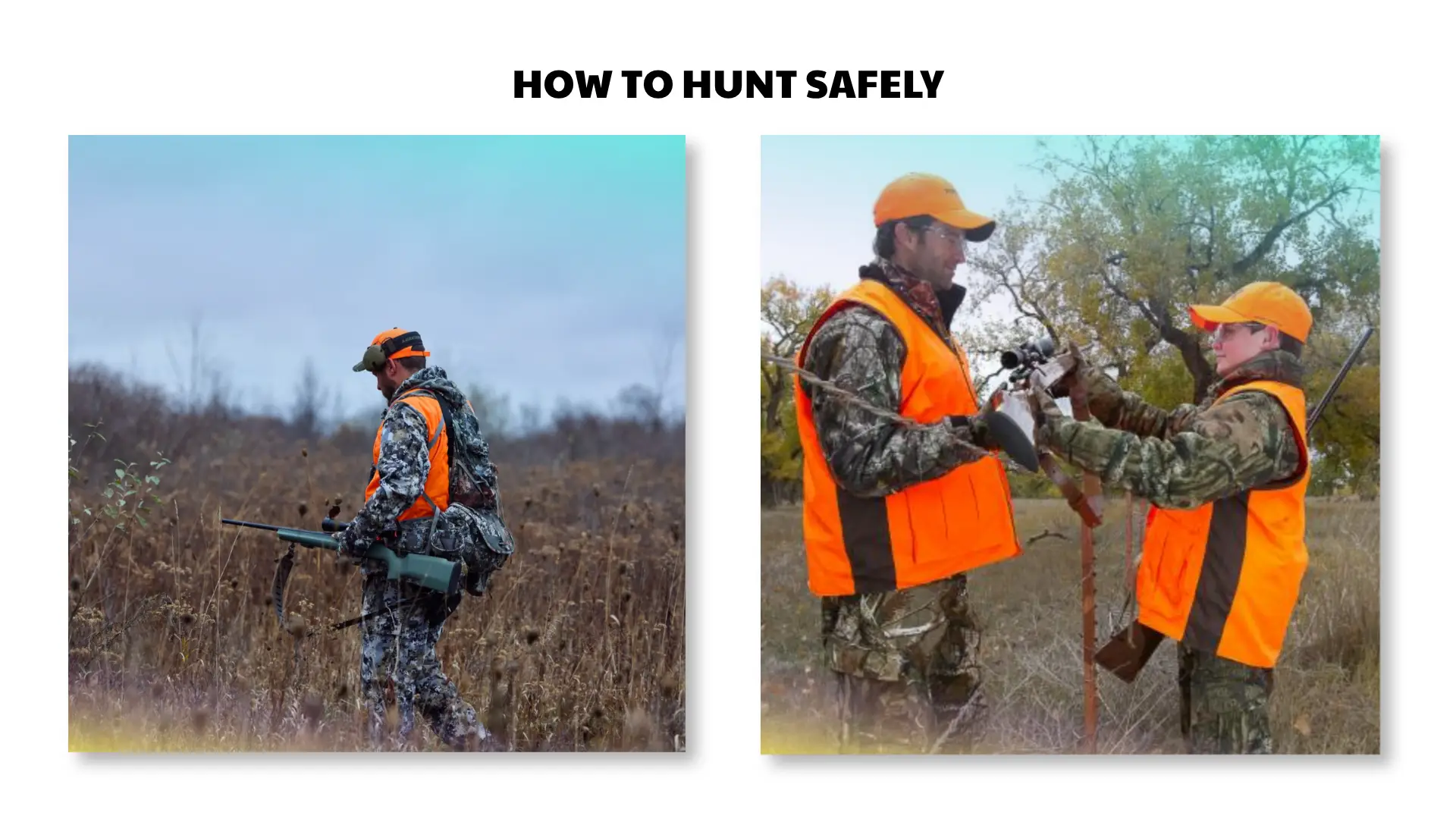

Quick Answer
To hunt safely, complete hunter education, verify every current license and property rule, practice with legal equipment, and plan the route, weather limits, communication, and recovery before leaving home. Keep the muzzle in a safe direction, treat every firearm as loaded, keep your finger outside the trigger guard, and identify the target and everything beyond it. Use a full-body fall-arrest system in elevated stands and wear an approved PFD on boats. Pass immediately whenever the target, background, distance, boundary, weather, or recovery plan is uncertain.
Important Legal and Safety Notice Before You Hunt
Hunting regulations vary by country, state, province, county, species, land type, season, weapon, and property. Always check the official wildlife agency and land manager for current requirements. The Texas Parks and Wildlife hunter-safety course provides general education, while local laws control the actual hunt.
- License and permits: Verify licenses, tags, permits, stamps, validations, hunter education, and draw results.
- Season and limits: Confirm dates, legal hours, species, sex or class restrictions, bag and possession limits.
- Weapon and ammunition: Use only lawful equipment and the exact ammunition or arrows specified by the manufacturer.
- Land access: Confirm property ownership, legal roads or easements, private permission, closures, and safety zones.
- Visibility: Follow hunter-orange or other clothing rules.
- Tree stands: Follow placement rules and use a full-body fall-arrest system.
- Boats: Follow boating laws, carry required equipment, and wear a suitable approved PFD.
- Reporting: Know tagging, check-in, reporting, testing, evidence, and transport requirements.
- Emergency planning: Prepare for injury, weather, fire, water, navigation failure, and delayed return.
Never shoot toward people, roads, trails, homes, buildings, camps, vehicles, livestock, workers, boats, dogs, other hunters, power lines, or unclear movement. Never use a weapon-mounted optic to identify an unknown person or object. Use binoculars and pass whenever identification or background is incomplete.
Understanding Game, Habitat, and Field Hazards
Animal Identification
Learn the legal target species in all common sexes, ages, seasonal plumages, and field conditions. Study protected species and look-alikes. Size, color, tracks, voice, movement, habitat, antlers, horns, or wing patterns can help, but the hunter must wait for complete identification.
Food, Water, Bedding, and Travel
Animals move among food, water, bedding, roosting, escape cover, and seasonal habitat. Scouting these patterns helps the hunter choose a stable position with a predictable, safe background rather than reacting to sudden movement.
Terrain Hazards
Steep slopes, cliffs, loose rock, mud, snow, ice, fallen timber, floodwater, dense vegetation, heat, cold, and low light affect footing, navigation, weapon control, and recovery. A productive location is not worth entering when the exit is doubtful.
Shared-Land Hazards
Public lands and large private properties may contain other hunters, hikers, cyclists, anglers, workers, vehicles, livestock, dogs, buildings, and roads. Recheck the background continuously because the safe area can change after setup.
Water Hazards
Cold water, current, waves, tide, surf, deep channels, soft mud, thin ice, and overloaded boats can quickly turn a hunt into an emergency. Wear the correct PFD and choose water below your skill level.
What You Need Before You Start
- Current license, tags, permits, and regulations
- Legal firearm, bow, or approved method
- Correct legal ammunition or arrows
- Eye and hearing protection
- Required visibility clothing
- Weather-appropriate clothing and boots
- Full-body fall-arrest system if elevated
- Approved, properly fitted PFD for boats
- Binoculars for identification
- Offline map, paper map, and compass
- GPS or phone as a secondary tool
- First aid and bleeding-control supplies
- Reliable emergency communication
- Headlamp and backup light
- Food, water, and emergency insulation
- Whistle and signaling equipment
- Protective broadhead cover or quiver
- Secure knife sheath
- Clean game-care supplies and cooler plan
- Shared trip plan and turnaround time
Core rule: A safety mechanism, camouflage, expensive optic, navigation app, or experienced partner cannot replace personal responsibility. The hunter who is uncertain must stop, unload or open the action when appropriate, and resolve the uncertainty before continuing.
How to Hunt Safely: Step-by-Step Guide
Step 1: Complete Hunter Education and Check Current Laws
Complete the hunter-education course required by your jurisdiction and learn with a qualified instructor or experienced ethical mentor. Before every hunt, verify the license, tags, permits, season dates, legal hours, bag limits, species restrictions, lawful weapon or method, ammunition rules, required visibility clothing, land access, reporting, transport, and property-specific regulations. Never rely on an old regulation booklet or another hunter’s memory.
Step 2: Know Your Firearm, Bow, and Personal Effective Range
Read the manufacturer instructions and practice under controlled range conditions. Use only the correct ammunition, arrows, and approved accessories. Learn how to load, unload, clear, carry, and store the equipment safely. Establish a conservative personal effective range through repeatable practice and never extend it because an animal appears briefly.
Step 3: Apply the Core Firearm and Bow Safety Rules
Keep the muzzle or arrow pointed in a safe direction, treat every firearm or bow as if it is ready to fire, keep your finger outside the trigger guard until the decision to shoot is complete, and be certain of the target, foreground, and background. Keep the safety engaged until ready, but never treat a mechanical safety as a substitute for disciplined handling.
Step 4: Choose a Legal Area and Confirm Every Boundary
Use official land-manager maps, current property signs, and confirmed access routes. Public ownership does not automatically mean hunting is open, and a public parcel may be surrounded by private land. Obtain private permission, respect gates and livestock, avoid closed areas and safety zones, and never cross an uncertain boundary during entry or recovery.
Step 5: Scout Wildlife and Human Activity
Learn the target species, legal identification features, habitat, food, water, bedding or roosting areas, tracks, droppings, trails, and seasonal movement. Also note roads, homes, trails, camps, vehicles, livestock, workers, hikers, anglers, other hunters, and target-shooting areas. A productive location is unsuitable when the background or shared use is unsafe.
Step 6: Build a Written Hunt and Emergency Plan
Share the property, parking location, route, companions, vehicle, expected return time, and emergency contact procedure with a responsible person. Carry an offline map, paper backup, compass, communication device, first aid, water, food, light, weather layers, and signaling equipment. Set a turnaround time and define what conditions will end the hunt.
Step 7: Check Weather, Terrain, Fire, Water, and Physical Limits
Review current and forecast weather, wildfire restrictions, flood conditions, road status, heat, cold, lightning, wind, fog, snow, ice, tides, and water temperature. Match the route and equipment to your fitness, mobility, experience, and recovery capacity. Do not let an opening-day plan override changing conditions.
Step 8: Travel and Cross Obstacles Safely
Keep the firearm unloaded or action open when required or whenever conditions make handling uncertain. Never climb a fence, ladder, tree, steep bank, or obstacle with a loaded firearm or nocked arrow. Unload, control the equipment, pass it safely or use an approved haul line, then cross one person at a time. After a fall, check the firearm safely for damage or barrel obstruction before further use.
Step 9: Use Tree Stands, Boats, and Blinds Correctly
Inspect stands, ladders, straps, boats, paddles, motors, anchors, blinds, and safety equipment before use. For elevated stands, use a manufacturer-approved full-body fall-arrest system while climbing, hunting, and descending, maintain three points of contact, and raise an unloaded weapon with a haul line. On boats and paddle craft, wear a properly fitted approved PFD, secure the load, and control the craft before handling a weapon.
Step 10: Establish Safe Zones of Fire With Partners
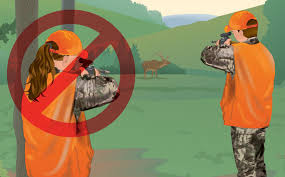
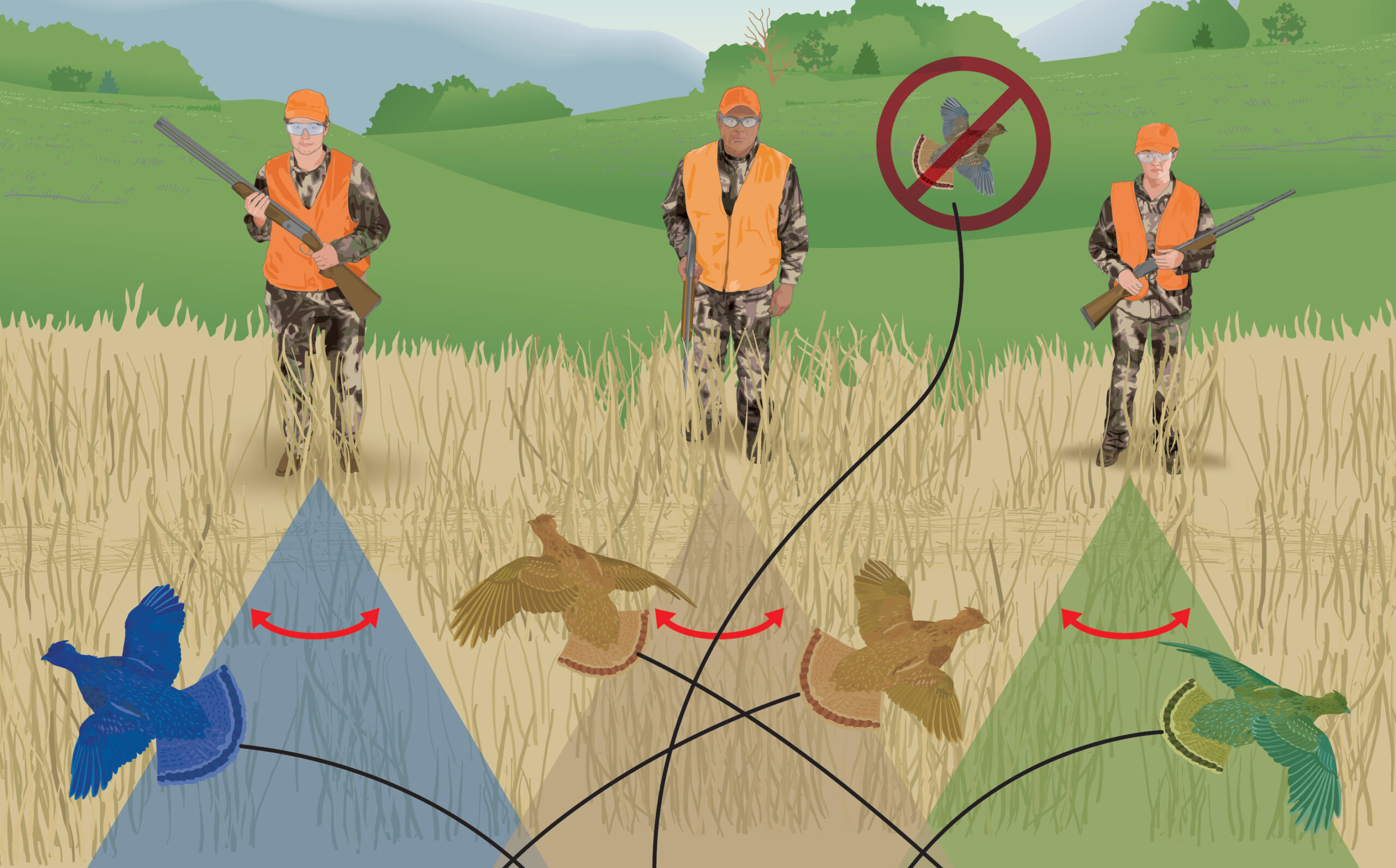
Before moving or setting up, agree on positions, communication, legal targets, and non-overlapping shooting directions. Know where every partner and dog is at all times. Stop immediately if anyone moves outside the plan, disappears from view, enters the line of fire, or creates uncertainty. Never swing a firearm or bow through another person’s zone.
Step 11: Identify the Target and Background Before Acting
Use binoculars rather than a firearm scope to identify uncertain movement. Confirm the species, sex or class when regulated, tag validity, legal season, safe angle, range, foreground, and background. Never shoot at sound, movement, brush, a silhouette, a ridge crest, water, rock, steel, a road, trail, home, vehicle, livestock, boat, or an animal with an unsafe area beyond it.
Step 12: Recover, Report, Handle Game, and Return Safely
After a legal opportunity, maintain safe weapon control and mark the last known location. Follow local recovery, tracking, private-property, tagging, validation, check-station, disease-testing, reporting, and transport rules. Use clean gloves and tools, cool edible meat promptly, avoid waste, and stop the recovery if terrain, water, weather, darkness, or exhaustion creates unacceptable risk. Notify the responsible contact when safely out.
Best Time, Place, and Conditions for a Safe Hunt
Legal Daylight and Visibility
Legal hunting hours vary by species and jurisdiction. Even during legal time, wait when fog, darkness, glare, brush, rain, or snow prevents positive identification and a safe background.
Stable Weather
Choose conditions that allow reliable access, shooting, recovery, and exit. Lightning, wildfire, floodwater, dangerous wind, extreme heat or cold, heavy snow, thin ice, and dense fog can require cancellation.
Manageable Terrain
The best location is one the hunter can enter, hunt, recover from, and exit without exceeding physical ability or equipment limits. Remote or steep terrain is not automatically safer or more productive.
Favorable Wind
Wind affects scent, sound, shooting stability, tree hazards, fire behavior, waves, and cold exposure. It is both a hunting factor and a safety factor.
Low-Conflict Access
Use legal parking, avoid blocking gates and roads, maintain distance from occupied setups, and select shooting directions that remain safe if another user appears.
Public and Private Land
Public ownership does not guarantee open hunting or legal access. Private permission should clearly cover parking, gates, livestock, boundaries, methods, recovery, and cleanup.
Helpful Tips for Better Results
- Recheck regulations and property notices before every hunt, not only once per season.
- Use binoculars to identify wildlife and people; never use a firearm scope for general observation.
- Keep the action open and firearm unloaded during uncertain movement, vehicles, obstacles, and climbing.
- Agree on safe zones of fire before partners spread out.
- Wear required visibility clothing and consider extra visibility during recovery.
- Use a full-body fall-arrest system from the ground up in elevated stands.
- Wear an approved, correctly fitted PFD whenever hunting from a boat or paddle craft.
- Carry a paper map and compass even when using a phone or GPS.
- Stop before lightning, fire, floodwater, fog, cold, heat, wind, ice, or fatigue overwhelms the plan.
- Avoid alcohol, impairing drugs, and medications that reduce alertness or coordination.
- Keep knives sheathed until needed and cut away from the body using stable footing.
- Pass on any opportunity that produces even slight uncertainty about safety or recovery.
Common Mistakes to Avoid
- Relying on a mechanical safety instead of controlling the muzzle.
- Placing a finger on the trigger while walking or aiming at uncertain movement.
- Using a firearm scope as binoculars.
- Shooting at a sound, silhouette, ridge crest, road, water, rock, or unknown background.
- Loading before the group has agreed on safe zones of fire.
- Crossing fences, ditches, ladders, or steep terrain with a loaded weapon.
- Climbing into a stand without a full-body fall-arrest system.
- Carrying a PFD in the boat instead of wearing it.
- Hunting while impaired by alcohol, drugs, fatigue, illness, heat, or cold.
- Relying only on a phone for navigation.
- Failing to share a trip plan.
- Taking a shot before considering legal recovery and property boundaries.
- Running toward game with a loaded firearm after excitement.
- Ignoring tagging, reporting, disease, transport, and meat-care rules.
Troubleshooting Common Problems
| Problem | Possible Cause | What to Do |
|---|---|---|
| You are unsure whether the firearm is loaded | The action was not checked or another person handled it | Point it in a safe direction, keep the finger outside the trigger guard, open the action, and verify chamber and magazine status. |
| A partner disappears from view | Terrain, vegetation, movement, or poor communication | Stop hunting, keep weapons controlled, and re-establish everyone’s location before continuing. |
| An unknown person enters the area | Shared public land, trail use, worker activity, or poor visibility | Do not shoot. Open the action or unload as appropriate and wait until the complete area is safe. |
| The target cannot be positively identified | Low light, brush, distance, fog, or mixed species | Use binoculars and pass unless identification becomes complete and legal. |
| The background is uncertain | Ridge crest, dense cover, buildings, roads, water, rock, or hidden users | Do not shoot and reposition only through a safe legal route. |
| The wind or weather changes | Front passage, storm, fog, wildfire, heat, or cold | Reassess the route and end the hunt before conditions exceed the plan. |
| Navigation equipment fails | Dead battery, lost service, damaged device, or app error | Use the paper map and compass, follow the known exit, and activate the trip-plan procedure if needed. |
| A tree stand or ladder moves | Loose straps, damaged parts, unsuitable tree, or poor installation | Do not climb or hunt from it. Descend safely if possible and replace or correctly reinstall it. |
| A boat becomes unstable | Overload, shifting gear, waves, current, reaching, or poor trim | Control the weapon, remain low, return to shore, reduce the load, and do not continue until stable. |
| A broadhead or knife is exposed | Damaged cover, rushed handling, or poor storage | Stop moving, secure the sharp edge safely, and replace the cover or sheath before continuing. |
| Recovery crosses private or closed land | The shot was too close to a boundary or the animal moved | Do not trespass. Mark the location and contact the landowner or managing agency. |
| Fatigue affects judgment | Long day, difficult terrain, dehydration, cold, heat, or heavy load | Stop, hydrate, warm or cool as needed, shorten the plan, and seek assistance before the situation becomes an emergency. |
Ethical Hunting and Conservation
Safe hunting and ethical hunting are inseparable. A legal season does not make every opportunity safe, and a visible animal does not remove the responsibility to identify it, protect the background, remain within practiced ability, and plan recovery.
- Respect wildlife, protected species, habitat, landowners, and other users.
- Obey licenses, tags, seasons, legal hours, methods, limits, and access restrictions.
- Complete hunter education and continue practicing throughout life.
- Pass on unsafe, uncertain, distant, obscured, or unrecoverable opportunities.
- Make reasonable legal recovery efforts and avoid waste.
- Use clean game-care methods and respect transport and reporting rules.
- Do not trespass, road hunt, spotlight illegally, or enter closed areas.
- Do not damage trees, gates, crops, fences, signs, water sources, or facilities.
- Pack out spent cases, line, packaging, flagging where required, and all trash.
- Support conservation through licenses, habitat programs, and responsible participation.
Review official hunter ethics guidance and the U.S. Fish and Wildlife Service hunters’ responsibilities.
When to Get More Training or Professional Guidance
Seek qualified help whenever you are uncertain about laws, firearms, bows, shooting, tree stands, boats, cold water, maps, wilderness first aid, species identification, tracking, game care, or transport.
- Official hunter education courses
- State or provincial wildlife agencies
- Certified firearm and bow instructors
- Tree-stand safety instructors and manufacturers
- Boating and paddling safety courses
- Wilderness first aid and navigation courses
- Experienced ethical mentors or licensed guides
- Land managers and conservation officers
Useful official references include elevated-stand safety, field preparation and survival, U.S. Coast Guard life-jacket guidance, and BLM hunting and access information.
After the Hunt: Follow-Up, Gear Care, and Learning
- Unload, verify, secure, and transport weapons according to law and manufacturer guidance.
- Complete tagging, reporting, testing, check-in, and transport documentation.
- Clean and inspect firearms, bows, strings, arrows, stands, harnesses, boats, and optics.
- Dry PFDs, clothing, boots, waders, decoys, ropes, and emergency equipment.
- Keep edible meat clean and cool and follow official food-safety guidance.
- Record weather, access, hazards, wildlife, people, shot decisions, and recovery lessons.
- Replace damaged safety equipment before the next hunt.
- Notify the trip-plan contact that everyone has returned safely.
- Report unsafe facilities, wildfire, violations, or hazards to the appropriate agency.
- Leave the land, launch, trail, stand area, and parking place cleaner than you found them.
Recommended Hunting Gear and Tools to Consider
You do not need the most expensive gear to hunt responsibly. Choose equipment based on local law, method, species, terrain, water, weather, skill level, emergency response time, and budget.
- A legal firearm, bow, or approved hunting method that fits the user
- Correct legal ammunition, arrows, and protected broadheads
- Eye and hearing protection
- Required visibility clothing and weather layers
- Full-body fall-arrest system and haul line for elevated stands
- Approved PFD and required boating safety equipment
- Binoculars for identification
- Offline navigation, paper map, compass, light, and spare power
- First aid, communication, whistle, and emergency insulation
- Water, food, sun protection, and temperature management
- Secure knife sheath, clean gloves, game bags, and cooling supplies
- Locked storage and cases for transport and home security
Final Thoughts
Learning how to hunt safely means building habits that remain reliable when the hunter is cold, tired, excited, hurried, or disappointed. Check the laws, know the equipment, control the muzzle, protect the trigger, identify the target and background, communicate with partners, prepare for weather and navigation, and pass whenever uncertainty appears.
A successful day is one in which everyone returns safely, the law and land are respected, wildlife is treated responsibly, and every decision could be explained honestly to a hunter-education instructor, landowner, conservation officer, and family member.
Frequently Asked Questions
1. How long does it take to learn how to hunt safely?
Hunter education provides a foundation, but safe hunting requires lifelong practice, disciplined habits, equipment knowledge, and field experience.
2. What is the most important hunting safety rule?
Always control the muzzle or arrow direction and never allow it to point at anything you do not intend to shoot.
3. What are the four basic firearm safety rules?
Treat every firearm as loaded, keep the muzzle in a safe direction, keep your finger off the trigger until ready, and identify the target and background.
4. Should I treat an unloaded firearm as loaded?
Yes. Consistent handling prevents mistakes when a firearm’s status is misunderstood.
5. Where should my trigger finger be?
Keep it straight and outside the trigger guard until the target, background, decision, and safe opportunity are fully confirmed.
6. Is a firearm safety mechanism enough?
No. Mechanical safeties can fail or be moved unintentionally and never replace safe muzzle and trigger discipline.
7. How do I check whether a firearm is unloaded?
Point it safely, open the action, and visually and physically confirm the chamber and magazine according to the manufacturer instructions.
8. Can I use a rifle scope to identify movement?
No. Use binoculars or another observation optic so the firearm is never pointed at an unidentified person, animal, or object.
9. Why must I know what is beyond the target?
Bullets, pellets, and arrows can miss, pass through, ricochet, or continue far beyond the intended animal.
10. Can I shoot at an animal on a ridge?
Do not shoot when there is no safe backstop or when the area beyond the animal cannot be seen and confirmed.
11. Can I shoot across water or at rocks?
Avoid hard or flat surfaces such as water, rock, and steel because projectiles can ricochet unpredictably.
12. Can I shoot at sound or movement?
Never. The target must be fully visible, positively identified, legal, and backed by a safe area.
13. What is a safe zone of fire?
It is the limited direction in which a hunter can safely shoot without crossing partners, roads, homes, trails, livestock, or other hazards.
14. How should hunting partners communicate?
Agree on positions, directions, signals, legal targets, lost-contact procedures, and emergency actions before moving into the field.
15. What should I do if I lose sight of a partner?
Stop hunting and safely re-establish the person’s position before handling the weapon as ready to fire.
16. Do I need hunter education?
Many jurisdictions require it based on age or license history. Every beginner benefits from an official course even when legally exempt.
17. Do I need a license and tag?
Requirements vary by species and jurisdiction. Verify every license, tag, permit, validation, and reporting duty before hunting.
18. How often should I check hunting regulations?
Check before the season and again before each hunt because closures, emergency rules, access, and conditions can change.
19. How do I verify legal land access?
Use official maps, land-manager instructions, current signs, confirmed public roads or easements, and written private permission where needed.
20. Can I cross private land to reach public land?
Not without landowner permission or a confirmed public easement.
21. Should I wear hunter orange?
Wear the visibility clothing required by law and consider extra visibility during shared access and game recovery.
22. Can I hunt alone safely?
It may be legal, but beginners are safer with a qualified mentor. Solo hunters need conservative plans, communication, and a detailed trip plan.
23. What information belongs in a hunting trip plan?
Include the property, parking place, route, companions, vehicle, equipment, expected return, and when the contact should request help.
24. What navigation tools should I carry?
Use an offline GPS or map app, paper map, compass, light, spare power, and known landmarks rather than relying on cell service.
25. What should be in a hunting first aid kit?
Carry supplies appropriate to the trip and training, including bleeding control, wound care, medications, insulation, and emergency communication.
26. When should weather cancel a hunt?
Cancel or leave when lightning, wildfire, floodwater, severe wind, extreme heat or cold, dense fog, ice, or poor roads exceed the plan.
27. How much water should I carry?
Amount depends on weather, distance, terrain, and individual needs. Carry enough for the planned hunt plus an emergency margin.
28. Can alcohol be used during a hunt?
No. Alcohol and impairing drugs reduce judgment, coordination, and safe weapon handling.
29. What if prescription medicine causes drowsiness?
Follow medical and label guidance and do not handle weapons or hunt when alertness, vision, balance, or judgment is impaired.
30. How should a firearm be transported?
Follow local law and manufacturer guidance, typically unloaded, secured, protected from damage, and separated from unauthorized access.
31. Should firearms and ammunition be stored separately?
Secure storage requirements vary, but locked, controlled storage that prevents unauthorized access is a core safety practice.
32. How do I cross a fence with a firearm?
Unload completely, control the firearm safely, pass it across or under using an approved method, then cross without holding a loaded weapon.
33. Can I climb a tree with a loaded firearm?
No. Unload it and raise it with a haul line only after you are securely positioned and attached.
34. Do I need a tree-stand harness?
Use a manufacturer-approved full-body fall-arrest system while climbing, hunting, and descending from an elevated stand.
35. What are three points of contact?
Keep either two hands and one foot or two feet and one hand connected to the ladder or climbing system.
36. How should I practice with a tree-stand harness?
Read the instructions and practice fitting, attaching, climbing, and suspension relief at ground level with responsible supervision.
37. Can I stand in a boat to shoot?
Standing can sharply reduce stability. Follow boat design, law, and training, and remain seated when standing would create risk.
38. Should I wear a PFD while hunting from a boat?
Wear a properly fitted approved PFD while on the water, especially in cold, rough, moving, or low-visibility conditions.
39. Are waders a substitute for a PFD?
No. Waders do not provide approved flotation and can complicate movement after an unexpected immersion.
40. How should weapons be handled in a boat?
Keep the craft stable, control the muzzle, follow loading and transport laws, and unload before unsafe movement or handling.
41. How should broadheads be transported?
Keep broadheads in a secure protective cover or quiver and never carry exposed blades through brush, vehicles, boats, or climbing routes.
42. How should hunting knives be handled?
Keep the knife sheathed until needed, maintain stable footing, cut away from the body, and never leave it exposed in grass or gear.
43. How do I know my effective shooting range?
Use repeated practice under realistic positions and choose the distance where accuracy and control remain dependable, not the farthest successful shot.
44. What is an ethical shot opportunity?
It is a legal, identified target within practiced range, with a safe background, suitable angle, and realistic recovery.
45. Should I shoot a moving animal?
Only when legal, safe, and within trained ability. Beginners should pass whenever movement prevents precise identification and controlled placement.
46. What if an animal moves toward a road or property boundary?
Do not shoot unless the complete opportunity and expected recovery remain legal and safe.
47. What should I do immediately after a shot?
Control the weapon, observe carefully, mark the last location, communicate with partners, and follow official recovery guidance.
48. When should game be tagged?
Tagging timing and method vary. Know the exact requirement before hunting and complete it as directed.
49. Do I need to report a harvest?
Many jurisdictions require reporting for specific species or permits. Verify the deadline and reporting method.
50. How do I recover game safely after dark?
Use reliable lighting, visibility clothing, navigation, partner communication, boundary awareness, and a conservative route.
51. What if recovery enters private land?
Stop at the boundary, mark the location, contact the landowner, and follow local wildlife-agency procedures.
52. How should harvested meat be cared for?
Use clean gloves and tools, prevent contamination, cool edible meat promptly, and follow local food-safety and transport rules.
53. What is wanton waste?
Definitions vary, but hunters generally must make reasonable recovery efforts and avoid wasting required edible portions.
54. What is the biggest beginner safety mistake?
The biggest mistake is allowing excitement or uncertainty to override muzzle control, identification, background awareness, and the decision to pass.
55. When should I seek more training?
Seek qualified instruction whenever unsure about laws, firearm or bow handling, shooting, tree stands, boats, navigation, first aid, recovery, or meat care.
Read more: How to Hunt Pressured Public Land Deer: A Beginner Guide