
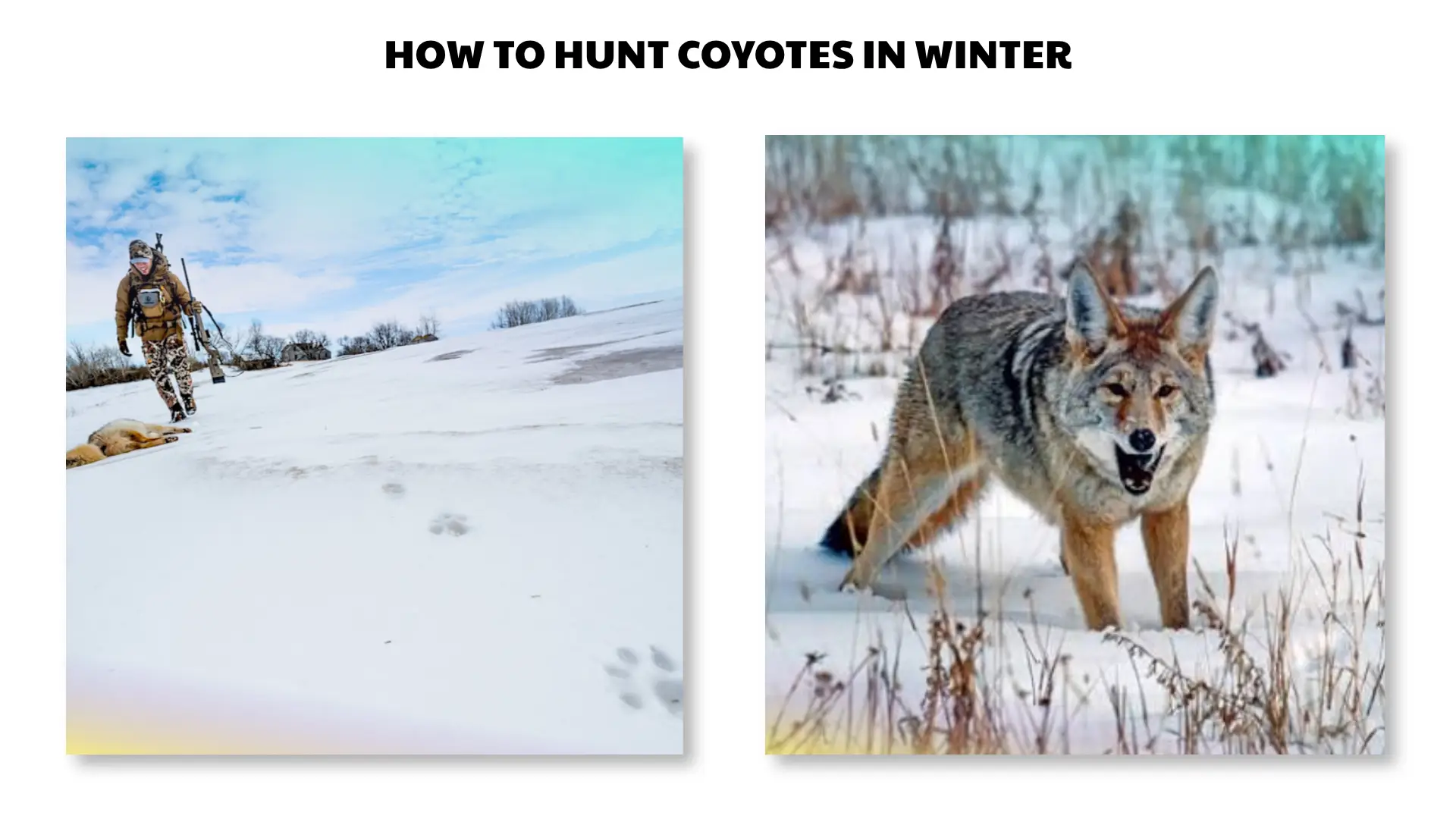

A practical, conservation-minded guide to legal preparation, winter scouting, safe setups, lawful calling, equipment handling, and ethical decisions.
Quick Answer
First verify the current license, season, legal-hour, weapon, equipment, access, and reporting rules for the exact location. Scout fresh tracks and travel corridors, approach with the wind in your favor, and choose a setup with clear visibility and a safe background. Use lawful calls carefully, remain patient, and act only on a positively identified legal animal within your practiced ability.
Important Legal and Safety Notice Before You Hunt
Hunting regulations vary by country, state, province, county, tribal jurisdiction, municipality, land manager, season, and weapon type. Read the current official rules and contact the responsible wildlife agency when anything is unclear.
- Licenses and permits: Confirm whether a general hunting, predator, small-game, furbearer, or special-area license is required.
- Tags and reporting: Check tagging, sealing, checking, harvest reporting, possession, and transport requirements.
- Seasons and hours: Verify opening dates, closing dates, daylight rules, night-hunting restrictions, and overlaps with big-game seasons.
- Weapons and equipment: Confirm lawful firearms, bows, ammunition, electronic calls, bait, artificial lights, thermal devices, and night vision.
- Land access: Verify public-land rules, closures, boundaries, parking, and private-land permission.
- Visibility: Wear blaze orange or other visibility clothing whenever required.
- Firearm safety: Keep the muzzle in a safe direction, keep your finger outside the trigger guard until ready, and know the target and what is beyond it.
- Winter safety: Carry navigation, communication, first aid, water, food, light, and emergency insulation.
Never shoot toward roads, homes, barns, livestock, people, vehicles, trails, or unidentified movement. Never trespass, road hunt, or use a restricted method.
Understanding Coyotes and Their Winter Habitat
Coyotes are adaptable canids found in agricultural ground, grassland, desert, forests, brush, wetlands, and developed landscapes. Their food may include small mammals, carrion, fruit, insects, and other locally available items.
Winter changes the landscape. Snow can reveal tracks and crossings, frozen water can redirect travel, and reduced cover may improve visibility. Coyotes may travel alone, in pairs, or in family groups. Late winter can overlap with breeding behavior, but timing varies by latitude, weather, habitat, and local population.
Winter Habitat Features Worth Scouting
- Field edges where open feeding areas meet brush or timber
- Creek bottoms, drainage lines, shelterbelts, and low terrain
- Fence crossings, gates, culverts, and narrow travel funnels
- Tracks connecting protected cover with food sources
- Wind-protected slopes and brush during severe weather
- Legal public-land transition zones away from heavy pressure
Signs Beginners Should Learn
Look for repeated canine tracks, direct trail patterns, droppings, scent-marking locations, and crossings used after fresh snow. One print is not enough for reliable identification because domestic dog tracks can be similar. Trail cameras may help where their use is legal and privacy is respected.
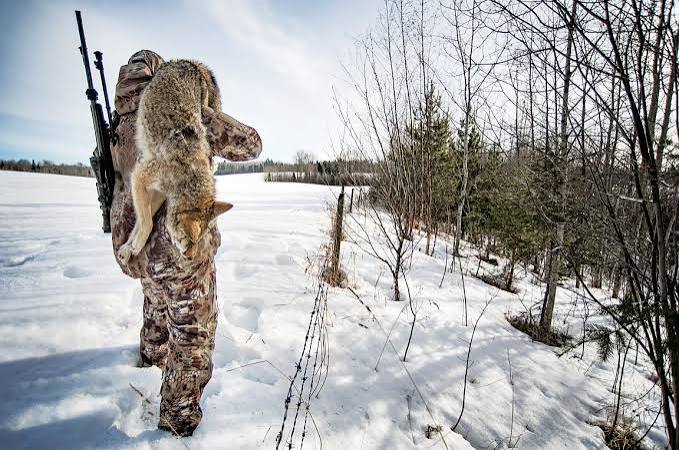
What You Need Before You Start
- Valid license, permits, and current regulations
- Written private-land permission or verified public access
- A legal firearm, bow, or other authorized method
- Manufacturer-approved ammunition or archery equipment
- Required visibility clothing
- Layered winter clothing and insulated boots
- Gloves that preserve safe equipment control
- Binoculars for positive identification
- A stable rest practiced before the hunt
- Map, compass, GPS, or offline hunting app
- Phone or approved emergency communicator
- First-aid kit and cold-weather emergency supplies
- Water, food, headlamp, and spare batteries
- Legal hand call or electronic caller where allowed
- Disposable gloves and lawful handling supplies
How to Hunt Coyotes in Winter: Step-by-Step Guide
Step 1: Check Local Hunting Laws First
Confirm species classification, licenses, season dates, legal hours, weapon and ammunition rules, electronic calls, bait, lights, thermal or night-vision devices, reporting, transport, and disposal. Also check local discharge ordinances and public-land closures.
Step 2: Learn Winter Coyote Patterns
Study how coyotes connect cover, food, and travel routes. Fresh snow can show crossings but does not reveal exactly when an animal will return. Look for repeated patterns over several days.
Step 3: Choose a Legal Hunting Area
Select a location with clearly legal access and a safe background. On private land, discuss houses, barns, livestock, workers, roads, gates, neighboring boundaries, and parking. On public land, review maps, weapon rules, closures, and shared-use expectations.
Step 4: Scout Before the Hunt
Scout tracks after fresh snow, fence crossings, field edges, creek bottoms, brush lines, and protected travel routes. Record track direction, freshness, wind, weather, time, nearby food, and human activity.
Step 5: Prepare Your Gear Safely
Inspect your lawful firearm or bow, optic, sling, rest, caller, batteries, navigation, and clothing. Practice loading, unloading, carrying, and using the equipment while wearing winter layers and gloves.
Step 6: Plan for Wind, Weather, and Entry Route
Choose an approach that keeps scent away from expected travel and avoids skylining. Check wind at the vehicle and at the setup because terrain can redirect air. Establish a weather cutoff before leaving.
Step 7: Set Up Carefully
Choose stable footing, a controlled position, clear visibility, and a known backstop. Identify roads, trails, structures, livestock, neighboring property, and any place another person could appear.
Step 8: Call Conservatively and Observe
Where legal, start with controlled volume suited to terrain and wind. Prey-distress sounds and coyote vocalizations are common, but no sequence works everywhere. Scan with binoculars rather than a firearm optic whenever possible.
Step 9: Take Only a Safe, Legal, and Ethical Shot Opportunity
Act only when the animal is positively identified as a legal coyote, the background is safe, and the distance is within your practiced ability. Pass on moving, hidden, distant, silhouetted, or uncertain animals.
Step 10: Follow Recovery and Reporting Rules
Keep the muzzle controlled, observe the last known location, and approach only when safe. Follow local recovery, tagging, reporting, possession, and transport rules. Do not cross private boundaries without permission.
Step 11: Handle the Animal Responsibly
Use gloves, keep tools clean, avoid contact with fluids and parasites, and follow lawful rules for hide use, salvage, transport, sale, and disposal.
Best Time, Place, and Conditions for This Hunt
| Factor | Practical Consideration | Safety or Legal Check |
|---|---|---|
| Time of day | Early and late daylight are common travel periods; quiet midday may also work. | Confirm legal hours and night-hunting rules. |
| Fresh snow | Tracks may reveal crossings and travel direction. | Evaluate ice, roads, visibility, and emergency access. |
| Wind | A steady wind makes scent movement easier to predict. | Stop if blowing snow obscures the target or background. |
| Cold front | Local movement may change around a front. | Use a wind-chill and travel cutoff. |
| Food pattern | Scout small-mammal habitat, agricultural edges, and natural carrion. | Do not bait unless clearly legal. |
| Public land | Avoid crowded access and repeated setups. | Confirm closures, boundaries, and shared use. |
| Private land | Landowners may know current tracks and livestock movement. | Obtain permission and discuss safe zones. |
Helpful Tips for Better Results
- Scout after fresh snow, then back out without overdisturbing the area.
- Park responsibly and enter quietly without crossing the expected approach route.
- Arrange binoculars, calls, and the rest before beginning.
- Watch downwind cover as well as the obvious opening.
- Use modest calling rather than constant volume.
- Rotate legal setups instead of repeatedly pressuring one location.
- Keep notes on wind, snow, tracks, calling, access, and sightings.
- Stop when numb hands, fogged optics, heavy snow, or changing wind reduce safety.
Common Mistakes to Avoid
- Using an outdated regulation summary
- Assuming coyotes can be hunted anywhere without a license
- Crossing private land because an app appears to show a shortcut
- Ignoring local firearm-discharge ordinances
- Approaching with scent blowing into the travel corridor
- Calling before confirming a safe firing area
- Using a riflescope as a general observation tool
- Mistaking a dog, wolf, fox, or unclear silhouette for a coyote
- Taking a rushed shot at a moving or hidden animal
- Staying after cold or poor visibility affects safe handling
- Failing to plan legal recovery and reporting
Troubleshooting Common Problems
| Problem | Possible Cause | What to Do |
|---|---|---|
| No coyotes seen | Old sign, poor timing, pressure, wind, or limited scouting | Scout multiple fresh crossings and try another legal setup. |
| Coyotes detect the hunter | Wind shift, movement, noise, skylining, or poor entry | Use steadier wind, better background cover, and quieter access. |
| Animals stay in cover | Pressure, wind-checking, or unsafe open ground | Remain still and never force an uncertain shot. |
| Public land is crowded | Easy access, weekends, snow, or overlapping seasons | Use another legal area or leave if safe zones overlap. |
| Boundary is unclear | Outdated map, weak signal, missing signs | Stop and verify with official records or the landowner. |
| Wind swirls | Terrain, trees, buildings, or changing weather | Move only when safe or end the setup. |
| Optics fog or ice | Moisture or temperature transition | Protect lenses and stop if identification becomes uncertain. |
| Caller fails | Cold battery, moisture, or damaged remote | Carry tested lawful backup batteries or a hand call. |
| Hunter feels rushed | Inexperience or unstable position | Keep the firearm safe and pass unless every condition is clear. |
| Recovery crosses private land | Animal moved toward an unpermitted boundary | Do not trespass; contact the landowner or proper authority. |
Ethical Hunting and Conservation
Ethical coyote hunting requires more than minimum legal compliance. It includes positive identification, shot discipline, respect for land and other users, responsible recovery, and lawful handling.
- Respect coyotes as adaptable wildlife with an ecological role.
- Follow seasons, method restrictions, reporting, and land rules.
- Practice until you know your limitations.
- Pass on uncertain, distant, moving, or poorly presented opportunities.
- Avoid waste and follow lawful salvage or disposal rules.
- Respect landowners, livestock, neighbors, hikers, and other hunters.
- Support conservation through education, habitat work, licenses, and accurate reporting.
- Remove litter and leave access points cleaner than you found them.
When to Get More Training or Professional Guidance
Seek additional help if you have never completed hunter education, are new to firearms or bows, cannot confidently identify coyotes, do not understand boundaries, have not practiced realistic positions, are entering remote winter terrain, or are unsure about reporting and recovery.
Useful sources include official hunter education programs, wildlife agencies, certified instructors, licensed guides, conservation organizations, and experienced ethical mentors.
After the Hunt: Follow-Up, Gear Care, and Learning
- Complete all tagging, reporting, possession, and transport requirements.
- Unload and secure equipment according to law and manufacturer guidance.
- Dry clothing, boots, optics, electronics, and cases before storage.
- Inspect slings, rests, batteries, lenses, and safety equipment.
- Use gloves and clean tools responsibly.
- Record tracks, wind, snow, access, calling, and sightings.
- Choose one improvement to practice before the next hunt.
- Thank the landowner and report any gate, fence, or livestock concern.
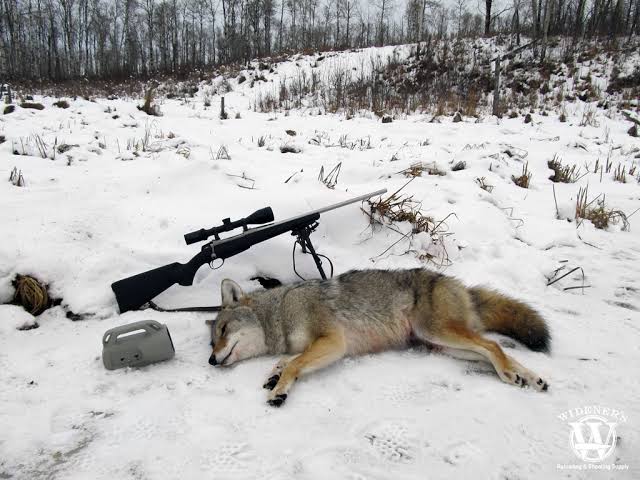
Recommended Hunting Gear and Tools to Consider
You do not need expensive gear to hunt responsibly. Choose equipment based on current laws, terrain, weather, safety, experience, and budget.
- A lawful firearm or bow you can use safely and accurately
- A secure case, sling, and approved ammunition or components
- Binoculars for identification
- A practiced field rest
- Layered winter clothing and required visibility gear
- Insulated boots with safe traction
- Map, compass, GPS, or offline hunting map
- First aid and emergency communication
- Headlamp, spare batteries, water, food, and insulation
- A legal hand call or electronic caller where allowed
- Disposable gloves and lawful handling supplies
Trusted Official Resources
- U.S. Fish & Wildlife Service — Hunter Education
- Iowa Department of Natural Resources — Coyotes
- Michigan Department of Natural Resources — Coyotes
- MassWildlife — Example of Location-Specific Regulations
These are educational examples. Always locate the current official regulations for the exact jurisdiction and land being hunted.
Final Thoughts
Learning how to hunt coyotes in winter is a process of legal research, winter scouting, wind planning, quiet access, observation, positive identification, and ethical restraint. Prepare before every trip, practice with lawful equipment, respect landowners and other outdoor users, and pass whenever the target or background is uncertain.
Frequently Asked Questions
1. How long does it take to learn how to hunt coyotes in winter?
Most beginners need several scouting trips and multiple field setups before they understand wind, access routes, winter sign, and local coyote behavior. Hunter education, practice, field notes, and an ethical mentor can speed up the learning process.
2. Do I need a hunting license to hunt coyotes in winter?
Requirements vary by country, state, province, tribal jurisdiction, municipality, and land type. Check the current official regulations for the exact area before hunting.
3. Do coyotes require tags or harvest reporting?
Some jurisdictions require tagging, sealing, checking, or online harvest reporting, while others do not. Verify the rules before leaving home.
4. Is there a specific winter coyote season?
Season dates differ widely. Some places allow long seasons, while others restrict dates, methods, or areas during overlapping big-game seasons.
5. What is the best time of day to hunt coyotes in winter?
Early morning and late daylight are common travel periods, but cold and quiet midday conditions can also be productive. Legal hunting hours always control.
6. Can I hunt coyotes at night during winter?
Only where night hunting is legal. Artificial lights, thermal devices, night vision, firearms, vehicles, and landowner permission may all be separately regulated.
7. Where should a beginner look for winter coyotes?
Scout legal areas with repeated tracks, field edges, creek bottoms, brush lines, fence crossings, and travel routes between cover and food.
8. Are snowy days good for coyote hunting?
Fresh snow can make tracks easier to read, but deep snow, ice, poor roads, and reduced visibility can create serious hazards.
9. How does cold weather affect coyote movement?
Cold may influence feeding and travel, but habitat, prey, pressure, wind, and local weather still matter. Scout current sign instead of relying on one temperature rule.
10. Do coyotes travel in groups during winter?
Coyotes may travel alone, in pairs, or in family groups. Group behavior can be more noticeable in winter in some regions.
11. What do coyote tracks look like in snow?
They are generally compact, canine-shaped tracks that often form a direct travel line. Domestic dog tracks may look similar, so use several prints and the overall trail pattern.
12. What other winter coyote sign should I scout?
Look for repeated tracks, droppings, scent-marking points, fence crossings, and trails connecting feeding areas with protected cover.
13. How important is wind direction when hunting coyotes?
Wind is critical because coyotes rely heavily on scent. Plan the approach and setup so your scent is less likely to reach the expected travel route.
14. Should I use scent-control products?
Clean clothing and a good wind plan matter more than expensive scent products. No product can make a hunter undetectable.
15. What is a safe winter coyote setup?
A safe setup has stable footing, a known backstop, clear target identification, and no roads, homes, livestock, people, vehicles, or trails in the firing area.
16. How far should I walk from my vehicle?
There is no universal distance. Walk only as far as you can safely navigate and return from in winter conditions while remaining within legal access.
17. Can I hunt from a vehicle?
Shooting from or across a vehicle or roadway is illegal in many places and is unsafe. Disability permits may create narrow exceptions with specific conditions.
18. Do I need private landowner permission?
Yes, when hunting private property or crossing private land. Written permission is best where available.
19. Is public land good for winter coyote hunting?
It can be, but public land may have heavy pressure, special weapon rules, seasonal closures, and other recreational users.
20. How do I confirm a property boundary?
Use current official maps, parcel records, signs, and landowner guidance. Mobile apps help but may contain errors.
21. What clothing is best for winter coyote hunting?
Use moisture-managing base layers, insulation, weather protection, warm boots, safe gloves, eye protection, and required visibility clothing.
22. Do I need camouflage?
Camouflage can help break up an outline, but stillness, wind, background cover, and legal visibility clothing are more important.
23. What safety gear should I carry?
Carry navigation, communication, first aid, light, water, food, spare batteries, emergency insulation, and a written trip plan.
24. What type of firearm can be used for coyotes?
Legal firearm types, calibers, ammunition, magazine limits, and discharge rules vary. Use only a lawful firearm you can handle safely and accurately.
25. Can I use a shotgun for winter coyotes?
A shotgun may be lawful and practical in some close-cover situations. Confirm ammunition and season restrictions.
26. Can I bowhunt coyotes in winter?
Where legal, bowhunting requires close-range discipline, safe broadhead handling, positive identification, and substantial practice.
27. How much practice should I do before hunting?
Practice until you can load, unload, carry, and use your equipment safely in winter clothing from realistic field positions.
28. Are electronic calls legal for coyotes?
Rules vary by jurisdiction, land type, season, and species classification. Confirm before use.
29. What calls work for coyotes in winter?
Prey-distress sounds and coyote vocalizations are commonly used where legal, but no sound or sequence guarantees a response.
30. How long should I stay at one calling setup?
Terrain, visibility, pressure, and wind matter more than a fixed number. Stay only while you can remain alert and safe.
31. How loud should a coyote call be?
Match volume to terrain and wind. Excessive volume may sound unnatural nearby and may disturb residents or livestock.
32. Should the caller be placed away from the hunter?
Where remote electronic callers are legal, modest separation may direct attention away from the hunter. Keep the caller in a safe, known location.
33. Can bait be used for winter coyote hunting?
Baiting laws vary widely and may involve wildlife-feeding, disease-control, carcass-disposal, and land-use rules.
34. Can I use thermal or night-vision optics?
Only where specifically legal. Some areas ban or restrict thermal imaging, night vision, or artificial light.
35. How do I avoid disturbing livestock?
Coordinate with the landowner, learn where animals and workers will be, avoid barns and pastures, close gates, and stop if livestock enter the area.
36. How can I distinguish a coyote from a dog?
Use body shape, movement, tail position, behavior, location, and clear optics. Never shoot when identification is uncertain.
37. What should I do if wolves may be present?
Study official identification guidance and protected-species rules. Pass on every uncertain animal.
38. Is it safe to hunt alone in winter?
Solo hunting adds risk. Beginners are safer with an experienced partner; otherwise use conservative limits, check-ins, and reliable communication.
39. How do I prevent hypothermia?
Stay dry, layer clothing, manage sweat, eat and hydrate, recognize early signs, and leave before conditions exceed your equipment or skill.
40. What if the wind changes during a setup?
Reassess both hunting effectiveness and safety. Quietly reposition only when legal and safe, or end the setup.
41. Why am I not seeing coyotes despite fresh tracks?
The tracks may be old, the animal may use the area at another time, or your access route may be alerting it.
42. Why do coyotes stop before entering the open?
They may be checking wind, watching movement, reacting to pressure, or using cover as a safer route.
43. What if a coyote approaches from the wrong direction?
Do not swing across a partner, road, structure, livestock, or unsafe background. Let the animal pass if needed.
44. How do I hunt pressured coyotes ethically?
Reduce repeated disturbance, improve scouting and access, rotate legal setups, and never escalate to illegal equipment or reckless shots.
45. What should I do if another hunter enters the area?
Make your presence known safely and end the setup if safe zones overlap or locations are uncertain.
46. Should I wear blaze orange while coyote hunting?
Wear every item required by current regulations, especially during overlapping firearm seasons.
47. What is an ethical shot opportunity on a coyote?
The animal must be positively identified and legal, the background safe, and the distance within the hunter’s practiced ability.
48. What should I do after a successful shot?
Keep the firearm safe, observe the last known location, approach carefully, and follow recovery, tagging, reporting, possession, and transport rules.
49. Do I need gloves when handling a coyote?
Disposable or washable gloves are a sensible hygiene precaution. Avoid contact with fluids, parasites, and abnormal tissue.
50. Can coyote meat be eaten?
Practices and regulations differ. Follow official wildlife-health and food-safety guidance and consult a qualified processor when unsure.
51. What should I do with the hide or carcass?
Follow local possession, salvage, tagging, sale, transport, and disposal laws. Never dump remains illegally.
52. How should I clean and store hunting gear after winter use?
Unload and secure the firearm, follow manufacturer instructions, dry wet gear, inspect optics and batteries, and store weapons safely.
53. How can I improve after an unsuccessful hunt?
Record wind, snow, tracks, access, calling, duration, and sightings, then change only one or two factors at a time.
54. How much does winter coyote hunting cost?
Costs depend on licenses, travel, clothing, optics, communication gear, and lawful equipment. Prioritize training and safety essentials.
55. When should I hire a guide or seek a mentor?
Seek help when you are new to firearms, winter navigation, local laws, public-land boundaries, identification, or recovery procedures.
Read more: How to Hunt Coyotes During the Day: A Beginner-Friendly Guide