
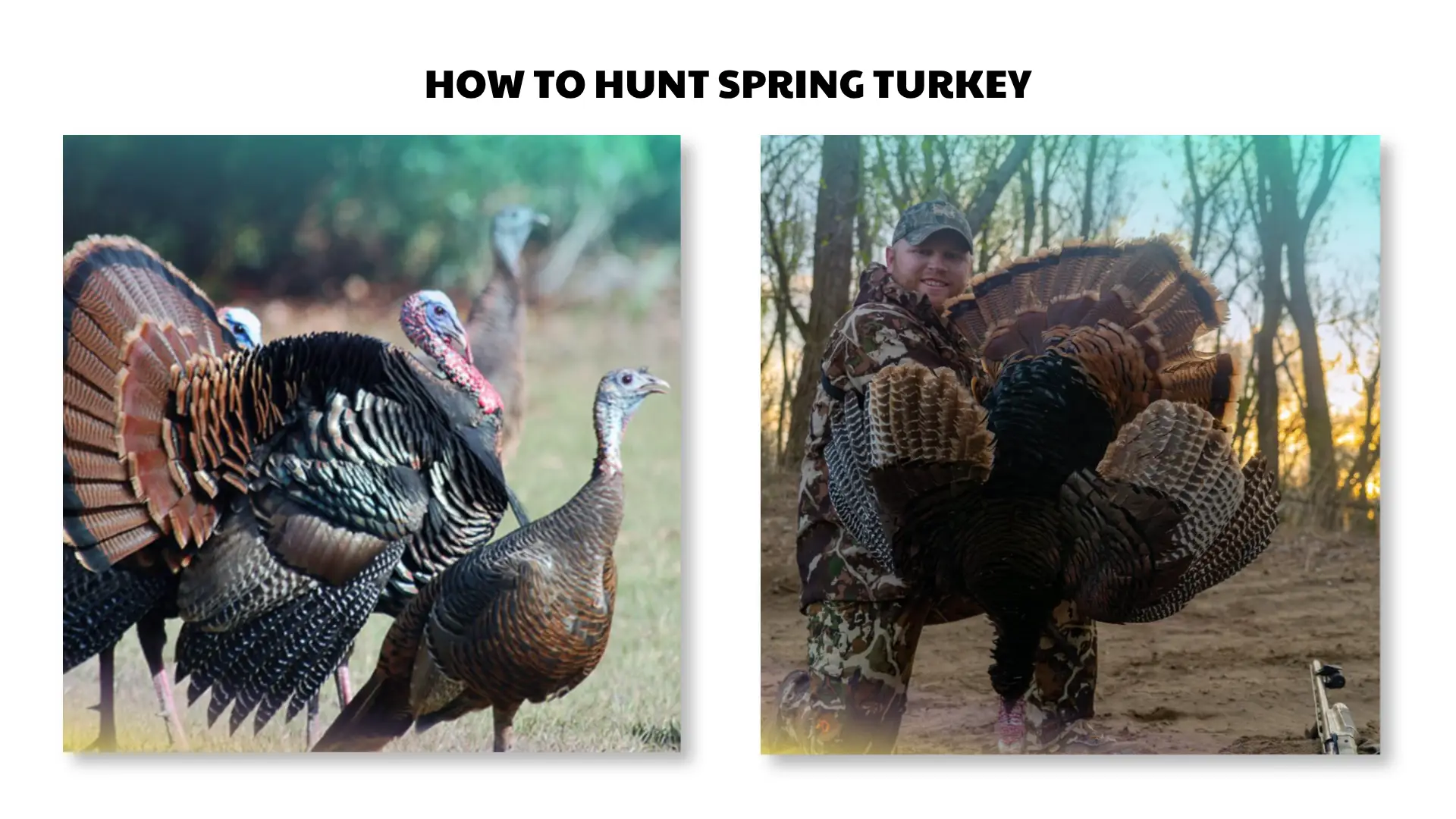

Learning how to hunt spring turkey involves much more than making a few calls at sunrise. A responsible beginner must understand current regulations, wild turkey behavior, scouting, calling restraint, safe setup selection, target identification, public-land awareness, and ethical recovery.
Quick Answer
To learn how to hunt spring turkey, first verify your license, permit, legal bird definition, season, hours, weapon rules, reporting duties, and land access. Scout roosting cover, feeding areas, tracks, scratching, and travel routes, then choose a stationary setup with a safe background before calling. Never stalk turkey sounds, shoot at movement, or display an exposed decoy while walking. With practice, patience, and careful identification, beginners can build safe and effective field skills.
Important Legal and Safety Notice Before You Hunt
- License and education: Confirm hunting license, hunter education, age, residency, and mentoring requirements.
- Permit or tag: Carry the correct turkey permit, tag, stamp, or electronic authorization.
- Legal bird: Learn the exact legal definition, including beard, sex, age, unit, or permit restrictions.
- Season and hours: Verify season dates, legal hunting hours, daily or seasonal limits, and closed days.
- Weapons and ammunition: Confirm legal firearms, bows, crossbows, ammunition, shot sizes, broadheads, and equipment restrictions.
- Calls and decoys: Check restrictions on electronic calls, live decoys, moving decoys, fans, reaping, bait, and attractants.
- Land access: Verify public boundaries, refuge or forest rules, parking, blind placement, and private-land permission.
- Visibility: Follow hunter-orange or other visibility requirements while moving, setting up, or transporting a bird.
- Reporting and transport: Understand tagging, validation, check-in, harvest reporting, evidence, and transport rules.
- Emergency planning: Check weather, carry navigation and first aid, and tell someone where you will be.
Critical turkey safety rule: Never shoot at sound, movement, color, a fan, or a partial outline. Positively identify the complete legal bird and know the foreground and background. Never stalk a turkey sound because it may be another hunter calling.
Understanding the Game Species and Its Habitat
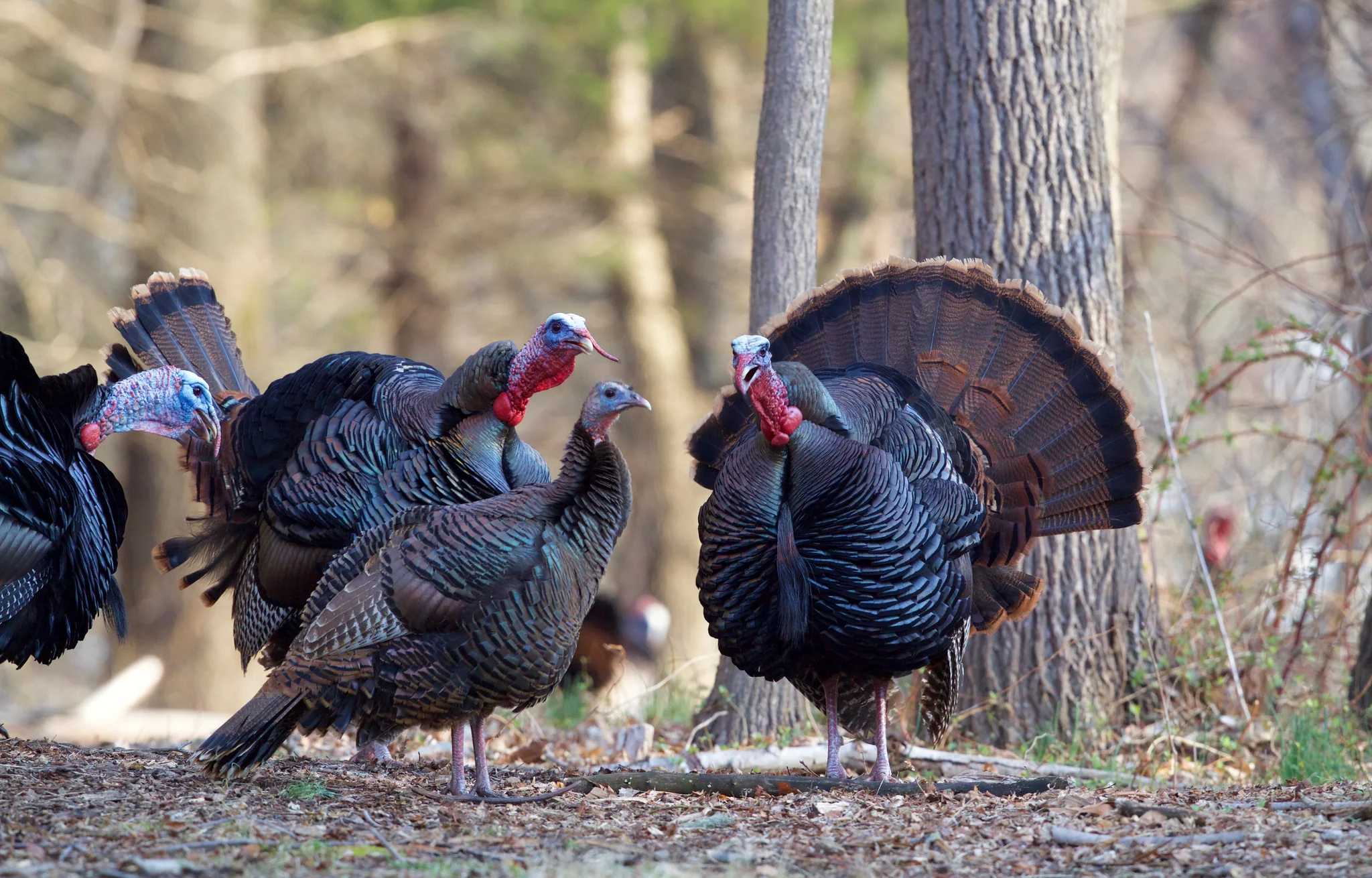
Wild turkeys use a combination of mature trees for nighttime roosting, open or semi-open areas for feeding and displaying, and secure cover for travel and nesting. Exact habitat varies across regions and subspecies, so local scouting is more useful than assuming every flock behaves the same way.
Spring Behavior
Spring activity is strongly influenced by breeding behavior. Gobblers may call from the roost, display in open areas, travel with hens, or approach calling silently. A bird that stops gobbling has not necessarily left. Calling pressure, weather, terrain, and the presence of hens can change how birds respond.
Habitat Features to Learn
- Roosting cover: Mature trees that provide suitable limbs and nearby travel routes.
- Feeding areas: Fields, forest openings, woodland edges, pastures, and areas with insects or seasonal plant foods.
- Strutting areas: Open ground where gobblers can display and maintain visibility.
- Travel corridors: Ridges, logging roads where legal, creek bottoms, field edges, saddles, and gentle terrain transitions.
- Secure cover: Brush, young forest, and broken terrain where birds may travel or avoid pressure.
Useful Spring Turkey Sign
Look for three-toed tracks, droppings, feathers, scratching in leaves, dusting bowls, wing-drag marks, tracks along field edges, and repeated observations or gobbling. Fresh sign connected to multiple habitat needs is more useful than one isolated clue.
What You Need Before You Start
- Valid hunting license, hunter education, turkey permit or tag, and current regulations
- A legal hunting weapon or method allowed for the exact season and property
- Required hunter orange or other visibility clothing
- Neutral or camouflage clothing that does not include visible red, white, or blue
- Weather-appropriate layers, rain protection, and supportive boots
- A seat cushion, low chair, or legal ground blind
- One or two simple turkey calls with protective storage
- Legal decoys and a fully enclosed carrying bag, if you choose to use decoys
- Binoculars for safe observation
- Map, compass, GPS, or hunting app with confirmed boundaries
- First-aid kit, water, food, headlamp, and emergency communication
- Required tags, pen, reporting instructions, clean gloves, cooler, and game-care supplies
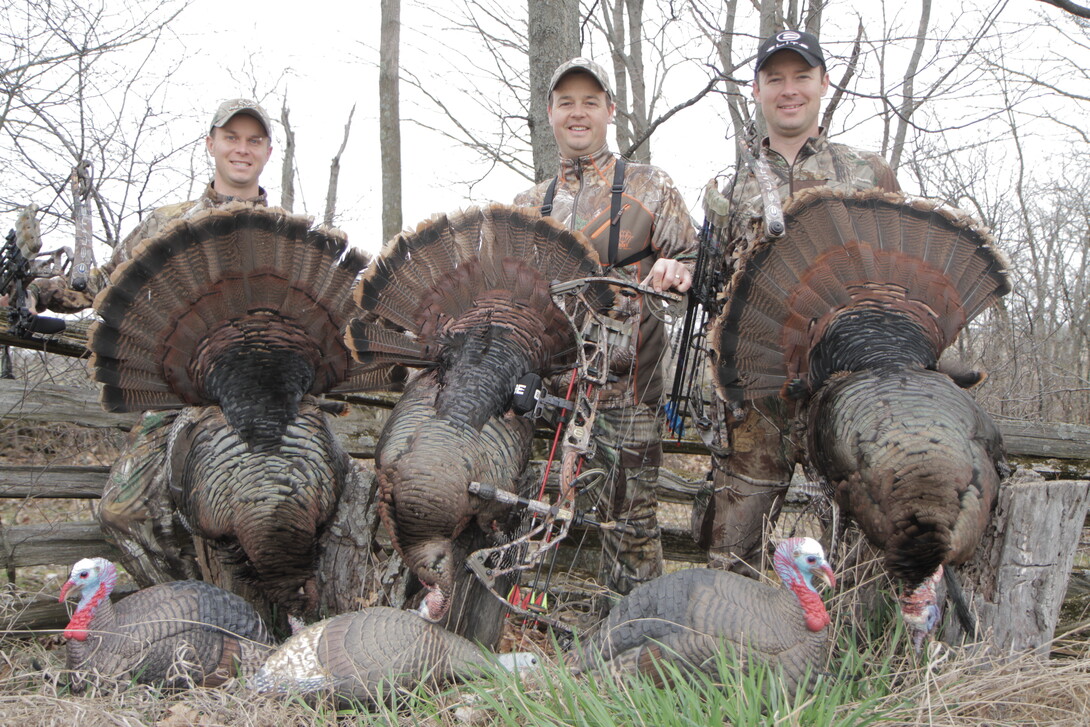
How to Hunt Spring Turkey: Step-by-Step Guide
Step 1: Check Local Hunting Laws First
Read the current official regulations for the exact property and hunting unit. Verify license, education, permit, legal bird definition, season, hours, bag limit, weapon, ammunition, call, decoy, bait, visibility, blind, reporting, and transport rules. Save an offline copy if service may be unavailable.
Step 2: Learn the Animal’s Patterns
Study how local turkeys move between roosting cover, feeding areas, display locations, and secure travel corridors. During spring, gobblers may be alone, grouped with other males, or occupied with hens. Their response to calling can change from day to day.
Step 3: Choose a Legal Hunting Area
On public land, confirm open areas, parking, access, property boundaries, refuge or forest restrictions, and blind rules. On private land, obtain permission and clarify gates, livestock, buildings, other hunters, guests, decoys, vehicle access, and recovery arrangements.
Step 4: Scout Before the Hunt
Scout from a distance and avoid repeatedly disturbing roost sites. Listen at legal times, watch fields from public or permitted locations, inspect tracks and scratching, and mark safe setup options. Record where birds travel after leaving the roost rather than focusing only on the roost tree.
Evaluate each location for hidden trails, houses, roads, livestock, hard surfaces, nearby hunters, and the direction a projectile or arrow could travel. A good turkey location is not a good hunting setup unless the entire zone is safe.
Step 5: Prepare Your Gear Safely
Practice with your chosen legal method at an approved range and follow manufacturer instructions. Learn safe loading, unloading, transport, casing, muzzle or bow control, and the field position you plan to use. Bowhunters should practice from a seated position and protect broadheads during transport.
Practice calling separately from weapon handling. Keep calls, binoculars, permits, water, and other frequently used items organized so you do not need large movements after settling.
Step 6: Plan for Wind, Weather, and Entry Route
Use an entry route that avoids walking beneath the roost, crossing open display areas, or moving through another hunter’s setup. Wind affects how far you can hear, how well turkeys hear your call, and whether branches create danger. Check for lightning, flooding, falling-limb hazards, heat, cold, and reduced visibility.
Step 7: Set Up Carefully
Choose a broad tree, bank, blind, or other legal cover that breaks up your outline and protects your back. Face a safe approach area and identify the exact limits of your zone of fire. Confirm that no road, trail, building, livestock area, vehicle, or neighboring property lies beyond it.
Sit before calling. Do not walk while carrying an exposed decoy or imitation fan. Place legal decoys only when you can control the area and transport them concealed. On pressured public land, a no-decoy setup may reduce mistaken-identity risk.
Step 8: Stay Patient and Observe
Call conservatively, listen carefully, and scan with binoculars rather than a firearm scope. A gobbler may approach silently after calling stops. Keep movement small, avoid repeated repositioning, and never crawl toward a fan or sound.
If another hunter approaches, use a clear human voice. Do not wave, stand suddenly, whistle like a turkey, or make turkey sounds to signal your presence.
Step 9: Take Only a Safe, Legal, and Ethical Shot Opportunity
Positively identify the entire bird and confirm that it meets the legal definition. Check the foreground and background, verify that no person is behind or near the bird, and make sure the opportunity is unobstructed and within your practiced ability.
Do not shoot at sound, movement, a partial fan, or color. Do not shoot through brush, over a ridge, toward a road or trail, or whenever another turkey could conceal a person. Passing is the only correct decision when identification or safety is uncertain.
Step 10: Follow Legal Recovery and Reporting Rules
Keep the weapon controlled and confirm the area is safe before moving. Follow local rules for tagging or electronic validation, harvest reporting, check stations, evidence of legality, and transport. Do not carry the bird openly where another hunter could mistake it for a live turkey.
Step 11: Handle the Game Responsibly
Use clean gloves and tools, protect the meat from contamination, and cool it promptly. Follow local disease guidance and transport rules. Use an experienced mentor or qualified processor if you have not learned responsible field care.
Best Time, Place, and Conditions for This Hunt
| Factor | Practical Spring Turkey Guidance |
|---|---|
| Early legal hours | Birds may gobble from roost areas and move toward feeding or display sites. Set up legally before calling and avoid disturbing the roost. |
| Later morning | Gobblers may become more available after separating from hens, but legal hours and local behavior vary. |
| Season timing | Breeding stage, foliage, pressure, and weather affect calling and movement. Use current observations rather than a fixed calendar assumption. |
| Calm weather | Calling and gobbling may be easier to hear, but calm conditions also make hunter movement easier for birds to detect. |
| Wind | Use sheltered ridges, field edges, or hollows where sound remains useful. Avoid hazardous limbs and unstable shooting conditions. |
| Rain | Open areas may provide visibility, but slippery ground, lightning, flooding, and poor identification can make hunting unsafe. |
| Hunting pressure | Pressured birds may call less, travel differently, or approach silently. Increase safe separation from other hunters. |
| Public land | Expect other users, verify access and property rules, avoid crowded parking areas, and never stalk calling. |
| Private land | Obtain permission, understand boundaries and other hunters’ locations, protect livestock, close gates, and follow landowner instructions. |
Helpful Tips for Better Results
- Scout travel routes and safe setup locations, not only roost trees.
- Learn one simple call well before buying several complicated calls.
- Call less after a gobbler shows interest; it may be approaching silently.
- Sit with your back protected and your safe zone of fire established before calling.
- Keep decoys completely concealed during transport.
- Avoid red, white, and blue clothing and follow all visibility rules.
- Use binoculars rather than a firearm scope to inspect movement.
- Mark property boundaries and offline maps before entering the field.
- Carry a second legal setup option for wind, pressure, or another hunter’s presence.
- Keep a journal of gobbling, weather, hens, pressure, travel direction, and calling response.
Common Mistakes to Avoid
Spring turkey hunting creates special safety concerns because hunters imitate turkey sounds and often wear camouflage. Avoid these common mistakes:
- Using last year’s regulations or assuming nearby properties have the same rules
- Hunting without the correct license, permit, tag, or private-land permission
- Wearing visible red, white, or blue
- Stalking a gobble or yelp that could be another hunter
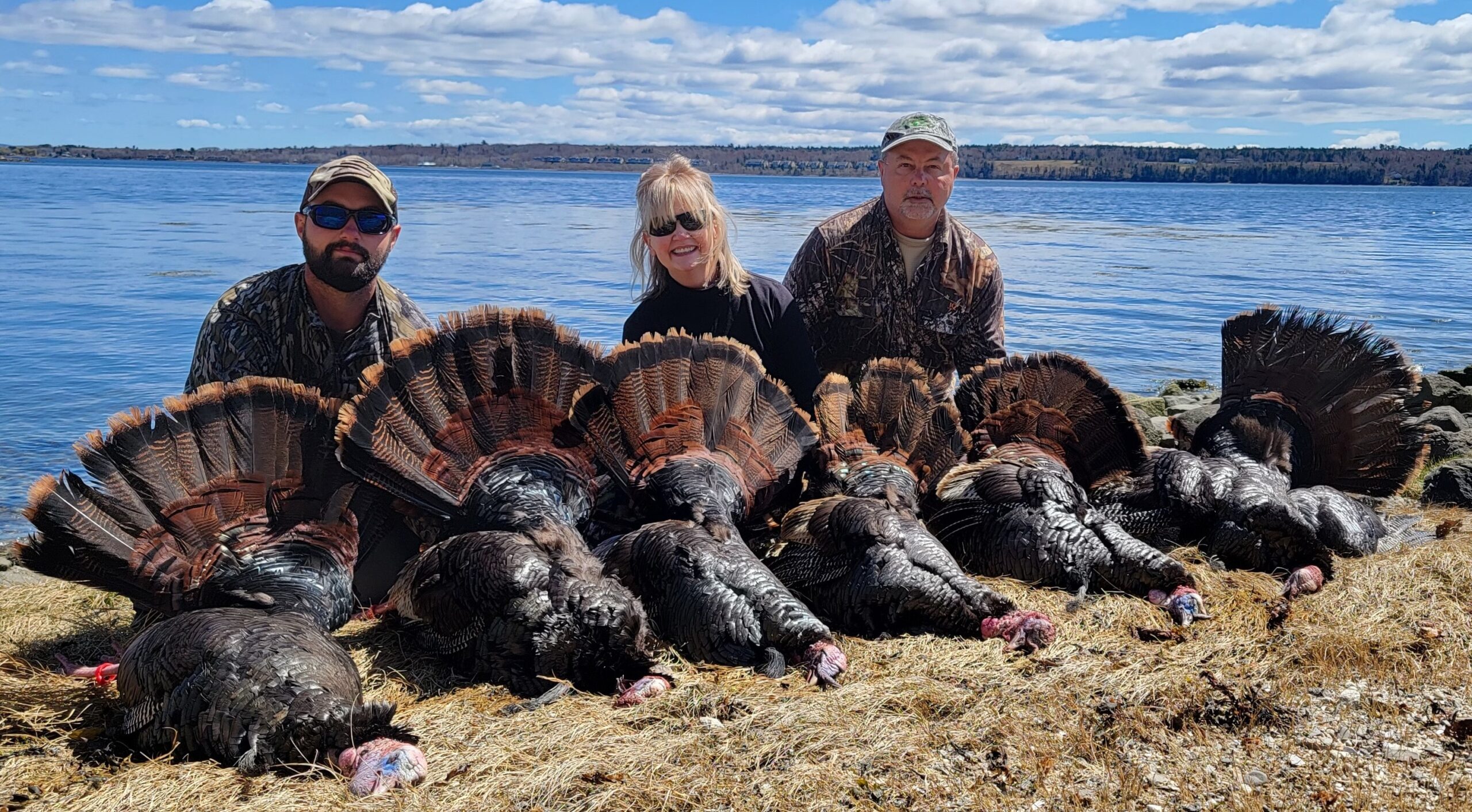
- Walking with an exposed decoy, fan, or harvested turkey
- Calling before choosing a safe setup
- Using too much calling instead of reading the bird’s response
- Sitting where the background, roads, trails, or property lines are uncertain
- Using a firearm scope to identify movement
- Shooting at sound, color, a fan, or a partially hidden bird
- Taking a rushed, obstructed, unstable, or overly distant opportunity
- Failing to plan tagging, reporting, transport, cooling, and game care
- Ignoring lightning, falling limbs, flooding, heat, cold, or navigation risks
Troubleshooting Common Problems
| Problem | Possible Cause | What to Do |
|---|---|---|
| You do not hear any gobbling | Weather, pressure, season stage, poor listening point, or silent birds | Scout fresh sign, listen from several safe legal locations, and avoid assuming silence means no birds are present. |
| A gobbler answers but will not approach | Hens, obstacle, visible movement, pressure, or expectation that the calling bird should move | Stay patient, reduce calling, and evaluate the setup after the hunt rather than forcing a risky relocation. |
| Birds see you move | Poor background, exposed hands or face, discomfort, or gear placed out of reach | Improve the setup, organize gear, use a comfortable seat, and move only after carefully checking the area. |
| Another hunter approaches | Calls, decoys, or public-land access have attracted the hunter | Use a clear human voice, keep the weapon pointed safely, and avoid sudden movement or turkey sounds. |
| The access point is crowded | Popular public area or opening-day pressure | Choose a different legal access point or property. Do not crowd an unknown setup. |
| Property boundary is unclear | Old map, weak signal, missing marker, or uncertain ownership | Stop and verify with official records or the landowner. Never cross uncertainty. |
| Wind makes calls hard to hear | Open terrain, ridge exposure, or strong gusts | Use sheltered listening points, shorten expected hearing distance, and leave if falling limbs or instability create danger. |
| A call stops working | Moisture, dirt, damage, or poor storage | Carry a simple legal backup, keep calls dry, and avoid trying to repair equipment while handling a loaded weapon. |
| You are unsure whether the bird is legal | Poor visibility, unfamiliar rule, partial view, or rushed judgment | Do not shoot. Use binoculars, wait for full identification, and review the official rule. |
| You become nervous when a bird appears | Limited realistic practice or unexpected movement | Breathe, maintain safe control, follow a fixed identification checklist, and pass when you cannot settle. |
| You are unsure about reporting or transport | Incomplete preparation or changing regulations | Keep official instructions offline and contact the wildlife agency before moving the bird when required. |
Ethical Hunting and Conservation
Ethical spring turkey hunting requires restraint. The responsible hunter treats legal requirements as the minimum standard and prepares to avoid mistaken identity, unsafe calling encounters, disturbance, waste, and conflict with other land users.
- Respect legal seasons, limits, closures, bird classifications, and property rules.
- Complete hunter education and practice before entering the field.
- Never stalk turkey sounds or use movement to pressure another hunter’s setup.
- Pass any bird that is not fully identified with a safe foreground and background.
- Transport decoys and harvested birds concealed from view.
- Complete legal reporting and use the harvest responsibly.
- Respect landowners, gates, livestock, crops, roads, hikers, and other hunters.
- Remove blinds, markers, shells, calls, packaging, and all trash.
- Support habitat conservation and science-based wildlife management through lawful participation.
When to Get More Training or Professional Guidance
Seek additional help if you have never handled a firearm or bow, have not completed hunter education, cannot confidently identify the legal bird, do not understand property boundaries, are unfamiliar with calling safety, or need help with reporting and game care.
Good learning sources include official hunter education courses, wildlife agencies, certified firearm or archery instructors, mentored-hunt programs, experienced ethical turkey hunters, conservation organizations, and reputable hunting clubs.
After the Hunt: Follow-Up, Gear Care, and Learning
- Complete legal duties: Validate or attach the tag, report the harvest, and retain confirmation records.
- Transport discreetly: Conceal the bird from other hunters and follow vehicle, evidence, and property rules.
- Care for meat: Use clean tools, prevent contamination, cool promptly, and follow local health guidance.
- Unload and store safely: Follow manufacturer instructions and local law for transport, cleaning, and secured storage.
- Dry and inspect equipment: Clean calls, blind fabric, boots, optics, and weather-exposed gear.
- Review the hunt: Record gobbling, hens, weather, pressure, calling, travel, and any safety concern.
- Restore the site: Remove decoys, stakes, blinds, trash, and temporary markers as required.
- Plan improvement: Identify skills to practice before the next hunt, such as calling restraint, mapping, or stable field positions.
Recommended Hunting Gear and Tools to Consider
You do not always need expensive gear to hunt responsibly. Choose equipment based on local laws, hunting method, terrain, weather, safety needs, skill level, and budget.
- Legal firearm, bow, crossbow, ammunition, or archery equipment for the season
- Required license, permit, tag, and visibility clothing
- Quiet weather-appropriate layers without exposed red, white, or blue
- Supportive waterproof boots
- Comfortable low seat or cushion
- Simple box call or pot call
- Legal decoys with a fully enclosed carrying bag
- Binoculars for safe observation
- Map, compass, GPS, or offline hunting app
- First aid, water, food, emergency shelter, light, and communication
- Clean gloves, cooler, and responsible game-care supplies
No call, decoy, camouflage pattern, or other product guarantees success. Legal preparation, scouting, patience, safe setup selection, and clear identification matter more than buying more equipment.
Final Thoughts
Understanding how to hunt spring turkey starts with current regulations, hunter education, legal access, careful scouting, and a safe stationary setup. Learn a few simple calls, transport decoys concealed, keep red, white, and blue out of your visible clothing, and never stalk turkey sounds.
Most importantly, identify the full legal bird and everything around it before any shot. Choose methods and gear that match your law, property, terrain, skill, and conservation responsibilities. A patient day without a shot is better than a rushed or uncertain decision.
Frequently Asked Questions
1. How long does it take to learn how to hunt spring turkey?
You can learn the legal and safety basics before your first season, but scouting, calling judgment, setup selection, and reading turkey behavior improve with field experience. A hunter education course and an experienced ethical mentor can make the learning process safer and clearer.
2. Can a complete beginner hunt spring turkey?
Yes, provided the beginner meets all legal requirements, completes required hunter education, practices with the legal hunting method, and understands target identification. Hunting with an experienced mentor is strongly recommended for the first few outings.
3. Do I need a hunting license for spring turkey?
Most regulated hunting areas require a valid hunting license, and many also require a turkey permit, tag, stamp, or authorization. Check the official wildlife agency for the exact jurisdiction and season.
4. Do I need a turkey tag or permit?
Many jurisdictions require a turkey-specific permit, tag, validation, or electronic authorization. Confirm the correct season, hunting unit, land type, legal bird category, reporting method, and deadline before hunting.
5. When does spring turkey season start?
Season dates vary by location, zone, land type, age group, and hunting method. Use the current official regulations for the exact area rather than relying on dates from a previous year or another state.
6. What are the legal hunting hours for spring turkey?
Legal hours differ by jurisdiction and may end before the rest of the day. Check the official definition of legal shooting time and carry a reliable watch. Never use low light as an excuse for uncertain identification.
7. What kind of turkey is usually legal in spring?
Many spring seasons focus on bearded birds, but legal definitions vary. Some rules distinguish by beard, sex, age, unit, or permit type. Learn the exact legal identification standard for your hunt.
8. What is the best time of day to hunt spring turkey?
Early legal hours can be productive as birds leave roost areas, while later mornings may offer opportunities after flocks separate. Local pressure, weather, season timing, and legal hours matter more than a universal schedule.
9. Where should a beginner look for spring turkeys?
Look for legal areas containing roosting cover, open feeding or strutting areas, field edges, ridges, creek bottoms, travel corridors, and fresh sign. Select locations that also provide safe visibility and a known background.
10. What turkey sign should I scout for?
Useful sign includes tracks, droppings, feathers, scratching in leaf litter, dusting areas, wing-drag marks, and repeated gobbling or sightings. Several fresh clues are more reliable than one old sign.
11. How can I identify turkey tracks?
Turkey tracks usually show three forward-pointing toes and may show a rear toe depending on the surface. Compare track size, stride, freshness, and nearby sign rather than relying on one print alone.
12. What is a turkey roost?
A roost is a tree or group of trees where turkeys spend the night. Observe roost areas from a respectful distance and avoid walking directly beneath them before or during the hunt, which can disturb birds and create unsafe encounters.
13. Should I hunt directly under a roost tree?
Usually no. Setting up too close can disturb birds, create poor visibility, and place you beneath falling debris or other hunters’ approach routes. Choose a legal setup along likely travel away from the roost.
14. How do I locate turkeys before the season?
Scout from legal roads, trails, overlooks, or listening points. Watch fields from a distance, listen around dawn or evening where lawful, use maps, and record fresh sign without repeatedly disturbing the same birds.
15. Do I need a turkey call?
A call is helpful but not mandatory. Beginners can start with a simple box or pot call and learn a few soft, controlled sounds. Calling skill matters less than setup, patience, and knowing when to stop calling.
16. Which turkey call is easiest for beginners?
Box calls and pot calls are often easier for beginners because they can produce consistent sounds with limited practice. Mouth calls keep hands free but usually require more practice and careful hygiene.
17. How much should I call to a spring gobbler?
There is no fixed amount. Start conservatively, listen to the bird’s response, and avoid constant calling. Excessive calling can reveal your position, sound unnatural, or attract another hunter.
18. What sounds should a beginner learn first?
Learn a basic yelp, soft cluck, and purr from a reputable instructor or hunter education resource. Focus on rhythm and restraint rather than volume or a large vocabulary of sounds.
19. Should I call when another hunter may be nearby?
Use extreme caution because turkey calls can attract hunters. Never stalk a turkey sound, never assume a gobble or yelp is a real bird, and make your presence known safely if another hunter approaches.
20. Is it safe to use a gobble call?
Gobble calls can be restricted and may attract hunters. Beginners should avoid them unless they fully understand the law, the property, and the safety risk. Use only where legal and never near roads, trails, or other hunters.
21. Are turkey decoys legal?
Decoy rules vary by jurisdiction, land type, date, and decoy design. Check current regulations, including restrictions on movement, electronic features, placement, and transport.
22. How should I carry a turkey decoy safely?
Keep it fully concealed in a bag while walking. Do not carry an exposed decoy or imitation fan where another hunter could mistake it for a live turkey.
23. Is fanning or reaping safe for beginners?
No. Approaching turkeys behind a fan or turkey image can make a hunter resemble the target species and is especially dangerous on public land. It may also be illegal in some places. Beginners should choose stationary setups without this added risk.
24. What colors should turkey hunters avoid wearing?
Avoid red, white, and blue because those colors can resemble parts of a gobbler’s head. Wear clothing appropriate to local visibility rules, and use required hunter orange while traveling or whenever regulations require it.
25. Do I need hunter orange for spring turkey hunting?
Requirements vary. Some jurisdictions require orange while moving, transporting a bird, or on certain lands, while others have different rules. Follow the exact law and consider visibility whenever other hunters may be present.
26. Can I hunt spring turkey on public land?
Yes where the land and season are open and your license and permit are valid. Verify boundaries, parking, special-use rules, legal access, blind restrictions, and the presence of other recreationists.
27. Is private land better for spring turkey hunting?
Private land can offer controlled access, but it still requires clear permission and compliance with every hunting rule. Public land can also provide good hunting when you scout carefully and give other users safe space.
28. Do I need written permission on private land?
Some jurisdictions require written permission, while others may allow verbal permission. Written permission is a strong practice because it can clarify dates, boundaries, parking, livestock, gates, guests, and recovery access.
29. How do I avoid trespassing while turkey hunting?
Use current maps, official boundary information, posted signs, and landowner instructions. Do not rely on a phone app alone, and never cross private property to reach public land without legal access.
30. How far should I set up from another hunter?
There is no universal distance. Choose enough separation that calling, movement, and possible lines of fire do not overlap. If a vehicle or hunter is already using an access point, consider another legal location.
31. What should I do if another hunter walks toward my calls?
Stay seated if moving would increase risk, keep your weapon pointed safely, and speak in a clear human voice. Do not wave, make turkey sounds, or confront the person aggressively.
32. Can I stalk a gobbling turkey?
Stalking turkey sounds is unsafe because the sound may come from another hunter. Many successful spring setups are stationary. Relocate only after confirming a safe route, controlling the weapon, and avoiding other hunters.
33. What is the safest way to set up against a tree?
Choose a broad tree or other solid cover that protects your back and breaks up your outline without blocking visibility. Confirm a safe foreground, background, and zone of fire before settling.
34. Should I use a ground blind?
A ground blind can hide movement and help new hunters remain still, but it is not required. Check blind placement and marking rules, set it where the background is safe, and confirm adequate firearm or bow clearance.
35. Can I leave a blind on public land?
Rules vary by agency and property. Some lands prohibit unattended blinds, set placement dates, require identification, or limit blind types. Check the property-specific rule and remove all equipment on time.
36. How important is wind for turkey hunting?
Wind usually affects sound, visibility, comfort, and calling more than human scent. Strong wind can make birds harder to hear and can create falling-limb hazards, so adjust your listening points and stop when conditions become unsafe.
37. How does rain affect spring turkey hunting?
Light rain may move birds toward open areas, but it can reduce hearing and visibility and make terrain slippery. Heavy rain, flooding, lightning, or poor visibility are reasons to postpone or end the hunt.
38. What should I do in strong wind?
Avoid dead limbs and exposed ridges, use sheltered listening locations, and shorten the distance at which you expect to hear birds. Leave when wind affects safe movement, identification, or stable shooting.
39. What equipment should a beginner carry?
Carry licenses and permits, a legal hunting method, required visibility gear, navigation tools, water, food, first aid, weather protection, a light, communication, binoculars, calls, a seat, and responsible game-care supplies.
40. Are binoculars useful for turkey hunting?
Yes. Binoculars help identify birds, hunters, and terrain without pointing a firearm at them. Never use a firearm scope as a general observation tool.
41. How much should I practice before the season?
Practice until you can handle your equipment safely, operate it without confusion, and make consistent decisions from realistic field positions within a conservative personal range. Qualified instruction is valuable.
42. What is an ethical shot opportunity on a turkey?
It is a legal, clearly identified bird with a safe foreground and background, unobstructed visibility, stable equipment control, and a distance within the hunter’s practiced ability. Pass whenever any factor is uncertain.
43. How do I know what is beyond the turkey?
Study the area before the hunt and check again before any shot. Rule out people, roads, trails, buildings, livestock, vehicles, other animals, hard surfaces, and hidden terrain.
44. Can I shoot at a turkey through brush?
No. Brush can hide another hunter or non-target animal and can deflect a projectile or arrow. Wait for a clear, legal, unobstructed opportunity with a known background.
45. Can I shoot at movement or a turkey sound?
Never. Positively identify the entire legal bird and the surrounding area before acting. A sound, color, fan, or moving shape could be another hunter.
46. What should bowhunters check before turkey season?
Confirm legal equipment and draw-weight rules, practice from the planned seated position, protect broadheads during transport, inspect arrows, and know a conservative effective range. Blind fabric and vegetation must not interfere.
47. What should firearm hunters check before turkey season?
Follow the manufacturer and hunter education guidance, confirm the legal firearm and ammunition, inspect safe function, use a proper case, and practice safe field positions at an approved range. Do not modify safety features.
48. What should I do if a turkey stops responding?
Stay patient, reduce calling, and listen. The bird may be approaching silently, moving with hens, or losing interest. Do not rush through cover or stalk the sound.
49. Why do gobblers hang up out of range?
They may expect the calling bird to approach, see an obstacle, be with hens, detect movement, or feel pressure. Improve the setup next time, use terrain carefully, and never force a risky shot.
50. Why am I hearing turkeys but not seeing them?
Terrain, vegetation, distance, hens, hunting pressure, or a poor setup angle may block the approach. Re-scout travel routes, choose a safe opening, and avoid moving while the bird may be close.
51. How long should I remain at a setup?
Remain as long as the setup is safe, legal, and supported by the behavior you observed. Turkeys may approach silently, so avoid leaving immediately after calling stops.
52. Can I hunt spring turkey alone?
Many adults hunt alone legally, but beginners benefit from a mentor. Always leave a trip plan, carry communication, understand the terrain, and know how to respond to an emergency.
53. What should be in a turkey hunting emergency plan?
Include the property, access point, vehicle, route, expected return, weather plan, emergency contacts, communication method, and what to do if service fails. Share it with a reliable person.
54. What should I do after a successful harvest?
Keep the weapon controlled, confirm the scene is safe, follow legal tagging or validation steps, complete required reporting, and begin clean, prompt game care. Transport the bird discreetly and lawfully.
55. Do I have to report a harvested turkey?
Many agencies require online, telephone, app-based, or in-person reporting within a stated period. Record any confirmation number and follow tagging, transport, check-station, and evidence requirements.
Read more: How to Hunt Wild Turkey: A Safe, Ethical Step-by-Step Guide