

Quick Answer
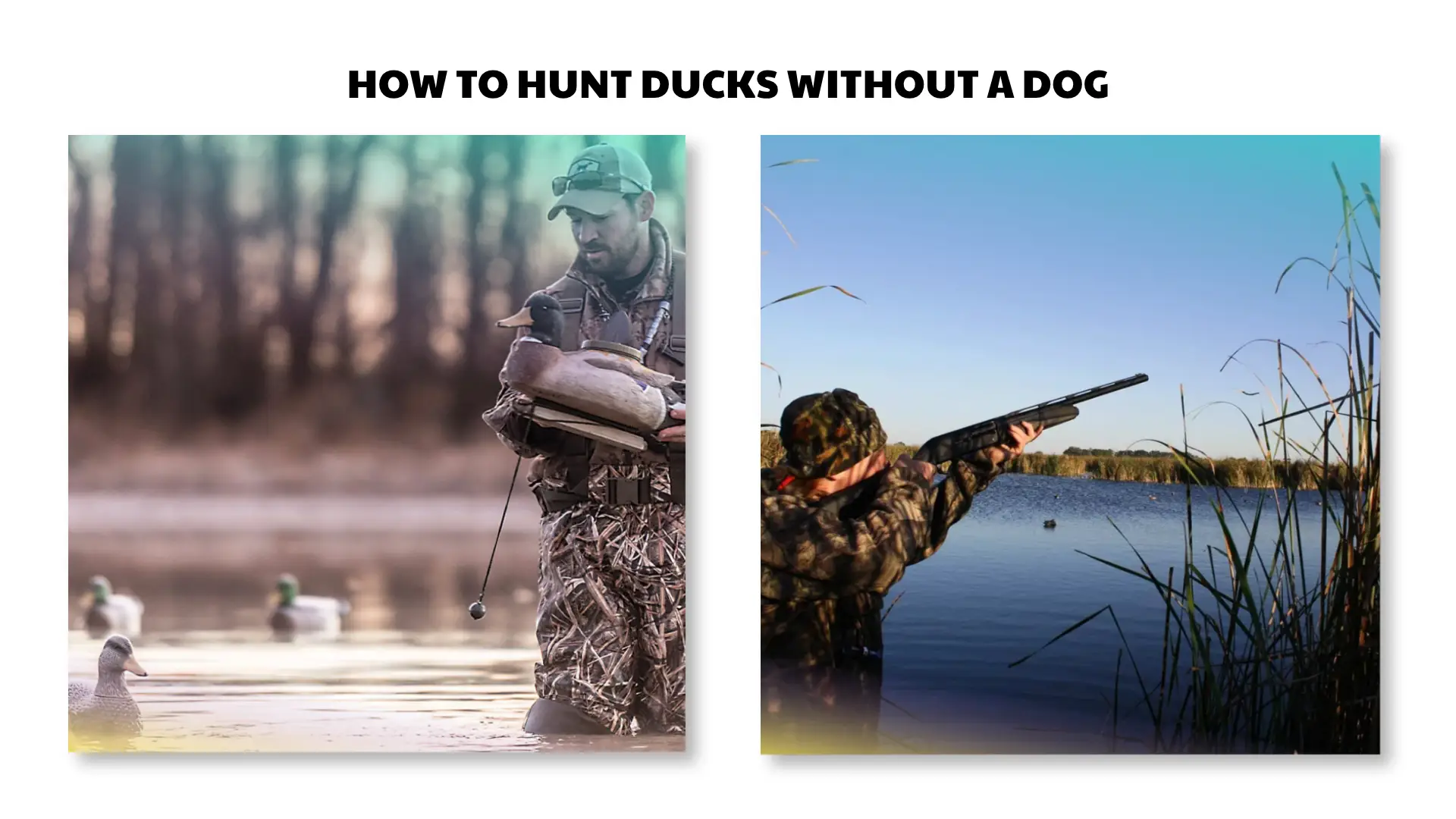
To hunt ducks without a dog, first verify all current licenses, stamps, seasons, species limits, ammunition rules, access restrictions, and recovery requirements. Choose shallow, known, legally accessible water or use a suitable boat with proper safety equipment, then place the decoys so ducks finish close to the safe retrieval route. Take only positively identified birds within your practiced range and only when prompt recovery is realistic. Pass whenever wind, current, vegetation, depth, ice, property boundaries, or weather makes recovery doubtful.
Important Legal and Safety Notice Before You Hunt
Migratory-bird laws vary by country, state, province, flyway, zone, property, species, and season. In the United States, federal frameworks are updated annually, and states select season dates within those frameworks. Always check the current official wildlife-agency publication.
- Licenses and permits: Verify the hunting license, HIP registration or equivalent, state validations, refuge permits, and check-in requirements.
- Federal Duck Stamp: Most U.S. migratory-waterfowl hunters age 16 or older need a current Federal Duck Stamp or E-Stamp.
- Season and limits: Confirm exact dates, zone, species and sex restrictions, legal shooting hours, daily limit, and possession limit.
- Ammunition: U.S. waterfowl hunting requires approved nontoxic shot.
- Firearm rules: Verify legal shotgun, capacity, transport, boat, casing, and property-specific restrictions.
- Methods: Confirm baiting, calls, electronic devices, blinds, decoys, boats, and motor restrictions.
- Access: Confirm public boundaries or obtain private permission, including water entry and retrieval rights.
- Reporting: Verify tagging, check-out, band reporting, harvest reporting, and transport documentation.
- Recovery: Learn the local reasonable-effort, wanton-waste, refuge, and trespass rules before hunting.
Never swim after a duck or intentionally enter dangerous water. Do not wade into unknown depth, current, surf, thin ice, severe mud, dense fog, lightning, or high wind. Never shoot toward people, roads, homes, livestock, vehicles, trails, boats, other blinds, dogs, or unclear movement.
Understanding Ducks and Recoverable Habitat
Dabbling Ducks
Mallards, teal, gadwalls, pintails, shovelers, wood ducks, and other dabbling ducks often use shallow wetlands, marsh edges, flooded vegetation, creeks, and ponds. These habitats can be suitable without a dog when the bottom, depth, boundaries, and recovery route are known.
Diving Ducks
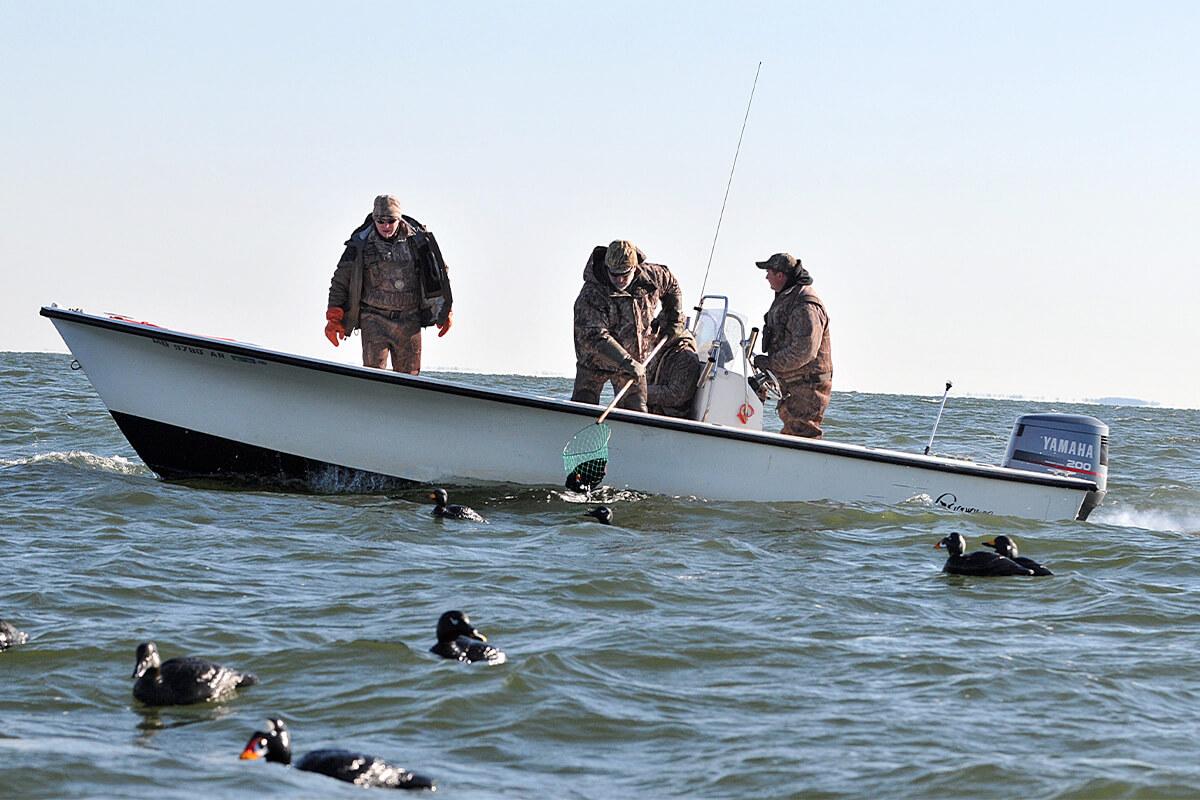
Canvasbacks, scaup, ring-necked ducks, redheads, buffleheads, goldeneyes, and other divers often use deeper open water. Hunting them without a dog commonly requires a suitable legal boat, greater cold-water preparation, and stricter shot restraint.
Wind and Current
A downed bird can move rapidly with wind, waves, tide, or river flow. Set the landing pocket so natural movement carries it toward accessible water rather than open water, private property, a channel, or dangerous cover.
Vegetation
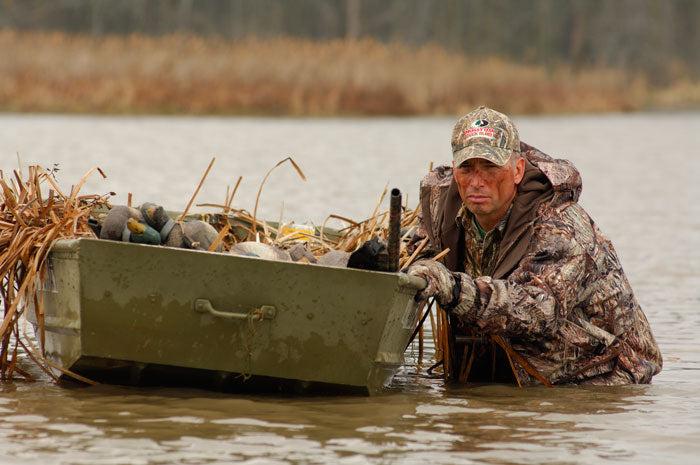
Dense reeds, flooded brush, cattails, and floating vegetation can hide a bird immediately. Without a dog, use open pockets and pass on shots over cover that cannot be searched safely and legally.
Water Depth and Bottom
“Shallow” is not enough. A wetland can contain sudden channels, holes, submerged logs, soft mud, and steep drop-offs. Scout the route in daylight and treat every unfamiliar step as a potential hazard.
What You Need Before You Start
- Current license, permits, stamps, and regulations
- Legal shotgun and approved nontoxic ammunition
- Eye and hearing protection
- Weather-appropriate layers and dry backup clothing
- Suitable boots or waders for known shallow water
- Properly fitted PFD for boats and hazardous water
- Stable legal boat or paddle craft when required
- Small manageable decoy spread
- Legal calls if desired
- Low-profile blind or legal natural cover
- Offline map, compass, GPS, or hunting app
- First aid kit and emergency signaling
- Reliable communication device
- Whistle and waterproof light
- Water and high-energy food
- Clean gloves and game-care supplies
- Cooler or approved cooling plan
- Property permission and recovery contacts
- Trip plan shared with a responsible person
- Conservative weather and exit plan
Core rule: Decide exactly how a bird will be recovered before deciding where to place the blind or take a shot. When the recovery answer is uncertain, the ethical answer is to pass.
How to Hunt Ducks Without a Dog: Step-by-Step Guide
Step 1: Check Current Laws and Property Rules
Use the official wildlife agency for the exact country, state or province, flyway, zone, property, species, and date. Verify the hunting license, HIP or equivalent registration, stamps, permits, season dates, legal hours, daily and possession limits, approved nontoxic ammunition, shotgun capacity, baiting rules, boat rules, land access, retrieval rights, reporting, tagging, and transport. A general guide cannot replace the current official regulation booklet.
Step 2: Complete Hunter Education and Practice
Complete required hunter education and seek an experienced ethical mentor. Practice safe loading and unloading, muzzle control, positive duck identification, shotgun patterning, and shooting only within your demonstrated ability. Hunting without a dog requires even more restraint because every safe shot must also have a realistic recovery plan.
Step 3: Choose Water You Can Retrieve From Safely
Select a shoreline, shallow marsh, flooded edge, narrow creek, managed impoundment, small pond, or boat-accessible area where the water depth, bottom, current, vegetation, and boundaries are known. Avoid setups where a bird can easily fall into deep open water, fast current, thick inaccessible cover, thin ice, hazardous mud, private property, or a navigation channel.
Step 4: Confirm Legal Access and Retrieval Permission
Use official public-land maps or obtain written or clearly documented private-land permission. Confirm whether you may enter the water, use a boat, cross a levee, retrieve from an adjacent parcel, or leave the designated hunting unit. Do not assume a recovery attempt allows trespass or entry into a refuge closure.
Step 5: Scout the Birds and the Recovery Area
Observe where ducks feed, rest, enter, and leave, but also study where a safely taken bird is likely to land. Check water depth in daylight where lawful, identify channels and drop-offs, note submerged timber, vegetation, current, waves, mud, ice, boat traffic, and safe shoreline access. Mark a conservative retrieval boundary before hunting.
Step 6: Select the Safest Retrieval Method
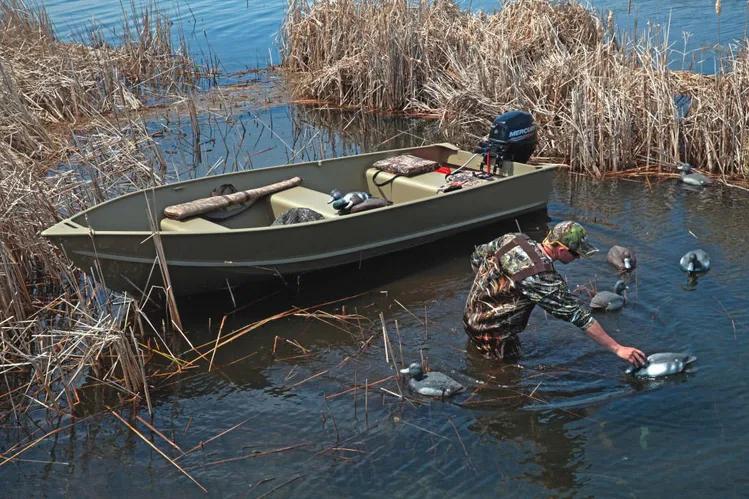
Use shore pickup when possible. On shallow known water, properly fitted waders may be appropriate if conditions are stable and the hunter understands wader safety. A stable legal boat or paddle craft can expand access only when the operator is trained, the craft is not overloaded, everyone wears an appropriate PFD, and wind, waves, temperature, and visibility are suitable. Never improvise a dangerous swim.
Step 7: Prepare Gear and an Emergency Plan
Carry licenses, legal nontoxic ammunition, a fitted shotgun, eye and hearing protection, weather layers, suitable boots or waders, a PFD for boating and hazardous water, a small decoy spread, legal calls, navigation, first aid, communication, dry clothing, a whistle, lighting for access, and clean game-care supplies. Tell someone the location and return time and carry a way to call for help.
Step 8: Build the Setup Around Recovery
Place the blind and decoys so approaching ducks finish over a safe, visible landing pocket near the accessible shoreline or retrieval route. Consider wind and current because they can move a downed bird away from the blind. Keep the intended shooting direction away from people, roads, buildings, livestock, boats, trails, dogs, and other blinds.
Step 9: Identify the Duck and Background
Study local ducks in multiple plumages and identify the individual bird before acting. Confirm that the species and sex are legal, the background is safe, the bird is inside your practiced range, and the likely landing area remains recoverable. Do not shoot at sound, silhouettes, uncertain mixed flocks, or birds hidden by fog, glare, darkness, or vegetation.
Step 10: Take Only a Recoverable Ethical Opportunity
Pass on high, distant, crossing, rapidly departing, heavily obscured, or open-water opportunities that make recovery doubtful. A legal bird is not automatically an ethical opportunity. Without a dog, the hunter should be more selective about distance, angle, wind, current, vegetation, ice, and the location of neighboring property.
Step 11: Mark and Begin Recovery Promptly
Watch the bird continuously, choose a fixed landmark, and note the exact direction and distance. Keep the firearm controlled and follow property rules while beginning a prompt safe recovery. If using a boat, unload or secure the firearm as required by law and safe-boating practice before moving. Do not rush into unknown water.
Step 12: Stop When Recovery Becomes Unsafe
Do not enter deep water, fast current, surf, thin ice, severe mud, lightning, high wind, dense fog, or unauthorized property. Mark the location, seek a lawful safer method, contact the land manager or wildlife agency when appropriate, and follow all local recovery and wanton-waste rules. Human life takes priority over equipment or game.
Step 13: Report and Care for the Harvest
Complete any required tagging, refuge check-out, harvest reporting, or band reporting. Keep species and possession information as required, cool the harvest promptly, use clean gloves and tools, prevent cross-contamination, and transport the bird legally. Record what made recovery easy or difficult so the next setup can be improved.
Best Time, Place, and Conditions for This Hunt
Best Locations
Good no-dog locations include accessible pond edges, narrow creeks, shallow managed wetlands, marsh openings near firm shoreline, and small protected water with a known bottom. Deeper water is appropriate only with a capable legal boat and conservative boating plan.
Time of Day
Morning and evening movements are common, but legal shooting hours control the hunt. Recovery becomes harder as darkness approaches, so beginners should stop early enough to retrieve decoys and leave safely.
Wind
Use a manageable wind to guide ducks into an accessible landing pocket. Avoid strong wind that pushes birds, decoys, or the boat into unsafe water.
Weather
Stable visibility and manageable water conditions are more important than predicted bird movement. Fog, lightning, waves, floodwater, freezing spray, extreme heat, and high wind can make a familiar area unsafe.
Public Land
Public wetlands may require drawings, check stations, assigned units, access times, boat restrictions, or marked retrieval boundaries. Read the property rules, not only the statewide regulations.
Private Land
Confirm permission for hunting, water access, boat use, parking, gates, and retrieval from every adjoining parcel. Do not assume permission to hunt includes permission to cross the entire property.
Helpful Tips for Better Results
- Choose hunting locations by retrieval safety first and bird numbers second.
- Scout the water depth, bottom, current, vegetation, and legal boundary in daylight.
- Keep the landing pocket close to an accessible shoreline or safe boat route.
- Use fewer decoys when a smaller spread makes setup and retrieval safer.
- Account for wind and current before placing the blind.
- Pattern the legal shotgun and approved nontoxic load before hunting.
- Reduce your personal shooting distance when recovery conditions are difficult.
- Mark the bird with a fixed shoreline landmark instead of watching only the water.
- Carry dry clothing, communication, first aid, and an appropriate PFD.
- Never use waders as flotation and never intentionally swim in them.
- Stop before fog, lightning, waves, current, ice, or darkness blocks a safe exit.
- Ask a mentor to review the setup and recovery plan before the first solo hunt.
Common Mistakes to Avoid
- Choosing a location based only on bird numbers.
- Assuming a shallow marsh has a safe firm bottom.
- Taking a shot before planning recovery.
- Shooting over deep water without a suitable boat.
- Shooting over dense reeds or flooded brush.
- Ignoring wind, current, tide, or changing water levels.
- Using waders as if they were flotation equipment.
- Entering water alone without communication or a trip plan.
- Continuing as fog, lightning, waves, ice, or darkness increases.
- Crossing private property or refuge boundaries during recovery.
- Leaving a loaded firearm unsecured while moving a boat.
- Taking distant or uncertain shots because no dog is present.
- Failing to mark the exact landing location.
- Waiting until after the hunt to read reporting and waste rules.
Troubleshooting Common Problems
| Problem | Possible Cause | What to Do |
|---|---|---|
| Ducks land beyond the safe retrieval zone | The landing pocket is too far out, wind changed, or the decoy spread pulls birds away | Move the decoys closer to accessible water and stop shooting until the recovery zone is safe. |
| A bird is difficult to relocate | The hunter did not maintain visual contact or choose a fixed landmark | Mark the last location with two shoreline references and approach slowly from a safe direction. |
| Current moves the bird away | Wind, tide, river flow, or a poor setup angle | Do not take further shots until the blind and landing pocket are repositioned for safe legal recovery. |
| Wading depth changes suddenly | An unseen channel, soft bottom, drop-off, or changing water level | Back out carefully, stop wading, and use another legal retrieval method. |
| Mud traps the hunter’s feet | Soft sediment, submerged vegetation, or unsafe wader route | Avoid forceful struggling, retreat carefully when possible, call for help, and do not reuse the route. |
| The boat drifts while retrieving | Poor anchoring, wind, current, or overloaded craft | Wear PFDs, control the craft before recovery, reduce the load, and leave when conditions exceed capability. |
| Fog or darkness hides the landmark | Weather changed or recovery started too late | Stop unsafe movement, use legal navigation and communication, and follow the emergency plan. |
| The bird crosses onto private property | The setup was too close to a boundary or wind carried it | Do not trespass. Contact the landowner or managing agency and follow local recovery rules. |
| Vegetation hides the bird | Dense reeds, flooded brush, or poor angle | Search methodically only inside the safe legal area and reconsider hunting that pocket without a dog. |
| A bird appears mobile after landing | The initial opportunity did not result in immediate recovery | Maintain visual contact, follow legal ethical follow-up guidance, and do not take unsafe rushed actions. |
| Weather worsens during recovery | Front, lightning, waves, high wind, cold, or heat | Stop, return to safety, and contact assistance when necessary. |
| You are unsure about wanton-waste rules | Local regulations are unclear or vary by property | Contact the official wildlife agency or property staff before hunting; do not guess. |
Ethical Hunting and Conservation
Hunting without a dog is ethical only when the hunter designs the setup to support prompt legal recovery and passes on doubtful opportunities. The absence of a retriever is never an excuse for waste, trespass, unsafe water entry, or a rushed second shot.
- Obey seasons, species limits, property rules, and refuge closures.
- Identify the individual duck and background before acting.
- Practice enough to know a conservative personal effective range.
- Choose accessible landing zones rather than maximizing shot volume.
- Begin recovery promptly and maintain visual contact.
- Pass when depth, current, vegetation, ice, weather, or boundaries create doubt.
- Respect landowners, other hunters, boaters, anglers, and wildlife watchers.
- Avoid waste and use the harvest responsibly.
- Pack out shells, line, food packaging, and blind material.
- Support wetland conservation through licenses, stamps, and habitat programs.
Review the U.S. Fish and Wildlife Service hunter responsibilities and the recovery guidance issued by the agency where you hunt.
When to Get More Training or Professional Guidance
Seek help before hunting independently when you have not completed hunter education, have limited firearm experience, cannot identify local ducks, are new to waders or boats, do not understand cold-water risks, or are unsure about boundaries and waste laws.
- Official hunter education courses
- State or provincial wildlife agencies
- Certified firearm and shotgun instructors
- Experienced ethical waterfowl mentors
- Boating, paddling, and cold-water safety courses
- Refuge or wildlife-area staff
- Licensed guides familiar with local recovery conditions
After the Hunt: Follow-Up, Gear Care, and Learning
- Unload and transport the firearm according to law and manufacturer guidance.
- Clean and dry the shotgun after exposure to rain, marsh water, mud, or salt.
- Dry waders, PFDs, boots, decoys, lines, calls, and blind material.
- Inspect the boat, drain plug, paddle, motor, battery, lights, anchor, and emergency gear.
- Complete all property check-out, tagging, reporting, and band reporting.
- Keep the harvest clean and cool and follow food-safety guidance.
- Record wind, current, depth, bottom, vegetation, landing locations, and recovery time.
- Move the next setup if any bird landed near an unsafe or inaccessible area.
- Replace damaged PFDs, waders, lights, and communication gear.
- Leave the shoreline, launch, blind, and parking area cleaner than you found them.
Recommended Hunting Gear and Tools to Consider
You do not need expensive equipment, but hunting without a dog requires dependable safety and recovery gear selected for the actual water, weather, access, and skill level.
- A legal shotgun that fits and can be controlled safely
- Approved nontoxic ammunition patterned with that shotgun
- Eye and hearing protection
- A properly fitted PFD
- Waders or boots appropriate to known shallow conditions
- A stable legal boat or paddle craft when necessary
- Required paddle, lights, signaling, and boating safety equipment
- A small manageable decoy spread and safe anchor system
- Offline maps and property-boundary information
- Waterproof communication and emergency light
- First aid, dry clothing, water, and food
- Clean game-care gloves, bags, and cooler
Final Thoughts
Learning how to hunt ducks without a dog is mainly the skill of planning recoverable opportunities. Choose accessible water, scout the bottom and boundaries, position the spread for a safe landing pocket, account for wind and current, shoot conservatively, mark every bird, and begin legal recovery promptly.
A safe day with no harvest is better than a bird lost in inaccessible cover or a dangerous attempt in deep water, current, ice, fog, or bad weather. Preparation, restraint, and respect for wildlife are the measures of a responsible hunt.
Frequently Asked Questions
1. How long does it take to learn how to hunt ducks without a dog?
A beginner can learn the legal and safety basics through hunter education and mentored trips. Safe water assessment, species identification, shot restraint, and recovery planning improve with experience.
2. Is it legal to hunt ducks without a dog?
Generally, a dog is not universally required, but local properties or methods can have specific rules. The hunter still has a legal and ethical responsibility to make reasonable recovery efforts.
3. Do I need a duck hunting license?
Most jurisdictions require a hunting license plus migratory-bird validations, permits, stamps, or registrations. Verify the current official requirements.
4. Do I need a Federal Duck Stamp in the United States?
Most U.S. migratory-waterfowl hunters age 16 or older must carry a current Federal Duck Stamp or valid electronic equivalent.
5. What is HIP registration?
The Harvest Information Program identifies U.S. migratory-bird hunters for harvest surveys. Complete the current state procedure before hunting.
6. What ammunition is legal for duck hunting?
In the United States, approved nontoxic shot is required for waterfowl hunting. Other countries and regions use their own approved-ammunition rules.
7. Can I use lead shot for ducks?
Do not assume lead is legal. Lead shot is prohibited for U.S. waterfowl hunting and restricted in many other jurisdictions.
8. How many shells can a waterfowl shotgun hold?
U.S. federal migratory-bird rules generally limit a shotgun to three shells total unless an official exception applies. Check all current rules.
9. When is duck hunting season?
Dates vary by species, flyway, zone, state or province, property, and year. Use the current official regulation booklet.
10. What are legal shooting hours?
Legal hours are set by regulation and often relate to sunrise or sunset. Confirm the exact daily rule and property restriction.
11. What is the best place to hunt ducks without a dog?
Choose shallow, known, accessible water with a firm bottom, limited current, clear boundaries, and a safe shoreline or boat route.
12. What water should I avoid without a dog?
Avoid deep open water, fast current, surf, dense inaccessible vegetation, severe mud, thin ice, hazardous boat traffic, and water next to inaccessible property.
13. Can I hunt from the bank without a dog?
Yes where legal. Bank hunting can make recovery easier when birds finish close to an accessible shoreline and the background is safe.
14. Can I hunt shallow marshes without a dog?
Yes when access is legal, water depth and bottom are known, and the hunter can retrieve without taking unreasonable risks.
15. Can I use a boat for retrieval?
Yes where legal and appropriate. Use a stable suitable craft, wear a PFD, avoid overloading, understand the water, and follow firearm and boating rules.
16. Can I use a kayak to retrieve ducks?
Only when lawful, the craft and operator are suited to the conditions, a PFD is worn, and wind, current, cold, waves, and firearm transport are managed safely.
17. Can I swim to retrieve a duck?
No. Intentionally swimming in hunting clothing or waders can be fatal, especially in cold water, current, waves, or poor visibility.
18. Are waders safe for duck retrieval?
They can be appropriate in shallow known water, but they are not flotation. Avoid unknown depth, current, drop-offs, thin ice, and soft mud.
19. Should I wear a PFD while wading?
A PFD may add protection in hazardous conditions, but it does not make unsafe water safe. Follow local rules and conservative judgment.
20. How do I avoid getting stuck in mud?
Scout the bottom, use a stable route, avoid deep soft sediment, move slowly, and turn back immediately when footing becomes uncertain.
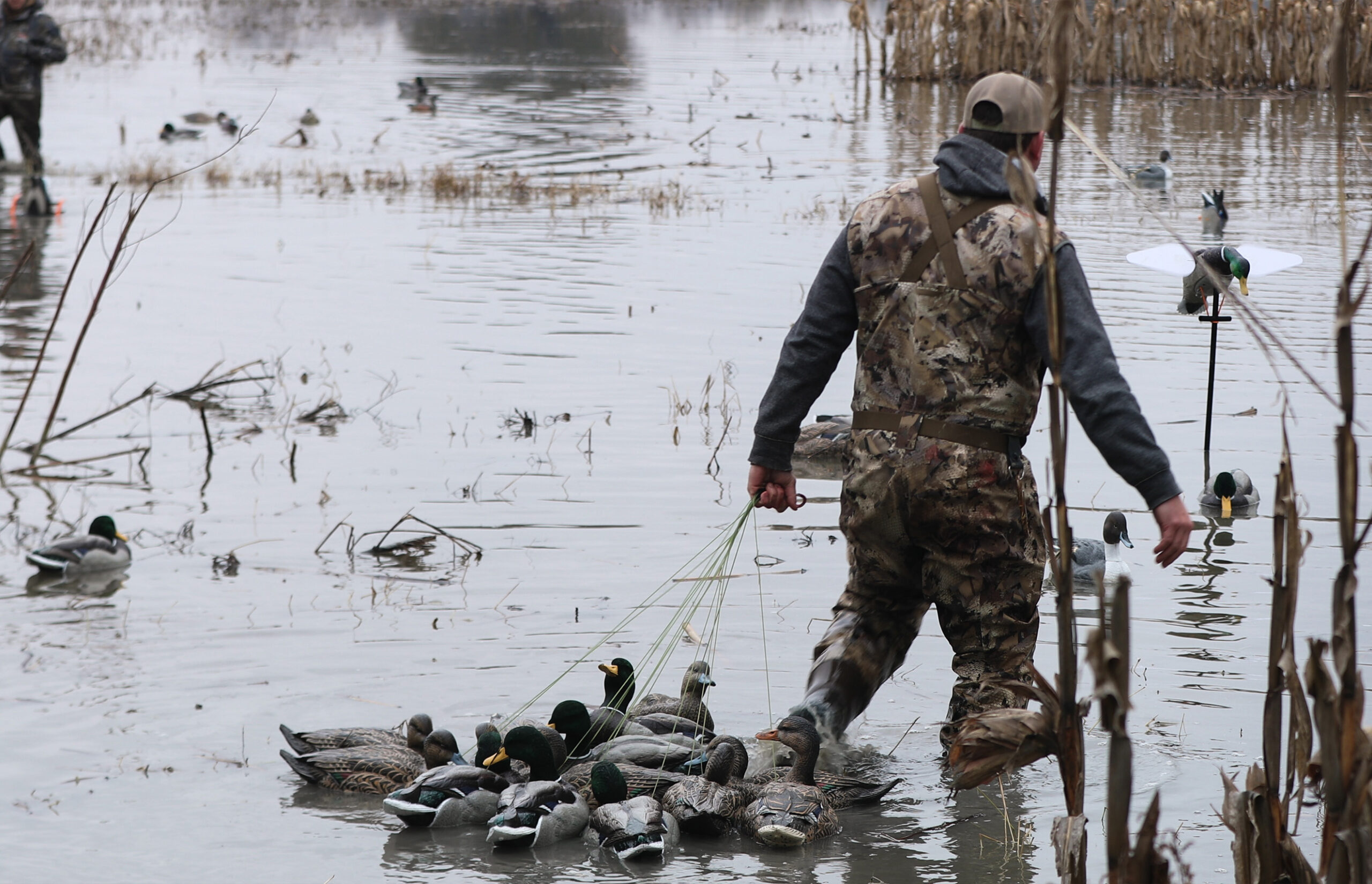
21. How do I place decoys for easier recovery?
Create an open pocket close to a safe shoreline or boat route, accounting for wind and current.
22. How many decoys do I need?
A small realistic spread can work. Use only the number you can deploy and retrieve safely before weather or darkness changes.
23. Does wind affect recovery?
Yes. Wind can move a bird, decoys, and the boat away from the blind. Plan the landing zone and retrieval route downwind or crosswind as conditions require.
24. Does current affect recovery?
Yes. Even mild current can quickly move a bird into deep water, vegetation, private property, or a hazardous channel.
25. How do I mark where a duck landed?
Maintain visual contact and align the location with two fixed shoreline objects or a mapped waypoint when lawful and practical.
26. Should I shoot over thick reeds without a dog?
Usually not when the vegetation prevents observation and recovery. Choose an open pocket or pass.
27. Should I shoot ducks over deep water without a dog?
Only when a legal, safe, immediate boat-retrieval plan exists. Otherwise, choose another setup or pass.
28. How close should ducks be before I shoot?
Use only the distance where you can identify the bird, confirm the background, perform consistently, and recover it safely.
29. What is a recoverable shot opportunity?
It is a legal, safe opportunity where the bird is within practiced range and the expected landing area can be accessed promptly without unreasonable risk.
30. Can I hunt diving ducks without a dog?
It is possible, but diving-duck habitats often involve deeper or rougher water. A suitable legal boat and strong safety plan may be necessary.
31. Can I hunt puddle ducks without a dog?
Yes. Shallow marsh edges, ponds, creeks, and managed impoundments can be suitable when the bottom and boundaries are known.
32. How do I identify ducks before shooting?
Study size, bill shape, plumage, wing pattern, voice, flock behavior, and local species. Pass whenever poor light or mixed flocks create uncertainty.
33. What if a duck lands in private property?
Do not trespass. Mark the location, contact the landowner or managing agency, and follow local recovery and waste rules.
34. What if a duck lands in a refuge closure?
Do not enter a closed area. Contact refuge staff or the managing agency for instructions.
35. What if the bird drifts into deep water?
Do not enter unsafe water. Use a lawful suitable boat or seek help if conditions allow; otherwise follow agency guidance.
36. What if I lose sight of the bird?
Stop, choose the last known landmark, search the safe legal area methodically, and do not create a second unsafe situation.
37. Can binoculars help during recovery?
They can help inspect open water from shore, but never use them while handling a loaded firearm or as a substitute for safe movement.
38. Can I use a long-handled net?
A suitable net may help from a boat or accessible shoreline when lawful and safe, but it does not justify entering hazardous water.
39. Do I need a duck call?
No. Scouting, concealment, decoy placement, and recovery planning are more important. Use only legal calls.
40. Do I need camouflage?
Camouflage can help, but remaining still, hiding faces and hands, and matching local cover matter more than a specific pattern.
41. How early should I arrive?
Arrive early enough to navigate, verify boundaries, set the spread, and settle before legal time without rushing through darkness.
42. How do I scout for a no-dog hunt?
Scout both bird activity and retrieval conditions: depth, bottom, current, vegetation, wind, boundaries, boat access, and safe exits.
43. How does hunting pressure affect ducks?
Pressure can shift birds to deeper water, refuges, private property, or later movement, making recovery more difficult.
44. What weather is unsafe?
Lightning, dense fog, high wind, dangerous waves, flooding, extreme cold, thin ice, and severe heat are reasons to stop.
45. How dangerous is cold water?
Cold-water immersion can quickly impair breathing, movement, and judgment. Wear a PFD in boats and avoid unnecessary exposure.
46. Can I hunt alone without a dog?
It may be legal, but beginners are safer with an experienced partner. Always leave a trip plan and carry reliable communication.
47. How should partners divide recovery duties?
Agree before hunting who controls firearms, who watches the location, who operates the boat, and who communicates during recovery.
48. How should the firearm be handled during boat retrieval?
Follow local law and manufacturer guidance. Keep the muzzle controlled and unload or secure the firearm before moving when required or safer.
49. What should I do after recovering a duck?
Confirm the species and legal limit, complete required tags or reports, keep it clean and cool, and record it as required.
50. Do I need to report my harvest?
Some states, provinces, refuges, or species require immediate reporting or check-out, while others use surveys. Verify before hunting.
51. How do I care for duck meat?
Keep the harvest clean and cool promptly, use clean gloves and tools, prevent cross-contamination, and follow official food-safety guidance.
52. What is wanton waste?
The exact legal definition varies, but it generally concerns failing to make required recovery efforts or wasting usable game. Check local law.
53. What is the biggest mistake when hunting without a dog?
The biggest mistake is taking an opportunity before planning a safe, legal, realistic recovery.
54. Is hiring a guide useful for beginners?
A reputable licensed guide or mentor can teach legal access, species identification, boating, setup, and recovery planning.
55. When should I stop hunting?
Stop when identification, recovery, weather, water, boundaries, equipment, or judgment is no longer reliable.
Read more: How to Hunt Geese: A Beginner-Friendly Guide