
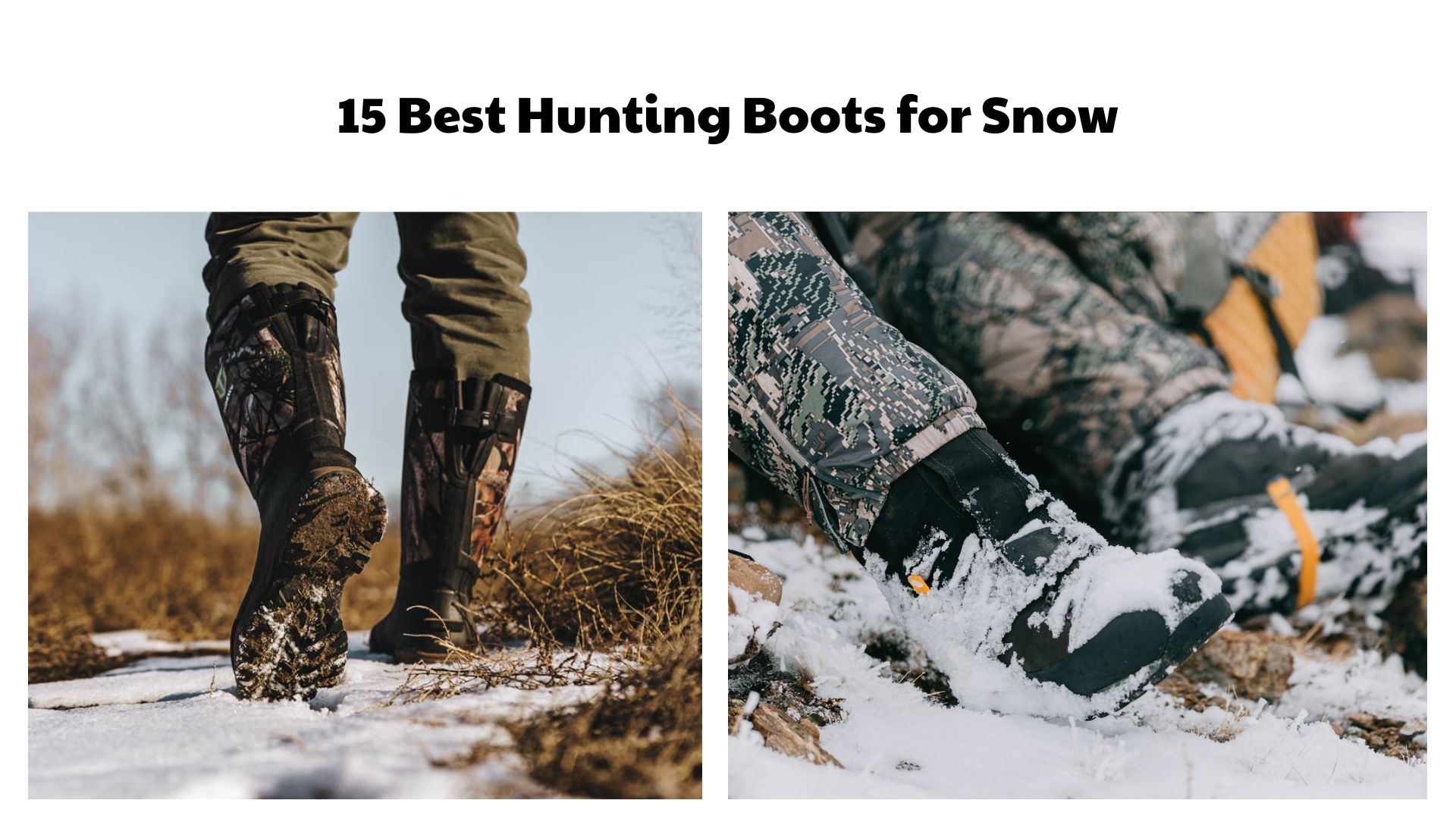

The best hunting boots for snow should keep your feet warm, dry, stable, and protected when winter hunting conditions turn rough. Snow creates several problems at once. It can soak ordinary footwear, chill your feet while you sit still, hide slick ice underneath, pack around your ankles, and make every step harder when you are carrying gear.
Snow hunting also changes depending on how you hunt. A whitetail hunter walking a short route to a treestand may prefer a tall insulated rubber boot. An elk hunter hiking snowy ridges may need a supportive lace-up mountain boot. A predator hunter calling in frozen fields may want maximum warmth. A late-season upland hunter may need a boot that stays warm but still allows long walking.
This guide compares 15 snow-capable hunting boots for deer hunters, elk hunters, campers, landowners, scouts, and winter outdoor users. The products include tall rubber hunting boots, insulated lace-up boots, rugged mountain boots, budget-friendly options, and active boots for hunters who walk more than they sit.
The products were compared by waterproofing, insulation, snow coverage, outsole traction, ankle support, material quality, durability, ease of use, comfort with thick socks, field application, brand reputation, customer feedback, and overall value. Because Amazon prices and availability change often, this article uses “Check Price on Amazon” instead of listing exact prices.
For hunting use, always follow federal, state, and local laws. Carry the correct license and tags, follow legal seasons and bag limits, respect land access rules, and practice ethical hunting. Snow, ice, and cold weather increase risk, so carry proper winter clothing, navigation, water, food, and emergency gear when appropriate.
Quick Picks:
- Best Overall: Muck Boot Arctic Pro on Amazon
- Best Budget Option: HUNTRITE Men’s Insulated Waterproof Hunting Boots on Amazon
- Best Premium Pick: Kenetrek Mountain Extreme Insulated Hunting Boot on Amazon
- Best for Deer Hunting: LaCrosse Alphaburly Pro Hunting Boot on Amazon
- Best Rugged Lace-Up Pick: Rocky BearClaw 3D Gore-Tex Hunting Boot on Amazon
Comparison Table: 15 Best Hunting Boots for Snow
| Product | Best For | Material | Support / Height | Key Features | Weather Resistance | Check Price |
|---|---|---|---|---|---|---|
| Muck Boot Arctic Pro | Best Overall | Rubber and neoprene | Tall pull-on boot | Winter build, waterproof exterior, easy cleanup | Snow, slush, mud, wet ground | Check Price on Amazon |
| Muck Boot Woody Max | Best Wet Snow Utility | Rubber and neoprene | Tall pull-on boot | Hunting camo style, waterproof build, easy on/off use | Wet snow, mud, frozen fields | Check Price on Amazon |
| LaCrosse Alphaburly Pro | Best for Deer Hunting | Rubber and neoprene | Tall pull-on boot | Easy-clean rubber, scent-conscious style, wet-route coverage | Snow, mud, wet grass, treestand access | Check Price on Amazon |
| Bogs Blaze II | Best Pull-On Snow Boot | Rubber/neoprene style | Tall boot | Simple pull-on use, waterproof coverage, winter utility | Wet snow, slush, cold mud | Check Price on Amazon |
| TIDEWE Rubber Hunting Boots | Best Affordable Rubber Boot | Rubber and neoprene | Tall pull-on boot | Camo style, waterproof rubber build, outdoor traction | Snow, slush, wet fields, muddy access | Check Price on Amazon |
| Kenetrek Mountain Extreme Insulated | Best Premium Pick | Leather mountain hunting boot | Tall supportive profile | Mountain support, insulated construction, rugged outsole | Snowy mountain and cold-weather hunting | Check Price on Amazon |
| Rocky BearClaw 3D Gore-Tex | Best Rugged Lace-Up Pick | Leather and nylon | Supportive hunting boot | Gore-Tex model, rugged outsole, insulated options | Snow, wet brush, cold rough terrain | Check Price on Amazon |
| Danner Pronghorn | Best Classic Hunting Boot | Leather and textile | Mid/tall support | Classic hunting profile, lace-up fit, multiple versions | Waterproof and insulated versions available | Check Price on Amazon |
| Danner Recurve | Best Value Lace-Up Boot | Leather-style hunting boot | Mid-height boot | Comfort-focused, versatile, active-hunt design | Waterproof versions available | Check Price on Amazon |
| Meindl EuroLight Hunter | Best Active Snow Pick | Leather hunting boot | Supportive field boot | Premium build, long-walk comfort, winter versatility | Weather-ready hunting design | Check Price on Amazon |
| Irish Setter Wingshooter | Best Leather Field Boot | Leather field boot | 9-inch coverage | Classic leather support, durable upper, field comfort | Waterproof models available | Check Price on Amazon |
| Irish Setter VaprTrek | Best Lightweight Snow-Morning Pick | Synthetic/leather-style hunting boot | 8-inch style | Lightweight profile, camo design, active field use | Waterproof versions available | Check Price on Amazon |
| HUNTRITE Insulated Waterproof Hunting Boots | Best Budget Option | Synthetic insulated hunting boot | Mid/tall boot style | Affordable, insulated, rugged outsole | Waterproof listing | Check Price on Amazon |
| RUNFUN Waterproof Lightweight Insulated Hunting Boots | Best Beginner Option | Synthetic hunting boot | 8-inch style | Lightweight design, insulated comfort, accessible price point | Waterproof listing | Check Price on Amazon |
| Kenetrek Corrie 3.2 Hiker | Best Snow Scouting Boot | Leather hunting hiker | Mid-height support | Supportive build, rugged outsole, active walking comfort | Waterproof hunting design | Check Price on Amazon |
For snowy hunting, tall rubber boots are usually the easiest choice for whitetail stands, blinds, food plots, wet snow, slush, and muddy access routes. Insulated lace-up boots are usually better for elk, mule deer, upland walking, mountain hunting, and long snowy hikes. Budget insulated boots can work for beginners and moderate terrain, while premium boots make more sense for serious hunters who spend many days in snow, cold, and rough ground.
1. Muck Boot Arctic Pro on Amazon
Short Overview
The Muck Boot Arctic Pro is one of the best hunting boots for snow when you need serious waterproof coverage, cold-weather utility, and easy pull-on use. It is best for late-season deer hunting, snowy treestand access, frozen fields, muddy trails, winter camp chores, and wet property work. The rubber and neoprene construction helps keep moisture away from your feet in snow, slush, and mud. The tall profile helps keep snow out better than mid-height boots when you are walking through deeper ground cover. It is not a stiff mountain boot, so it is better for moderate walking and stationary hunting than steep rocky terrain. Hunters who sit for long periods in cold weather may appreciate the warmth and coverage. It is also practical for farmers, landowners, and campers who need a winter utility boot. For cold, snowy, and wet hunting conditions, this is the best overall pick.
Key Features
- Cold-weather rubber and neoprene boot design
- Tall pull-on profile for snow and slush coverage
- Waterproof exterior for wet ground
- Easy-clean design for mud and snow
- Useful for treestand hunting, camp chores, and winter outdoor work
Pros
- Excellent for snow, slush, mud, and wet winter ground
- Easy to pull on before early-morning hunts
- Simple to rinse clean after field use
- Strong choice for deer hunters and landowners
Cons
- Bulkier than lightweight lace-up boots
- Less precise ankle support than mountain boots
- Can feel warm during active mild-weather hunts
Who It’s Best For
This boot is best for deer hunters, late-season hunters, winter campers, farmers, landowners, and outdoor users who need waterproof snow boots for hunting and cold-weather chores.
2. Muck Boot Woody Max on Amazon
Short Overview
The Muck Boot Woody Max is a practical hunting boot for snow, wet grass, muddy routes, and cold access trails. It works well for hunters who need waterproof pull-on protection without dealing with laces in freezing conditions. The rubber and neoprene build is easy to clean after snowy or muddy hunts. The tall profile gives good lower-leg coverage when walking through wet fields or shallow snow. It is especially useful for whitetail hunters, landowners, winter campers, and hunters who make short-to-moderate walks to stands or blinds. It is not ideal for steep mountain terrain because pull-on boots cannot match the ankle control of lace-up boots. However, for cold, wet hunting property use, it solves real field problems. It is a strong alternative to the Arctic Pro for hunters who like Muck-style rubber hunting boots.
Key Features
- Rubber and neoprene hunting boot construction
- Tall waterproof pull-on profile
- Hunting camo style
- Easy-clean exterior
- Useful for snow, mud, wet grass, and cold access routes
Pros
- Good snow and wet-weather hunting utility
- Easy to clean after muddy use
- Useful for treestands, blinds, and camp chores
- Simple pull-on design
Cons
- Less supportive than lace-up boots
- Not ideal for steep mountain terrain
- Can feel bulky during long walks
Who It’s Best For
This boot is best for cold-weather deer hunters, property owners, campers, and outdoor users who need waterproof rubber boots for snowy, muddy, and wet field conditions.
3. LaCrosse Alphaburly Pro Hunting Boot on Amazon
Short Overview
The LaCrosse Alphaburly Pro is a popular snow-capable hunting boot for deer hunters who need waterproof rubber protection and cold-weather field comfort. It is especially useful for whitetail hunters walking through snow-covered food plots, wet grass, muddy trails, frozen fields, and lowland access routes. The rubber and neoprene construction makes it easy to clean and practical for scent-conscious hunting. The tall pull-on design helps keep snow and slush away from your socks and pant legs. It is not the best boot for steep terrain, rocky ridges, or all-day mountain hiking. However, for treestand and blind hunters, it solves common winter problems like wet feet, muddy boots, and slow setup before daylight. It also works well around camp and hunting property. For snowy deer hunting, it is one of the strongest rubber boot choices.
Key Features
- Rubber and neoprene hunting boot construction
- Tall pull-on design for snow and wet grass
- Easy-clean exterior
- Useful for treestands, blinds, food plots, and lowland access
- Scent-conscious rubber style for whitetail hunting
Pros
- Excellent for snowy and muddy deer hunting areas
- Easy to clean after late-season hunts
- Good lower-leg coverage
- Practical for scent-conscious hunters
Cons
- Less supportive than lace-up boots
- Not ideal for steep or rocky hunting terrain
- Can feel warm during active walking
Who It’s Best For
This boot is best for whitetail hunters, treestand hunters, blind hunters, land managers, and outdoor users who need waterproof rubber hunting boots for snow, mud, and cold wet ground.
4. Bogs Blaze II Waterproof Hunting Boot on Amazon
Short Overview
The Bogs Blaze II is a pull-on waterproof boot for hunters who need snow-ready utility and simple all-weather protection. It is useful for snowy deer access, cold camp chores, muddy property work, wet fields, and winter outdoor tasks. The rubber/neoprene-style build helps seal out snowmelt and slush while making cleanup easy. The tall design provides more coverage than low or mid-height boots. It is best for hunters who sit more than they hike or who travel moderate terrain. This is not a technical mountain boot, so it should not be chosen for steep, rocky, long-distance pack-outs. However, it is convenient for cold mornings when you want easy on/off footwear. For wet snow and practical winter use, it is a strong pull-on option.
Key Features
- Pull-on waterproof hunting boot style
- Rubber/neoprene-style construction
- Good lower-leg coverage
- Easy-clean exterior
- Useful for hunting, chores, and wet winter ground
Pros
- Convenient for early morning snow hunts
- Good for wet and cold field conditions
- Easy to clean after muddy use
- Useful for camp, property work, and deer hunting
Cons
- Less precise fit than lace-up boots
- Not ideal for steep technical terrain
- Can feel bulky for long walks
Who It’s Best For
This boot is best for hunters, campers, farmers, and landowners who want a pull-on waterproof boot for snow, slush, cold mud, and moderate hunting access routes.
5. TIDEWE Rubber Hunting Boots on Amazon
Short Overview
The TIDEWE Rubber Hunting Boots are an affordable option for hunters who need waterproof protection in snow, slush, mud, and wet grass. They are useful for late-season deer hunting, food plots, ground blinds, property chores, and general winter outdoor use. The rubber and neoprene design helps protect your feet from wet snow and cold mud. The tall profile adds lower-leg coverage when walking through shallow snow or wet grass. These boots are not as supportive as lace-up mountain boots, so they are best for moderate terrain and shorter approaches. For hunters who need budget-friendly snow boots, they offer practical utility. Buyers should check sizing, calf fit, and recent reviews before ordering. For affordable waterproof snow-hunting use, they are worth comparing.
Key Features
- Rubber and neoprene hunting boot design
- Tall waterproof coverage
- Camo hunting style
- Easy-clean exterior
- Useful for wet fields, mud, snow, and chores
Pros
- Budget-friendly rubber hunting boot option
- Good for snowy and wet deer hunting
- Easy to rinse clean after use
- Useful beyond hunting season
Cons
- Less supportive than lace-up boots
- May feel warm during active walking
- Fit can vary by calf size and sock thickness
Who It’s Best For
This boot is best for budget-conscious deer hunters, landowners, campers, and outdoor users who need waterproof rubber hunting boots for snowy and muddy conditions.
6. Kenetrek Mountain Extreme Insulated Hunting Boot on Amazon
Short Overview
The Kenetrek Mountain Extreme Insulated is a premium snow hunting boot for hunters who need serious support in rugged winter terrain. It is especially relevant for elk hunting, mule deer hunting, mountain hunting, cold rifle seasons, and snowy backcountry scouting. The tall leather profile gives much more structure than rubber pull-on boots. The rugged outsole helps with rocky ground, sidehills, snow patches, and steep approaches. Insulation makes it more useful when temperatures drop, especially during slow movement or glassing. It may be too much boot for casual treestand hunters, but that support is valuable in rough terrain. Like most premium leather boots, it should be broken in before the season. For snowy mountain hunts, this is the best premium pick.
Key Features
- Tall leather mountain hunting boot design
- Insulated construction for colder hunts
- Supportive upper for sidehills and uneven terrain
- Rugged outsole for rocky and steep ground
- Useful for elk, mule deer, mountain hunting, and late-season use
Pros
- Excellent support for rugged snowy terrain
- Strong choice for mountain hunters
- Durable leather construction
- Good for hunters carrying heavy packs
Cons
- Premium model may cost more
- May feel too warm for early-season hunts
- Requires break-in before serious use
Who It’s Best For
This boot is best for serious hunters, elk hunters, western hunters, and backcountry users who need insulated support for steep snowy terrain, rough weather, and heavy loads.
7. Rocky BearClaw 3D Gore-Tex Hunting Boot on Amazon
Short Overview
The Rocky BearClaw 3D Gore-Tex is a rugged lace-up hunting boot for hunters who need waterproof support in snow, wet brush, and rough terrain. It is a strong option for hunters who walk more than short treestand distances. The Gore-Tex-listed model is especially relevant for snowmelt, wet grass, and cold muddy trails. The rugged outsole helps when walking on uneven or slippery field ground. It may feel heavier than lightweight scouting boots, but that added protection can be useful in winter. Hunters should check the exact Amazon listing for insulation level and current model details before buying. It is not a minimalist boot and is better for hunters who want durability and support. For snowy lace-up hunting use, it is a strong rugged pick.
Key Features
- Gore-Tex waterproof hunting boot model
- Insulated options available
- Rugged outsole for field traction
- Leather and nylon-style construction
- Designed for snow, wet brush, and demanding hunting conditions
Pros
- Good rugged hunting boot choice
- Useful for wet brush, snow, and cold ground
- Supportive build for rough terrain
- More protective than lightweight hiking boots
Cons
- Can feel heavy for mild-weather hunts
- Exact insulation level should be checked
- May be more boot than casual users need
Who It’s Best For
This boot is best for hunters who want a rugged waterproof lace-up boot for snow, cold weather, wet ground, brush, and demanding field conditions.
8. Danner Pronghorn Hunting Boot on Amazon
Short Overview
The Danner Pronghorn is a classic hunting boot line that can work well in snow depending on the version selected. It is useful for deer hunting, elk scouting, turkey hunting, camp chores, and general winter field use. The lace-up design gives better support and fit control than most pull-on rubber boots. For snow, buyers should check the exact listing for insulation, waterproofing, and boot height. The Pronghorn is a good choice for hunters who want one familiar boot for several seasons and terrain types. It is not as specialized as a heavy pac boot or extreme-cold rubber boot, but it is more versatile for walking. It works well for hunters who need to move instead of sitting all day. For all-around snow hunting, it is a dependable classic option.
Key Features
- Classic hunting boot design
- Leather and textile-style construction
- Supportive lace-up fit
- Available in multiple hunting configurations
- Useful for deer, elk scouting, turkey, and outdoor work
Pros
- Versatile hunting boot for many seasons
- More supportive than casual outdoor footwear
- Good all-around field suitability
- Well-known hunting boot design
Cons
- Exact features vary by listing
- May not be warm enough in uninsulated versions
- May require break-in before long hunts
Who It’s Best For
This boot is best for hunters who want a versatile lace-up hunting boot for snow, cold mornings, mixed terrain, scouting, and regular outdoor use.
9. Danner Recurve Hunting Boot on Amazon
Short Overview
The Danner Recurve is a practical lace-up option for hunters who need a boot for light snow, cold mornings, and active field use. It is best for moderate walking, scouting, deer hunting, camp use, and mild late-season conditions. The mid-height design gives more support than casual outdoor shoes while staying easier to walk in than very stiff winter boots. It is better for active hunts than bulky rubber boots, especially when snow is not too deep. Buyers should check the exact listing for insulation and waterproof details before ordering. It may not be warm enough for extreme stationary sits without proper socks and layering. However, it is a useful boot for hunters who move, scout, and cover ground. For value-focused hunters, it is worth comparing.
Key Features
- Mid-height lace-up hunting boot profile
- Comfort-focused design for active use
- Leather-style construction
- Useful for scouting, camp, and moderate snow hunts
- Better fit control than pull-on rubber boots
Pros
- Good value for a lace-up hunting boot
- Comfortable for moderate walking
- Works for several hunting styles
- Beginner-friendly compared with very stiff boots
Cons
- Not ideal for deep snow or extreme cold
- Insulation and waterproofing can vary by listing
- May not provide enough warmth for long stationary sits
Who It’s Best For
This boot is best for hunters who want a versatile lace-up boot for light snow, cool weather, scouting, moderate cold, and active field use.
10. Meindl EuroLight Hunter on Amazon
Short Overview
The Meindl EuroLight Hunter is a premium field boot for hunters who want snow-season versatility without choosing the heaviest winter boot. It is especially useful for active hunters who walk, scout, or hunt upland birds in cold weather. The leather construction gives it a durable and supportive feel. It is more mobile than bulky pull-on rubber boots and better suited to long walking days. It may not be the warmest choice for all-day stationary sits in extreme cold, but it works well for hunters who generate heat by moving. The supportive design helps on uneven ground and mixed terrain. Like most quality leather boots, it should be fitted and broken in before serious use. For active snow hunting, it is a strong premium walking option.
Key Features
- Premium leather hunting boot style
- Supportive build for long field walks
- Durable materials for regular outdoor use
- Good crossover option for hunting and hiking
- Practical for active snow-season hunting
Pros
- Strong premium option for active hunters
- Good support for long walking days
- Durable field-ready construction
- Useful for hunting, scouting, and hiking
Cons
- Higher cost than entry-level boots
- May not be warm enough for extreme stationary cold
- Fit should be checked carefully before field use
Who It’s Best For
This boot is best for snow-season hunters who walk often and want a premium leather boot with support, mobility, and long-term field value.
11. Irish Setter Wingshooter 9-Inch Hunting Boot on Amazon
Short Overview
The Irish Setter Wingshooter is a classic leather field boot for hunters who need support, durability, and long-walk comfort in cold or lightly snowy weather. It is useful for upland hunters, pheasant hunters, small-game hunters, camp users, and outdoor walkers. The 9-inch height gives more coverage than low hiking shoes, which can help in shallow snow and wet grass. The leather construction provides a traditional field feel and good durability. It is not the warmest deep-snow boot in this guide, but it works well for active hunters who keep moving. Leather boots like this may require break-in and maintenance. They are not as easy to rinse clean as rubber boots, but they offer better walking support. For cold field hunting where walking matters, it is a useful leather option.
Key Features
- 9-inch leather hunting boot style
- Classic upland field design
- Supportive upper for brush and uneven ground
- Good walking comfort for field use
- Durable construction for outdoor work and hunting
Pros
- Great for upland hunting and field walking
- More protective than low hiking shoes
- Classic leather hunting boot feel
- Useful outside hunting season
Cons
- Not the warmest choice for deep snow
- May require break-in time
- Not as easy to clean as rubber footwear
Who It’s Best For
This boot is best for upland hunters, bird hunters, field walkers, and outdoor users who prefer a classic leather boot for cold-to-light-snow active hunting.
12. Irish Setter VaprTrek Hunting Boot on Amazon
Short Overview
The Irish Setter VaprTrek is a lighter hunting boot that works best for active snowy mornings rather than deep snow or stationary extreme cold. It is useful for scouting, early winter walks, turkey hunting, moderate deer hunting, and hunters who prefer mobility. The 8-inch profile gives more coverage than a low hiking shoe while staying more mobile than heavy winter boots. The camo hunting design pairs well with hunting clothing. It may not be the best choice for deep snow, icy late-season blinds, or all-day freezing sits. However, it can be practical when you are walking enough to generate body heat. Buyers should confirm the exact waterproofing and insulation details by Amazon listing. For active cold mornings with light snow, it is a useful lightweight option.
Key Features
- Lightweight hunting boot profile
- 8-inch field coverage
- Camo hunting design
- Useful for active cold-weather hunting
- More mobile than many heavy insulated boots
Pros
- Good for active hunters
- Lighter feel than heavy winter boots
- Useful for scouting and moderate cold
- Hunting-specific design
Cons
- Not ideal for deep snow or extreme stationary cold
- Less rugged than premium mountain boots
- Exact waterproofing and insulation should be checked by listing
Who It’s Best For
This boot is best for active hunters who want a lighter hunting boot for cool mornings, light snow, scouting, early winter hunts, and moderate field use.
13. HUNTRITE Men’s Insulated Waterproof Hunting Boots on Amazon
Short Overview
The HUNTRITE Men’s Insulated Waterproof Hunting Boots are a budget-friendly choice for hunters who want warmth, waterproofing, and basic snow-season field traction. They are especially useful for beginners, occasional hunters, and anyone building a winter hunting kit on a budget. The insulated design helps on cold mornings and moderate winter hunts. The waterproof listing adds protection from wet ground, light snow, and mud. These boots are best for moderate terrain rather than extreme backcountry conditions. They may not match premium boot materials or long-term durability, but they offer practical value. Buyers should check sizing and customer feedback before ordering. For entry-level snow hunting, they are one of the most accessible picks.
Key Features
- Insulated hunting boot design
- Waterproof listing
- Rugged outsole for field traction
- Budget-friendly category
- Useful for cool-to-cold outdoor use
Pros
- Good entry-level snow hunting boot
- Budget-friendly compared with premium boots
- Useful for deer hunting and cold mornings
- Practical for beginners
Cons
- May not match premium boot durability
- Fit should be checked carefully
- May be too warm for active mild-weather hunts
Who It’s Best For
This boot is best for beginner hunters, occasional hunters, and budget buyers who want insulated waterproof boots for snow-season hunting and basic field use.
14. RUNFUN Waterproof Lightweight Insulated Hunting Boots on Amazon
Short Overview
The RUNFUN Waterproof Lightweight Insulated Hunting Boots are a practical beginner option for hunters who want a lighter snow-season boot at an accessible price point. They are useful for casual hunting, camping, scouting, moderate deer hunting, and weekend outdoor chores. The lightweight design makes them less tiring than heavier insulated boots. The insulation helps on cold mornings, while the waterproof listing gives more protection than ordinary shoes. They are not premium mountain boots and should not be treated as extreme deep-snow footwear. However, for hunters who do not need technical performance, they offer good basic utility. Buyers should check current size options, recent reviews, and product details before ordering. For a starter snow hunting boot, they offer practical value.
Key Features
- Lightweight insulated hunting boot design
- Waterproof listing
- 8-inch style coverage
- Beginner-friendly price point
- Useful for hunting, camping, and outdoor chores
Pros
- Good starter hunting boot
- Lighter than many heavy insulated boots
- Budget-friendly and practical
- Suitable for moderate snow-season use
Cons
- Not built for extreme backcountry conditions
- May not last as long as premium leather boots
- Support may be limited compared with higher-end models
Who It’s Best For
This boot is best for beginners, casual hunters, campers, and outdoor users who need affordable waterproof insulated boots for moderate snow and cold-weather conditions.
15. Kenetrek Corrie 3.2 Hiker on Amazon
Short Overview
The Kenetrek Corrie 3.2 Hiker is a supportive hunting hiker that works well for active hunters in cold, wet, and lightly snowy conditions. It is not as warm as a heavy rubber winter boot, but it offers better walking support and mobility. It is useful for scouting, hiking to stands, shed hunting, late-season camp use, and mixed-terrain outdoor travel. The mid-height leather construction gives more support than a low hiking shoe. It is best for hunters who stay active and generate warmth by walking. It may not be the right boot for all-day stationary sits in deep snow or freezing conditions. However, it is a strong option for hunters who want snow-season waterproof protection without excessive bulk. For active hunters, it is a practical snow scouting boot.
Key Features
- Leather hunting hiker construction
- Supportive mid-height profile
- Rugged outsole for mixed terrain
- Useful for scouting, hiking, and active hunting
- Good balance of support and mobility
Pros
- Excellent for active hunters and scouting
- More supportive than basic hiking shoes
- Durable build for regular outdoor use
- Useful beyond hunting season
Cons
- Not the warmest option for stationary snow hunting
- May require break-in before long hunts
- Not as easy to clean as rubber hunting boots
Who It’s Best For
This boot is best for hunters, hikers, campers, and outdoor users who want a supportive waterproof hunting hiker for active cold-weather and light-snow use.
Buying Guide: How to Choose the Best Hunting Boots for Snow
Start With Your Snow Conditions
The best hunting boots for snow depend on whether you face light snow, wet snow, deep snow, frozen mud, slush, or steep icy terrain. Shallow snow around food plots and treestands is very different from mountain snow in elk country. If your snow is wet and muddy, tall rubber boots are practical. If your snow is rocky, steep, or mixed with hiking terrain, insulated lace-up boots usually provide better control.
Choose the Right Boot Type
Snow hunting boots usually fall into three groups: rubber pull-on boots, insulated lace-up hunting boots, and active waterproof hunting hikers. Rubber boots are best for wet snow, mud, slush, deer stands, and scent-conscious whitetail access. Lace-up insulated boots are best for walking, hills, elk hunting, rough terrain, and carrying a pack. Hunting hikers are best for active scouting, camp use, and light-snow conditions where mobility matters.
Understand Insulation
Insulation is important in snow, but more insulation is not always better. If you sit still for hours, more insulation can help. If you hike hard, too much insulation can make your feet sweat. Sweat can later make your feet colder when you stop. Choose heavy insulation for stationary cold and lighter insulation for active snow hunts.
Waterproofing Is Non-Negotiable
Snow turns into water as soon as it melts against your boot. Waterproof protection is essential. Rubber boots provide simple waterproof coverage for snow, slush, and mud. Waterproof lace-up boots provide better support while still helping keep moisture out. Even waterproof boots need proper drying after use.
Boot Height Matters in Snow
Tall boots help keep snow out when walking through deeper powder, wet grass, and slush. Mid-height boots are easier to walk in but offer less coverage. If you use mid-height lace-up boots in snow, gaiters can help keep snow and debris out. Choose boot height based on snow depth and walking distance.
Traction and Stability
Snow can hide ice, frozen mud, roots, rocks, and uneven ground. A good snow hunting boot needs traction. Look for rugged rubber outsoles, deep lugs, and stable platforms. Mountain hunters should prioritize support and outsole grip. Treestand hunters should still pay attention to traction because icy ladder steps and frozen trails can be dangerous.
Fit With Winter Socks
Snow hunting usually requires thicker socks, but the boot still needs to fit correctly. Tight boots can reduce circulation and make your feet colder. Loose boots can cause heel slip and blisters. Try boots with the exact socks you plan to wear. Your toes should have room to move, but your heel should stay secure.
Warmth While Sitting vs. Walking
A boot that feels warm while sitting may feel too hot during a long walk. A boot that feels comfortable while hiking may not be warm enough after you sit still. Whitetail hunters who sit in stands often need more warmth. Elk hunters, upland hunters, and scouts often need better moisture control and support.
Rubber vs. Leather
Rubber boots are waterproof, easy to clean, and useful for muddy snow. They are ideal for wet lowland hunting and short-to-moderate routes. Leather lace-up boots provide better support for hiking, hills, rocks, and heavy packs. Many serious hunters own both because they solve different winter problems.
Break-In Before the Hunt
Do not wear new snow hunting boots for the first time on an important hunt. Break them in with short walks, chores, and scouting trips. Pay attention to heel slip, toe pressure, rubbing, and hot spots. Snow and cold make foot problems worse, so fix fit issues before the season.
Maintenance After Snow Use
After hunting in snow, remove mud, ice, and slush from your boots. Take out the insoles and let everything dry naturally. Do not dry boots directly by a fire or heater because high heat can damage leather, rubber, adhesives, and waterproof membranes. Condition leather boots when needed and store rubber boots away from heat, fuel, sunlight, and strong odors.
Budget and Value
Budget snow hunting boots can work for beginners and occasional hunters. Premium boots are better for frequent hunters, harsh conditions, mountain terrain, and long-term use. Value is not only about the lowest price. The best value is the boot that fits well, keeps your feet warm and dry, grips snow safely, and lasts through real field conditions.
Responsible Winter Hunting
Snow hunting requires preparation. Carry the proper license and tags, follow legal seasons, obey bag limits, and respect private and public land rules. In winter, also plan for cold exposure, shorter daylight, frozen water, difficult pack-outs, and changing weather. Good boots help, but they do not replace responsible planning.
Final Recommendation
The best overall pick is the Muck Boot Arctic Pro on Amazon because it offers strong snow-season utility, waterproof protection, tall coverage, and practical use for snow, slush, mud, treestand hunting, camp chores, and winter outdoor work.
For snowy deer hunting, the LaCrosse Alphaburly Pro on Amazon is one of the most practical rubber boot choices. For rugged lace-up support, compare the Rocky BearClaw 3D Gore-Tex Hunting Boot on Amazon. For premium snowy mountain hunting, the Kenetrek Mountain Extreme Insulated Hunting Boot on Amazon is the strongest premium pick. For budget buyers, the HUNTRITE Men’s Insulated Waterproof Hunting Boots on Amazon are a practical starting point.
Choose based on snow depth, temperature, terrain, walking distance, waterproofing, insulation, fit, support, and responsible field use. Check current Amazon availability, sizing, seller details, product specifications, customer reviews, and return policy before ordering.
FAQs About the Best Hunting Boots for Snow
1. What are the best hunting boots for snow?
The best hunting boots for snow are waterproof, insulated, tall enough for your snow depth, and built with good traction. Rubber boots are excellent for wet snow and treestand hunting, while insulated lace-up boots are better for hiking, hills, and rugged snowy terrain.
2. Are rubber hunting boots good for snow?
Yes. Rubber hunting boots are very good for wet snow, slush, mud, and short-to-moderate walks to stands or blinds. They are easy to clean and provide strong waterproof coverage. They are less ideal for steep mountain terrain because they offer less ankle control than lace-up boots.
3. Are lace-up hunting boots better for snow?
Lace-up hunting boots are better for snowy hills, rocky terrain, elk hunting, upland walking, and heavy pack use. They provide more precise fit and support than pull-on rubber boots. For deep wet snow, however, rubber boots may offer better simple waterproof coverage.
4. How much insulation do I need for snow hunting?
The right insulation depends on how much you move. Stationary hunters often need more insulation because feet get cold while sitting. Active hunters need less insulation because walking creates heat. Too much insulation can cause sweating, which can make feet colder later.
5. Are waterproof boots necessary for snow?
Yes. Snow becomes water when it melts, so waterproofing is essential. Wet socks can lead to cold feet, blisters, and discomfort. Choose waterproof rubber boots or waterproof lace-up boots for snow hunting.
6. What boot height is best for snow?
Tall boots are best for deeper snow, slush, and wet grass. Mid-height boots work for light snow and active walking. If using mid-height boots in snow, gaiters can help keep snow from entering the top.
7. Are snow hunting boots good for ice?
Snow hunting boots can help on icy ground if they have good traction, but no boot makes ice fully safe. Move slowly, use caution on frozen steps and hills, and consider traction accessories if conditions are extremely icy.
8. What boots are best for snowy treestand hunting?
Tall insulated rubber boots are usually best for snowy treestand hunting because they provide warmth, waterproofing, and easy cleanup. They also work well for muddy or wet routes to stands.
9. What boots are best for snowy elk hunting?
Snowy elk hunting usually requires insulated lace-up boots with strong ankle support, waterproof construction, and rugged traction. Mountain terrain is demanding, so rubber boots are usually not the best primary choice.
10. What boots are best for snowy upland hunting?
Snowy upland hunting requires boots that are warm but still comfortable for long walking. Leather field boots or insulated lace-up hunting boots are often better than heavy rubber boots for active bird hunting.
11. Are pac boots good for snow hunting?
Pac boots can be excellent for extreme cold and stationary snow hunting. They are often warm and protective but can be bulky. They are best for blinds, stands, and very cold conditions rather than long steep hikes.
12. Should I size up for snow hunting boots?
You may need slightly more room for thick winter socks, but sizing up too much can cause heel slip and blisters. Try boots with your hunting socks before wearing them outside.
13. Can tight boots make my feet colder?
Yes. Tight boots can reduce circulation, which can make your feet colder. Snow hunting boots should have enough room for socks and toe movement without feeling loose.
14. What socks are best for snow hunting?
Wool or wool-blend moisture-wicking socks are usually best. Avoid cotton because it holds moisture. Choose sock thickness based on temperature, boot fit, and activity level.
15. Should I wear two pairs of socks?
Some hunters use a thin liner sock under a wool sock, but this only works if the boot has enough room. Too much sock thickness can make boots tight and reduce warmth.
16. How do I keep my feet warm while sitting?
Use insulated boots with enough room for warm socks, avoid sweating during the walk in, and consider changing socks before a long sit. Foot warmers can help when used according to product instructions.
17. How do I prevent sweaty feet in snow boots?
Choose insulation based on activity level, wear moisture-wicking socks, and avoid over-insulated boots for long walks. If your feet sweat during the hike in, they may get cold after you stop.
18. Are hunting boots good for snowshoeing?
Some insulated lace-up hunting boots work with snowshoes if the bindings fit properly. Bulky rubber boots may not fit all snowshoe bindings. Always test the setup before going into the field.
19. Are hunting boots good for winter camping?
Many snow hunting boots are useful for winter camping, especially waterproof insulated models. Make sure they dry properly overnight and match your activity level. For backpacking, boot weight matters more.
20. Are hunting boots good for ice fishing?
Some insulated waterproof hunting boots can work for ice fishing, especially rubber winter boots. Ice safety requires more than footwear, so follow local guidance and carry proper safety equipment.
21. Can I use snow hunting boots for outdoor range use?
Yes, snow hunting boots can work well at outdoor ranges in mud, snow, or cold weather. For indoor ranges, they may feel bulky. Always follow range rules and safe firearm handling practices.
22. Are lightweight boots good for snow?
Lightweight boots can work for light snow and active hunting, but they may not be warm enough for deep snow or long stationary sits. Choose lightweight boots only when mobility matters more than maximum warmth.
23. Are heavy boots better for snow?
Heavy boots often provide more warmth and protection, but they can fatigue your legs during long walks. Choose heavier boots for stationary cold and rugged snow, and lighter boots for active hunts.
24. What outsole is best for snow hunting?
A rubber outsole with deep, aggressive lugs is useful for snow, mud, wet leaves, and frozen ground. No outsole eliminates slip risk on ice, so move carefully.
25. Do I need gaiters with snow hunting boots?
Gaiters help keep snow, brush, and debris out of lace-up boots. They are especially useful with mid-height boots in deeper snow. Tall rubber boots often provide more built-in coverage.
26. Are camo boots necessary for snow hunting?
Camo boots are not necessary. Fit, warmth, waterproofing, traction, and comfort matter more. Wildlife is usually more affected by movement, wind direction, scent, and noise than boot pattern alone.
27. Do rubber boots help with scent control?
Rubber boots can absorb less odor than fabric-heavy boots, but they do not make a hunter scent-free. Wind direction, clothing storage, hygiene, and careful access routes still matter.
28. Are snow hunting boots quiet?
No boot is completely quiet in snow. Powder, crust, ice, and frozen leaves all make different sounds. A secure fit and careful foot placement help reduce unnecessary noise.
29. How do I clean rubber snow hunting boots?
Rinse off mud, snow, and debris, wipe the boots clean, remove insoles if possible, and let them dry away from heat. Store rubber boots away from sunlight, fuel, chemicals, and strong odors.
30. How do I clean leather snow hunting boots?
Brush off dirt and snow, wipe with a damp cloth, remove insoles, and air dry naturally. Use leather conditioner or waterproofing treatment recommended by the manufacturer.
31. Can I dry snow hunting boots by a fire?
Avoid drying boots directly next to a fire or heater. High heat can damage leather, rubber, adhesives, and waterproof membranes. Air drying is safer and helps extend boot life.
32. How should I store snow hunting boots?
Store boots clean and dry in a cool, ventilated area. Do not store wet boots in sealed bags. Keep rubber boots away from sunlight, fuel, heat, and chemicals.
33. How long do snow hunting boots last?
Lifespan depends on quality, terrain, frequency of use, and maintenance. Snow, mud, rocks, and repeated wet conditions can wear boots faster. Proper cleaning and drying help extend life.
34. Are expensive snow hunting boots worth it?
Premium boots can be worth it if you hunt often, walk rough terrain, or need reliable warmth and support in severe conditions. Budget boots can work for beginners and occasional hunters.
35. What should beginners buy first?
Beginners should choose waterproof insulated boots that match their main hunting style. Treestand hunters may prefer rubber boots, while active hunters should consider lace-up insulated boots.
36. What should I check on Amazon before buying?
Check size, width, insulation level, waterproof claim, boot height, seller, return policy, and recent reviews. Make sure the link is a real product page and not a search page or redirect.
37. Are Amazon reviews useful?
Amazon reviews can help identify patterns about warmth, fit, waterproofing, durability, and sizing. Look for recent reviews from hunters or outdoor users in similar snow conditions.
38. Should I buy snow hunting boots online?
Buying online gives you more options, but fit can be tricky. Check return policies, size charts, width options, and customer feedback. Try boots indoors before wearing them outside.
39. Do snow hunting boots need a warranty?
A warranty can be helpful, especially for premium boots. Coverage depends on the brand and seller. Normal wear is usually not covered, so read warranty details carefully.
40. What does 400g insulation mean?
It refers to the amount of insulation in the boot. It can be useful for cool-to-cold conditions, but warmth also depends on socks, fit, activity level, and weather.
41. What does 800g insulation mean?
800g insulation is generally warmer than 400g and is often used for colder conditions or slower hunts. It may be too warm for active mild-weather walking.
42. What does 1000g insulation mean?
1000g insulation is usually aimed at very cold conditions or hunters who sit still for long periods. It can be too warm for active early-season or mild-weather hunts.
43. What does neoprene do in hunting boots?
Neoprene adds flexibility, comfort, and insulation in many rubber hunting boots. It helps the boot move with your leg while providing warmth and waterproof coverage.
44. What does Gore-Tex mean in hunting boots?
Gore-Tex is a waterproof-breathable membrane used in some boots. It helps keep water out while allowing some moisture vapor to escape. Always check the exact product listing for construction details.
45. Are snow hunting boots useful for survival kits?
Insulated waterproof boots can be useful for winter preparedness in snowy regions. Choose boots that match your climate, terrain, and emergency needs. Reliability and fit matter more than appearance.
46. Can snow hunting boots be too tall?
Yes. Very tall boots provide snow coverage but can feel bulky during long walks. Choose tall boots for deep snow and wet grass, and mid-height boots for active walking in lighter snow.
47. Can snow hunting boots be too stiff?
Yes. Stiff boots help in rough terrain but may feel uncomfortable on flat ground. Choose stiffness based on terrain, pack weight, and walking distance.
48. Can snow hunting boots be too soft?
Yes. Soft boots may feel comfortable at first but lack support on hills, frozen ground, and uneven terrain. Hunters who walk rough country need more structure.
49. Are snow hunting boots good for farm work?
Many rubber snow hunting boots are useful for farm chores, mud, snow, and wet property work. They may not meet workplace safety standards, so use proper work boots if safety certification is required.
50. What is the best value snow hunting boot?
The best value boot is the one that fits well, keeps your feet warm and dry, supports your terrain, and lasts through real field use. Budget boots can work for occasional hunts, while premium boots are better for frequent snow hunting.
51. How do I know if snow boots are too small?
Boots are too small if your toes hit the front, your feet feel squeezed, or thick socks create painful pressure. Tight boots can reduce circulation and make your feet colder.
52. How do I know if snow boots are too big?
Boots are too big if your heel slips, your foot slides, or your toes jam forward downhill. Oversized boots can cause blisters and poor walking control.
53. Should I use foot warmers?
Foot warmers can help during long cold sits, but they should be used according to product instructions. Make sure your boots have enough room so warmers do not create pressure or restrict circulation.
54. What is the safest way to choose snow hunting boots?
The safest approach is to match boots to snow depth, temperature, terrain, walking distance, and your physical needs. Prioritize fit, traction, waterproofing, insulation, and support. Test boots before hunting.
55. What is the most important snow hunting boot buying tip?
Choose boots based on how you actually hunt. If you sit still, prioritize warmth and waterproof coverage. If you walk far, prioritize fit, moisture control, support, and traction. Always break boots in before the hunt and follow legal, ethical hunting practices.
Read more: